
50 moments
Born in Rome
· Rome, Italy
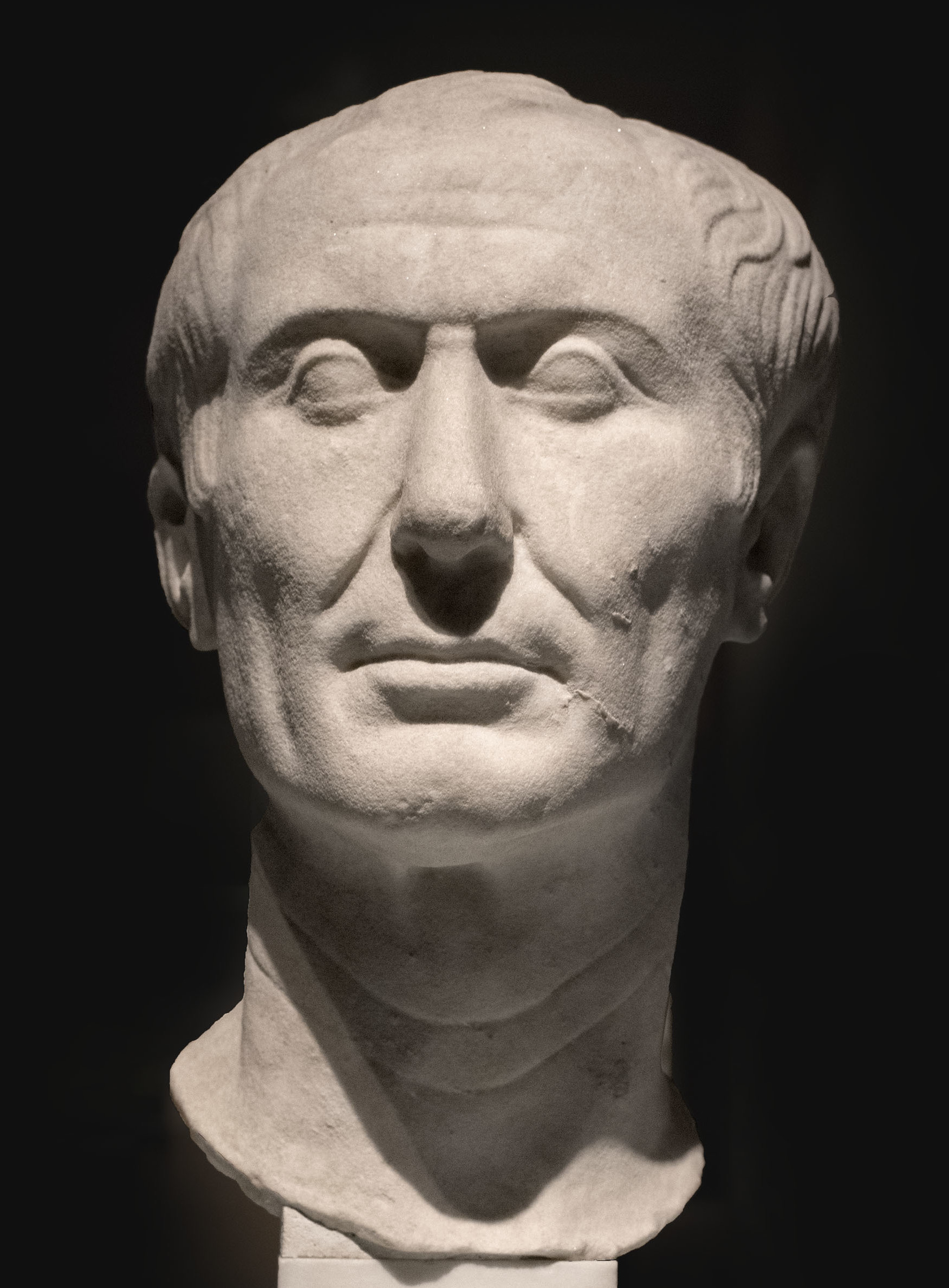
Wikimedia Commons · Creative Commons Attribution 2.0 Generic license · file Ancient tradition places Caesar's birth in Rome; the exact day is disputed between 12 and 13 July. Birth year is secure; ancient sources differ on 12 versus 13 July, so only the year is used.
Hides in the Sabine country
· Sabine Hills, Lazio, Italy
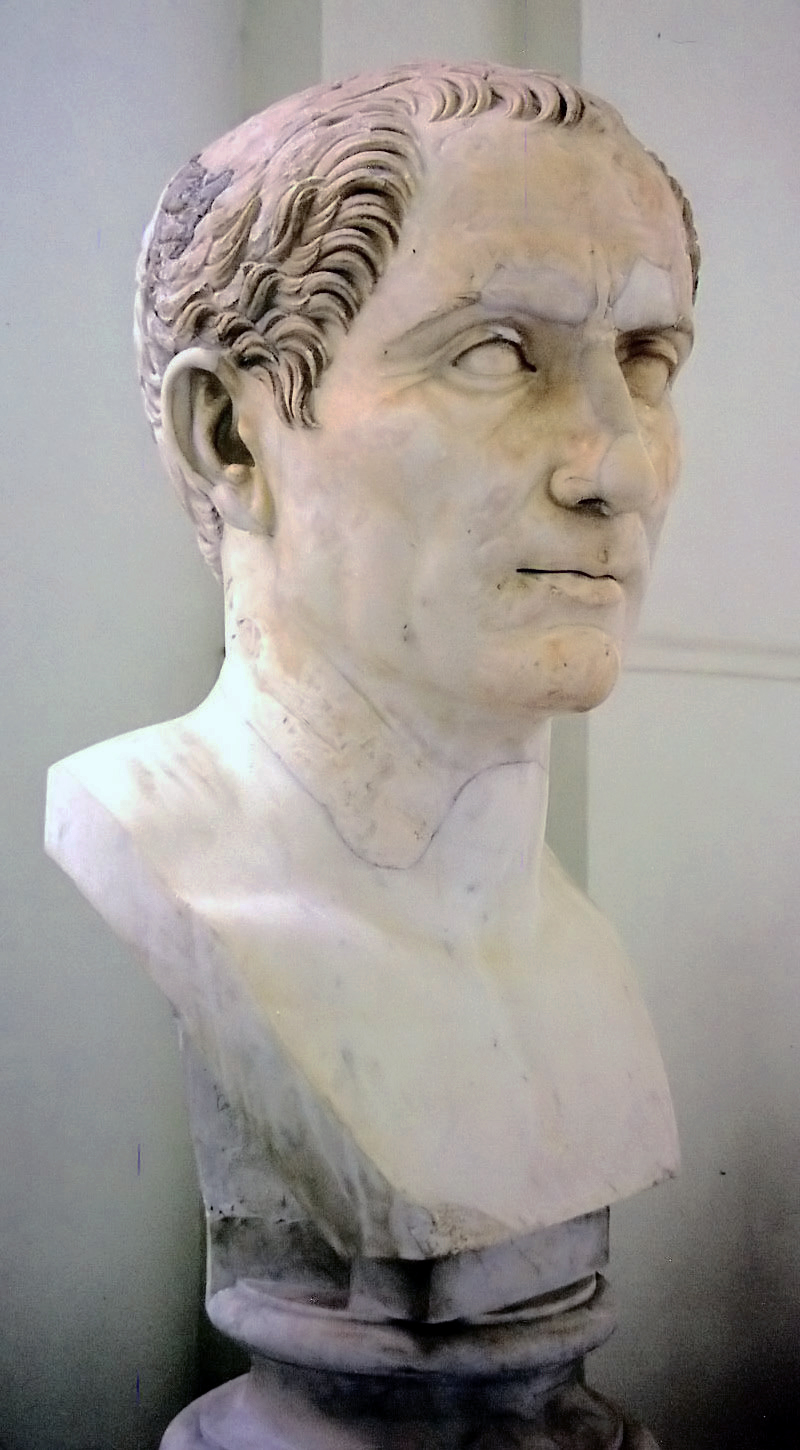
Wikimedia Commons · Public domain · file During Sulla's ascendancy Caesar went into hiding and moved between refuges before obtaining a pardon. The source supports the Sabine country broadly, not a specific settlement; coordinates are representative.
Serves at Nicomedes' court
· Nicomedia, Bithynia, Turkey
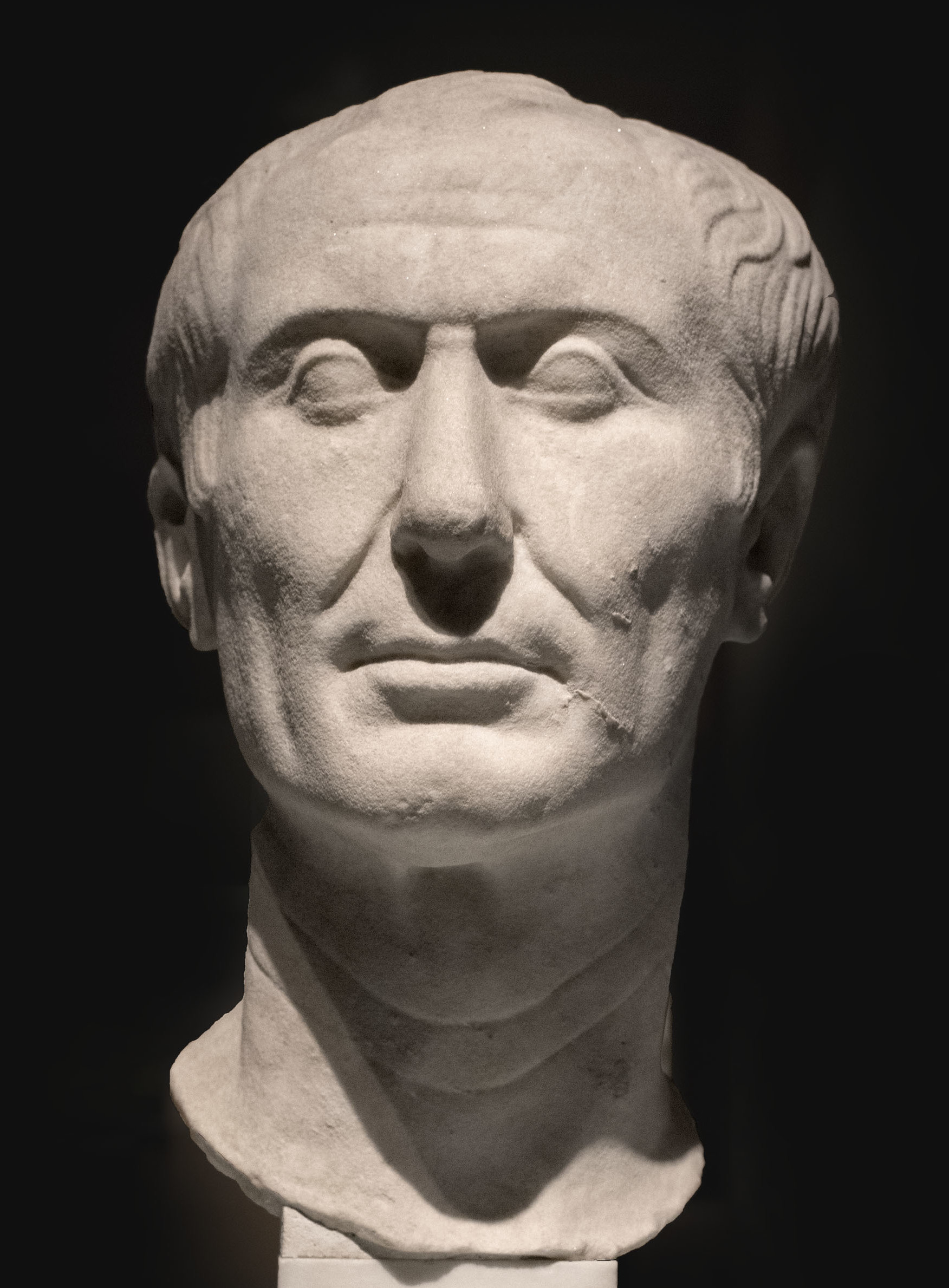
Wikimedia Commons · Creative Commons Attribution 2.0 Generic license · file Serving under Marcus Minucius Thermus, Caesar was sent to Bithynia to obtain ships from King Nicomedes IV. Nicomedes' court was at Nicomedia; the source names Bithynia and the royal court rather than the city explicitly.
Fights at Mytilene
· Mytilene, Lesbos, Greece
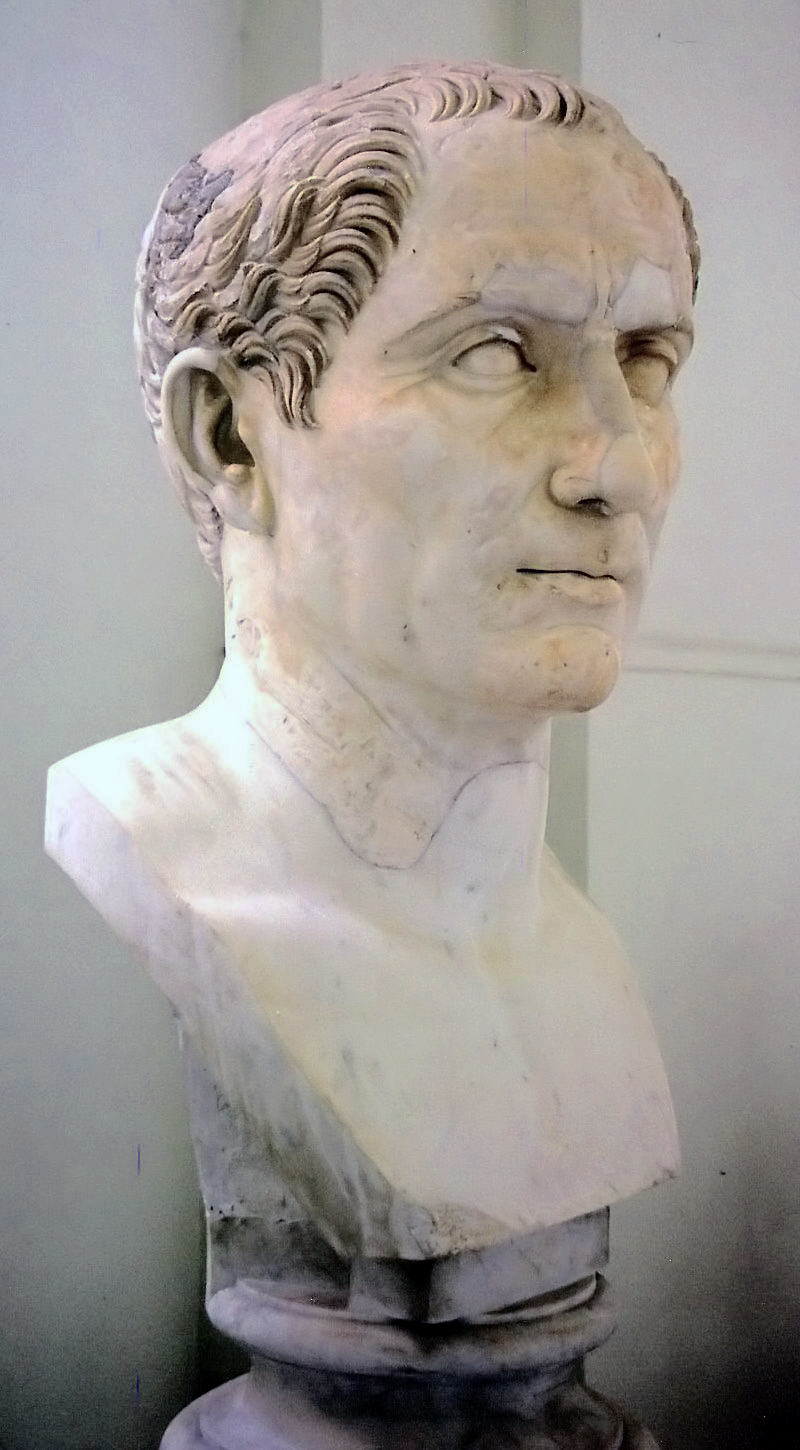
Wikimedia Commons · Public domain · file In his first eastern military service Caesar took part in the storming of Mytilene and received the civic crown.
Returns to Rome after Sulla's death
· Rome, Italy
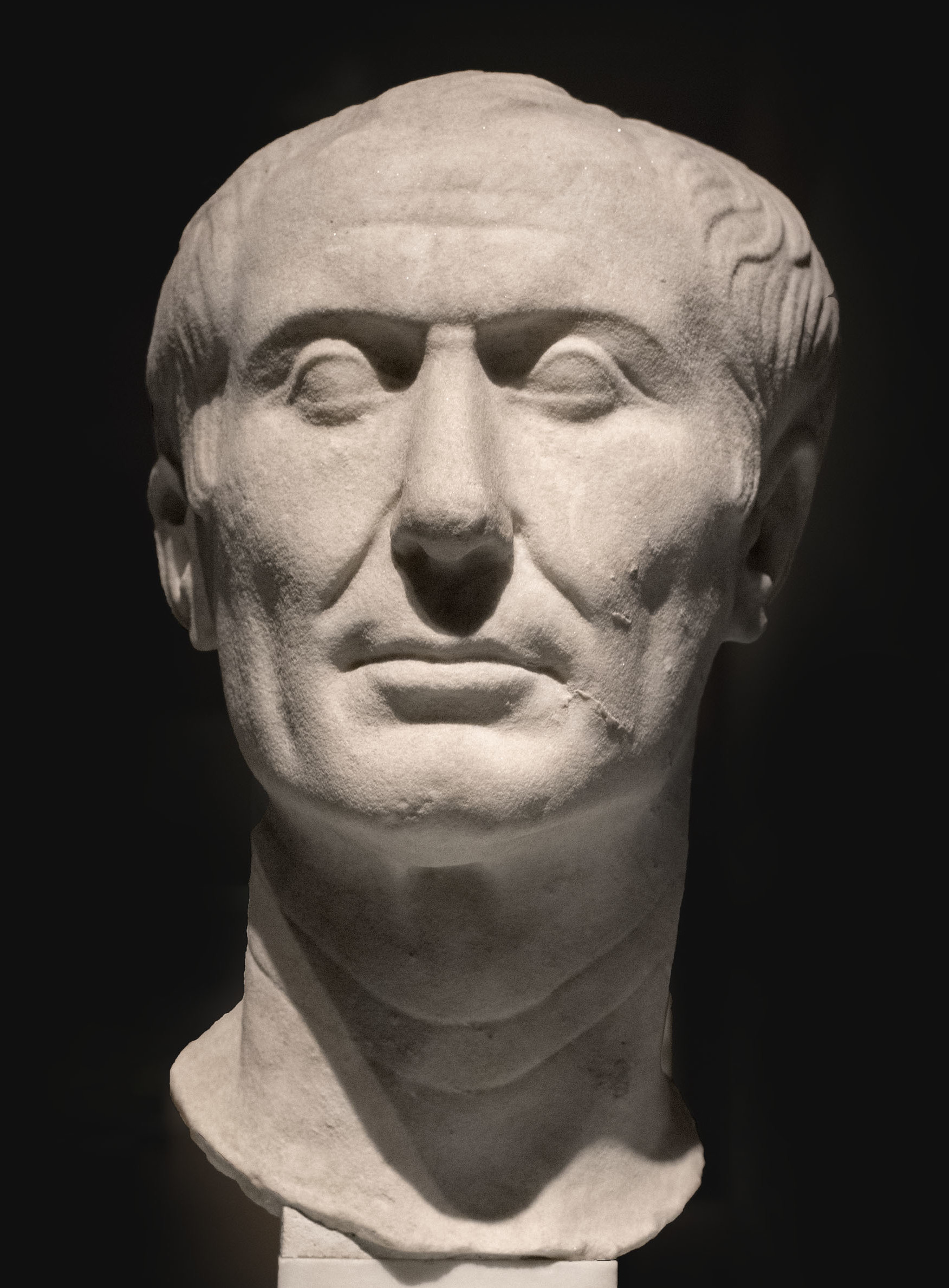
Wikimedia Commons · Creative Commons Attribution 2.0 Generic license · file After hearing of Sulla's death, Caesar left service in Cilicia and returned quickly to Rome.
Captured near Pharmacusa
· Farmakonisi, Dodecanese, Greece
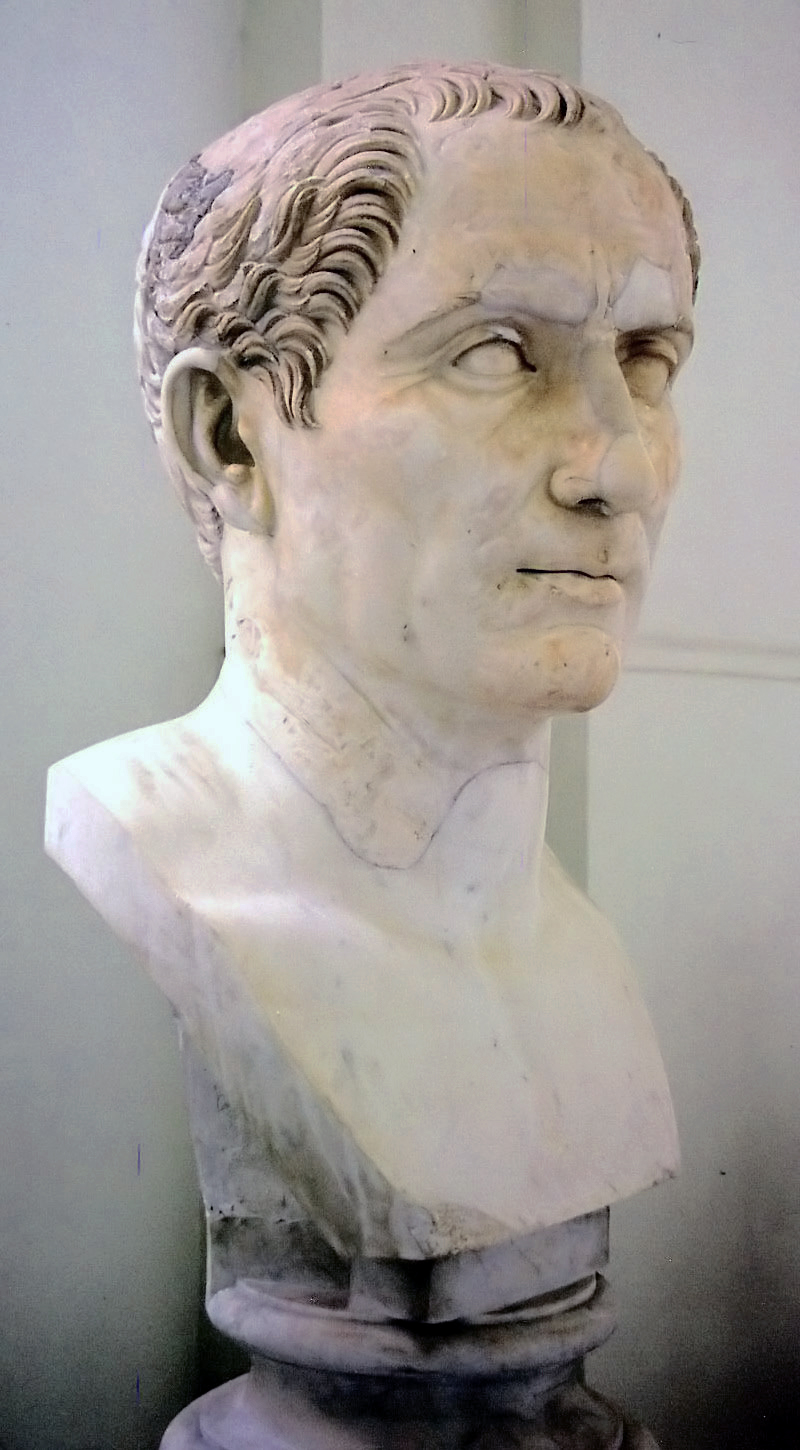
Wikimedia Commons · Public domain · file While sailing toward Rhodes for further rhetorical study, Caesar was captured by pirates near Pharmacusa and held for weeks. Pharmacusa is generally identified with modern Farmakonisi.
Launches pursuit from Miletus
· Miletus, Aydın Province, Turkey
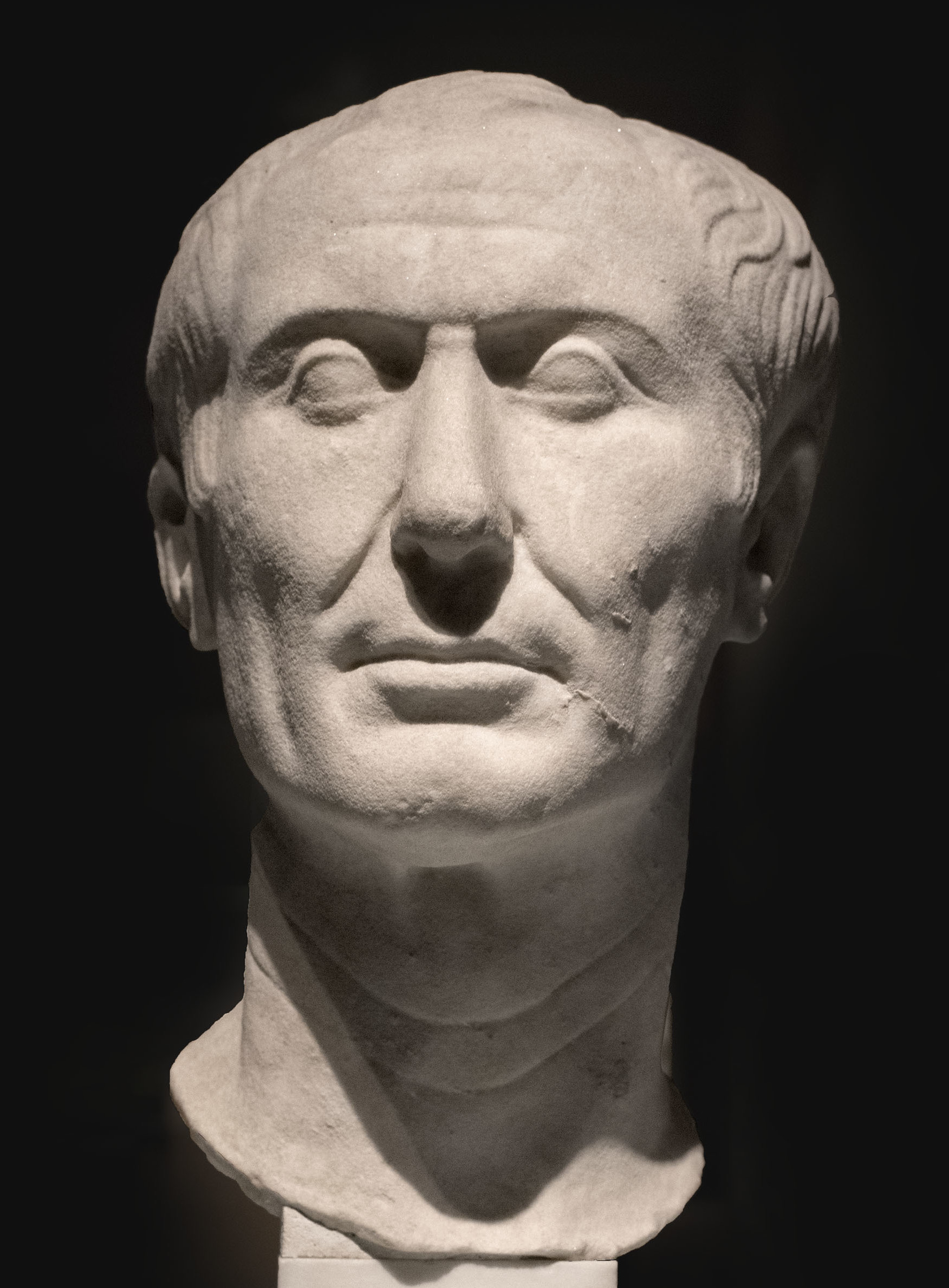
Wikimedia Commons · Creative Commons Attribution 2.0 Generic license · file After ransom was paid, Caesar organized ships at Miletus and immediately pursued his former captors.
Studies rhetoric on Rhodes
· Rhodes, Greece
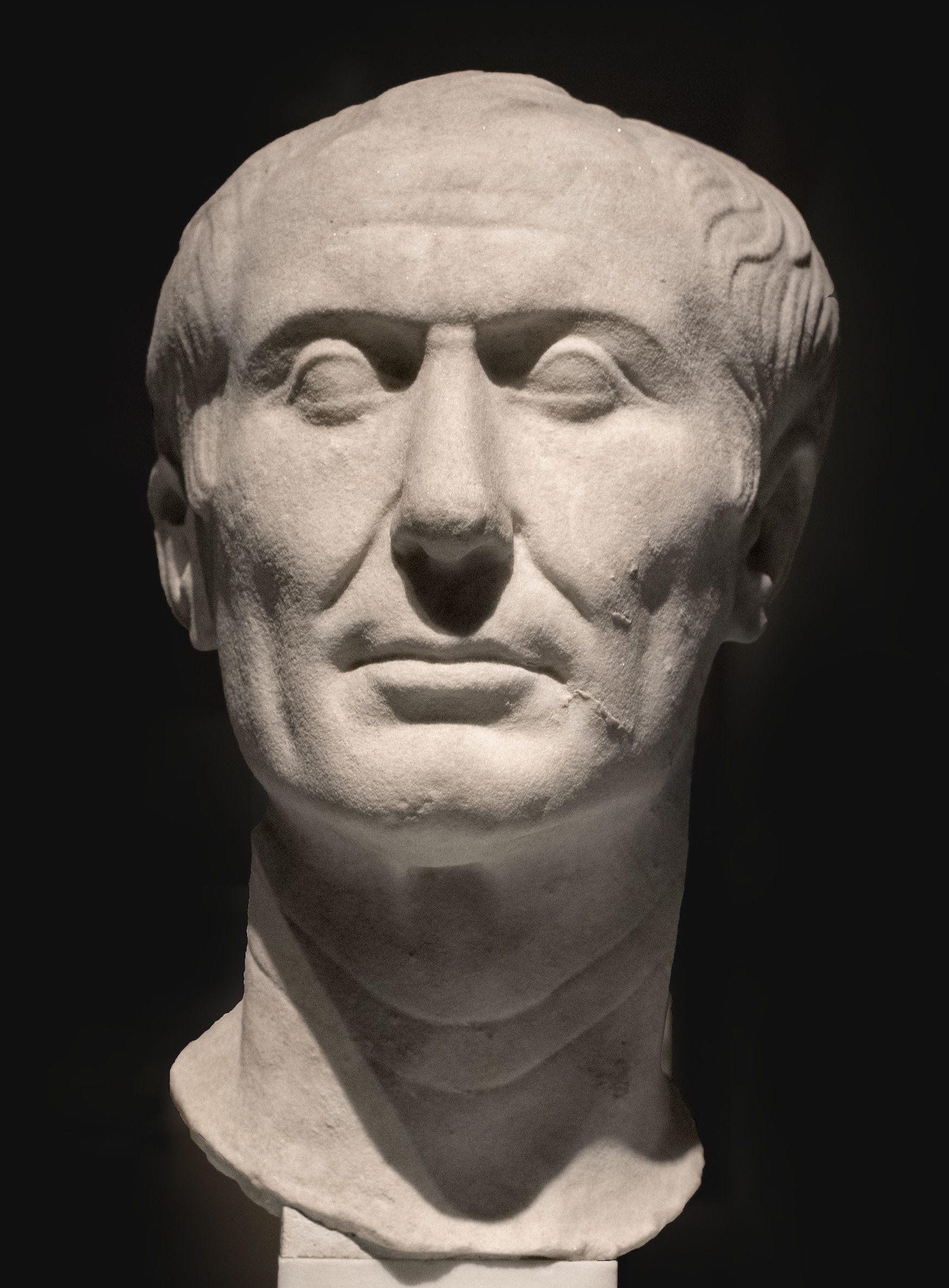
Wikimedia Commons · Creative Commons Attribution 2.0 Generic license · file Caesar continued to Rhodes to study rhetoric under Apollonius Molon.
Takes pirates from Pergamum prison
· Pergamum, Bergama, Turkey
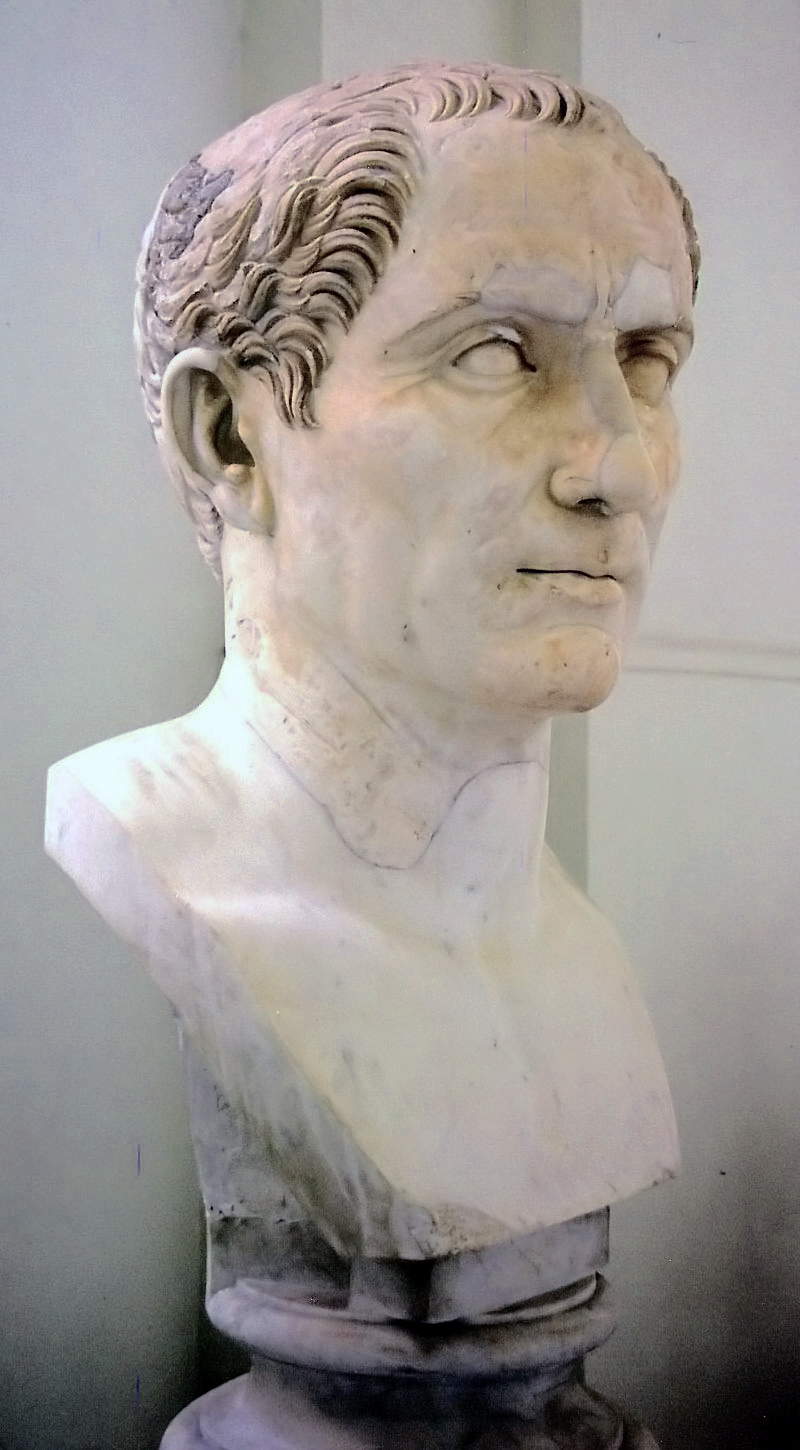
Wikimedia Commons · Public domain · file After the provincial governor delayed punishment, Caesar returned to Pergamum and personally removed the captured pirates for execution.
Returns to Asia during Mithridatic attack
· Roman Province of Asia, western Turkey
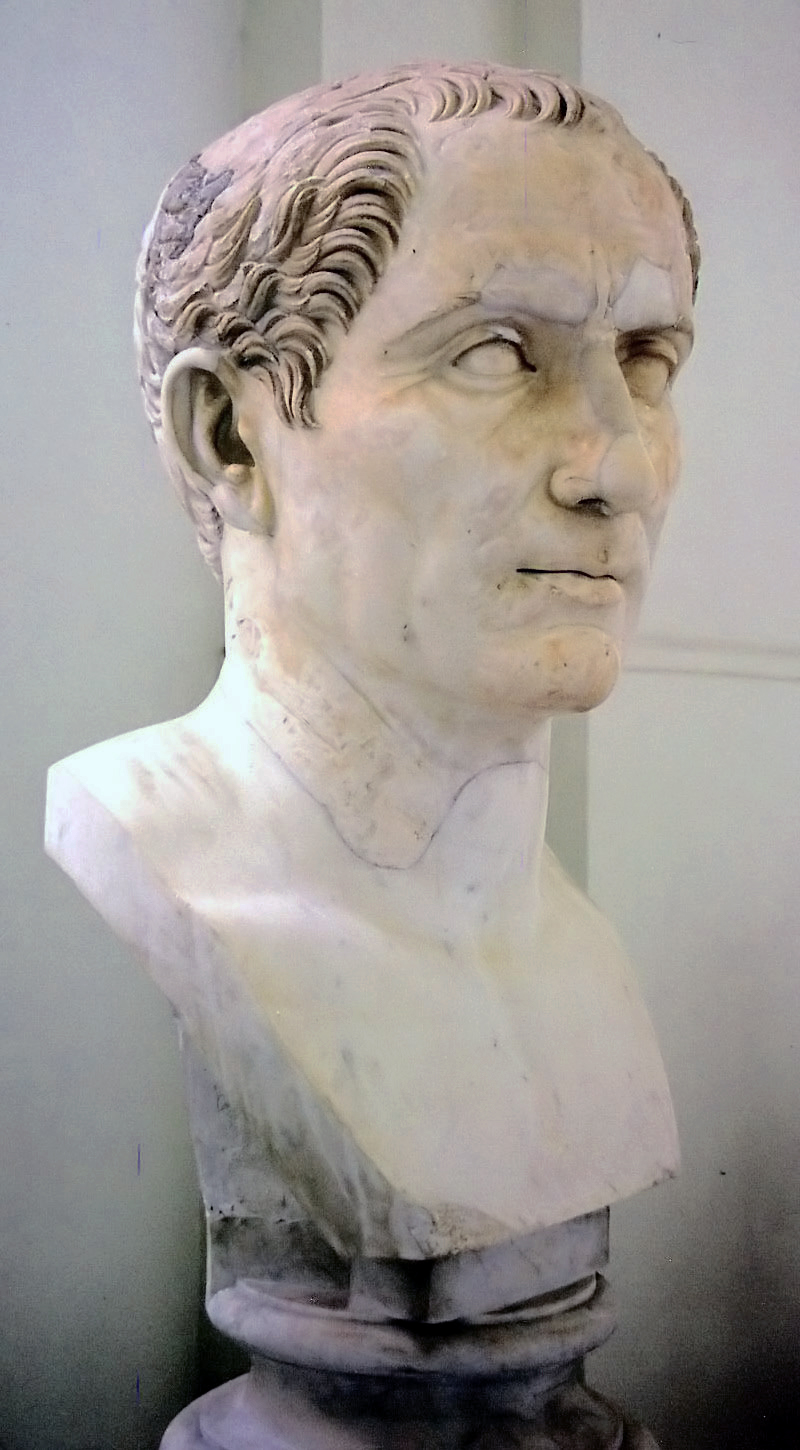
Wikimedia Commons · Public domain · file When Mithridates' forces threatened Roman allies, Caesar crossed from Rhodes back to Asia and raised auxiliaries. The source establishes the province but not a specific city; coordinates are representative of western Asia Minor.
Governs Farther Spain
· Hispania Ulterior, Spain
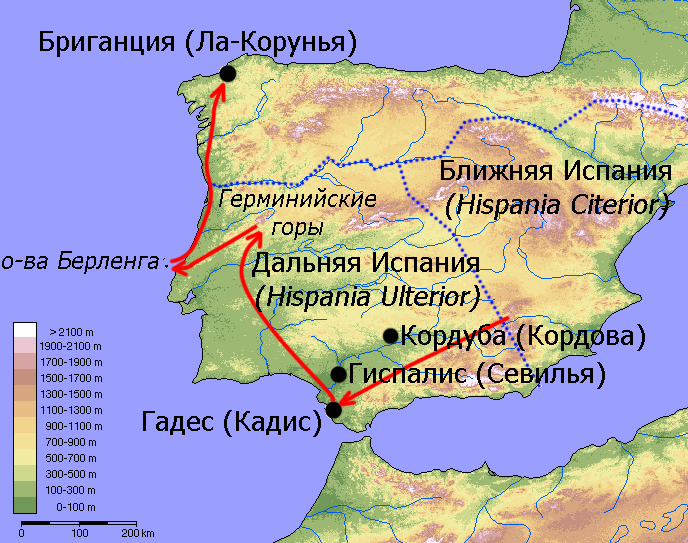
Wikimedia Commons · Creative Commons Attribution-Share Alike 4.0 International license · file After his praetorship Caesar departed for his assigned province of Hispania Ulterior, where he campaigned and restored order. The source supports the province broadly; no single headquarters is specified in the quoted passage.
Serves as consul in Rome
· Roman Forum, Rome, Italy
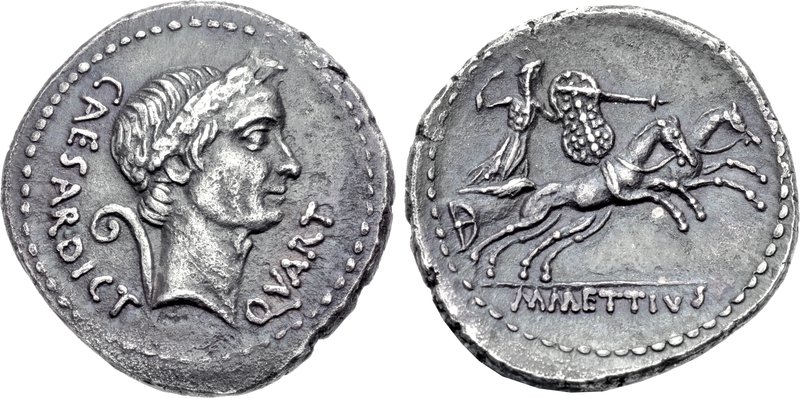
Wikimedia Commons · Creative Commons Attribution-Share Alike 2.5 Generic license · file Caesar held his first consulship in Rome, using popular legislation and alliance with Pompey and Crassus to dominate politics. The quoted passage concerns political action in the Forum during his consulship; coordinates mark the Forum broadly.
Arrives near Geneva
· Geneva, Switzerland
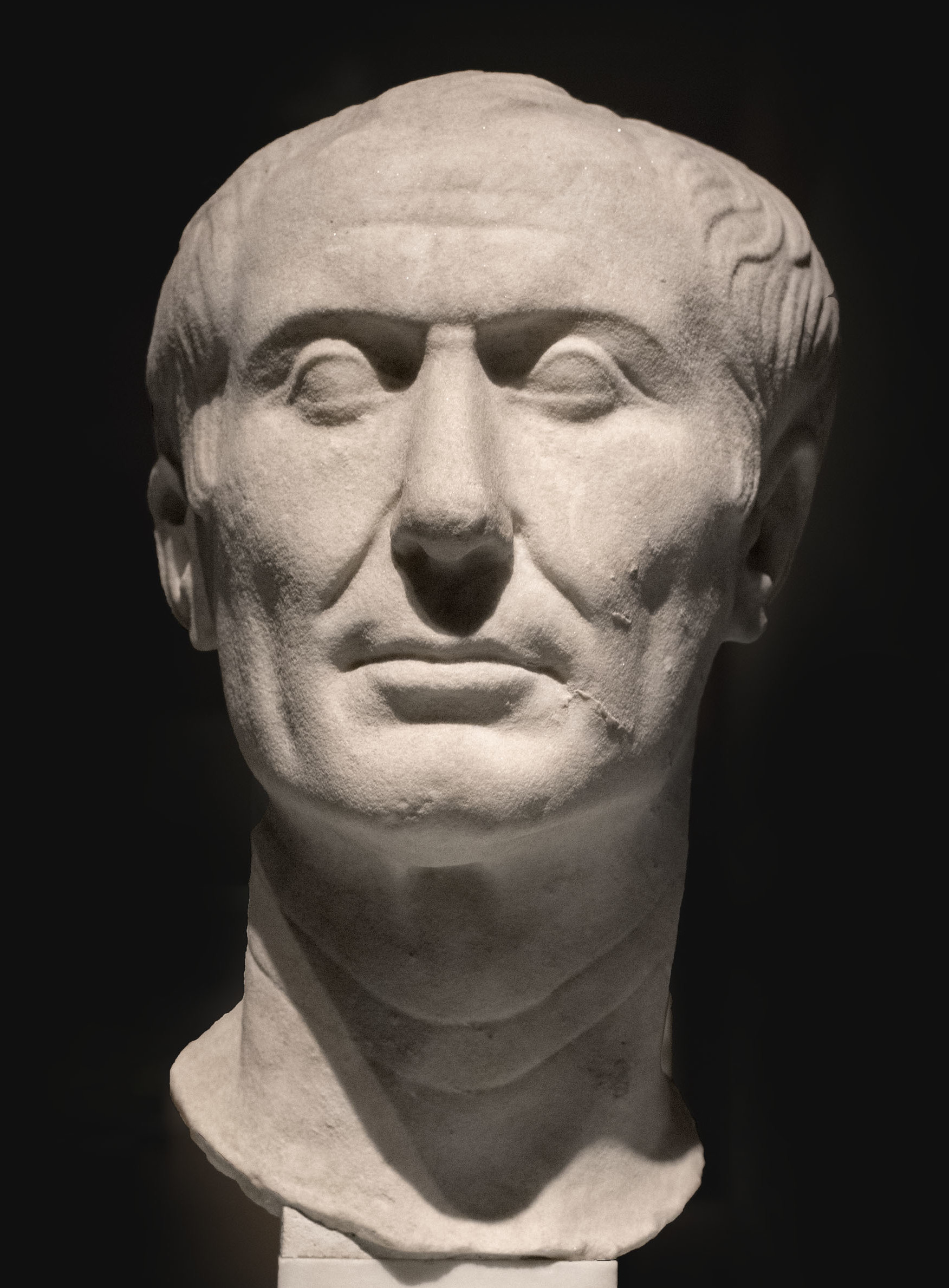
Wikimedia Commons · Creative Commons Attribution 2.0 Generic license · file At the opening of the Gallic War Caesar hurried from Rome to block the migrating Helvetii from entering the Roman province.
Crosses the Saône after attacking the Helvetii
· Saône River near Mâcon, France
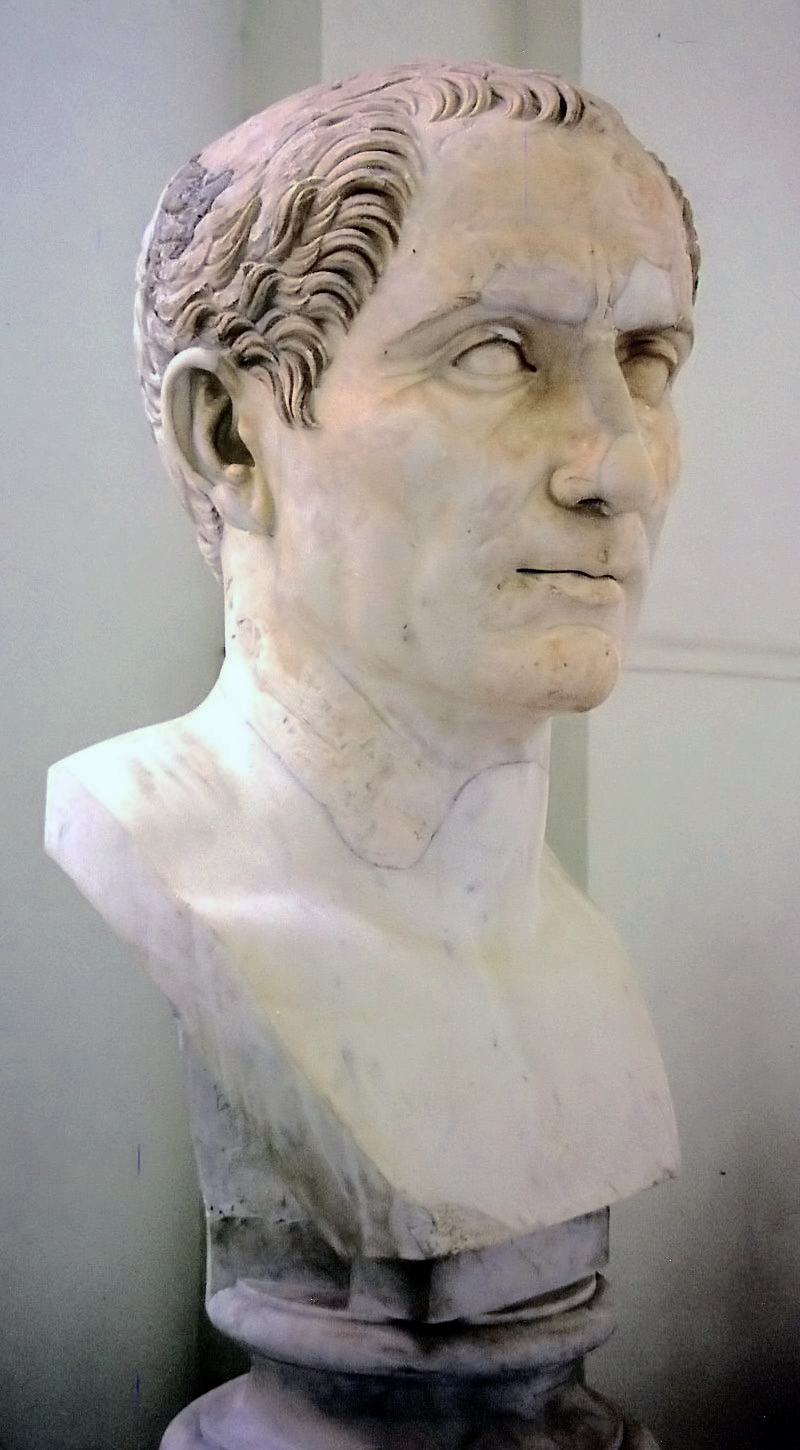
Wikimedia Commons · Public domain · file Caesar attacked the Tigurini near the Saône, then bridged the river and crossed with his army in pursuit of the Helvetii. The exact crossing point is debated; coordinates are a representative point on the Saône in the campaign area.
Seizes Vesontio
· Besançon, France
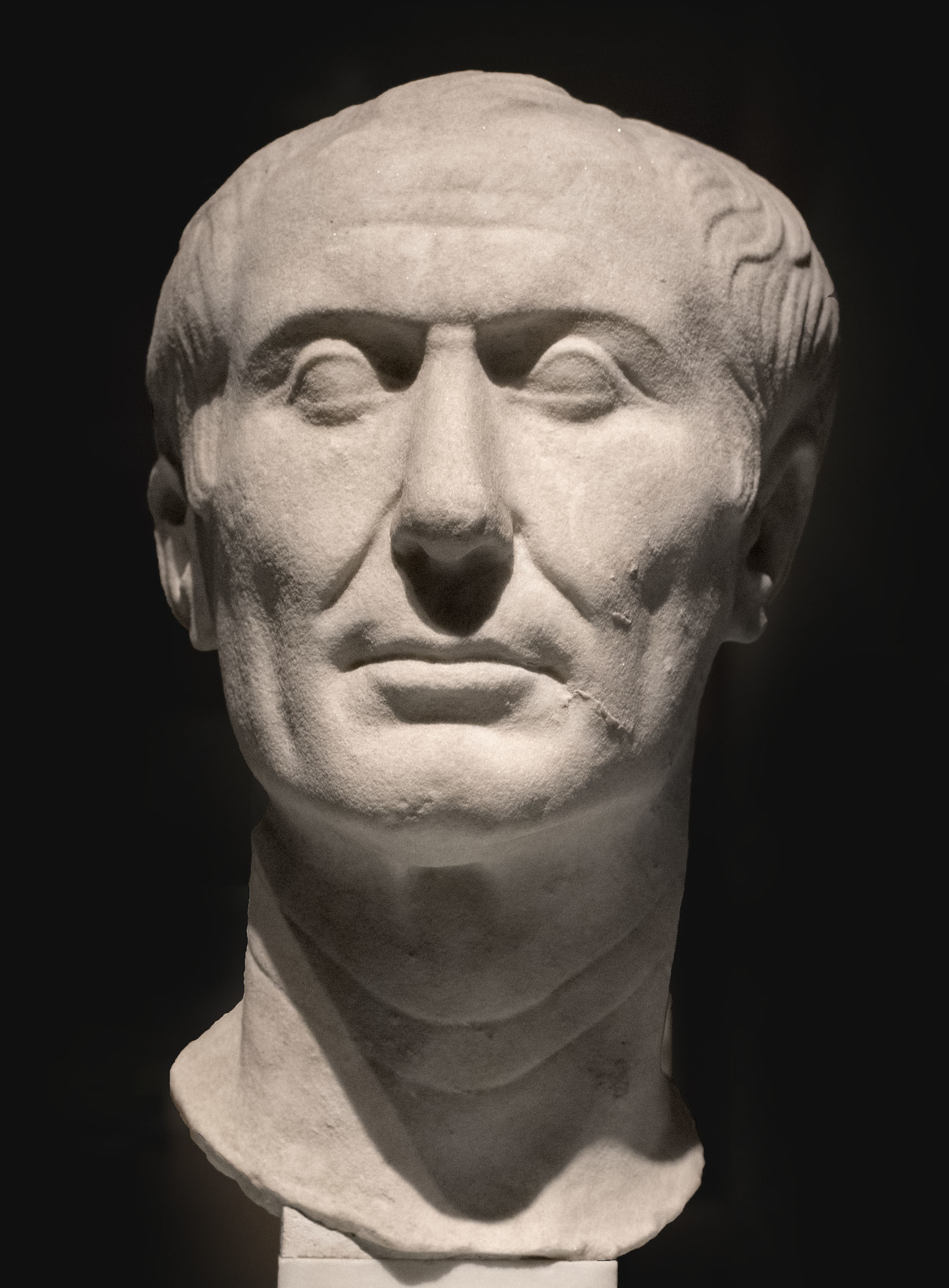
Wikimedia Commons · Creative Commons Attribution 2.0 Generic license · file Racing Ariovistus for the strategically vital Sequanian town, Caesar reached Vesontio first and installed a garrison. Vesontio is modern Besançon.
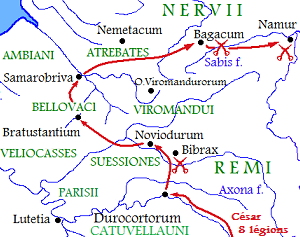
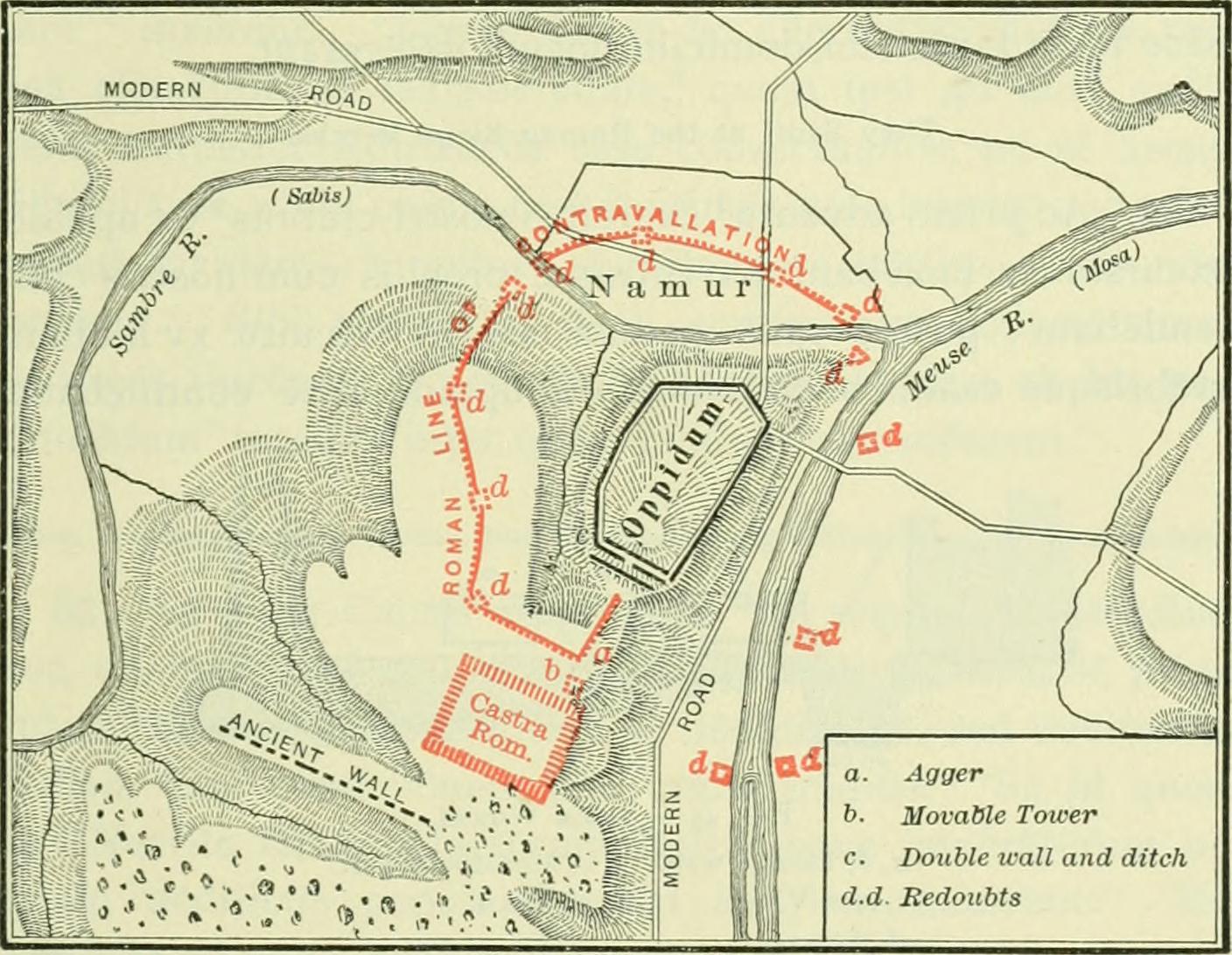
Campaigns at the Sabis
· Selle River near Saulzoir, France
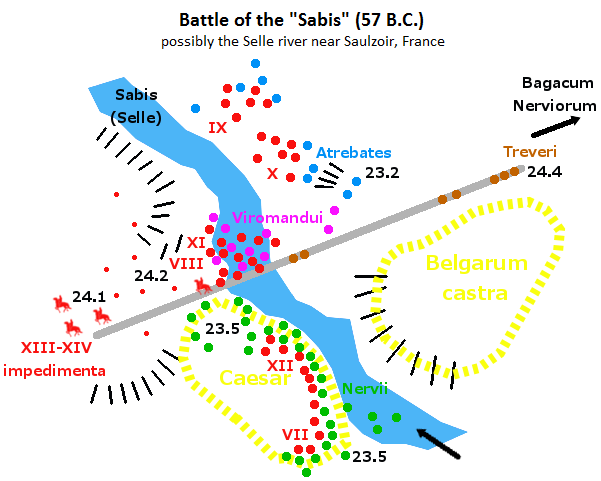
Wikimedia Commons · Creative Commons Attribution-Share Alike 3.0 Unported license · file Caesar advanced into Nervian territory and fought the major battle traditionally associated with the Sambre/Selle region. Identification of the ancient Sabis is disputed; many modern scholars favor the Selle rather than the Sambre. Coordinates are representative.
Meets Pompey and Crassus at Lucca
· Lucca, Tuscany, Italy
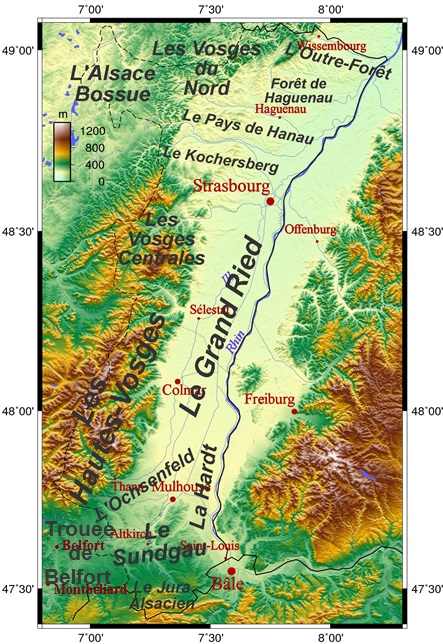
Wikimedia Commons · Public domain · file Caesar met leading Roman politicians at Lucca to renew the political compact that prolonged his Gallic command. Livius dates the conference to April 56 BC; the card retains year precision because the quoted evidence itself does not state the month.
Crosses the Rhine into Germania
· Rhine crossing near Neuwied, Germany
Wikimedia Commons · Public domain · file Caesar built a bridge across the Rhine and led Roman forces into Germania in a demonstration against tribes east of the river. The exact bridge site is debated; the Loeb editor places it between Andernach and Koblenz. Coordinates are representative.
Embarks for first invasion of Britain
· Boulogne-sur-Mer, France
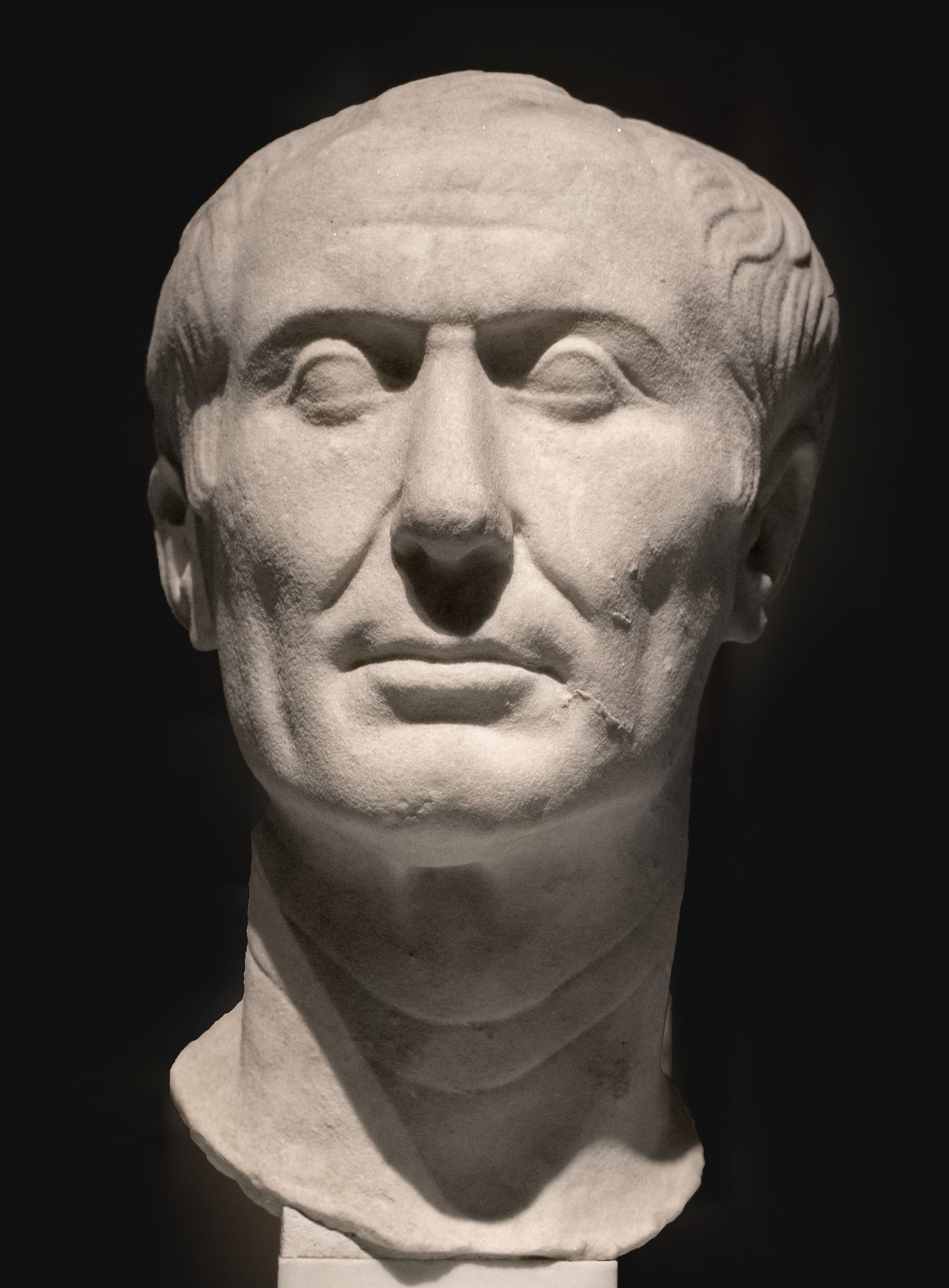
Wikimedia Commons · Creative Commons Attribution 2.0 Generic license · file Caesar launched his first British expedition from the Channel coast of Gaul, probably from the Boulogne area. Portus Itius is commonly identified with Boulogne, but the identification is not certain; date is the Loeb appendix reconstruction.
Lands in Britain near Deal
· Deal–Walmer coast, Kent, United Kingdom
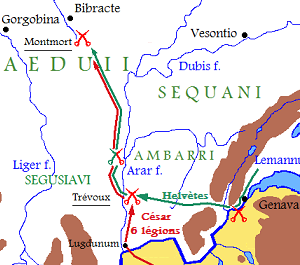
Wikimedia Commons · Public domain · file The first expedition reached the Kent coast after bypassing the cliffs near Dover and landed on open shore. Landing site is reconstructed rather than archaeologically certain; coordinates are representative of the Deal–Walmer coast.
Embarks for second invasion of Britain
· Boulogne-sur-Mer, France
Wikimedia Commons · Creative Commons Attribution 2.0 Generic license · file Caesar returned with a much larger fleet for a second British expedition. Date and port are reconstructed in the Loeb appendix; exact identification remains debated.
Reaches the Thames against Cassivellaunus
· Thames crossing, Greater London/Surrey, United Kingdom
Wikimedia Commons · Public domain · file During the second British expedition Caesar advanced inland to the Thames and forced a difficult crossing against defended banks. The exact crossing site is uncertain; coordinates are a representative point on the lower Thames in the traditional campaign zone.
Besieges Alesia
· Alise-Sainte-Reine, France
Wikimedia Commons · Creative Commons Attribution-Share Alike 3.0 Unported license · file After pursuing Vercingetorix, Caesar established the double lines of circumvallation and contravallation around Alesia.
Commands siege at Gergovia
· Gergovia, La Roche-Blanche, France
Wikimedia Commons · GNU Free Documentation License, Version 1.2 or any later version · file Caesar personally led six legions toward Gergovia and later abandoned the siege after a costly reverse.
Crosses the snowbound Cévennes
· Cévennes, France
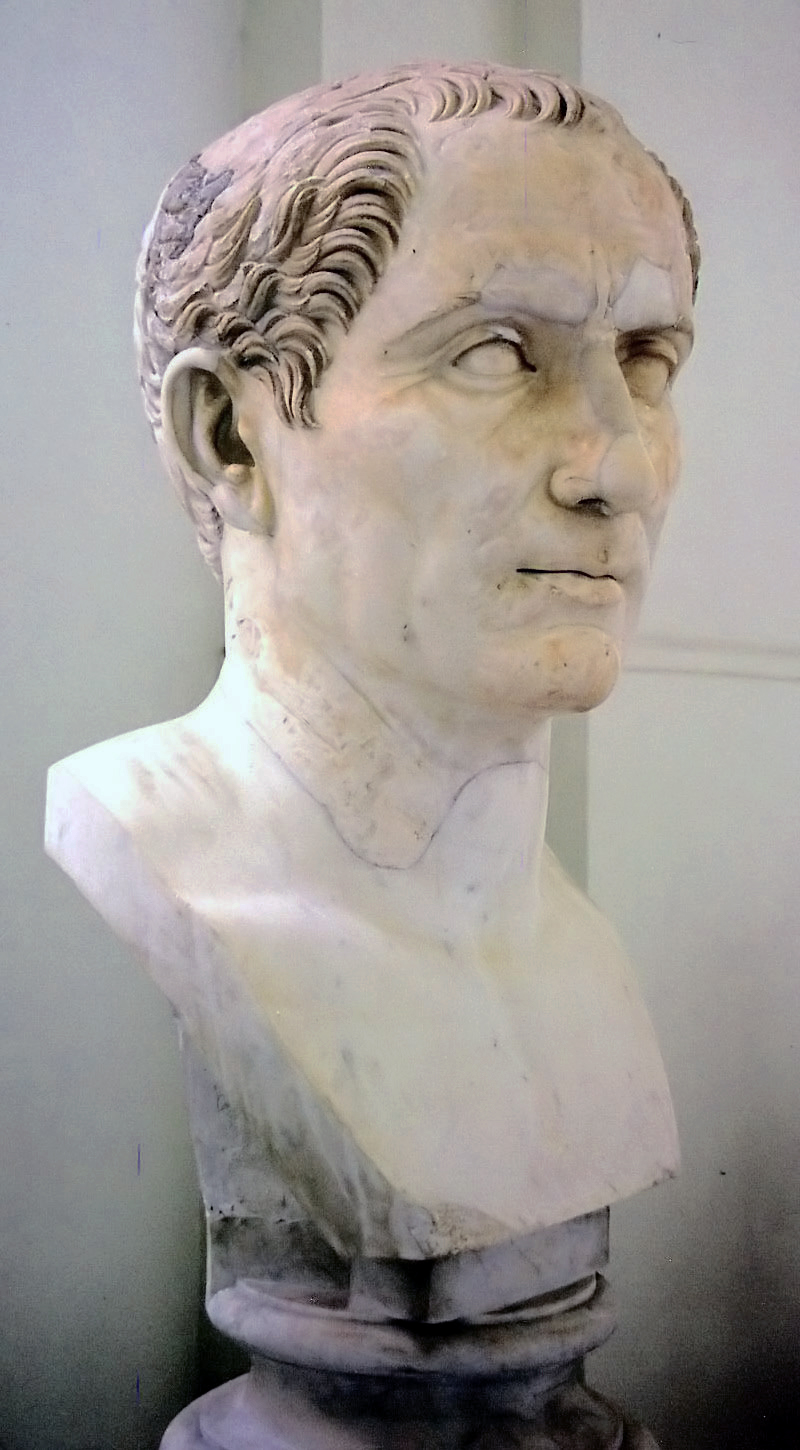
Wikimedia Commons · Public domain · file Caesar opened roads through deep winter snow and crossed the Cévennes to surprise the Arverni. The precise pass is uncertain; coordinates represent the central Cévennes.
Moves on Avaricum
· Bourges, France
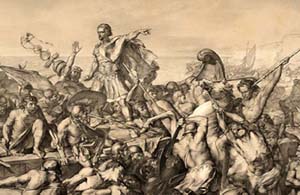
Wikimedia Commons · Creative Commons Attribution 2.0 Generic license · file After operations at Vellaunodunum, Cenabum and Noviodunum, Caesar advanced to besiege Avaricum, a major Biturigan stronghold. Avaricum is modern Bourges.
Returns to Narbo during the Gallic revolt
· Narbonne, France
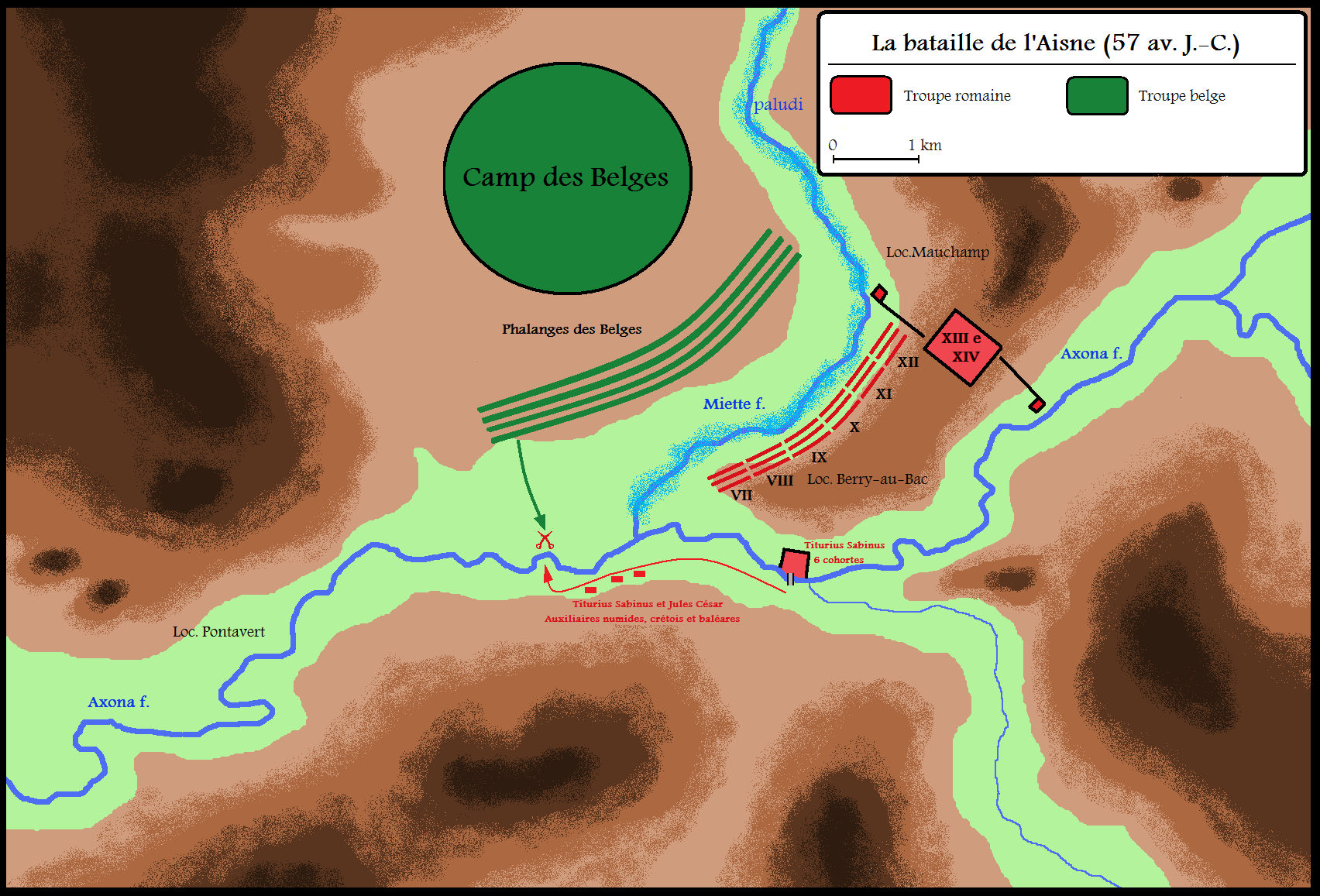
Wikimedia Commons · Creative Commons Attribution 2.0 Generic license · file At the start of Vercingetorix's great revolt Caesar hurried to Narbo to secure the Roman province.
Personally conducts the siege of Uxellodunum
· Puy d'Issolud, Vayrac, France
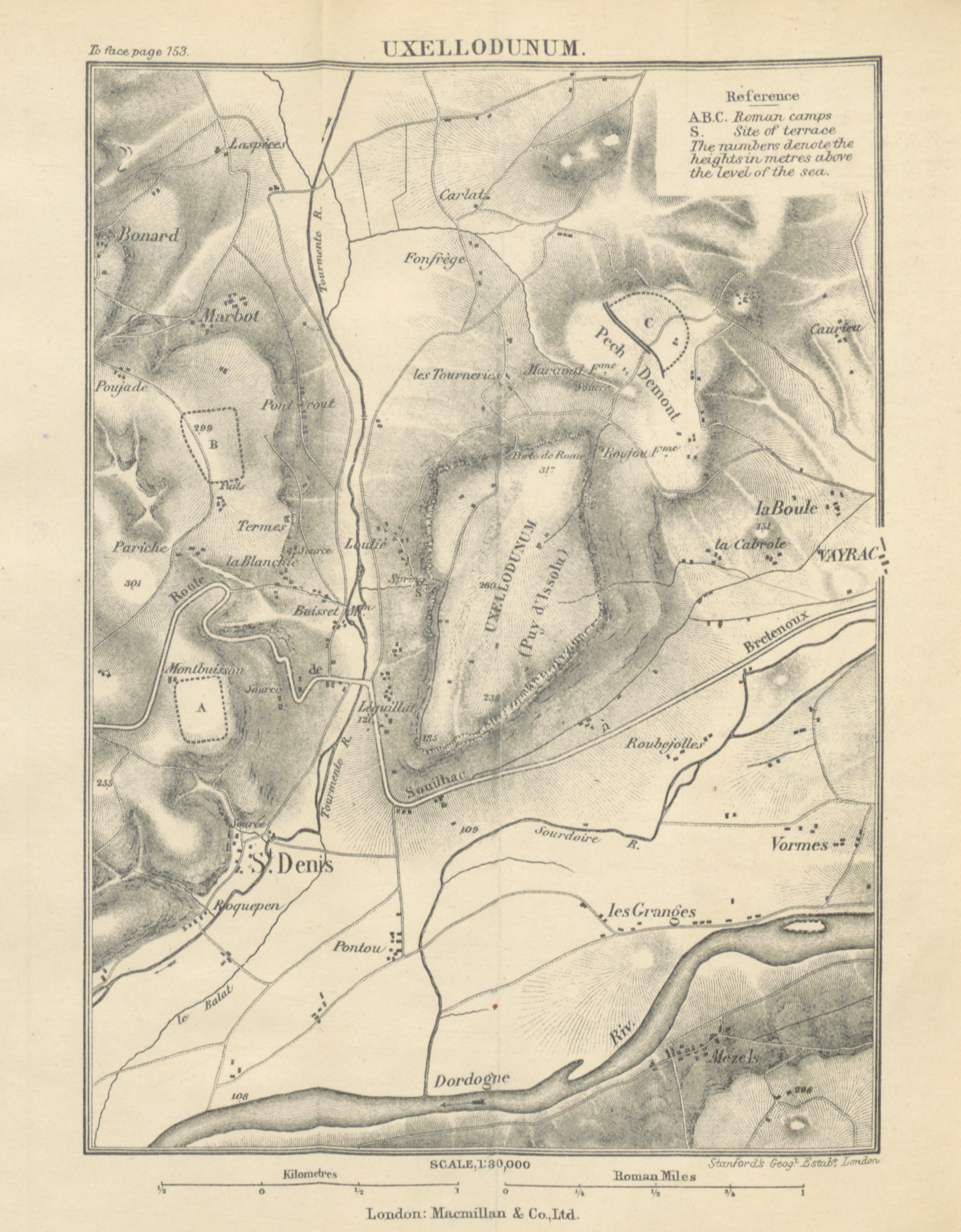
Wikimedia Commons · Public domain · file In the final major resistance of the Gallic War, Caesar came to Uxellodunum and directed operations that cut off the defenders' water supply. Uxellodunum is widely identified with Puy d'Issolud; coordinates mark that site.
Advances to Brundisium
· Brindisi, Italy
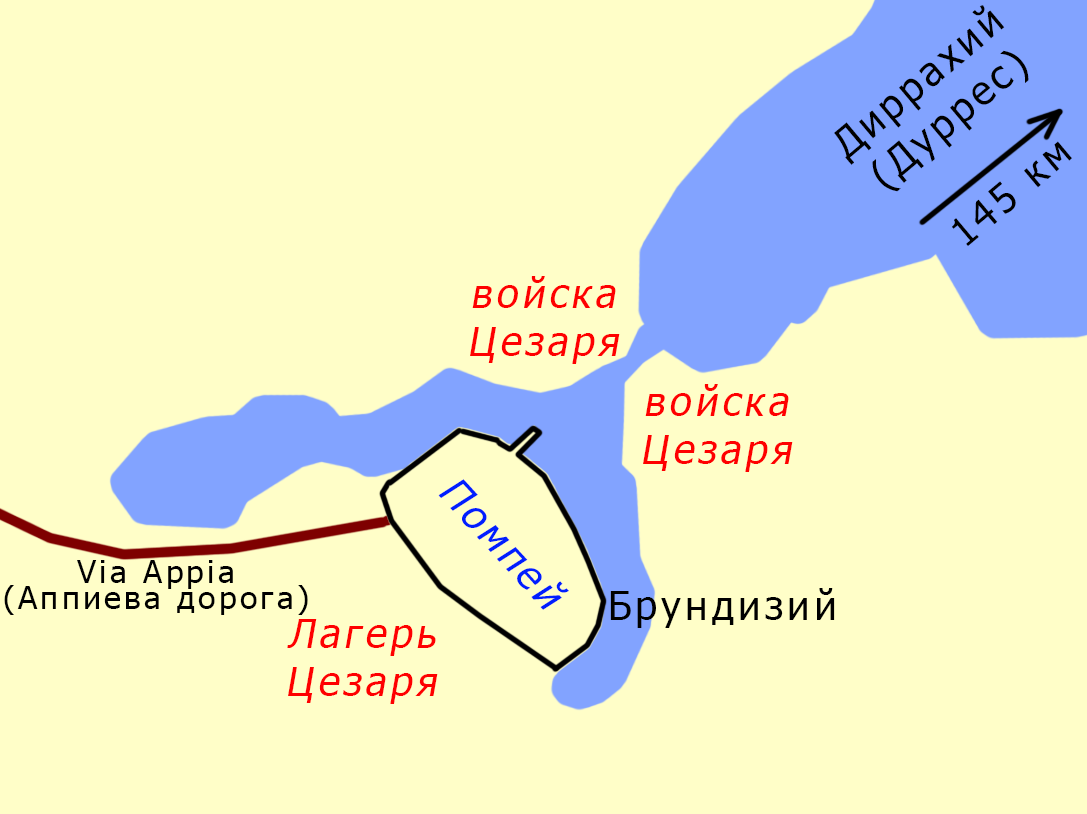
Wikimedia Commons · Creative Commons Attribution-Share Alike 3.0 Unported license · file Pursuing Pompey to the Adriatic, Caesar reached Brundisium but lacked the ships to prevent Pompey's departure for Greece.
Besieges Corfinium
· Corfinio, Abruzzo, Italy
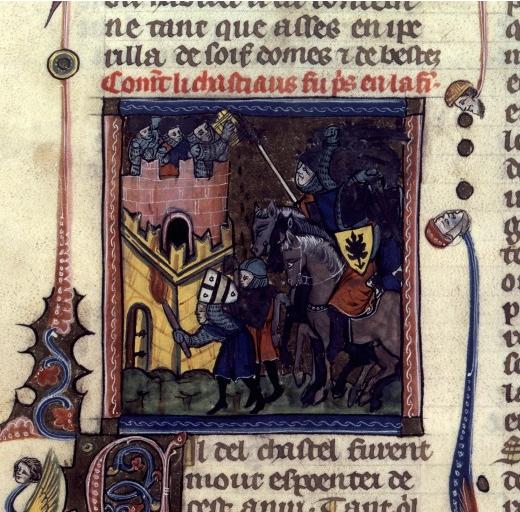
Wikimedia Commons · Public domain · file Caesar moved rapidly through central Italy and camped directly outside Corfinium, where Domitius Ahenobarbus surrendered.
Campaigns through Massilia en route to Spain
· Marseille, France
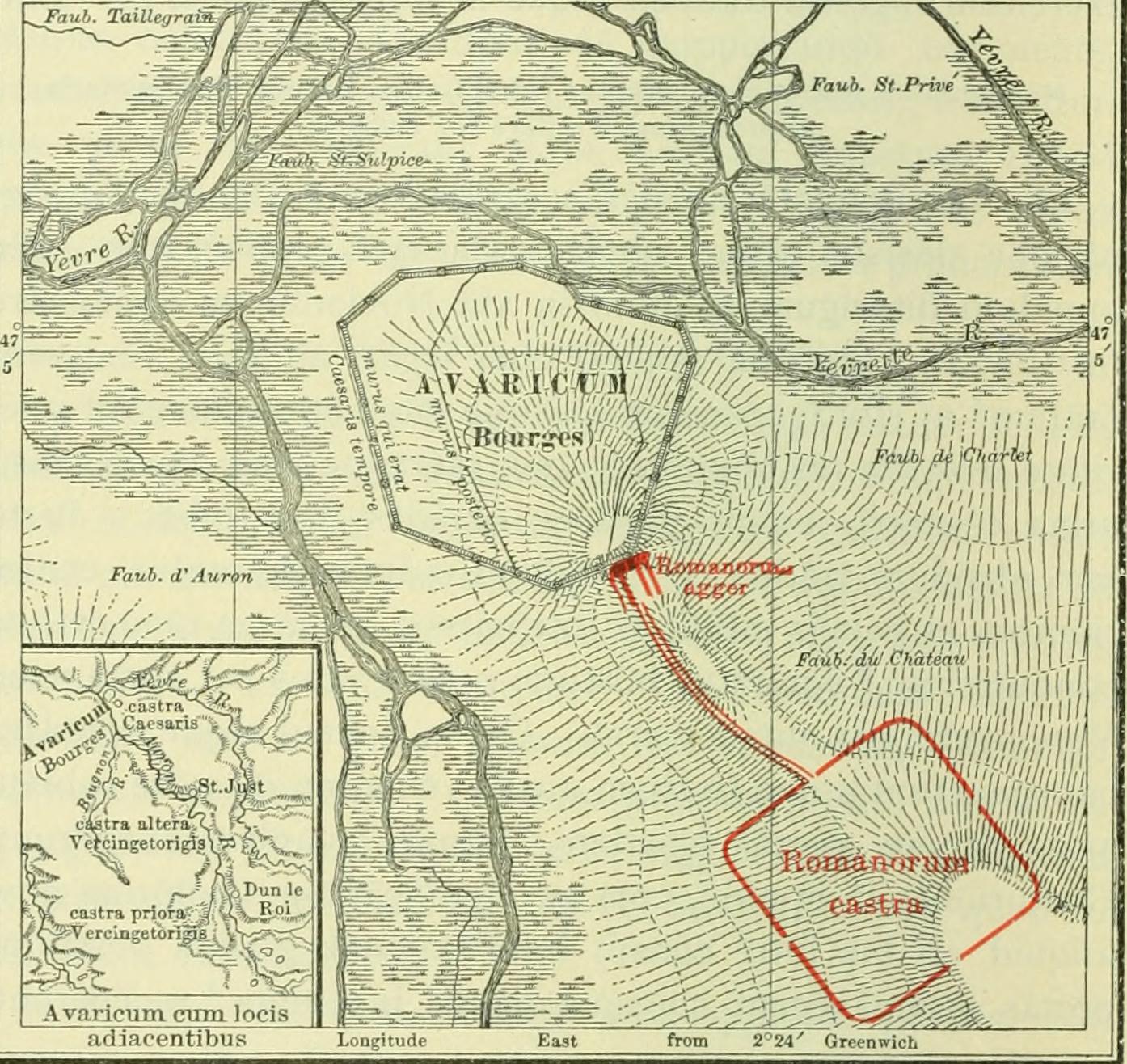
Wikimedia Commons · Public domain · file Caesar's westward advance was delayed by Massilia, whose refusal to admit him forced a siege before he continued toward Spain. The source confirms Caesar's advance at Massilia but does not specify his exact camp.
Crosses the Rubicon
· Rubicon River near Savignano sul Rubicone, Italy
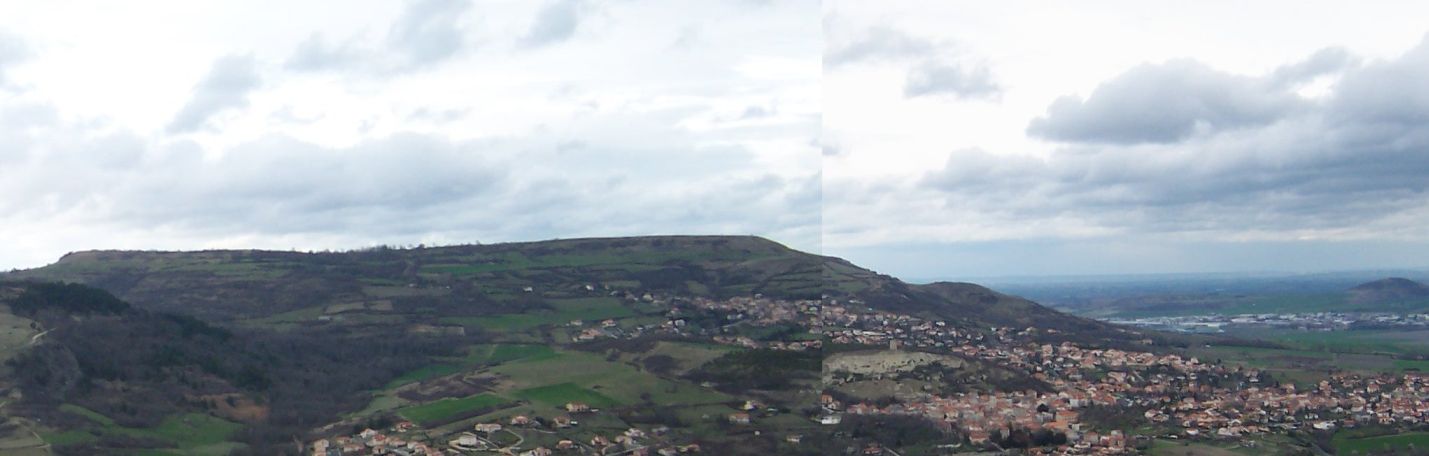
Wikimedia Commons · Public domain · file Caesar crossed the boundary of his province with troops, openly initiating civil war against the Pompeian government. Ancient identification of the Rubicon with the modern river is traditional but not absolutely certain; exact crossing point is unknown.
Follows Pompeians from Ilerda
· Lleida province, Catalonia, Spain
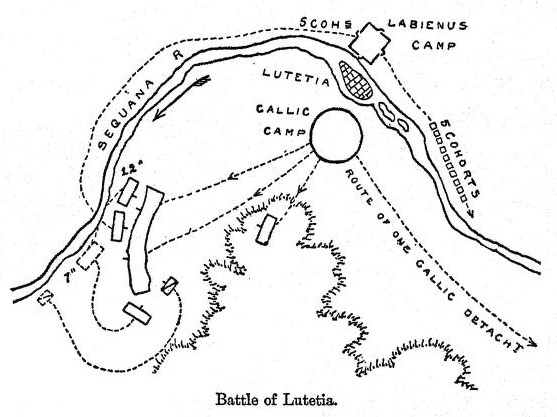
Wikimedia Commons · Creative Commons Attribution-Share Alike 3.0 Unported license · file After maneuvering near the Sicoris, Caesar personally followed the retreating Pompeian army as their position collapsed. The action occurred during the retreat from Ilerda; exact position shifted daily, so coordinates are representative.
Reaches the army before Ilerda
· Lleida, Catalonia, Spain
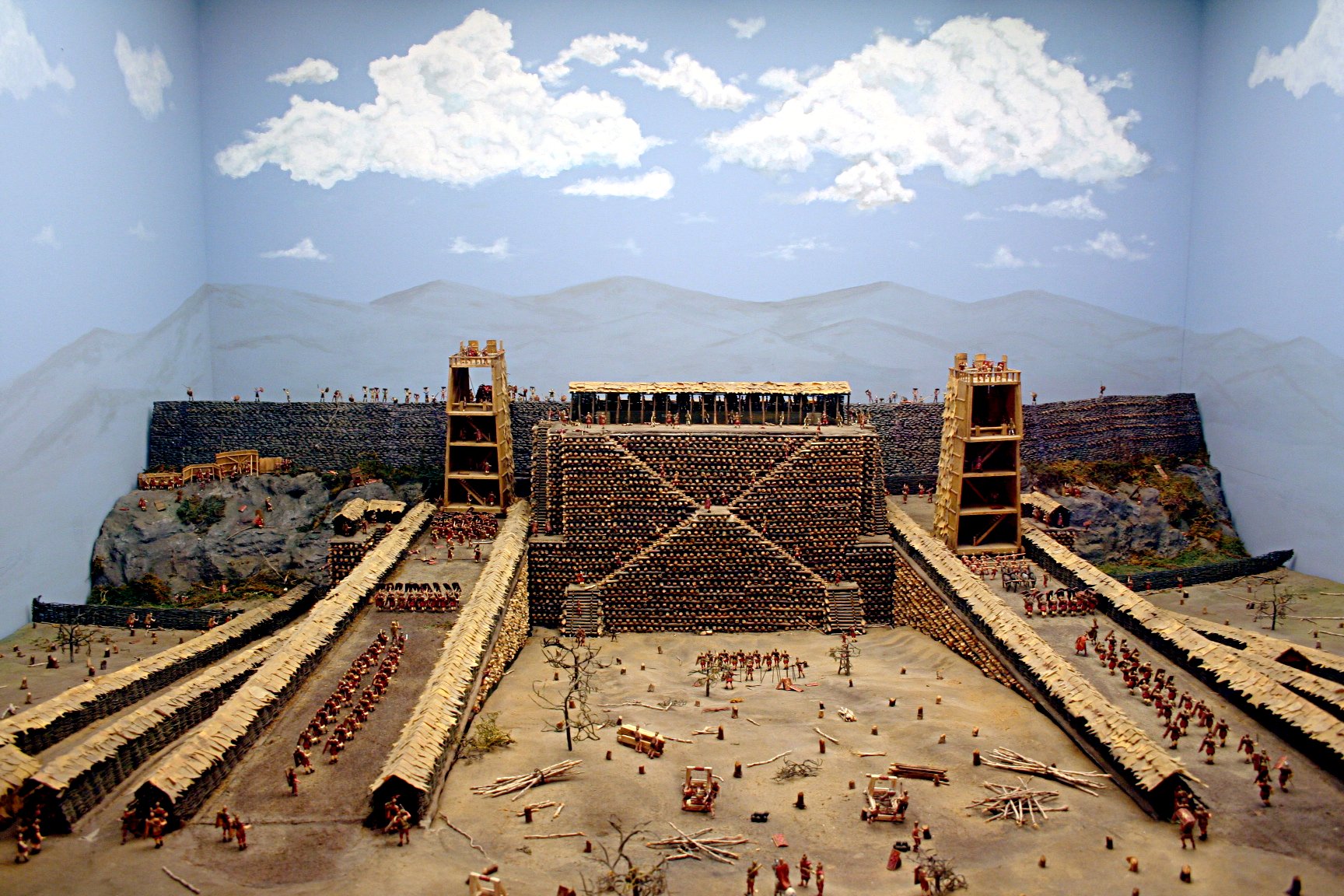
Wikimedia Commons · Creative Commons Attribution-Share Alike 3.0 Unported license · file Caesar joined his forces in northeastern Spain and took personal command of operations against Afranius and Petreius around Ilerda. The surrounding passage identifies the camp as the Roman position before Ilerda; coordinates mark modern Lleida.
Returns to Rome during the civil war
· Rome, Italy
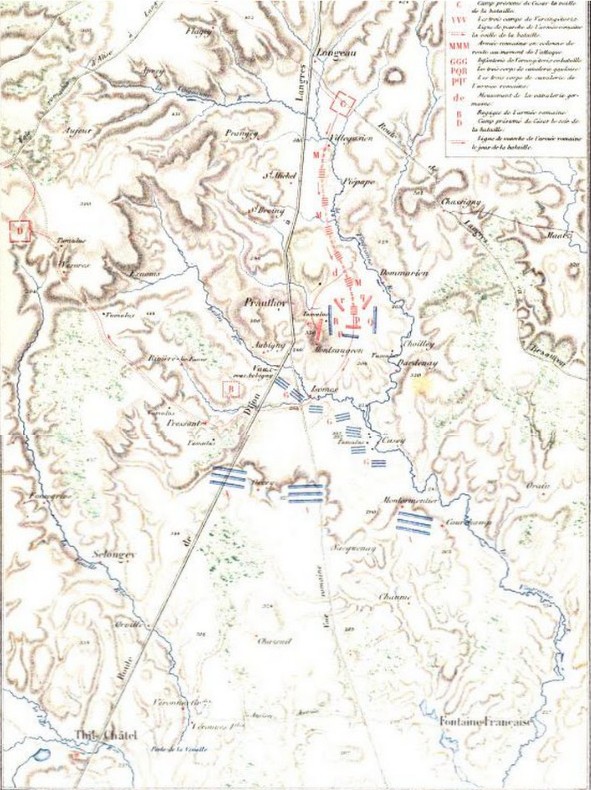
Wikimedia Commons · Creative Commons Attribution-Share Alike 2.5 Generic license · file After Pompey's evacuation of Italy, Caesar returned to Rome and convened the Senate before campaigning in Spain.
Arrives at Alexandria
· Alexandria, Egypt
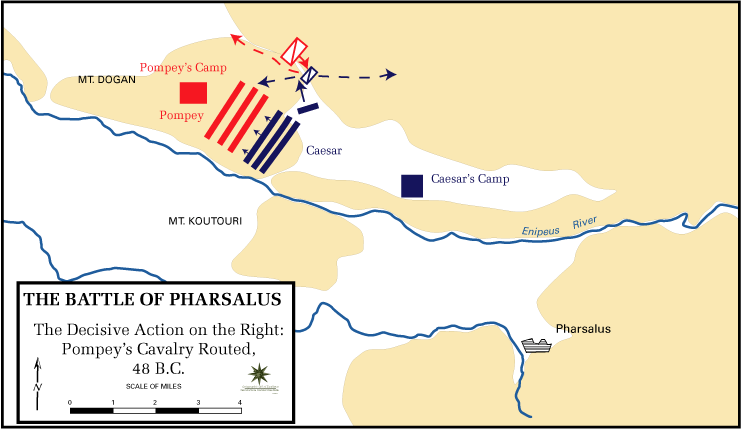
Wikimedia Commons · Creative Commons Attribution 2.0 Generic license · file Caesar followed Pompey to Egypt, learned of his murder, and became entangled in the Alexandrian dynastic conflict.
Crosses into Macedonia against Pompey
· Macedonia, Greece
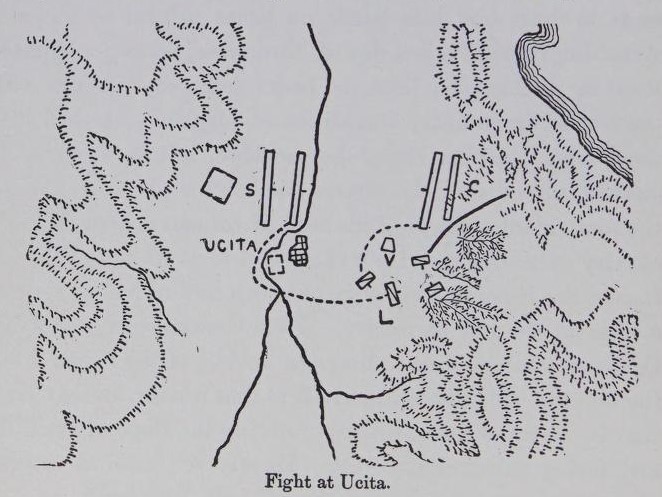
Wikimedia Commons · Creative Commons Attribution 2.0 Generic license · file After returning to Italy and then crossing the Adriatic, Caesar entered Macedonia to renew the campaign against Pompey. The source names Macedonia broadly; coordinates are representative.
Defeats Pompey at Pharsalus
· Pharsalus battlefield, Thessaly, Greece
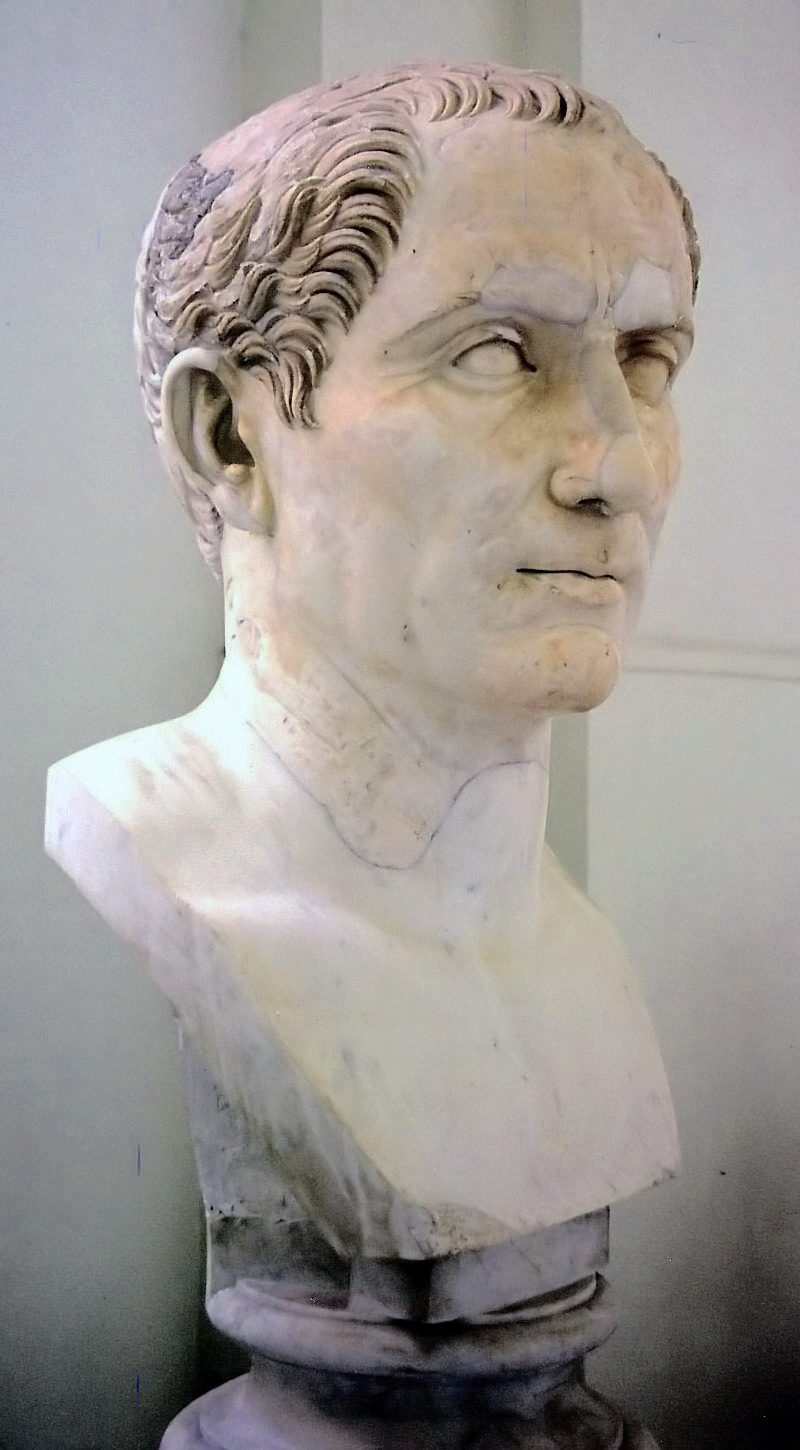
Wikimedia Commons · Public domain · file Caesar won the decisive battle of the civil war in Thessaly, destroying Pompey's field army and forcing him to flee. Exact battlefield placement within the Pharsalus plain remains debated; coordinates are representative.
Operates around Dyrrhachium
· Durrës, Albania
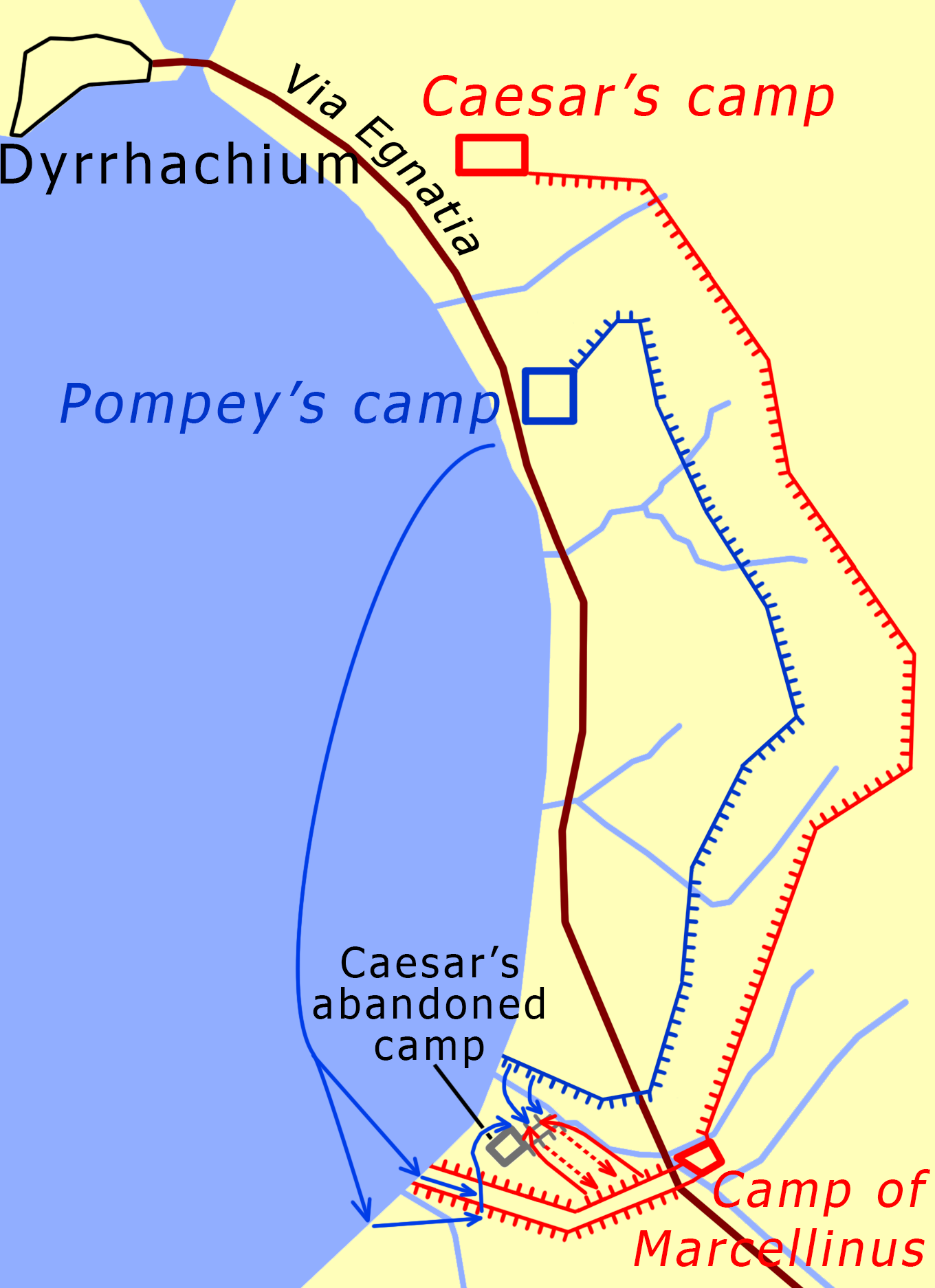
Wikimedia Commons · Public domain · file Caesar attempted to contain Pompey's larger army near Dyrrhachium before suffering a serious reverse and withdrawing eastward. The quote establishes the prolonged blockade; Dyrrhachium is modern Durrës.
Defeats Pharnaces near Zela
· Zela, Zile, Turkey
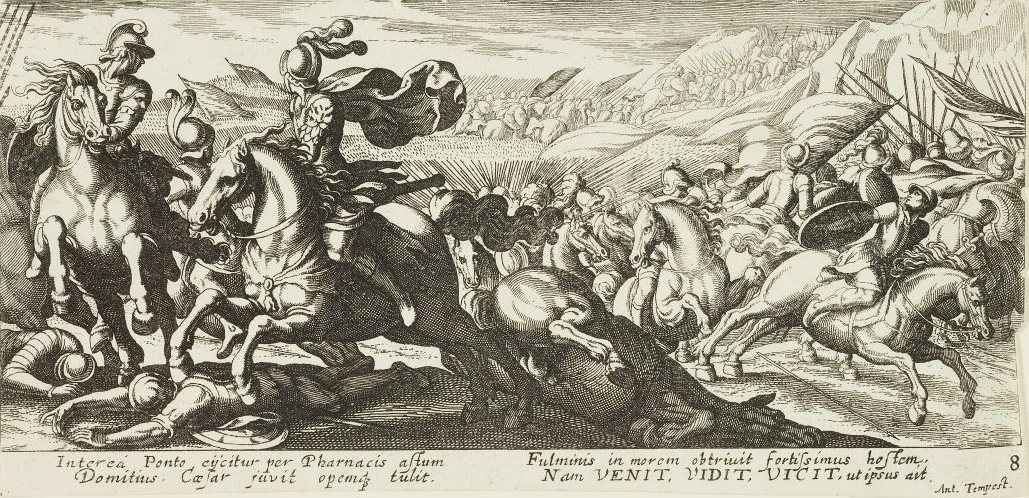
Wikimedia Commons · Creative Commons Attribution-ShareAlike 4.0 International · file Caesar moved rapidly through Asia Minor and defeated Pharnaces II in the campaign associated with the phrase veni, vidi, vici.
Leaves Egypt for Syria
· Syria
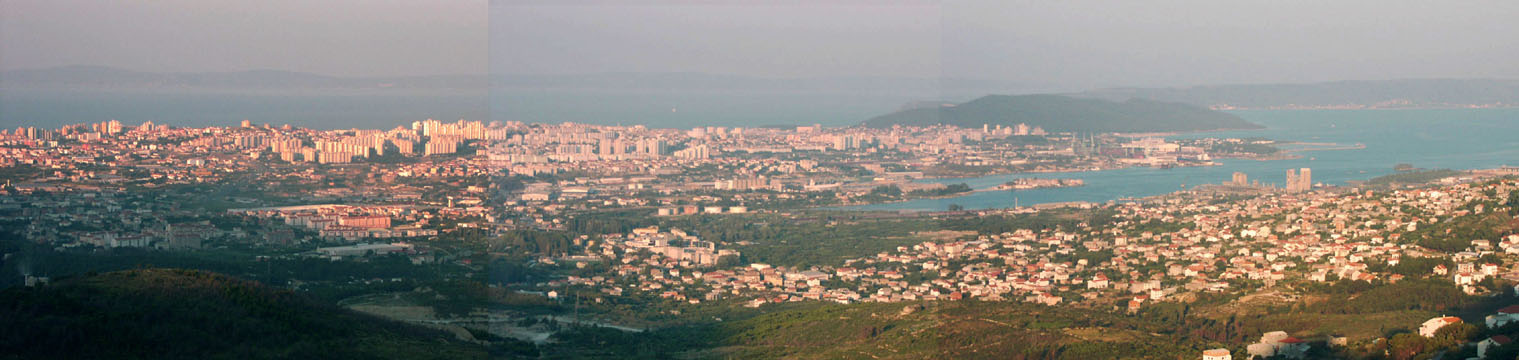
Wikimedia Commons · Public domain · file After victory in the Alexandrian War and settlement of Cleopatra on the throne, Caesar departed Egypt for Syria. The source supports the region but not a specific Syrian city; coordinates are representative.
Returns through Asia Minor toward Italy
· Bithynia, Turkey
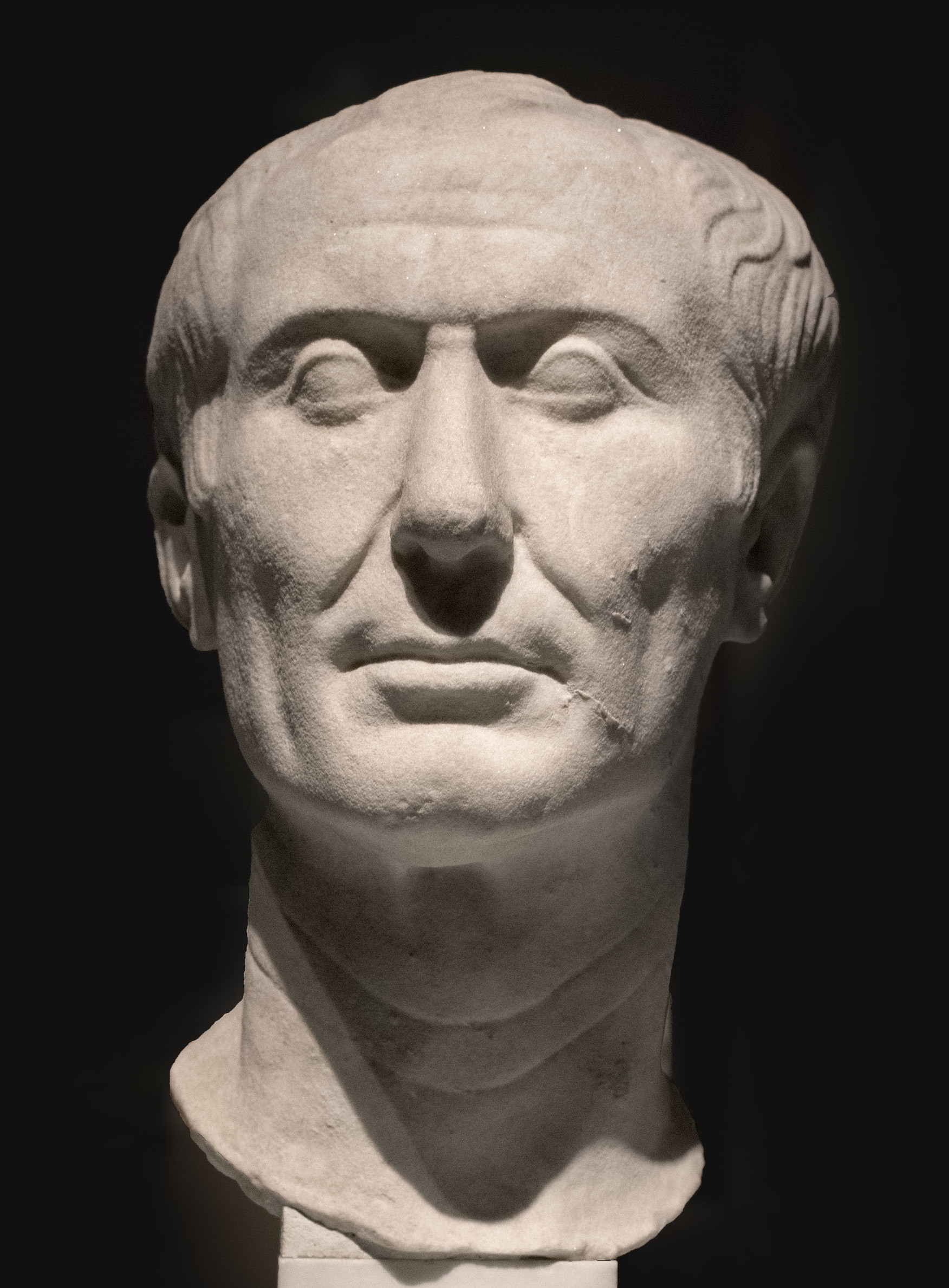
Wikimedia Commons · Creative Commons Attribution 2.0 Generic license · file After Zela Caesar traveled back through Galatia and Bithynia and then returned to Italy to deal with political and military problems. This is a regional transit card; coordinates are representative of Bithynia.
Campaigns in Africa and defeats the Pompeians
· Thapsus, Tunisia
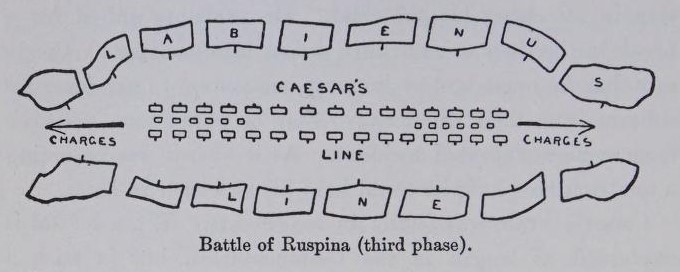
Wikimedia Commons · Creative Commons Public Domain Mark 1.0 · file Caesar crossed to Roman Africa to destroy the remaining Pompeian coalition led by Scipio and supported by King Juba. Ancient Thapsus is generally placed near modern Ras Dimass/Bekalta; coordinates are representative.
Celebrates triumphs in Rome
· Rome, Italy
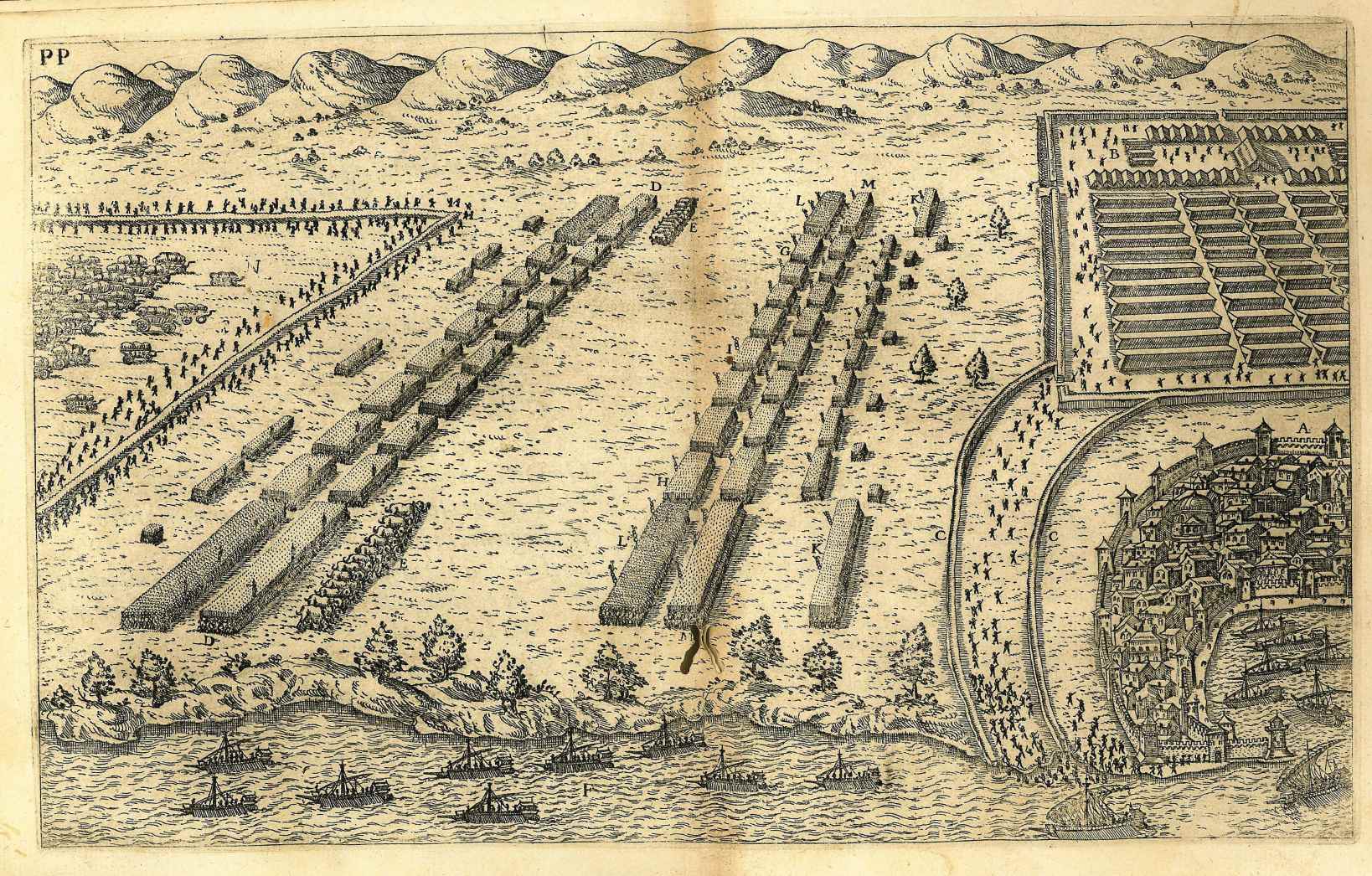
Wikimedia Commons · Creative Commons Attribution-Share Alike 2.5 Generic license · file Back from Africa, Caesar celebrated multiple triumphs and staged large public entertainments in Rome.
Fights at Munda
· Munda battlefield, Andalusia, Spain
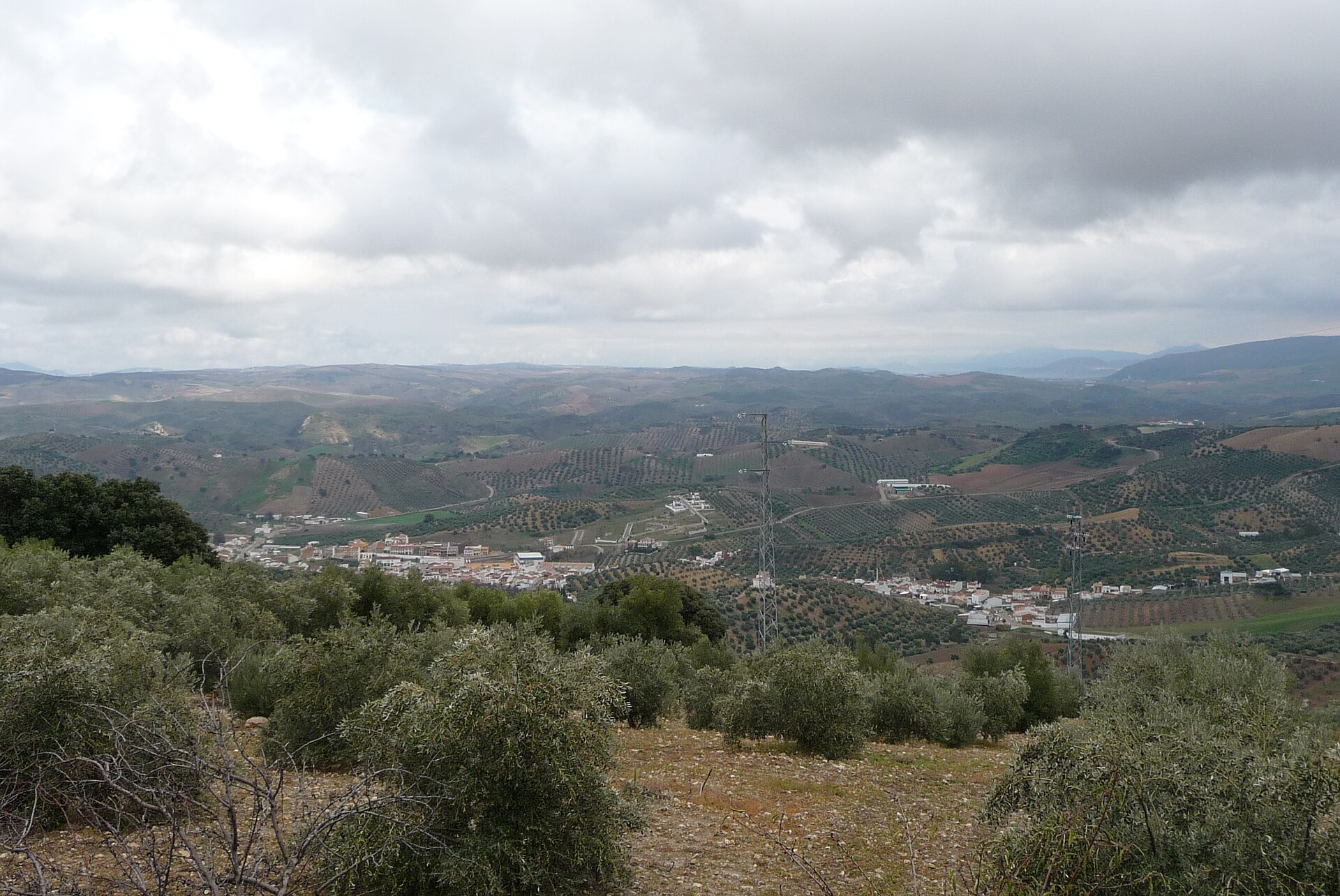
Wikimedia Commons · Creative Commons Attribution-Share Alike 4.0 International license · file Caesar won the hard-fought battle of Munda, breaking the last major organized Pompeian resistance in Spain. Munda's exact battlefield location remains disputed; coordinates are a representative point in the traditional central Andalusian search area.
Marches to Spain for the final civil-war campaign
· Hispania, Spain
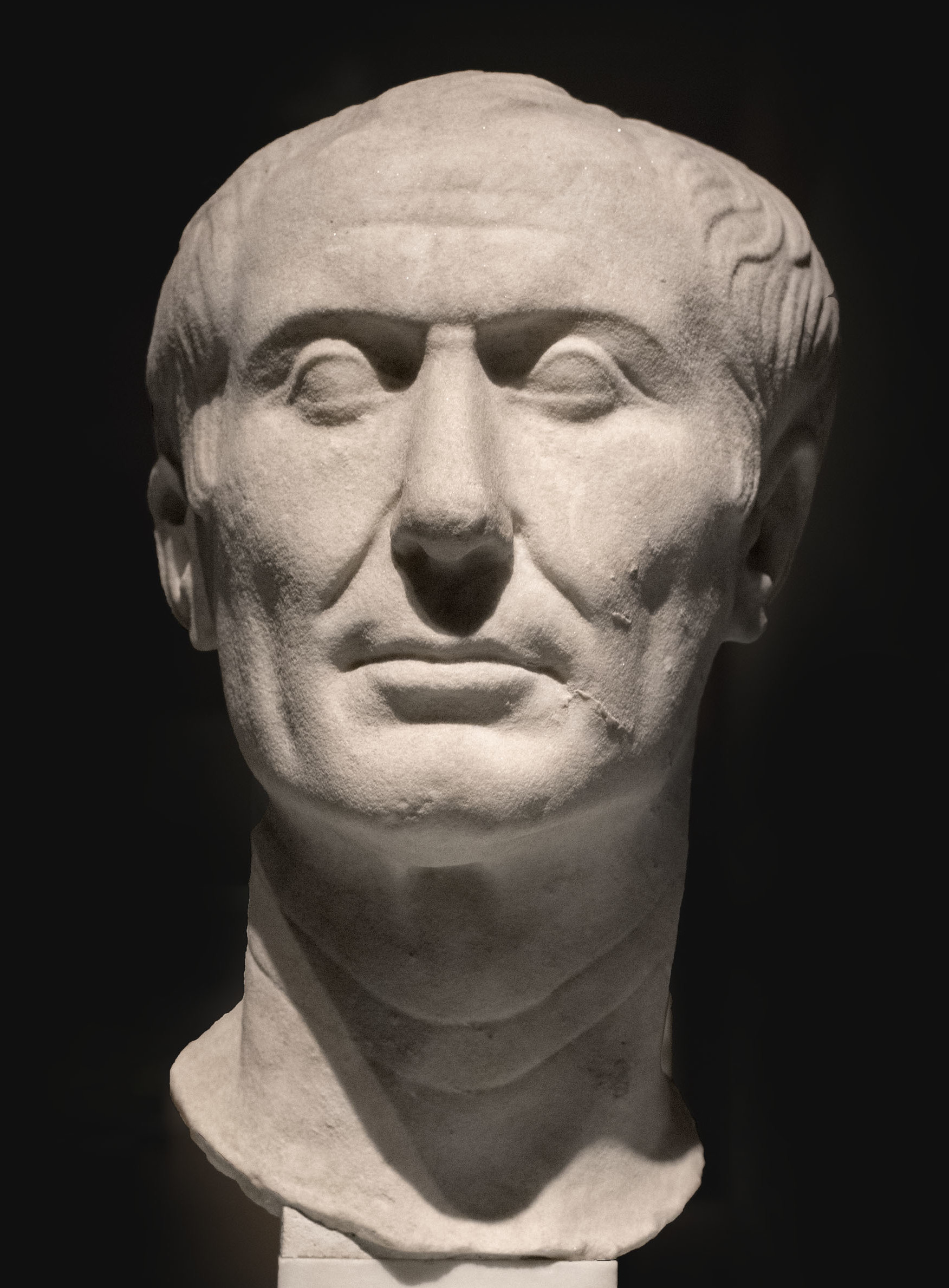
Wikimedia Commons · Creative Commons Attribution 2.0 Generic license · file Caesar left Rome for Spain to confront the younger Pompey and the last major republican field army. The source supports Spain broadly; coordinates are representative.
Returns to Rome after Spain
· Rome, Italy
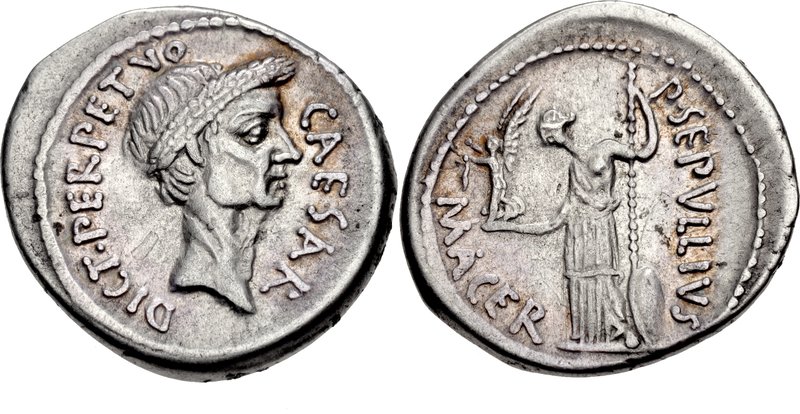
Wikimedia Commons · Creative Commons Attribution-Share Alike 2.5 Generic license · file After the Spanish campaign Caesar returned to Rome as undisputed ruler and prepared reforms and a planned Parthian campaign. The source gives September 45 BC; month precision is not used because the chronology format for BC dates is kept year-level throughout.
Dines at Lepidus' house on the eve of the assassination
· Rome, Italy
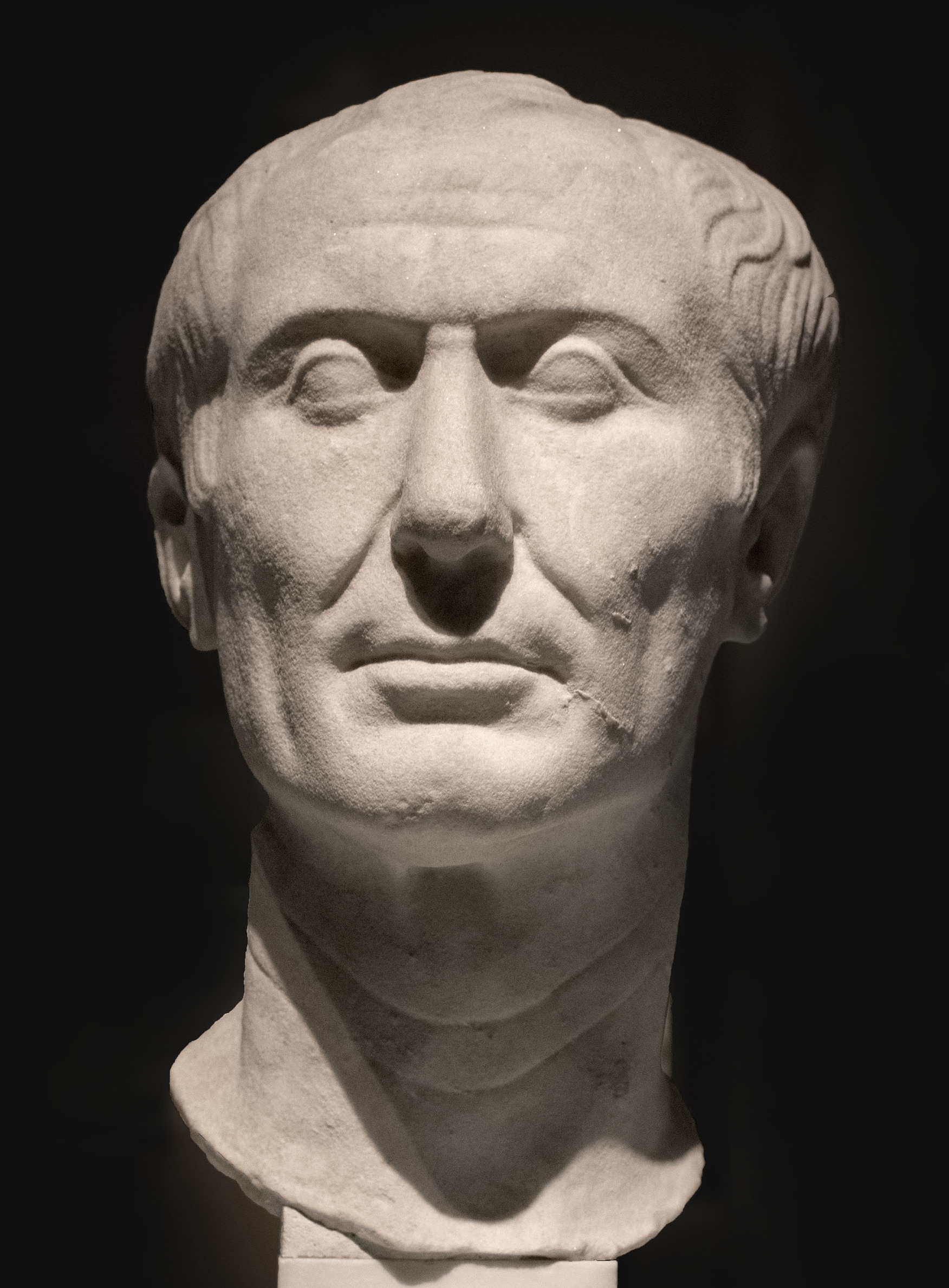
Wikimedia Commons · Creative Commons Attribution 2.0 Generic license · file The night before his murder Caesar dined at Marcus Lepidus' house, where a conversation turned to the best kind of death. The exact location of Lepidus' house is not securely identified; coordinates represent central Rome.
Watches the Lupercalia from the Rostra
· Rostra, Roman Forum, Rome, Italy
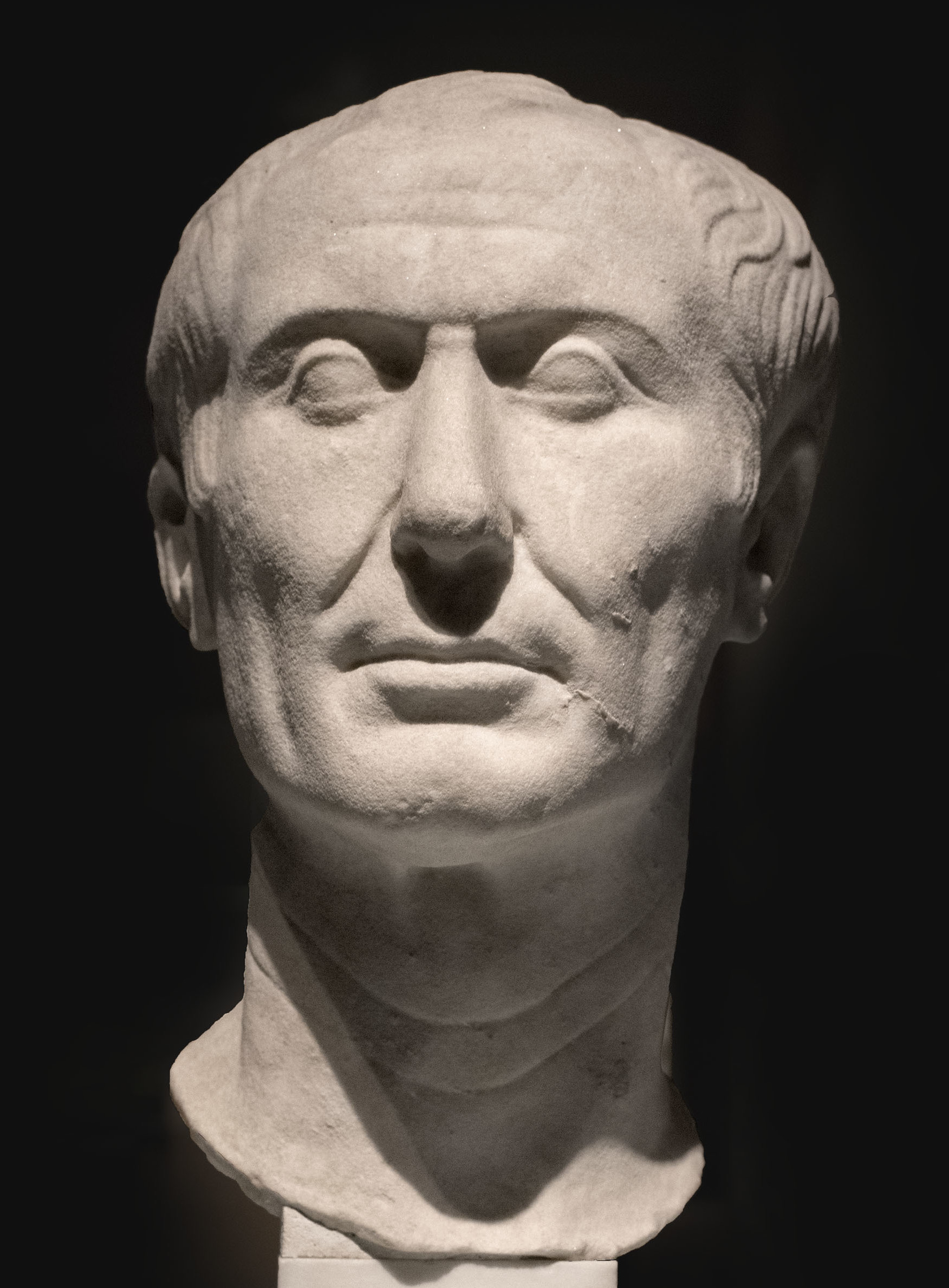
Wikimedia Commons · Creative Commons Attribution-Share Alike 2.5 Generic license · file At the Lupercalia Caesar sat on the Rostra in triumphal dress while Antony publicly offered him a diadem, which Caesar rejected. The event occurred at the Lupercalia in February 44 BC; the ancient-source quotation does not itself provide a day.
Assassinated at the Curia of Pompey
· Curia of Pompey, Largo di Torre Argentina, Rome, Italy
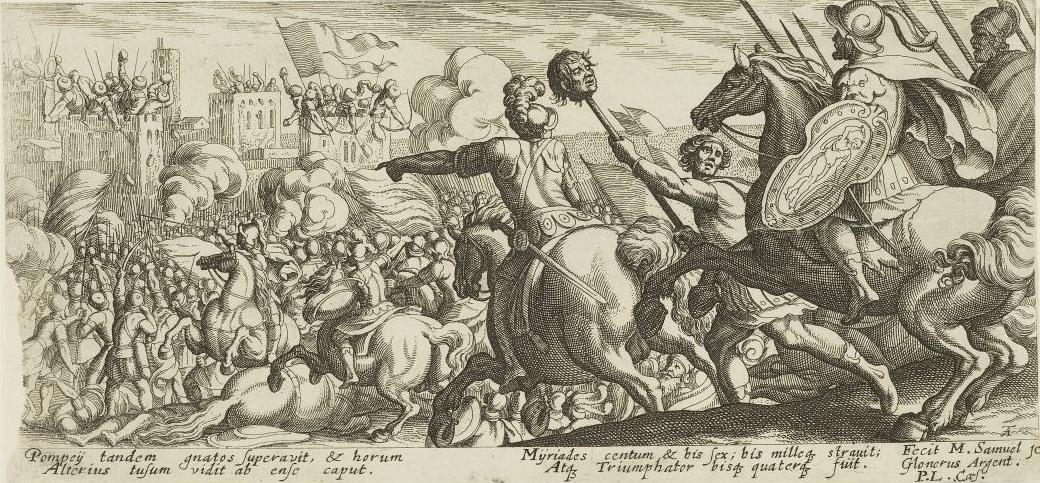
Wikimedia Commons · Public domain · file On the Ides of March Caesar went to the Senate meeting in Pompey's complex and was killed by a group of conspirators. The Senate was meeting in the Curia of Pompey; coordinates mark the remains within Largo di Torre Argentina.