
34 moments
Born in Handan
· Handan, Hebei, China
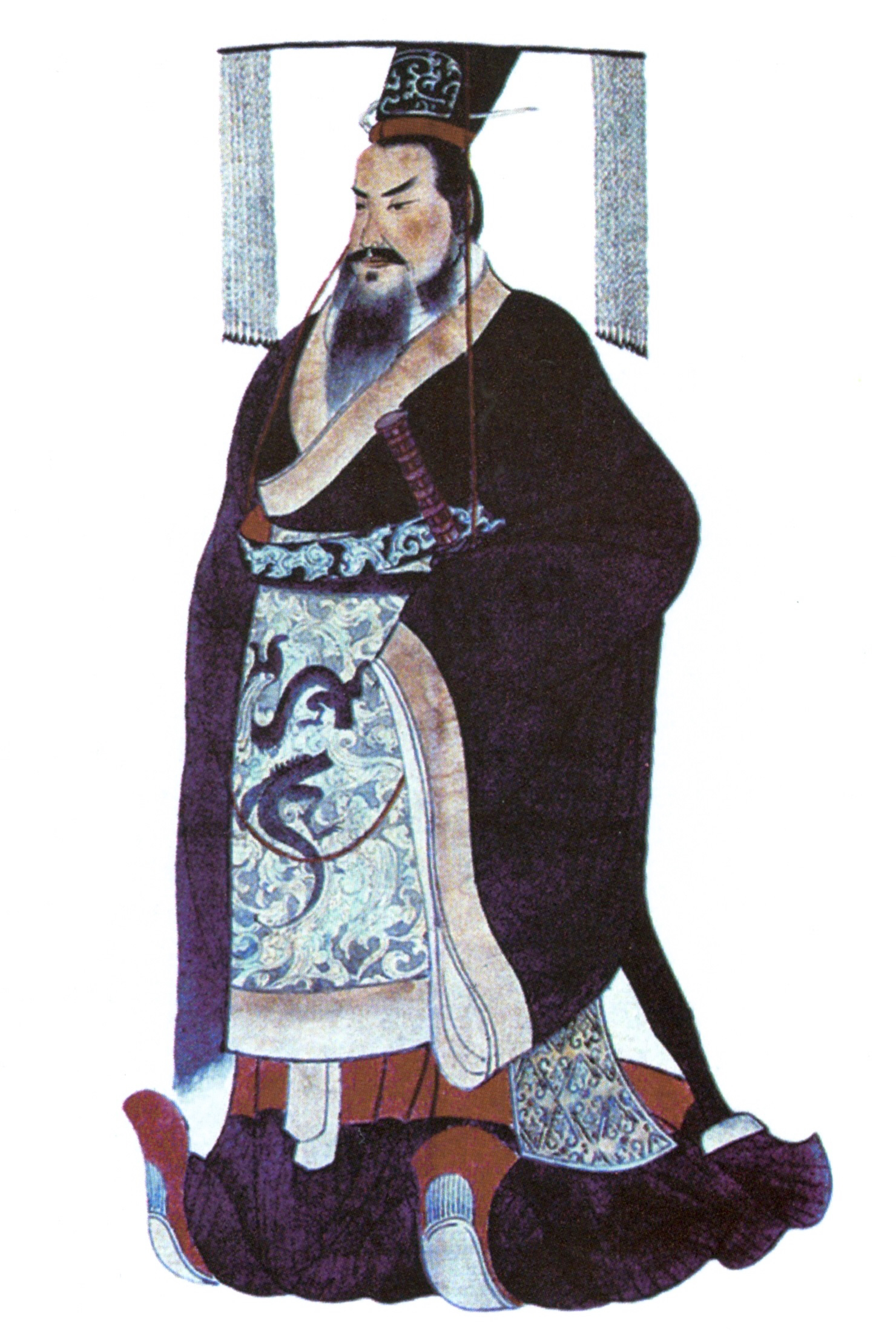
Wikimedia Commons · Public domain · file Zhao Zheng, the future Qin Shi Huang, was born in Handan while his father was a Qin hostage in the Zhao capital. The source supports February 259 BC but not a specific day; coordinates represent modern central Handan.
Travels to the former Qin capital
· Yong, present-day Fengxiang District, Baoji, Shaanxi, China
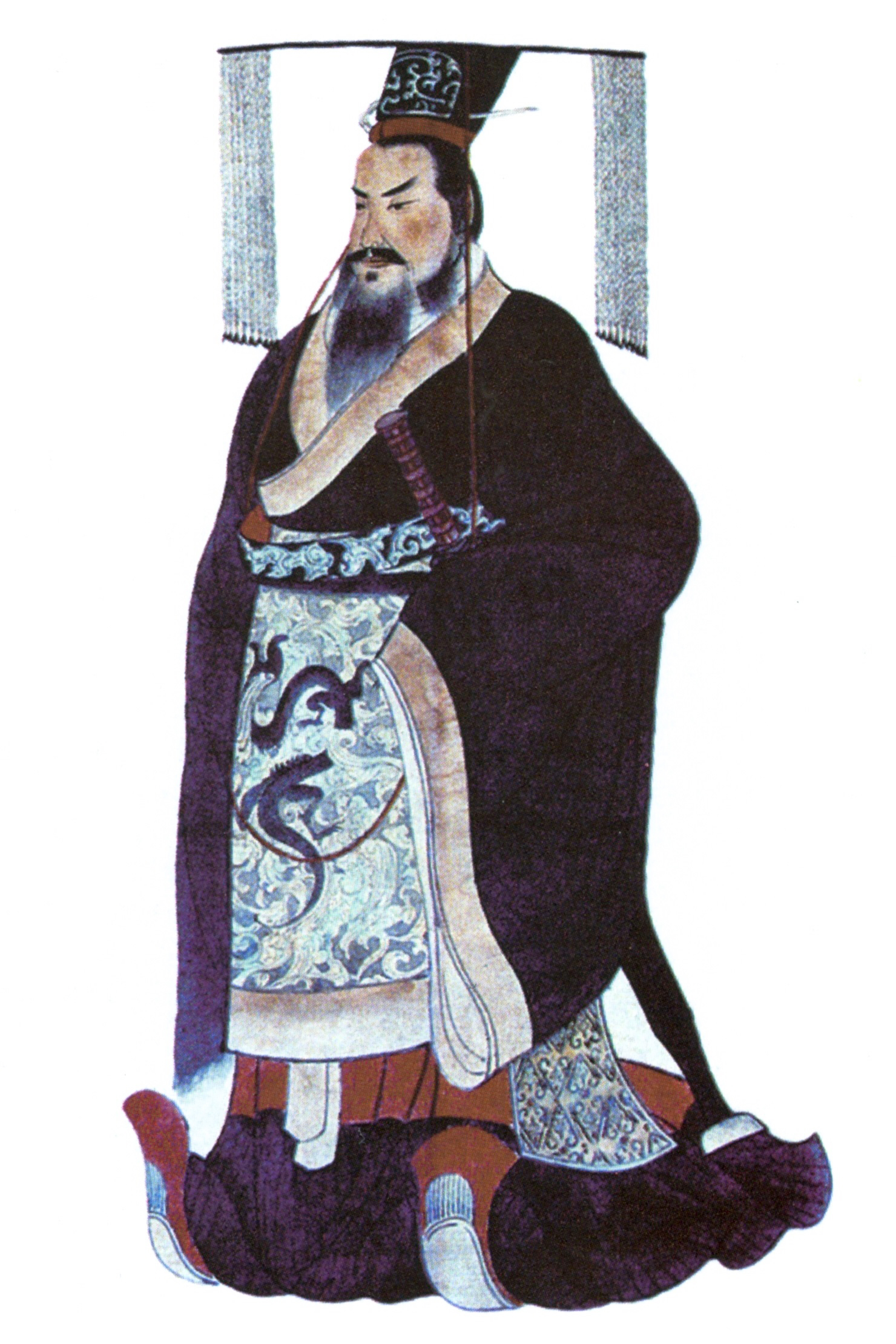
Wikimedia Commons · Creative Commons CC0 1.0 Universal Public Domain Dedication · file While traveling to Yong, the young King Zheng was notified that Lao Ai had begun a coup, a crisis that helped end the king’s political dependence on his regents. Coordinates represent Fengxiang, the modern locality associated with ancient Yong.
Returns through Taiyuan
· Taiyuan, Shanxi, China
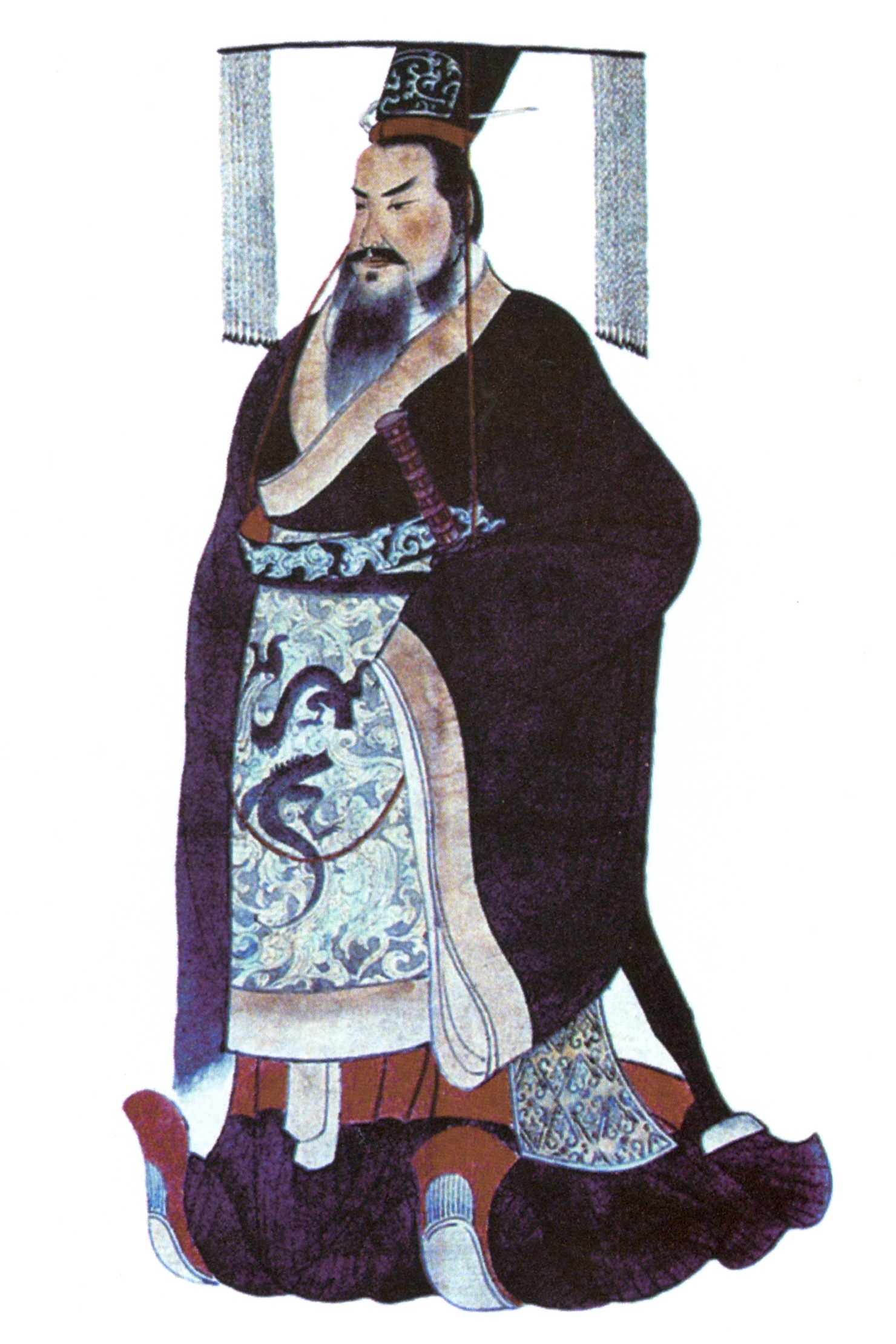
Wikimedia Commons · Public domain; released into the public domain by the copyright holder · file Following his visit to Handan, King Zheng traveled back toward Qin through Taiyuan, documenting his movement across newly conquered Zhao territory. Taiyuan could denote the ancient commandery; coordinates represent modern Taiyuan.
Returns to conquered Handan
· Handan, Hebei, China
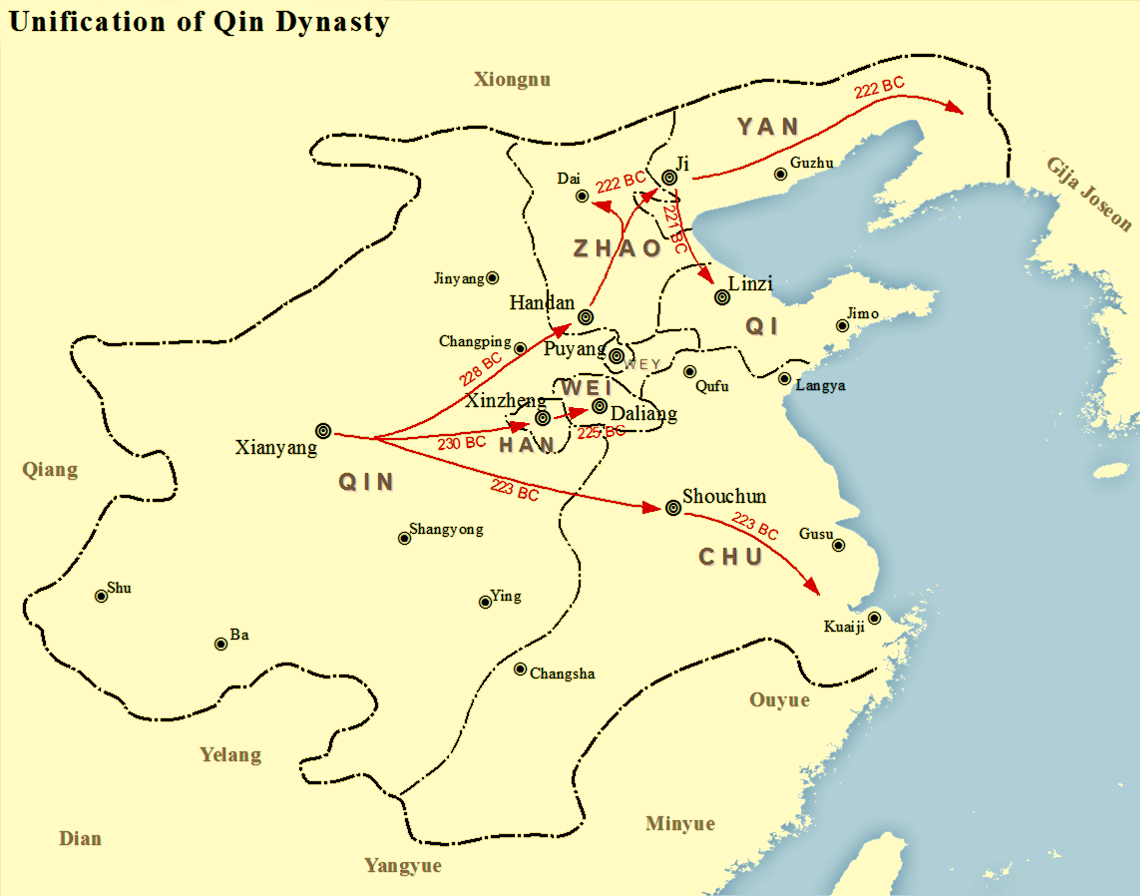
Wikimedia Commons · Creative Commons Attribution-Share Alike 4.0 International · file After Qin captured Zhao’s capital, King Zheng personally returned to the city of his birth and punished people associated with childhood grievances against his mother’s family. Coordinates represent central Handan rather than a securely identified palace or execution site.
Inspects Beidi
· Beidi region near the Jing River, Gansu–Shaanxi, China
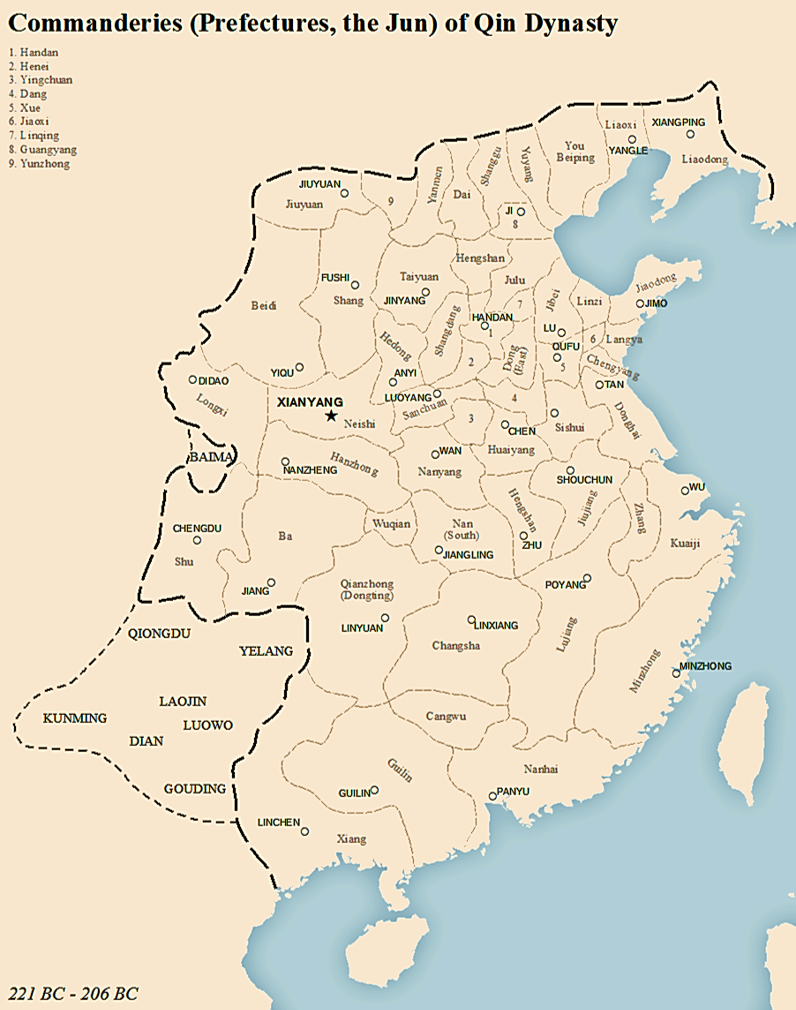
Wikimedia Commons · Creative Commons Attribution-Share Alike 4.0 International · file The First Emperor continued his initial inspection through Beidi, part of Qin’s northwestern frontier region around the Jing River. Beidi was a large historical commandery; coordinates are a representative point in the upper Jing River region.
Reaches Jitou Mountain
· Jitou Mountain, identified near Kongtong Mountain, Pingliang, Gansu, China
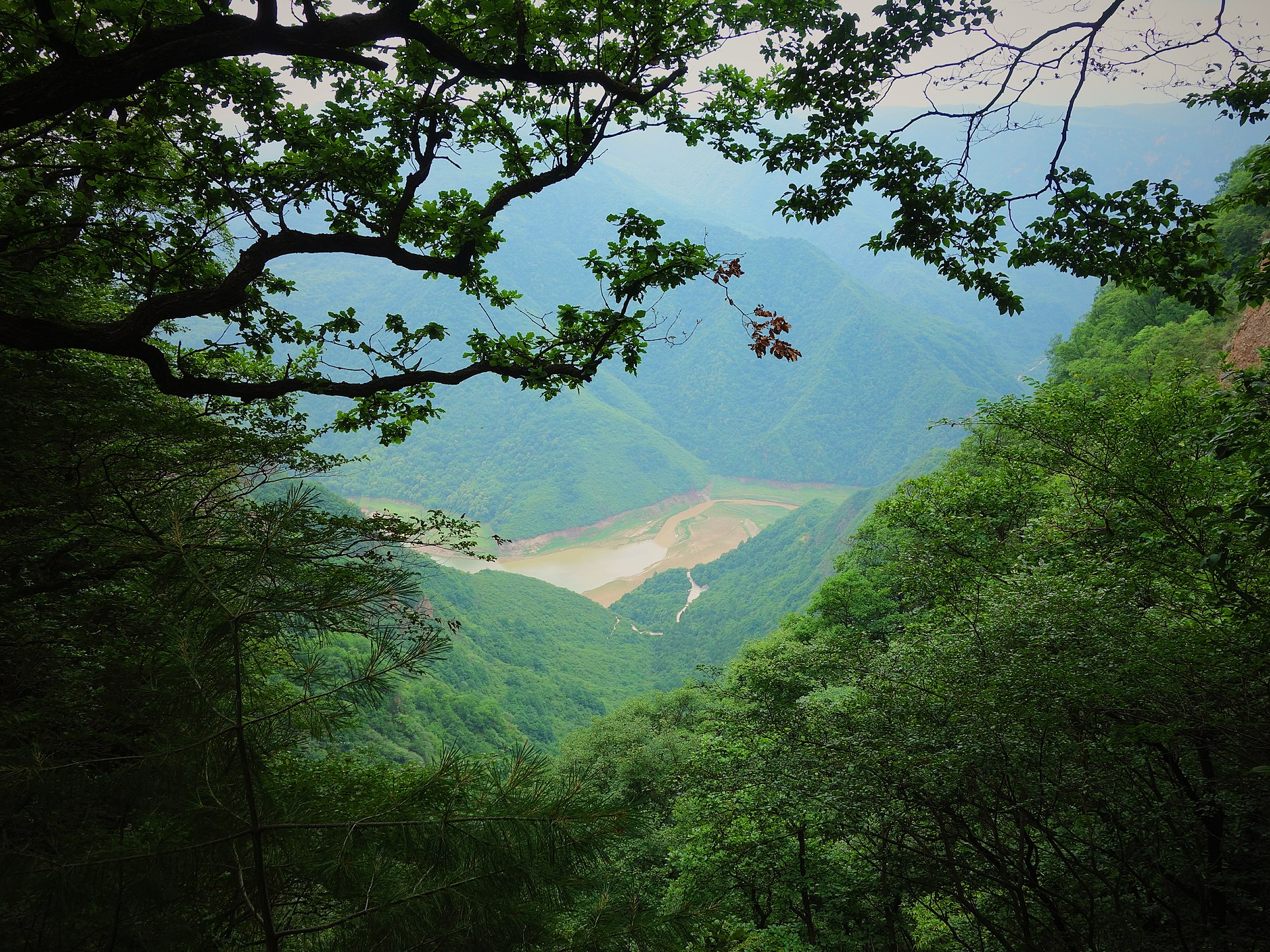
Wikimedia Commons · Creative Commons Attribution-Share Alike 4.0 International · file Qin Shi Huang proceeded as far as Jitou Mountain during the western inspection, marking the outer extent of his first imperial tour. The identification of ancient Jitou or Chicken Head Mountain with the Kongtong-area peak is not certain.
Tours Longxi
· Longxi region near the Liupan Mountains, Gansu, China
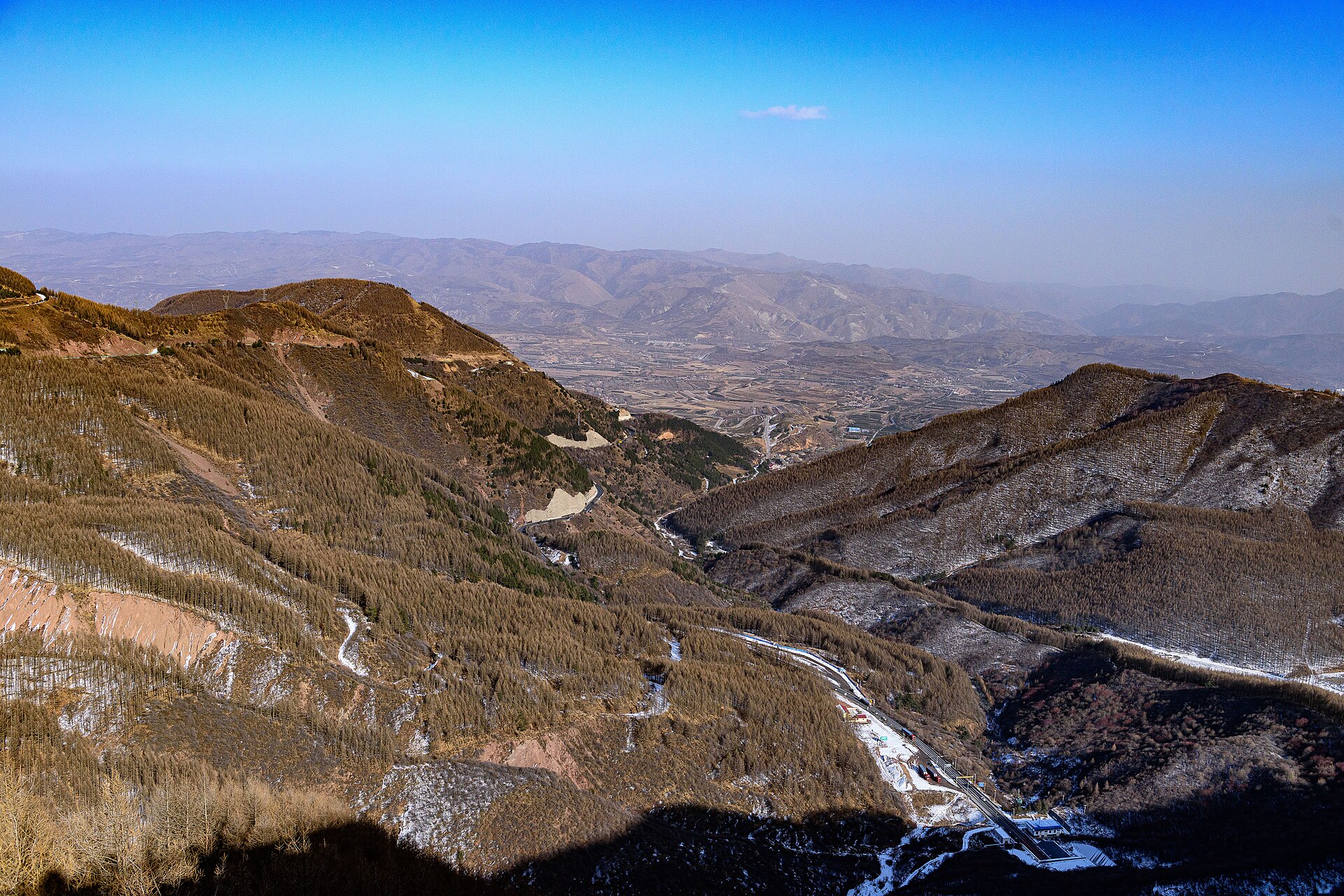
Wikimedia Commons · Creative Commons Attribution-Share Alike 4.0 International · file On his first imperial inspection tour, Qin Shi Huang traveled west through Longxi, remaining within the former territorial heartland of Qin. Ancient Longxi covered a broad area; this is a representative point near the Liupan Mountains identified by the source.
Ascends Mount Yi
· Mount Yi, Zoucheng, Shandong, China
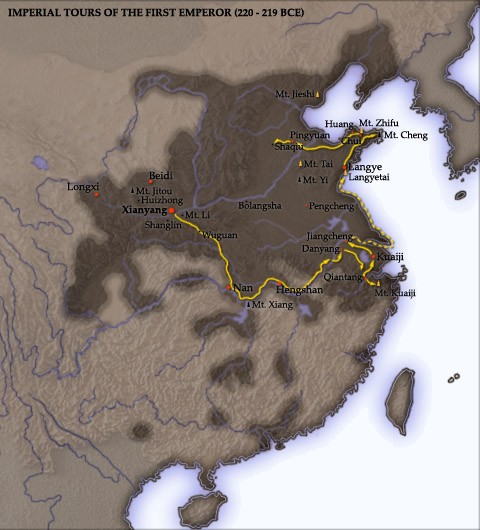
Wikimedia Commons · Creative Commons Attribution-Share Alike 3.0 Unported; GNU Free Documentation License, Version 1.2 or later · file At the beginning of his major eastern tour, the emperor climbed Mount Yi in former Lu territory, erected a stele, and consulted scholars about ritual and inscriptions. Coordinates represent the Mount Yi scenic area near Zoucheng.
Caught in a storm at Xiang Mountain
· Xiang Mountain, identified with Junshan Island, Yueyang, Hunan, China
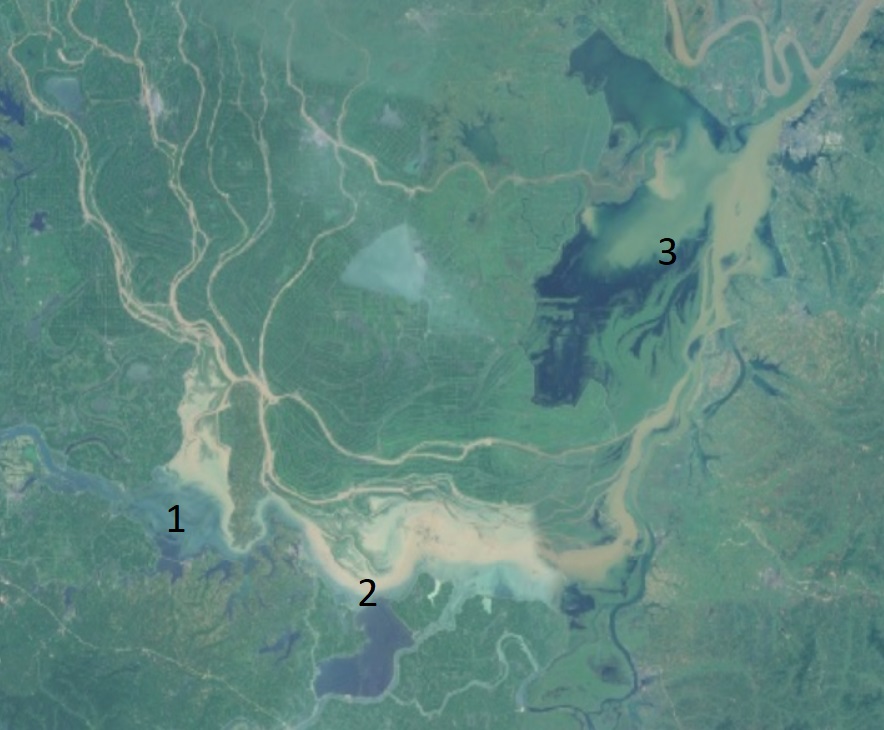
Wikimedia Commons · Public domain because it is a screenshot from NASA’s World Wind software using a public domain layer · file While traveling by the Yangtze and Dongting waterways, the emperor reached the shrine at Xiang Mountain and encountered a storm that nearly prevented his crossing. Xiang Mountain’s identification with Junshan in Dongting Lake is traditional but not certain.
First documented visit to Zhifu
· Zhifu Island, Yantai, Shandong, China
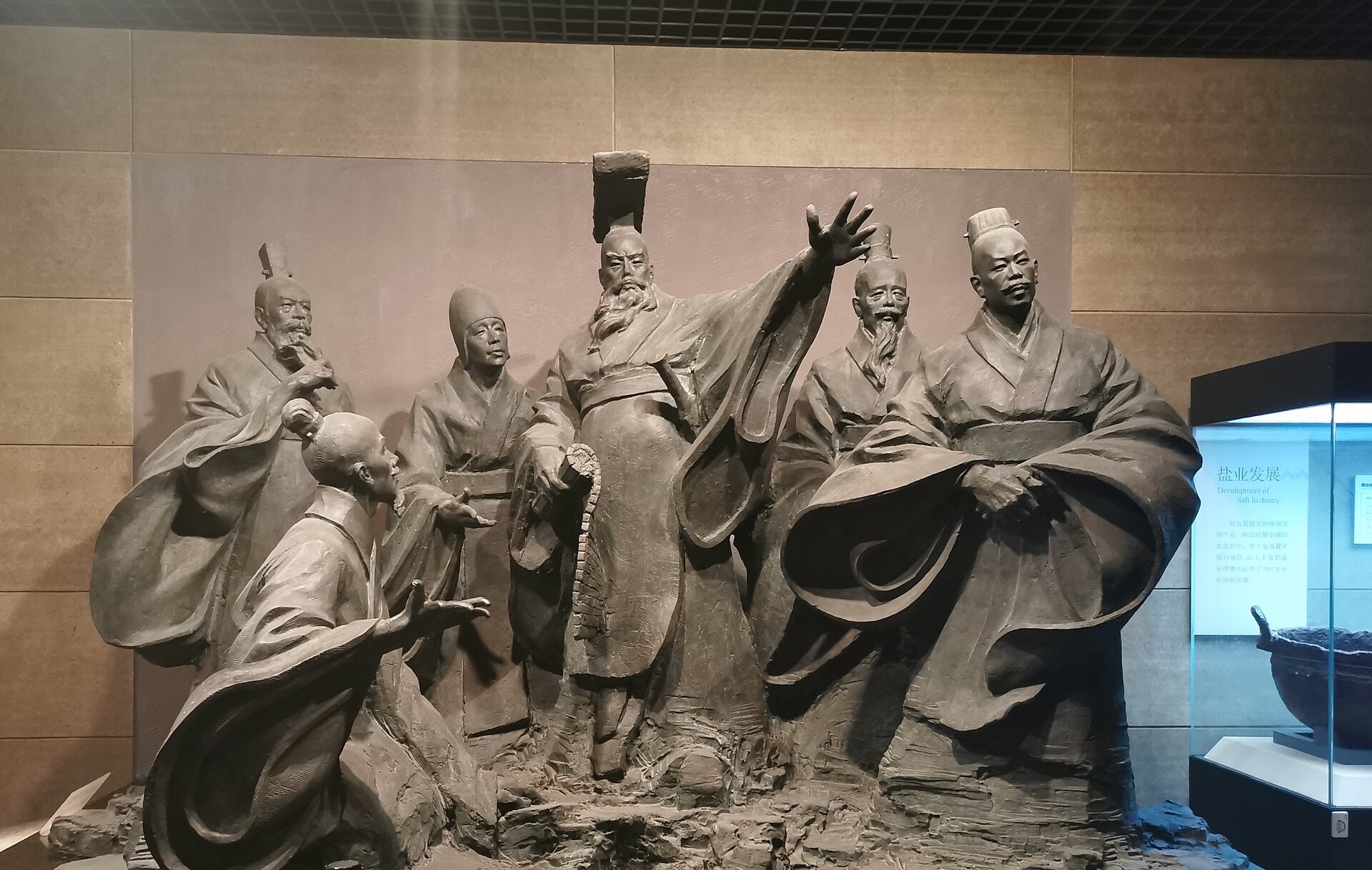
Wikimedia Commons · Creative Commons Attribution-Share Alike 4.0 International · file The emperor climbed Zhifu on the Shandong coast during his second inspection tour, beginning a series of visits connected with inscriptions and his search for immortality. The itinerary source indicates he had also visited Zhifu in 219 BC; the quoted Yantai article dates a documented visit to 218 BC, so this card relies on the tour chronology for the first visit.
Performs the Mount Tai sacrifice
· Mount Tai, Tai'an, Shandong, China
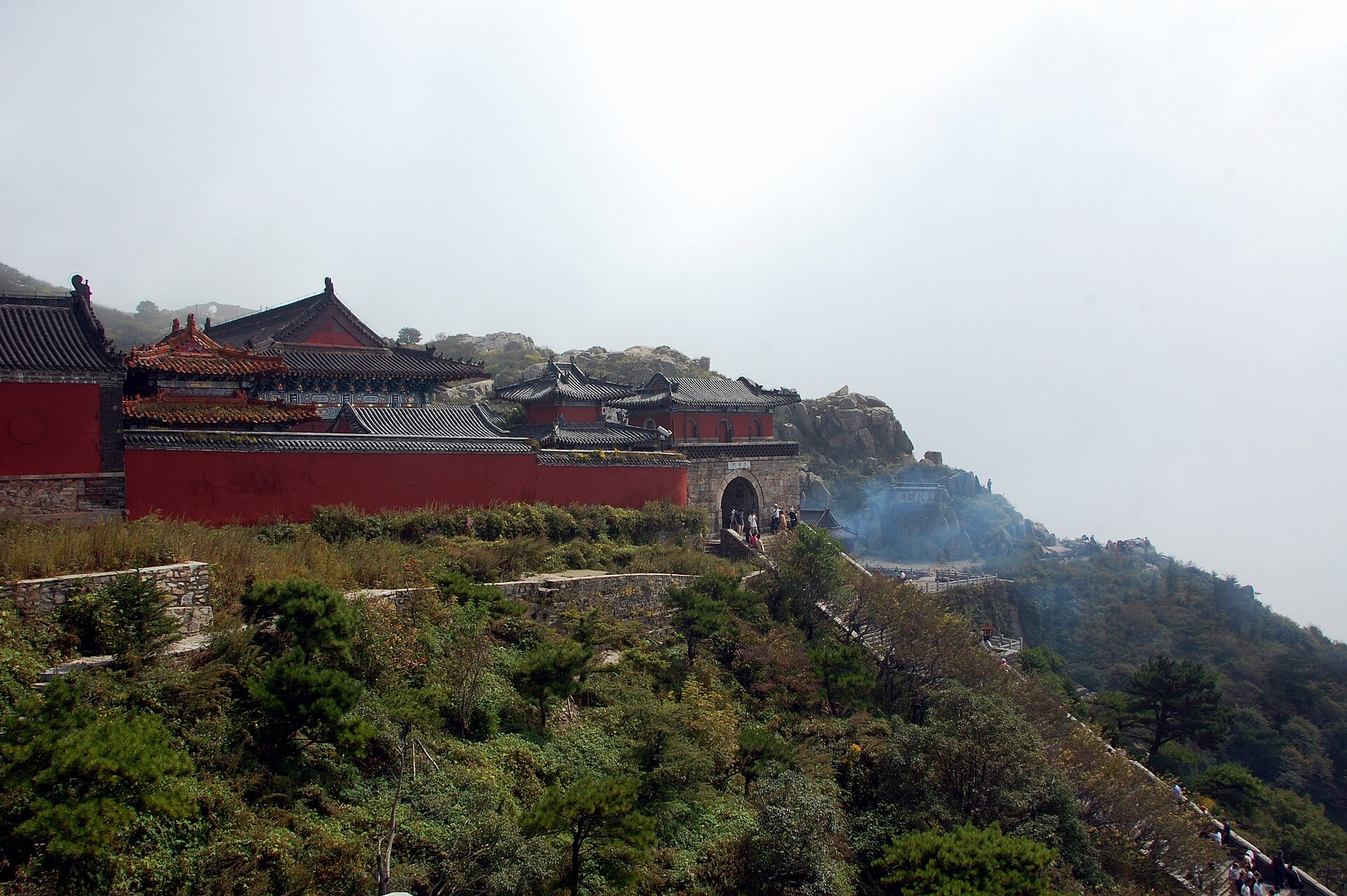
Wikimedia Commons · Creative Commons Attribution 2.0 Generic · file Qin Shi Huang climbed Mount Tai and performed the feng sacrifice, using China’s preeminent sacred mountain to proclaim the legitimacy of unified imperial rule.
Prays at Pengcheng
· Pengcheng, present-day Xuzhou, Jiangsu, China
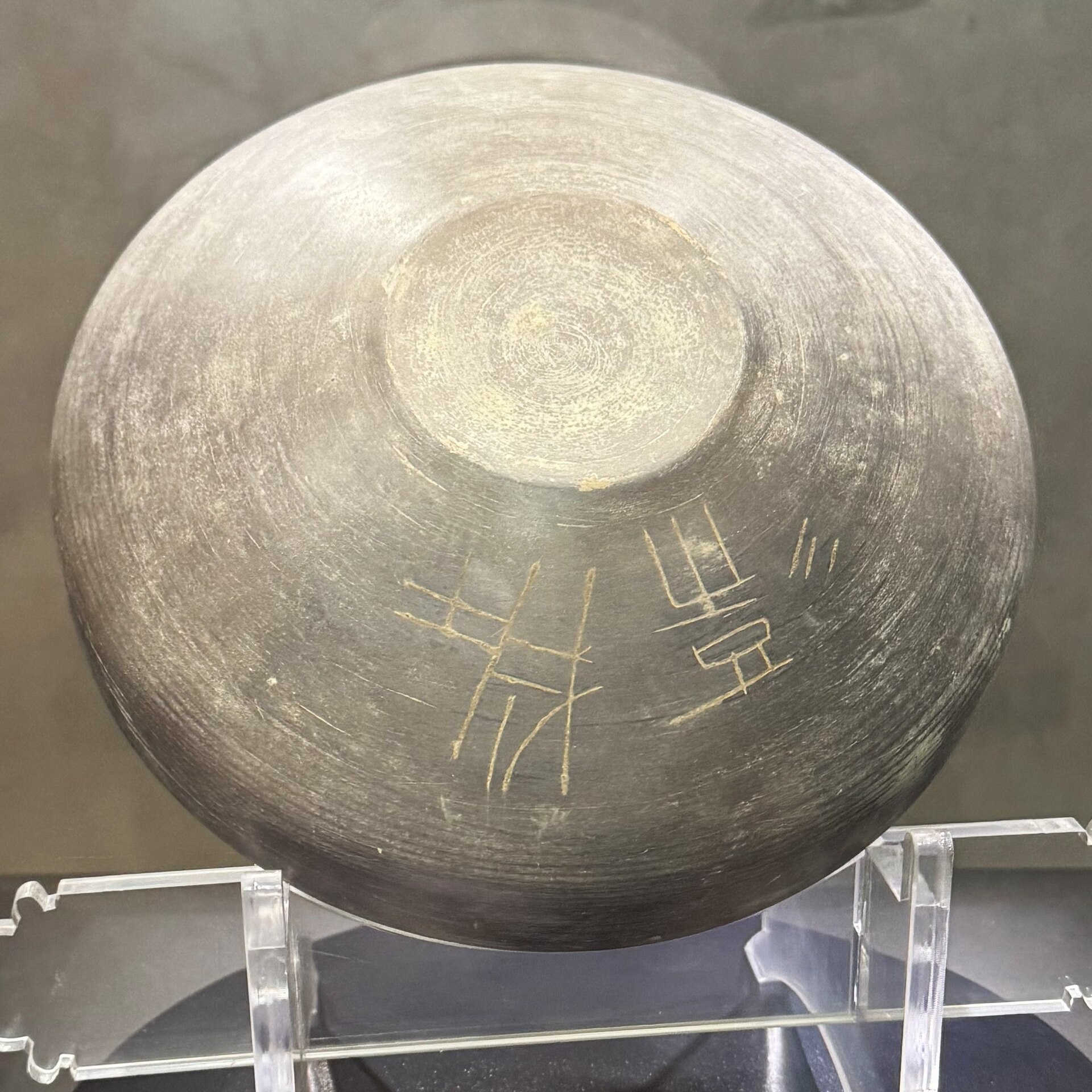
Wikimedia Commons · Creative Commons Attribution-Share Alike 4.0 International · file On the return journey, the emperor passed through Pengcheng, purified himself, prayed, and unsuccessfully attempted to recover the legendary Zhou tripods from the Si River. Coordinates represent central Xuzhou, successor to ancient Pengcheng.
Reaches Chengshan at the eastern extremity
· Chengshan Head, Rongcheng, Shandong, China
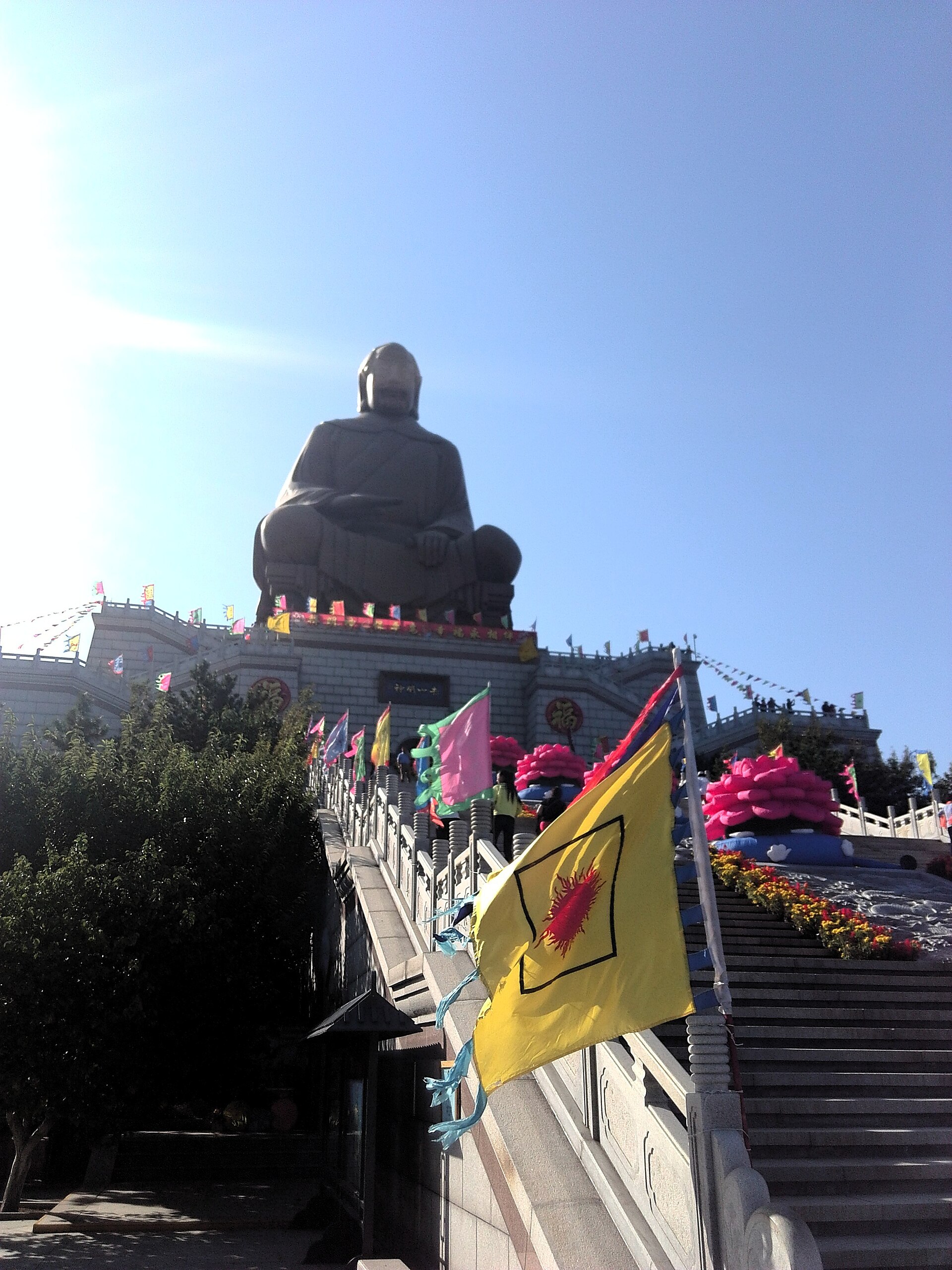
Wikimedia Commons · Creative Commons Attribution 3.0 Unported · file Traveling along the Shandong coast, Qin Shi Huang reached Chengshan, the prominent cape regarded as the peninsula’s eastern extremity. Coordinates represent Chengshan Head, the conventional identification of ancient Chengshan.
Returns through Wu Pass
· Wu Pass, Danfeng County, Shaanxi, China
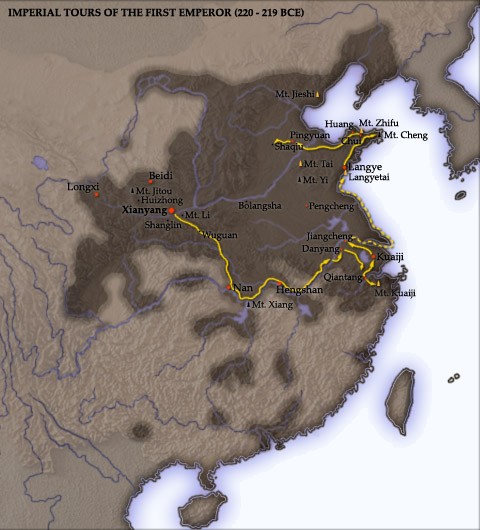
Wikimedia Commons · Creative Commons Attribution-Share Alike 3.0 Unported; GNU Free Documentation License, Version 1.2 or later · file Qin Shi Huang completed the southern portion of his eastern tour by returning toward the Qin heartland through the strategically important Wu Pass. Coordinates represent the historical pass area near Danfeng.
Sacrifices at Liangfu Mountain
· Liangfu Mountain, Tai'an region, Shandong, China
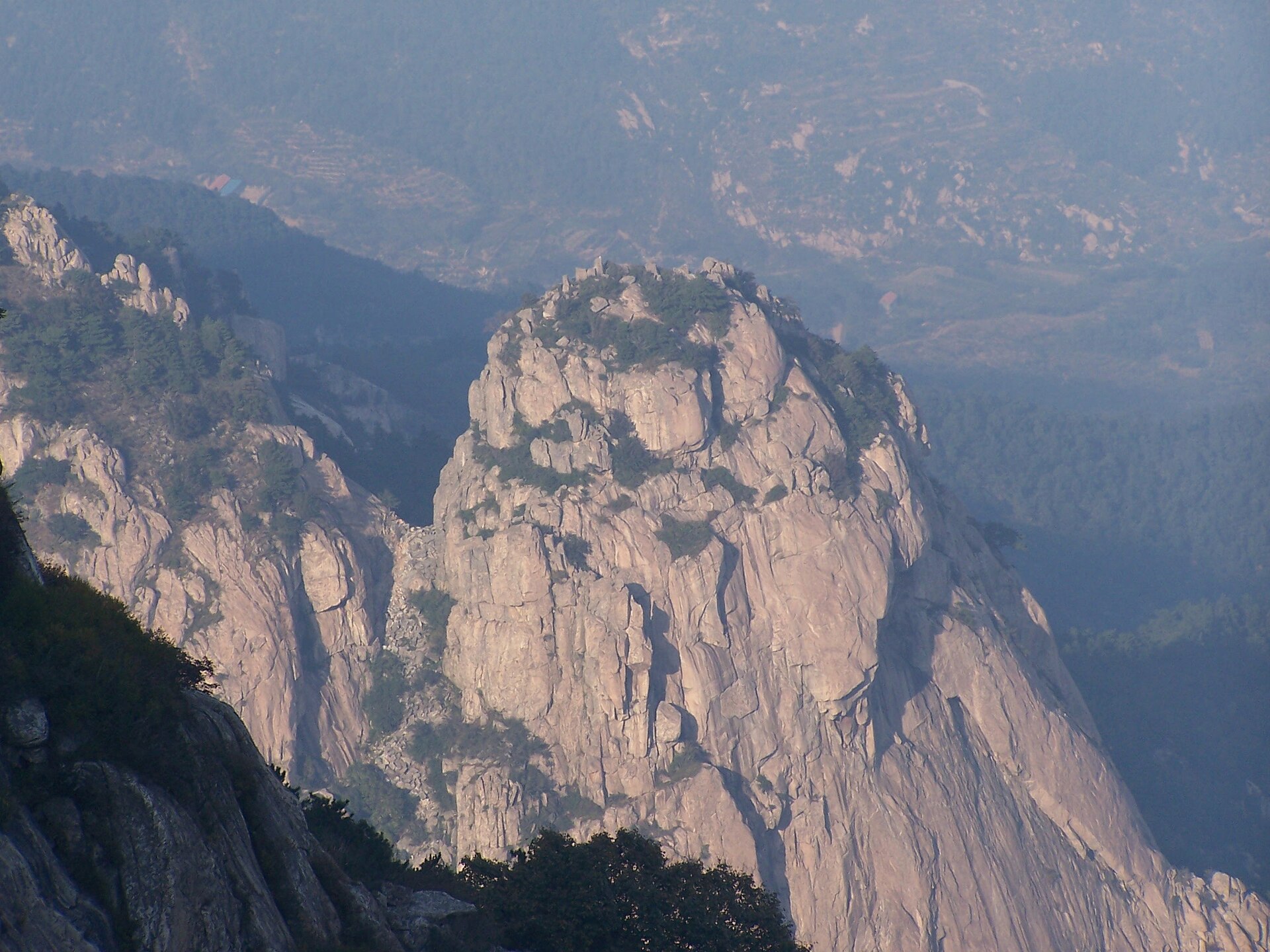
Wikimedia Commons · Creative Commons Attribution-Share Alike 3.0 Unported · file After descending Mount Tai, the emperor conducted the complementary shan sacrifice at nearby Liangfu Mountain. The ancient ritual site’s exact point is uncertain; coordinates represent the commonly identified Liangfu area south of Mount Tai.
Stays at Langya Terrace
· Langya Terrace, Huangdao District, Qingdao, Shandong, China
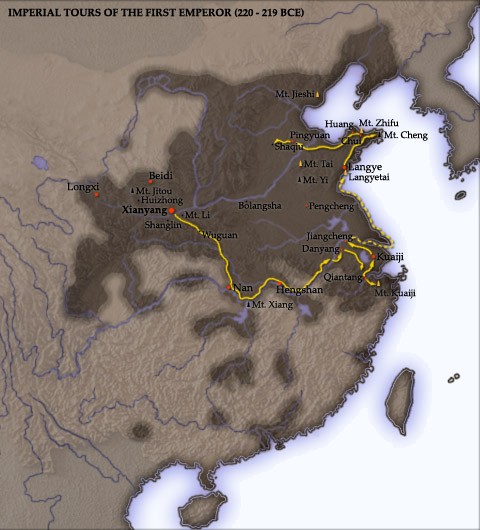
Wikimedia Commons · Creative Commons Attribution-Share Alike 3.0 Unported; GNU Free Documentation License, Version 1.2 or later · file Qin Shi Huang was delighted by coastal Langya, remained for three months, built up its terrace, erected an inscription, and relocated households there. Coordinates represent the recognized Langya Terrace archaeological and scenic site.
Climbs Zhifu and erects inscriptions
· Zhifu Island, Yantai, Shandong, China
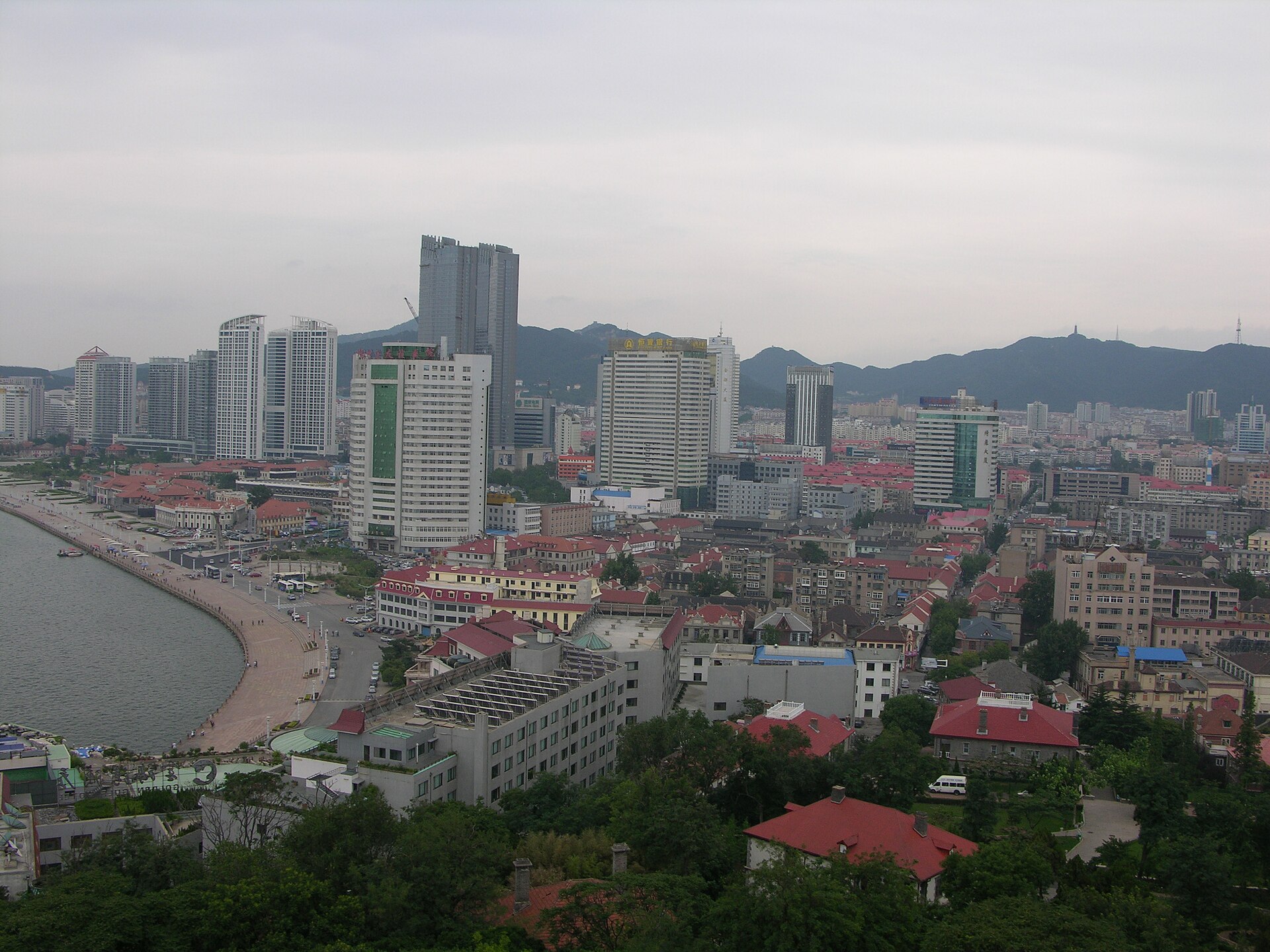
Wikimedia Commons · Creative Commons Attribution 3.0 Unported · file Continuing east after the assassination attempt, the emperor climbed Zhifu and erected two inscriptions overlooking the sea.
Returns through Shangdang
· Shangdang region, present-day Changzhi, Shanxi, China
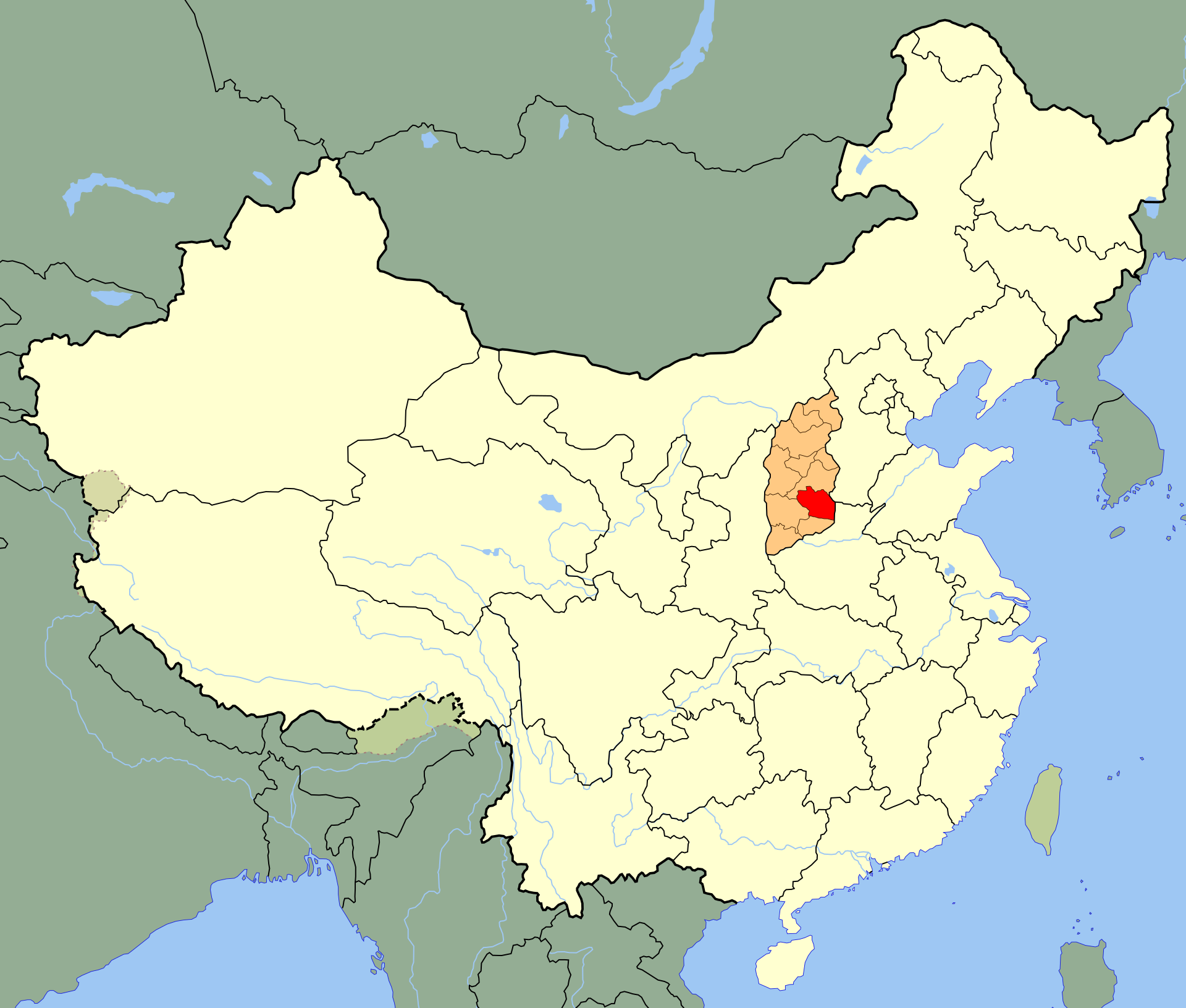
Wikimedia Commons · Public domain; released into the public domain by the copyright holder · file The emperor’s third inspection tour concluded with a westward return through the strategically important highland region of Shangdang. Shangdang was a broad historical region; coordinates represent modern Changzhi.
Revisits Langya
· Langya Terrace, Huangdao District, Qingdao, Shandong, China
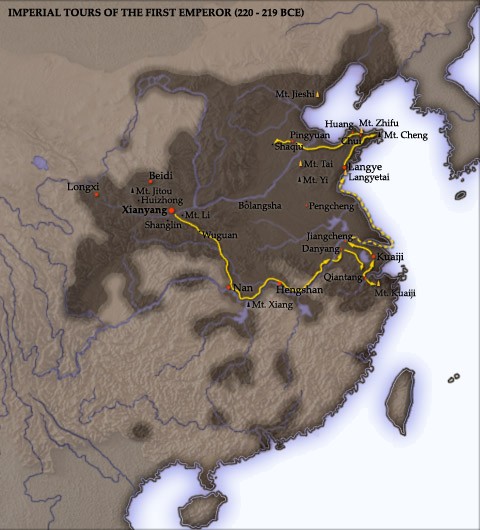
Wikimedia Commons · Creative Commons Attribution-Share Alike 3.0 Unported; GNU Free Documentation License, Version 1.2 or later · file Qin Shi Huang returned to Langya after his Zhifu visit, reinforcing the site’s importance in his eastern coastal itinerary.
Survives the Bolangsha ambush
· Bolangsha, near Yuanyang County, Henan, China
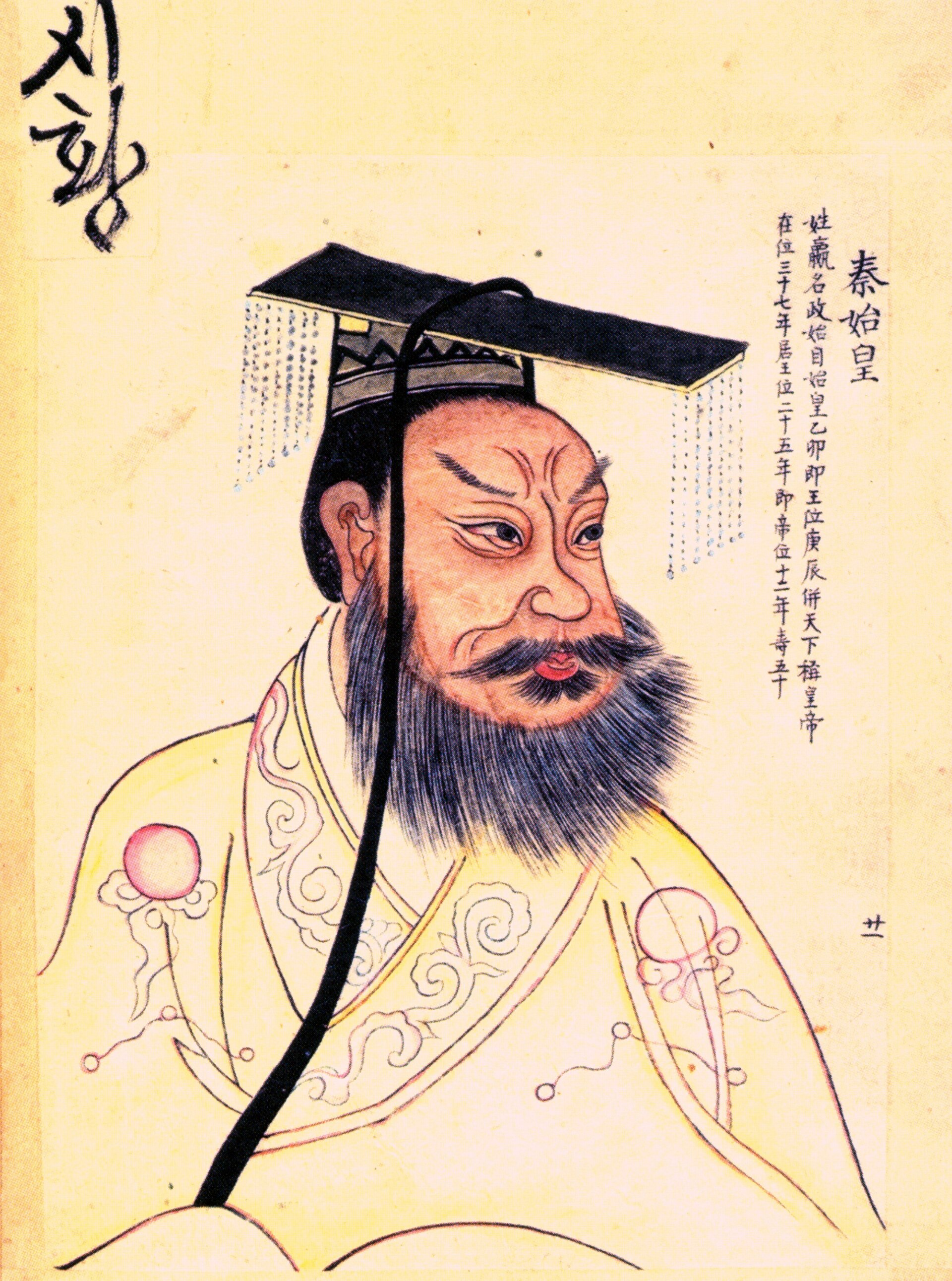
Wikimedia Commons · Public domain · file During his third inspection tour, Qin Shi Huang survived Zhang Liang’s ambush at Bolangsha because the projectile struck a decoy carriage. The exact ambush site is uncertain; coordinates represent the traditionally identified Bolangsha area.
Secret nighttime outing at Lanchi
· Lanchi, Xianyang area, Shaanxi, China
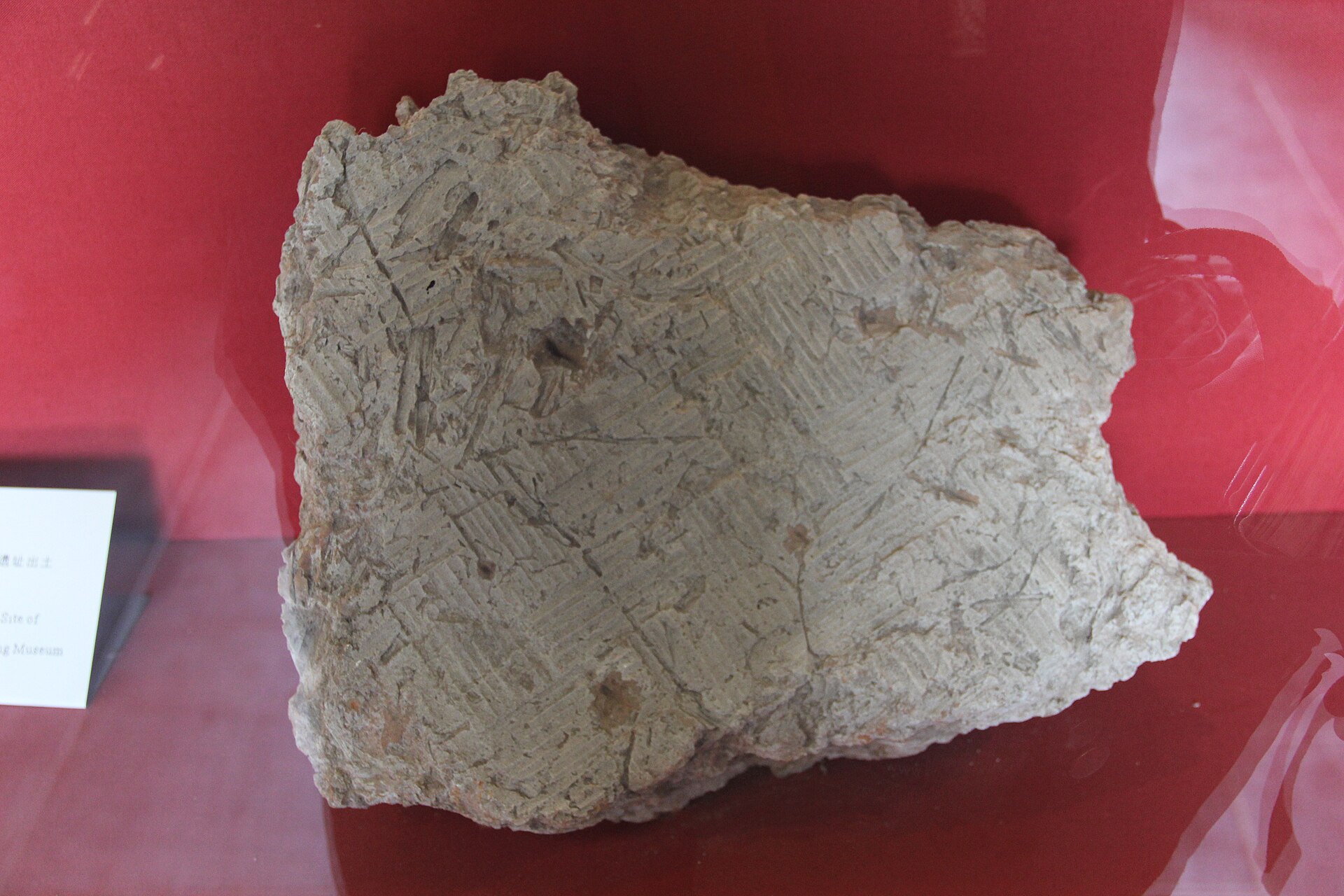
Wikimedia Commons · Creative Commons CC0 1.0 Universal Public Domain Dedication · file Traveling incognito from Xianyang with four warriors, Qin Shi Huang encountered robbers at Lanchi; his guards killed the attackers. The precise position of ancient Lanchi is uncertain; coordinates are representative of the northeastern Xianyang area.
Erects a coastal stele at Jiangnüshi
· Jiangnüshi site near Shanhai Pass, Bohai coast, China
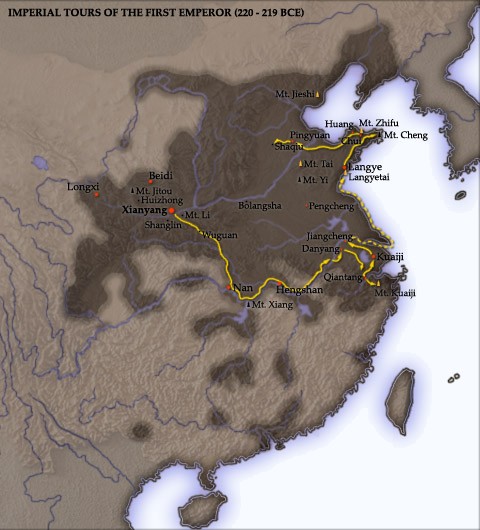
Wikimedia Commons · Creative Commons Attribution-Share Alike 3.0 Unported; GNU Free Documentation License, Version 1.2 or later · file During his fourth inspection tour, Qin Shi Huang visited the fortified coastal palace at Jiangnüshi and erected a stele at its gate. The ruins are generally placed north of Shanhai Pass near the Liaoning–Hebei coastal boundary.
Visits ancient Ji
· Ancient Ji, present-day southwest Beijing, China
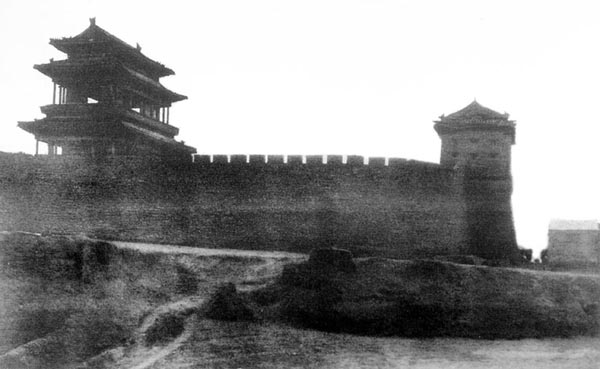
Wikimedia Commons · This image is now in the public domain in China because its term of copyright has expired · file The emperor visited Jicheng, the former Yan capital and predecessor of Beijing, while inspecting the empire’s northeastern territories. Coordinates represent the traditionally identified ancient Ji area near Guang'anmen.
Holds banquet at Xianyang Palace
· Qin Xianyang Palace site, Xianyang, Shaanxi, China
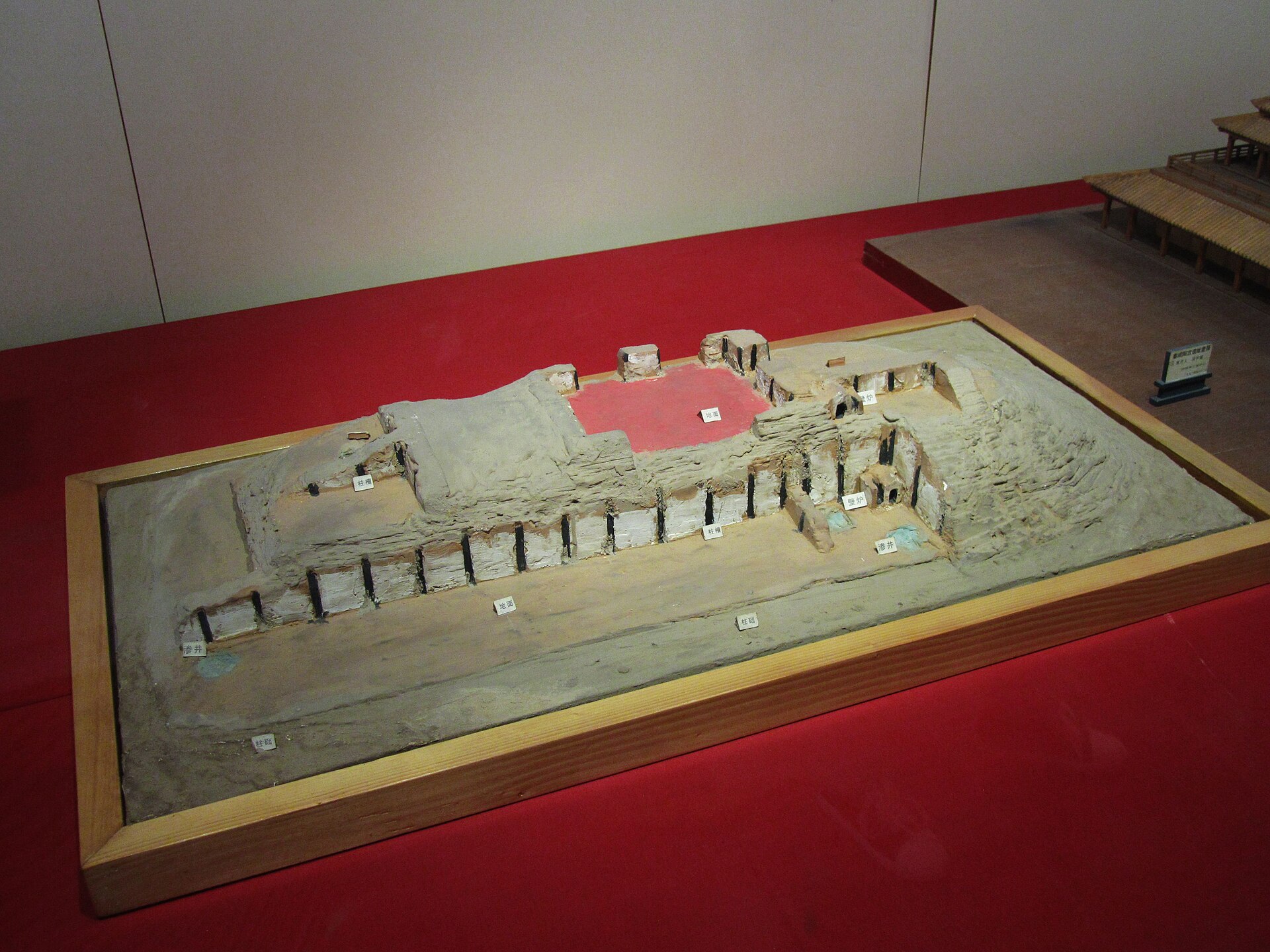
Wikimedia Commons · Creative Commons Attribution-Share Alike 3.0 Unported · file At a ceremonial palace banquet, competing speeches about imperial government prompted Li Si’s proposal for the famous book-burning decree. Coordinates represent the Qin palace ruins north of the Wei River; the particular banquet hall is unknown.
Visits Liangshan Palace
· Liangshan Palace area, Qian County, Shaanxi, China
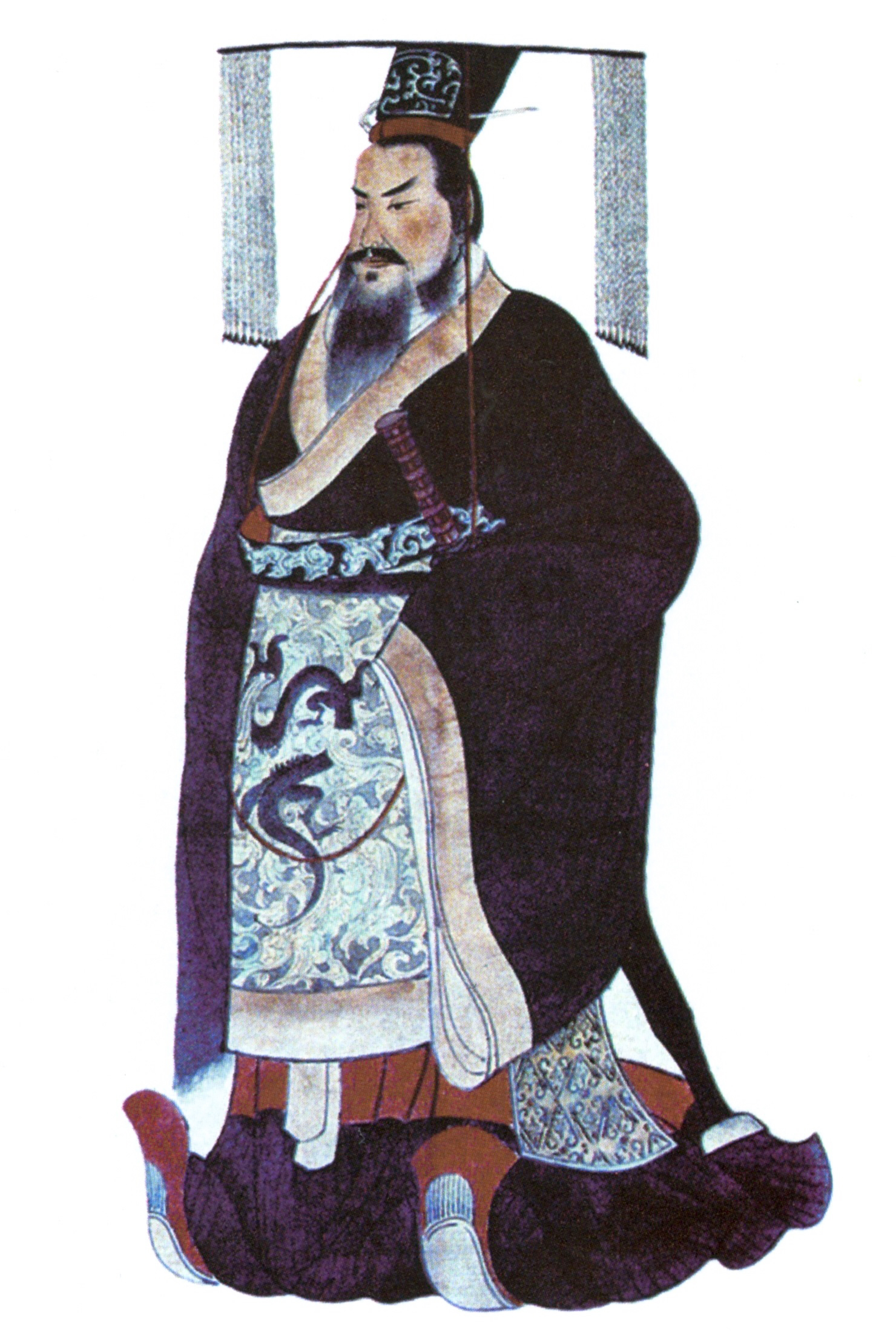
Wikimedia Commons · Public domain · file At Liangshan Palace, Qin Shi Huang observed the chancellor’s large procession. His anger over the later reduction of that retinue contributed to deadly court secrecy. The exact palace location is uncertain; coordinates represent the Liangshan area of Qian County.
Sacrifices at Yunmeng
· Yunmeng region near Anlu, Hubei, China
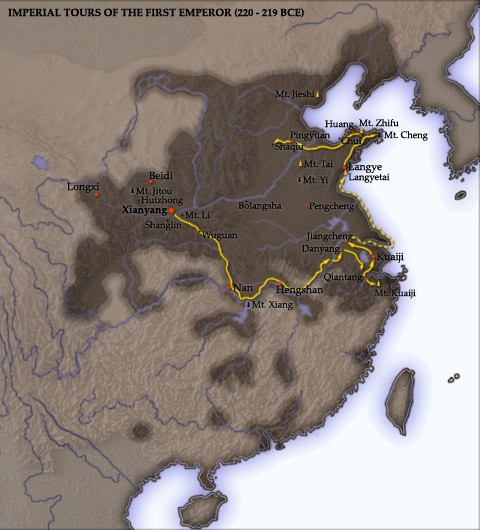
Wikimedia Commons · Creative Commons Attribution-Share Alike 3.0 Unported; GNU Free Documentation License, Version 1.2 or later · file At the outset of his fifth and final tour, Qin Shi Huang reached Yunmeng and performed a distant sacrifice to the legendary Emperor Shun. The Qin-calendar month overlaps late 211 or early 210 BC under possible conversions; coordinates represent Anlu, near the identified Yunmeng site.
Ascends Mount Kuaiji
· Mount Kuaiji, Shaoxing, Zhejiang, China
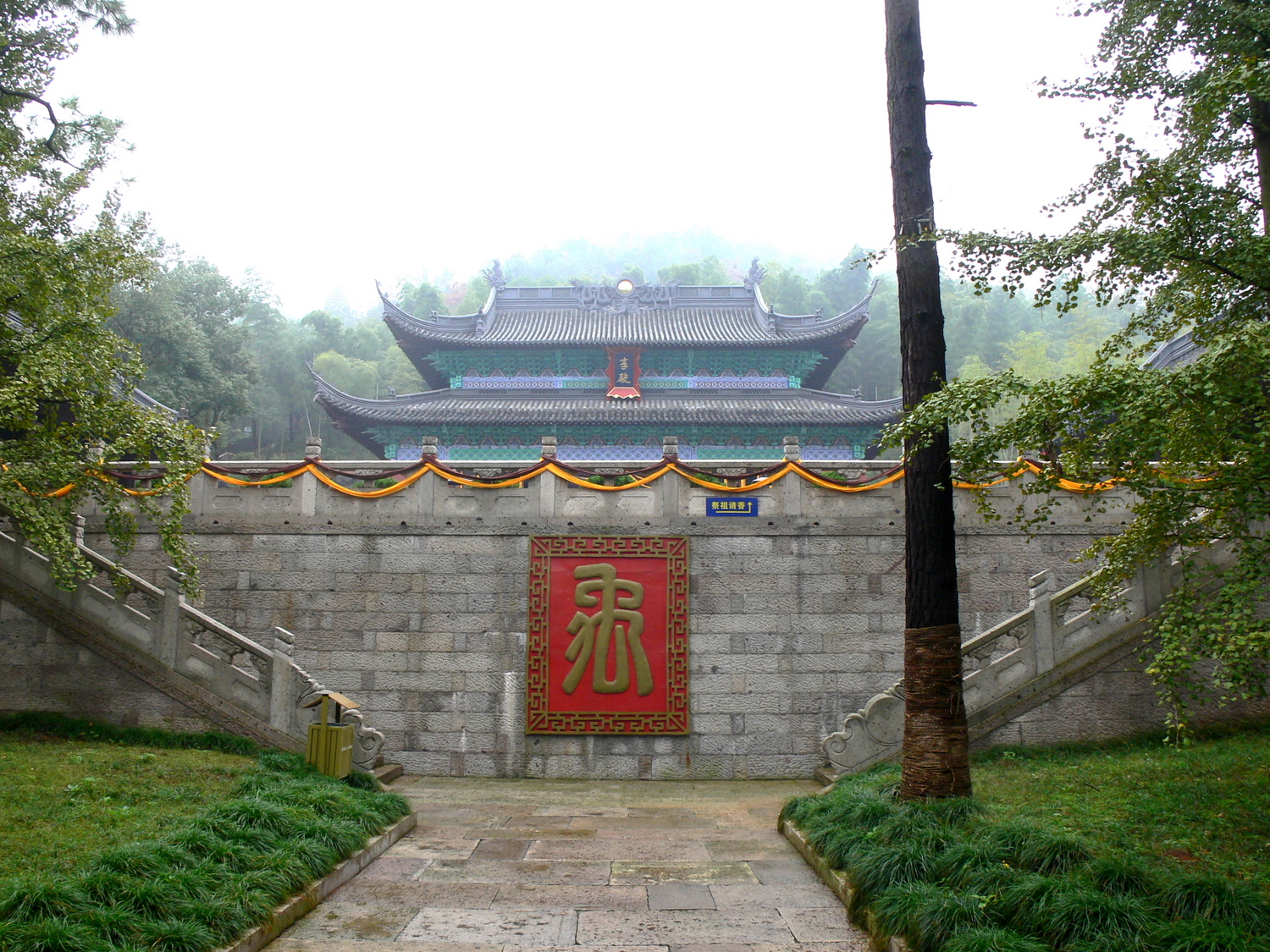
Wikimedia Commons · Creative Commons Attribution-Share Alike 3.0 Unported · file The emperor climbed Mount Kuaiji, sacrificed to Yu the Great, viewed the southern seaward horizon, and erected his final major tour inscription. Coordinates represent the principal Mount Kuaiji scenic and ritual area.
Buried at Mount Li
· Mausoleum of the First Qin Emperor, Lintong District, Xi'an, Shaanxi, China
Wikimedia Commons · Creative Commons CC0 1.0 Universal Public Domain Dedication · file After the concealed corpse was returned to the capital region and mourning announced, Qin Shi Huang was interred in his enormous mausoleum at Mount Li. The ninth month is that of the Qin calendar and is not treated here as a securely converted Gregorian September.
Falls ill at Pingyuan Ford
· Pingyuan Ford area, Pingyuan County, Shandong, China
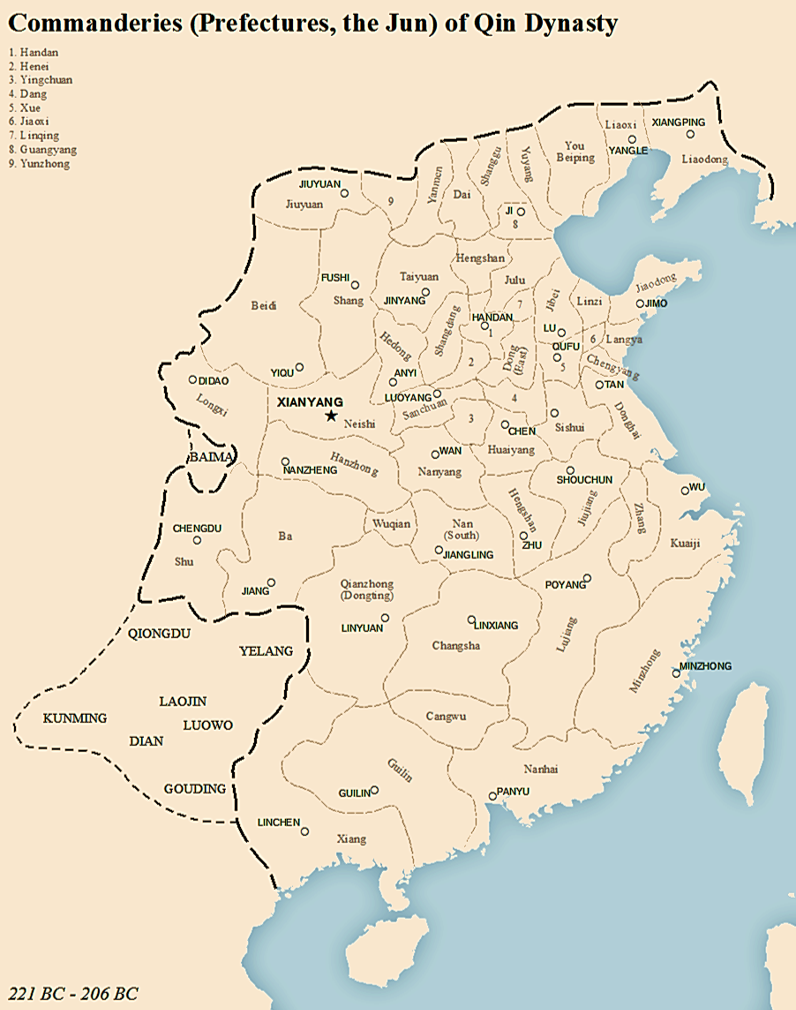
Wikimedia Commons · Creative Commons Attribution-Share Alike 4.0 International · file During the homeward journey, Qin Shi Huang became seriously ill at Pingyuan Ford and prepared a sealed message directing his son Fusu to join the funeral cortege. The exact ancient ford has not been securely located; coordinates represent modern Pingyuan County.
Kills a great fish at Zhifu
· Zhifu Island, Yantai, Shandong, China
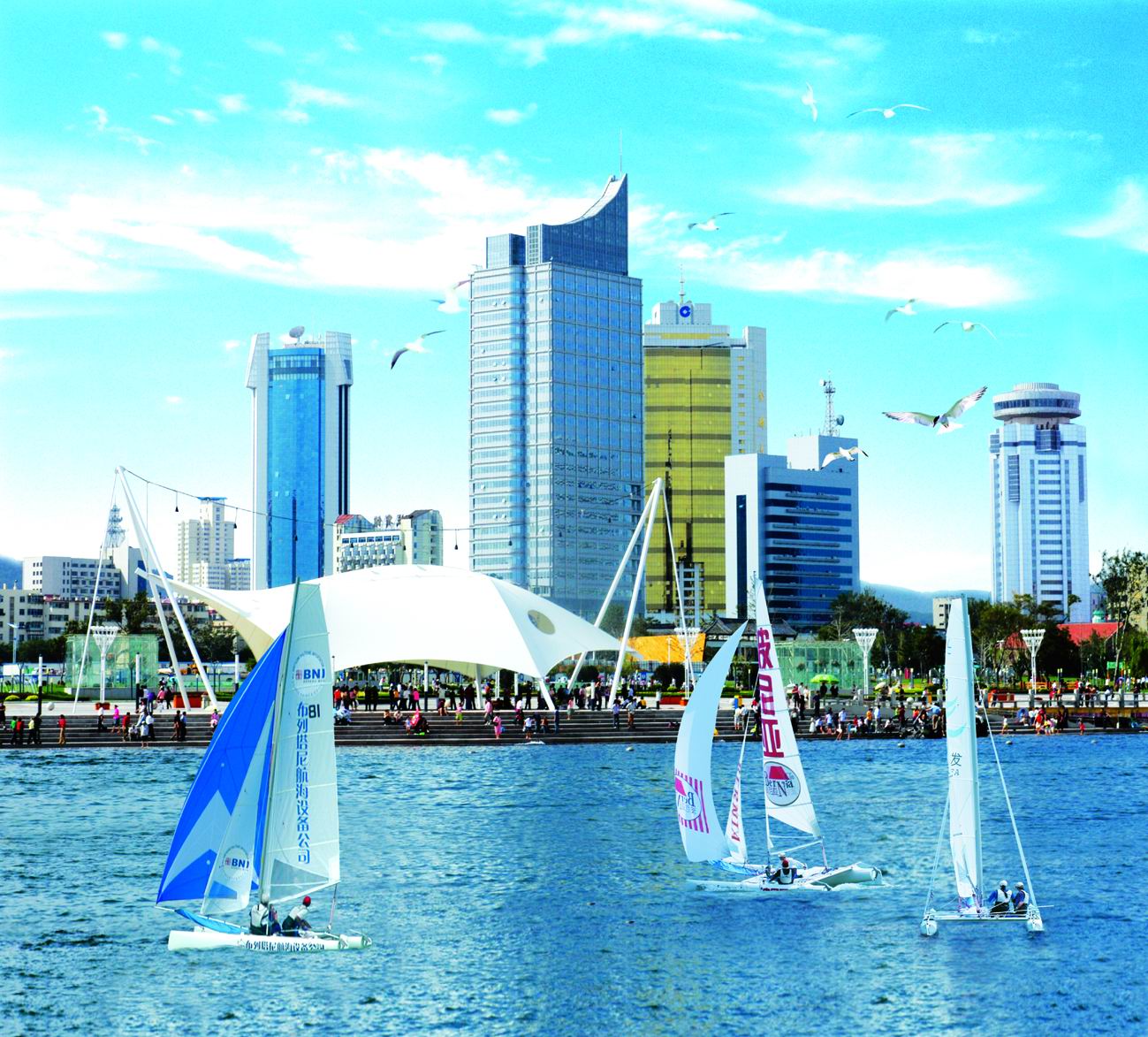
Wikimedia Commons · Public domain; released into the public domain by the copyright holder · file On his third documented Zhifu visit, Qin Shi Huang sighted and killed a large fish with a crossbow before continuing west along the coast.
Passes through Wu
· Ancient Wu, present-day Suzhou, Jiangsu, China
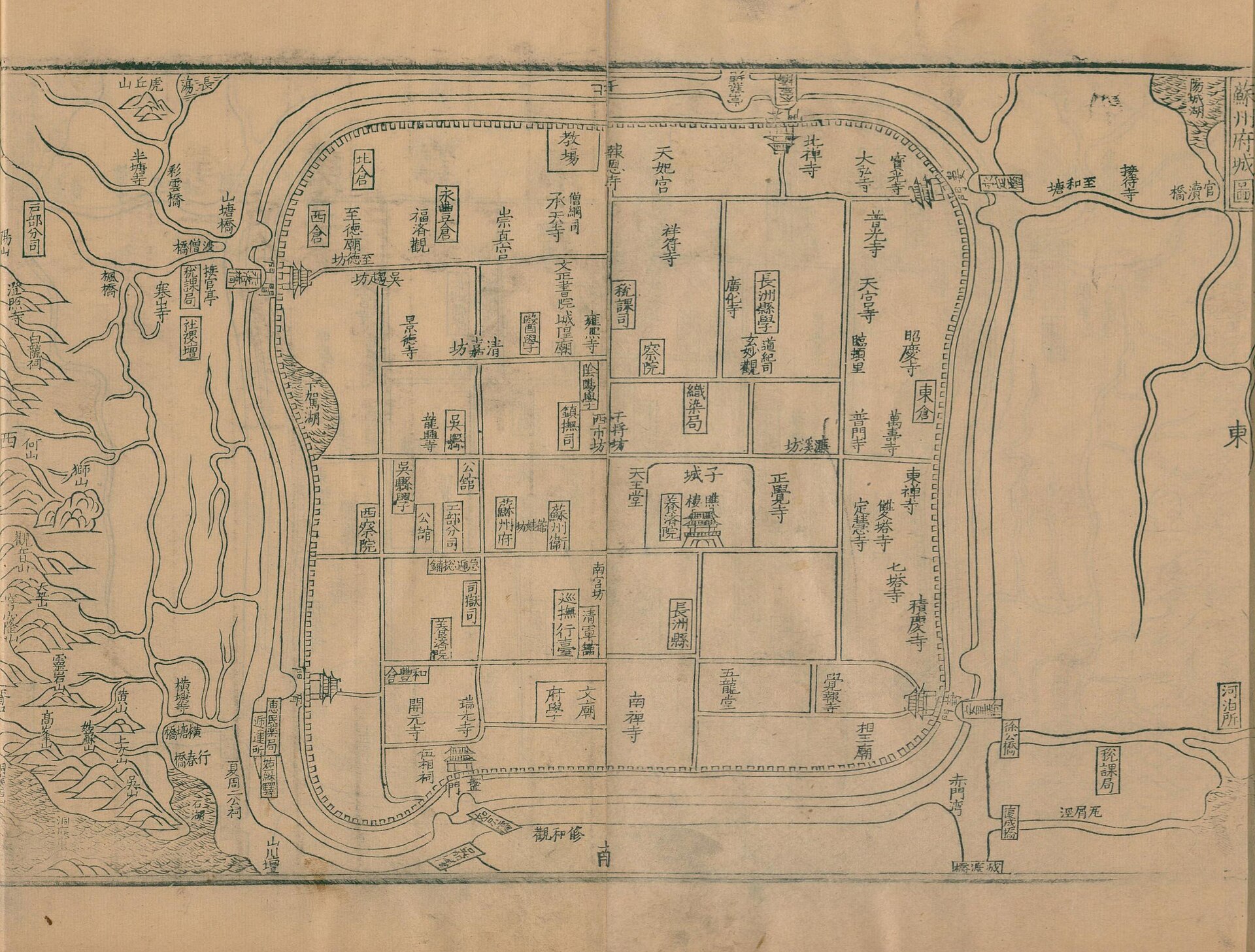
Wikimedia Commons · Public domain · file Returning north from Kuaiji, Qin Shi Huang passed through Wu, the ancient city corresponding to modern Suzhou. Coordinates represent central Suzhou rather than a specific Qin-period stop.
Returns to Langya on final tour
· Langya Terrace, Huangdao District, Qingdao, Shandong, China
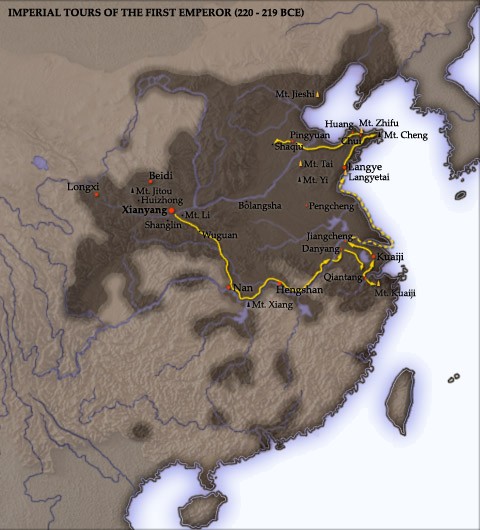
Wikimedia Commons · Creative Commons Attribution-Share Alike 3.0 Unported; GNU Free Documentation License, Version 1.2 or later · file Traveling north along the coast, Qin Shi Huang again reached Langya, where Xu Fu explained his failure to obtain the drugs of immortality.
Searches from Langya to Rongcheng Mountain
· Rongcheng Mountain area, Rongcheng, Shandong, China
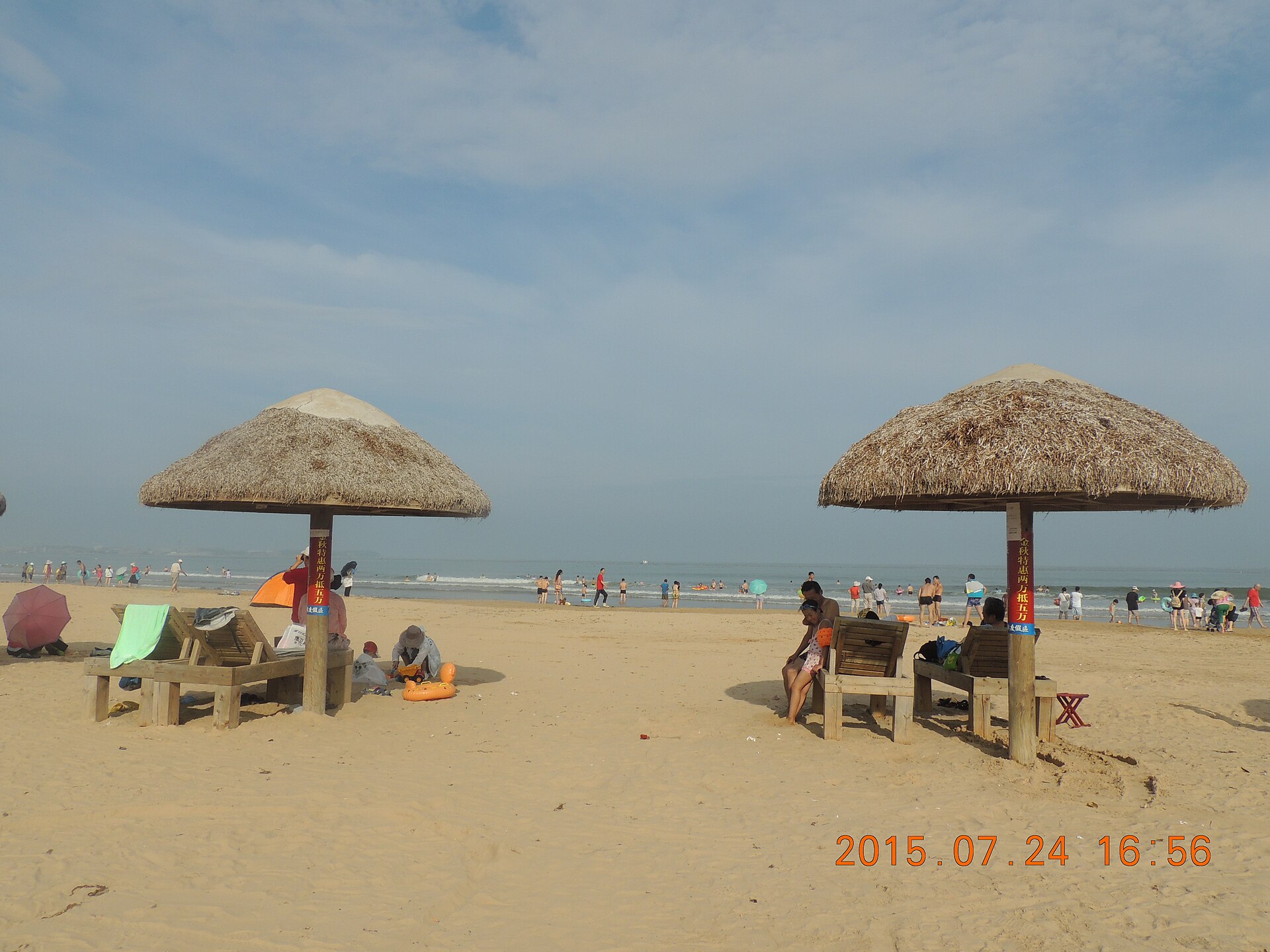
Wikimedia Commons · Creative Commons Attribution 3.0 Unported · file Armed with a repeating crossbow, the emperor traveled northward along the Shandong coast searching for the giant fish believed to obstruct access to the immortals. The exact ancient mountain identification is uncertain; coordinates represent the Rongcheng coastal area.
Dies at Shaqiu Platform
· Shaqiu Platform, Pingxiang–Guangzong area, Hebei, China
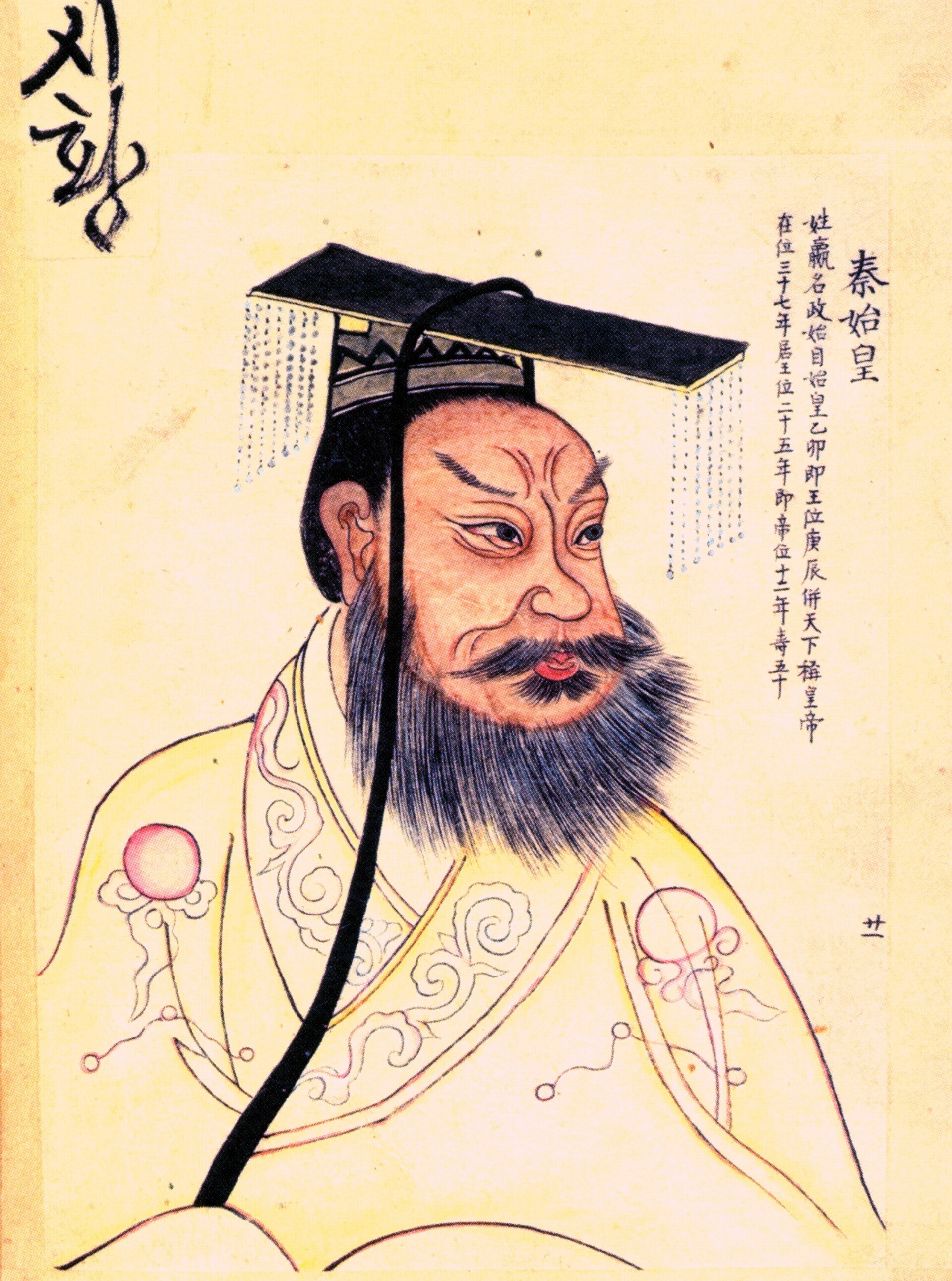
Wikimedia Commons · Public domain · file Qin Shi Huang died at Shaqiu during his final tour. Li Si, Zhao Gao, and Huhai concealed the death, enabling the succession conspiracy that installed Qin Er Shi. The canonical article converts the date to 12 July 210 BC, but 11 July and other dates also appear in scholarship. Shaqiu is variously placed in present-day Pingxiang or Guangzong County.