
20 moments
Birth at Söğüt
· Söğüt, Bilecik Province, Türkiye
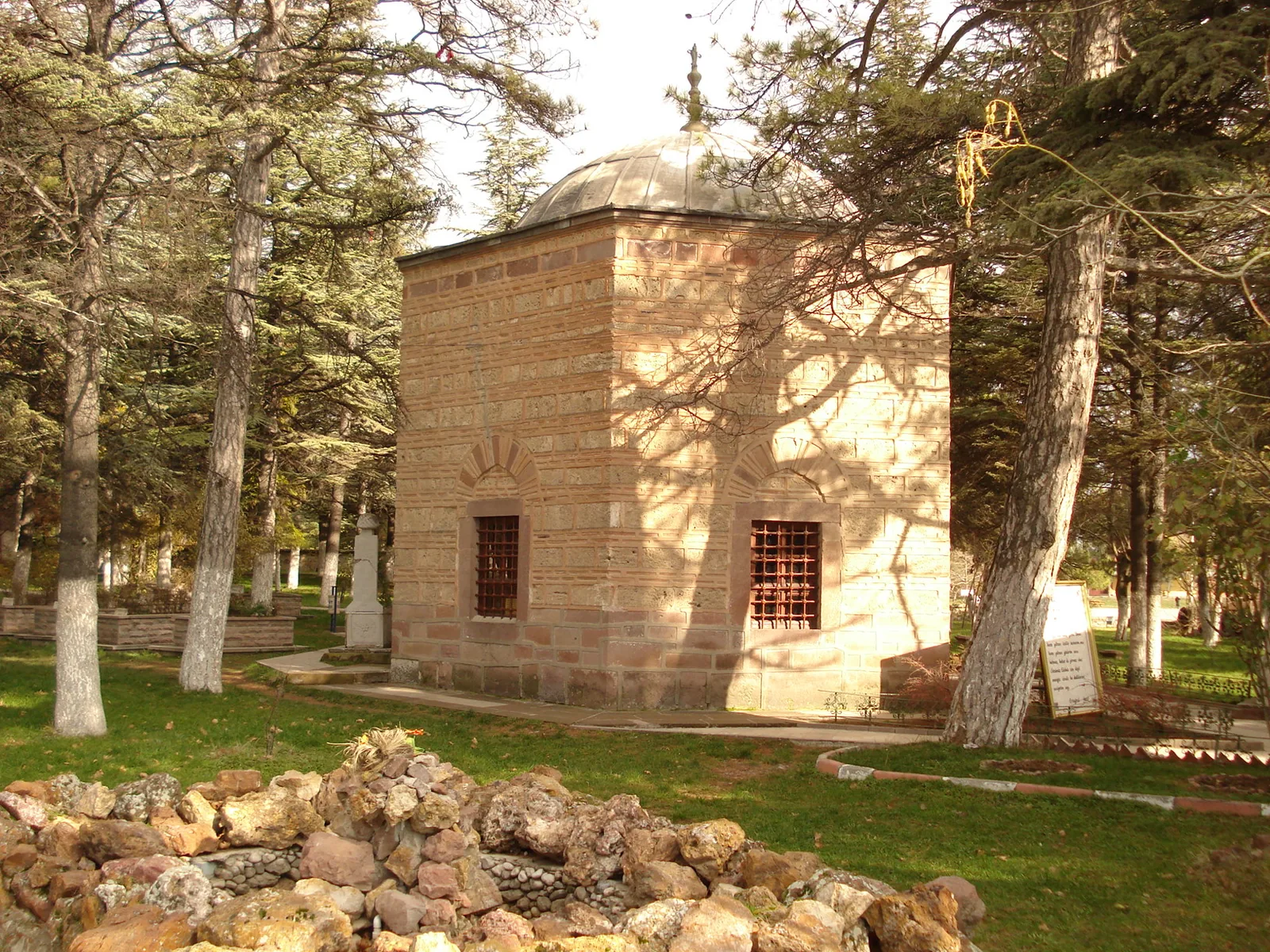
Wikimedia Commons · CC BY-SA 3.0 · file Osman was reportedly born at Söğüt, the frontier town associated with his father Ertuğrul's beylik. The year is approximate: the source gives 1254/5 rather than a securely known birth date. Birth year is conventionally represented as 1254, but Wikipedia describes it as possibly 1254/5.
Night raid on Kulaca Hisar
· Kulaca Hisar site, near İnegöl, Bursa Province, Türkiye
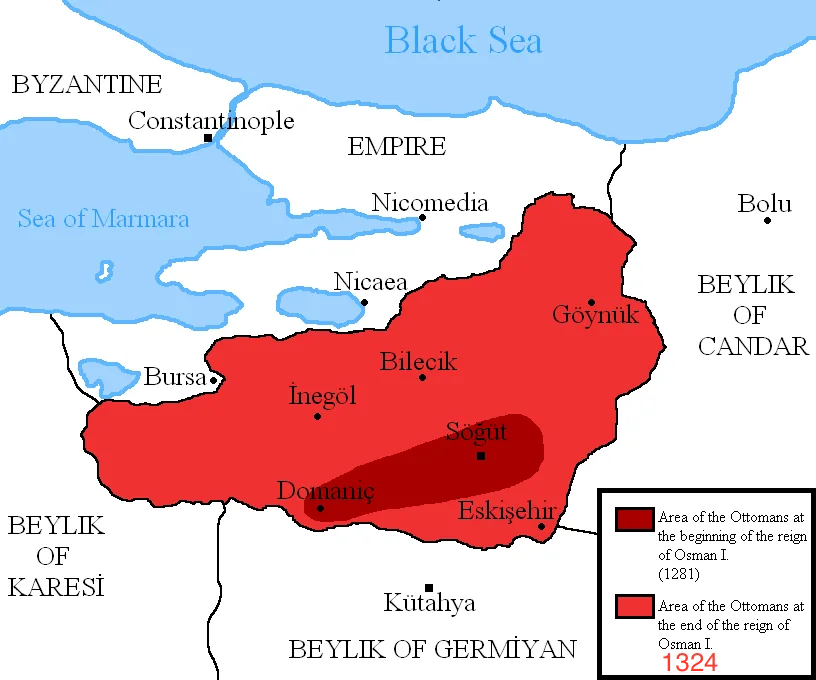
Wikimedia Commons · CC BY-SA 3.0 · file In the early struggle with the İnegöl frontier lord, Osman is reported to have raided and burned the small fortress of Kulaca near İnegöl. Coordinate is a representative point near modern Kulaca; the precise medieval fortress site is uncertain.
Battle at the Domaniç pass
· Domaniç Pass near İkizce, Kütahya Province, Türkiye
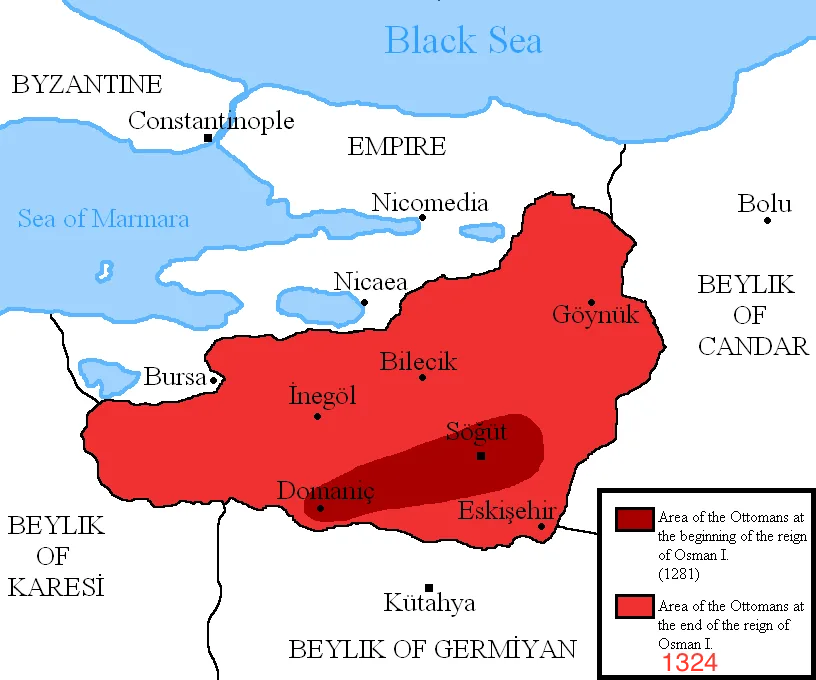
Wikimedia Commons · CC BY-SA 3.0 · file Osman assembled his fighters and crossed the Domaniç pass near İkizce, where a major clash with forces associated with the Karacahisar lord took place. Coordinate represents the Domaniç area; the exact battlefield is not securely identified.
Capture of Karacahisar
· Karacahisar Castle, Odunpazarı, Eskişehir Province, Türkiye
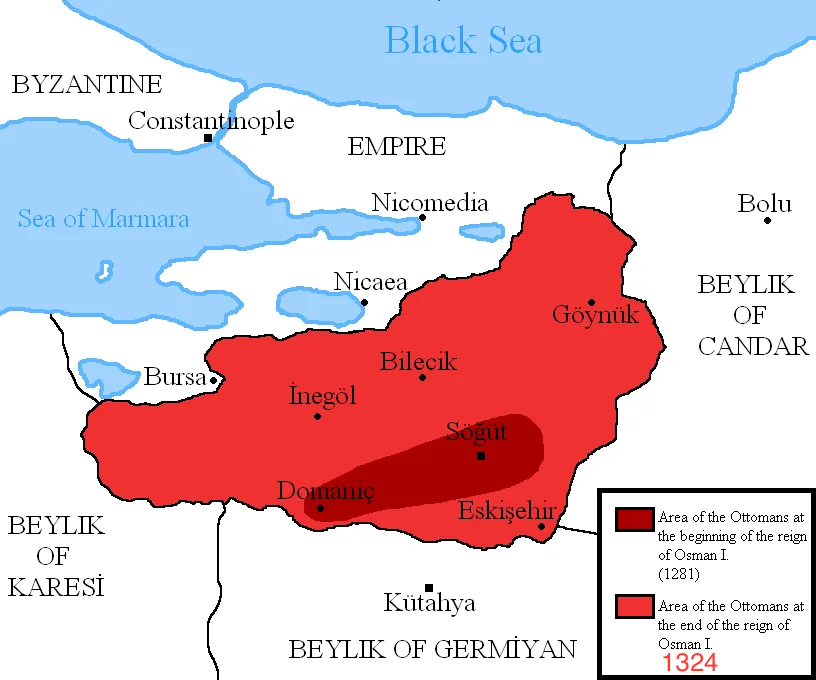
Wikimedia Commons · CC BY-SA 3.0 · file Osman took Karacahisar and made it a center of his frontier beylik, a consequential advance toward control of the Eskişehir region. The conquest date is disputed; the source associates Osman's regional dominance with 1288, while other scholarship allows a broader late-thirteenth- or early-fourteenth-century range.
Descent into the Gölpazarı plain
· Gölpazarı Plain, Bilecik Province, Türkiye
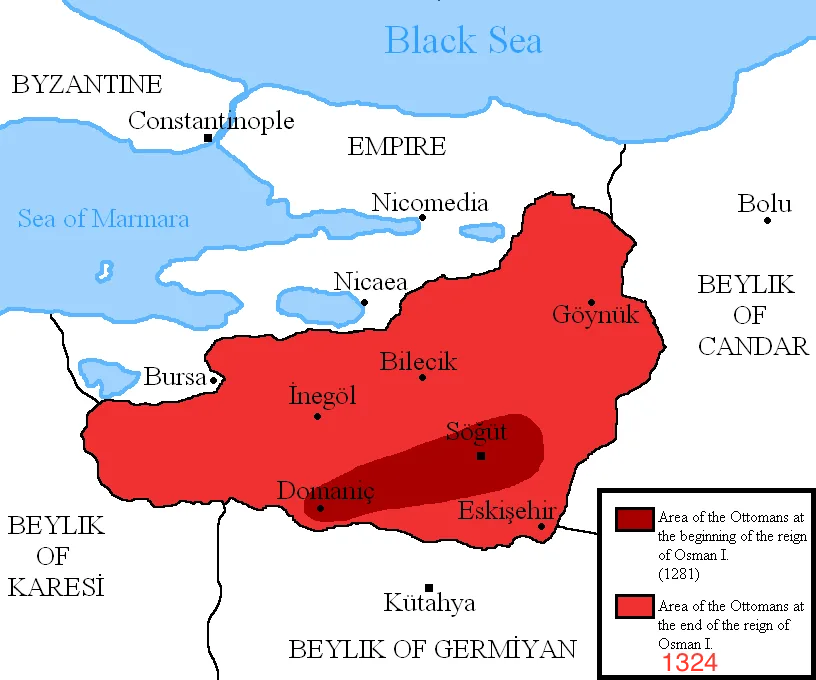
Wikimedia Commons · CC BY-SA 3.0 · file After the northern raid route, Osman reportedly turned south through mountainous country and descended into the Gölpazarı plain. The historical identification of Göl-Flanoz/Klanoz with modern Gölpazarı is qualified in the source; date is broadly 1288–1299.
Raid at Taraklı Yenicesi
· Taraklı, Sakarya Province, Türkiye
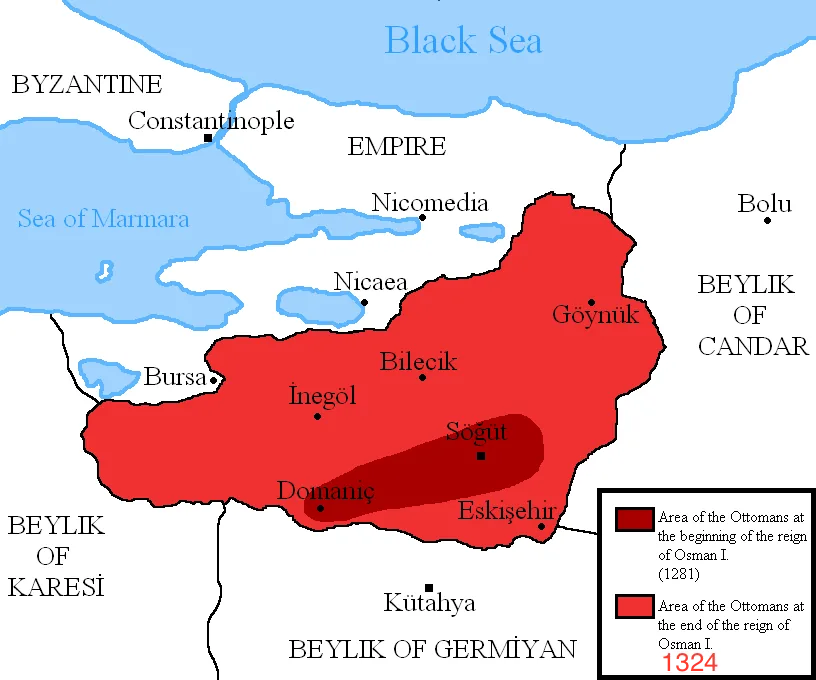
Wikimedia Commons · CC BY-SA 3.0 · file The same reported expedition brought Osman to Taraklı Yenicesi after Göynük, showing his movement across the western Sakarya-region frontier. The campaign is dated only broadly to 1288–1299 in the reference context.
Raid through Göynük
· Göynük, Bolu Province, Türkiye
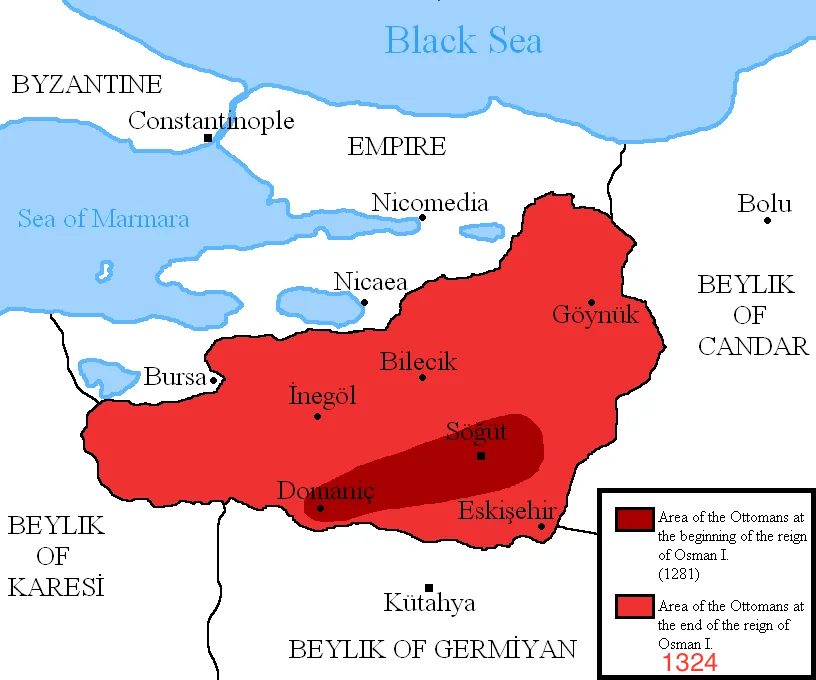
Wikimedia Commons · CC BY-SA 3.0 · file During a campaign from the Karacahisar frontier, Osman is reported to have reached Göynük and raided it while moving through the Sakarya hinterland. The campaign is placed broadly within the 1288–1299 period; 1288 is used as a representative year rather than an exact dating.
Establishment at Yenişehir
· Yenişehir, Bursa Province, Türkiye
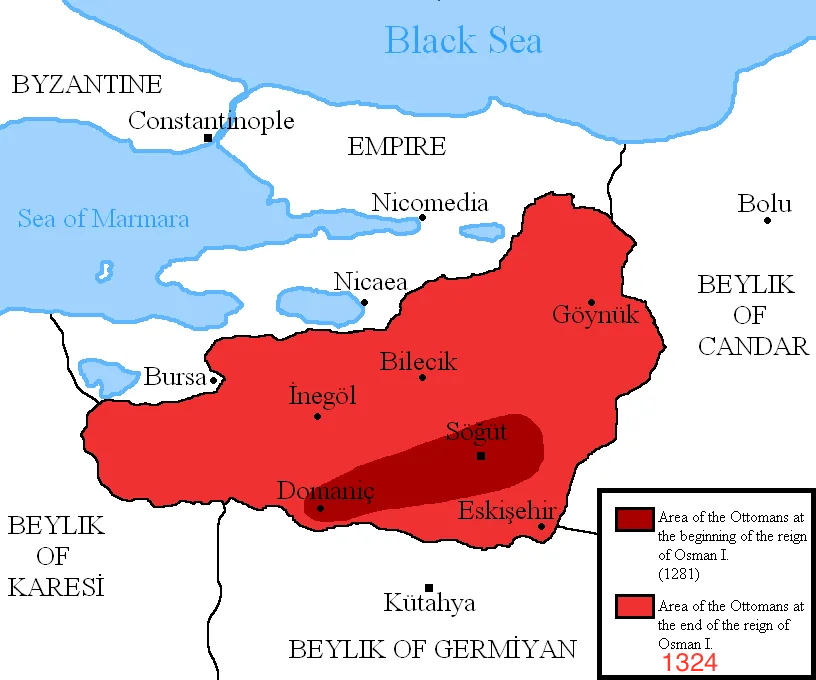
Wikimedia Commons · CC BY-SA 3.0 · file Osman relocated the frontier center to Yenişehir, closer to İznik and the Byzantine borderlands, making it a base for subsequent operations. The source distinguishes Bilecik as capital and Yenişehir as the frontier center.
Move of the capital to Bilecik
· Bilecik, Bilecik Province, Türkiye
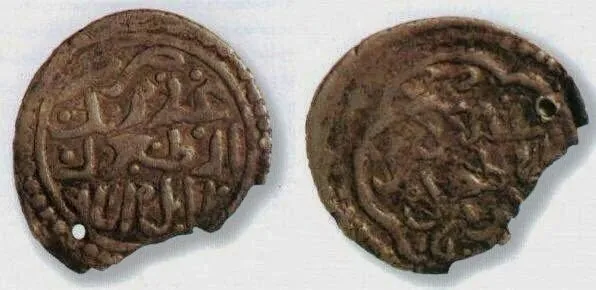
Wikimedia Commons · Public domain · file Osman shifted his political center westward from Karacahisar to Bilecik as he reoriented his operations toward Byzantine Bithynia. The source describes a relocation of the capital; the precise administrative character of early Ottoman capitals is debated.
Siege of İznik
· İznik, Bursa Province, Türkiye
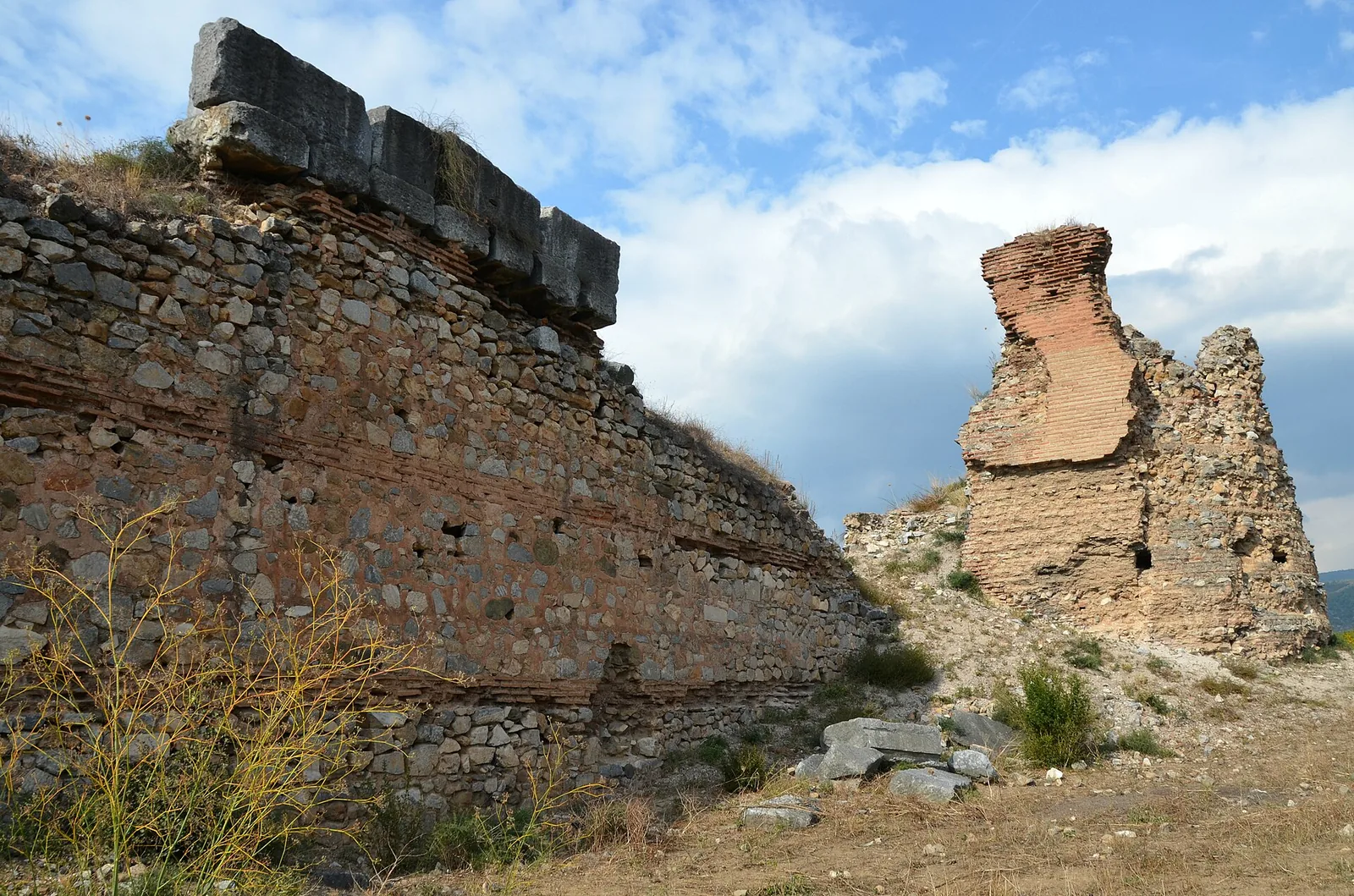
Wikimedia Commons · CC BY-SA 2.0 · file From his new operational base, Osman focused his activity on İznik and personally came to besiege the former Byzantine capital. The campaign is commonly dated 1301–1302; 1301 is used as the earliest supported year.
Battle of Bapheus
· Bapheus battlefield, Yalakdere-Hersek area, Yalova Province, Türkiye
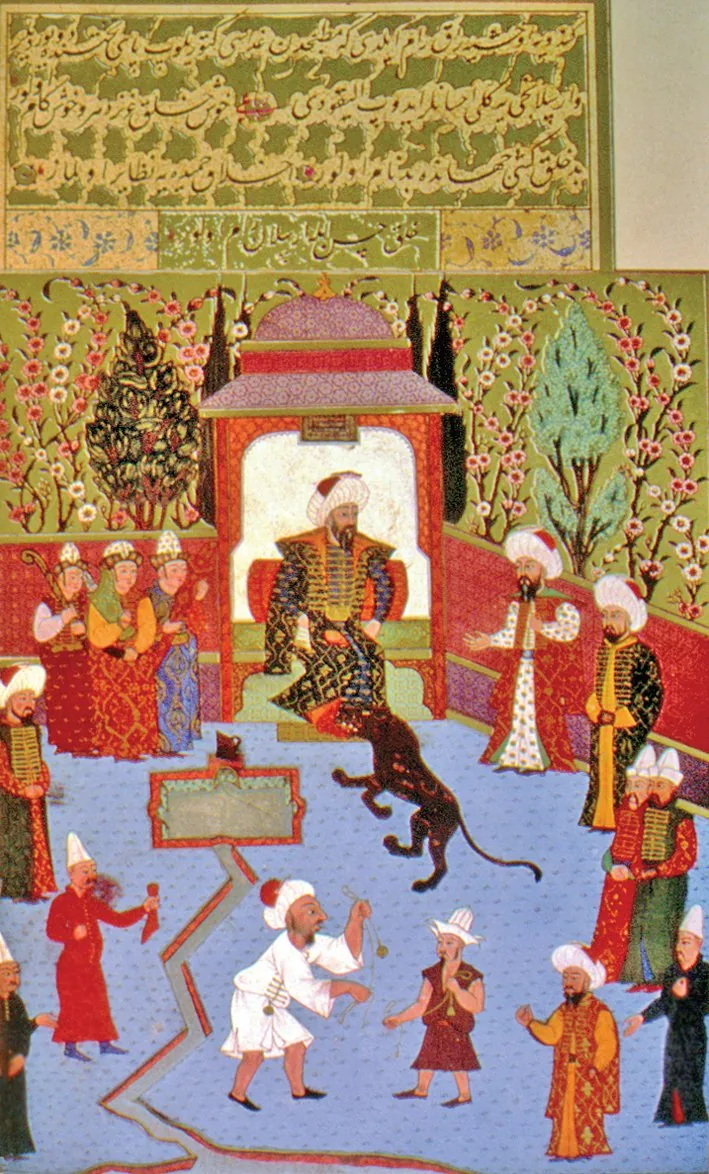
Wikimedia Commons · CC BY-SA 4.0 · file Osman led his forces in the Battle of Bapheus against a Byzantine army, a major victory that strengthened his position in Bithynia. The battle’s date is contested between 1299 and 1302 in modern scholarship. Coordinate is a representative point for the Yalakdere/Hersek identification; the exact battlefield remains disputed.
At Kite Castle after the Dimbos campaign
· Kite Castle site, near Ürünlü, Nilüfer, Bursa Province, Türkiye
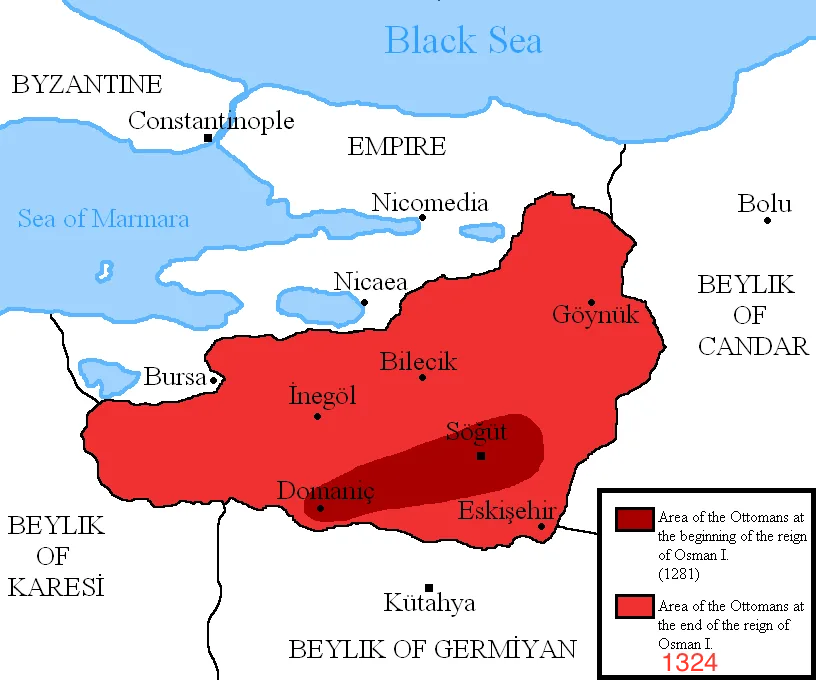
Wikimedia Commons · CC BY-SA 3.0 · file Osman received the surrendered lord of Kite and had him executed before Kite Castle; the fortress then capitulated. Coordinate is a representative point near modern Ürünlü; the exact location of the medieval Kite Castle is not certain.
Battle at Dimbos
· Dimbos (modern Erdoğan), Kestel, Bursa Province, Türkiye
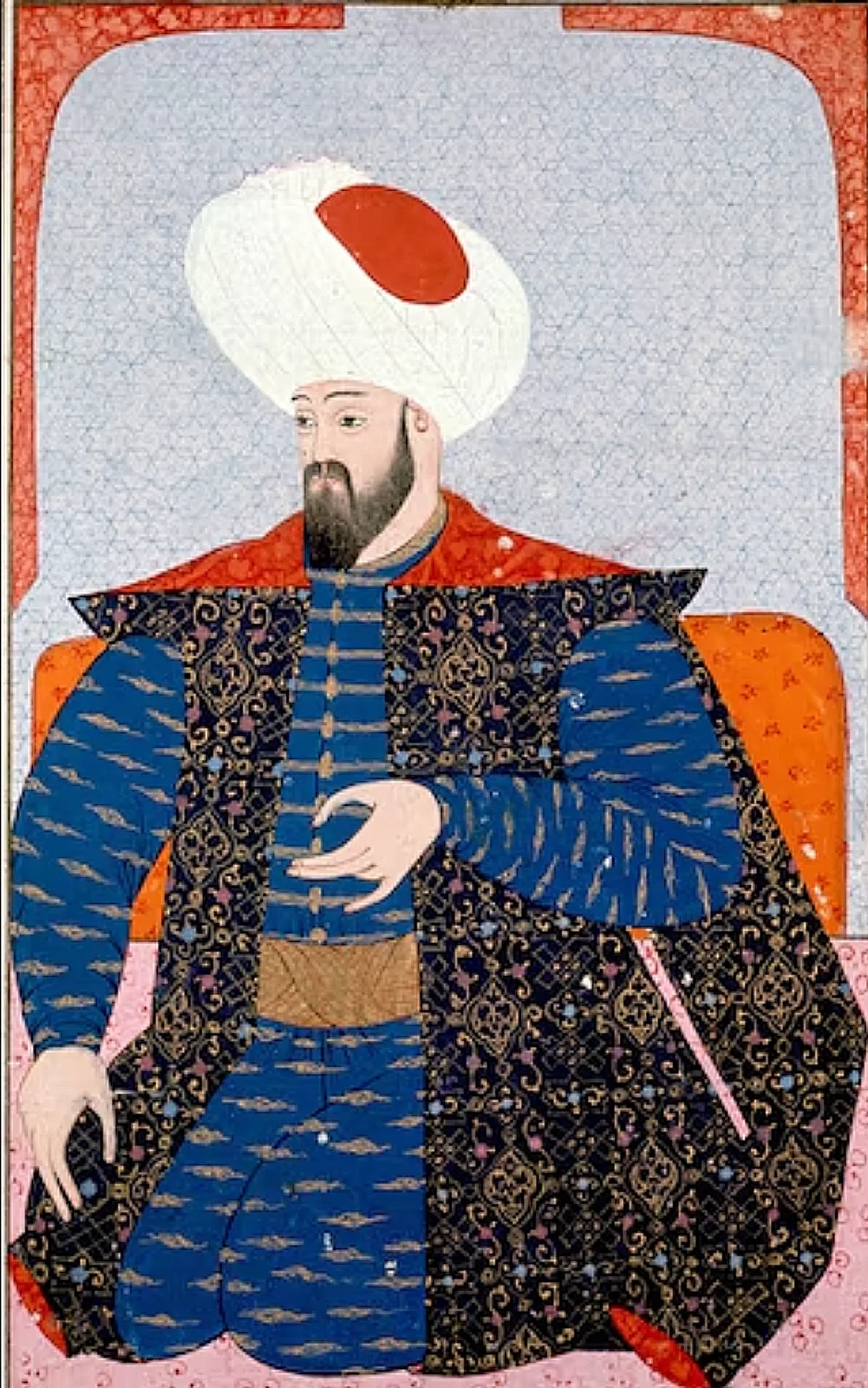
Wikimedia Commons · Public domain · file When an alliance of Bursa-plain lords advanced toward Yenişehir, Osman met their army and fought the final phase of the engagement at the narrow Dimbos pass. The source places the action in the spring of 1303 based on a Hijri-year discussion.
Blockade works around Bursa
· Bursa, Bursa Province, Türkiye
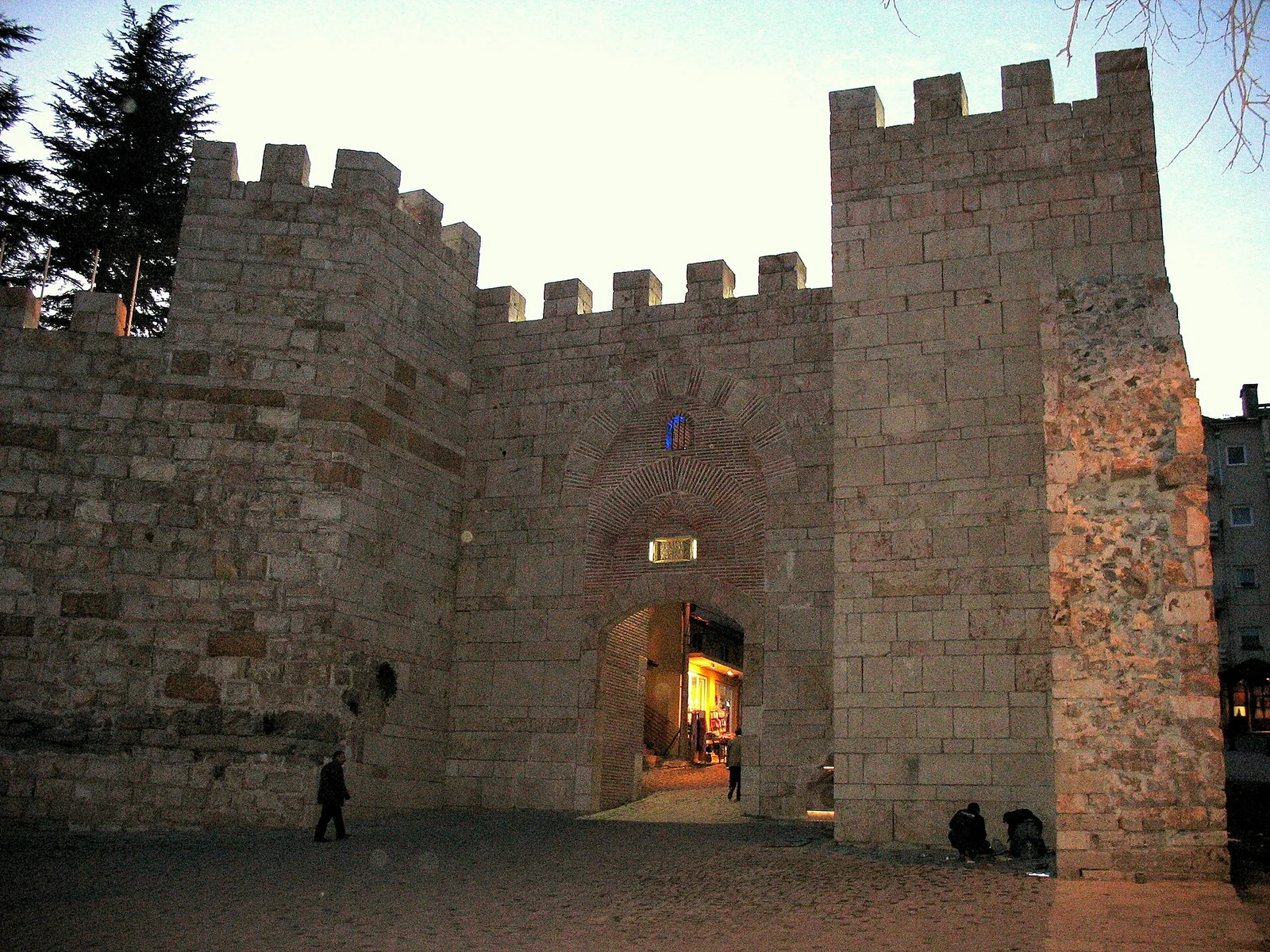
Wikimedia Commons · CC BY-SA 3.0 · file Osman began isolating Bursa after the Dimbos campaign by constructing two blockade towers around the city before withdrawing. Coordinate represents historic Bursa. The exact sites of Aktimur and Balabancık towers are not established here.
Pursuit to Ulubat Bridge
· Ulubat Bridge area, Karacabey, Bursa Province, Türkiye
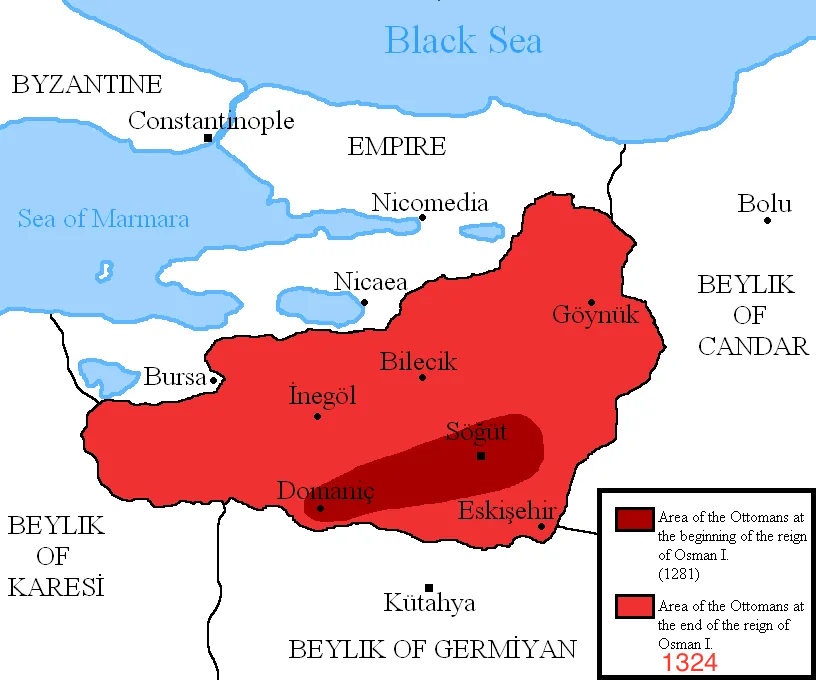
Wikimedia Commons · CC BY-SA 3.0 · file After the Dimbos fighting, Osman pursued the fleeing lord of Kite as far as the head of Ulubat Bridge, where he demanded the fugitive's surrender. Coordinate represents the historic Ulubat/Lopadion bridge area; exact medieval bridge position is uncertain.
Arrival at Akhisar in the Sakarya valley
· Akhisar (historic Metabole), near Pamukova, Sakarya Province, Türkiye
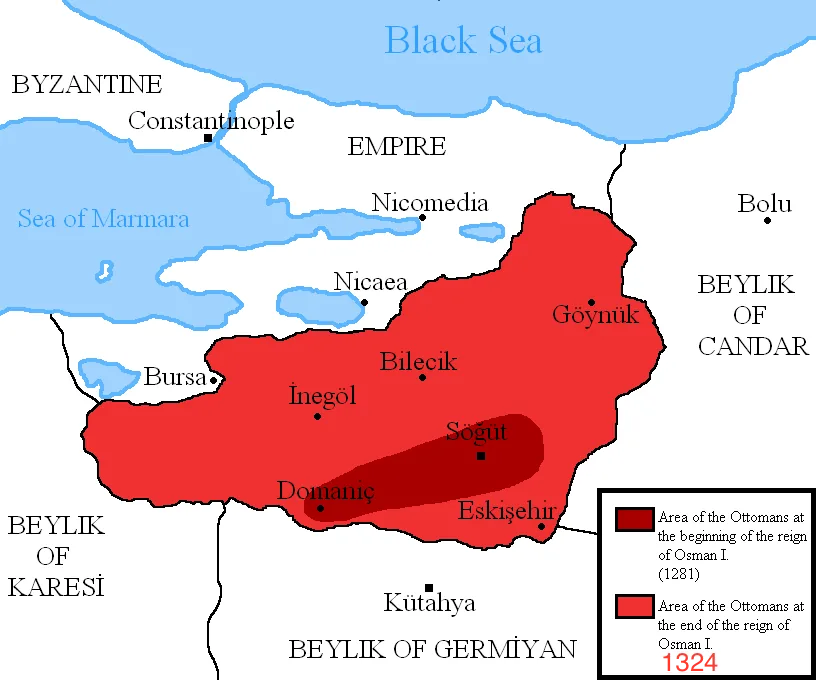
Wikimedia Commons · CC BY-SA 3.0 · file Osman reached Akhisar with the submitted lord of Mekece during the 1304 Sakarya campaign; fighting followed when Akhisar's lord resisted. Coordinate is a representative point in the Pamukova area; the historical Akhisar/Metabole site is not pinpointed by the source.
Arrival at Lefke
· Lefke (modern Osmaneli), Bilecik Province, Türkiye
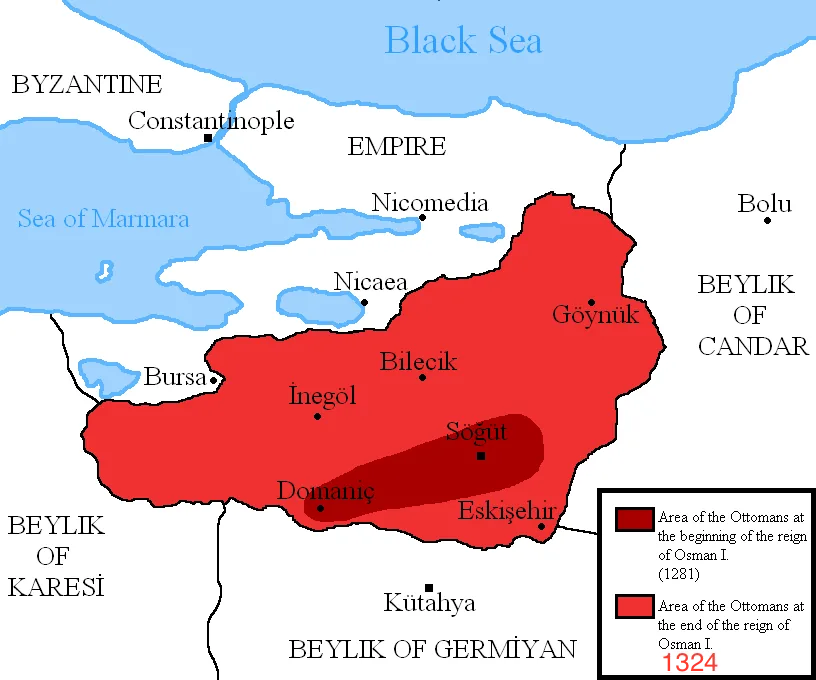
Wikimedia Commons · CC BY-SA 3.0 · file During the Sakarya campaign intended to isolate İznik, Osman arrived at Lefke, where local lords submitted and entered his service. Lefke is identified with modern Osmaneli in the source.
Arrival at Mekece
· Mekece, Pamukova, Sakarya Province, Türkiye
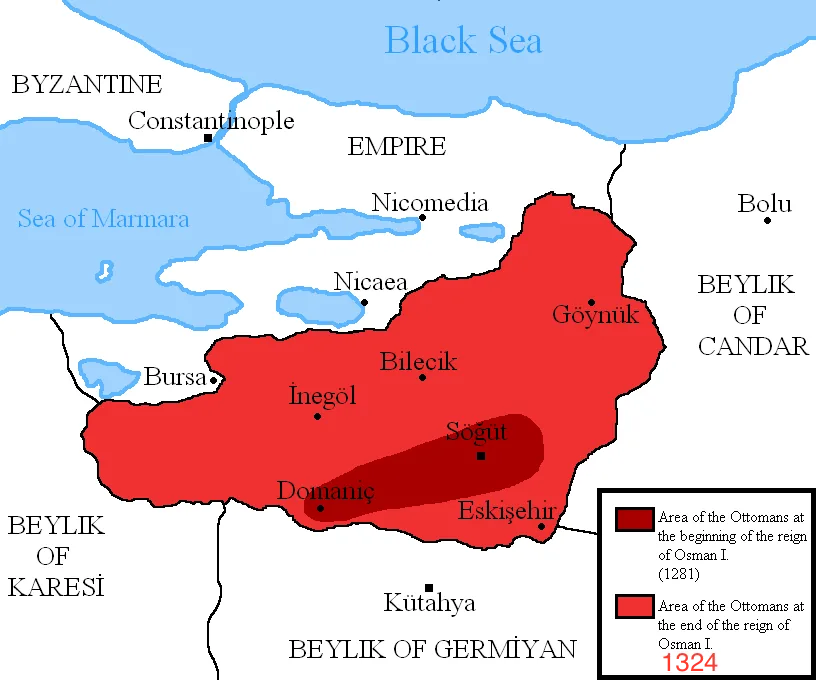
Wikimedia Commons · CC BY-SA 3.0 · file Continuing along the Sakarya route, Osman reached Mekece, whose lord submitted; he then moved with the local ruler toward Akhisar. Coordinate is for modern Mekece; the source identifies the destination explicitly.
Capture of Geyve
· Geyve, Sakarya Province, Türkiye
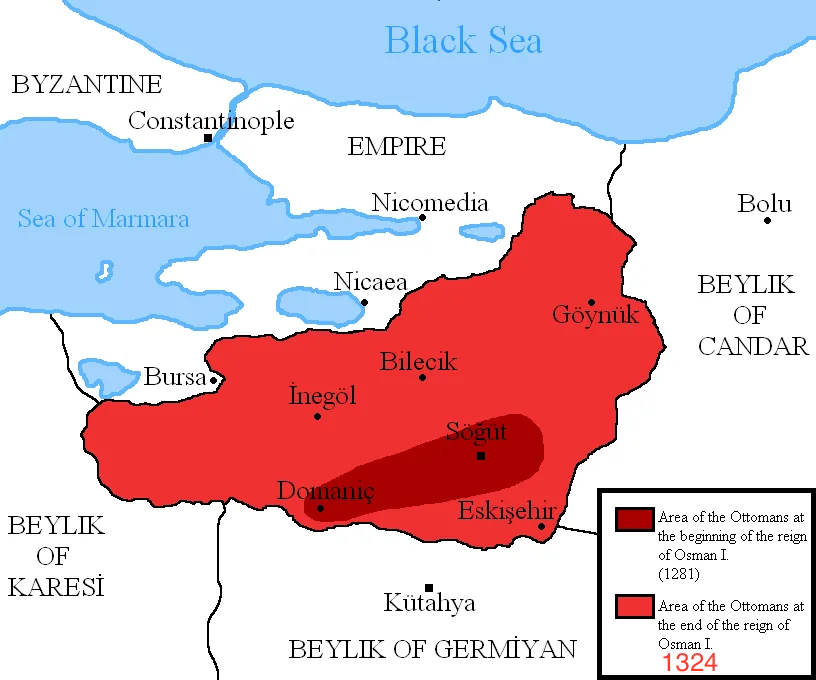
Wikimedia Commons · CC BY-SA 3.0 · file During the same Sakarya campaign, Osman went to Geyve and took its apparently unoccupied fortress before continuing operations in the region. The source identifies Geyve with historical Kabakia.
Remaining at Karacahisar
· Karacahisar Castle, Odunpazarı, Eskişehir Province, Türkiye
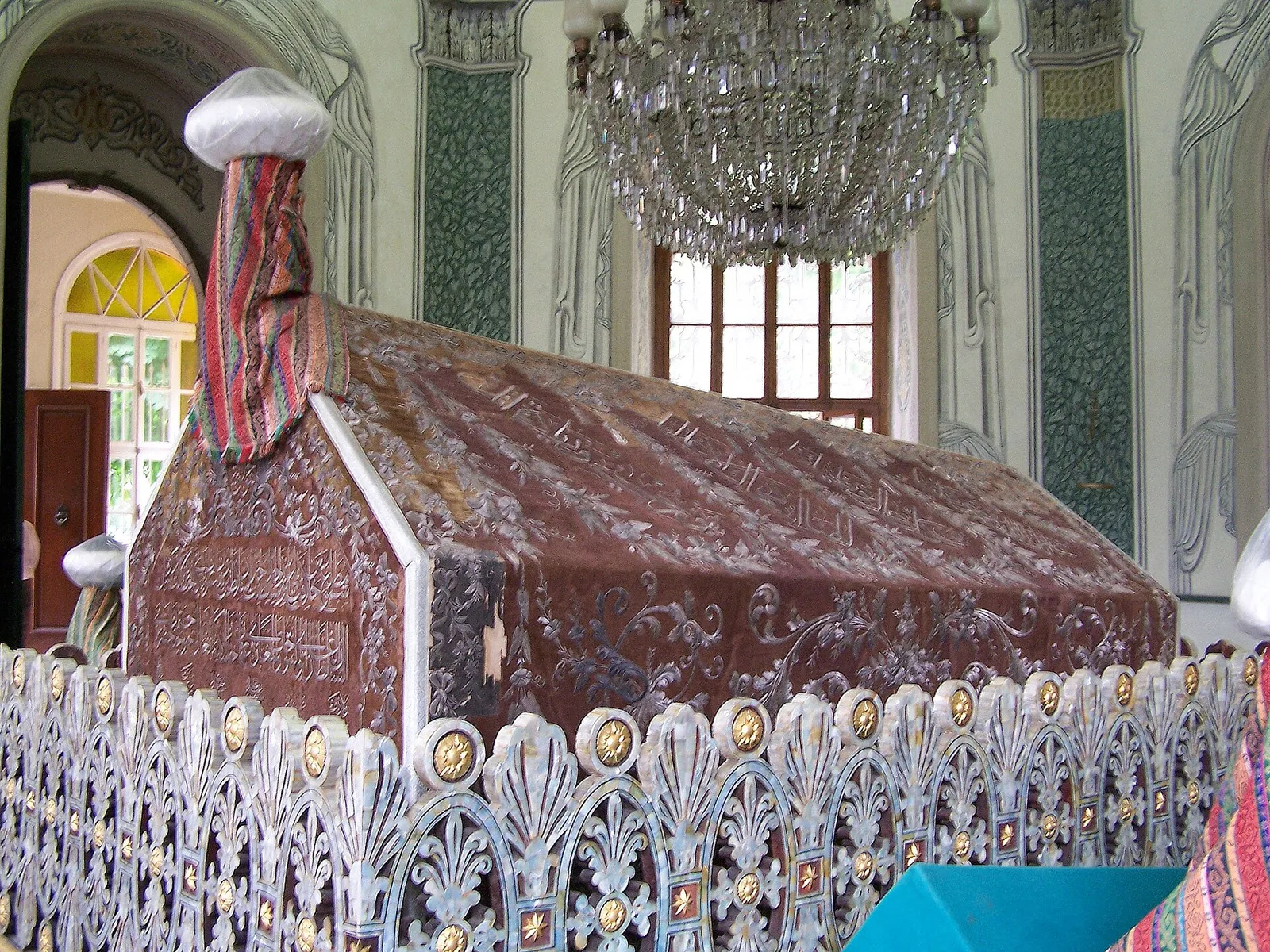
Wikimedia Commons · CC BY-SA 3.0 · file As his son Orhan conducted a further fortress campaign, Osman remained at Karacahisar, reportedly because of the risk of a Tatar attack and/or his age and illness. The source gives alternative reasons for his remaining at Karacahisar, but directly states his presence there.