
28 moments
Born in Alcalá de Henares
· Alcalá de Henares, Community of Madrid, Spain
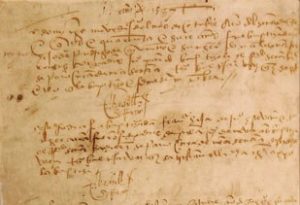
Wikimedia Commons · Public domain · file Cervantes was born in Alcalá de Henares and baptized there on 9 October. The conventional birth date is based on the feast of Saint Michael. The place is well established, but 29 September is an assumed birth date inferred from his baptism and name.
Childhood relocation to Valladolid
· Valladolid, Castile and León, Spain
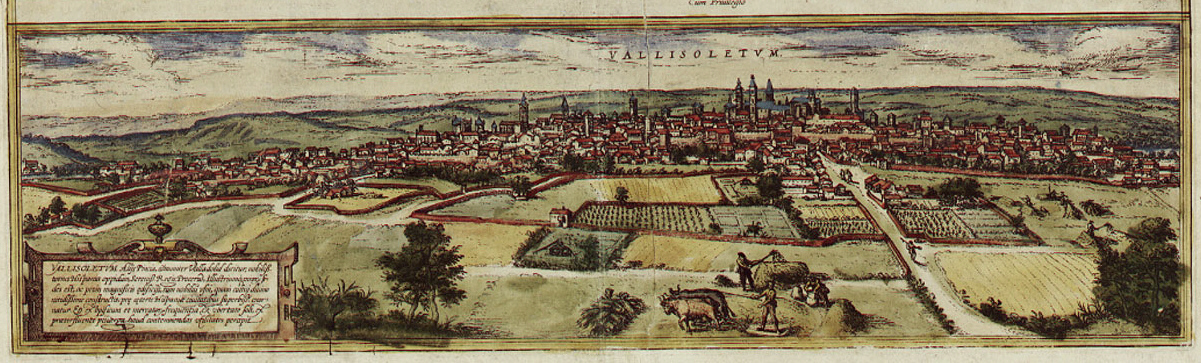
Wikimedia Commons · Public domain · file At approximately four years old, Cervantes moved with his father to Valladolid, an early stage in the family's repeated relocations. The year is derived from the source's stated age of four and the conventional 1547 birth year; coordinates represent Valladolid.
Moves with family to Madrid
· Madrid, Community of Madrid, Spain
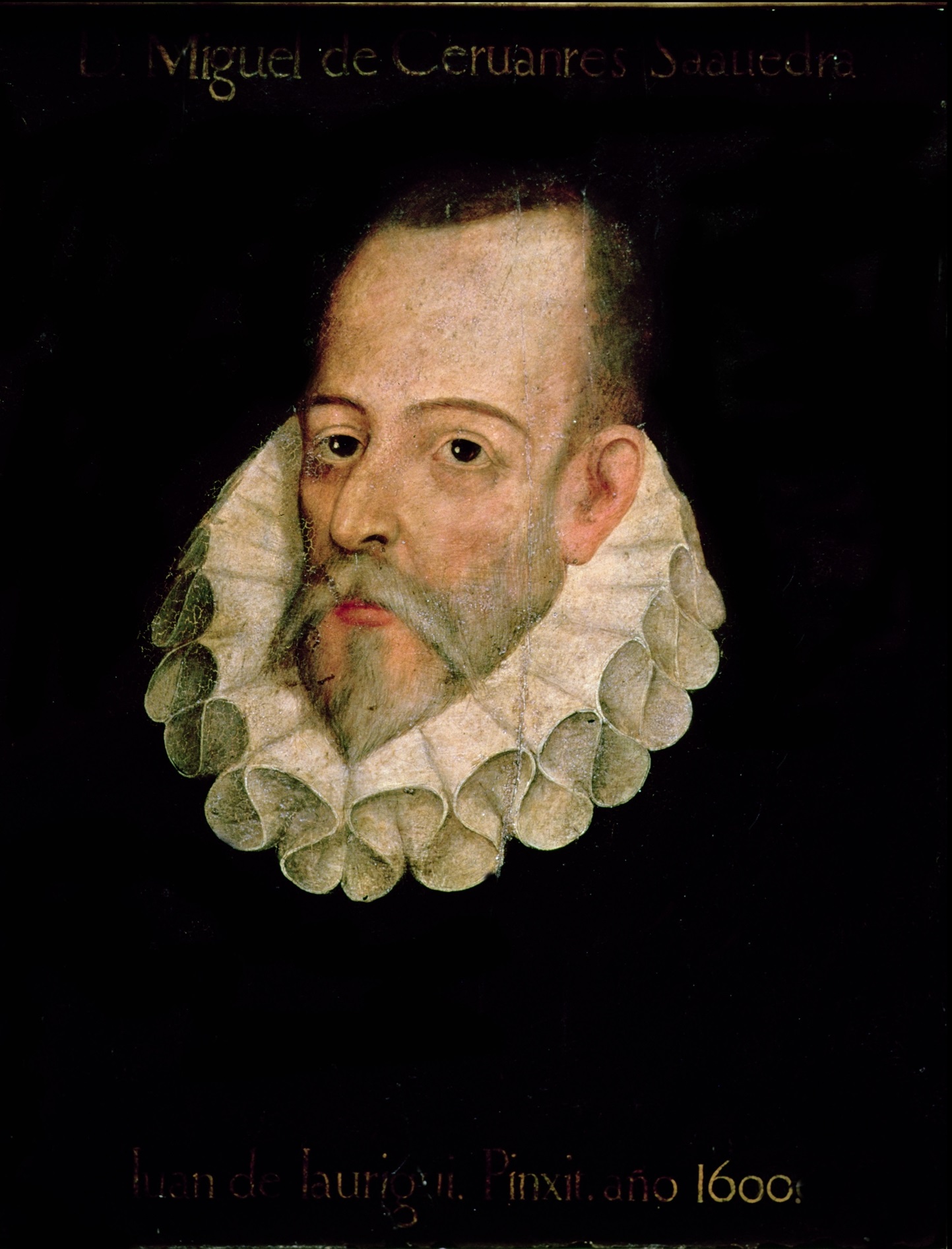
Wikimedia Commons · Public domain · file Cervantes arrived in Madrid with his family and continued his humanistic and literary formation there before departing Spain. Settlement coordinates represent Madrid; the precise family residence is not securely identified.
Serves Cardinal Acquaviva in Rome
· Rome, Lazio, Italy
After leaving Spain, Cervantes reached Rome and entered the household of the future cardinal Giulio Acquaviva. A document dated 22 December 1569 describes Cervantes as presently in Rome; coordinates represent the city.
Fights at Lepanto
· Battlefield of Lepanto, Gulf of Patras, Greece
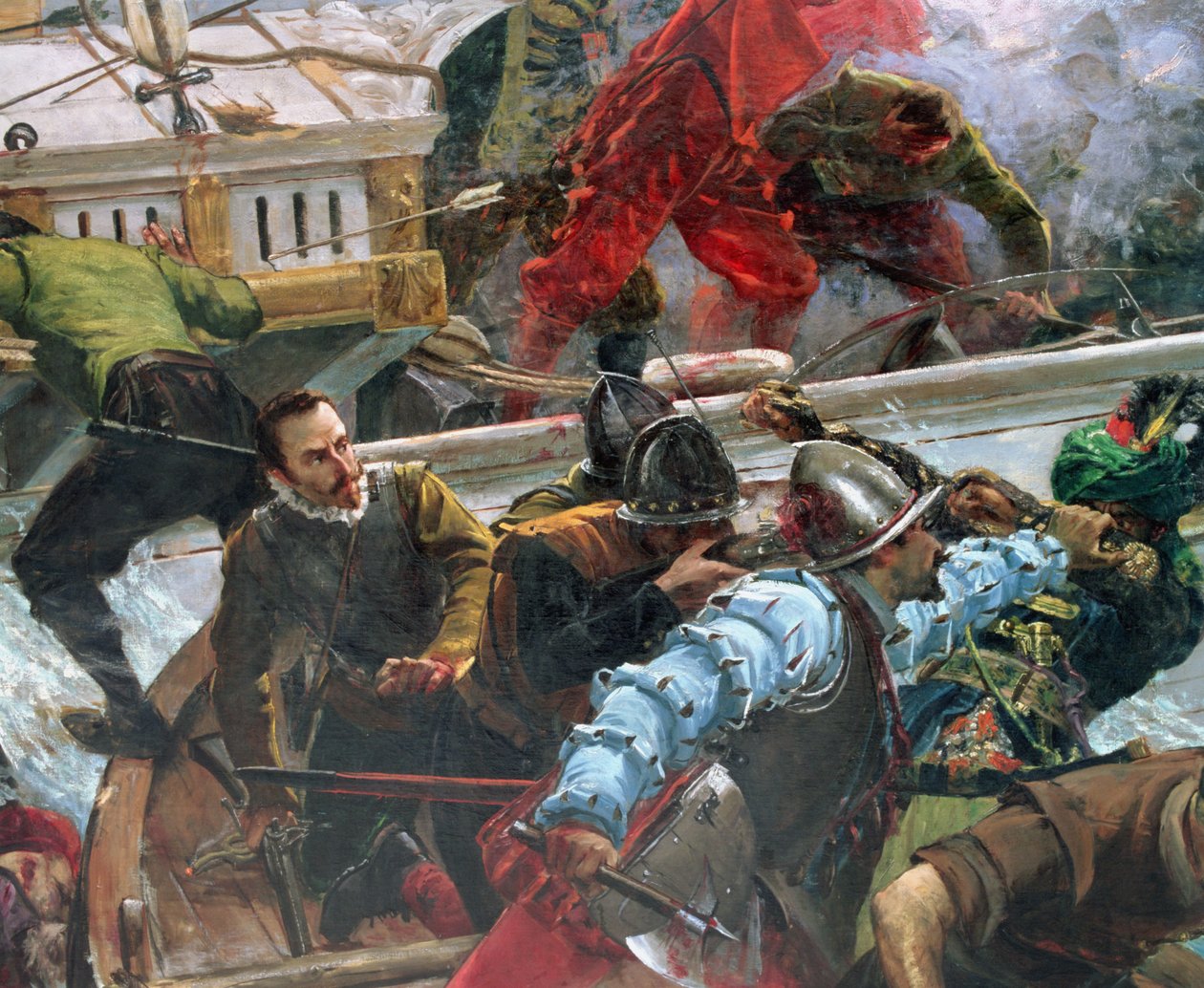
Wikimedia Commons · Public domain · file Serving aboard the galley Marquesa, Cervantes fought at Lepanto and suffered wounds to his chest and left hand. Coordinates are a representative point in the Gulf of Patras for the dispersed naval battlefield.
Campaigns at Corfu
· Corfu, Ionian Islands, Greece
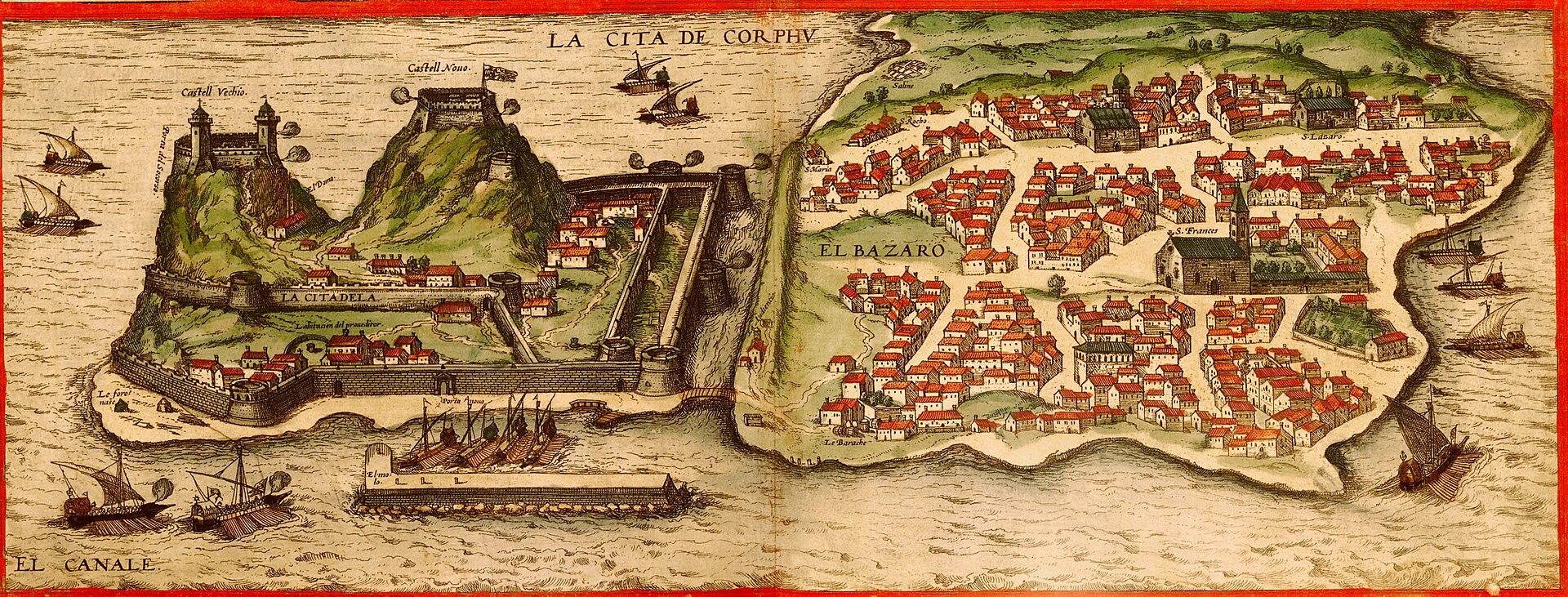
Wikimedia Commons · Public domain · file After recovering sufficiently from his wounds, Cervantes participated in Don John of Austria's naval campaign around Corfu. The source dates the campaign to August and September 1572 but does not specify the sequence or exact day at each location.
Campaigns at Modon
· Methoni, Peloponnese, Greece
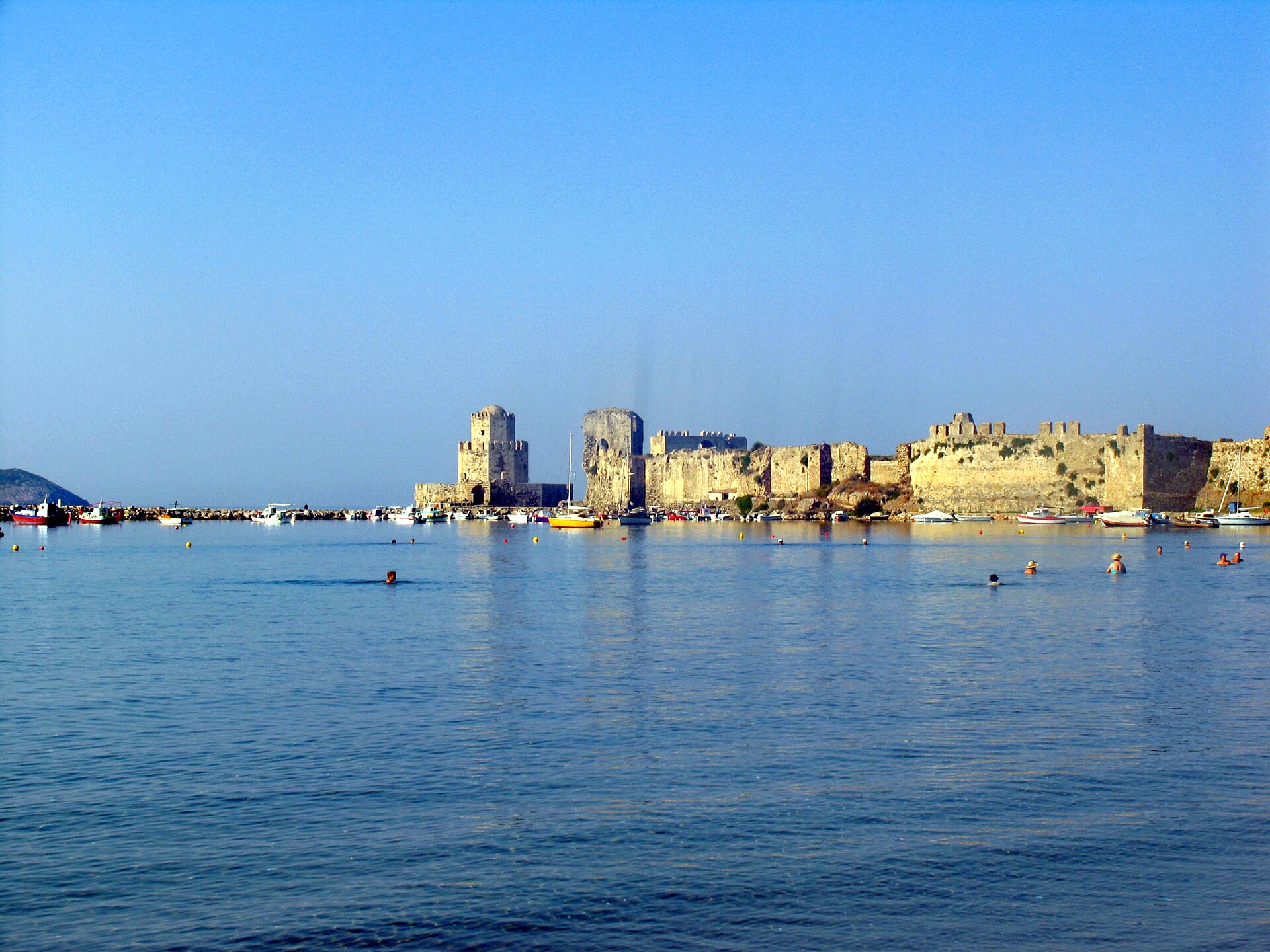
Wikimedia Commons · Public domain · file The same eastern Mediterranean campaign brought Cervantes to Modon, the Venetian-era name for present-day Methoni. The source groups Corfu and Modon within August–September 1572 without specifying the sequence; settlement coordinates are used.
Participates in the occupation of Tunis
· Tunis, Tunisia
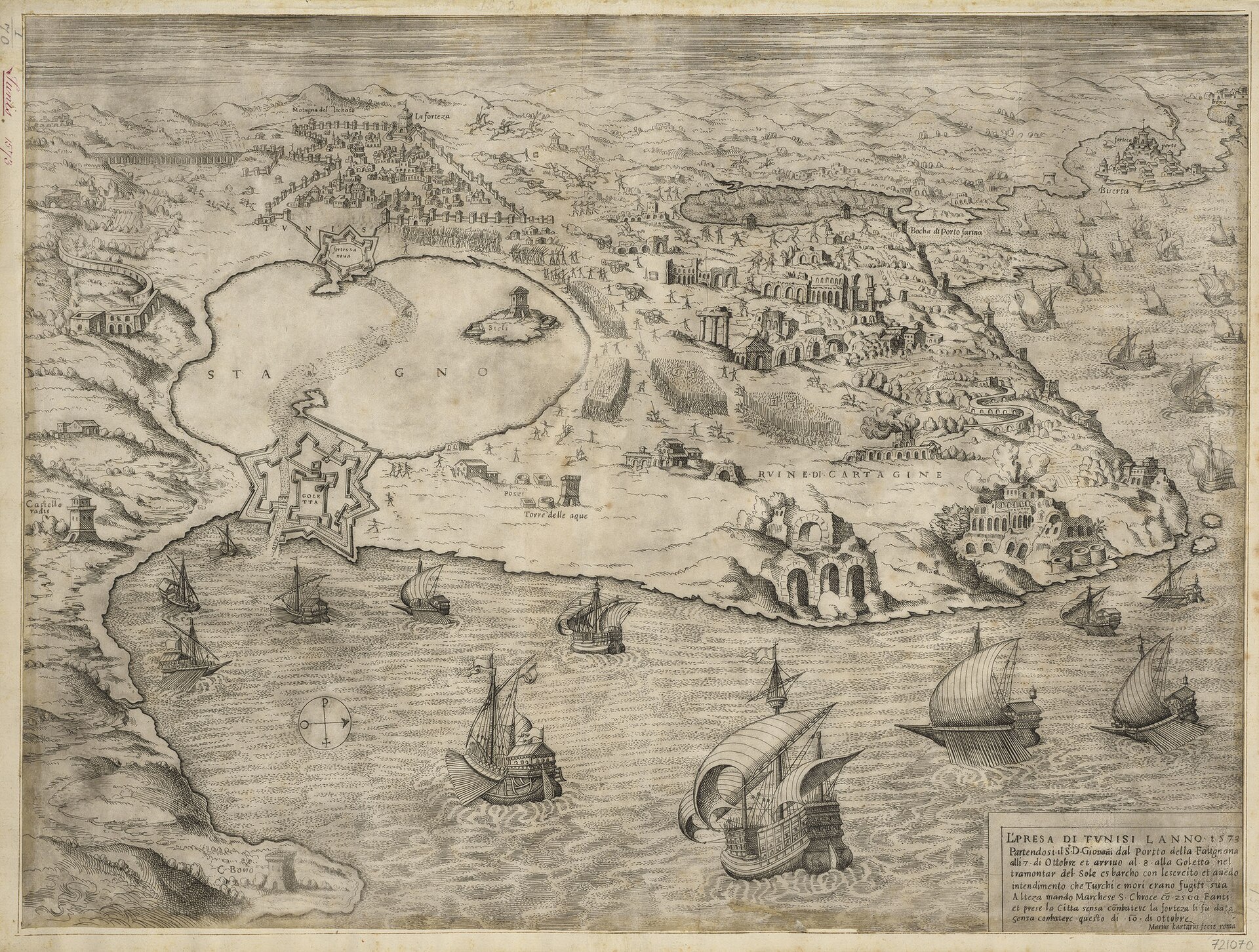
Wikimedia Commons · Public domain · file Cervantes took part in the Spanish occupation of Tunis and La Goulette during continued Mediterranean operations. Coordinates represent Tunis; the operation also involved nearby La Goulette.
Stationed with his company in Naples
· Naples, Campania, Italy
Cervantes served in Manuel Ponce de León's company while it was quartered in Naples, a principal base during his military years. Coordinates represent Naples because the company's precise quarters are not identified.
Begins captivity in Algiers
· Casbah of Algiers, Algiers, Algeria
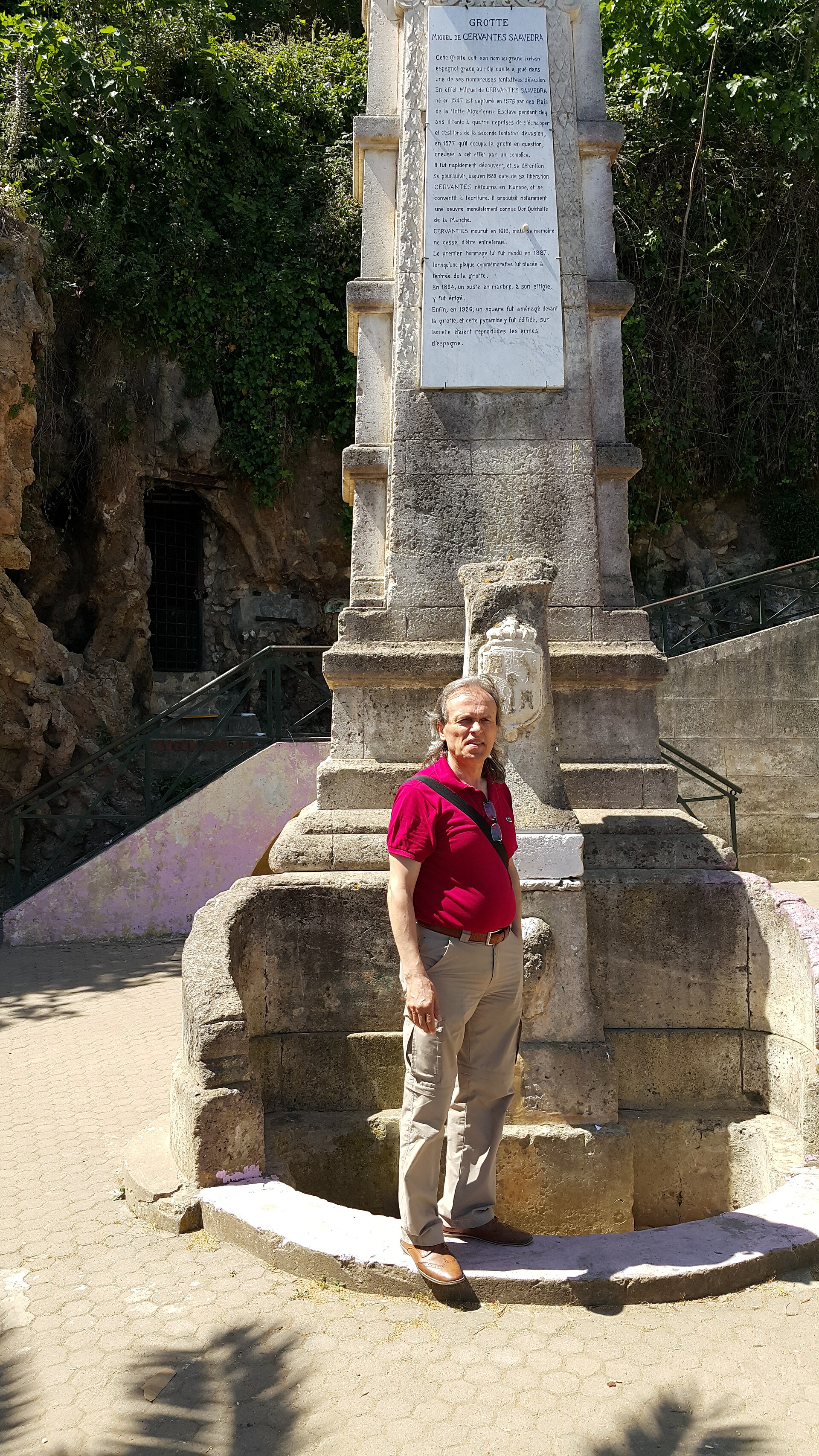
Wikimedia Commons · Creative Commons Attribution-Share Alike 4.0 International · file After corsairs captured the Sol off the Catalan coast, Cervantes was taken to Algiers and held for ransom, beginning nearly five years of captivity. Arrival followed his capture on 26 September 1575; the exact arrival day and captive lodging are not specified.
Embarks from Naples for Spain
· Port of Naples, Naples, Campania, Italy
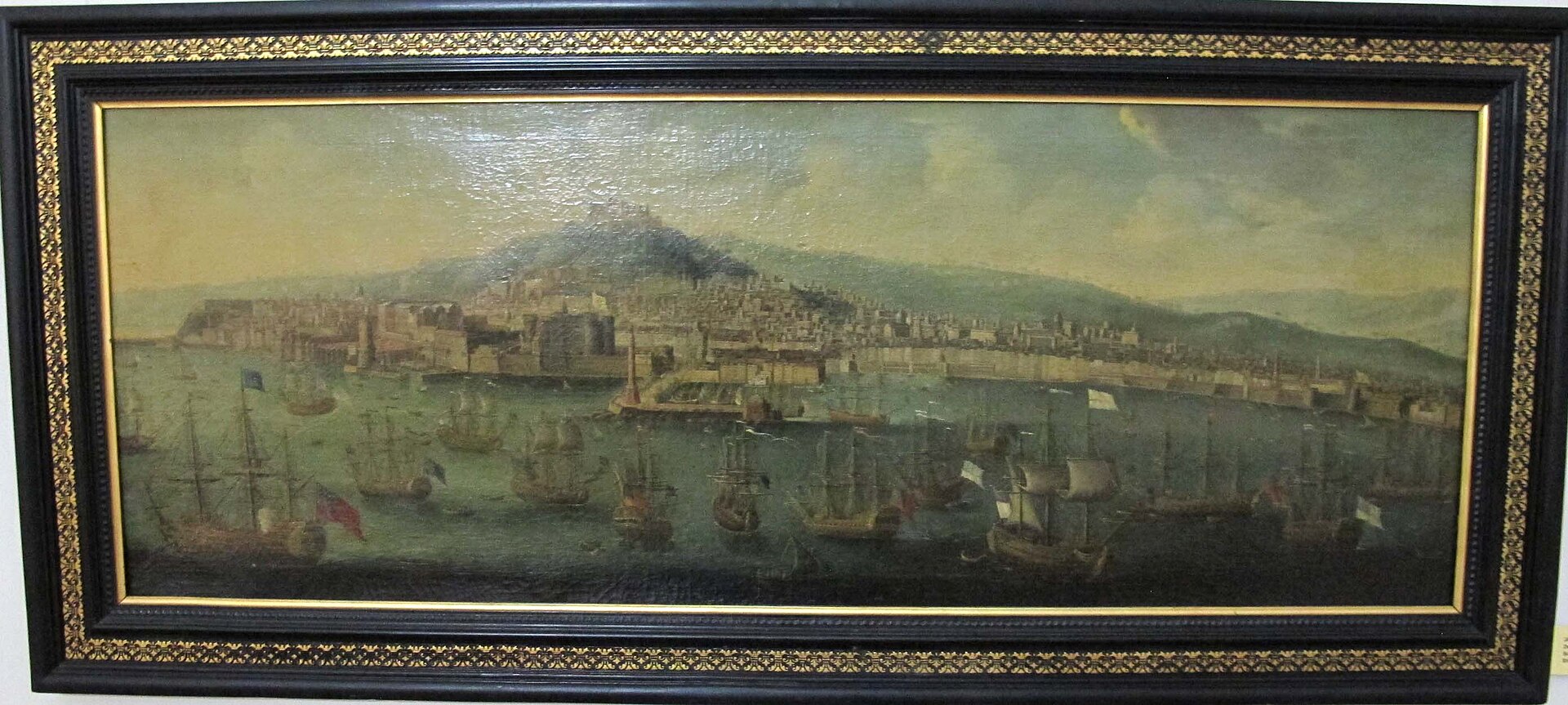
Wikimedia Commons · Creative Commons Attribution 3.0 Unported · file Carrying military recommendations, Cervantes boarded the galley Sol at Naples to return to Spain; corsairs captured the vessel later that month. Coordinates represent the historic harbor area rather than a documented berth.
Confined in the king's bath
· King's Bath, Algiers, Algeria
Following the betrayal of his second escape plan, Cervantes accepted responsibility and was confined in the ruler's prison compound in Algiers. The source dates the failed escape to September 1577. The bath's precise historical footprint is uncertain; coordinates represent old Algiers.
Lands at Dénia after ransom
· Port of Dénia, Valencian Community, Spain
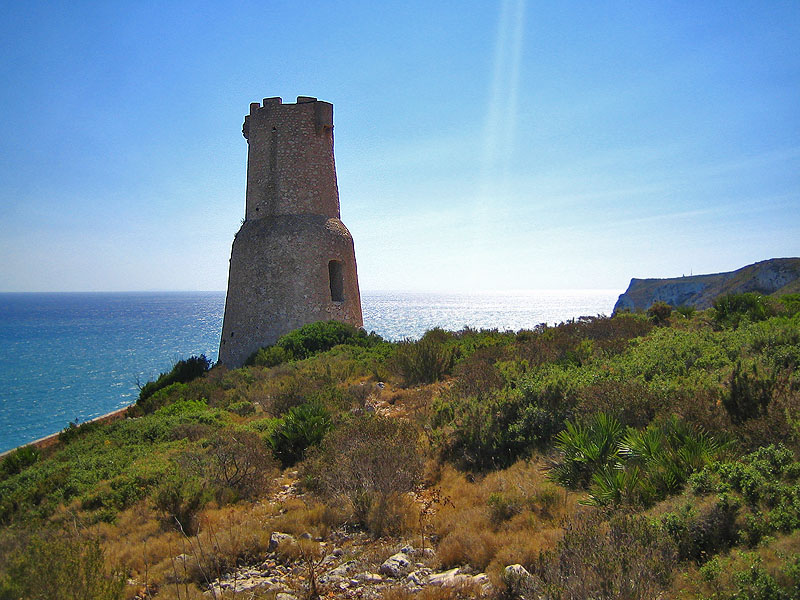
Wikimedia Commons · Public domain · file After his ransom in Algiers, Cervantes returned to Spanish territory through Dénia, the first Spanish land reached by the freed captives. The voyage departed Algiers on 24 October, making the stated landing date 27 October 1580; coordinates represent Dénia's port.
Undertakes mission to Oran
· Oran, Algeria
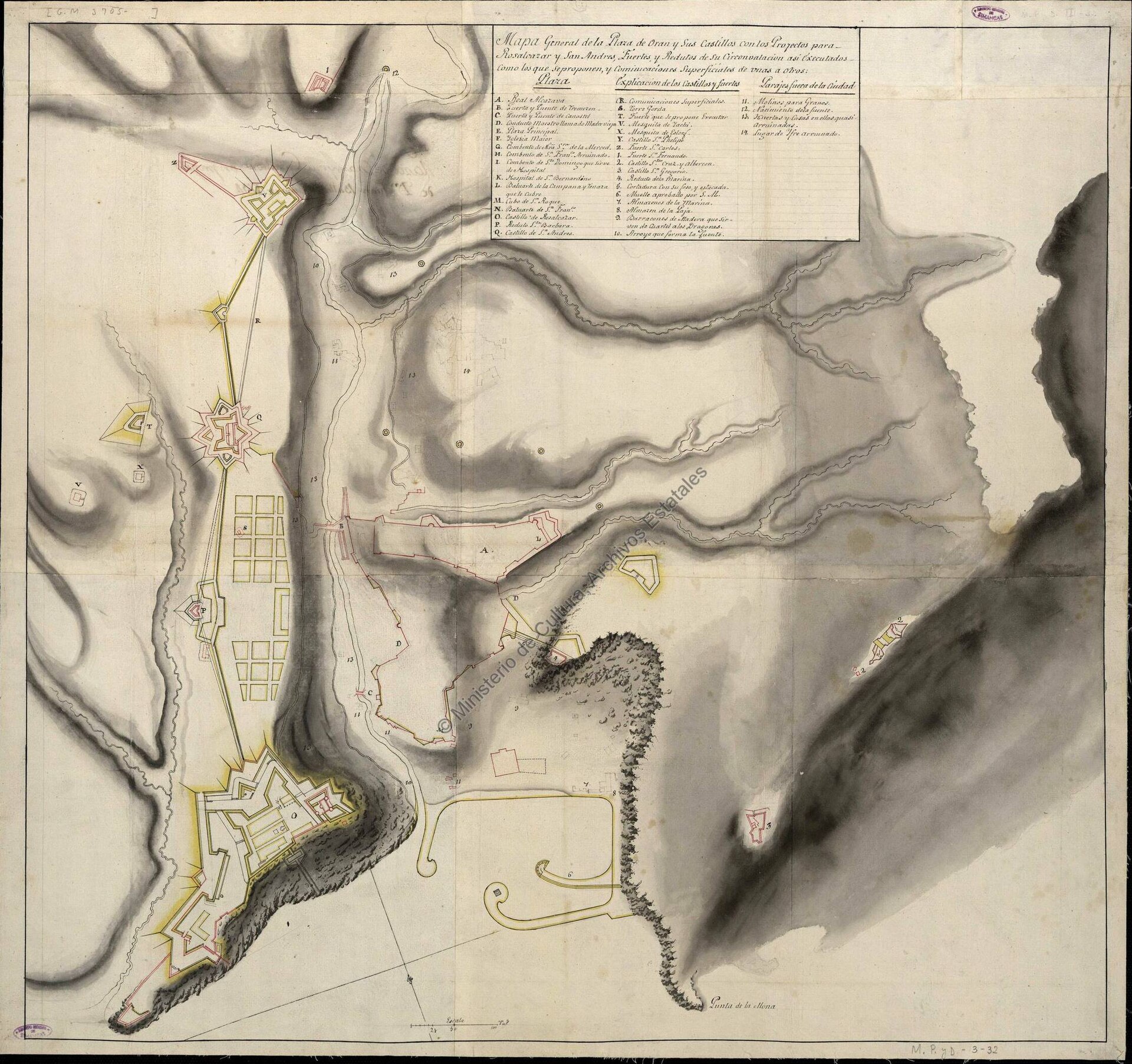
Wikimedia Commons · Creative Commons Public Domain Mark 1.0 · file Cervantes visited Oran on a royal intelligence mission shortly after his return from captivity, drawing again on his North African experience. The source supports spring 1581 but not a more precise date; coordinates represent Oran.
Returns frequently to Madrid
· Madrid, Community of Madrid, Spain
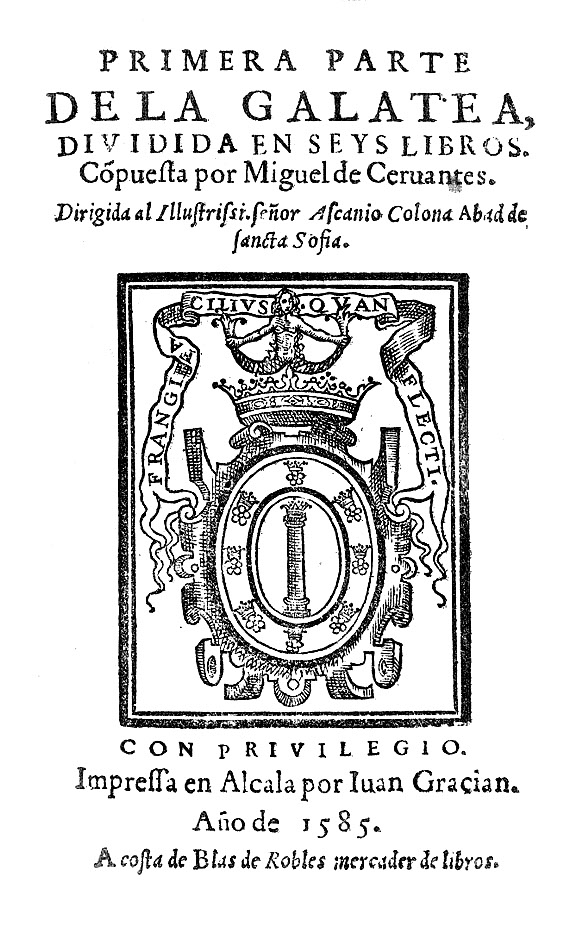
Wikimedia Commons · Public domain · file Following his North African mission, Cervantes was again documented in Madrid, where he pursued patronage, literary work and official employment. The source documents recurring visits over 1582–1585 rather than one continuously dated residence.
Visits Esquivias and meets Catalina
· Esquivias, Castile-La Mancha, Spain
Cervantes visited Esquivias to help settle the affairs of his deceased friend Pedro Laínez and met Catalina de Salazar y Palacios there. The source supports month precision but not a specific day.
Marries in Esquivias
· Church of Our Lady of the Assumption, Esquivias, Castile-La Mancha, Spain
Cervantes married Catalina de Palacios y Salazar in Esquivias, establishing his strongest domestic connection outside Madrid. Coordinates represent the parish church identified with the marriage; the building was subsequently altered.
Establishes his Andalusian base in Seville
· Seville, Andalusia, Spain
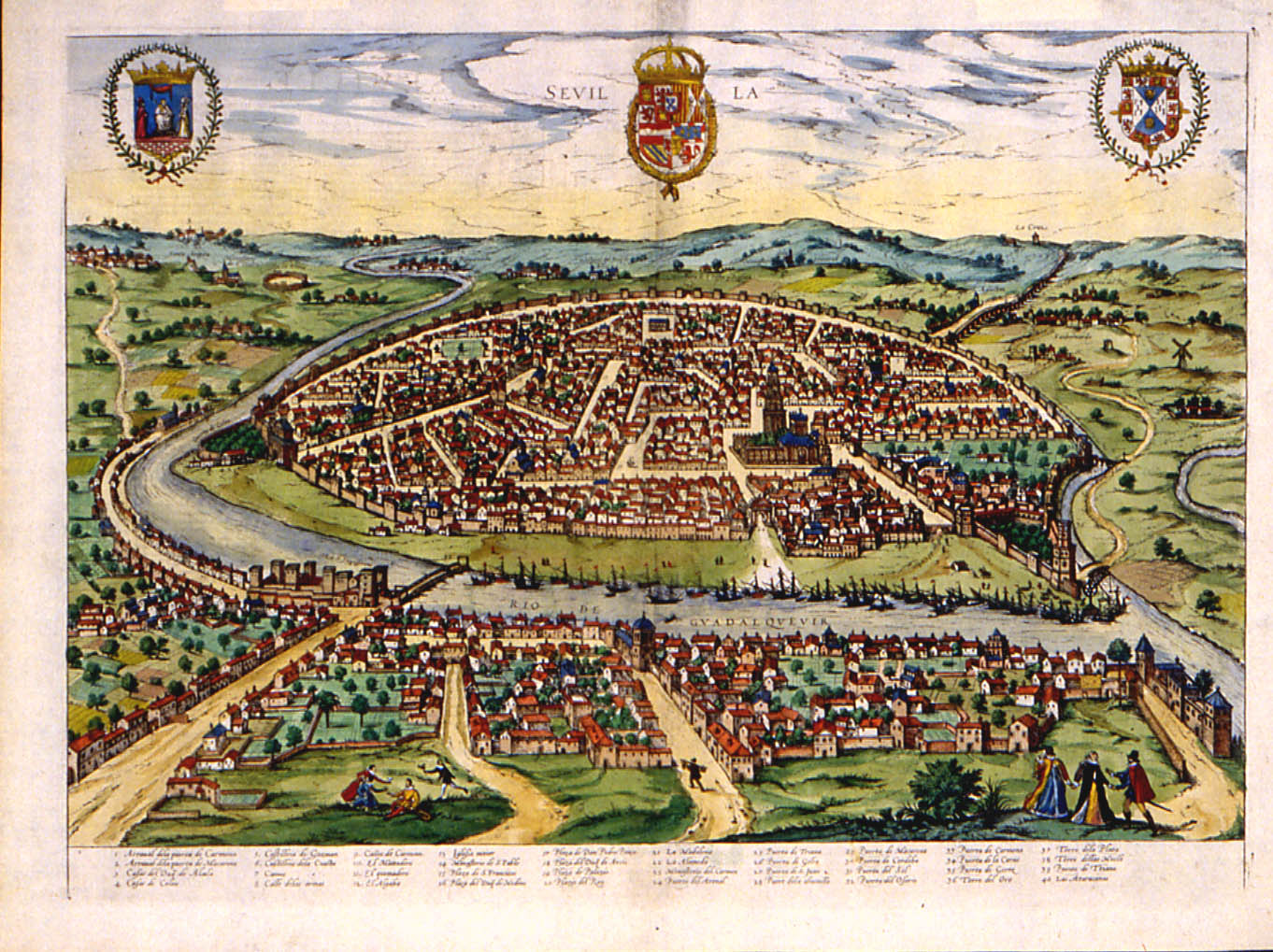
Wikimedia Commons · Public domain · file As a royal purchasing commissioner, Cervantes made Seville his principal base while procuring provisions for the Spanish fleet. The source describes a more-or-less fixed residence interrupted by extensive official travel; city-center coordinates are used.
Collects provisions at Castro del Río
· Castro del Río, Andalusia, Spain
Cervantes worked in Castro del Río collecting grain, oil and other provisions intended for the Armada. The surrounding source explicitly states that Cervantes was in Castro del Río on this first visit; coordinates represent the town.
Requisitions oil at Carmona
· Carmona, Andalusia, Spain
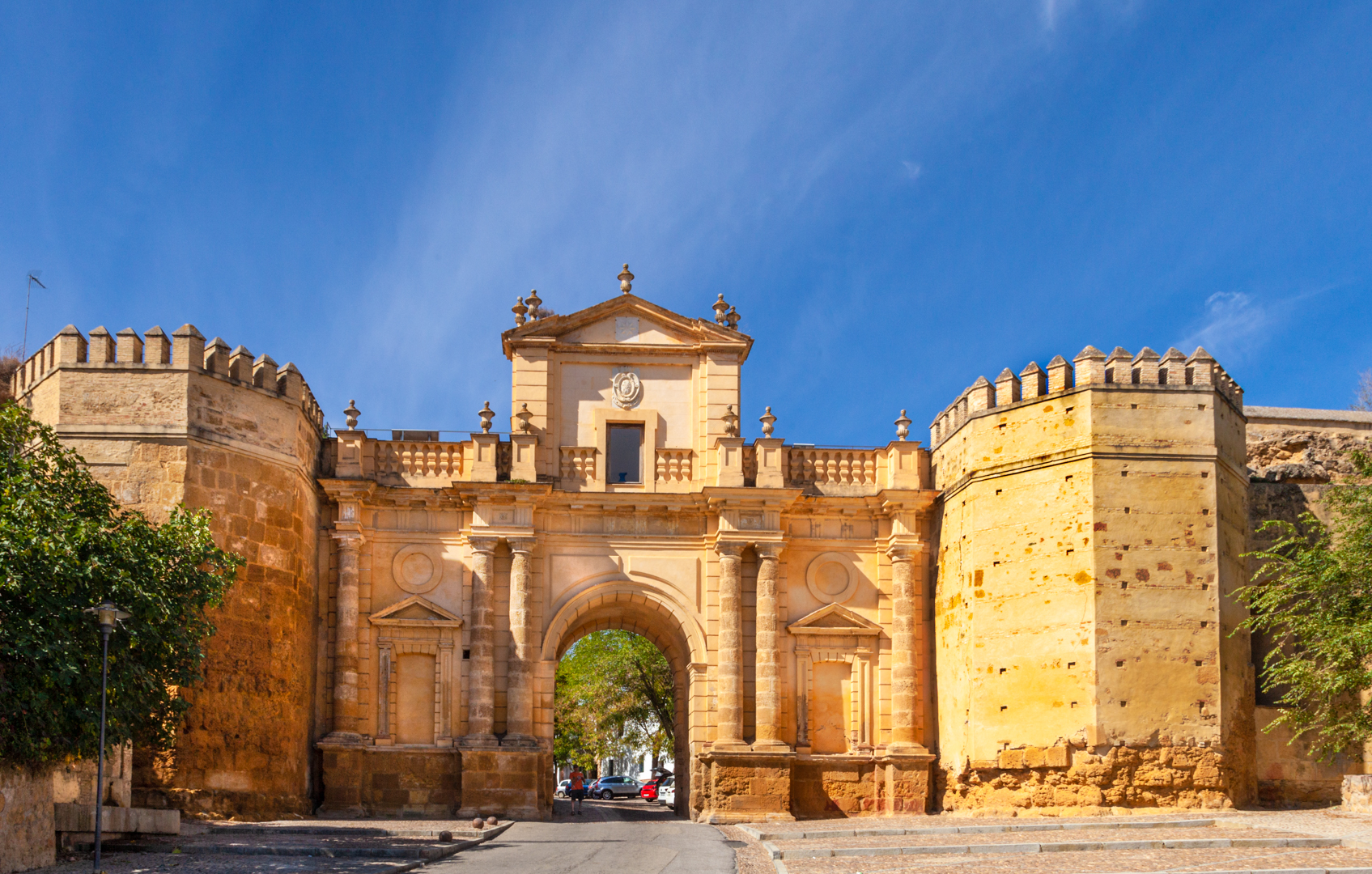
Wikimedia Commons · Creative Commons Attribution 2.0 Generic · file Cervantes was in Carmona early in 1590 under commission to requisition oil, part of his difficult logistical work for the Crown. The source supports early 1590 but not a month or exact site; coordinates represent Carmona.
Procures grain in Jaén
· Jaén, Andalusia, Spain
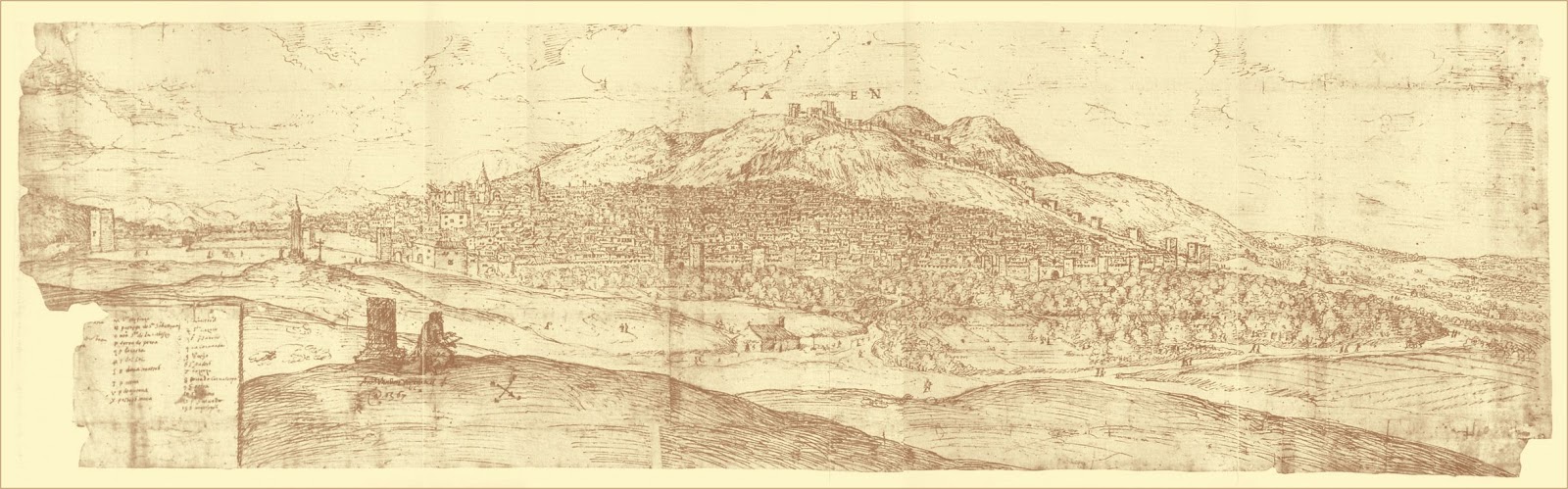
Wikimedia Commons · Public domain · file Cervantes traveled through Jaén and its province as royal purchasing commissioner, obtaining food for Spanish troops and naval forces. A separate documentary chronology places him in Jaén on 18 November 1591; settlement coordinates are used.
Returns to Castro del Río and is arrested
· Castro del Río, Andalusia, Spain
During a second provisioning visit, Cervantes was notified of an arrest sentence concerning his earlier conduct as royal commissioner and was briefly jailed. The source dates notification and immediate arrest to 21 September. The historic jail site is uncertain, so town coordinates are used.
Imprisoned in Seville's Royal Jail
· Former Royal Jail, Calle Sierpes 85, Seville, Andalusia, Spain
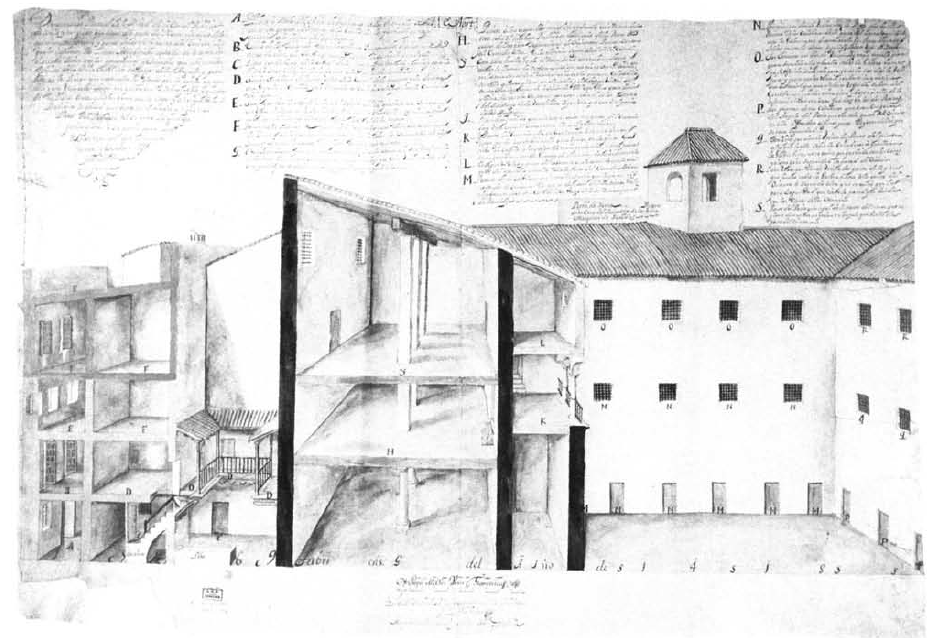
Wikimedia Commons · Public domain · file A banking failure involving money Cervantes had collected led to his imprisonment in Seville's Royal Jail until the following spring. Coordinates approximate the documented former jail location at present-day Calle Sierpes 85.
Resides at the Valladolid house
· Casa de Cervantes, Valladolid, Castile and León, Spain
Cervantes lived with his family in Valladolid while securing authorization and arrangements for the publication of the first Don Quixote. Coordinates represent the preserved Casa de Cervantes complex; the broader Valladolid residence began by 1603 according to other chronologies.
Settles near Antón Martín Hospital
· Antón Martín and Atocha district, Madrid, Spain
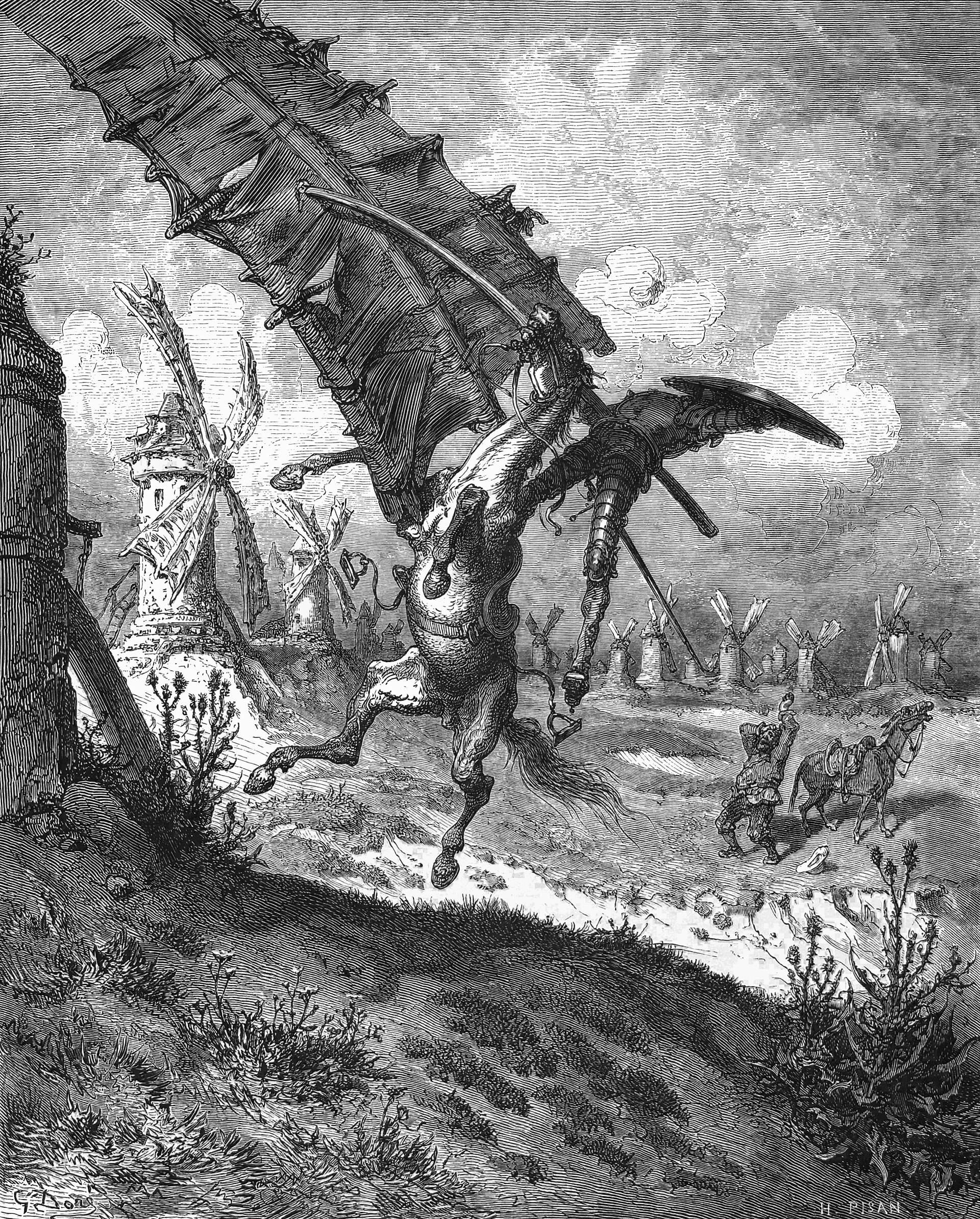
Wikimedia Commons · Public domain · file After the royal court returned to Madrid, Cervantes established a household in the Atocha district behind the Antón Martín hospital. The source states that he was known to be lodged there in February 1608; coordinates represent the Antón Martín area.
Moves to Calle del León
· Calle del León, Barrio de las Letras, Madrid, Spain

Wikimedia Commons · Public domain · file Cervantes moved into Madrid's literary quarter on Calle del León, near the homes and gathering places of other Golden Age writers. The source does not identify the exact building occupied in 1610; coordinates represent Calle del León.
Moves to Calle de las Huertas
· Calle de las Huertas, Barrio de las Letras, Madrid, Spain
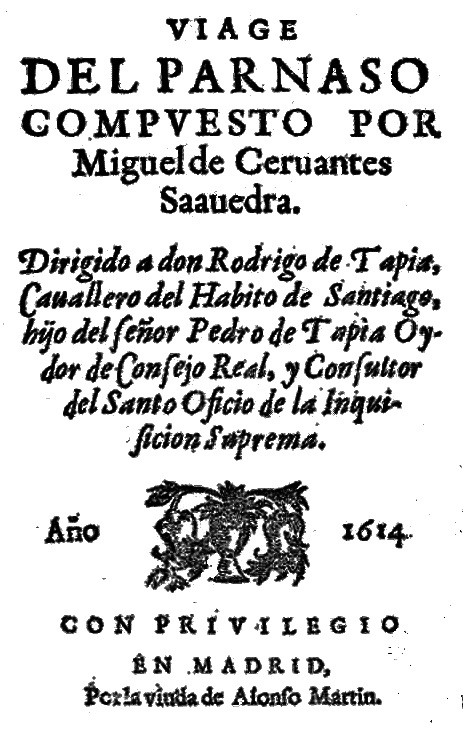
Wikimedia Commons · Public domain · file In the closing phase of his literary career, Cervantes relocated nearby to Calle de las Huertas, behind the cemetery of San Sebastián. The exact house is not extant or securely located; coordinates represent the documented street near San Sebastián.
Dies at his Calle del León home
· Calle del León at Calle de Francos, Barrio de las Letras, Madrid, Spain
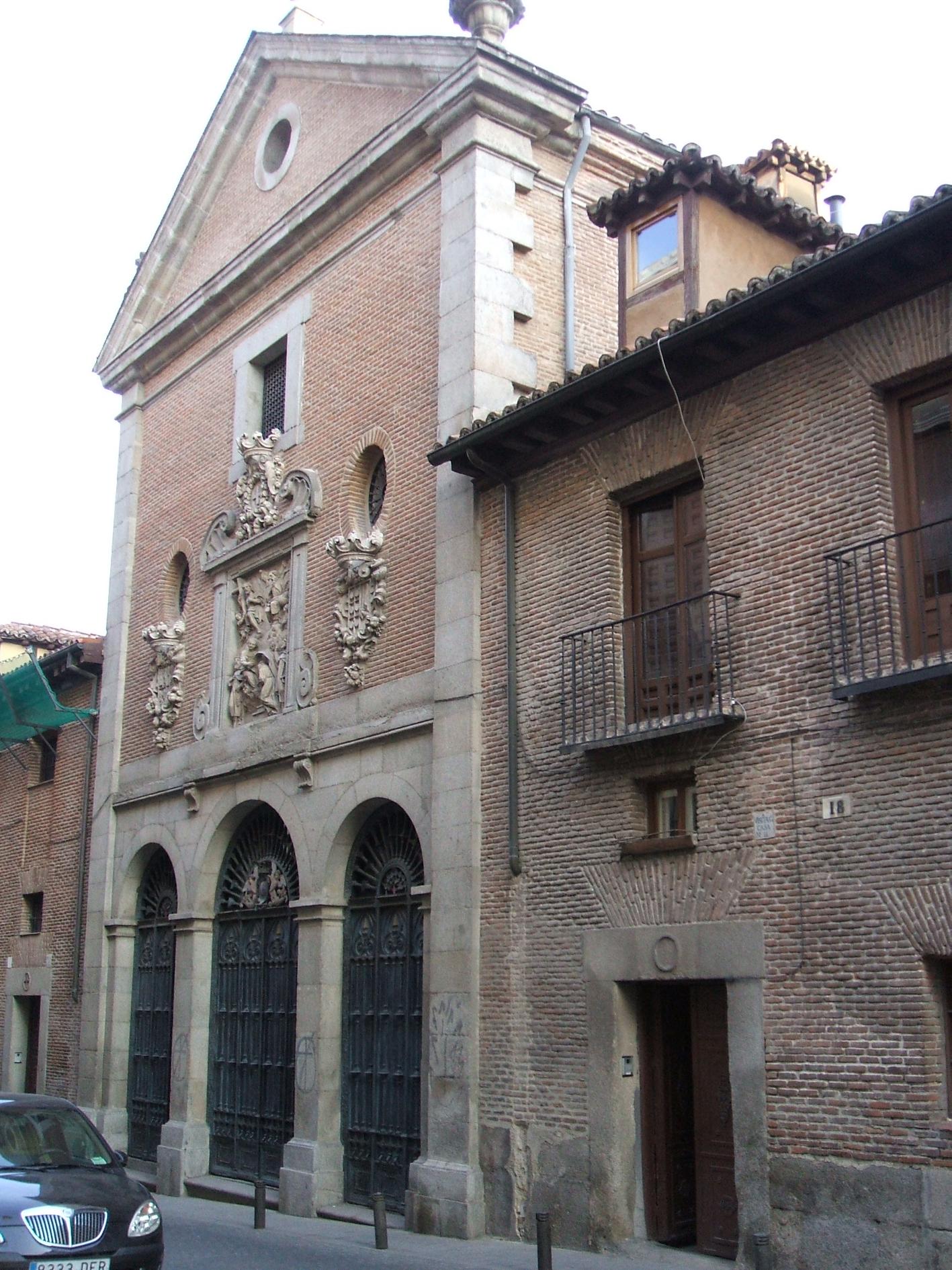
Wikimedia Commons · Public domain · file Cervantes died in Madrid after completing the dedication to Persiles. He was buried the following day at the nearby Convent of the Barefoot Trinitarians. Calle de Francos is now Calle de Cervantes. Coordinates approximate the documented corner of his final residence.