
12 moments
Birth at Hatsekats
· Hatsekats (modern Güven), Muş Province, Turkey
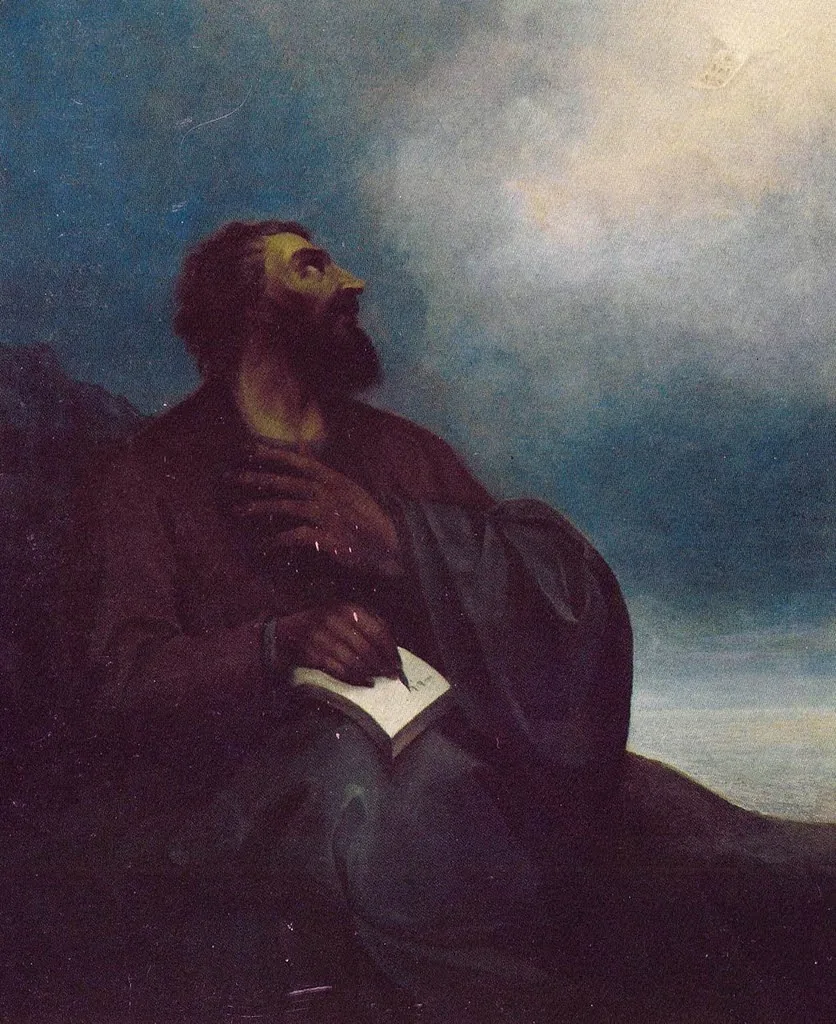
Wikimedia Commons · Public domain (PD-Art; Public Domain Mark 1.0) · file Mashtots was born in Hatsekats, in the historical district of Taron. The year 361 is accepted by recent scholarship; other proposed birth years exist.
Monastic life in Goghtn
· Goghtn, historical Armenia (representative point: Ordubad, Azerbaijan)
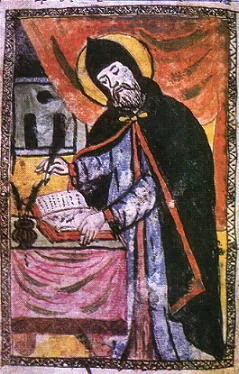
Wikimedia Commons · Public domain (PD-old-100; PD-Art; Public Domain Mark 1.0) · file After leaving royal service, Mashtots became a monk and lived in a monastery in Goghtn before beginning his wider missionary work. The source dates this event circa 394; the coordinate represents the historical Goghtn district.
First mission in Goghtn
· Goghtn, historical Armenia (representative point: Ordubad, Azerbaijan)
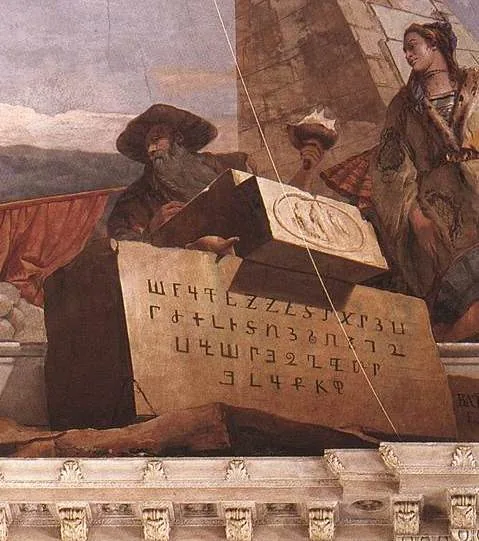
Wikimedia Commons · Public domain · file Mashtots began a mission in Goghtn, preaching Christianity with disciples among the district's inhabitants. The source dates the mission around 395; coordinate represents the historical district rather than an identified mission site.
Alphabet work at Samosata
· Samosata, Commagene (near modern Samsat), Adıyaman Province, Turkey
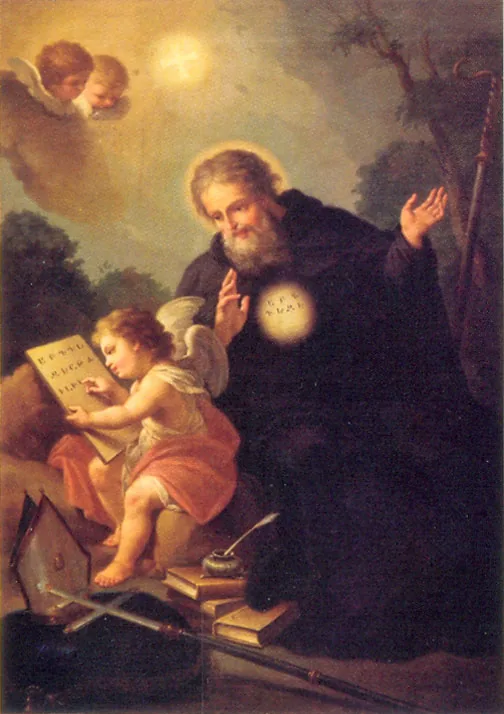
Wikimedia Commons · Public domain (PD-old-100; PD-Art; Public Domain Mark 1.0) · file At Samosata, Mashtots worked with the scribe Rufinus, refined the Armenian letters, and began translating Scripture with pupils. The itinerary is dated by modern scholarship to 406–407; the ancient city's location is represented by its documented archaeological coordinate.
Journey to Amida
· Amida (modern Diyarbakır), Diyarbakır Province, Turkey
On the same Mesopotamian journey, Mashtots was received by bishops and civic elites at Amida. A recent scholarly reconstruction places this first Roman-territory journey in 406–407; 406 is used as the representative year.
Journey to Edessa
· Edessa (modern Şanlıurfa), Şanlıurfa Province, Turkey
Mashtots travelled with pupils to Edessa during the journey in which the Armenian alphabet was developed and refined. A recent scholarly reconstruction places this first Roman-territory journey in 406–407; 406 is used as the representative year.
Return to Ayrarat near the New City
· New City, Ayrarat, Armenia (conventionally associated with Vagharshapat)
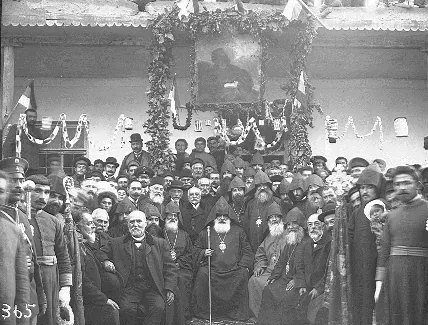
Wikimedia Commons · Public domain (PD-Russia) · file After the Mesopotamian journey, Mashtots returned with his party to Armenia, arriving in Ayrarat near the New City and being ceremonially received. The regnal-year chronology is disputed. The coordinate is a representative point at Vagharshapat, conventionally identified with the New City in this context.
Mission in Iberia
· Kingdom of Iberia, Caucasus (representative point near Mtskheta, Georgia)
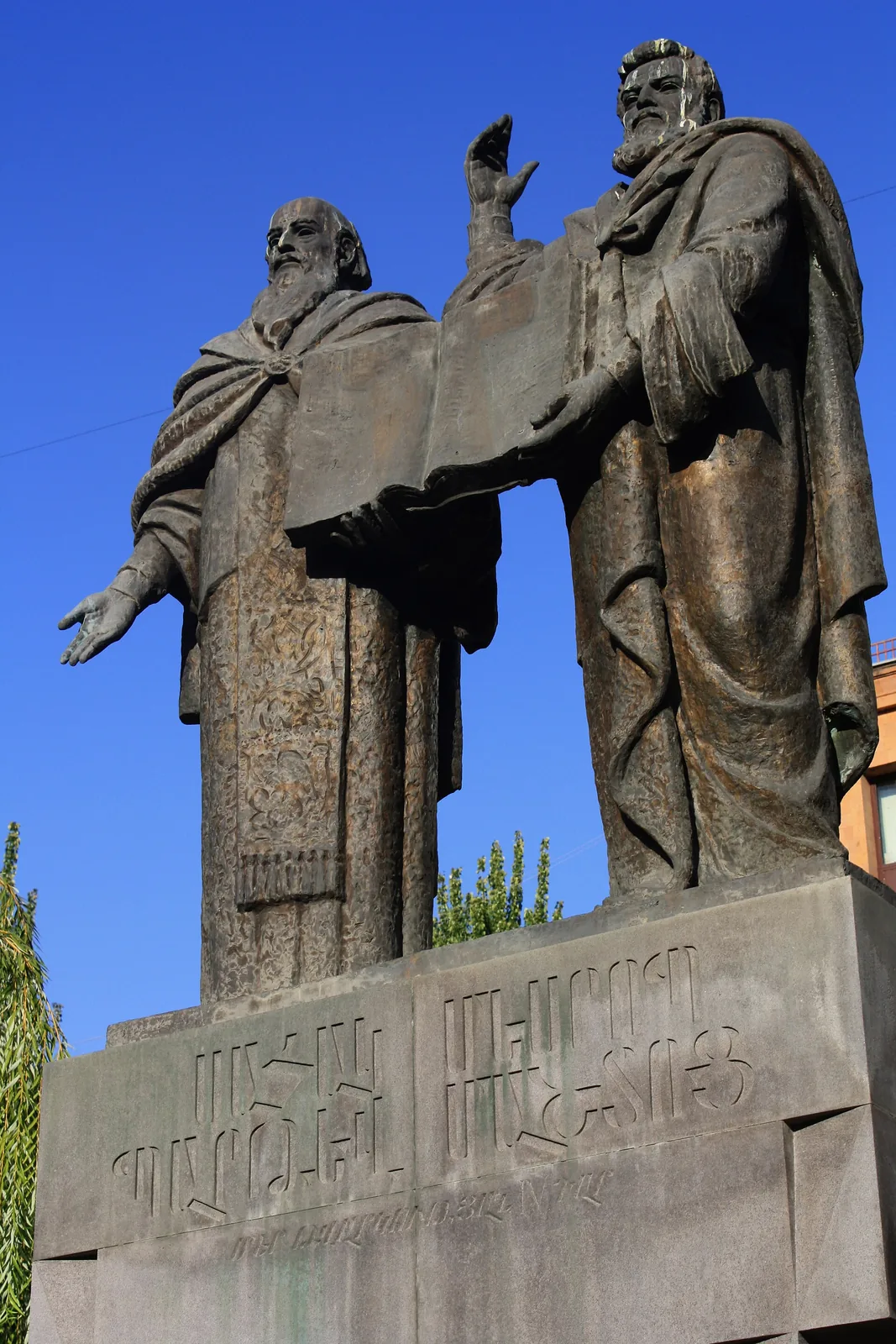
Wikimedia Commons · Creative Commons Attribution-Share Alike 3.0 Unported · file Mashtots travelled into Iberia with selected disciples, met King Bakur and Bishop Moses, and organized religious and educational work there. The source establishes the journey but does not give a calendar year. A scholarly reconstruction places this first Iberian journey probably around 413; coordinate is representative for the kingdom, not an identified venue.
Arrival at Melitene
· Melitene (modern Malatya), Malatya Province, Turkey
During his later journey into Roman territory, Mashtots brought many disciples to Melitene and entrusted them to Bishop Acacius. A recent scholarly reconstruction dates Mashtots's second journey to Roman territory to 422–423; 422 is used as the representative year.
Audience at Constantinople
· Constantinople (modern Istanbul), Turkey
Mashtots travelled onward to Constantinople, where he appeared before the imperial court and Patriarch Atticus and secured authorization for work among Armenians under Roman rule. A recent scholarly reconstruction dates this journey to 422–423; 422 is used as the representative year.
Burial at Oshakan
· Oshakan, Aragatsotn Province, Armenia
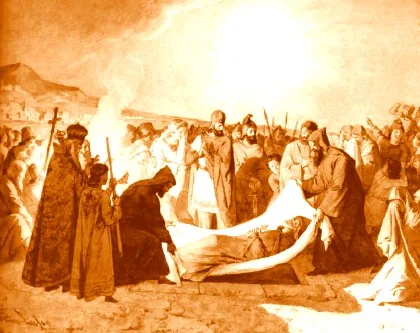
Wikimedia Commons · Public domain (PD-Art; Public Domain Mark 1.0) · file After his death, Mashtots's body was carried to Oshakan, where his memorial service and burial took place. This records Mashtots's posthumous physical presence during burial; his tomb is at Saint Mesrop Mashtots Church in Oshakan.
Death at Vagharshapat
· Vagharshapat, Armenia
Mashtots died at Vagharshapat after the death of Sahak Partev, ending a life of teaching, translation, and church administration. The date is traditional; Koriun places the death six months after Sahak's death.