
26 moments
Born at Bethlehem
· Bethlehem, West Bank
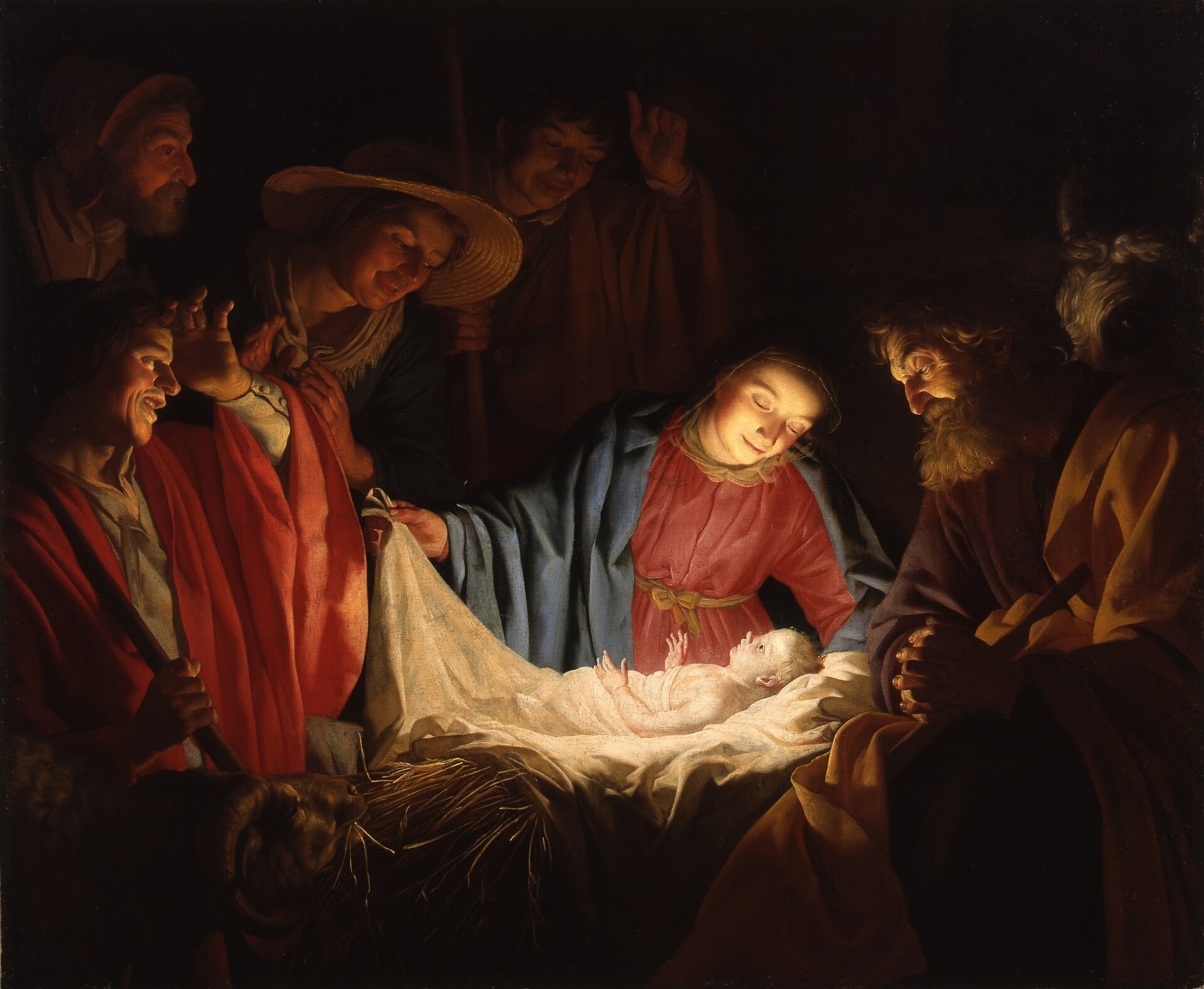
Wikimedia Commons · Public domain · file Matthew and Luke independently place Jesus's birth at Bethlehem during the reign of Herod the Great. Modern scholarship commonly dates the birth between 6 and 4 BC, so 5 BC is only a representative year within that scholarly range. The year 5 BC is a representative midpoint of the scholarly 6–4 BC birth range, not an independently attested exact year; the historicity of the Bethlehem birth tradition is debated.
Grew up in Nazareth
· Nazareth, Galilee, Israel
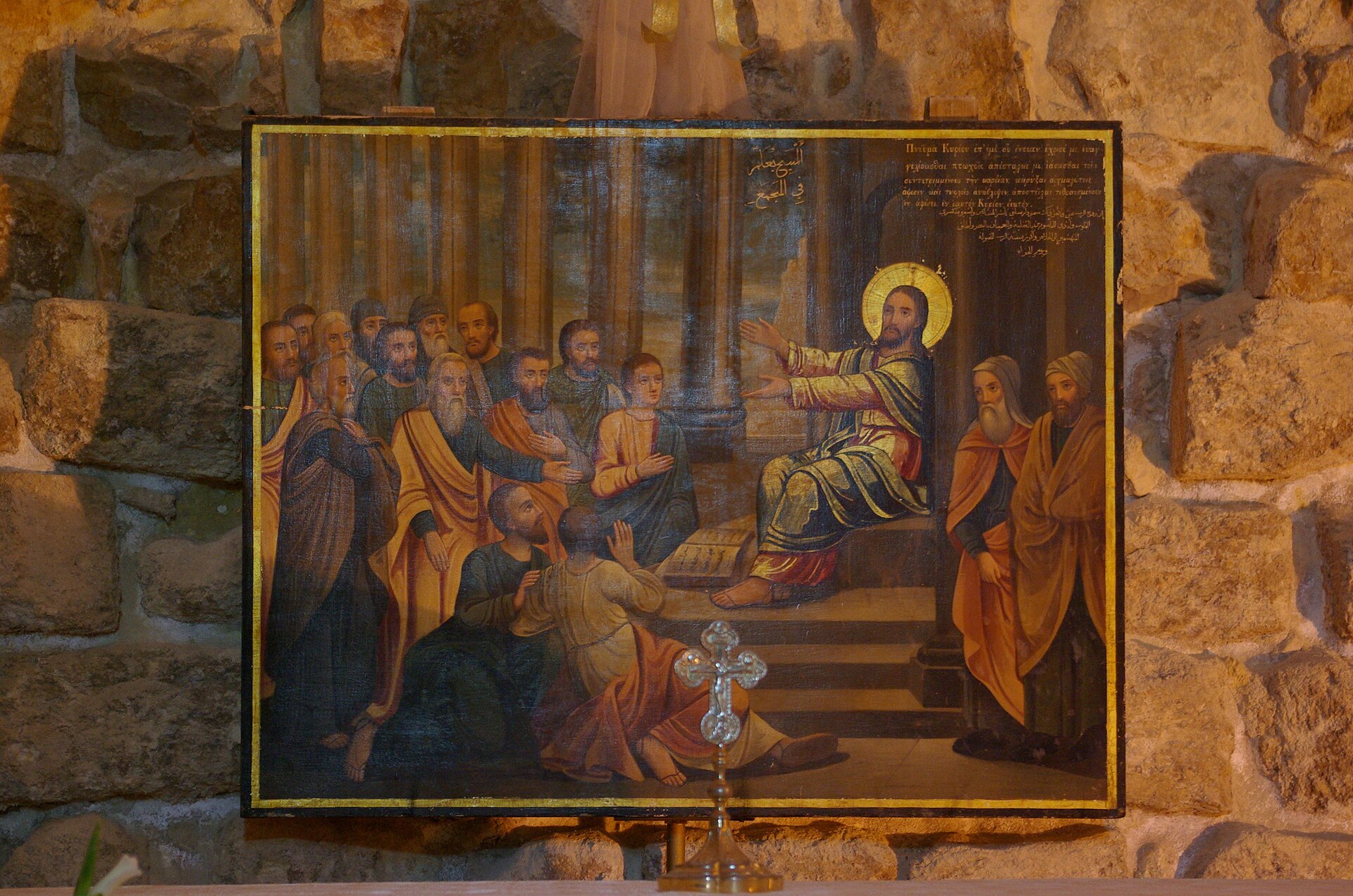
Wikimedia Commons · Public domain · file The canonical Gospel tradition identifies Nazareth as Jesus's childhood home. Nazareth is also the place-name most consistently associated with Jesus in early tradition ('Jesus of Nazareth'). The date is only a representative early-1st-century point in a multi-year childhood residence; the sources do not provide an absolute year for the move or residence.
Attended the wedding at Cana
· Kafr Kanna (traditional Cana), Galilee, Israel
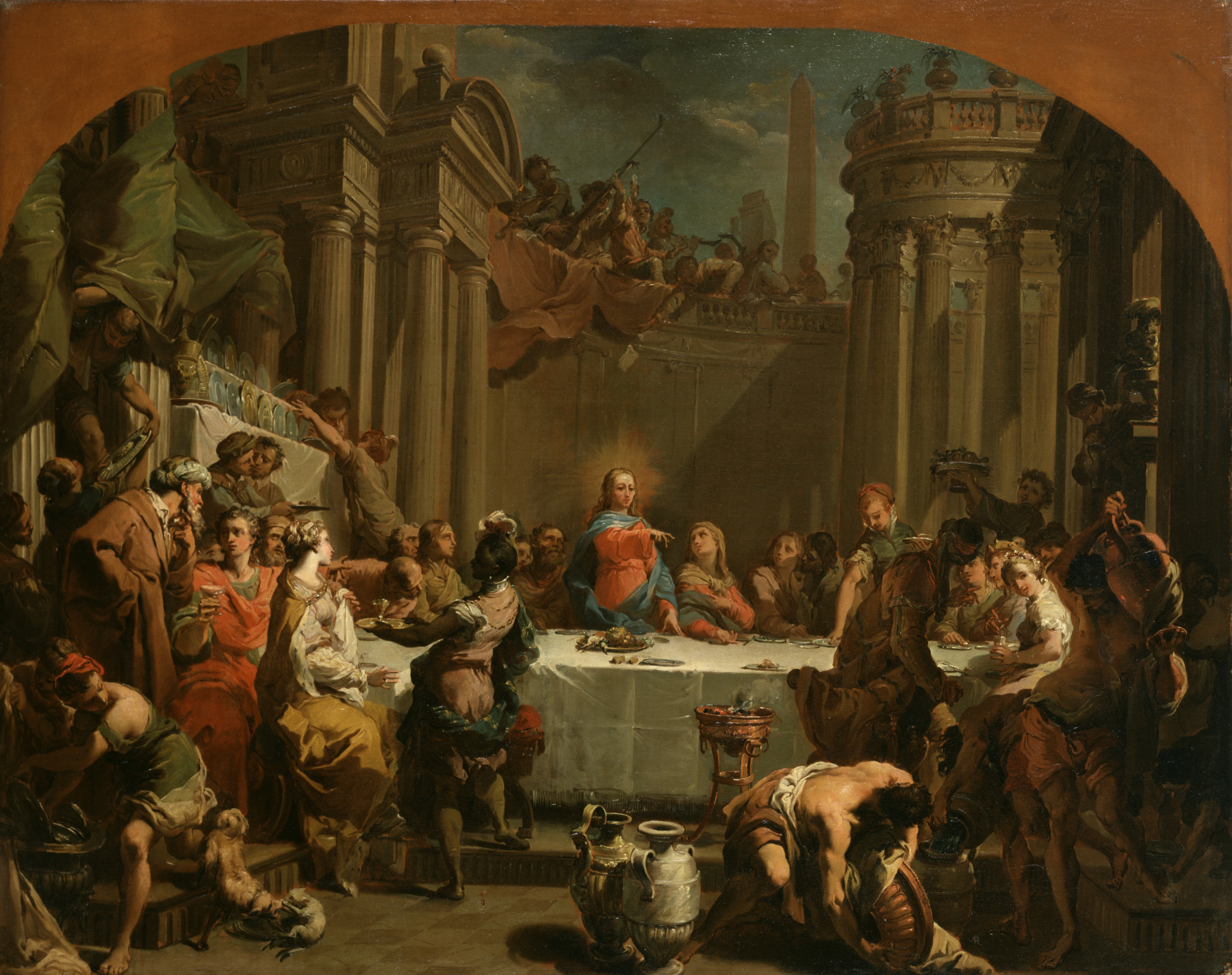
Wikimedia Commons · Public domain · file John places Jesus at a wedding in Cana, where the Gospel narrates the transformation of water into wine as his first sign. The identification of biblical Cana is disputed; Kafr Kanna is a traditional candidate. Absolute year is approximate.
Baptized in the Jordan
· Jordan River near Al-Maghtas / Qasr al-Yahud
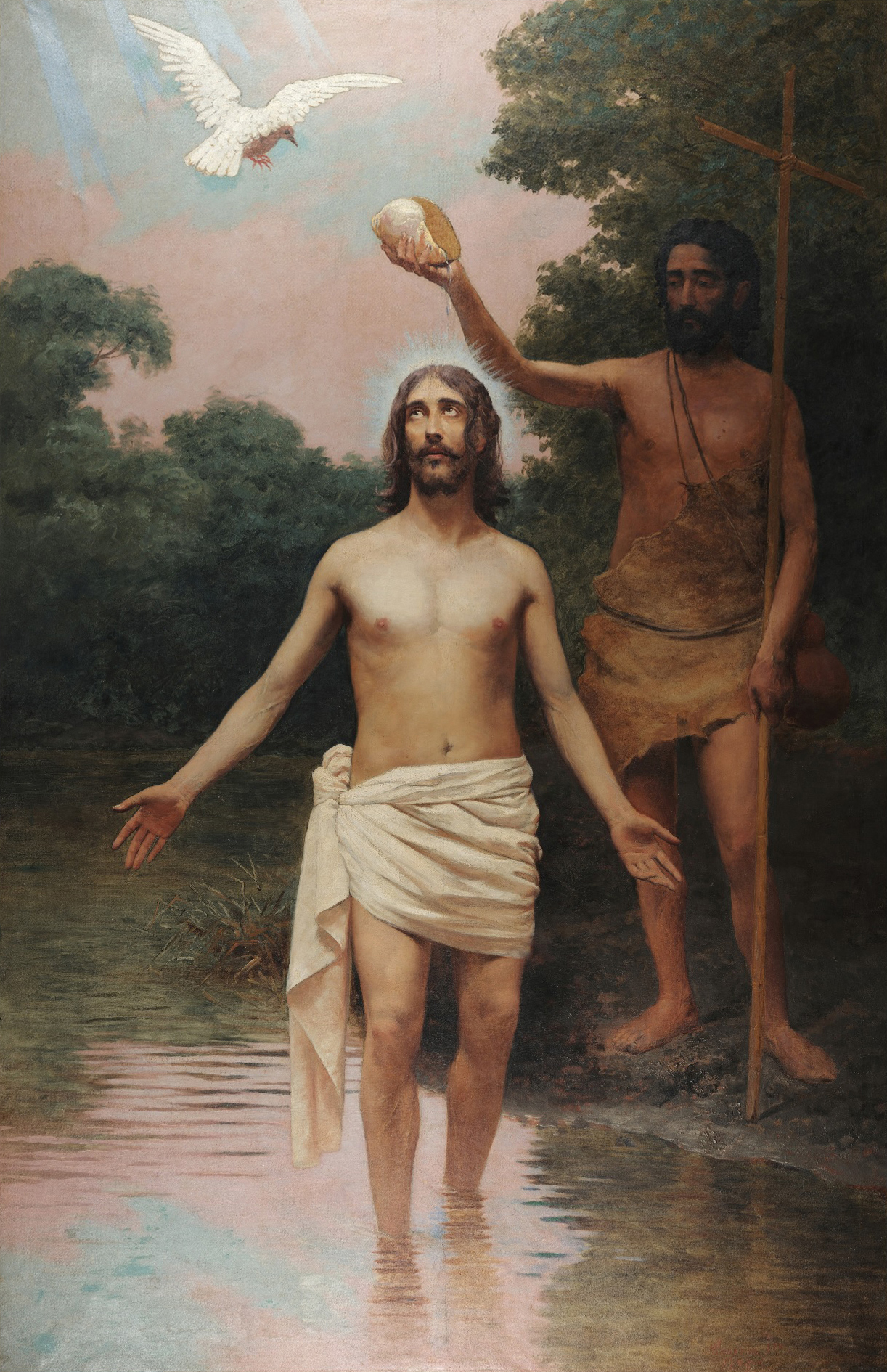
Wikimedia Commons · Public domain · file Jesus's baptism by John is one of the few episodes in his life widely regarded by historians as historical. The Gospels place it in the Jordan region; John's Gospel associates John's baptizing activity with 'Bethany beyond the Jordan.' AD 29 is within the commonly reconstructed AD 28–29 start of ministry. The exact baptism site and bank of the Jordan are disputed.
Called disciples by the Sea of Galilee
· Sea of Galilee, northern shore, Israel
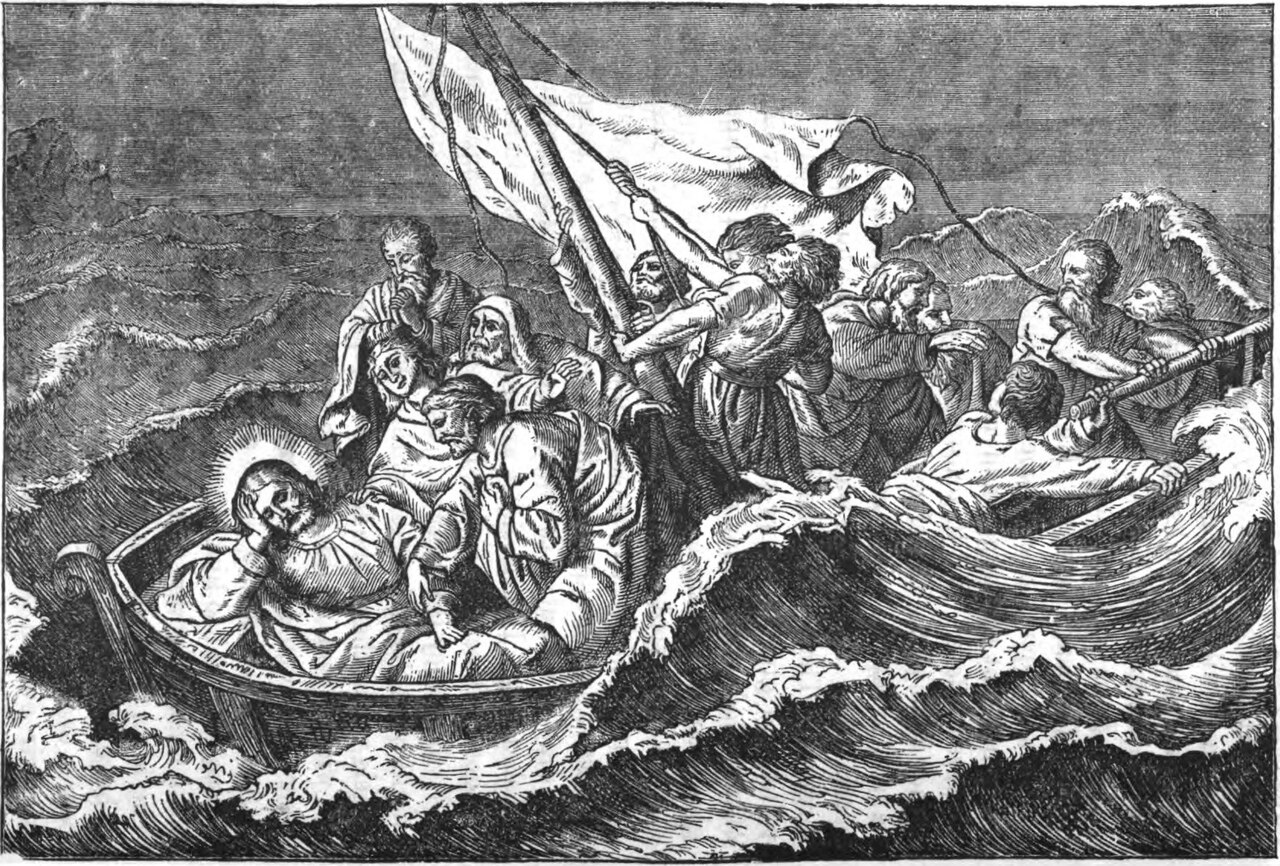
Wikimedia Commons · Public domain · file The Gospel narratives place the calling of Jesus's first disciples on the shores of the Sea of Galilee, anchoring the early movement in the lake's fishing communities. Representative shoreline coordinate near Capernaum; absolute year is approximate.
Crossed to the Gerasa/Gadara region
· Gadara region (Umm Qais), Jordan
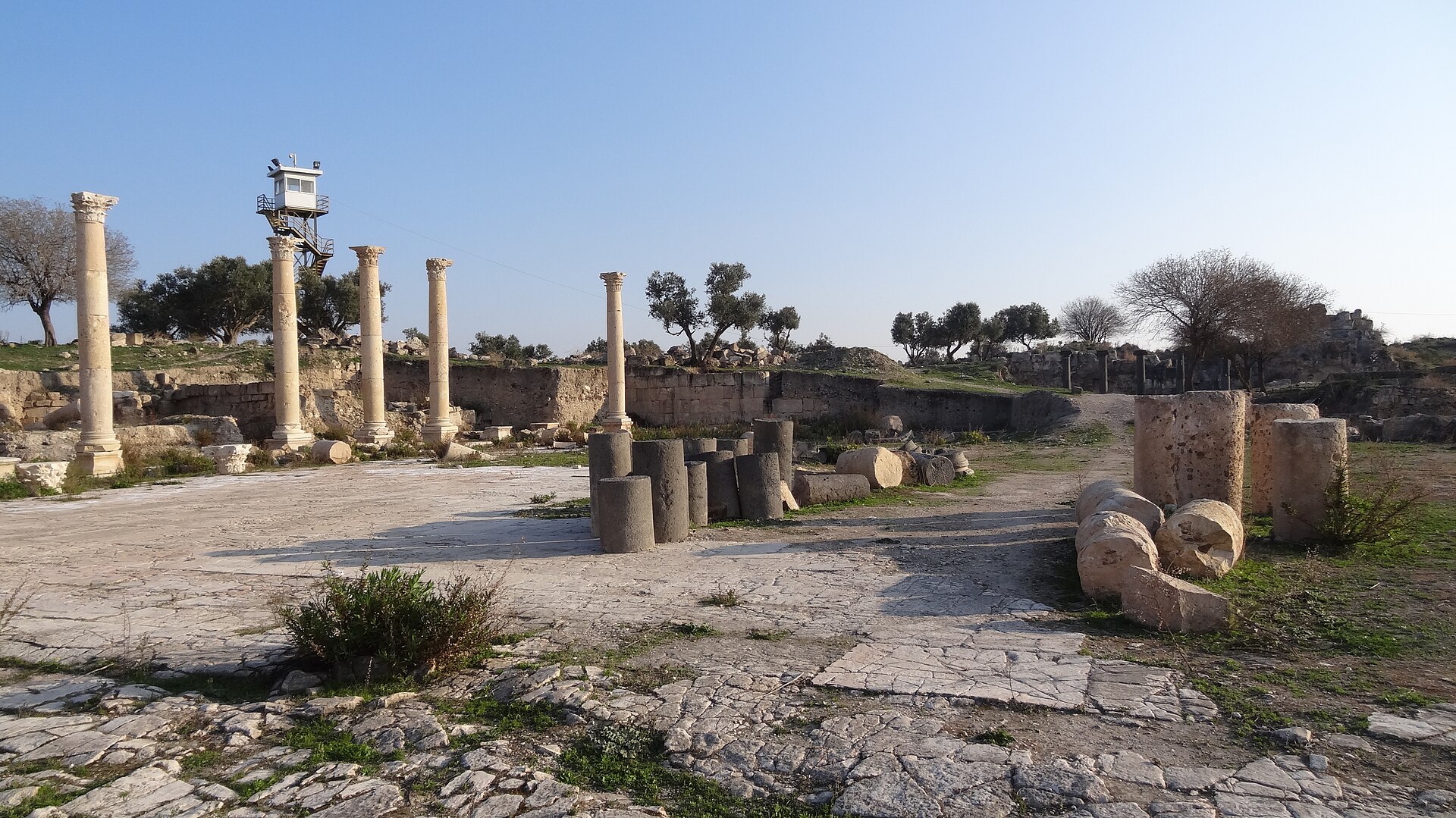
Wikimedia Commons · Creative Commons Attribution-Share Alike 3.0 Unported · file The Synoptic Gospels place Jesus across the Sea of Galilee in the region variously called Gerasa, Gergesa, or Gadara for the exorcism of the Gerasene demoniac. The manuscripts differ on the place-name; coordinate uses Gadara/Umm Qais as a representative candidate. Absolute year is approximate.
Entered Nain
· Nein (Nain), Lower Galilee, Israel
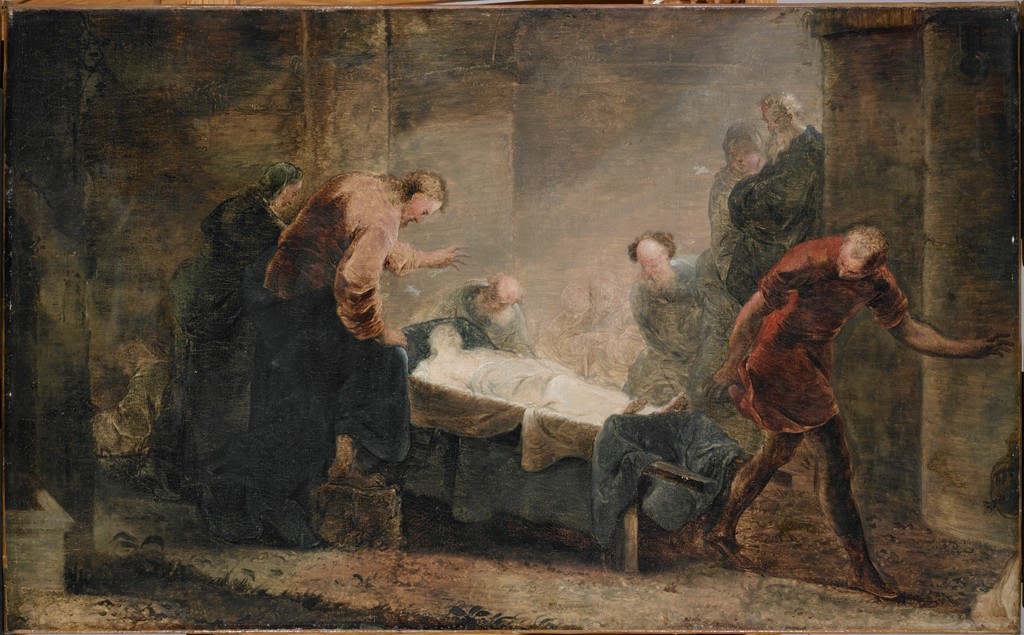
Wikimedia Commons · Public domain · file Luke alone places Jesus at Nain for the episode in which he is said to have raised a widow's son. Presence derives from a Luke-specific episode; absolute year is approximate.
Forty days in the Judaean Desert
· Judaean Desert
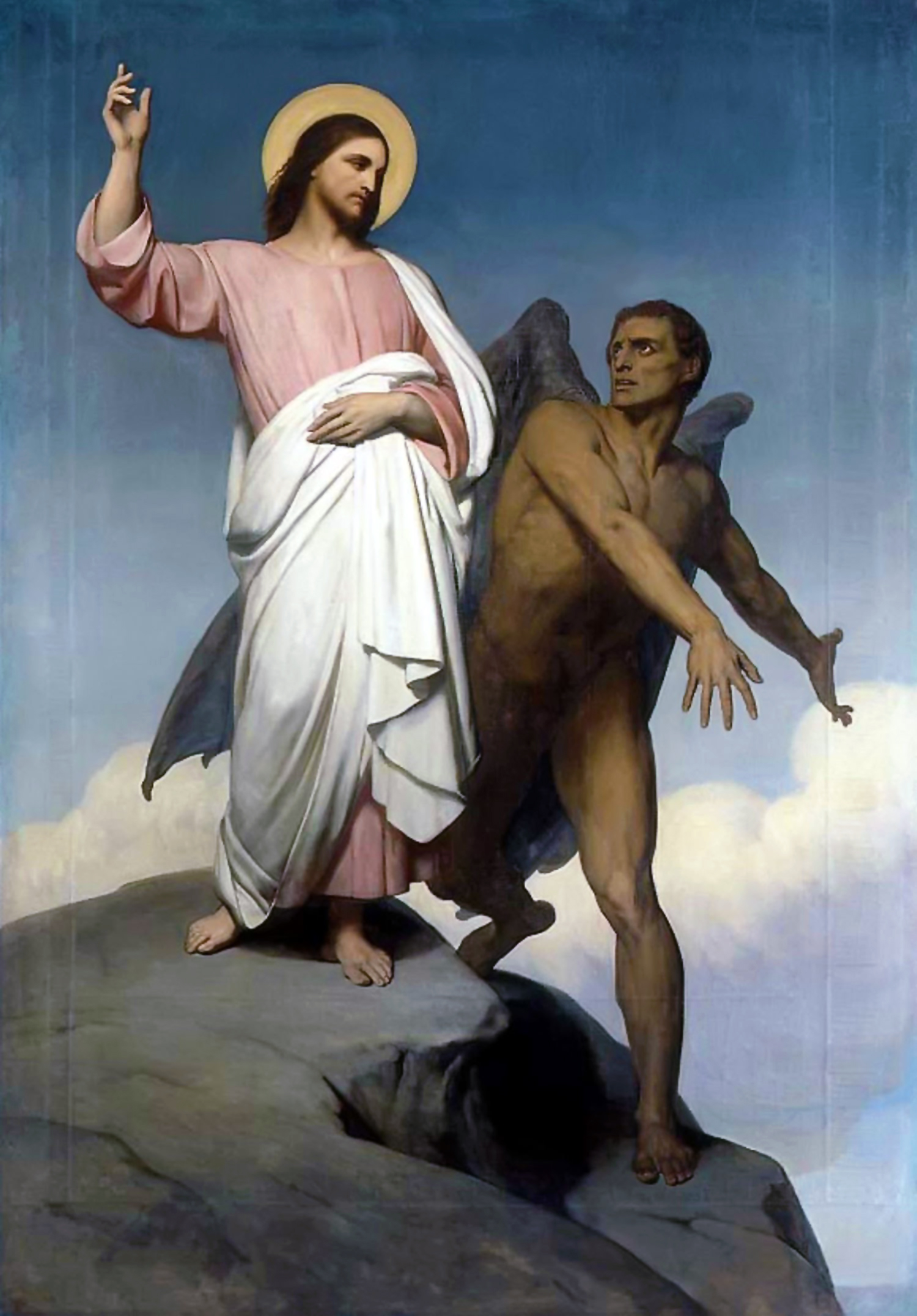
Wikimedia Commons · Public domain · file The Synoptic Gospels place Jesus in the Judaean wilderness immediately after his baptism, where the temptation narrative is set. The wilderness episode is Gospel tradition rather than a securely independently dated event; coordinate is a representative point in the Judaean Desert.
Preached at Capernaum
· Capernaum, Sea of Galilee, Israel
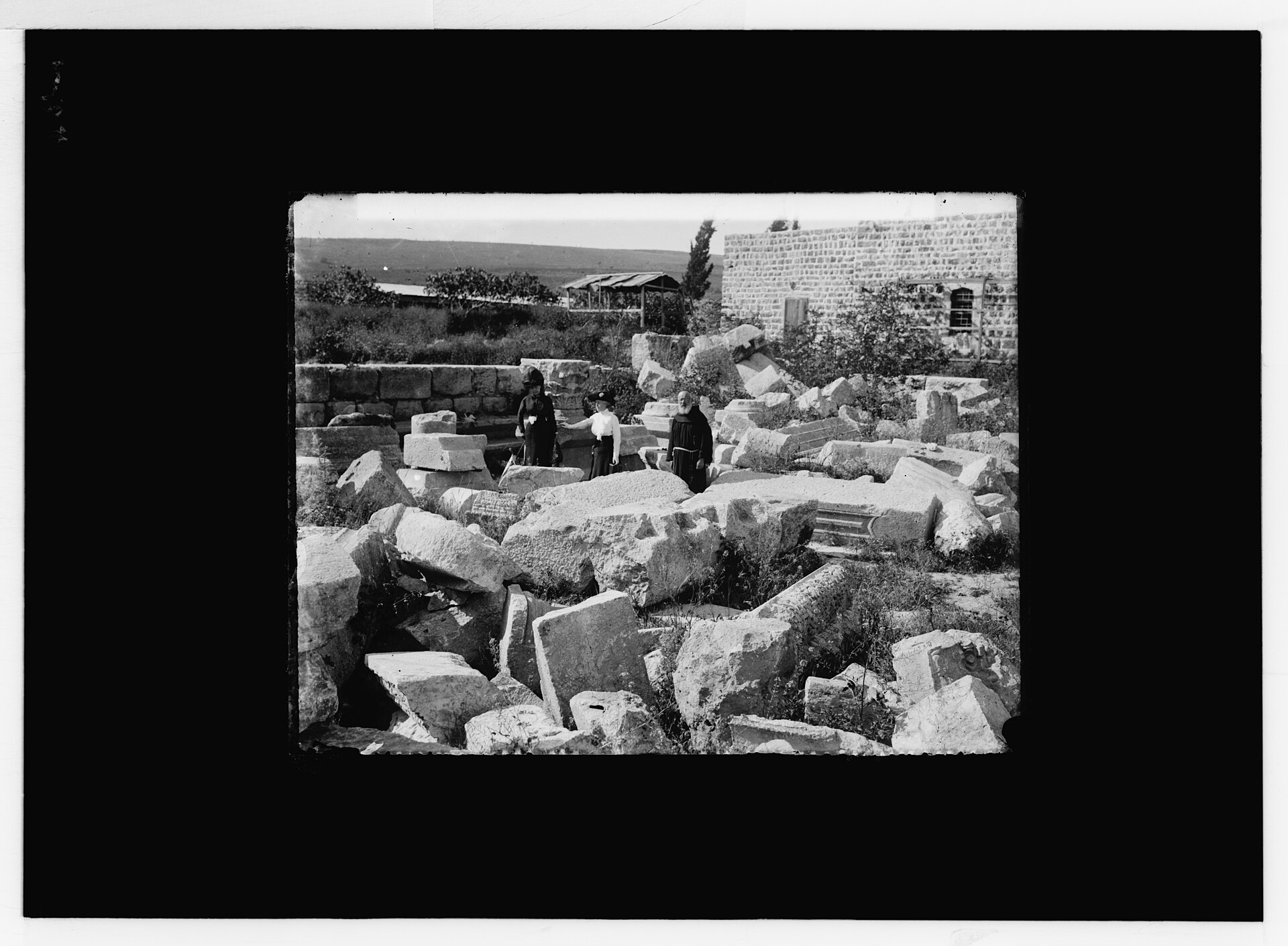
Wikimedia Commons · Public domain · file Capernaum is one of the best-attested centers of Jesus's Galilean activity in the Gospel tradition and likely functioned as a recurring base during his ministry. Absolute year is approximate; repeated activity at Capernaum cannot be assigned to one securely known year.
Returned to Galilee
· Galilee, Israel
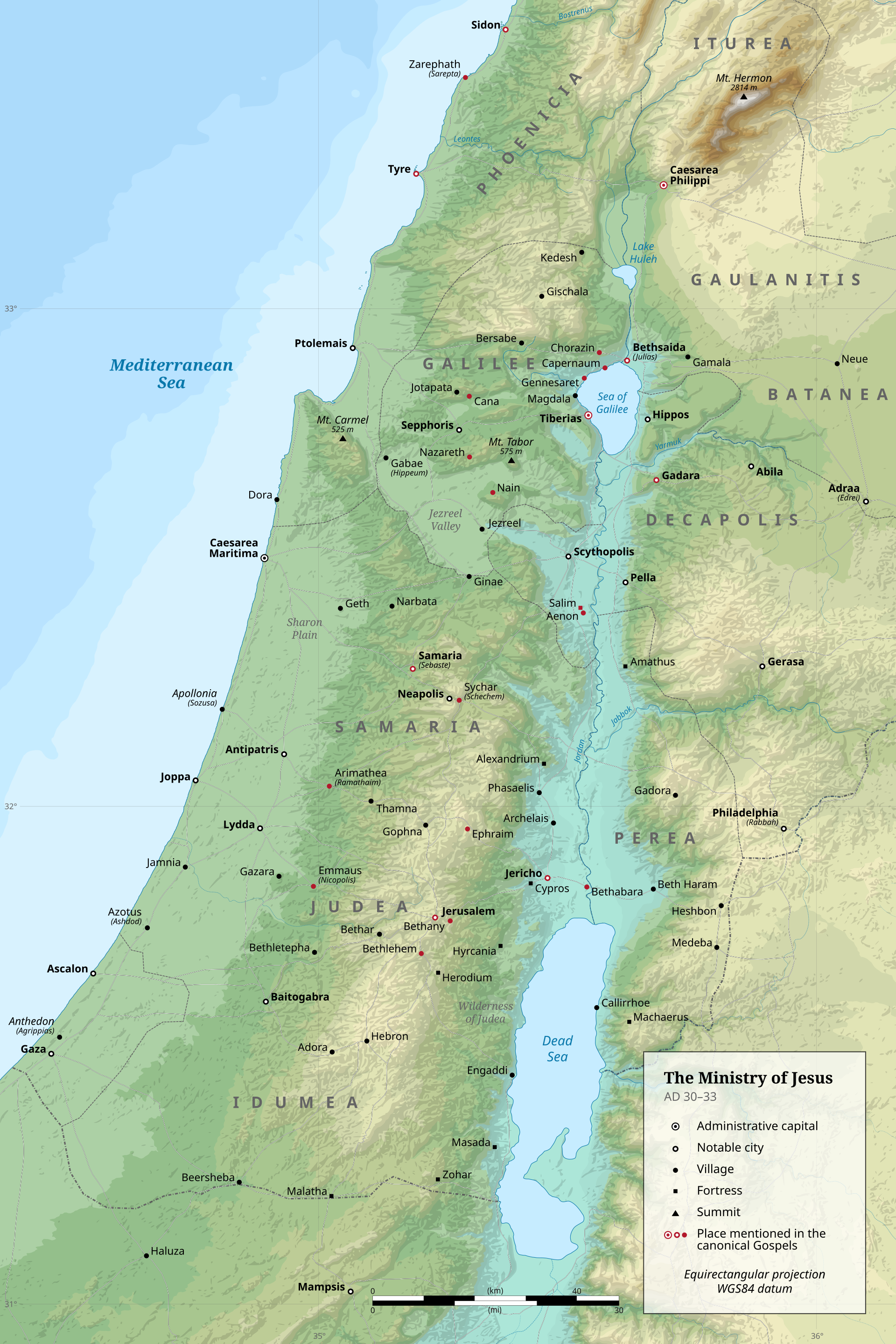
Wikimedia Commons · Creative Commons Attribution-Share Alike 4.0 International · file The early Galilean ministry begins after the baptism and wilderness episode. Galilee became the principal setting of Jesus's preaching and disciple-gathering in the Synoptic tradition. Broad regional coordinate; AD 29 is an approximate reconstruction within the AD 27–29 start-of-ministry range.
Returned to Nazareth
· Nazareth, Galilee, Israel
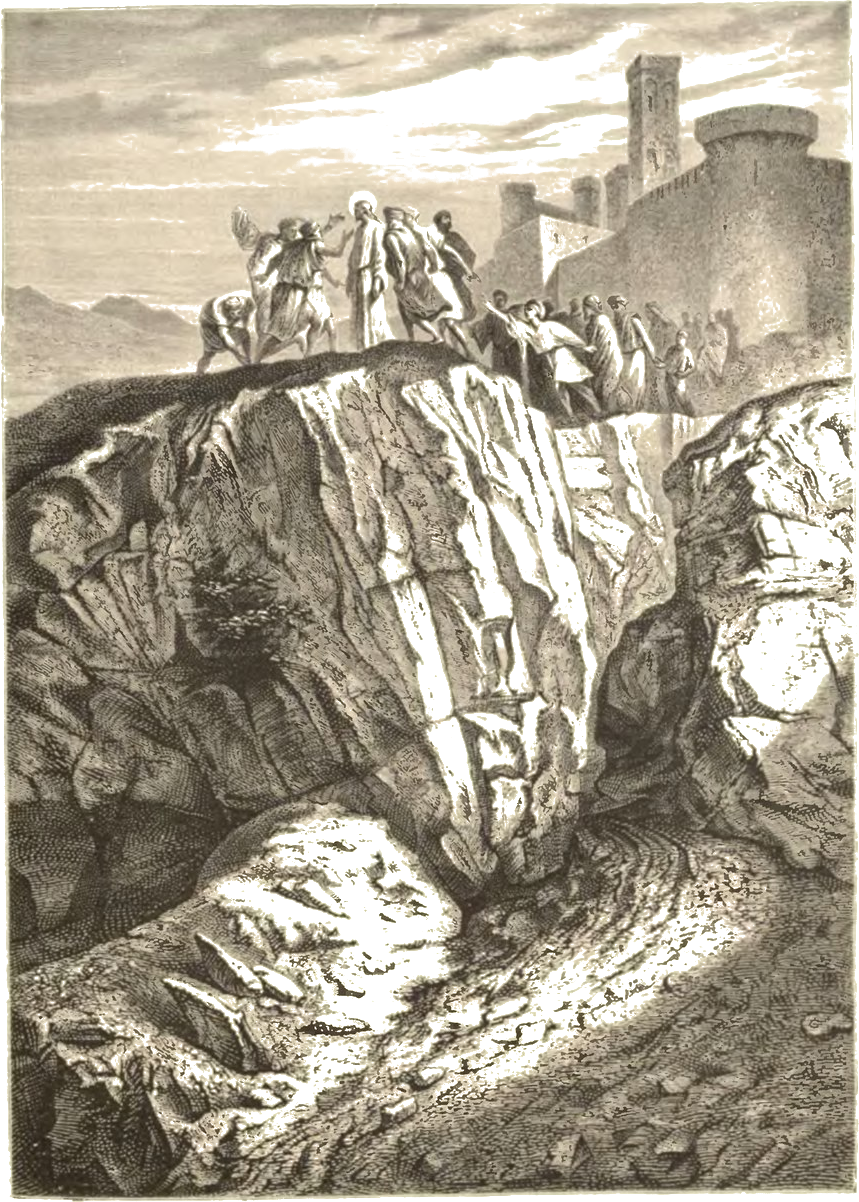
Wikimedia Commons · Public domain · file The Gospel tradition records a later return to Nazareth during the Galilean ministry, where Jesus's teaching was rejected by people of his hometown. Absolute year is approximate.
Acted in the Second Temple
· Second Temple / Temple Mount, Jerusalem
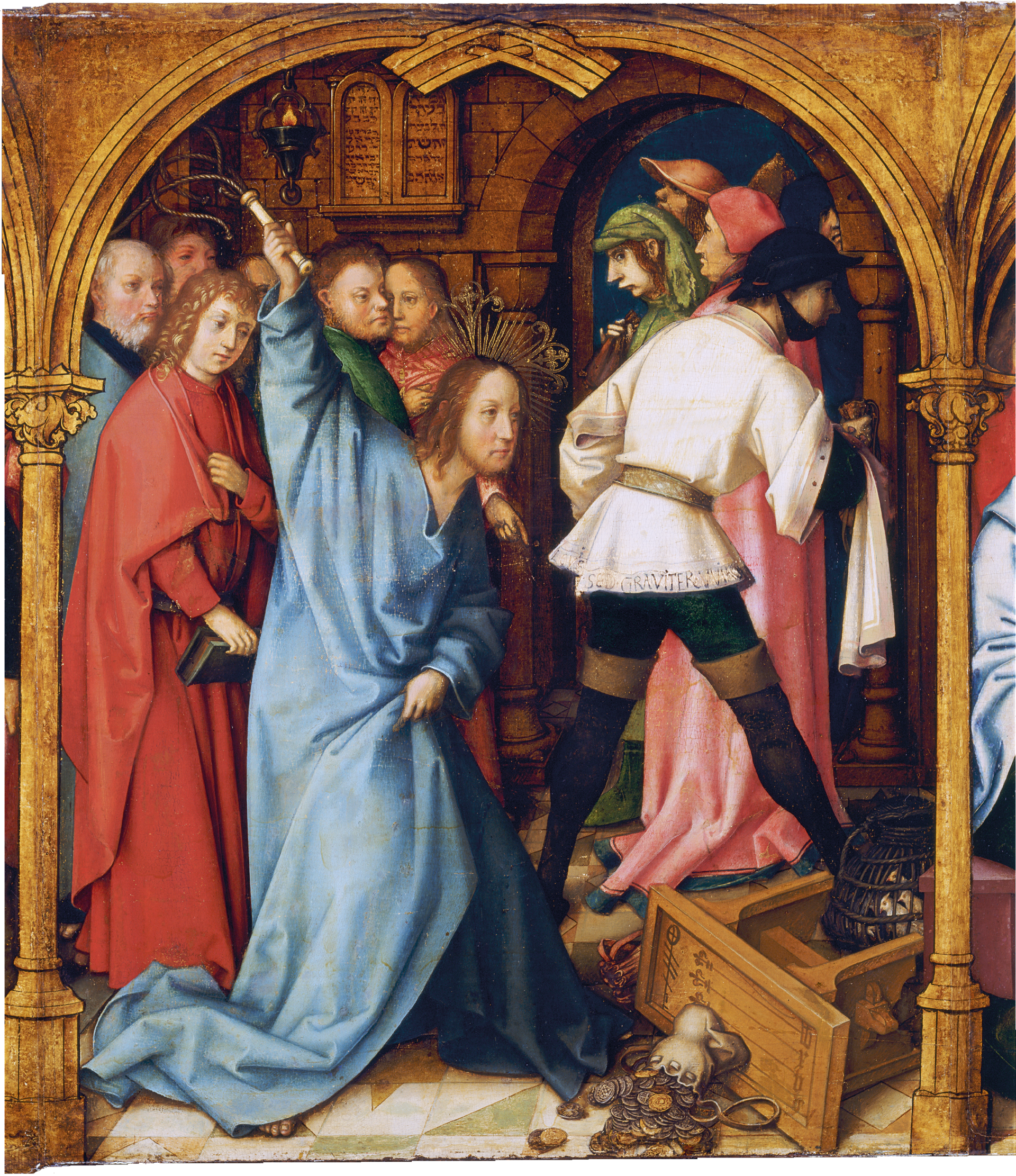
Wikimedia Commons · Public domain · file The Temple incident is widely regarded by historians as a likely historical event and probably contributed to the authorities' decision to arrest Jesus. The exact sequence and number of Temple incidents differ between John and the Synoptic Gospels.
Ate the Last Supper in Jerusalem
· Jerusalem
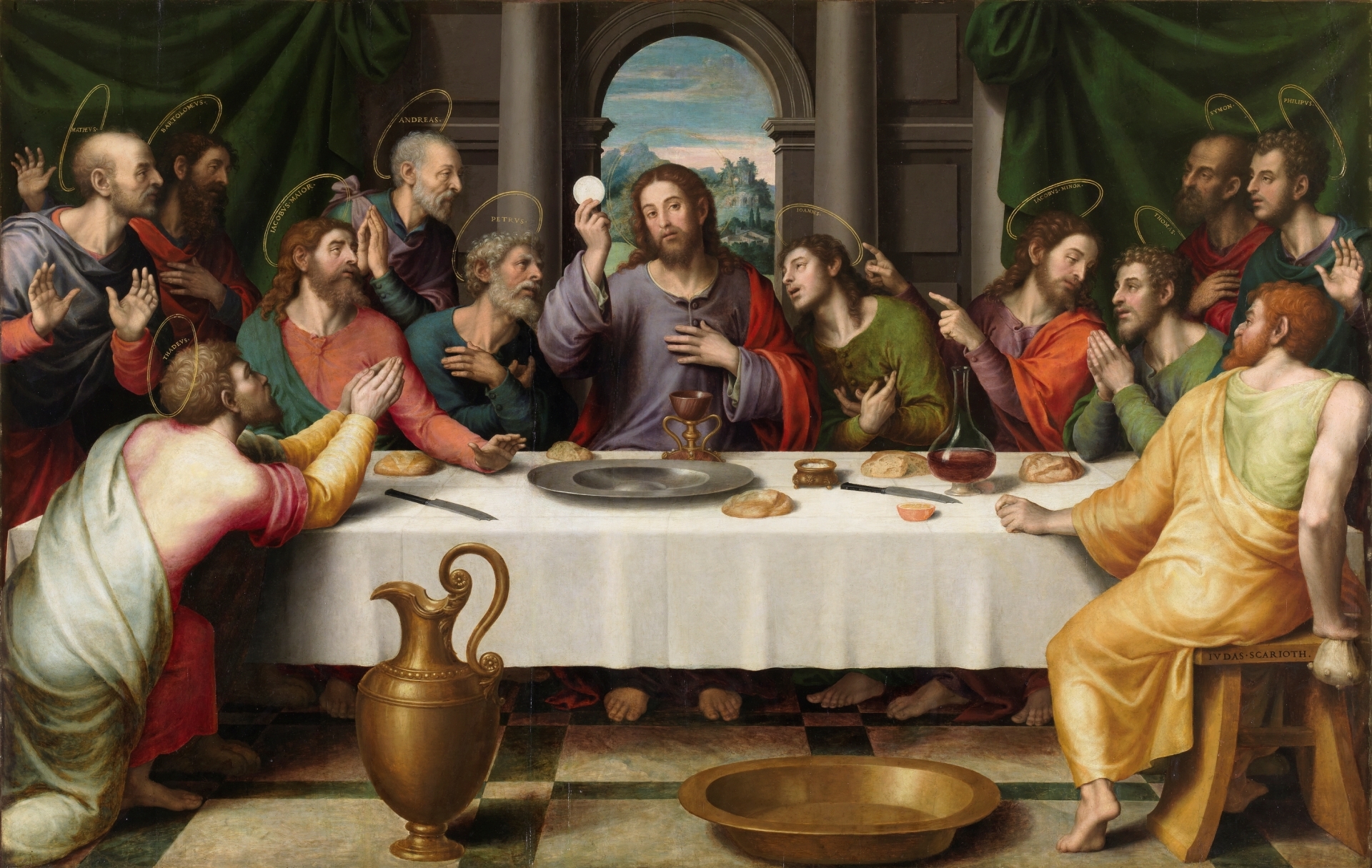
Wikimedia Commons · Public domain · file The Gospels and Paul preserve a final meal tradition immediately before Jesus's arrest. Its precise room or building is not historically identifiable. The exact venue is unknown. The year follows the AD 30 Passion reconstruction; AD 33 remains a major alternative.
Descended the Mount of Olives into Jerusalem
· Mount of Olives, Jerusalem
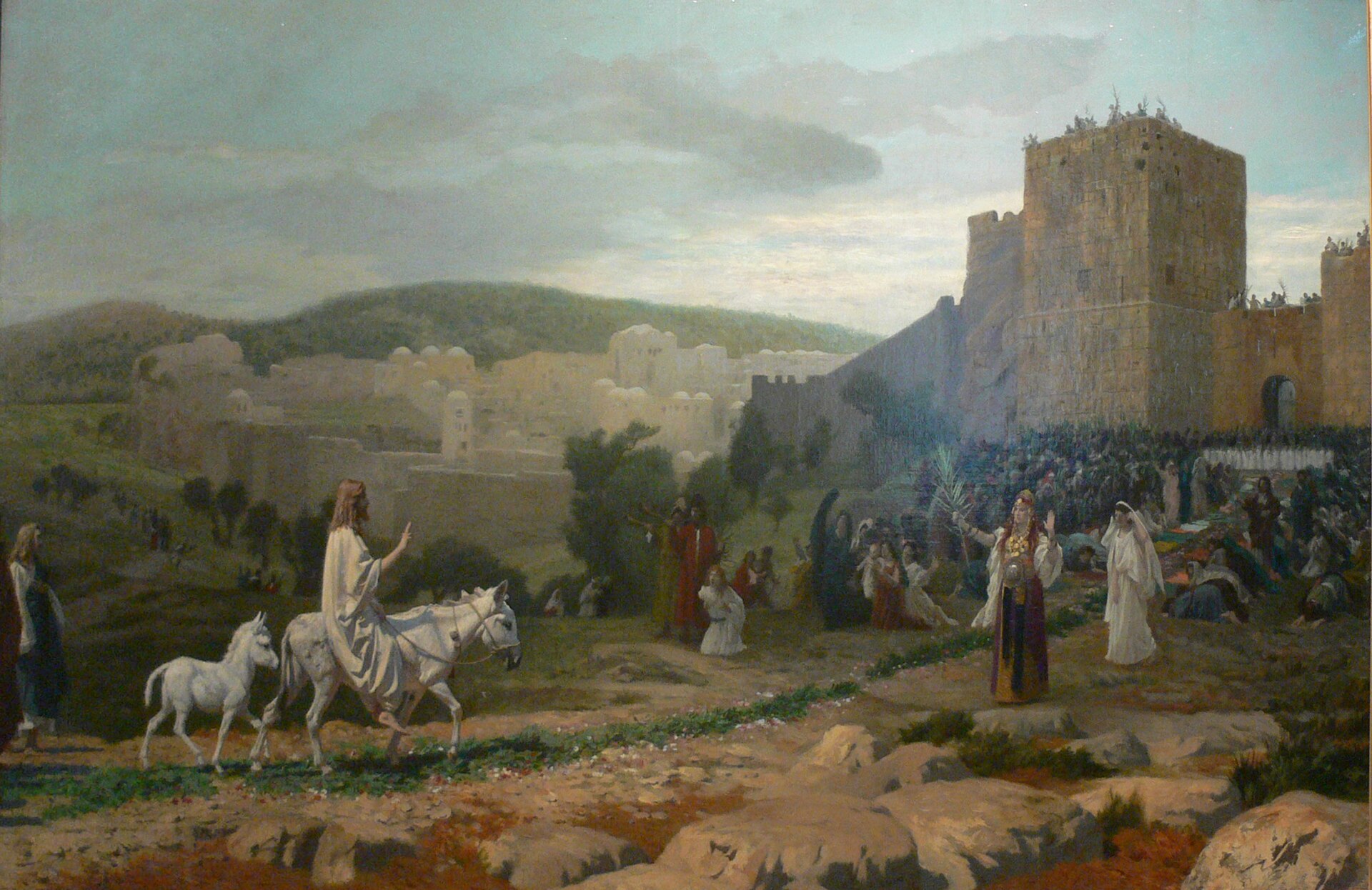
Wikimedia Commons · Public domain · file The triumphal-entry tradition places Jesus on the Mount of Olives immediately before he entered Jerusalem for the final Passover. AD 30 is one of the principal scholarly crucifixion chronologies; an AD 33 chronology is also widely discussed.
Entered Jerusalem for Passover
· Jerusalem
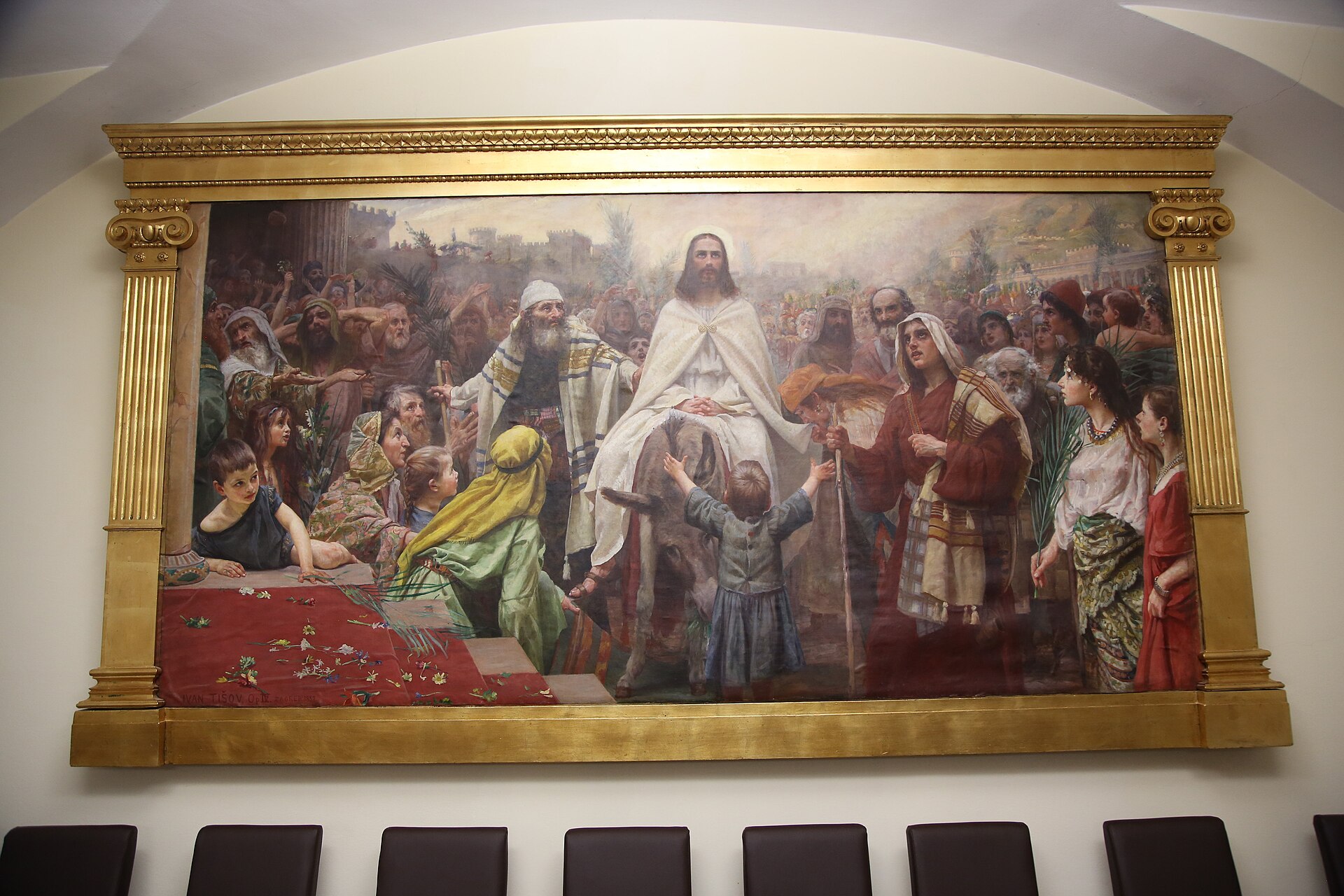
Wikimedia Commons · Creative Commons Attribution-Share Alike 4.0 International · file Jesus's final arrival in Jerusalem is one of the strongest geographical anchors in the historical reconstruction of his life. Around Passover he entered the city, taught, and confronted the Temple establishment. The canonical article uses 'Around AD 30'; some chronologies instead place the crucifixion in AD 33.
Entered the region of Tyre and Sidon
· Tyre–Sidon region, Lebanon
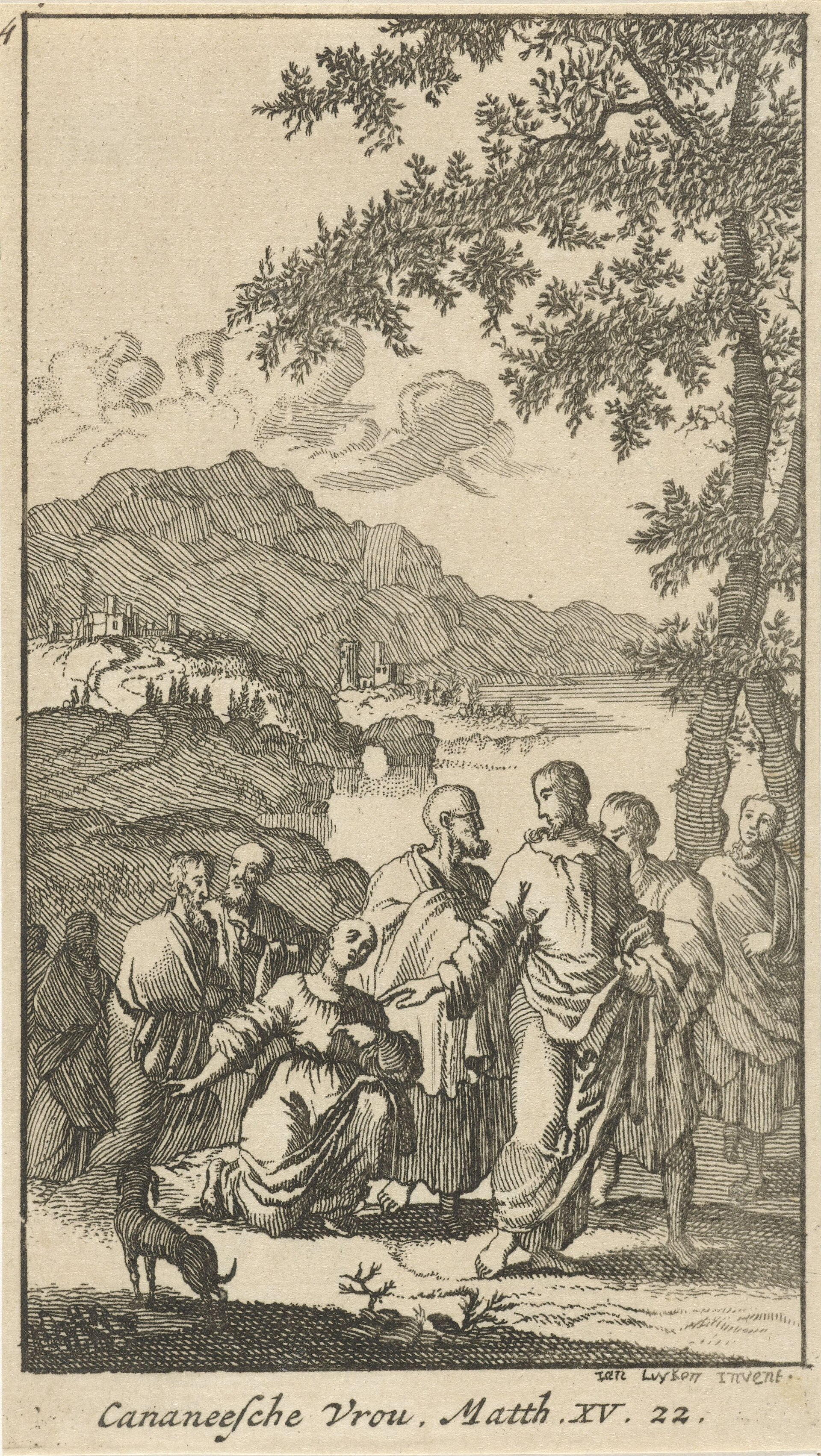
Wikimedia Commons · CC0 1.0 Universal Public Domain Dedication · file The Synoptic tradition places Jesus outside Galilee in the Phoenician coastal region of Tyre and Sidon, where the Syrophoenician/Canaanite woman episode is set. The text specifies the region rather than a particular city; coordinate is a representative midpoint between Tyre and Sidon. Absolute year is approximate.
Faced Pilate at the Gabbatha/Lithostrōtos
· Gabbatha/Lithostrōtos, Jerusalem
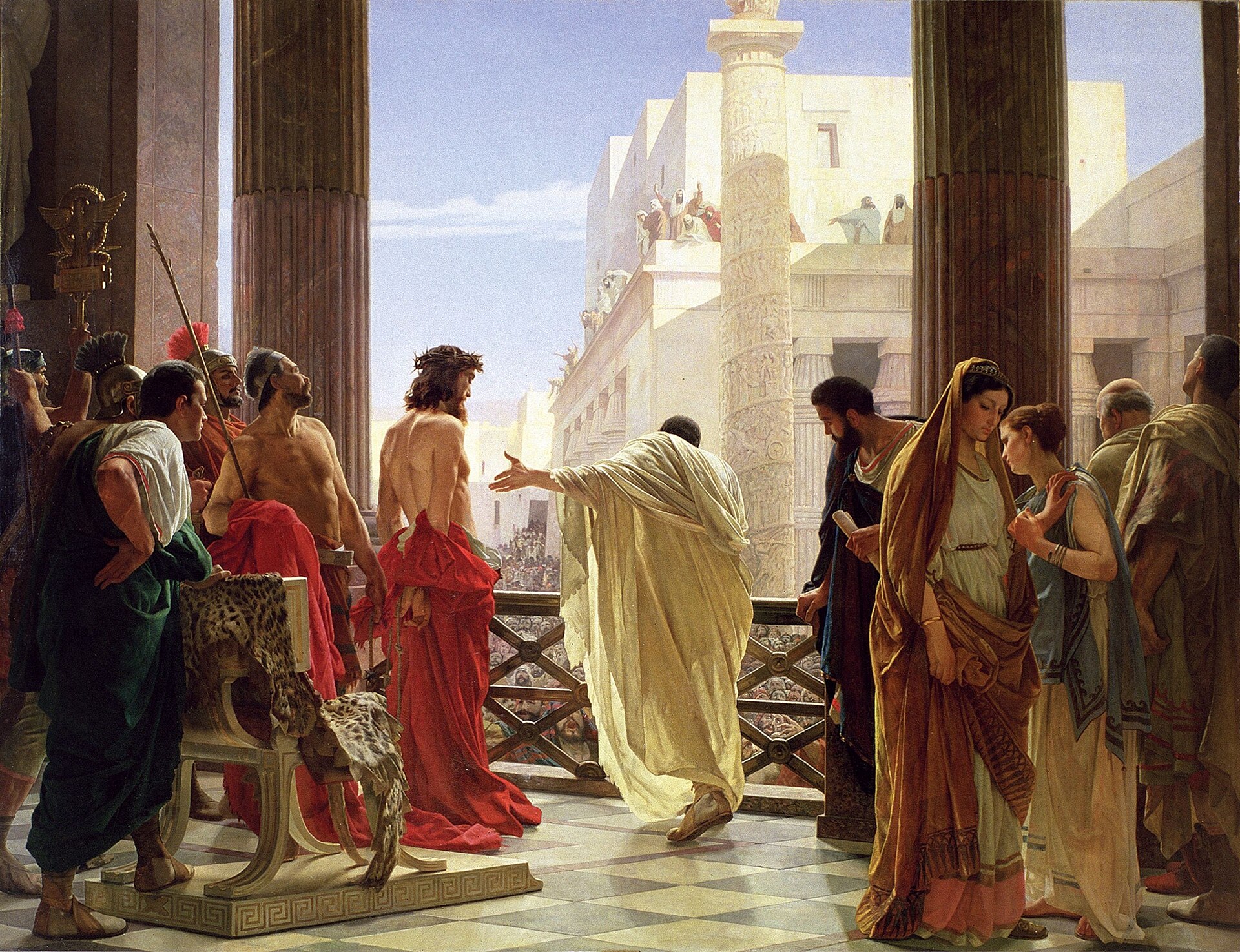
Wikimedia Commons · Public domain · file John locates Jesus before Pontius Pilate at a place called Gabbatha or Lithostrōtos, a stone pavement associated with the Roman trial scene. The exact archaeological identification of the praetorium and Gabbatha is disputed; coordinate is representative within the Old City.
Landed at Gennesaret
· Gennesaret plain, Sea of Galilee, Israel
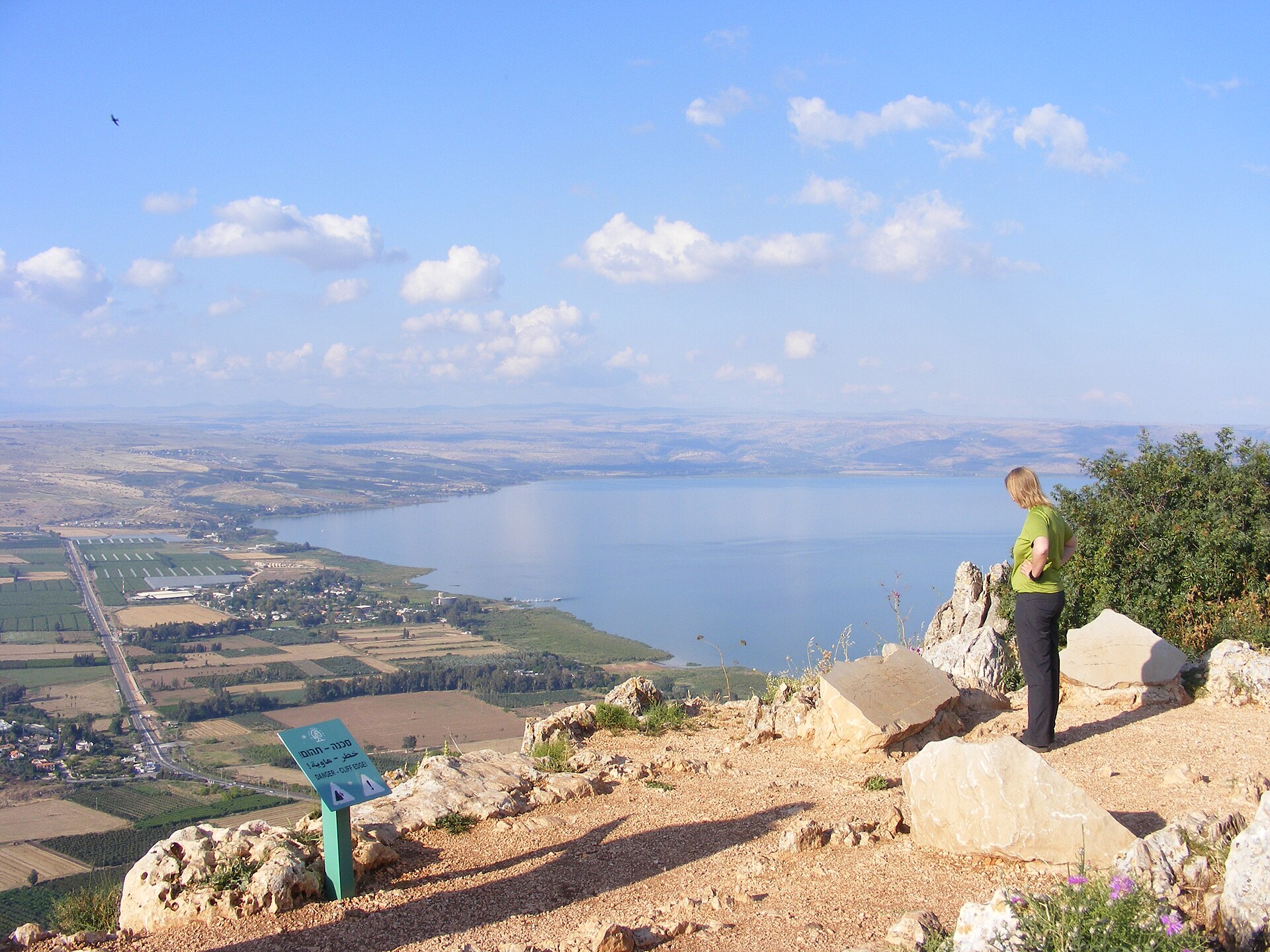
Wikimedia Commons · Creative Commons Attribution-Share Alike 3.0 Unported · file Matthew and Mark place Jesus and his disciples at Gennesaret after crossing the Sea of Galilee, followed by a healing ministry in the area. Ancient Gennesaret no longer exists as a town; coordinate represents the Ginosar/Gennesaret plain. Absolute year is approximate.
Passed through the Decapolis
· Decapolis region, Jordan
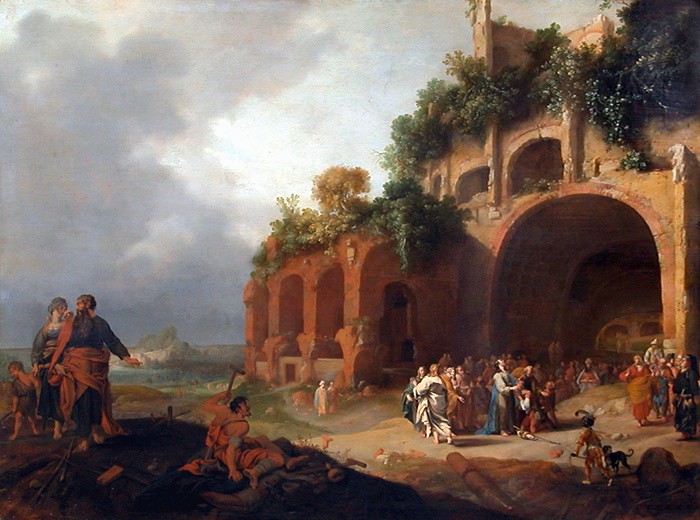
Wikimedia Commons · Public domain · file Mark's Gospel routes Jesus from the Sidon area into the Decapolis, the Hellenistic city-region east and southeast of Galilee. The Decapolis was a broad region; coordinate is representative rather than a claimed exact site. Absolute year is approximate.
Reached Caesarea Philippi
· Caesarea Philippi (Banias), Golan Heights
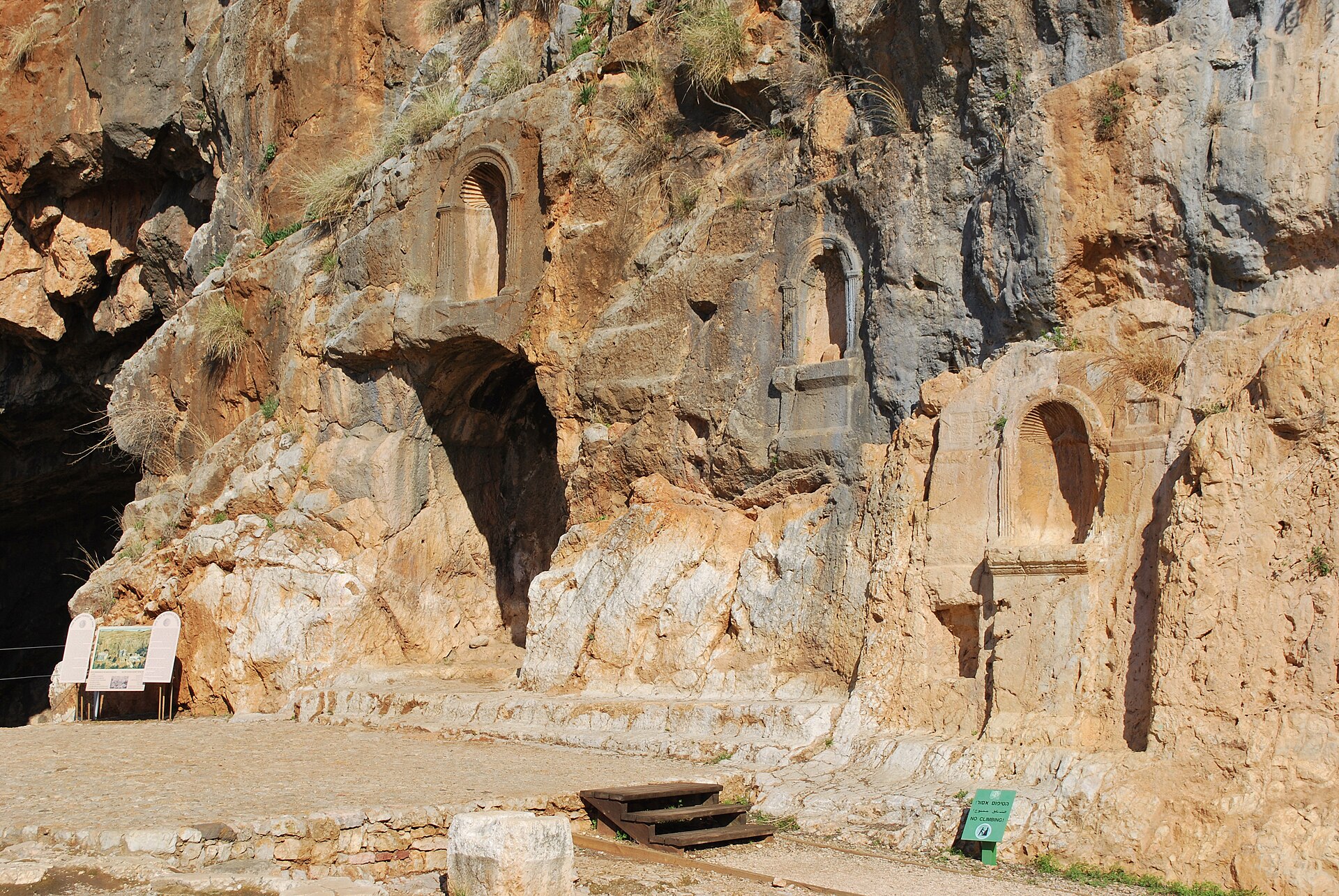
Wikimedia Commons · Creative Commons Attribution 2.0 Generic · file The Synoptic Gospels place Jesus and his disciples in the villages around Caesarea Philippi for Peter's confession and Jesus's first explicit passion prediction. The Gospel wording can refer to the surrounding villages rather than the urban center itself; absolute year is approximate.
Stopped near Jericho
· Jericho, West Bank
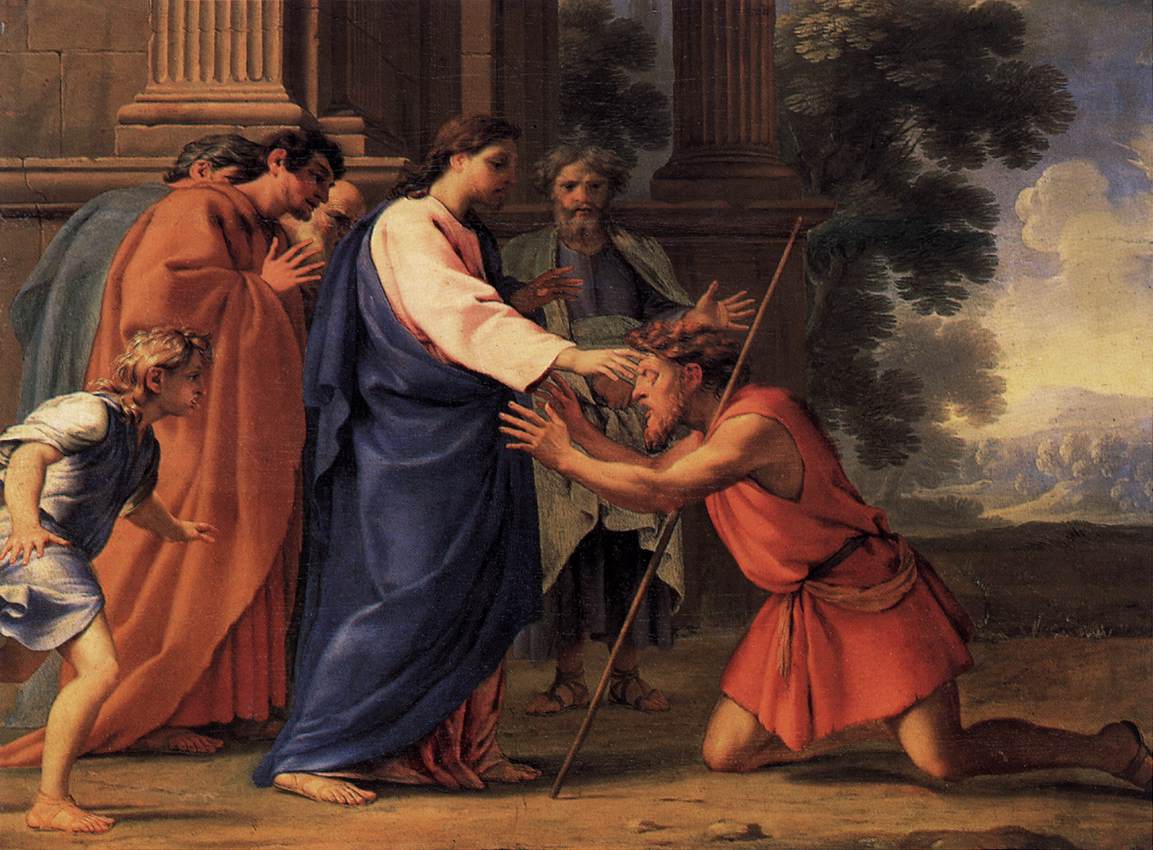
Wikimedia Commons · Public domain · file The final approach to Jerusalem passes Jericho; Mark's narrative locates the Bartimaeus episode as Jesus was leaving the city. Absolute year is tied to the approximate final-journey chronology.
Traveled through Perea toward Jerusalem
· Perea, east of the Jordan River, Jordan
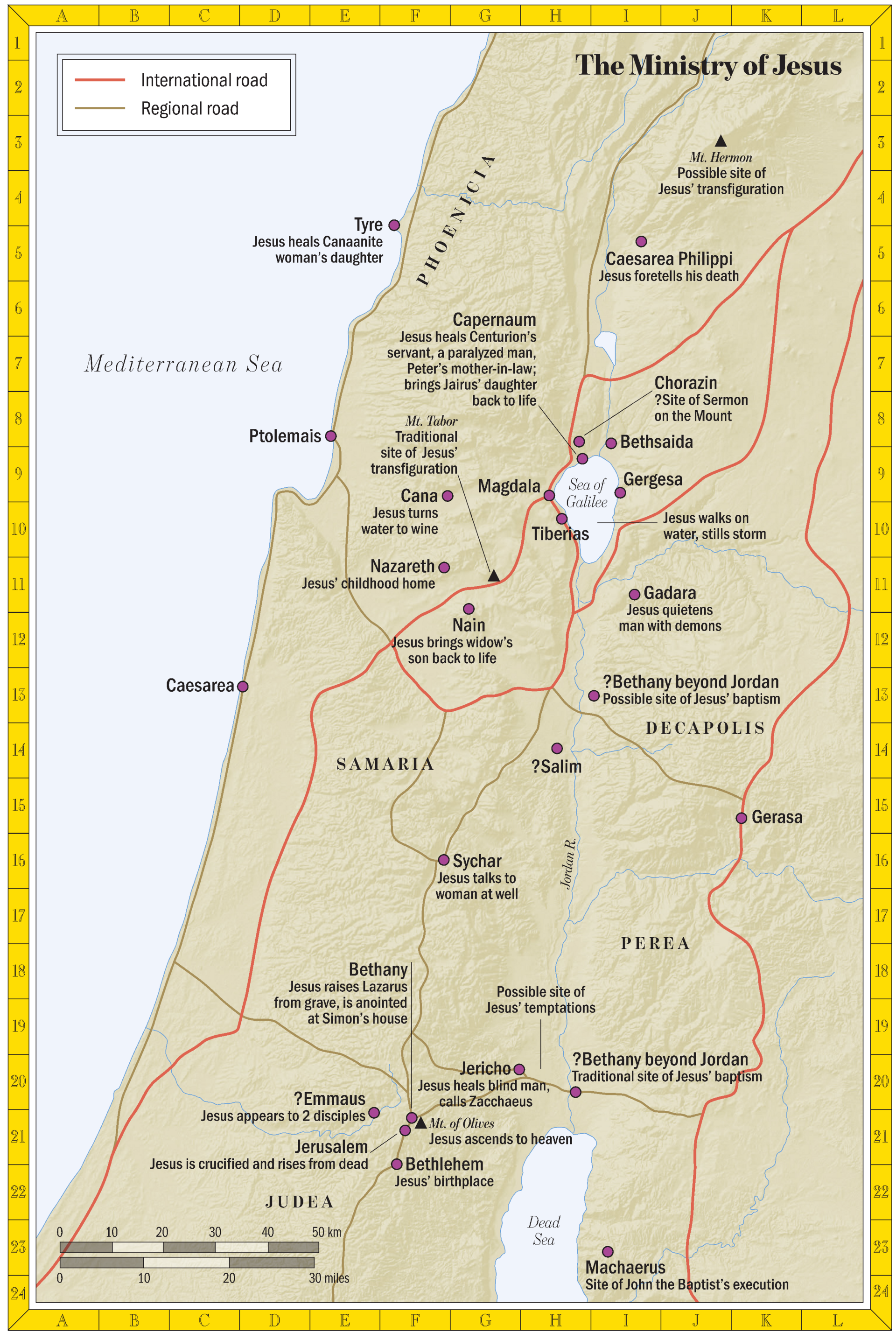
Wikimedia Commons · Creative Commons Attribution-Share Alike 4.0 International · file The later ministry is presented as a southward journey toward Jerusalem through Perea and Judea, returning to the Jordan region associated with his baptism. Regional coordinate; the itinerary is a Gospel reconstruction rather than an independently dated travel log.
Visited Bethany before the final entry
· Bethany (Al-Eizariya), West Bank
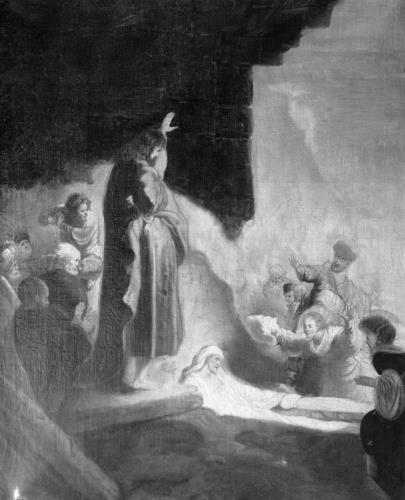
Wikimedia Commons · Public domain · file John places Jesus at Bethany shortly before the final entry into Jerusalem, in the Lazarus narrative and the anointing tradition. The event is Johannine tradition; AD 30 is an approximate Passion chronology.
Went to Gethsemane and was arrested
· Gethsemane, Jerusalem
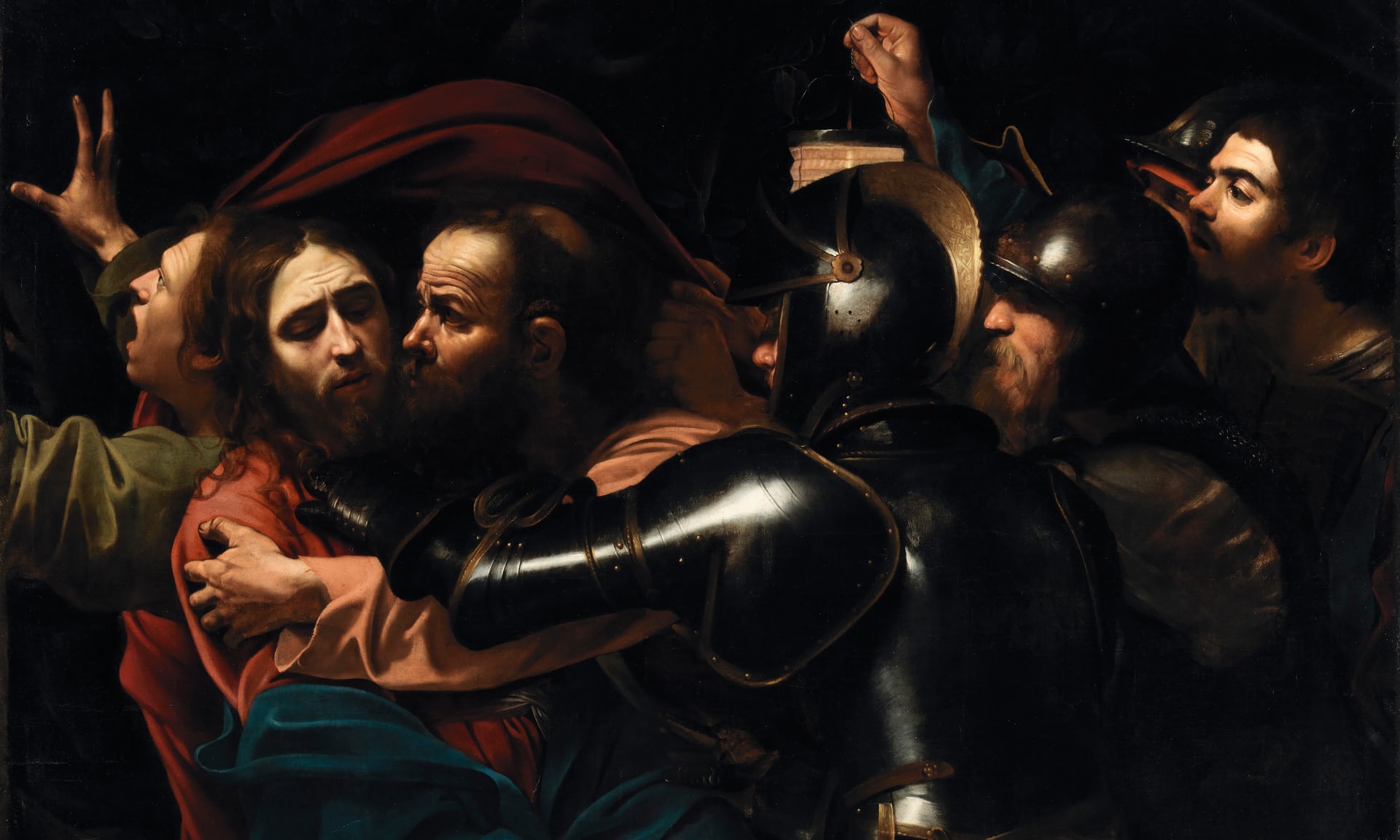
Wikimedia Commons · Public domain · file Immediately after the final meal, the Synoptic tradition places Jesus in Gethsemane on the Mount of Olives, where he prayed and was arrested. The traditional garden location is plausible but not archaeologically demonstrable as the exact arrest spot.
Withdrew near Bethsaida
· Bethsaida area, north shore of Sea of Galilee
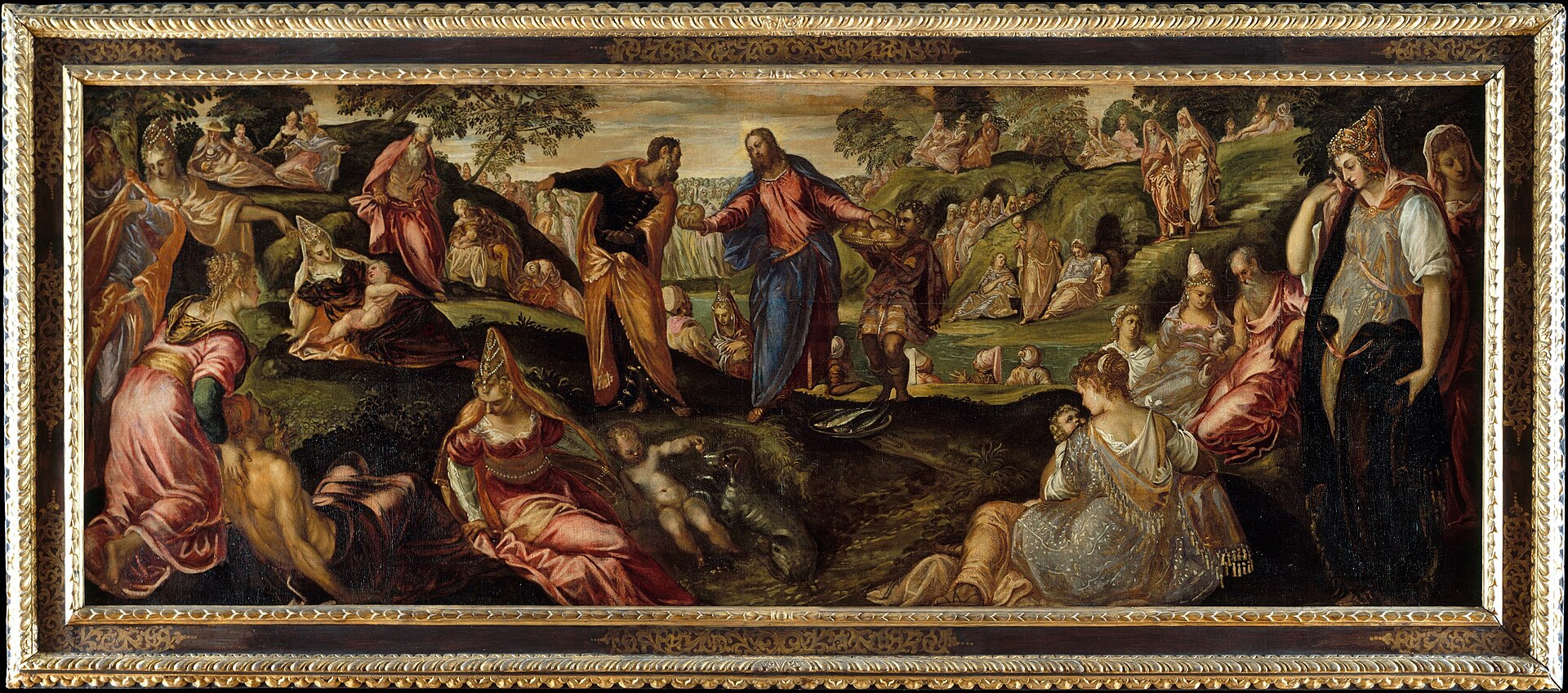
Wikimedia Commons · Public domain · file After hearing of John the Baptist's death, the Gospel narrative places Jesus in a solitary area near Bethsaida, followed by the feeding of a large crowd. Bethsaida's archaeological identification remains disputed between major candidate sites; AD 30 is an approximate sequencing year.
Crucified at Golgotha
· Golgotha / traditional Church of the Holy Sepulchre site, Jerusalem
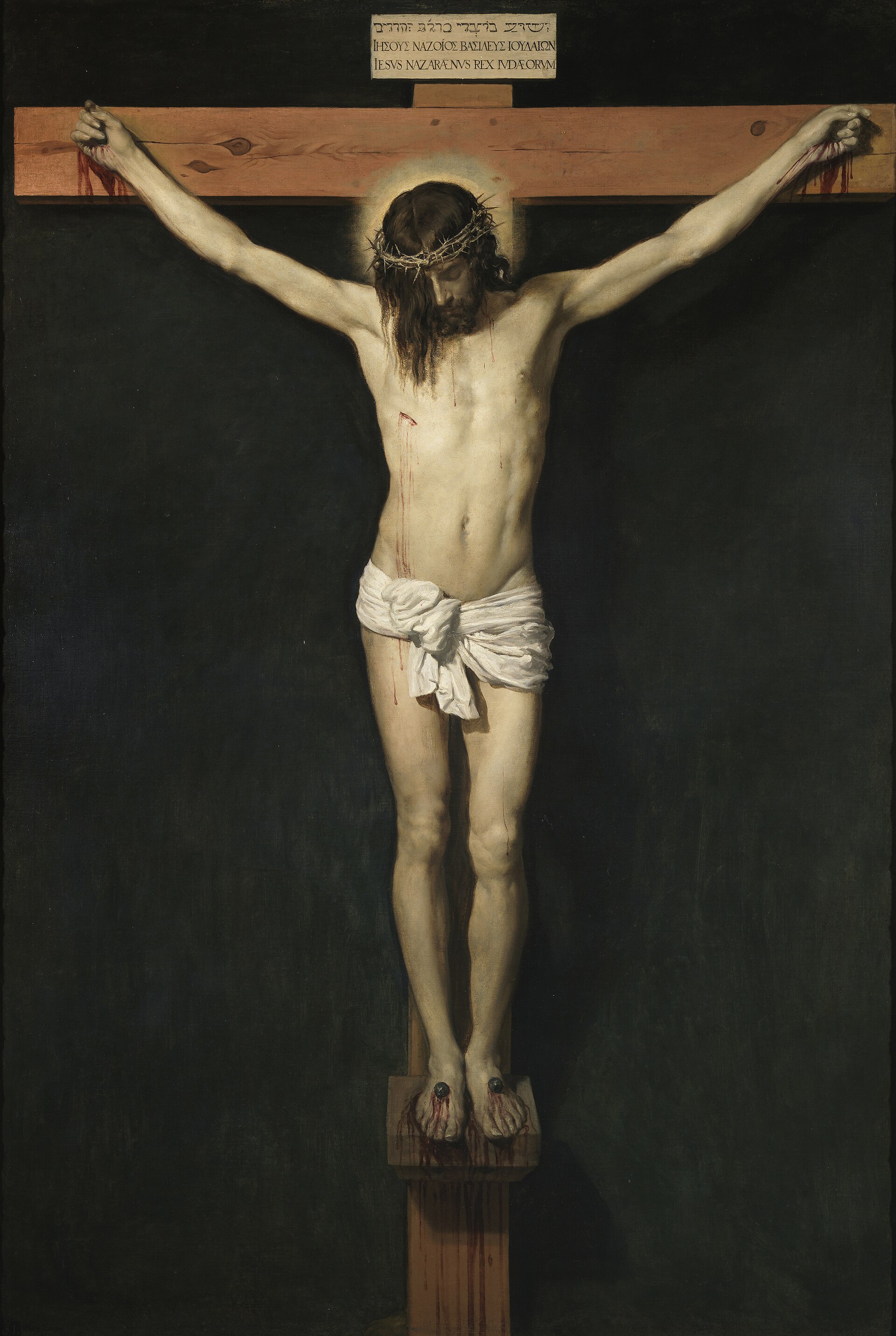
Wikimedia Commons · Public domain · file Crucifixion under Pontius Pilate is among the most secure facts about the historical Jesus. Astronomical-calendar reconstructions leave Friday 7 April AD 30 and Friday 3 April AD 33 as the two principal feasible dates. The date 7 April AD 30 is one of two principal astronomical candidates; 3 April AD 33 is the major alternative. The exact location of Golgotha is historically debated; the coordinate uses the traditional Holy Sepulchre site.