
30 moments
Return to Dagestan
· Dagestan, Russian Empire (present-day Russia)
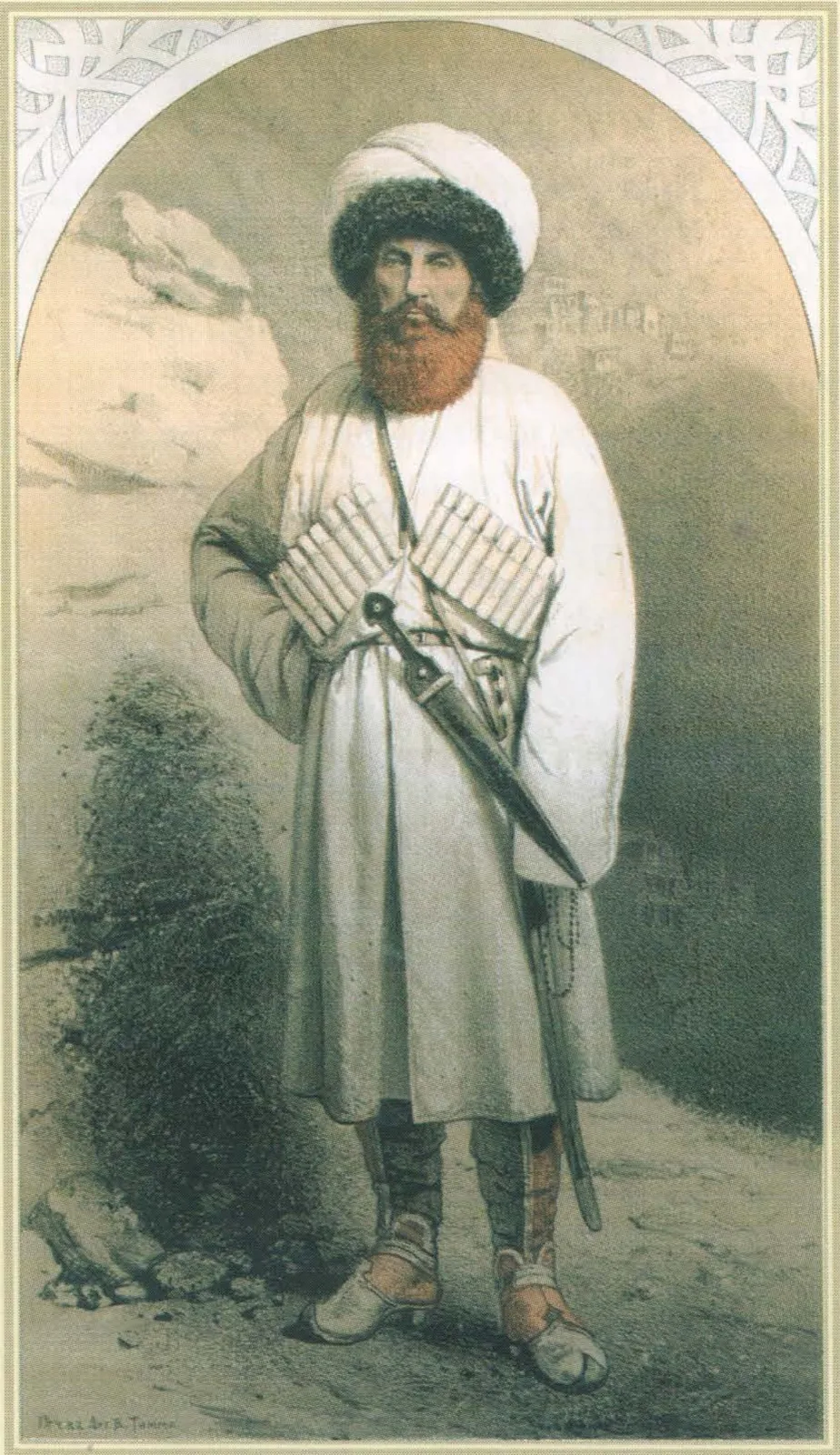
Wikimedia Commons · Public domain · file After religious study, Shamil returned to Dagestan, where he soon became associated with the renewed anti-Russian movement led by his friend Molla Muhammad. The source identifies only the region of Dagestan; coordinates are a representative regional point at Makhachkala.
Attack on Tarki
· Tarki, Dagestan, Caucasian Imamate (present-day Russia)
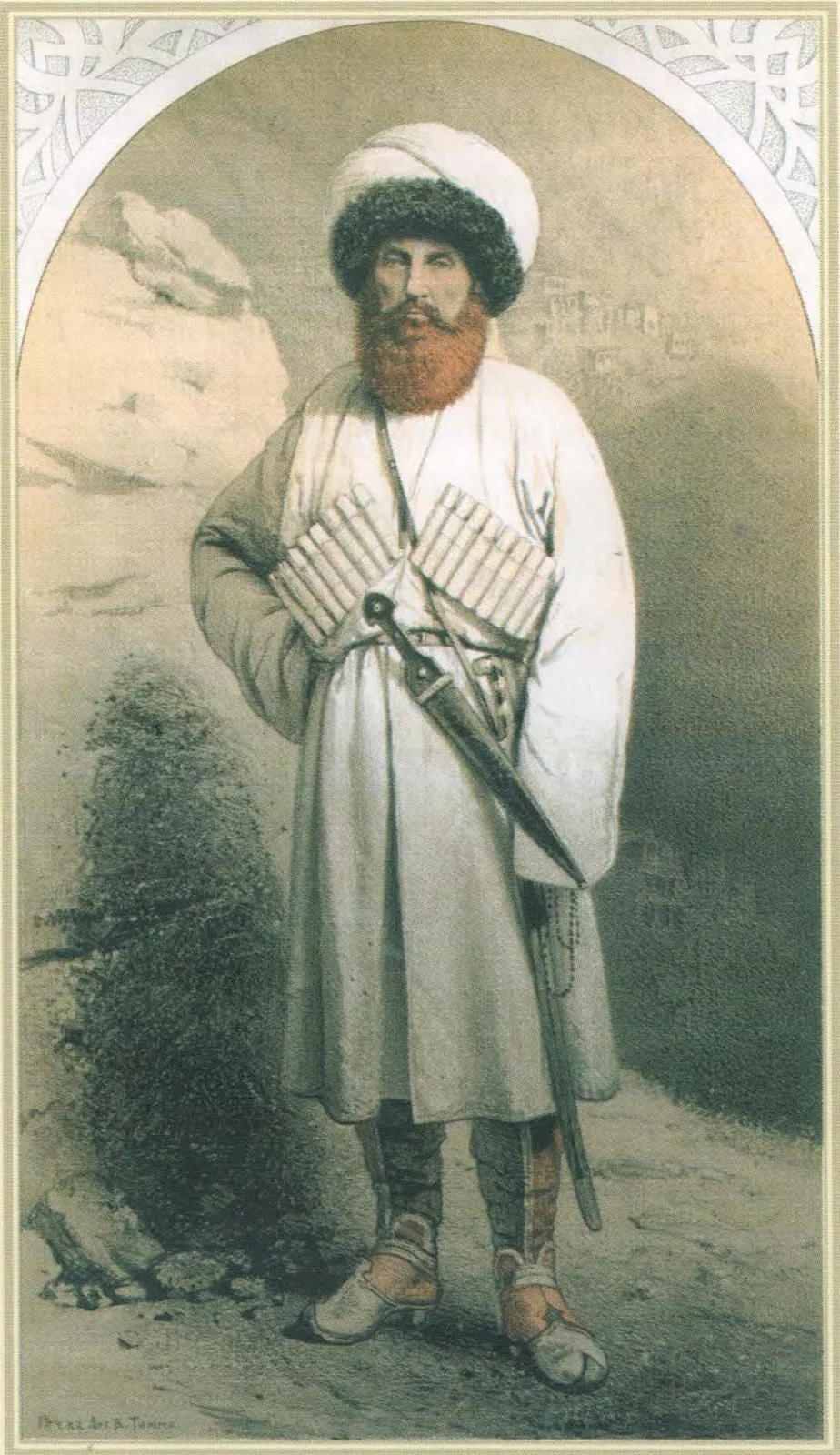
Wikimedia Commons · Public domain · file Shamil and Molla Muhammad attacked Tarki on the Caspian coast but withdrew when Russian forces arrived.
Attempt on Khunzakh Fortress
· Khunzakh, Dagestan, Caucasian Imamate (present-day Russia)
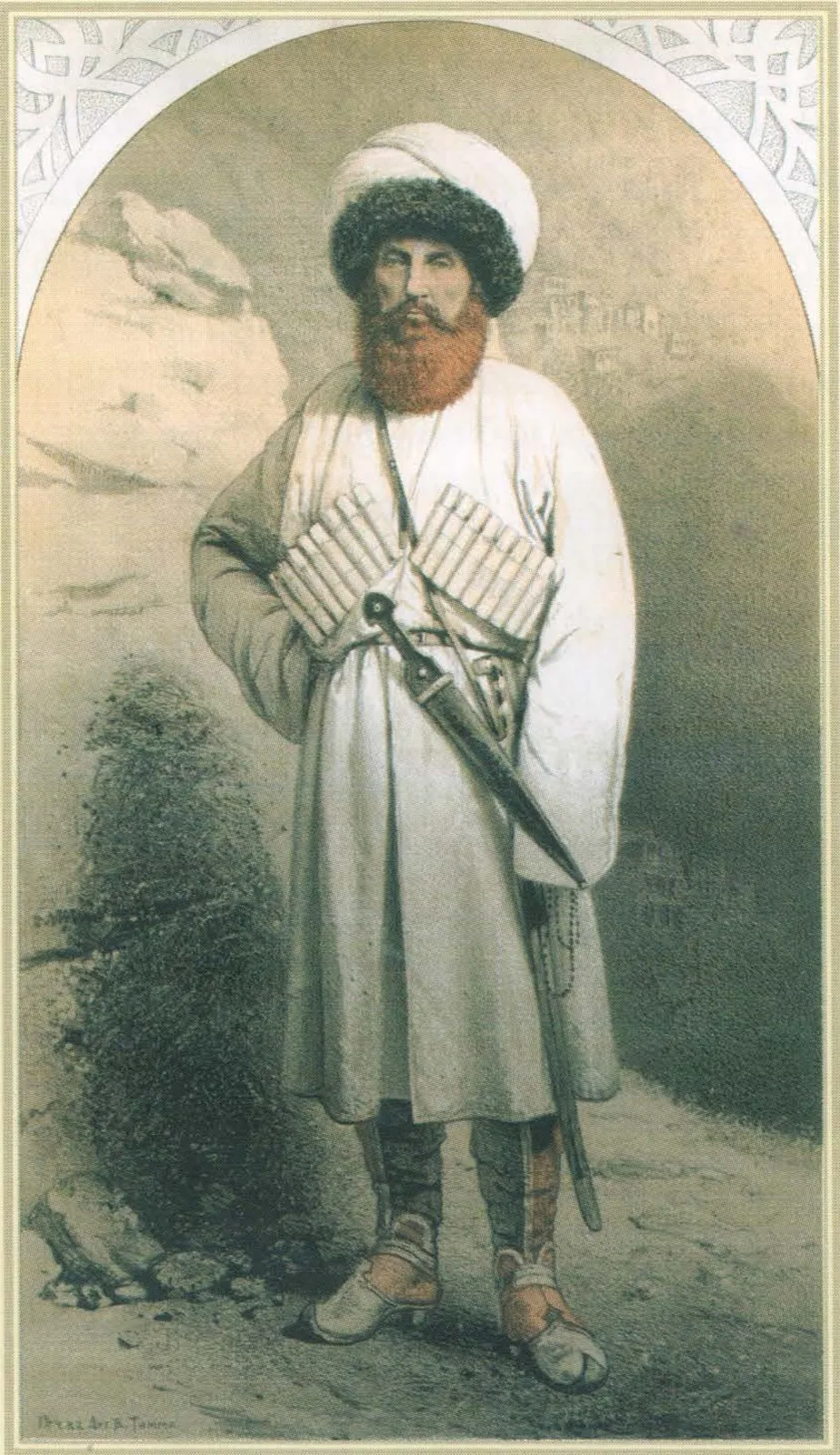
Wikimedia Commons · Public domain · file Shamil joined Molla Muhammad’s unsuccessful attempt to take Khunzakh Fortress, an early operation in the resistance movement.
Capture of Tarki
· Tarki, Dagestan, Caucasian Imamate (present-day Russia)
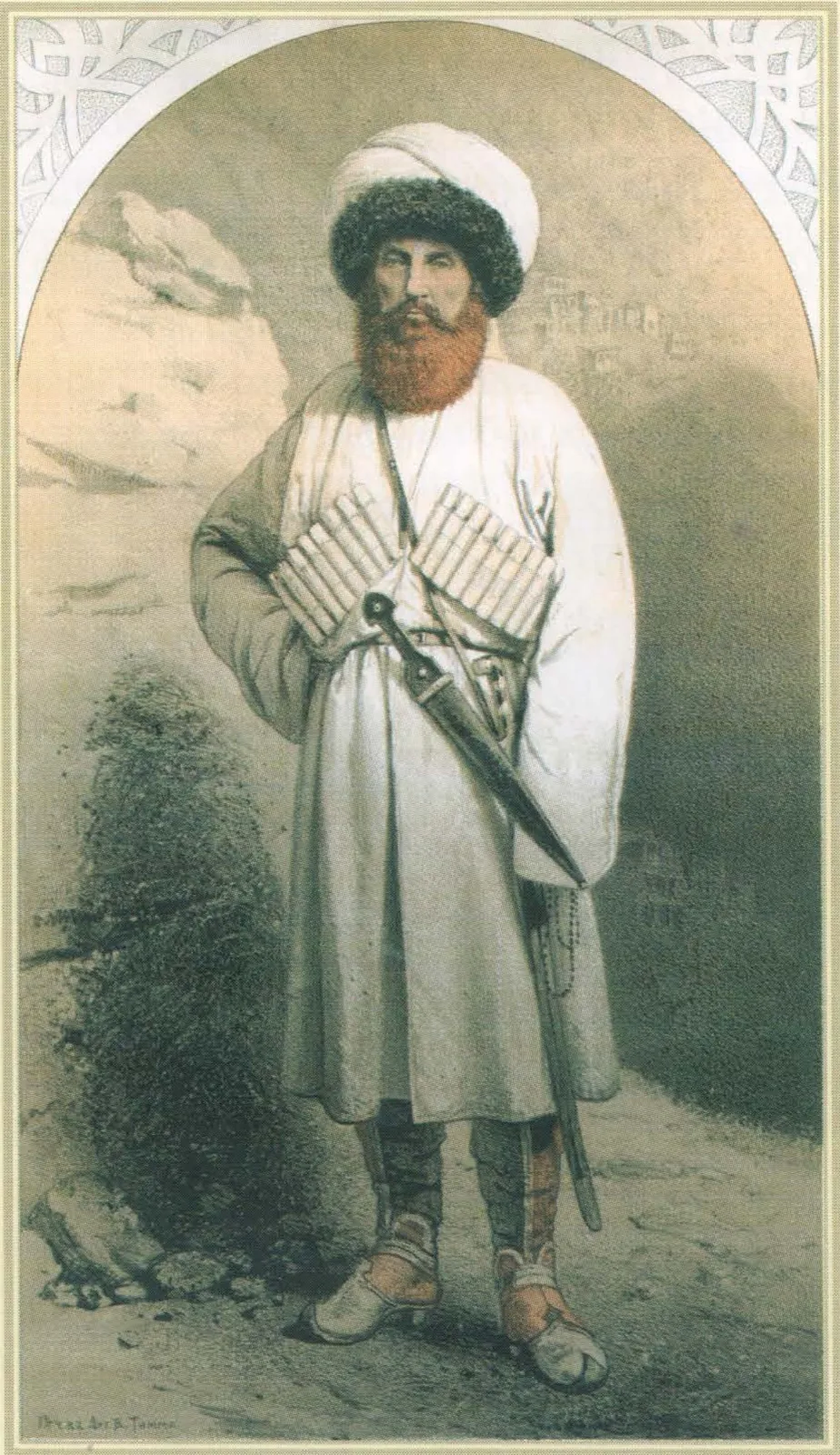
Wikimedia Commons · Public domain · file Shamil participated in the capture of Tarki during the following year’s operations.
Siege of Derbent
· Derbent, Dagestan, Russian Empire (present-day Russia)
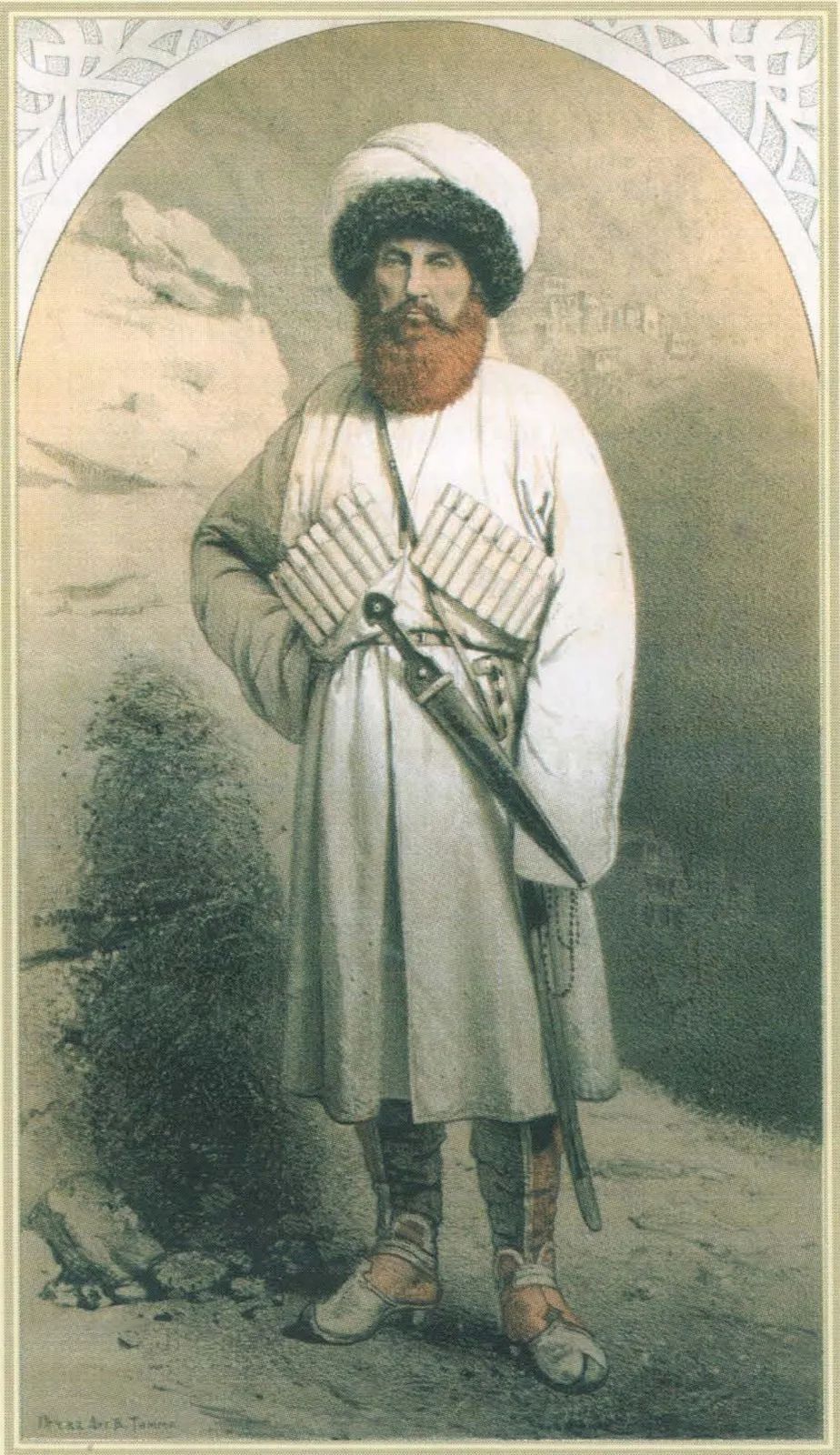
Wikimedia Commons · Public domain · file Shamil was among the forces that besieged Derbent after taking Tarki.
Siege of Kizlyar
· Kizlyar, Russian Empire (present-day Dagestan, Russia)
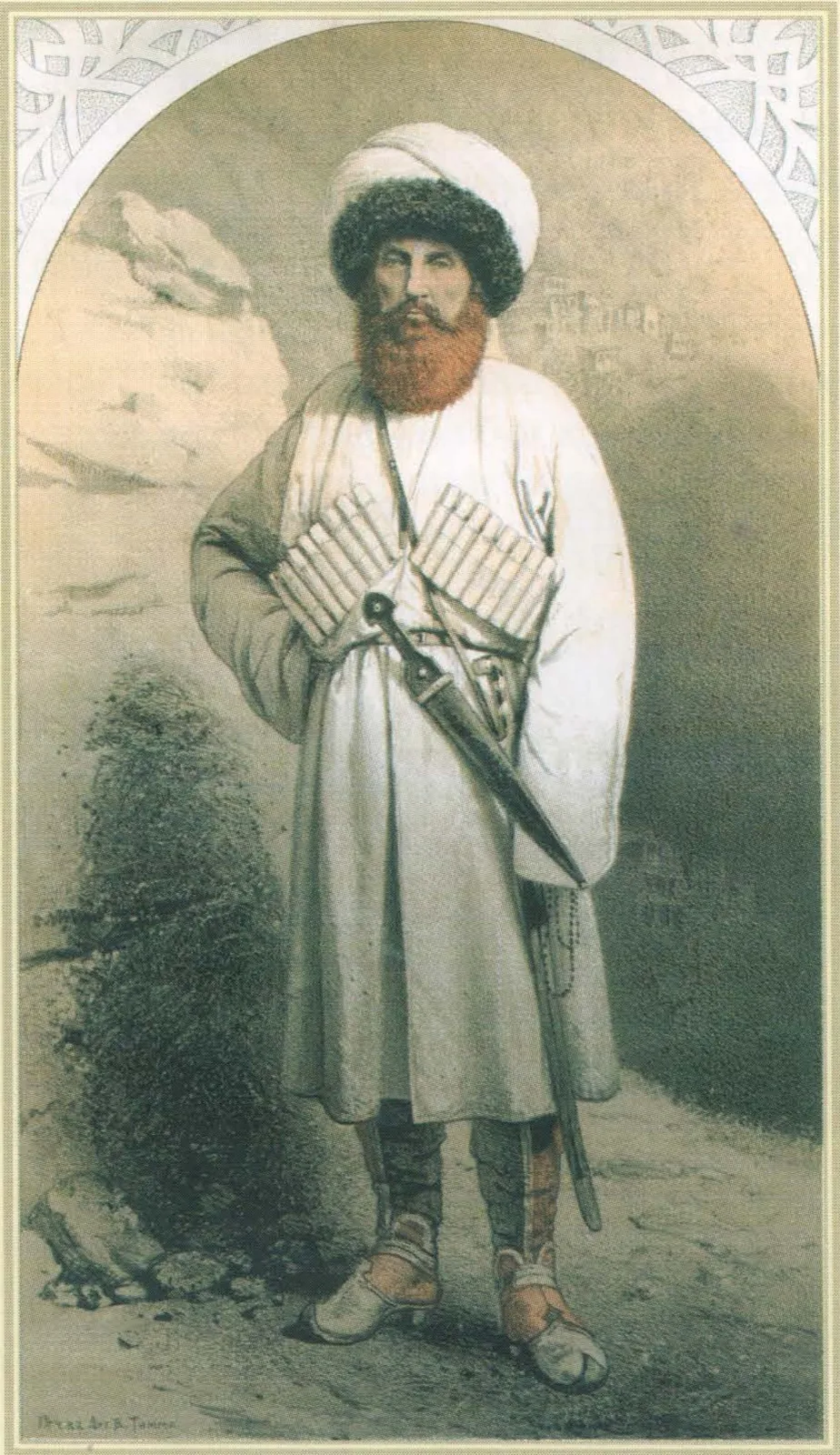
Wikimedia Commons · Public domain · file Shamil was among the forces that besieged Kizlyar in the 1831 campaign.
Battle of Gimry
· Gimry, Dagestan, Caucasian Imamate (present-day Russia)
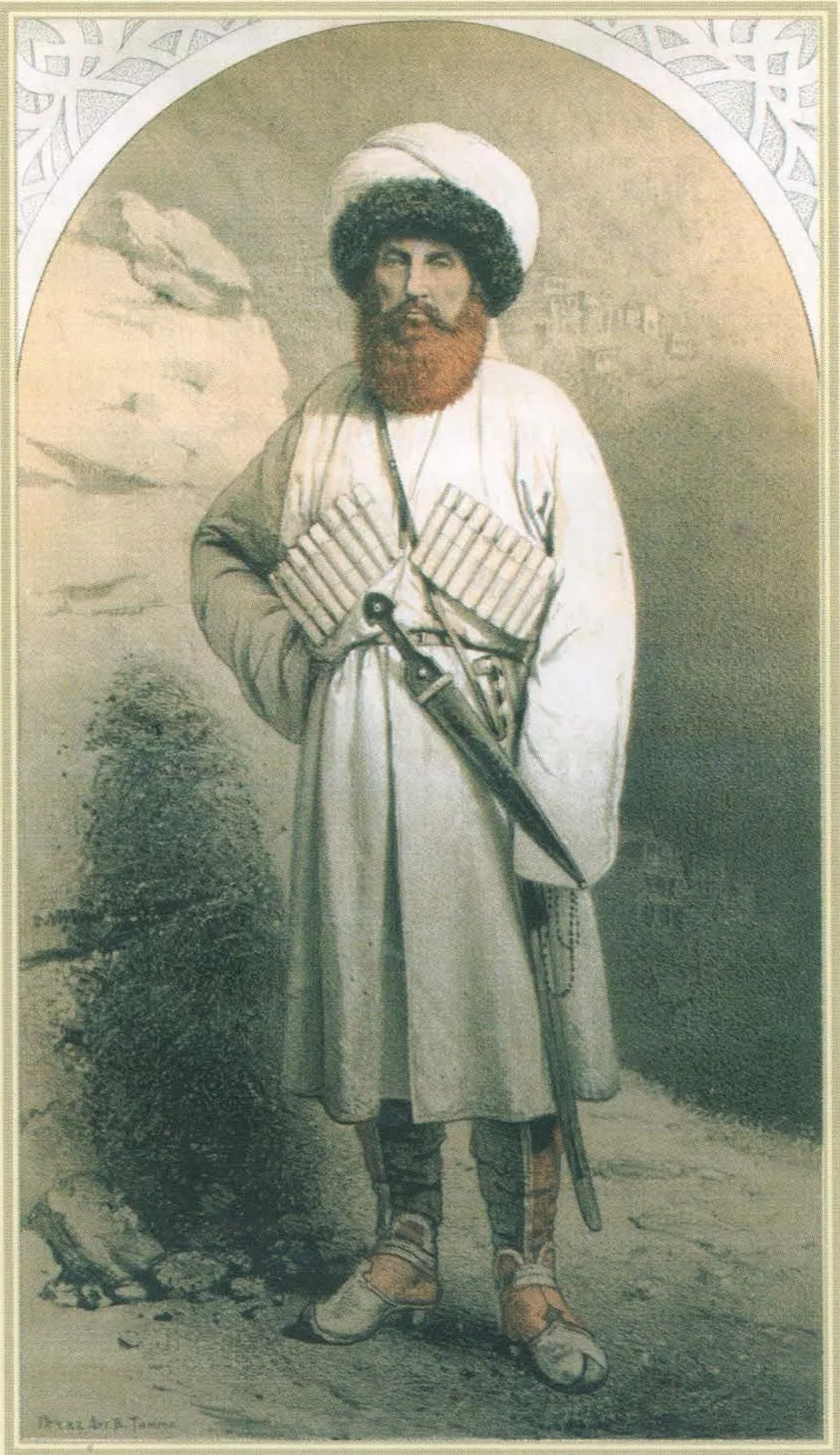
Wikimedia Commons · Public domain · file Shamil fought at Gimry, was wounded, and escaped after Ghazi Muhammad’s headquarters was captured by Russian forces. The card date is the first day of the documented 17–18 October battle.
March on Khunzakh
· Khunzakh, Dagestan, Caucasian Imamate (present-day Russia)
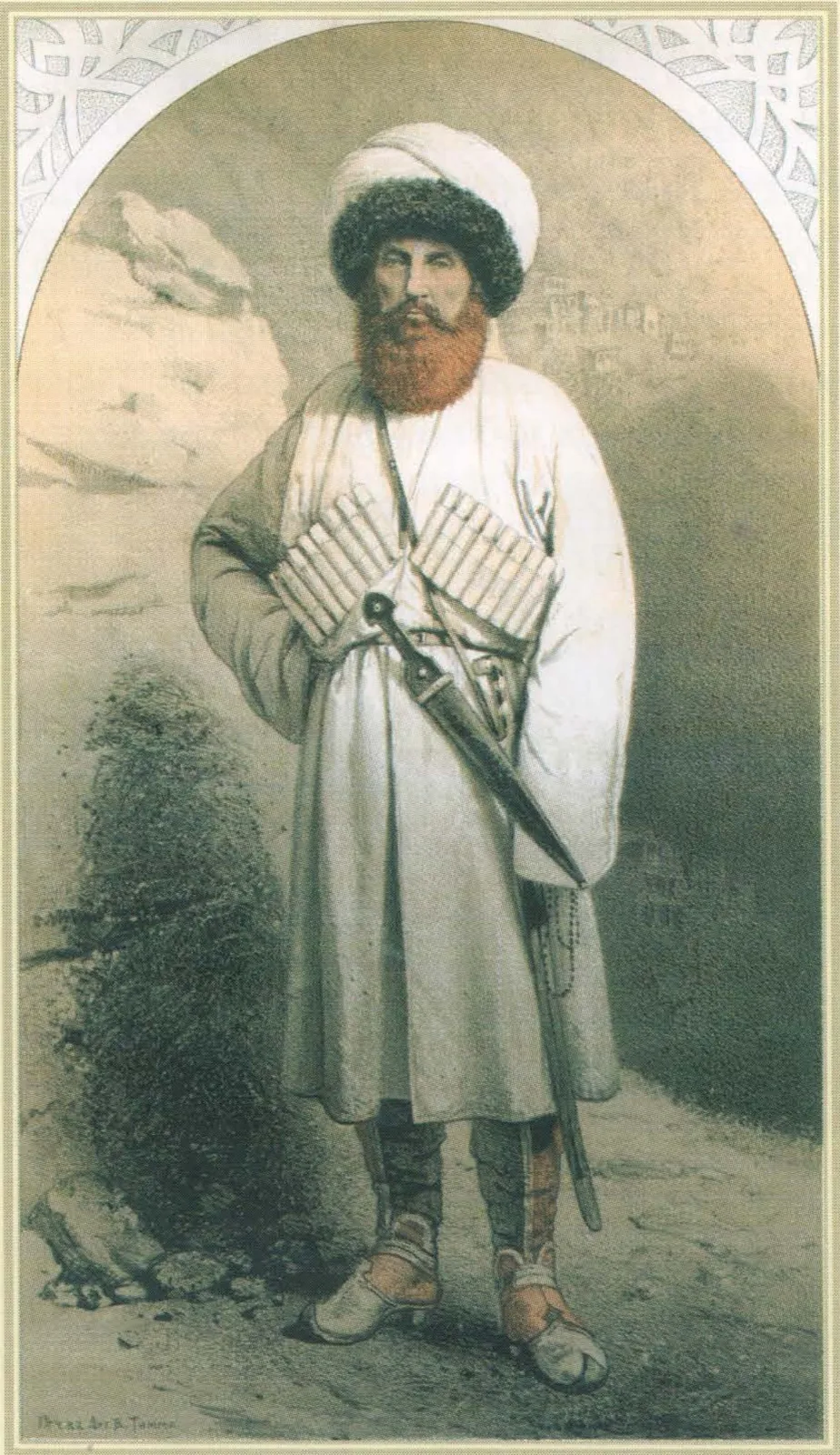
Wikimedia Commons · Public domain · file After becoming imam, Shamil marched on Khunzakh and brought all of Avaria under his control. The source supports the year through its account of events following Hamzat Bek’s September 1834 assassination, but does not give a day or month for Shamil’s march.
Leadership meeting at Chirkey
· Chirkey, Dagestan, Caucasian Imamate (present-day Russia)
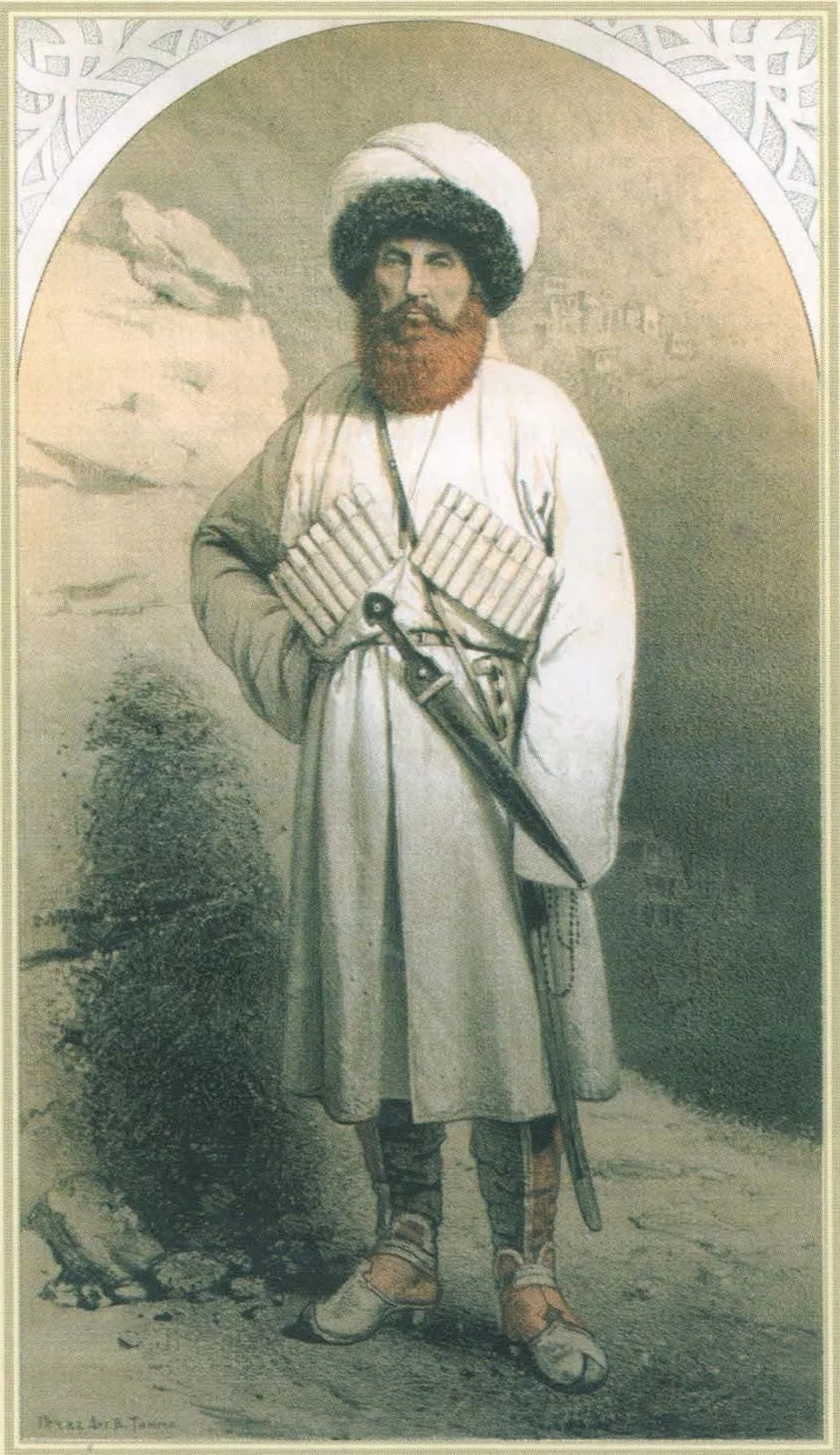
Wikimedia Commons · Public domain · file Shamil convened a meeting at Chirkey where Dagestani leaders agreed to work under his leadership. The source places this event in its 1836 narrative but does not give a more precise date.
Siege at Tilitl
· Teletl (historical Tilitl), Dagestan, Caucasian Imamate (present-day Russia)
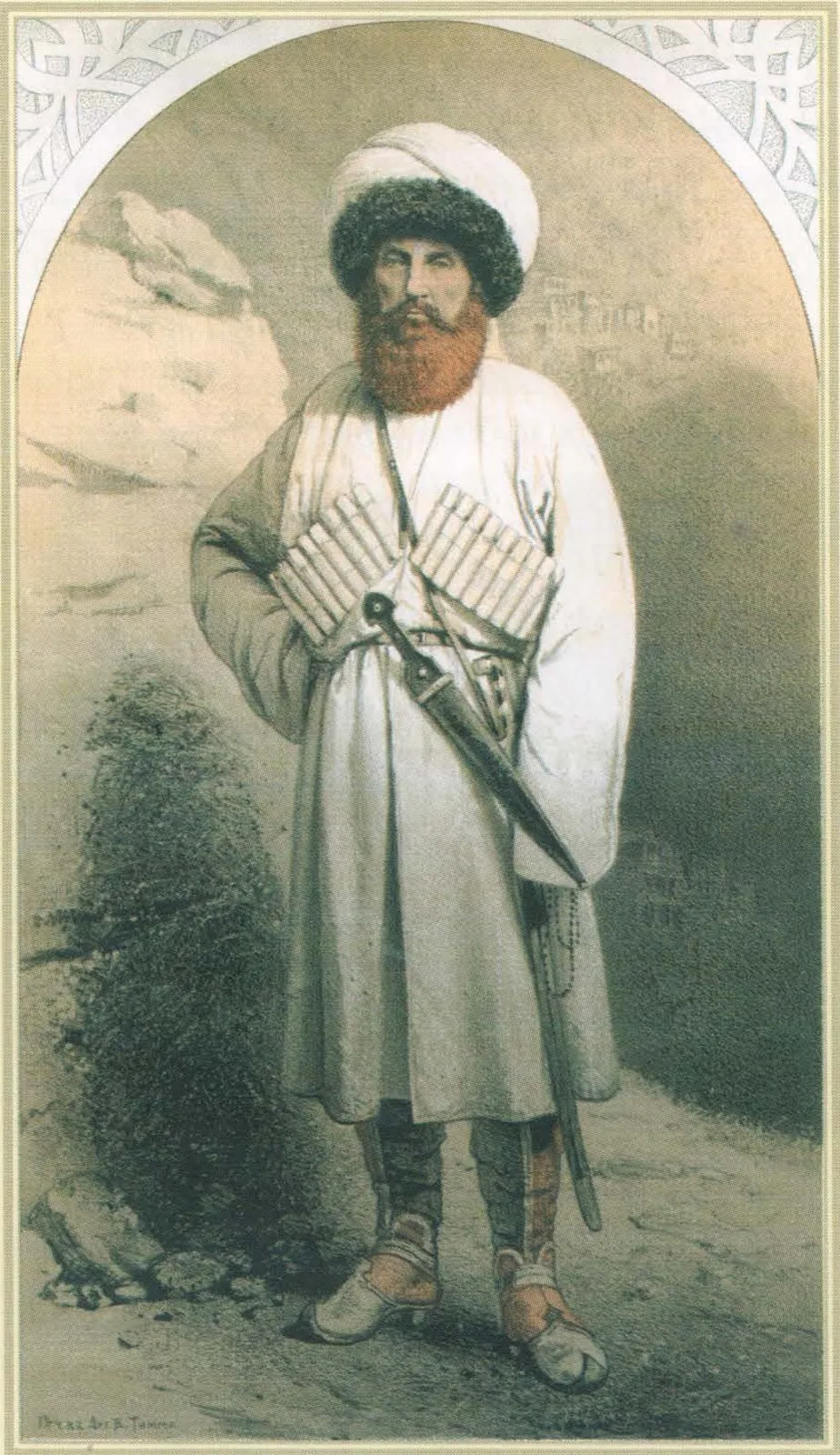
Wikimedia Commons · Public domain · file Russian forces besieged Shamil at Tilitl; he made a sortie during the June fighting and later negotiated a ceasefire. The source identifies Tilitl as probably modern Teletl; coordinates are an approximate settlement point.
Meeting with Klugenau at the Spring of Gimry
· Spring of Gimry, near Gimry, Dagestan, Caucasian Imamate (present-day Russia)
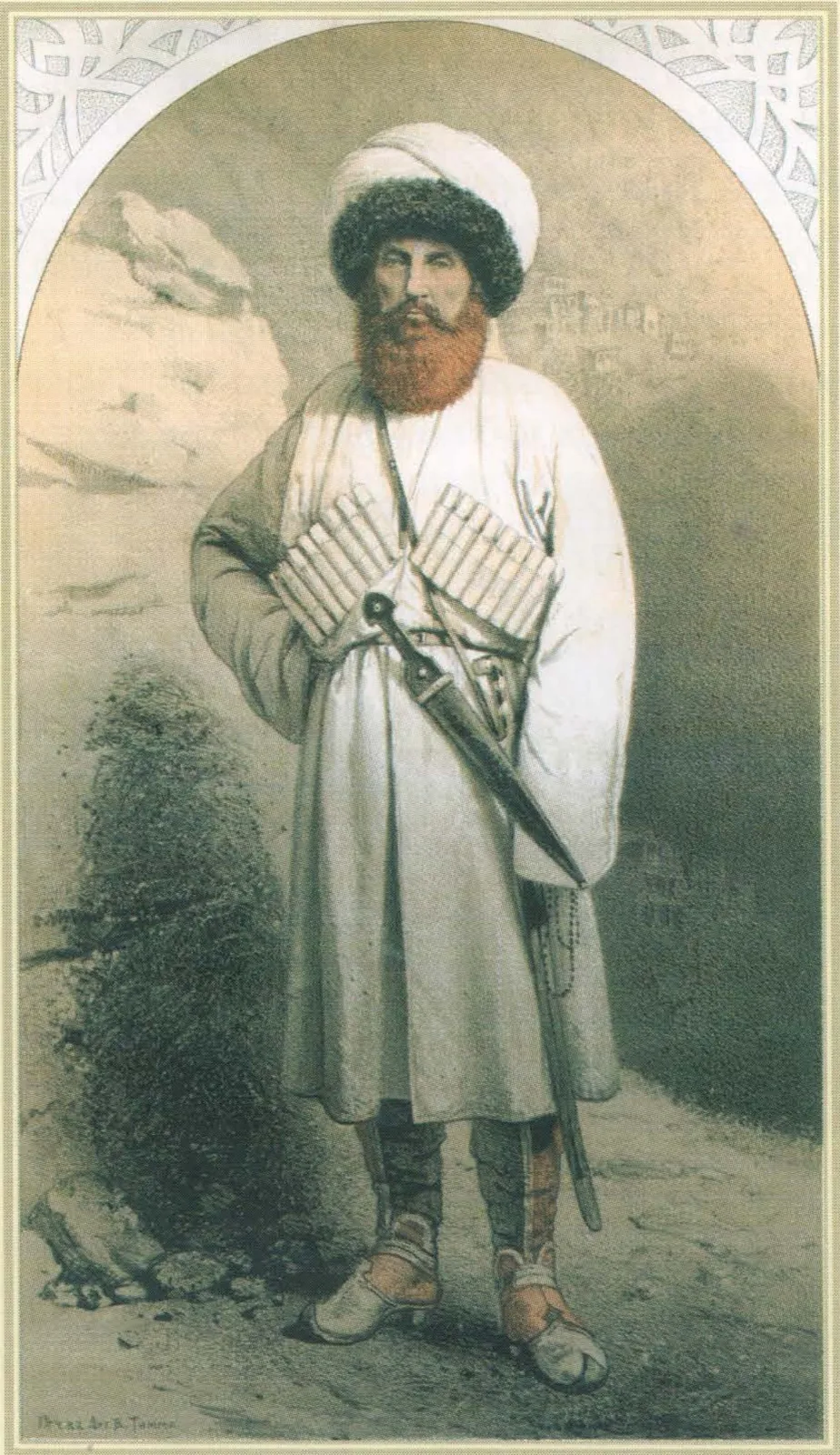
Wikimedia Commons · Public domain · file Shamil met Russian general Klugenau at the Spring of Gimry in an unsuccessful attempt at negotiations. The spring’s precise modern coordinates were not established; coordinates represent Gimry.
Siege of Akhulgo
· Akhulgo, Dagestan, Caucasian Imamate (present-day Russia)
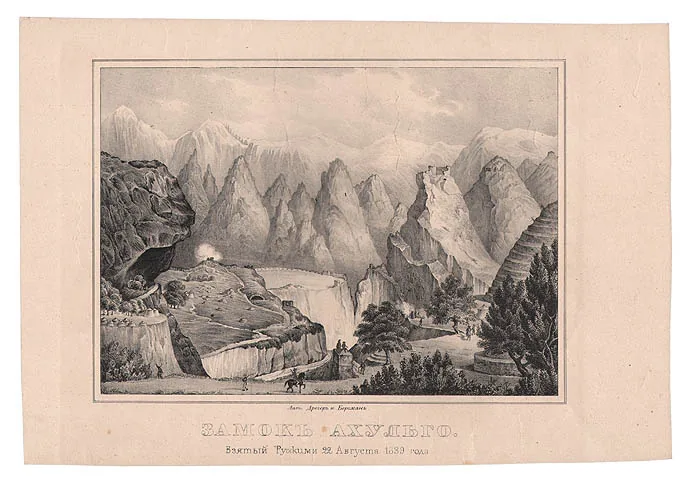
Wikimedia Commons · Public domain · file Shamil commanded the defense of the mountain stronghold of Akhulgo during its prolonged Russian siege, then escaped when it fell. The date records the opening month of a documented June–August siege.
Establishment at Dargo
· Dargo, Chechnya, Caucasian Imamate (present-day Russia)
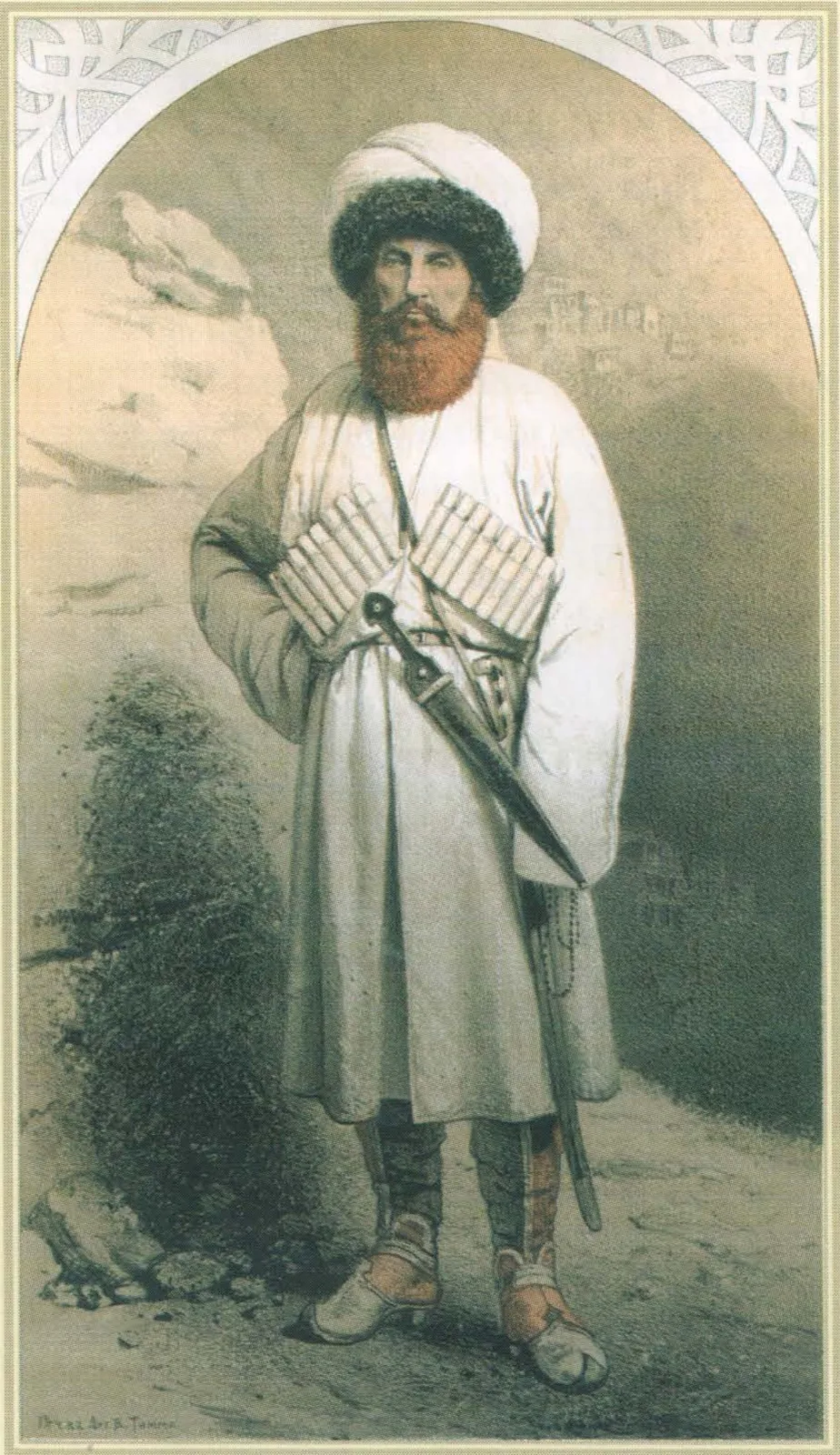
Wikimedia Commons · Public domain · file Following Akhulgo, Shamil established himself at Dargo in the Chechen forests, which became an important center of his resistance. The source establishes the move after the 1839 siege; 1840 is used because the related war chronology identifies that year as Shamil’s move into Chechnya.
Western expedition into Kabardia
· Kabardia, Caucasian Imamate frontier (present-day Kabardino-Balkaria, Russia)
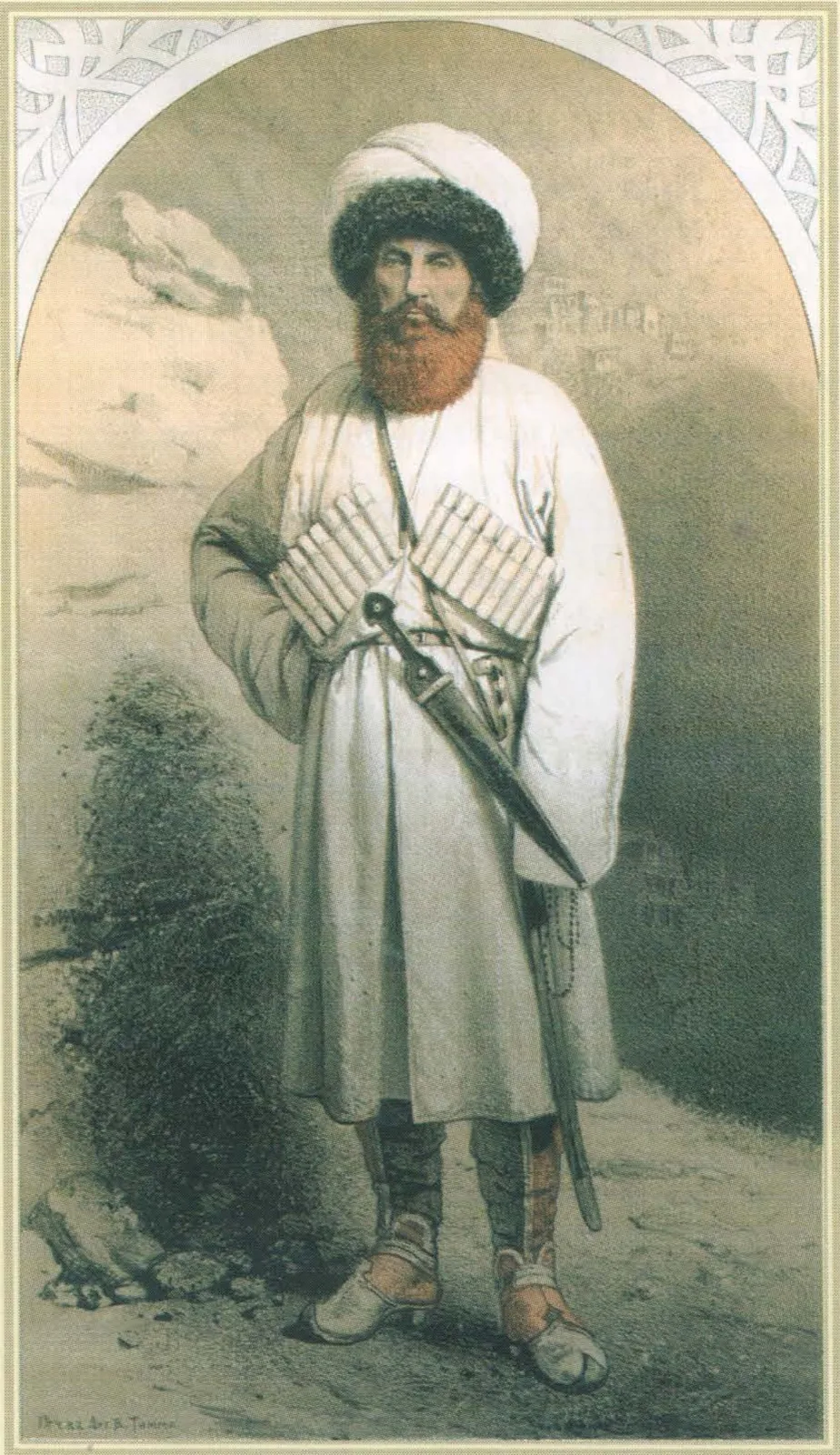
Wikimedia Commons · Public domain · file Shamil crossed the Argun and then the Terek during an expedition into Kabardia intended to broaden his movement westward. The source’s chronology states that all dates in this section are Old Style. Coordinates are a representative point at Nalchik for the broader Kabardia region.
Residence at Veden
· Veden, Chechnya, Caucasian Imamate (present-day Russia)
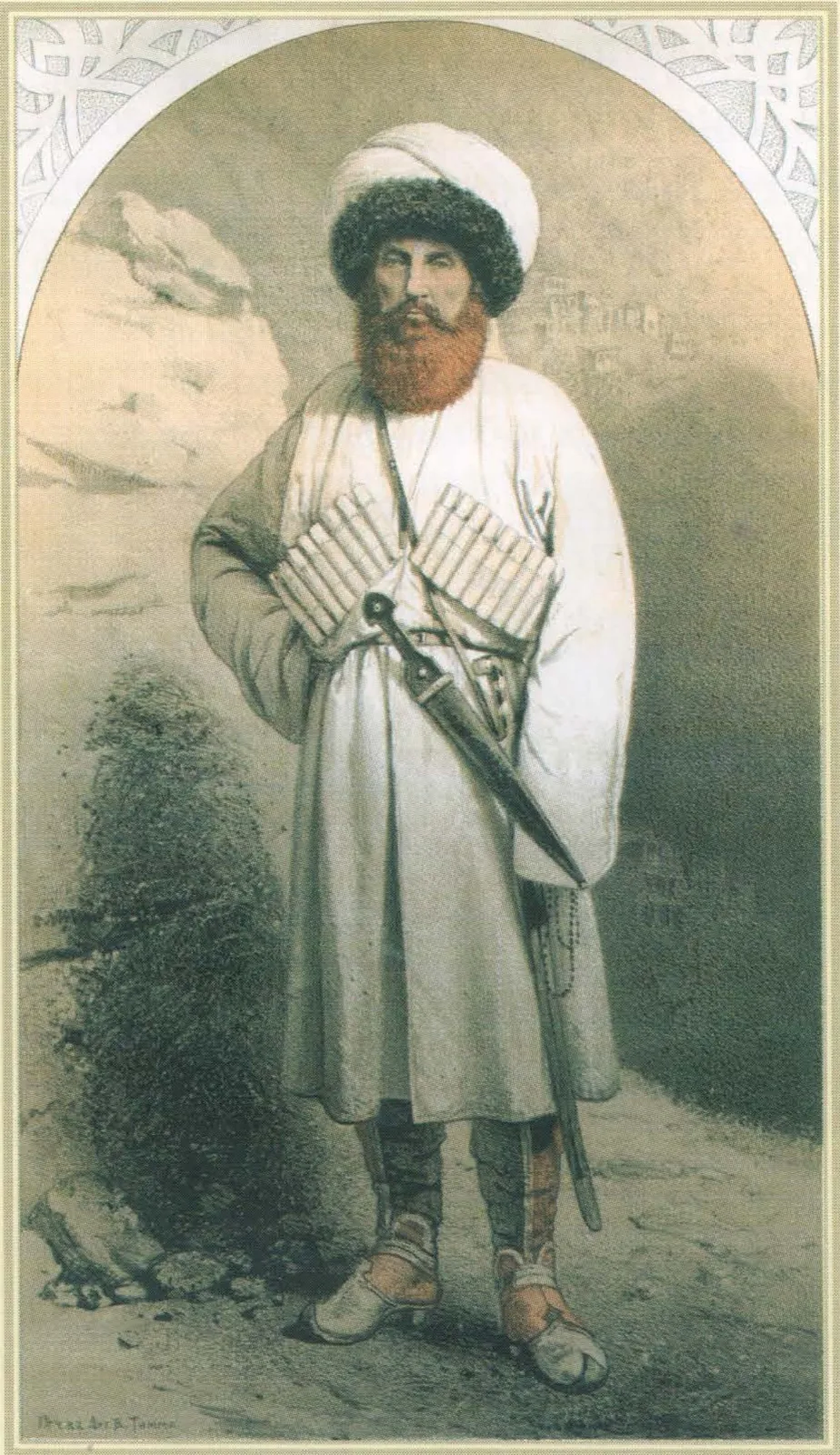
Wikimedia Commons · Public domain · file By 1847, Shamil had established himself at Veden, a major later center of the Imamate in Chechnya. The statement appears in the source’s 1847 chronology without a more precise date.
Entry into Kakheti
· Kakheti, Russian Empire (present-day Georgia)
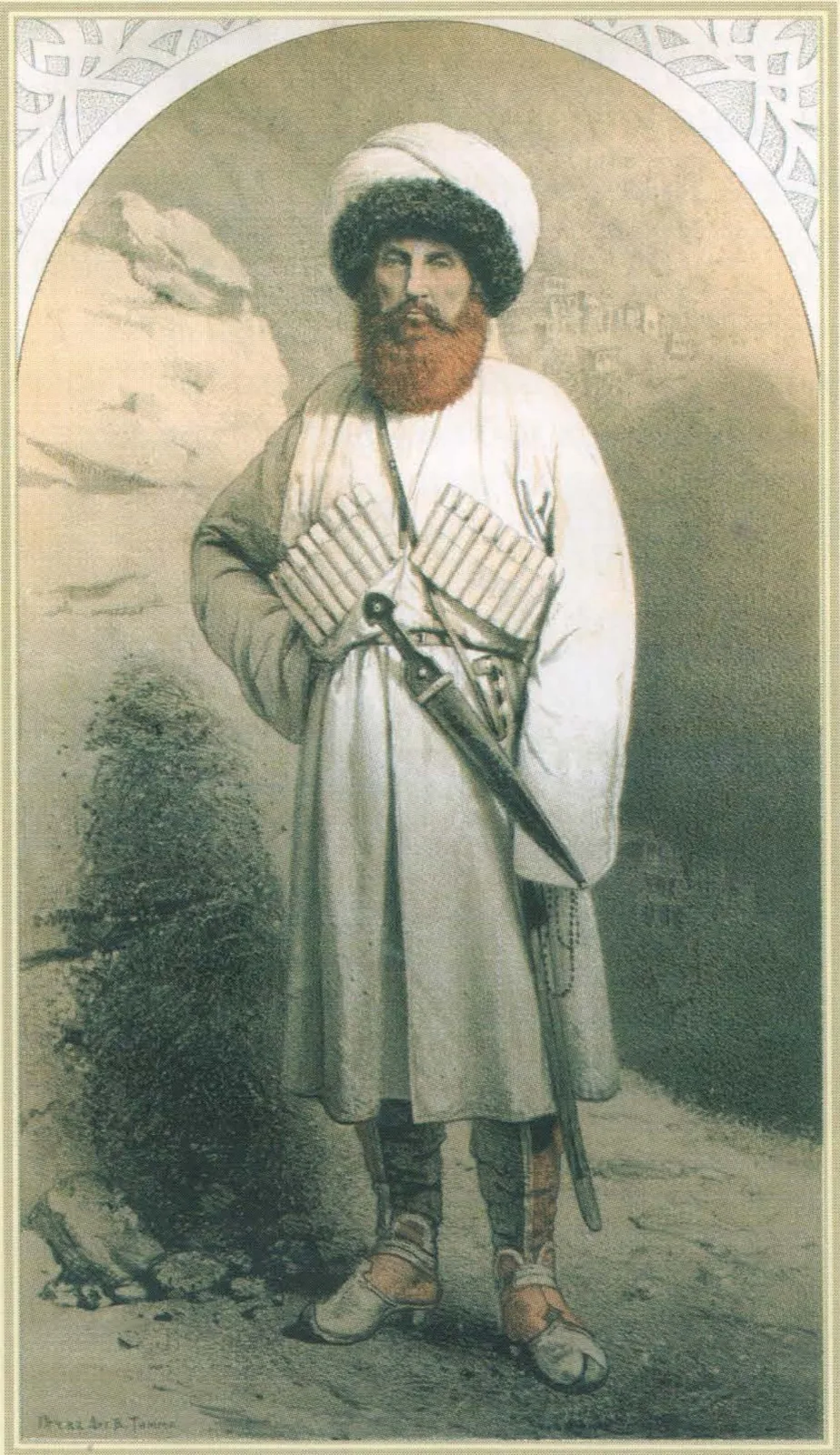
Wikimedia Commons · Public domain · file Shamil entered Georgia’s Kakheti region during his effort to press operations toward Tiflis in the Crimean War period. The source identifies the region rather than a specific settlement; coordinates are a representative point in Kakheti.
Crossing of the Argun
· Argun River, Chechnya, Russian Empire (present-day Russia)
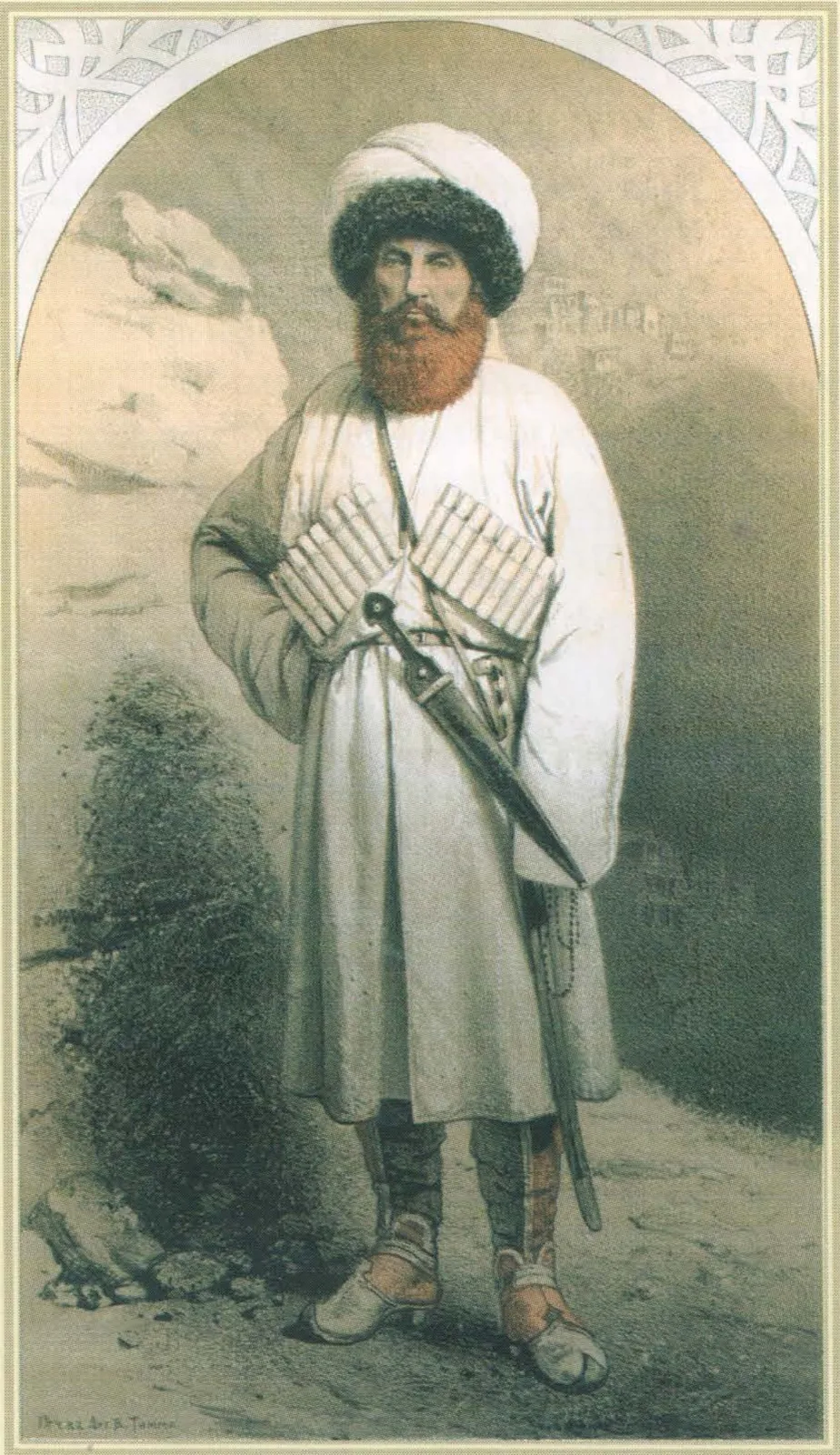
Wikimedia Commons · Public domain · file During attempts to support the Nazran revolt, Shamil crossed the Argun under Russian fire but could not reach Nazran. The source places the event in 1858 but does not identify the crossing point; coordinates are a representative point on the Argun River.
Defense line at Ichichali
· Ichichali, Dagestan, Caucasian Imamate (present-day Russia)
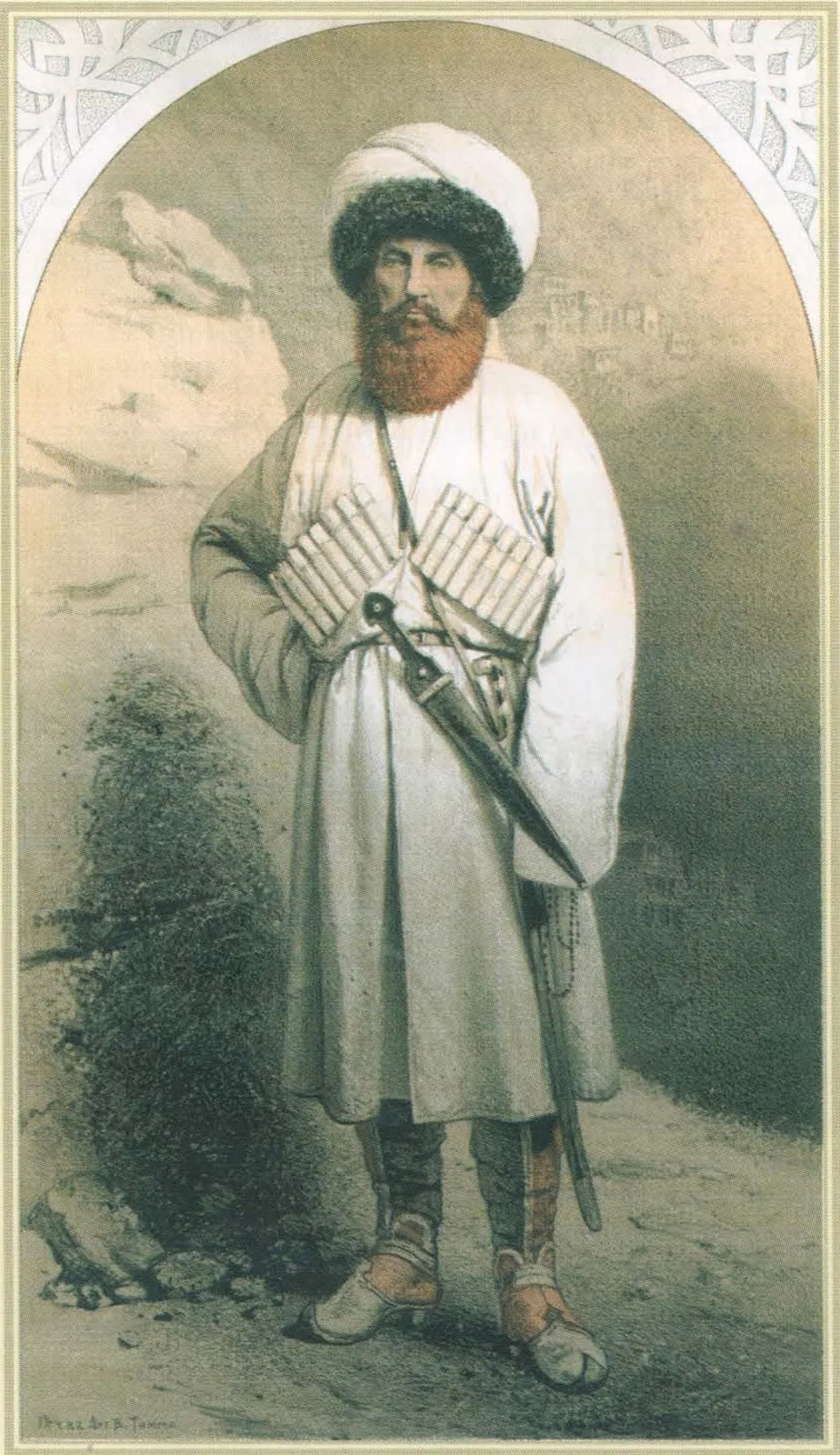
Wikimedia Commons · Public domain · file Driven from Chechnya, Shamil attempted to hold a defensive line along the Andi Koysu and fortified Ichichali. The source provides no more precise date within 1859; coordinates are approximate for the historical locality.
Exile at Kaluga
· Kaluga, Russian Empire (present-day Russia)
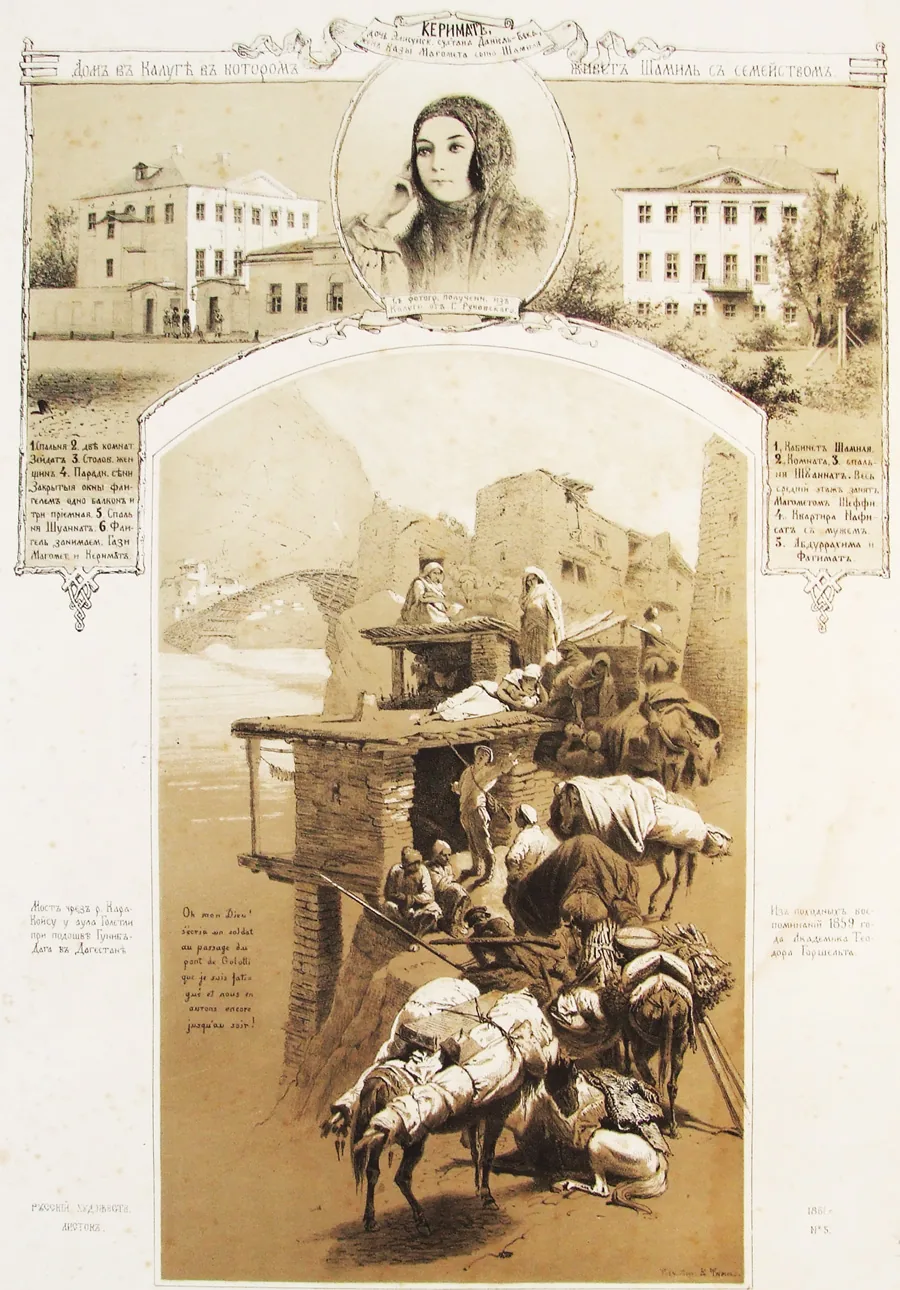
Wikimedia Commons · Public Domain Mark 1.0 · file Shamil began his Russian exile at Kaluga after his Saint Petersburg audience. The source places the exile after the 1859 capture without a more precise arrival date.
Meeting Tsar Alexander II
· Saint Petersburg, Russian Empire (present-day Russia)
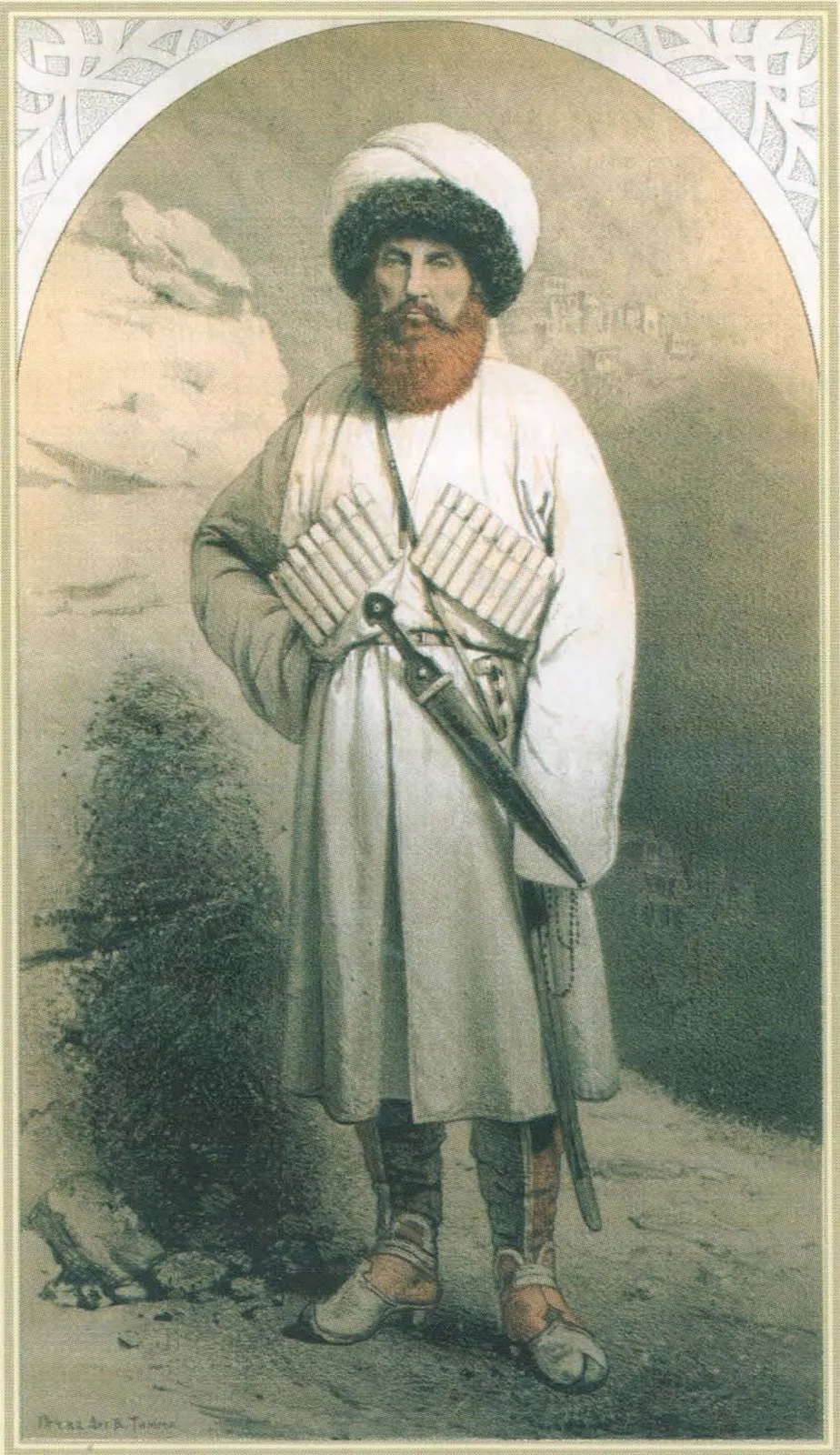
Wikimedia Commons · Public domain · file After capture, Shamil was sent to Saint Petersburg to meet Tsar Alexander II. The source places the transfer after Shamil’s 1859 capture without a more precise date.
Transfer to Temir-Khan-Shura
· Temir-Khan-Shura (present-day Buynaksk), Dagestan, Russian Empire (present-day Russia)
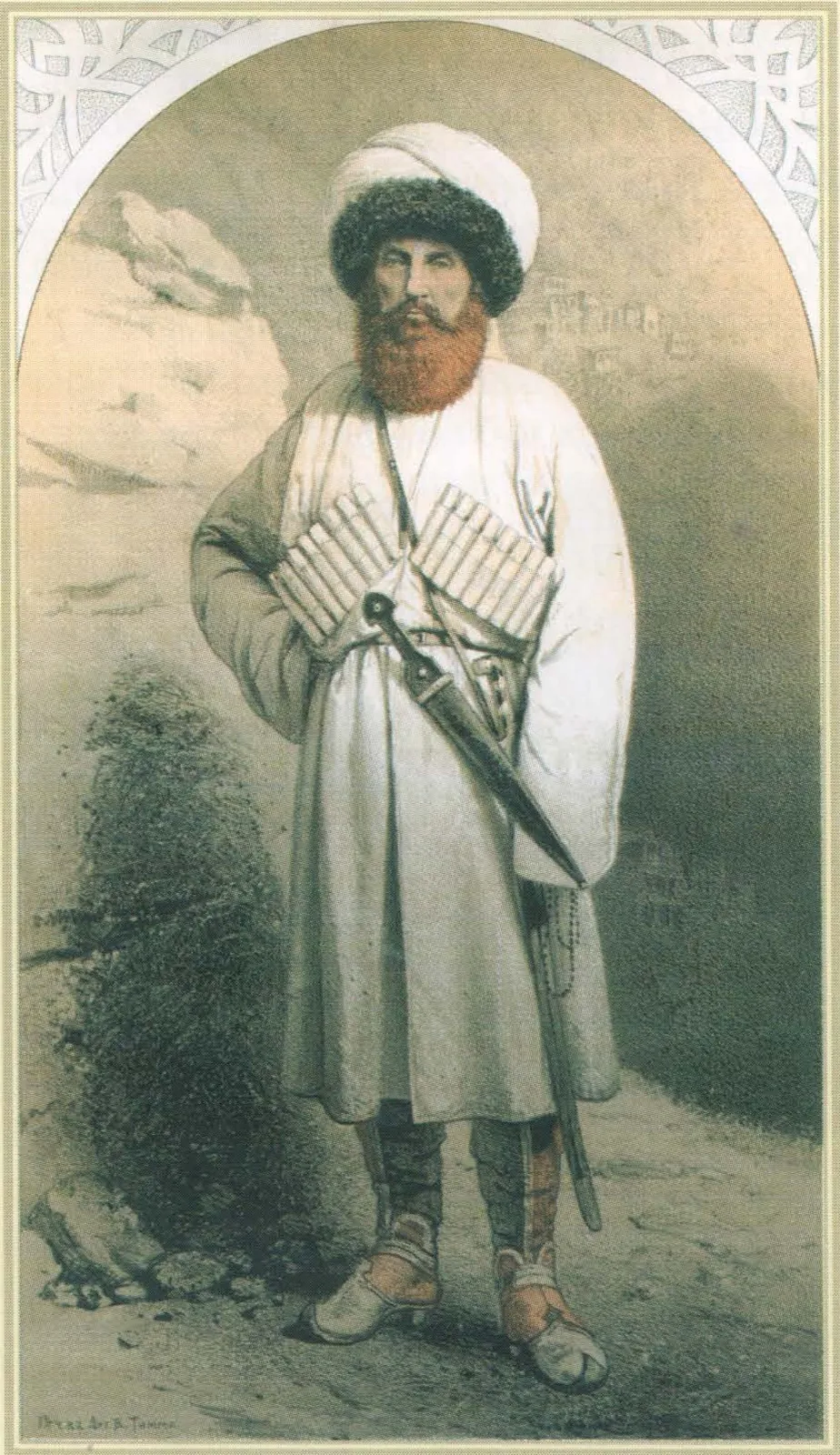
Wikimedia Commons · Public domain · file Following his surrender, Shamil was taken to Temir-Khan-Shura before being moved onward to Saint Petersburg and Kaluga. The source gives this movement after its account of Shamil’s 1859 surrender but does not provide a directly reconcilable day in the Gregorian calendar.
Retreat from near Veden
· Near Veden, Chechnya, Caucasian Imamate (present-day Russia)
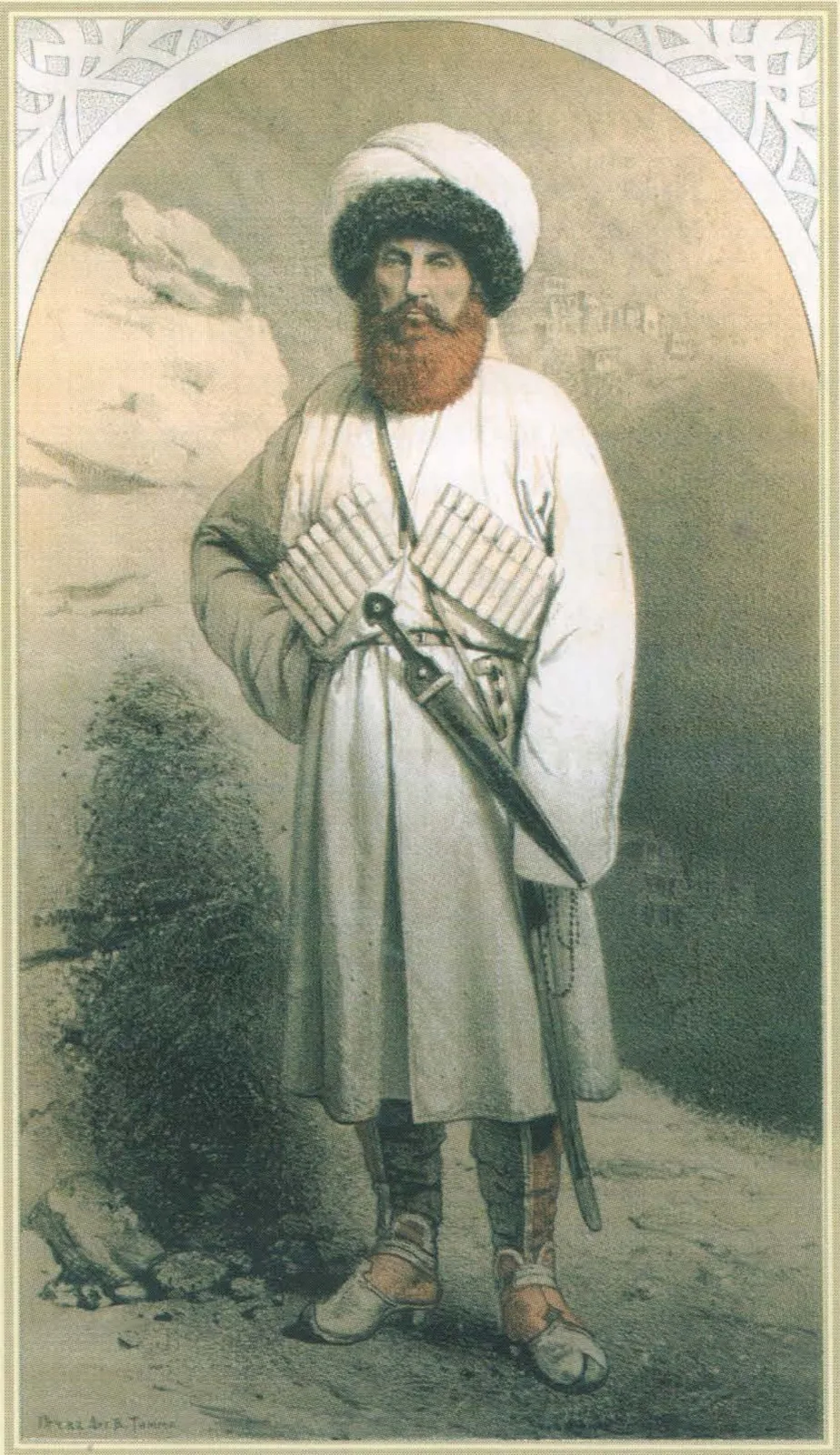
Wikimedia Commons · Public domain · file When Veden fell after a two-month siege, Shamil, who had been nearby, retreated south as Russian pressure intensified. The source reports Veden’s capture on 1 April and places Shamil only in its neighborhood; coordinates represent Veden.
Retreat through Karata
· Karata, Dagestan, Caucasian Imamate (present-day Russia)
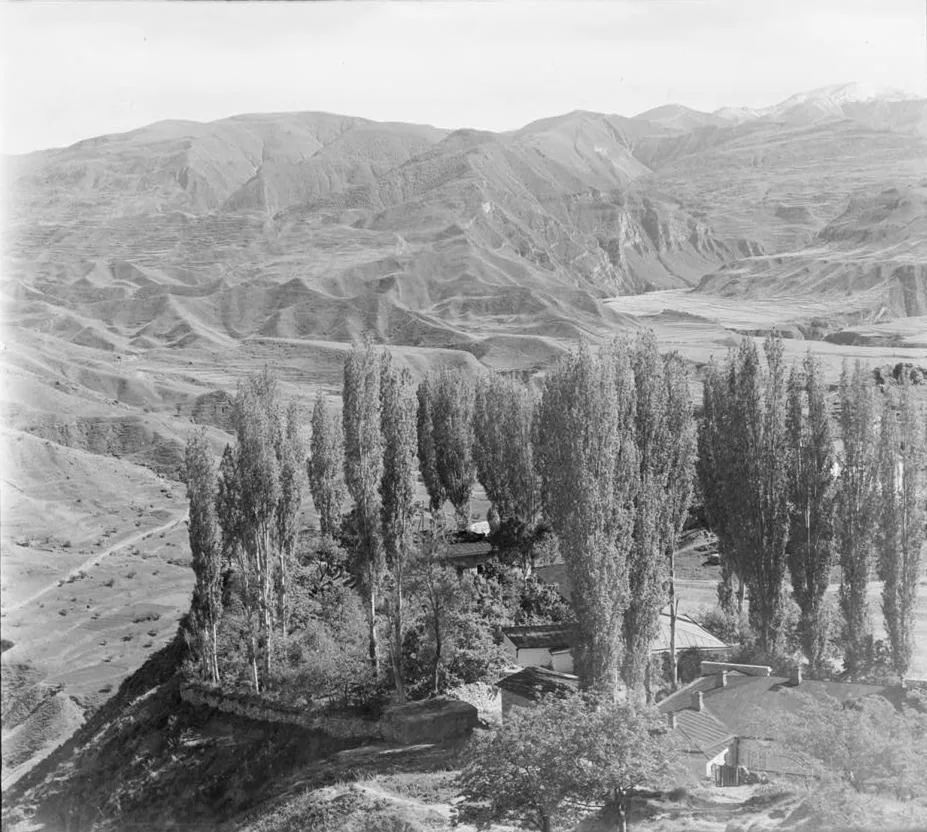
Wikimedia Commons · Public Domain Mark 1.0 · file As Russian columns advanced, Shamil fled from Karata toward Gunib with his remaining followers. The movement is described in the source’s late-July 1859 sequence.
Surrender at Gunib
· Gunib, Dagestan, Caucasian Imamate (present-day Russia)
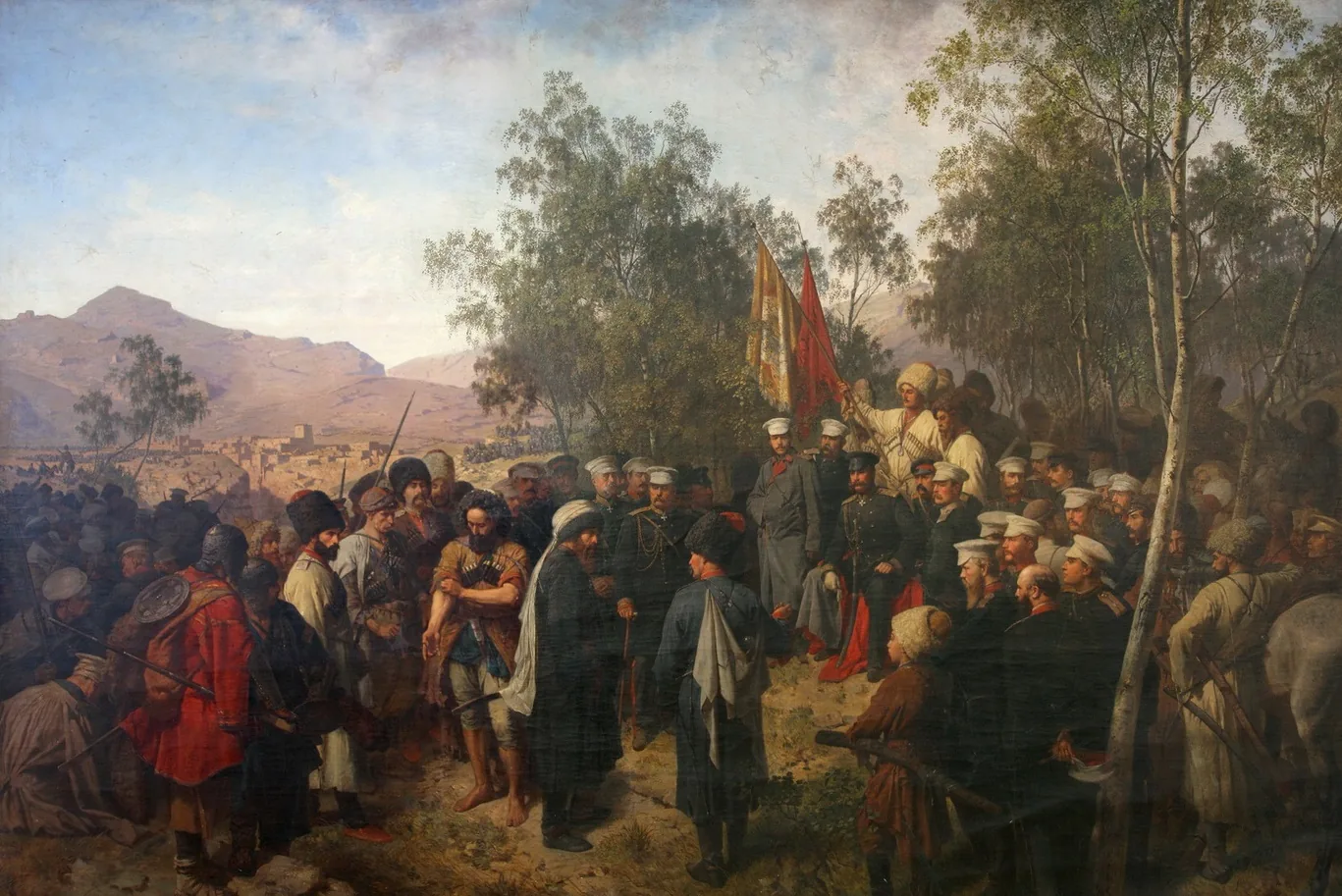
Wikimedia Commons · Public domain · file After Russian forces besieged Gunib, Shamil surrendered with his remaining followers, ending his organized resistance.
Move to Kyiv
· Kyiv, Russian Empire (present-day Ukraine)
After years in Kaluga, Shamil received permission to move to Kyiv, where authorities provided him a mansion while keeping him under surveillance.
Departure via Odesa for the Hajj
· Odesa, Russian Empire (present-day Ukraine)
Having received permission for the Hajj, Shamil traveled from Kyiv to Odesa before sailing onward to Istanbul. The source dates the Hajj permission and journey to 1869 but does not give a day or month for his presence in Odesa.
Pilgrimage in Mecca
· Mecca, Ottoman Empire (present-day Saudi Arabia)
During the Hajj, Shamil was in Mecca, where he met and conversed with Emir Abdelkader. The source places the pilgrimage journey in 1869 but does not state a more precise date for Shamil’s arrival in Mecca.
Reception at Topkapı Palace
· Topkapı Palace, Istanbul, Ottoman Empire (present-day Türkiye)
Shamil reached Istanbul on his Hajj journey, was greeted by Sultan Abdulaziz, and briefly became a guest at Topkapı Palace. The source places this stay during Shamil’s 1869 Hajj journey.
Audience at Dolmabahçe Palace
· Dolmabahçe Palace, Istanbul, Ottoman Empire (present-day Türkiye)
Sultan Abdulaziz received Shamil at Dolmabahçe Palace during his extended Istanbul stay before the pilgrimage.
Death in Medina
· Medina, Ottoman Empire (present-day Saudi Arabia)
Shamil died while visiting Medina after completing his pilgrimage to Mecca; he was buried in Jannatul Baqi. The exact date, 4 February 1871, is given in the article’s infobox; the quoted text independently establishes his physical presence in Medina at death.