
27 moments
Birth at Schönhausen
· Schönhausen, Saxony-Anhalt, Germany
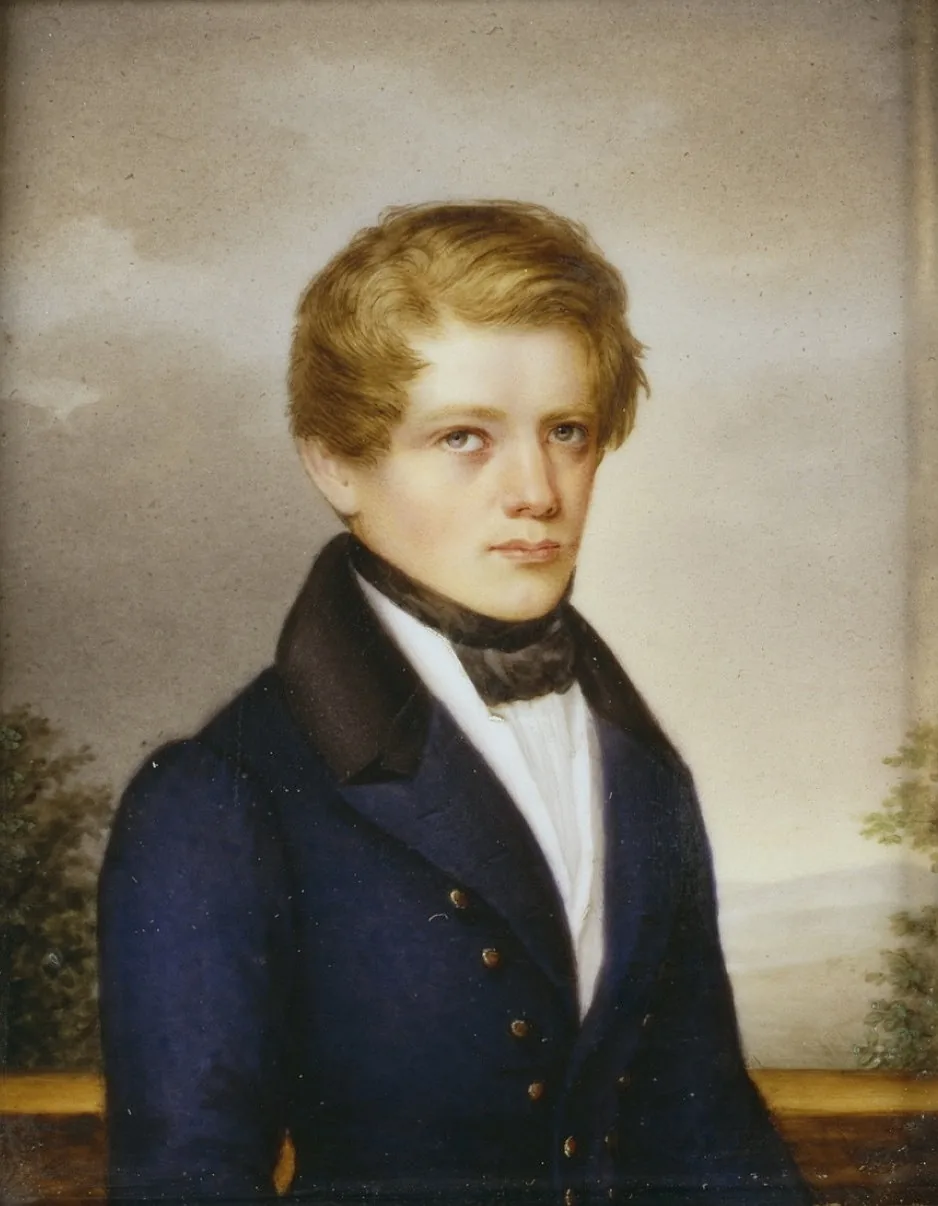
Wikimedia Commons · Public domain · file Bismarck was born at the Bismarck family estate in Schönhausen, then in Prussian Saxony. Coordinates represent Schönhausen settlement; the birth estate is within the locality.
Childhood at Kniephof estate
· Kniephof estate (now Konarzewo), West Pomeranian Voivodeship, Poland
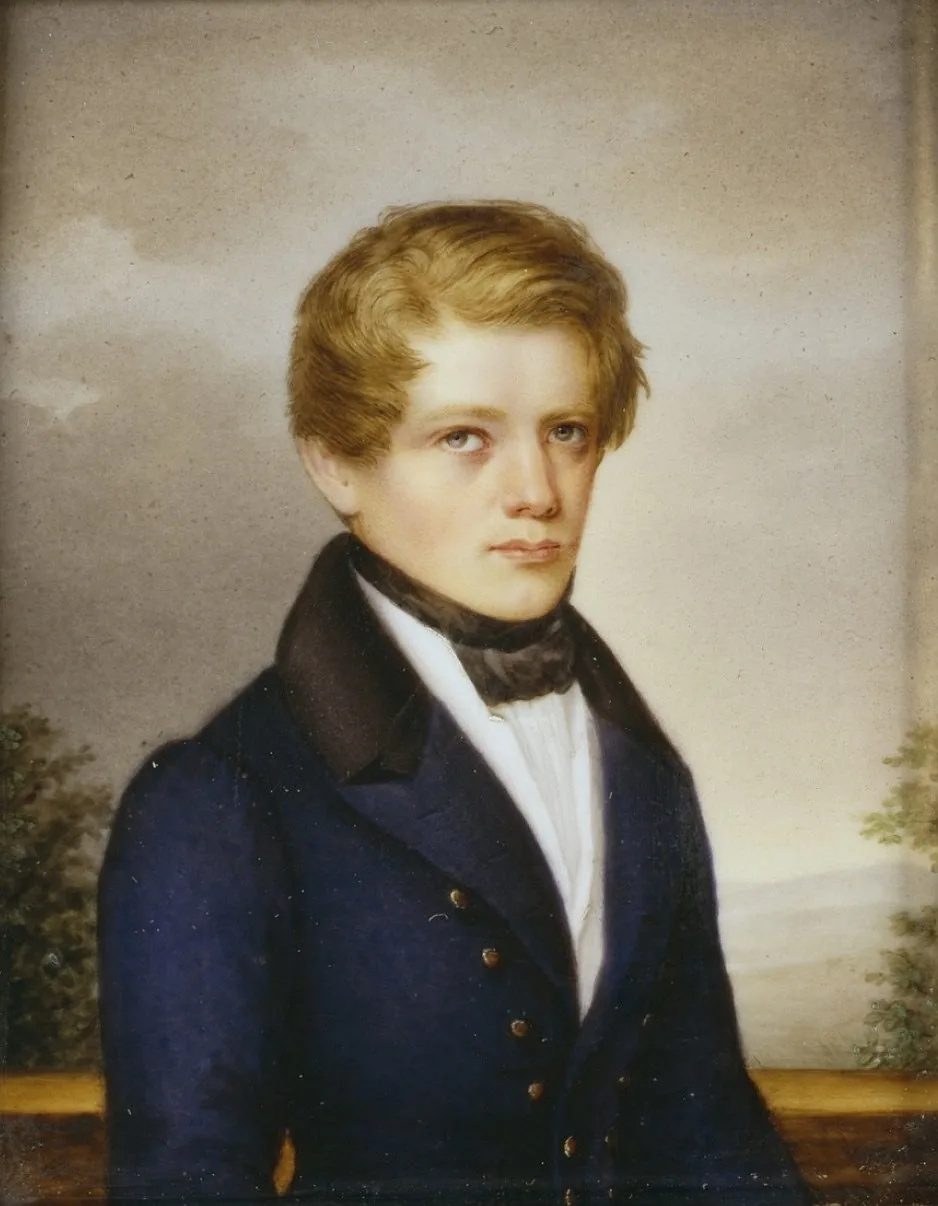
Wikimedia Commons · Public domain · file His family relocated to Kniephof in Farther Pomerania, where Bismarck spent his childhood. Coordinates are a representative point for modern Konarzewo, the site identified with historic Kniephof.
Law studies at Göttingen
· University of Göttingen, Göttingen, Lower Saxony, Germany
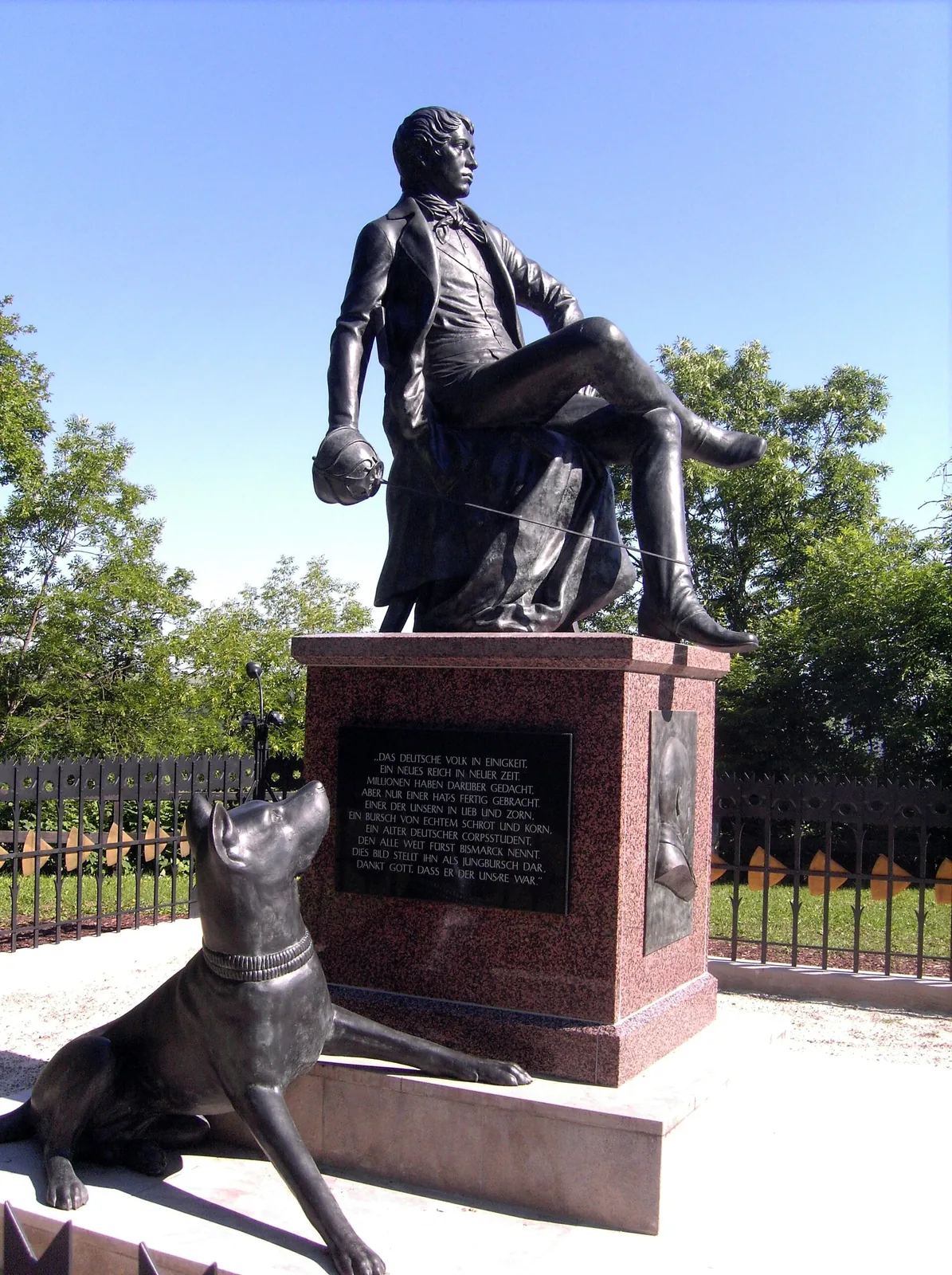
Wikimedia Commons · Public domain · file Bismarck began studying law at the University of Göttingen and joined Corps Hannovera.
Continued studies in Berlin
· University of Berlin, Berlin, Germany
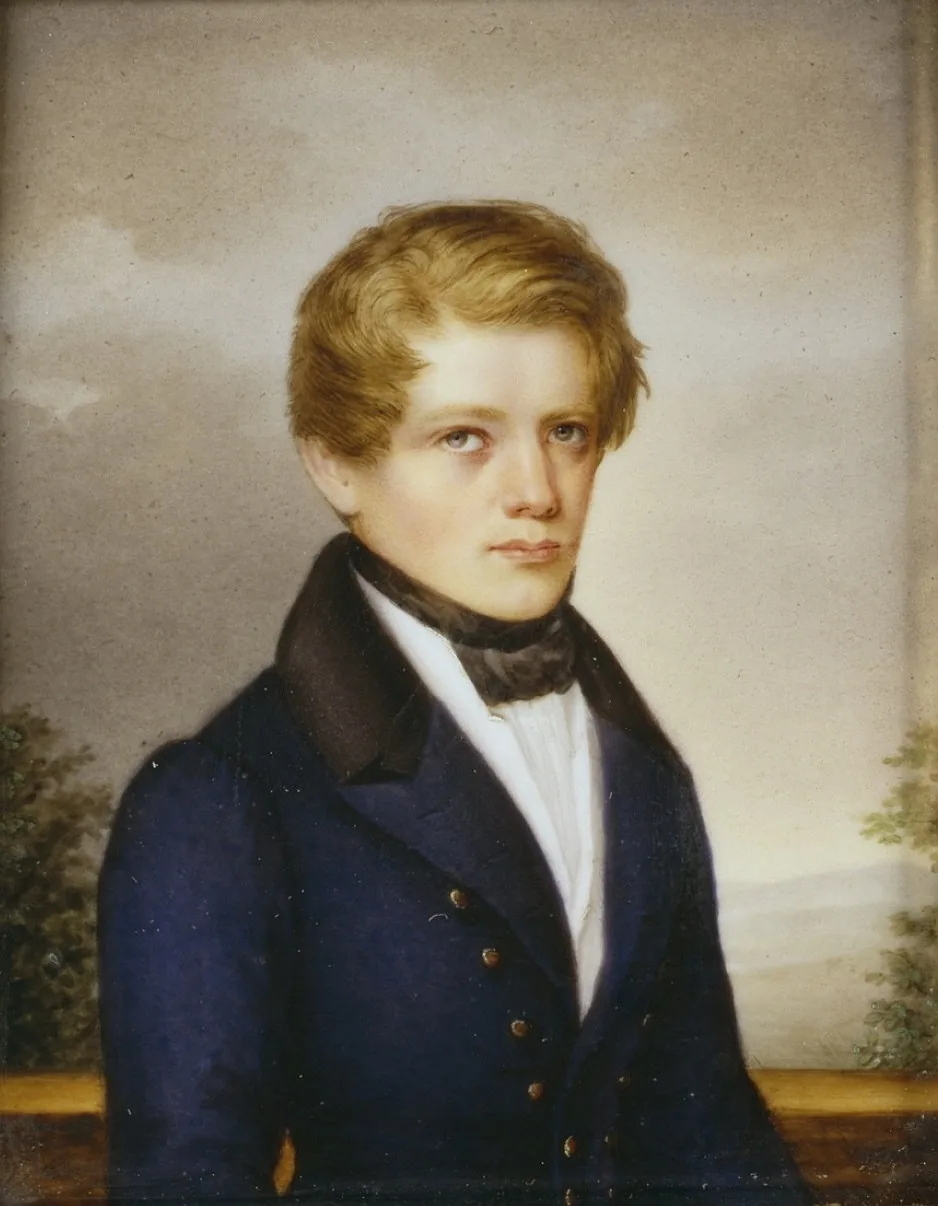
Wikimedia Commons · Public domain · file After Göttingen, Bismarck enrolled at the University of Berlin for further legal study. Coordinates represent the historic central Berlin university area.
Army reserve service and agricultural study
· Greifswald, Mecklenburg-Vorpommern, Germany
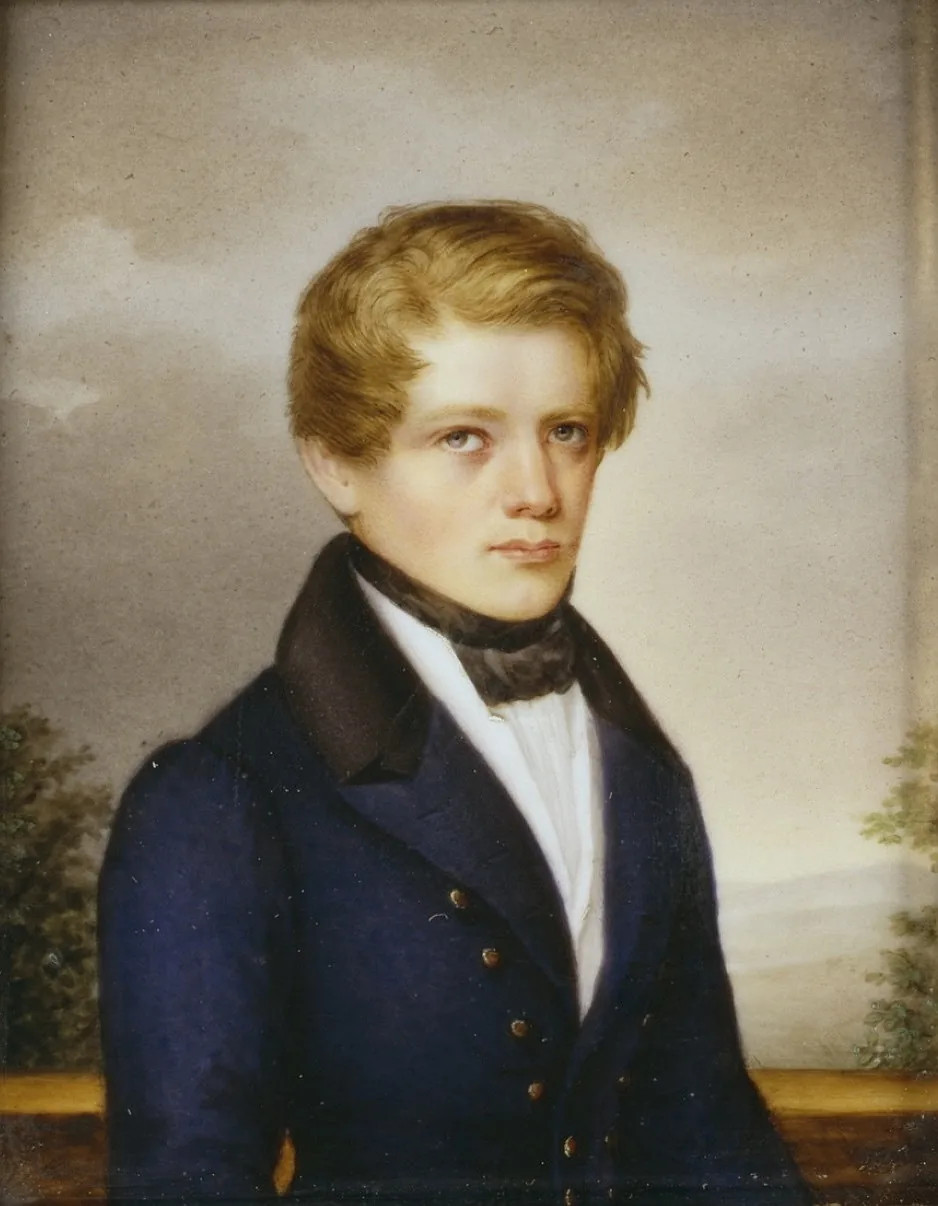
Wikimedia Commons · Public domain · file While posted as an army reservist at Greifswald, Bismarck studied agriculture at its university.
Returned to manage Schönhausen estate
· Schönhausen, Saxony-Anhalt, Germany
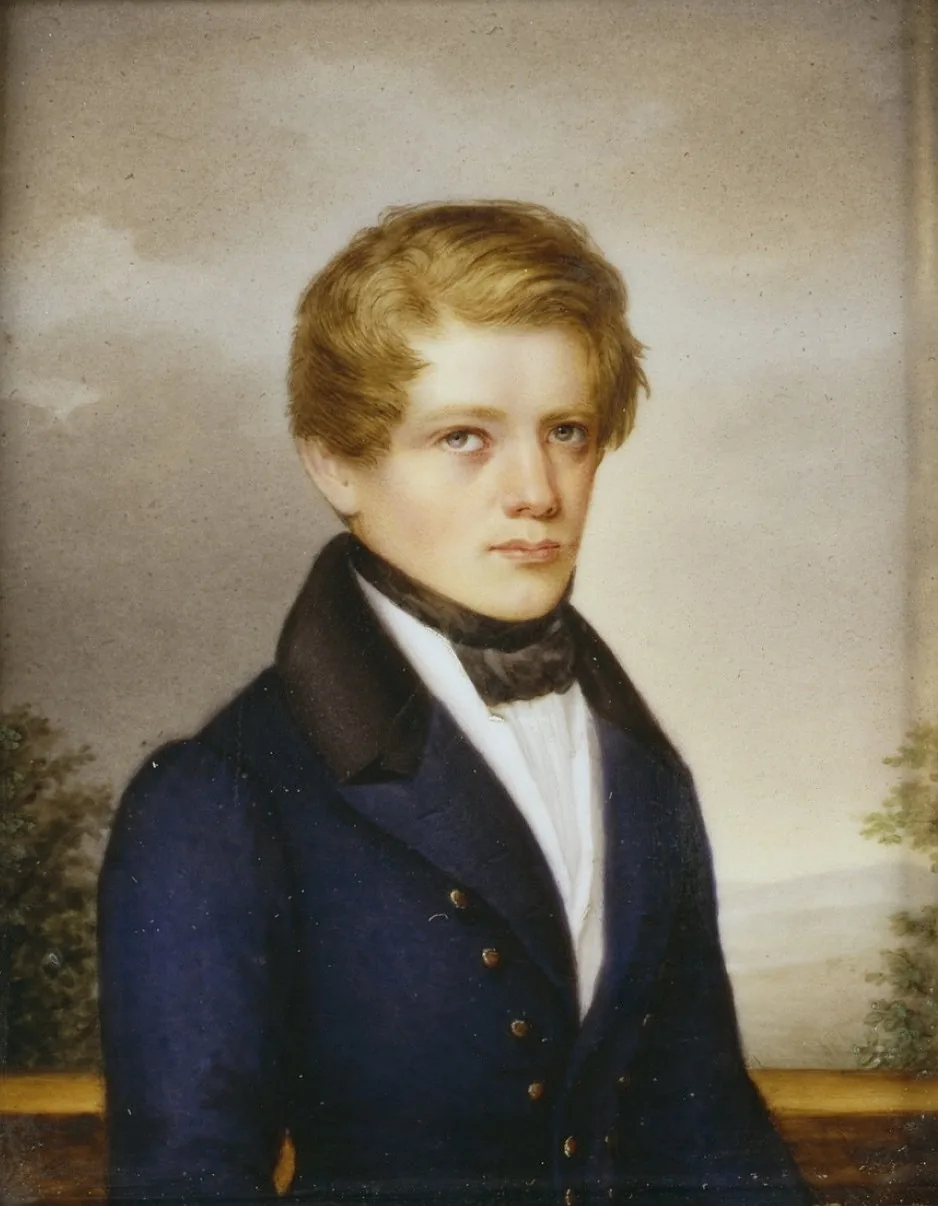
Wikimedia Commons · Public domain · file After his mother's death, Bismarck returned to Schönhausen and managed the family estates. The source gives a relative chronology; 1839 is used because his mother died in that year.
Marriage to Johanna von Puttkamer
· Kołczygłowy (historic Alt-Kolziglow), Pomeranian Voivodeship, Poland
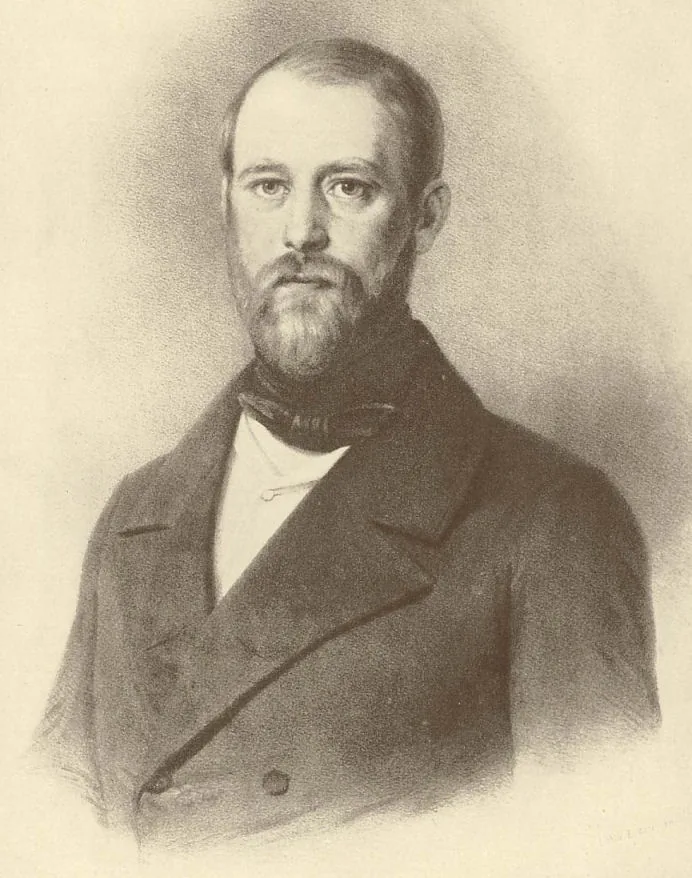
Wikimedia Commons · Public domain · file Bismarck married Johanna von Puttkamer at Alt-Kolziglow, now Kołczygłowy, beginning a marriage that lasted until her death in 1894.
Revolutionary crisis visit to Berlin
· Berlin, Germany
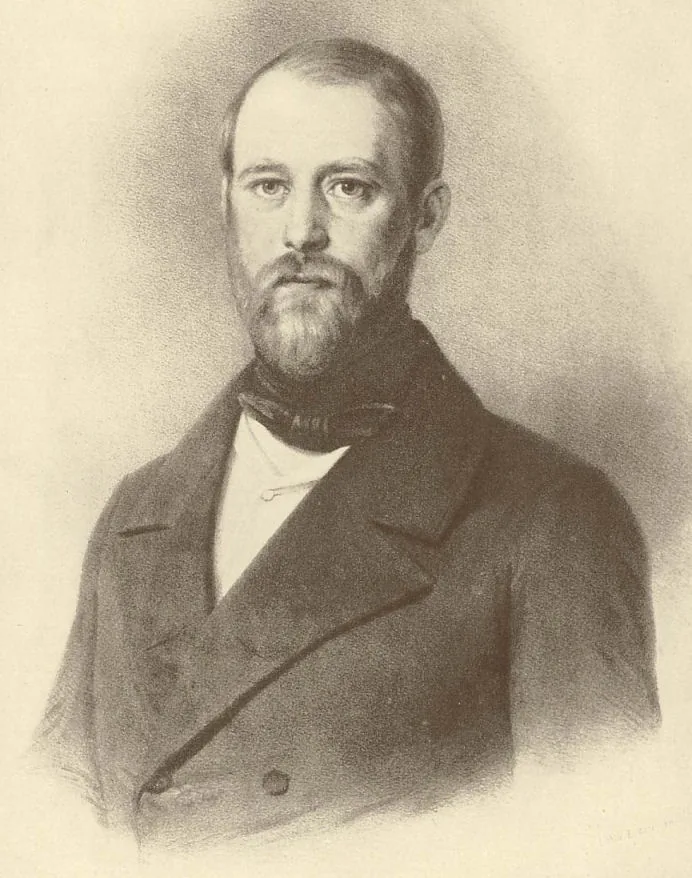
Wikimedia Commons · Public domain · file During the Prussian revolution, Bismarck traveled to Berlin in disguise to offer his services to the king. The article places this journey in the March 1848 revolutionary crisis.
Prussian envoy at the Federal Diet
· Frankfurt am Main, Hesse, Germany
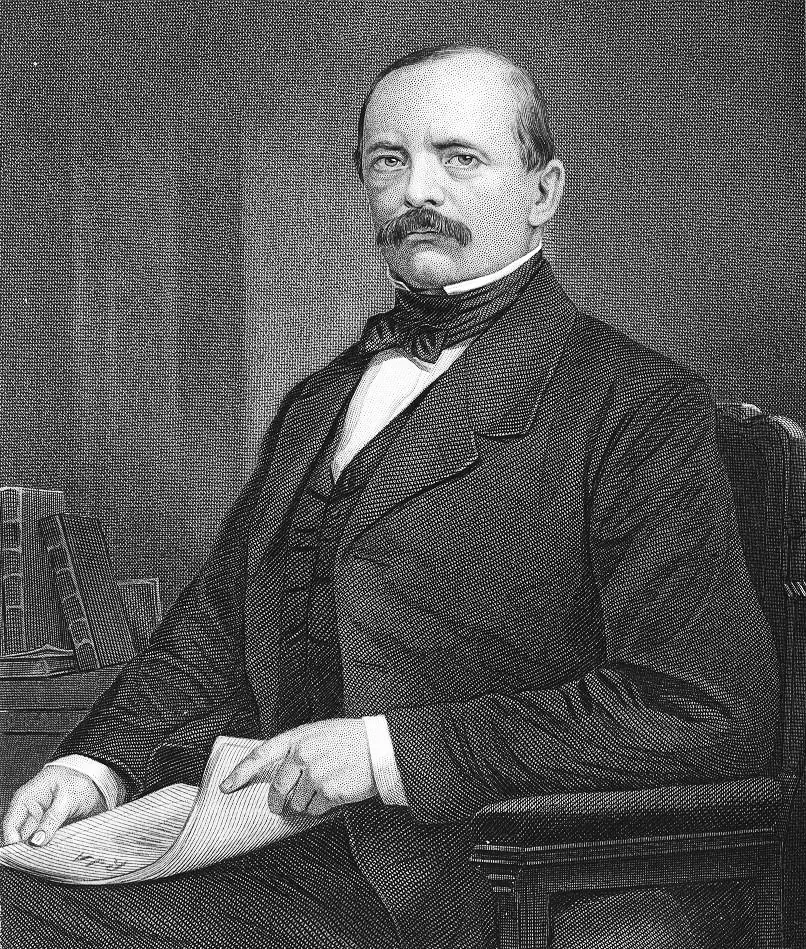
Wikimedia Commons · Public domain · file Bismarck began his eight-year diplomatic posting as Prussia's envoy to the Diet of the German Confederation in Frankfurt. Coordinates represent central Frankfurt; the Federal Diet met in the city.
Ambassadorial residence in St Petersburg
· St Petersburg, Russia
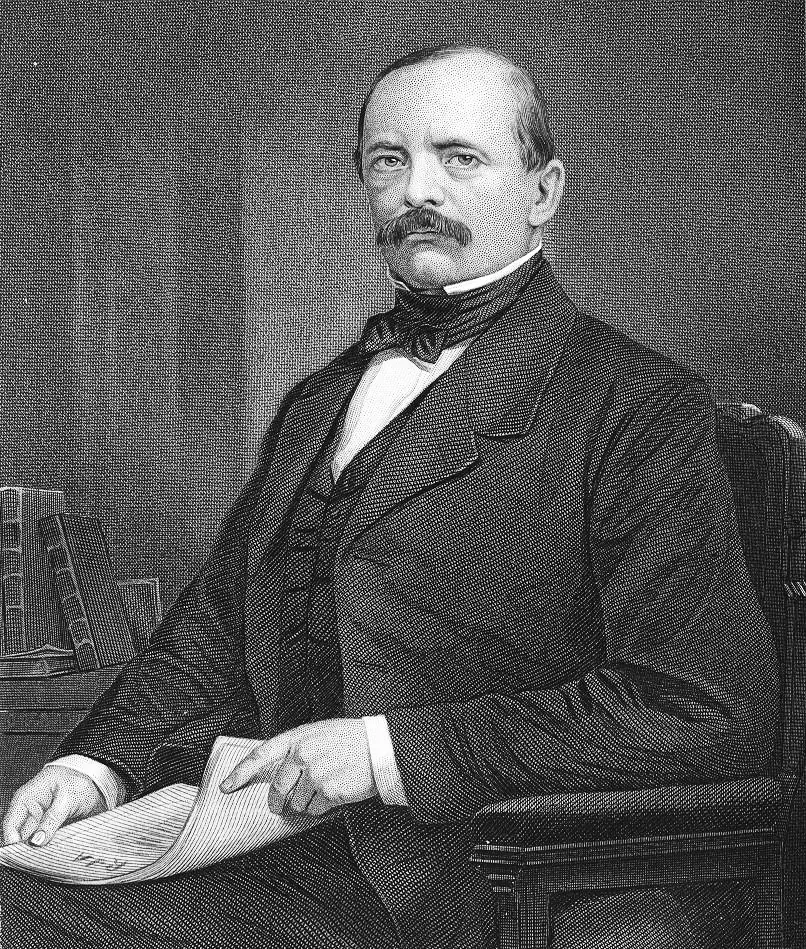
Wikimedia Commons · Public domain · file As Prussian ambassador to the Russian Empire, Bismarck spent four years in St Petersburg. The source does not specify an arrival month; 1859 is used as the start year of his Russian ambassadorship.
Diplomatic visit to England
· London, England, United Kingdom
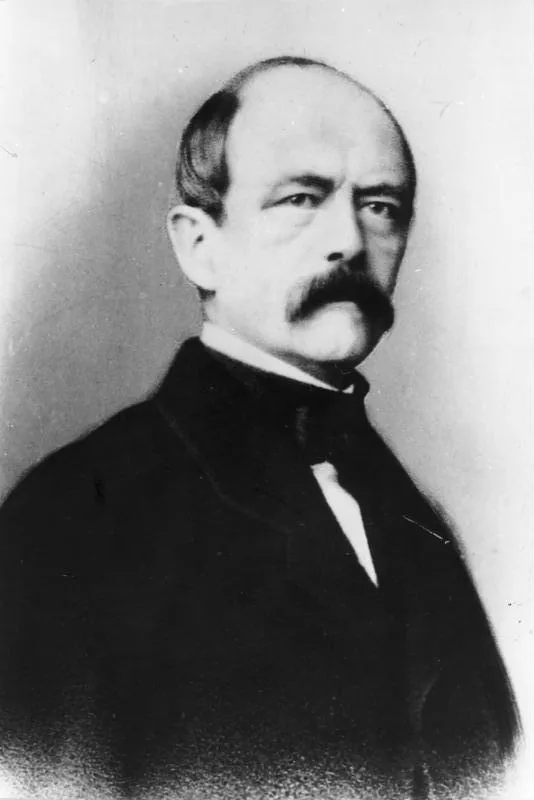
Wikimedia Commons · CC BY-SA 3.0 DE · file During the summer of 1862, Bismarck visited England and met leading British political figures. The source identifies England but does not identify a specific city; London is used as the defensible representative point because the named ministers were met in the national political center.
Ambassadorial posting in Paris
· Paris, France
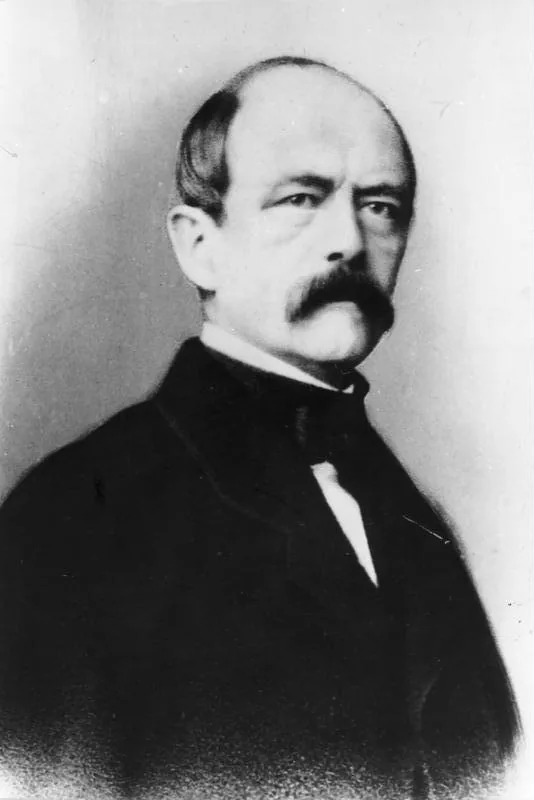
Wikimedia Commons · CC BY-SA 3.0 DE · file Bismarck was sent to Paris to serve as Prussia's ambassador to France, shortly before being recalled to Prussian government.
Blood and Iron speech
· Prussian Chamber of Deputies, Berlin, Germany
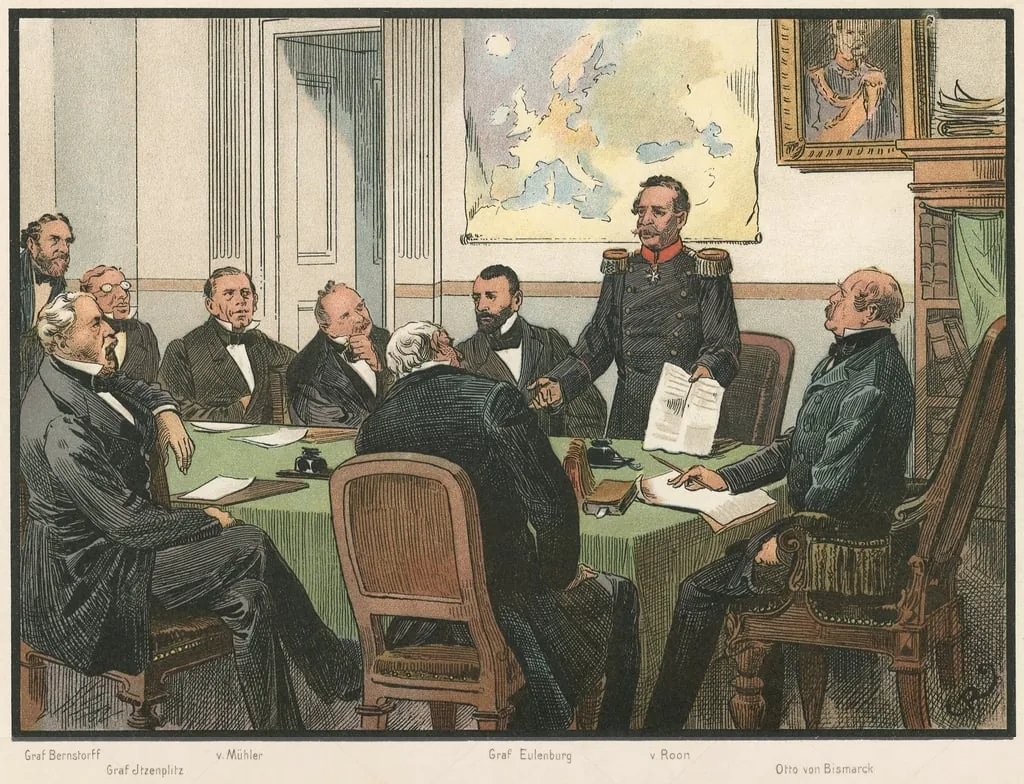
Wikimedia Commons · Public domain · file Soon after becoming minister president, Bismarck addressed the Prussian Chamber's Budget Committee in the speech associated with his "iron and blood" formula. Coordinates represent the historic Prussian parliamentary district in central Berlin.
Gastein Convention negotiations
· Bad Gastein, Salzburg, Austria
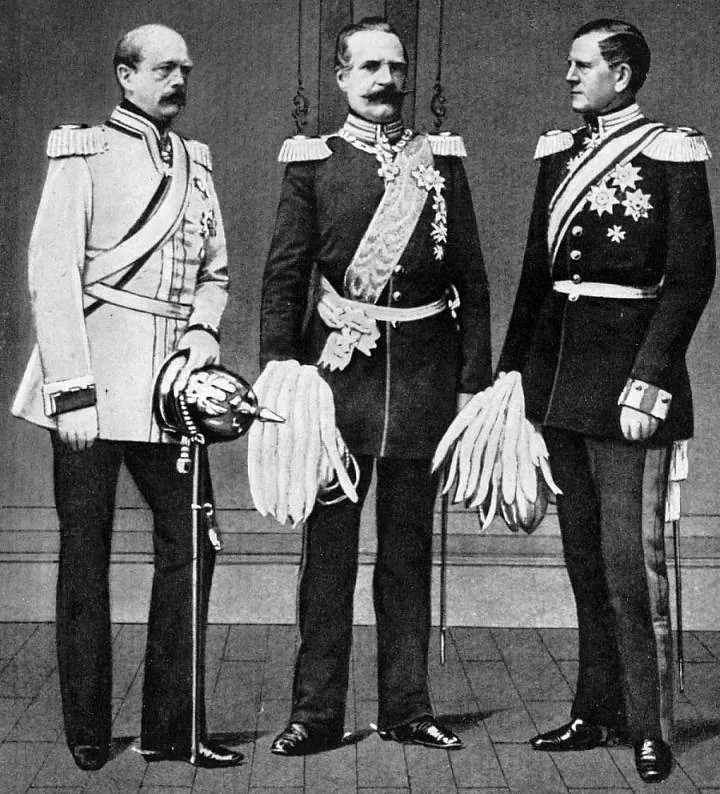
Wikimedia Commons · Public domain · file Bismarck met Austrian envoy Gustav von Blome at Bad Gastein during negotiations that produced the Gastein Convention. The convention was signed at Bad Gastein on 14 August 1865.
Meeting Napoleon III at Biarritz
· Biarritz, Nouvelle-Aquitaine, France
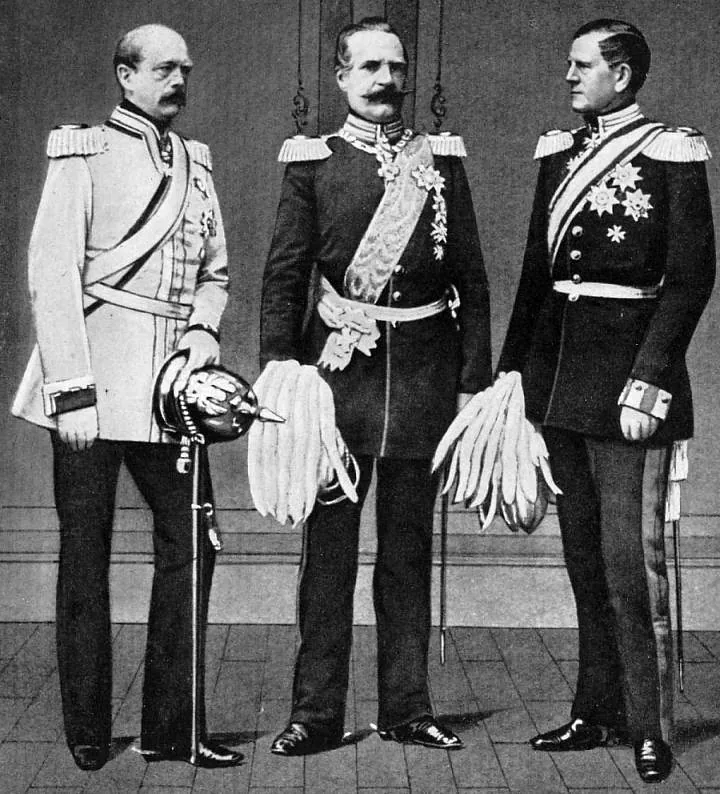
Wikimedia Commons · Public domain · file Bismarck visited Napoleon III at Biarritz while seeking to clarify France's position before the conflict with Austria. Contemporary chronology places the Biarritz meetings in October 1865.
Assassination attempt in Berlin
· Berlin, Germany
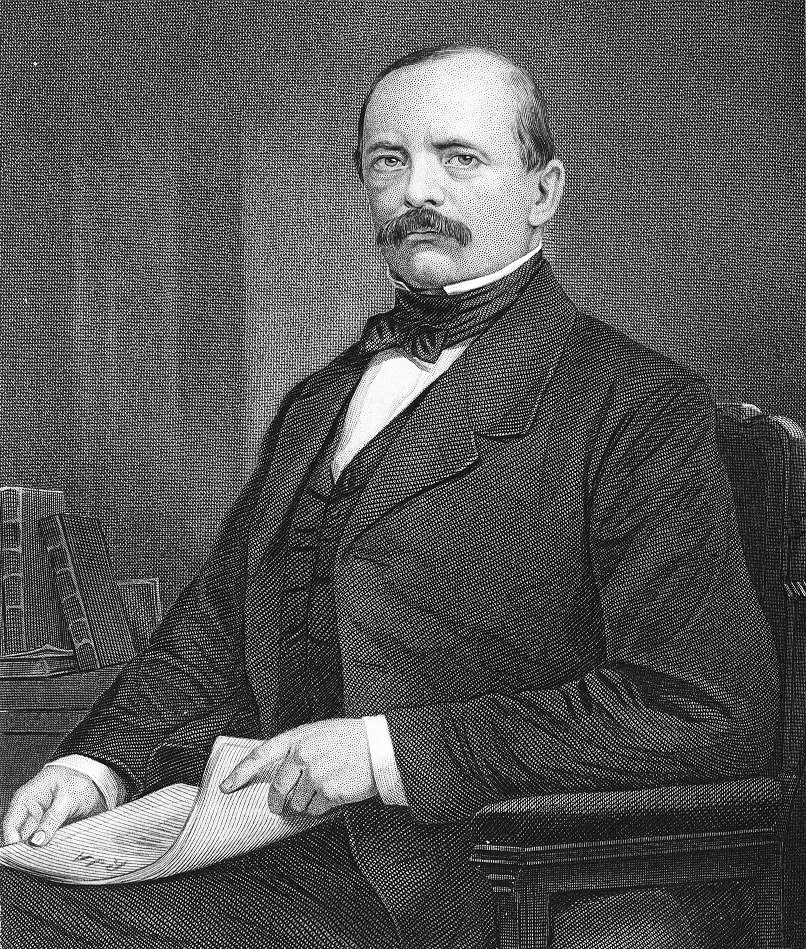
Wikimedia Commons · Public domain · file During the opening of the Austro-Prussian War, Ferdinand Cohen-Blind shot Bismarck in Berlin; Bismarck sustained only minor injuries. The cited passage places the event during the 1866 war but does not give a day in the quoted text.
Observed the Battle of Königgrätz
· Chlum, near Hradec Králové, Czech Republic
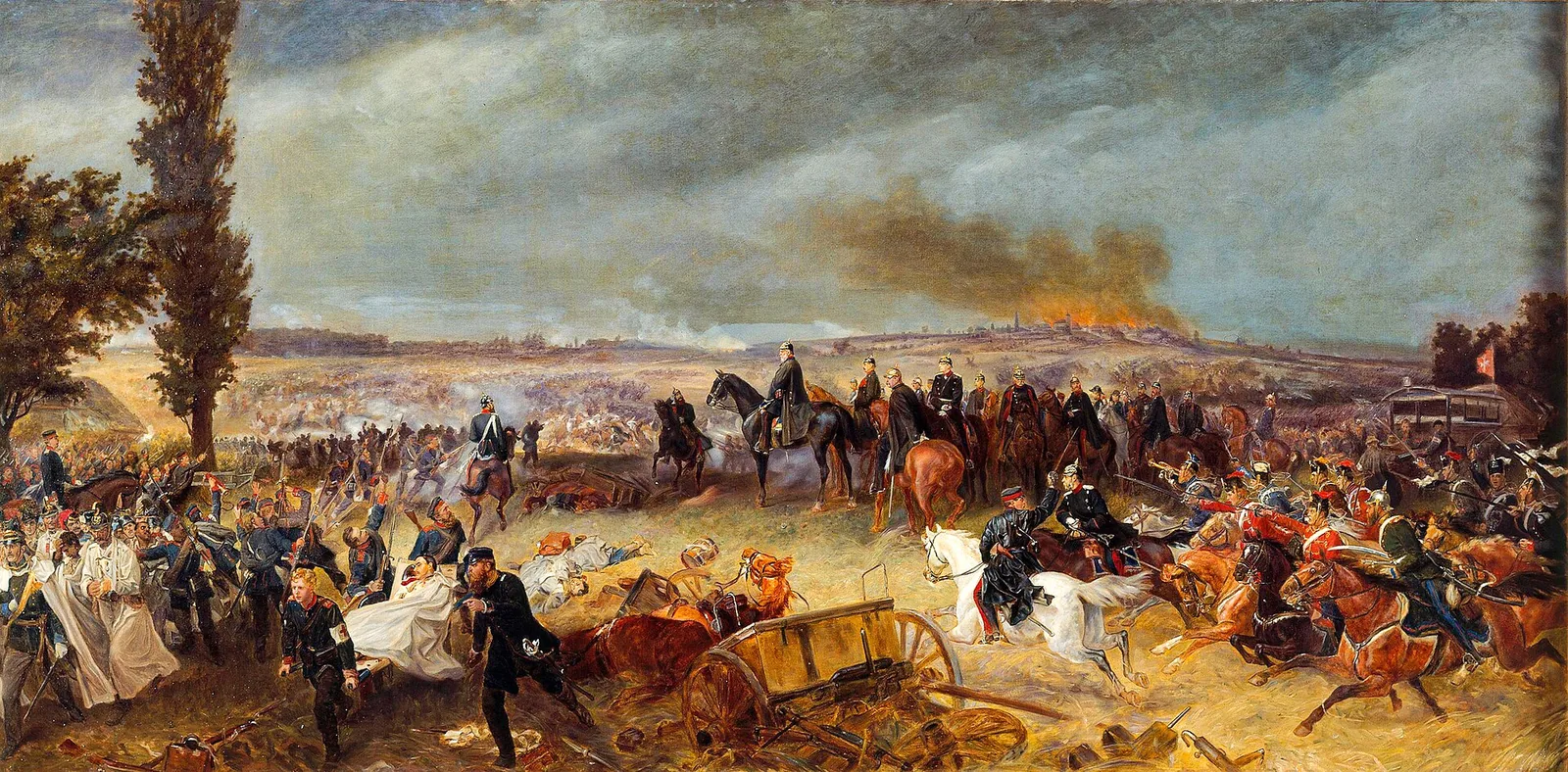
Wikimedia Commons · Public domain · file Bismarck was among King William's suite observing the decisive Prussian victory at Königgrätz during the Austro-Prussian War. Coordinates represent Chlum, a principal observation and battlefield area near Königgrätz; the source caption establishes presence but not a precise observation point.
Armistice negotiations at Versailles
· Palace of Versailles, Versailles, France
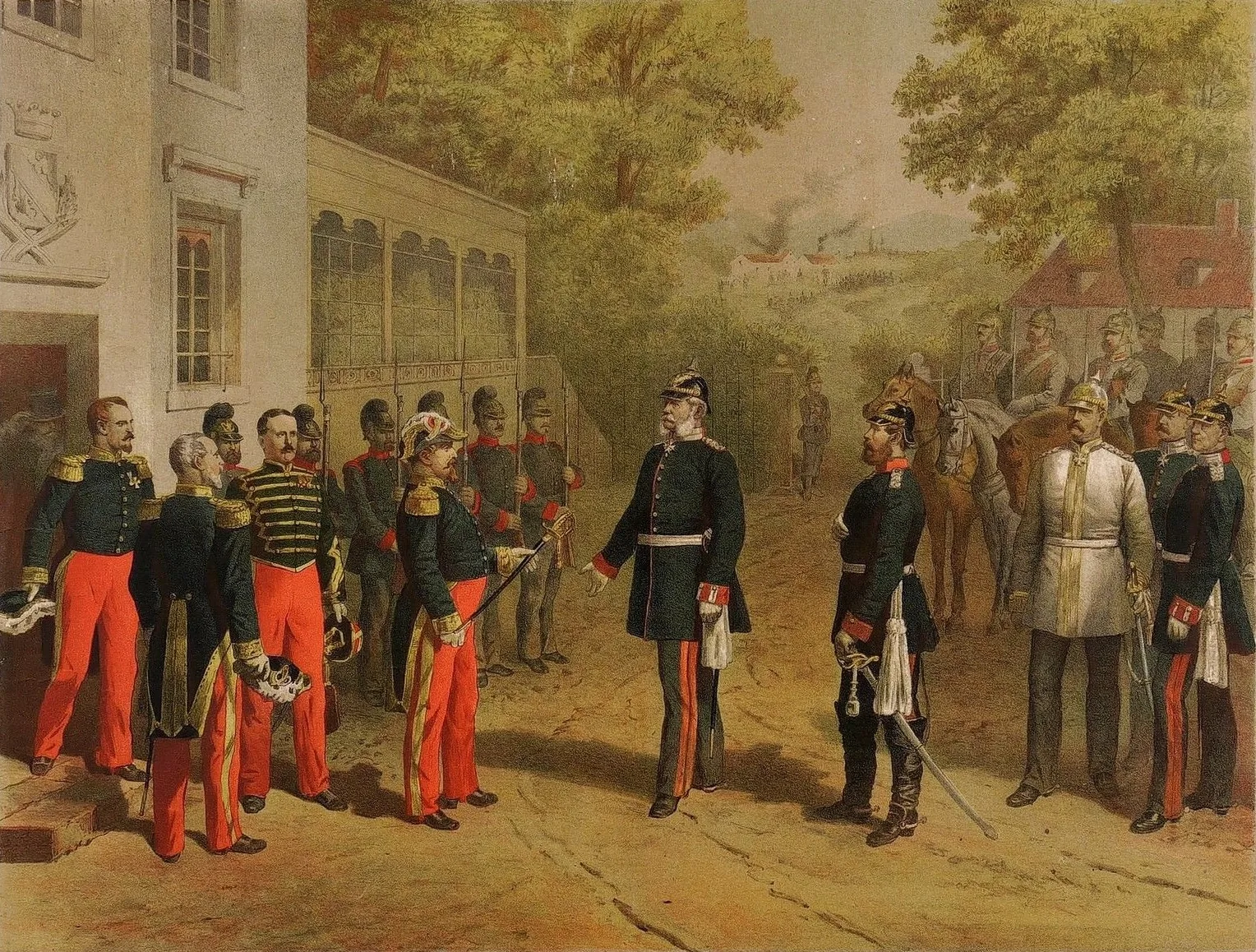
Wikimedia Commons · Public domain · file Bismarck negotiated secret armistice discussions with Jules Favre at Versailles during the final phase of the Siege of Paris. The card date is month precision because the documented presence extended from 23 to 27 January.
Residence at Friedrichsruh
· Friedrichsruh, Aumühle, Schleswig-Holstein, Germany
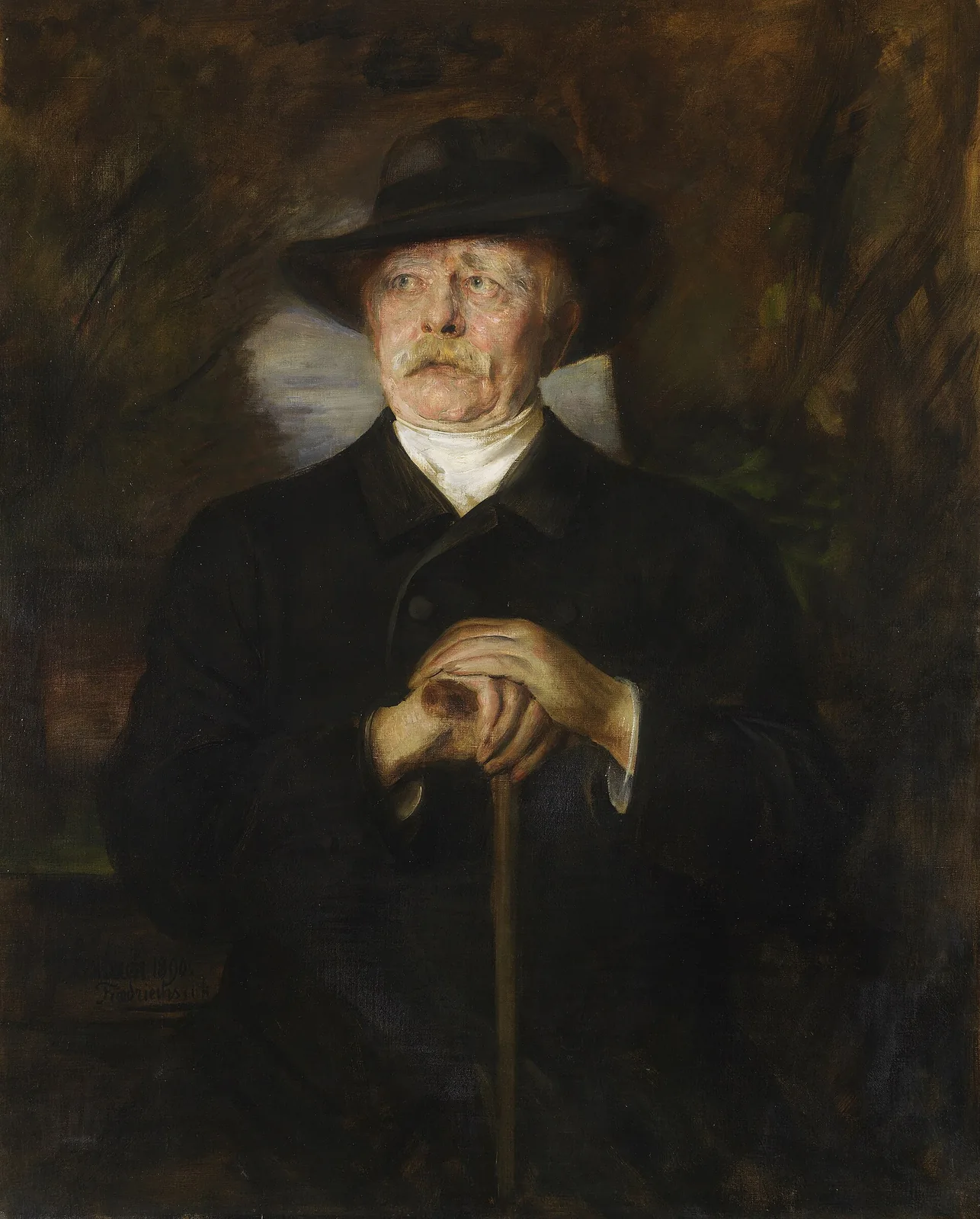
Wikimedia Commons · Public domain · file After German unification, Friedrichsruh became Bismarck's principal country residence near Hamburg. Coordinates represent Friedrichsruh manor area.
Proclamation of the German Empire
· Hall of Mirrors, Palace of Versailles, Versailles, France
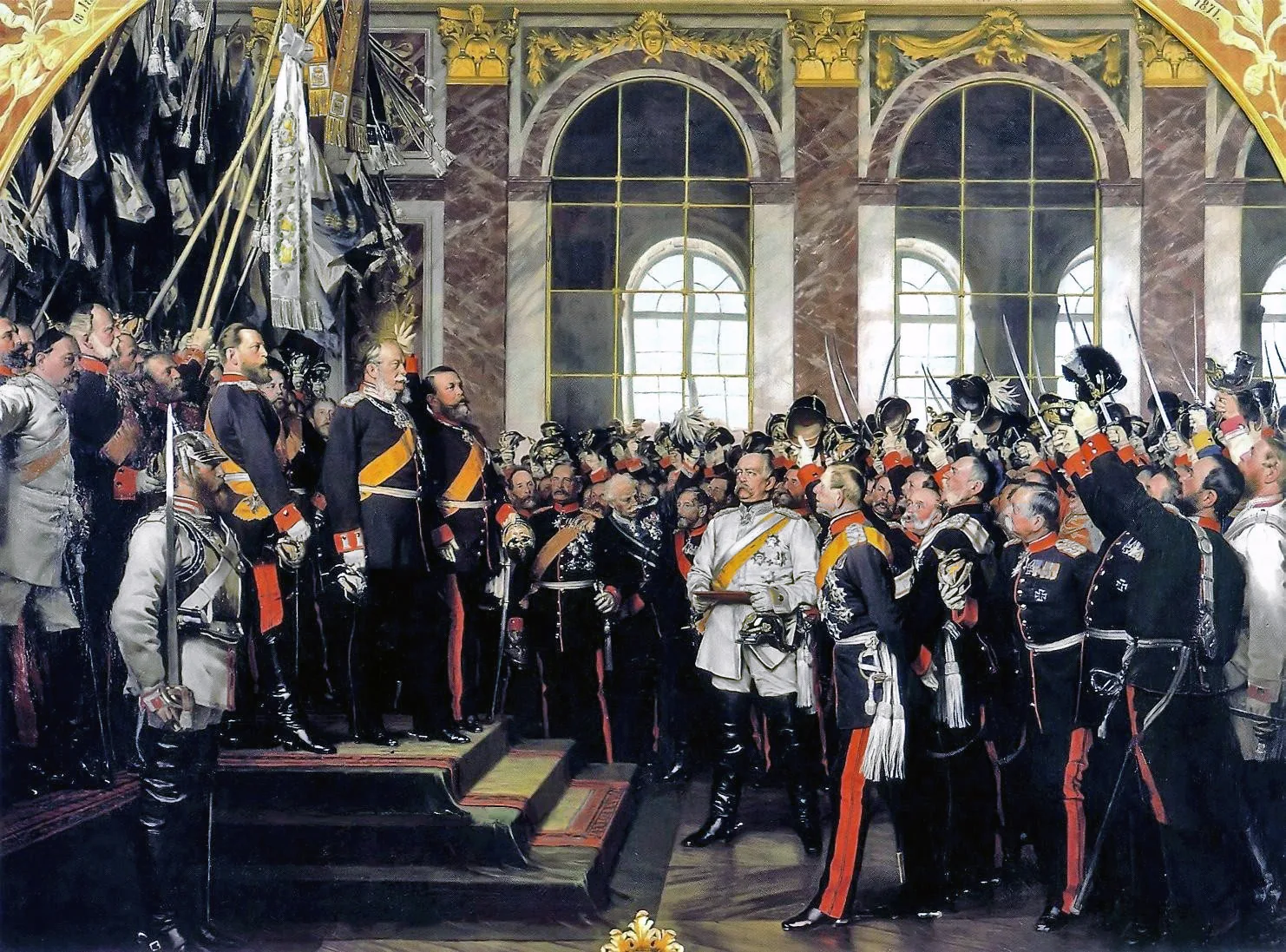
Wikimedia Commons · Public domain · file Bismarck participated in the imperial proclamation at Versailles and read the proclamation in the Hall of Mirrors.
Survived attack at Bad Kissingen
· Bad Kissingen, Bavaria, Germany
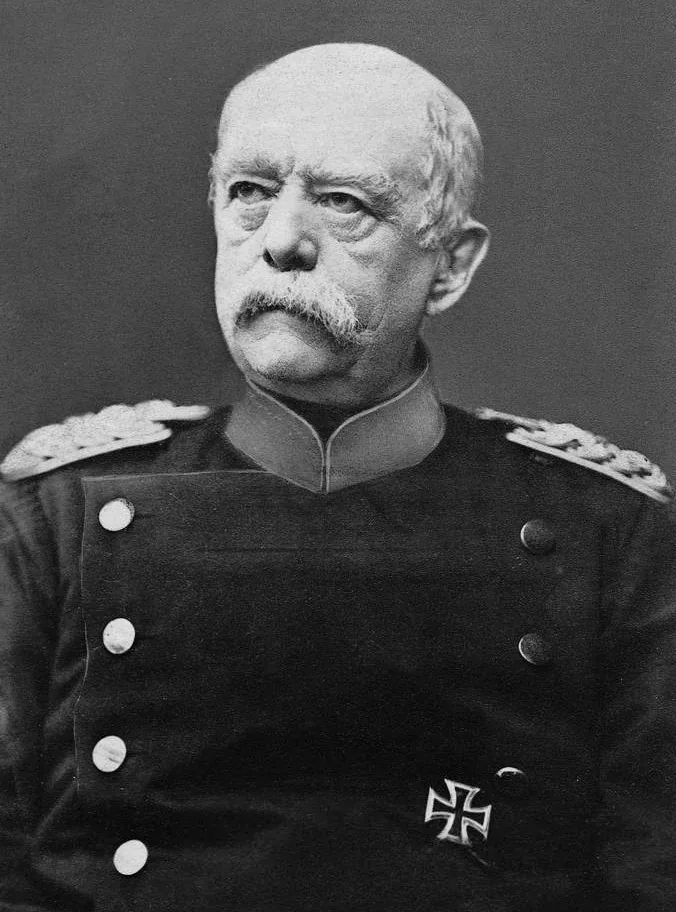
Wikimedia Commons · Public domain · file While taking the waters at Bad Kissingen, Bismarck survived an assassination attempt by Eduard Kullmann.
Kissingen Dictation at spa
· Bad Kissingen, Bavaria, Germany
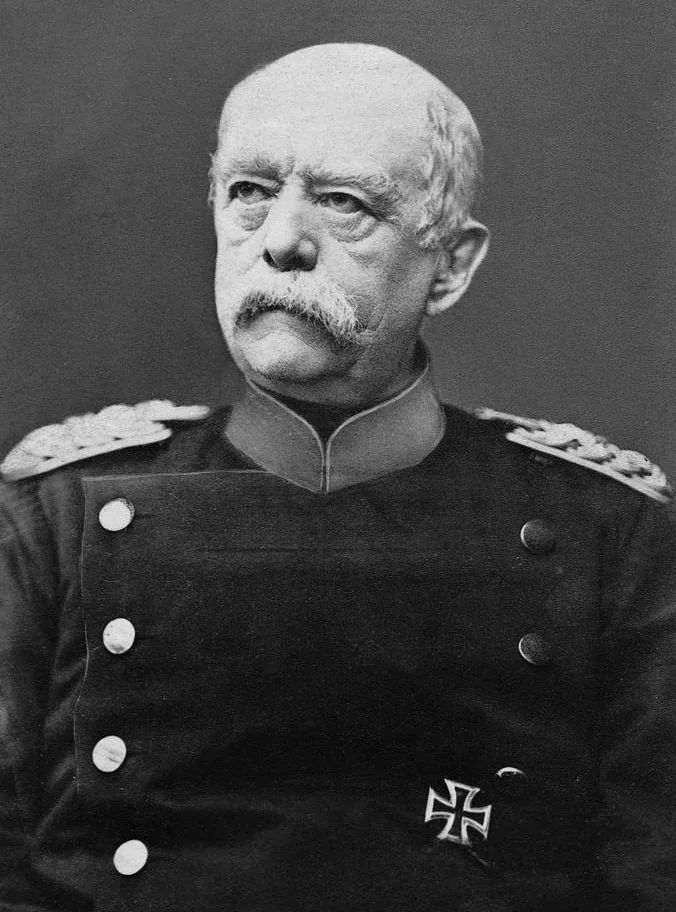
Wikimedia Commons · Public domain · file At Bad Kissingen, Bismarck dictated the Kissingen Dictation, an important statement of his foreign-policy principles.
Hosted Congress of Berlin
· Reich Chancellery, Berlin, Germany
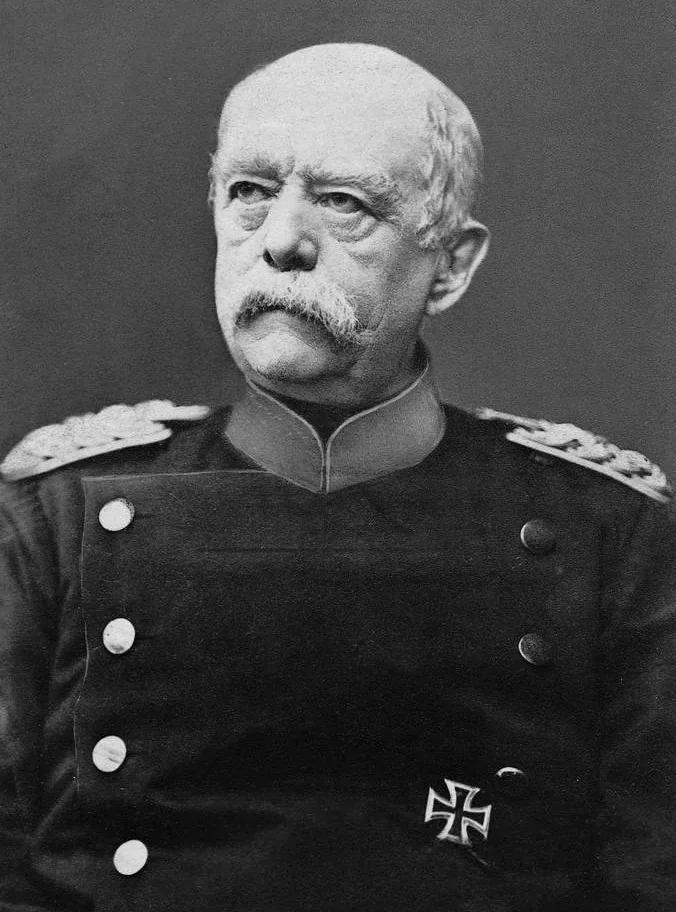
Wikimedia Commons · Public domain · file Bismarck hosted and presided over the Congress of Berlin at his Reich Chancellery, mediating a settlement following the Russo-Turkish War. Coordinates represent the former Radziwiłł Palace/Reich Chancellery site in Berlin.
Berlin Conference plenipotentiary
· Wilhelmstraße 77, Berlin, Germany
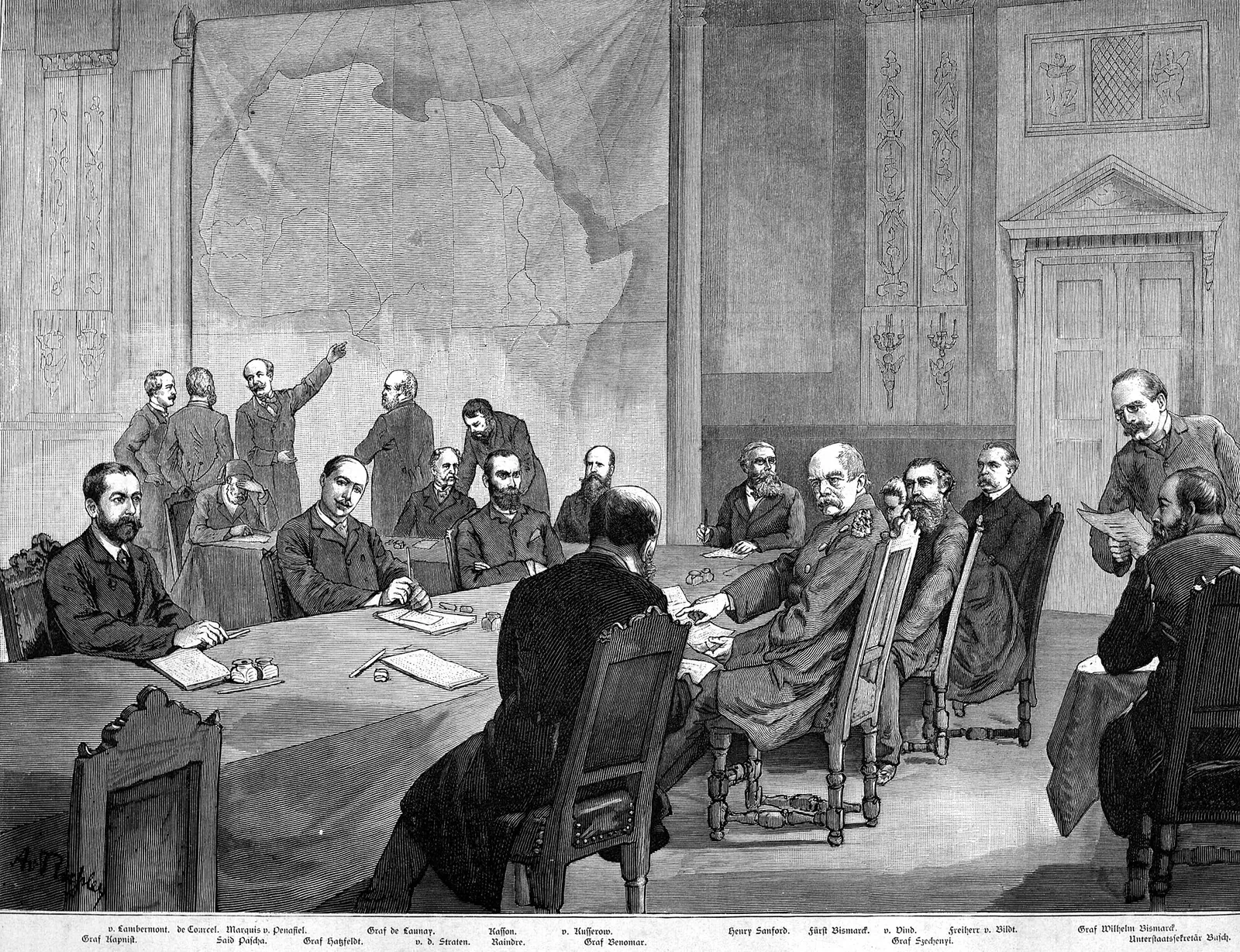
Wikimedia Commons · Public domain · file Bismarck served as Germany's plenipotentiary at the Berlin Conference, which opened in November 1884 and addressed European colonial claims in Africa. The source identifies Bismarck as organizer and gives the Berlin venue; the conference opened on 15 November 1884. Coordinates represent the historic Wilhelmstraße site.
Retirement at Friedrichsruh
· Friedrichsruh, Aumühle, Schleswig-Holstein, Germany
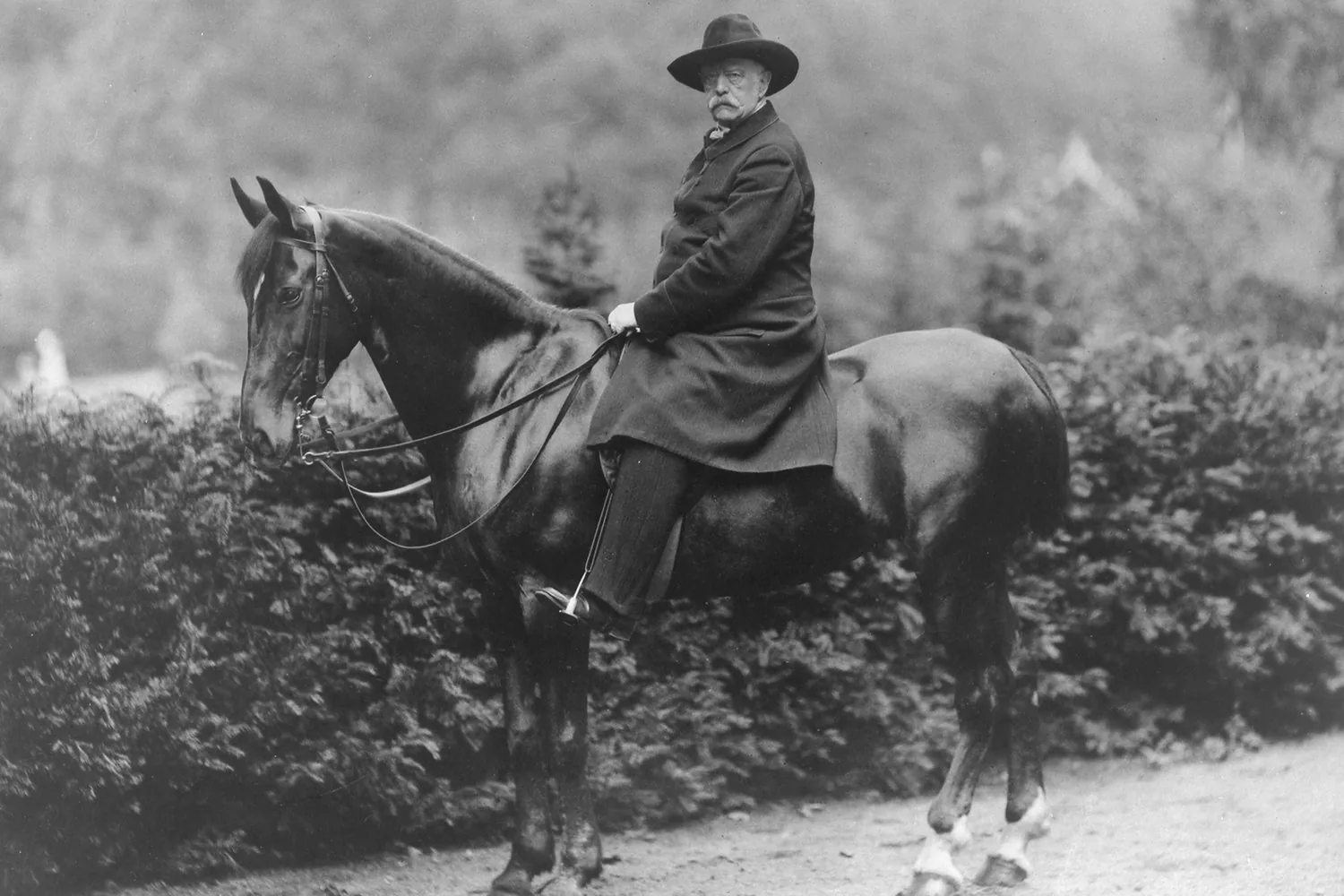
Wikimedia Commons · Public domain · file After resigning as chancellor, Bismarck entered retirement and lived at Friedrichsruh near Hamburg. Coordinates represent Friedrichsruh manor area.
Retirement at Varzin estate
· Varzin estate (now Warcino), Pomeranian Voivodeship, Poland
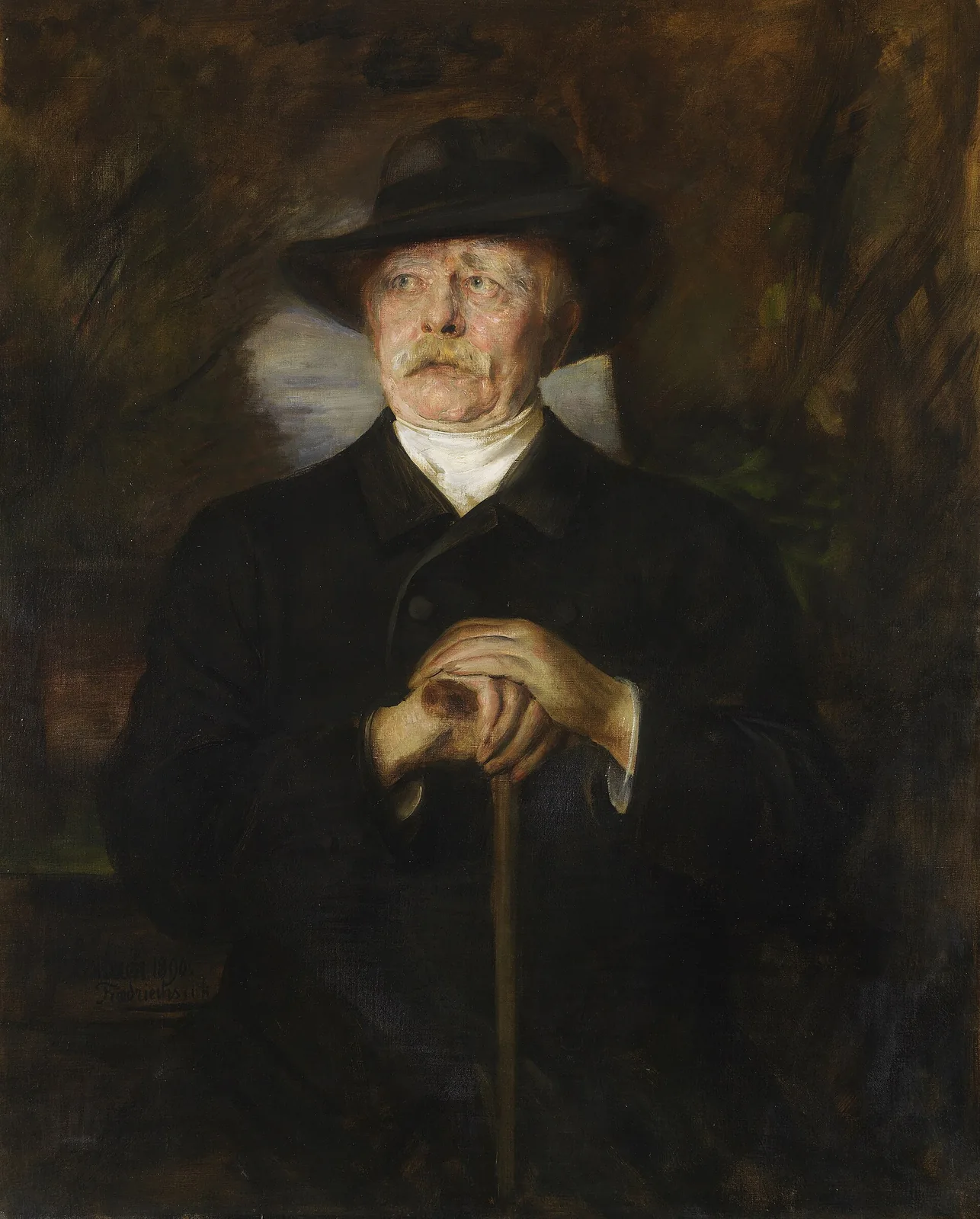
Wikimedia Commons · Public domain · file In retirement following his dismissal, Bismarck also stayed at his estates at Varzin in Pomerania. Coordinates are a representative point for modern Warcino, associated with the historic Varzin estate.
Death at Friedrichsruh
· Friedrichsruh, Aumühle, Schleswig-Holstein, Germany
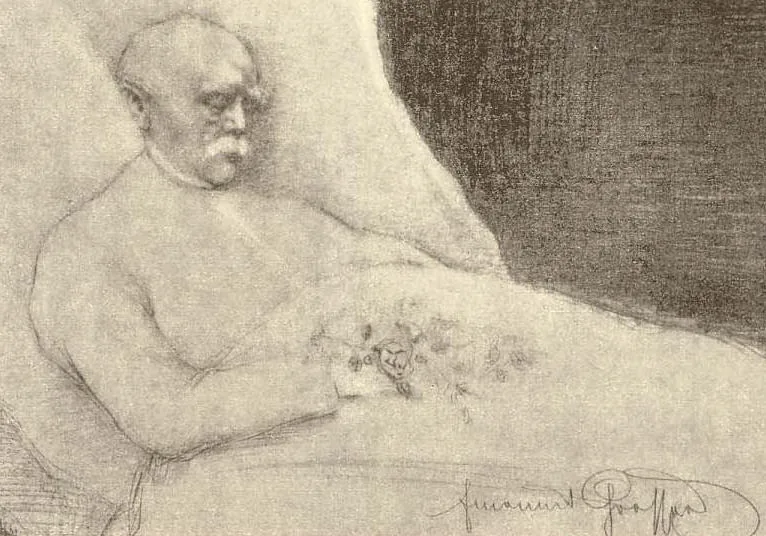
Wikimedia Commons · Public domain · file Bismarck died at Friedrichsruh after a prolonged final illness and was later entombed nearby in the Bismarck Mausoleum. Coordinates represent Friedrichsruh manor area; his mausoleum is nearby.