
16 moments
Birth at Qusi Village
· Qusi Hamlet, Sanhe Village, Qujiu Town, Fusui County, Guangxi, China
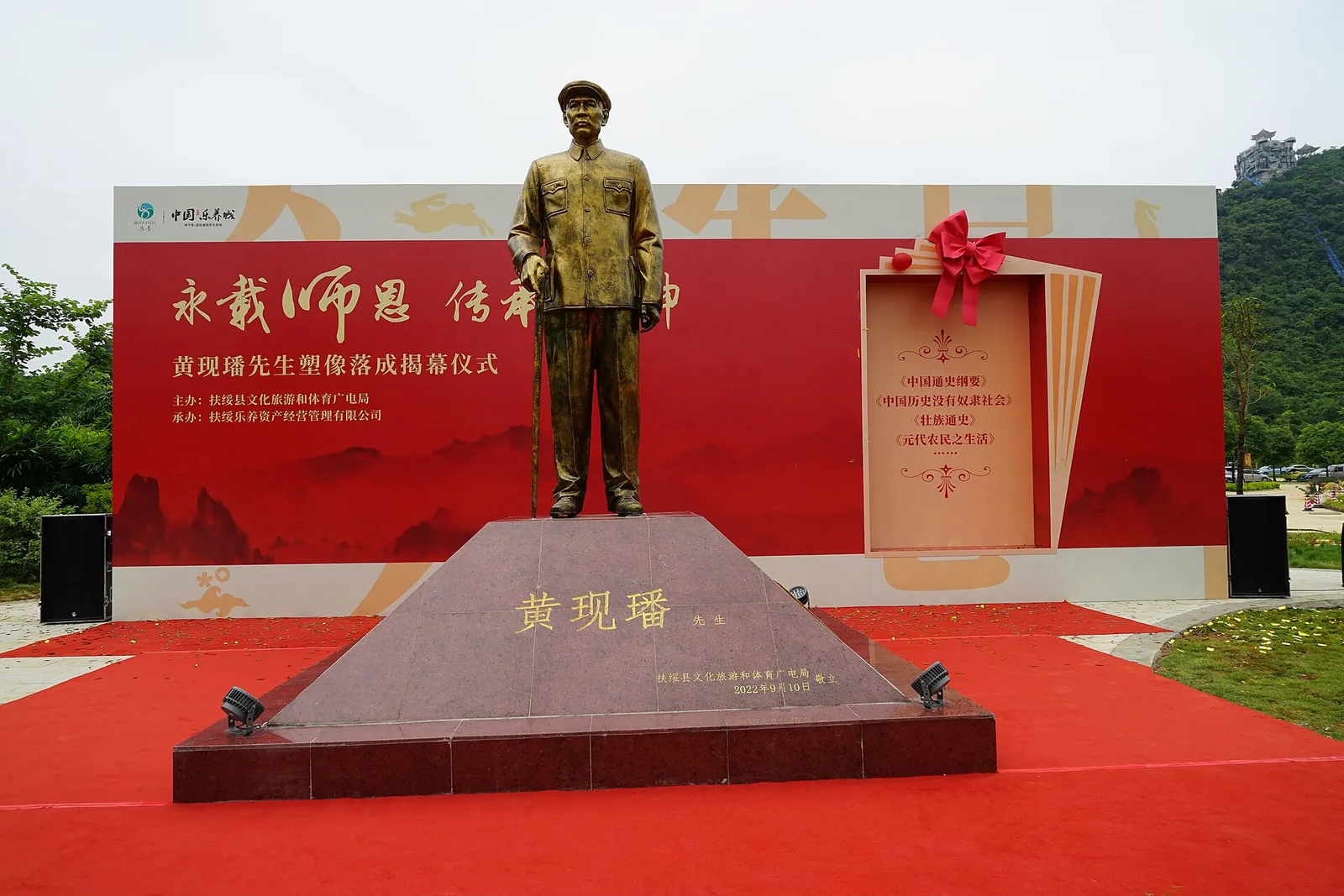
Wikimedia Commons · CC0 1.0 Universal Public Domain Dedication · file Huang Xianfan was born in Qusi Village, now Qusi Hamlet of Sanhe Village in Qujiu Town, Fusui County. Coordinates are a representative point for Qujiu Town; the historic Qusi Hamlet is within its Sanhe Village jurisdiction.
Entered Beijing Normal University
· Beijing Normal University, Beijing, China
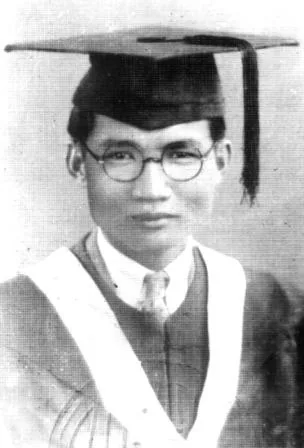
Wikimedia Commons · Public domain · file Huang entered the preparatory program of Beijing Normal University, beginning nine years of study there across preparatory, undergraduate, and graduate-level work. The supported date is the year he entered the university's preparatory program.
Departed for Tokyo Imperial University
· Tokyo Imperial University, Hongo, Tokyo, Japan
Huang departed for Japan and entered the graduate institute of Tokyo Imperial University to study Chinese history under Wada Sei and Katō Shigeshi.
Led Guizhou–Guangxi border investigation
· Guizhou–Guangxi border region, China
Huang organized and led the Guizhou–Guangxi Border Region Investigation Group, conducting field research among minority communities in the two provinces. Coordinates are a representative point for the broadly documented Guizhou–Guangxi border research area.
Led southern Guizhou border-peoples investigation
· Southern Guizhou, China
Huang organized and led the Southern Guizhou Border Peoples Investigation Group, part of his wartime fieldwork among minority communities in Guizhou and Guangxi. Coordinates are a representative point for southern Guizhou; the source does not identify one single locality.
Central Ethnic Visiting Delegation fieldwork
· Minority areas of Guangxi, China
As deputy head of the Guangxi branch of the Central Ethnic Visiting Delegation's Central-South group, Huang traveled through minority areas of Guangxi for慰问 and investigation. Coordinates are a representative point for the broad Guangxi fieldwork area.
Summer fieldwork in western Guangxi
· Longluo–Chongzuo–Debao–Jingxi field route, Guangxi, China
During the summer Huang conducted fieldwork around Longluo in Fusui, Chongzuo, Debao, and Jingxi, collecting material on local tusi remains and regional history. The source specifies summer but not a month; coordinates represent the multi-place route.
Investigation route through Du'an, Donglan, and Nandan
· Du'an–Donglan–Nandan field route, Guangxi, China
Huang led assistants on an investigation route through the areas of Du'an, Donglan, and Nandan in Guangxi. Coordinates represent the documented three-county fieldwork route rather than a single stop.
Historical-relics investigation in Hechi
· Hechi, Guangxi, China
Huang led his investigation group into Hechi during the 1953 field survey of minority peoples and local historical materials. Coordinates represent Hechi's urban center.
Historical-relics investigation in Luocheng
· Luocheng Mulao Autonomous County, Guangxi, China
Huang led his investigation group into Luocheng during the survey that documented communities including Yao, Maonan, Miao, Zhuang, and Mulao people. Coordinates represent the county seat.
Historical-relics investigation in Nandan
· Nandan County, Guangxi, China
Huang led his investigation group into Nandan to visit and investigate minority communities and collect historical materials. Coordinates represent Nandan County's administrative center.
Historical-relics investigation in Tian'e
· Tian'e County, Guangxi, China
Huang led his investigation group into Tian'e as part of a multi-county survey of minority communities and historical materials. Coordinates represent Tian'e County's administrative center.
Historical-relics investigation in Xincheng
· Xincheng County, Guangxi, China
Huang led his investigation group into Xincheng during its extensive survey and collection of historical and ethnographic material. Coordinates represent Xincheng County's administrative center.
Organized survey group at Guangxi University
· Guangxi University, Nanning, Guangxi, China
At Guangxi University, Huang organized the Historical Relics Investigation Working Group of the Culture and Education Bureau of the Western Guangxi Zhuang Autonomous Region government and led it as group head.
National ethnic-work meeting
· Qingdao, Shandong, China
Huang attended the National People's Congress Ethnic Affairs Committee's national ethnic-work symposium in Qingdao.
Death in Guilin
· Guilin, Guangxi, China
Huang Xianfan died in Guilin at age 82, ending a career as a historian, ethnologist, educator, and public figure.