
9 moments
Birth in Chunsubang
· Chunsubang (approximate site near Yeongchumun), Hanyang, Joseon (now Seoul, South Korea)
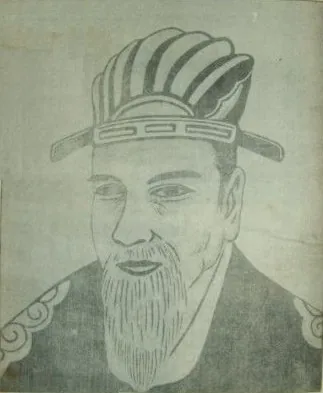
Wikimedia Commons · Public domain · file Yi To, later Sejong the Great, was born in Chunsubang in the Joseon capital of Hanyang. The exact location of historical Chunsubang is unknown; coordinates represent the traditionally estimated area outside present-day Yeongchumun.
Accession at Geunjeongjeon
· Geunjeongjeon, Gyeongbokgung Palace, Hanyang, Joseon (now Seoul, South Korea)
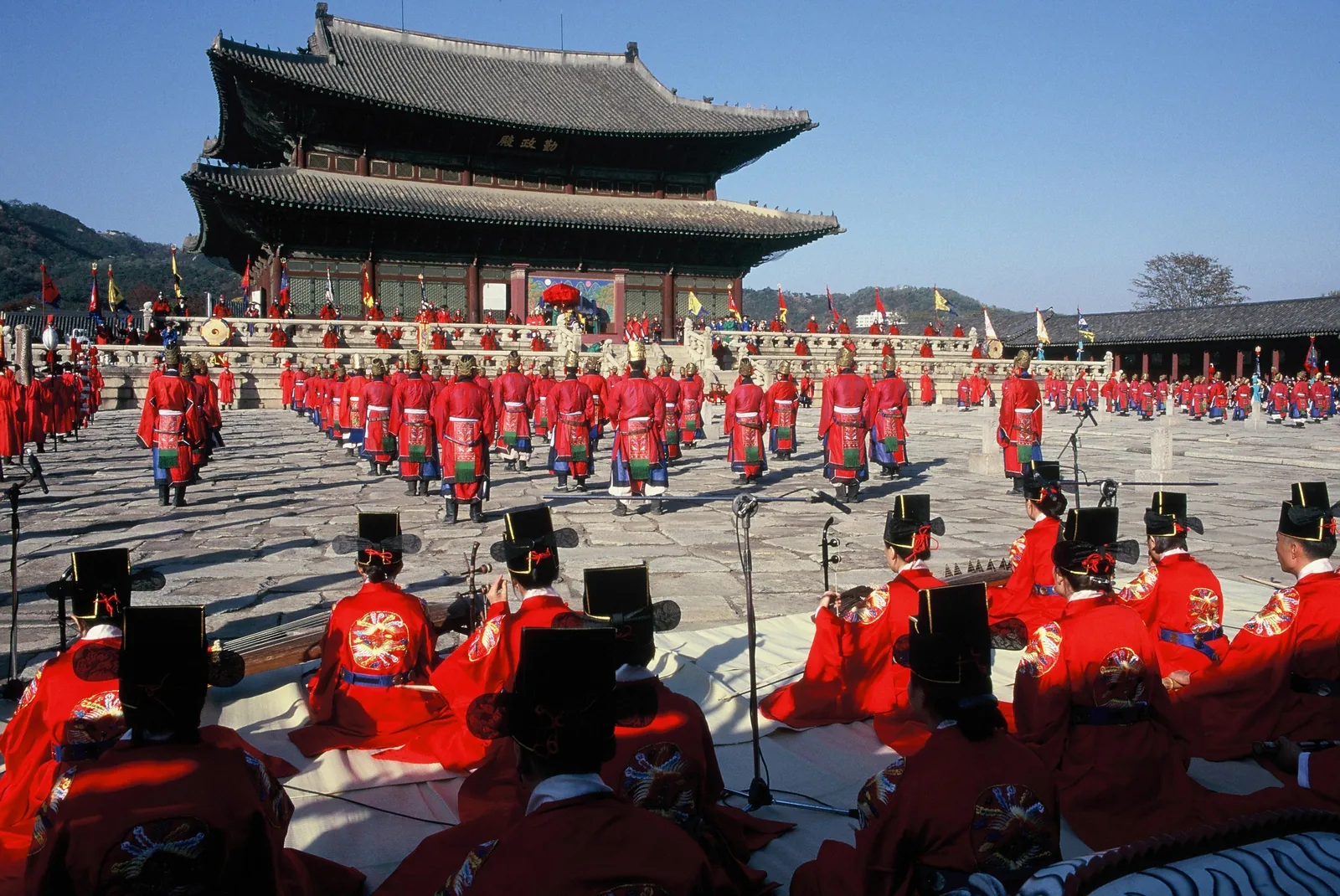
Wikimedia Commons · Creative Commons Attribution 4.0 International · file Sejong ascended the Joseon throne at Geunjeongjeon, the principal audience hall of Gyeongbokgung Palace. The article gives September 18, 1418 as the Gregorian conversion; the quoted regnal date is in the Korean calendar.
Military archery display at Gyeonghoeru
· Gyeonghoeru Pavilion, Gyeongbokgung Palace, Hanyang, Joseon (now Seoul, South Korea)
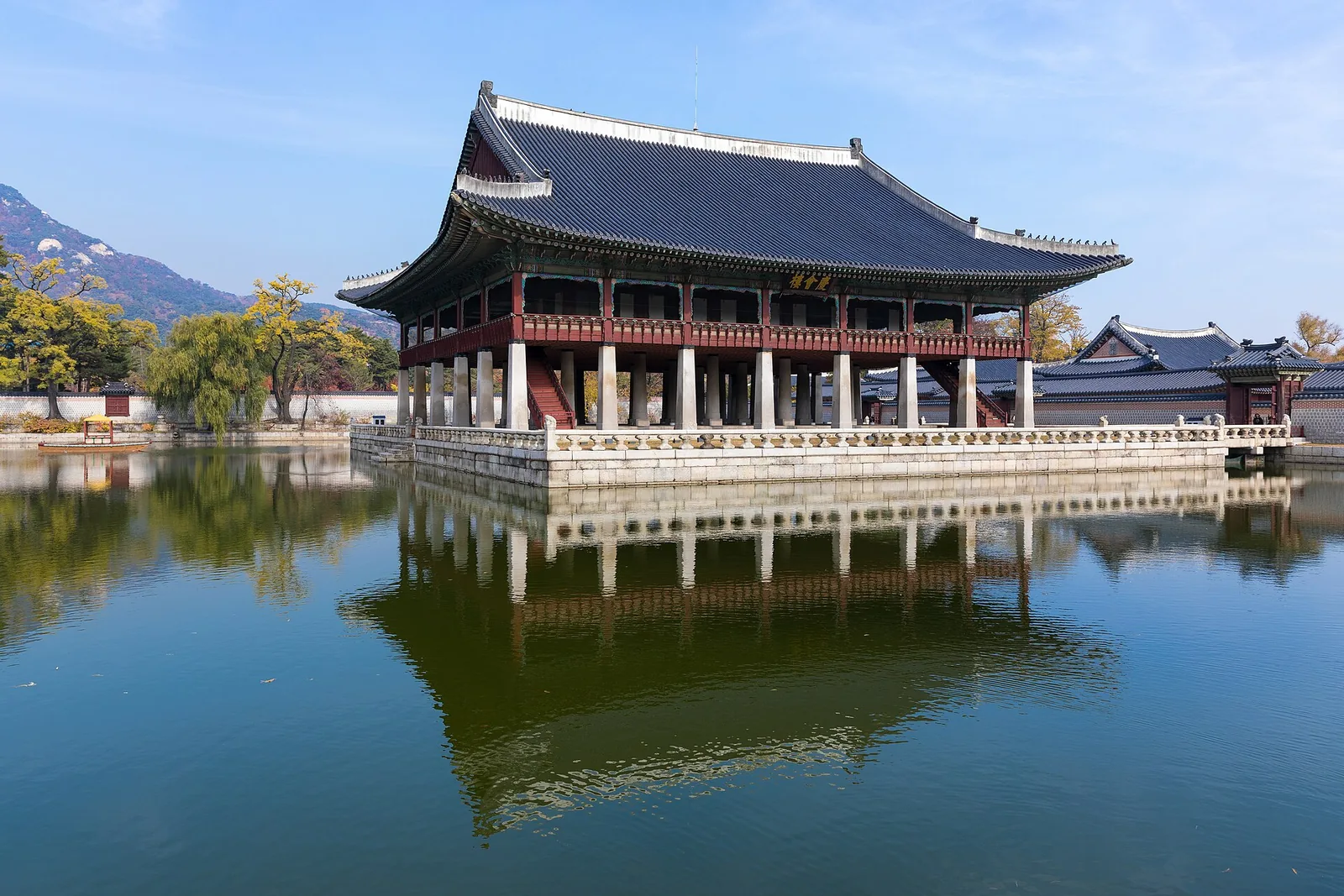
Wikimedia Commons · Creative Commons Attribution-Share Alike 4.0 International · file Sejong went to Gyeongbokgung's Gyeonghoeru Pavilion to watch a military archery competition and reward leading archers. Date is the Korean lunisolar-calendar date recorded in the Veritable Records of the Joseon Dynasty.
Falconry in the eastern suburb
· East Suburb (Donggyo), Hanyang, Joseon (now Seoul, South Korea)
Sejong visited the eastern suburb of Hanyang to watch falconry, halted at the field before Nakcheonjeong, and returned to the palace that evening. Date is Korean lunisolar. The precise site of Nakcheonjeong is uncertain; coordinates are a representative point for the historic eastern outskirts of Hanyang.
Falconry journey via Noryang
· Noryangjin, Hanyang, Joseon (now Seoul, South Korea)
Sejong traveled through Hanyang's southern suburb, crossed the Han River, ranged to the lower fields of Geumcheon, and halted at Noryang before returning to the palace. Date is the Korean lunisolar-calendar date recorded in the Veritable Records.
Reception of Ming envoys at Gyeongbokgung
· Gyeongbokgung Palace, Hanyang, Joseon (now Seoul, South Korea)
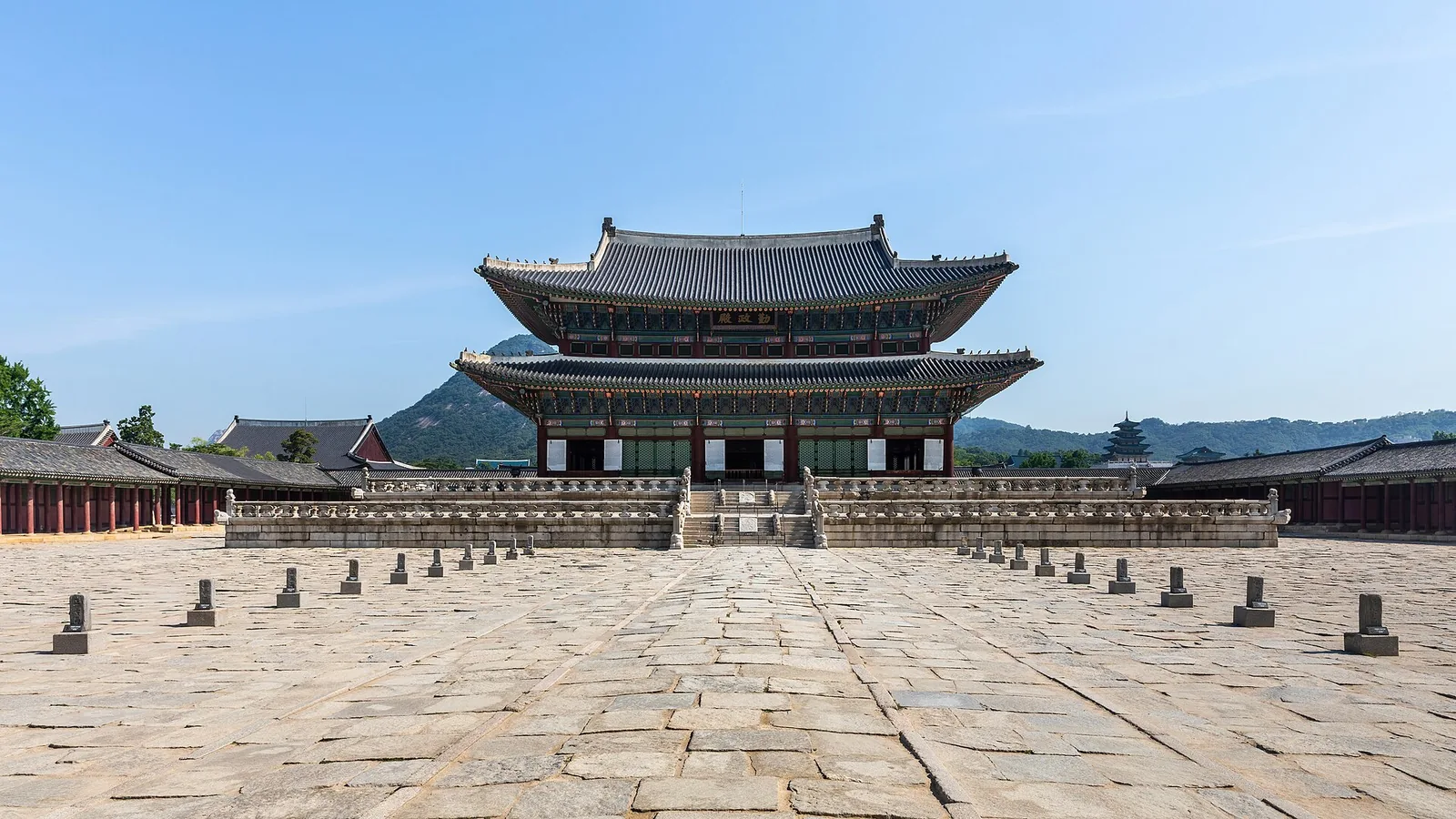
Wikimedia Commons · Creative Commons Attribution-ShareAlike 4.0 International · file Sejong led officials to Mohwa Hall to receive a Ming imperial edict, then proceeded to Gyeongbokgung to conduct the prescribed ceremony. Date is the Korean lunisolar-calendar date recorded in the Veritable Records.
Falconry at Salgoji
· Salgoji, Hanyang, Joseon (now Seoul, South Korea)
Sejong visited Salgoji to observe falconry and used the outing to discuss the military role and training of the Chungui Guard. Date is the Korean lunisolar-calendar date recorded in the Veritable Records; coordinates mark the Salgoji area near the present Salgoji Bridge.
Arrival at Onyang Hot Springs
· Onyang Hot Springs, Onyang County, Chungcheong, Joseon (now Asan, South Korea)
During a royal journey with Queen Sohŏn toward Onyang, Sejong's royal procession arrived at the hot springs in Onyang County. Date is the Korean lunisolar-calendar date recorded in the Veritable Records. The preceding entry identifies the royal journey as Sejong and Queen Sohŏn's progress to Onyang County Hot Springs.
Death in the East Palace
· East Palace, Gyeongbokgung Palace, Hanyang, Joseon (now Seoul, South Korea)
After moving for medical treatment during his final illness, Sejong died while still reigning in Grand Prince Yŏngŭng's residence in the East Palace. The article gives April 8, 1450 as the Gregorian conversion; the East Palace structures no longer survive, and coordinates represent the eastern palace sector.