
20 moments
Birth at the Brühl
· Brühl, Leipzig, Germany
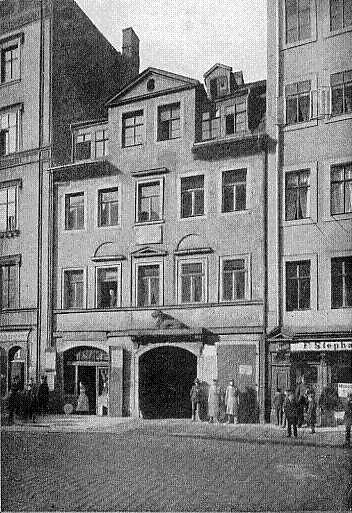
Wikimedia Commons · Public domain · file Wagner was born in Leipzig, at the house known as the Red and White Lions on the Brühl. The birthplace building no longer survives; coordinates represent the historic Brühl site.
Family move to Dresden
· Dresden, Germany
After his father's death, Wagner moved with his mother and siblings to Ludwig Geyer's residence in Dresden. The source gives August 1814 but not a more specific day.
Return to Leipzig
· Leipzig, Germany
Wagner returned to Leipzig with his family, beginning the period in which he pursued harmony studies and encountered major orchestral music. Coordinates represent central Leipzig.
Choirmaster appointment
· Theatre Würzburg, Würzburg, Germany
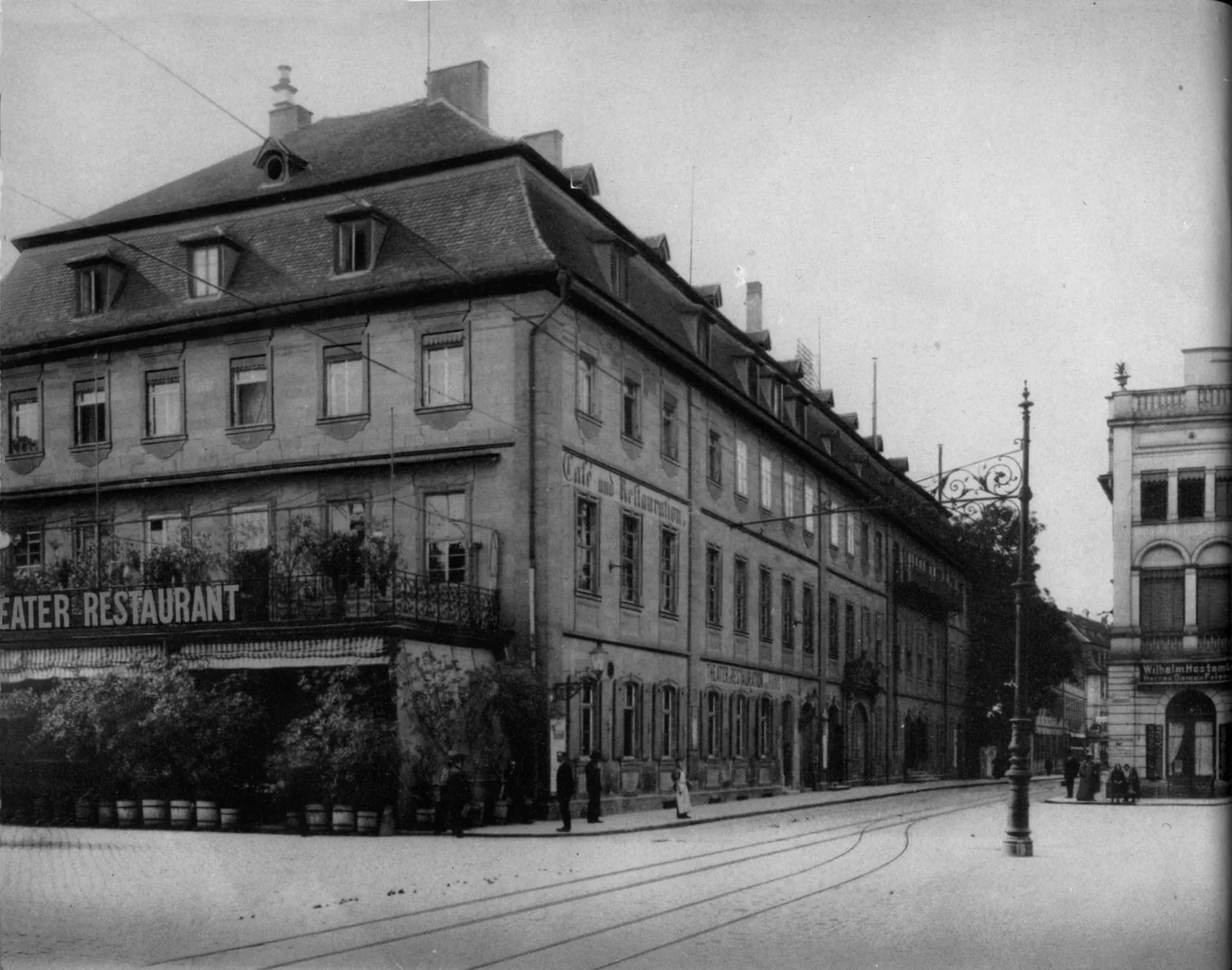
Wikimedia Commons · Public domain · file Wagner began his professional theatre career as choirmaster at the Theatre Würzburg. Coordinates represent the theatre site; the source supports the year but not a more precise appointment date.
Marriage at Tragheim Church
· Tragheim Church site, Königsberg (now Kaliningrad), Russia
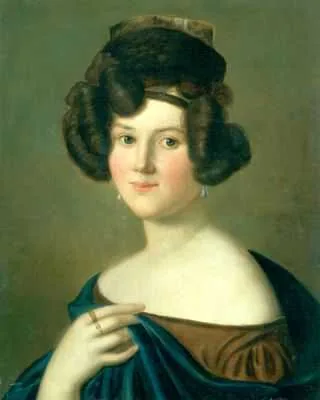
Wikimedia Commons · Public domain · file Wagner married the actress Minna Planer at Tragheim Church after following her to Königsberg. The church was demolished in the 1950s; coordinates mark its documented former site.
Opera directorship in Riga
· Riga, Latvia
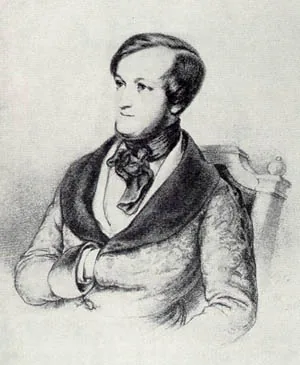
Wikimedia Commons · Public domain · file Wagner moved to Riga to become music director of the local opera, a post he held during a financially difficult period. Coordinates represent central Riga; the source does not identify the precise opera-house building.
Paris residence in exile
· Paris, France
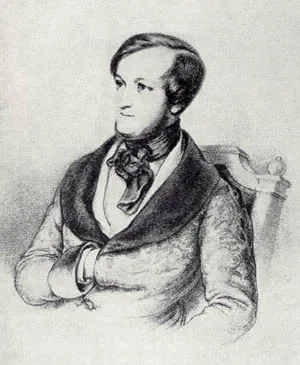
Wikimedia Commons · Public domain · file After fleeing creditors from Riga and travelling via London, Wagner and Minna settled in Paris, where he completed Rienzi and Der fliegende Holländer. Coordinates represent central Paris.
Move to Dresden for Rienzi
· Dresden, Germany
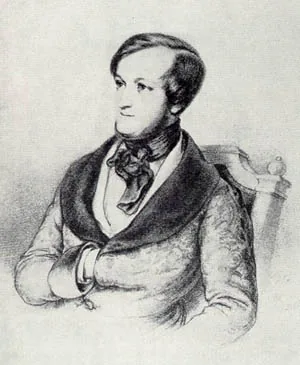
Wikimedia Commons · Public domain · file Wagner moved to Dresden after the Dresden Court Theatre accepted Rienzi; he would live there for the next six years and become Royal Saxon Court Conductor. Coordinates represent central Dresden.
Exile in Zürich
· Zürich, Switzerland
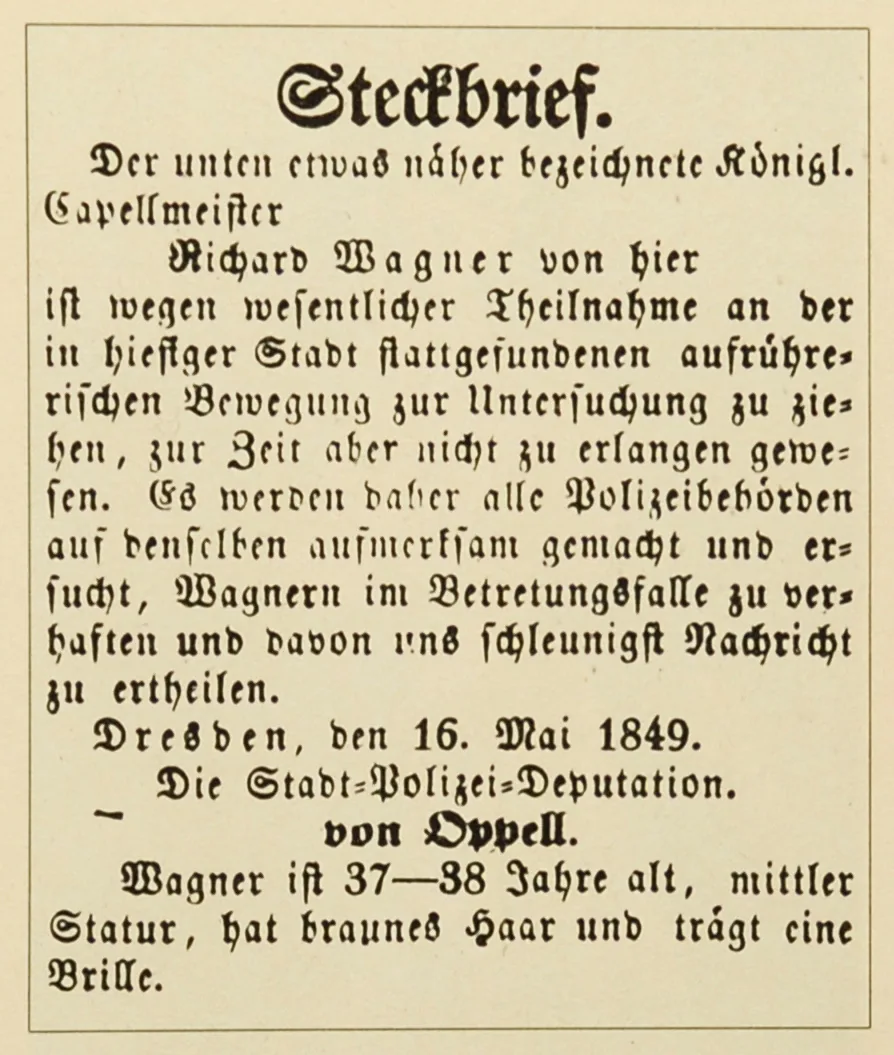
Wikimedia Commons · Public domain · file Wagner settled in Zürich after fleeing Saxony. His Swiss exile became a major period of theoretical writing and work on the Ring cycle. The source supports 1849 but gives no more precise arrival date.
Flight through Paris
· Paris, France
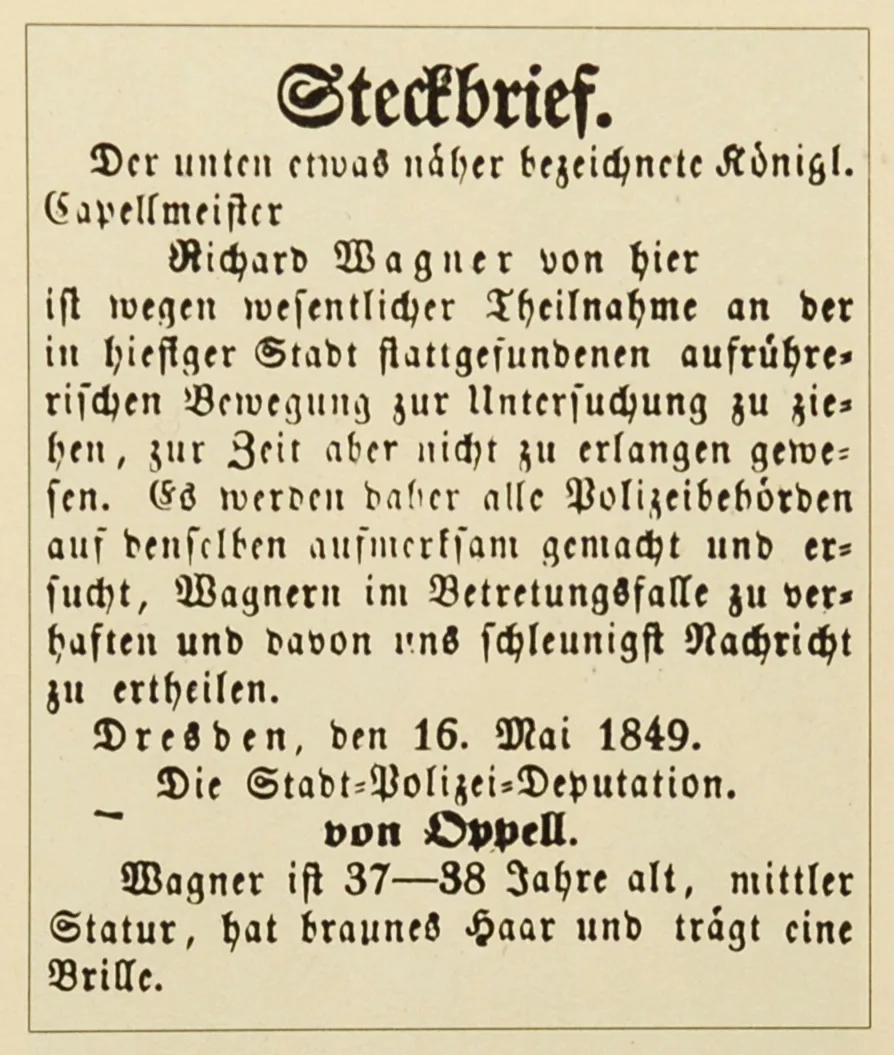
Wikimedia Commons · Public domain · file Following the Dresden May Uprising and arrest warrants for revolutionaries, Wagner fled through Paris before taking refuge in Switzerland. The source supports 1849 but gives no more precise date or Paris location.
London Philharmonic concerts
· London, England, United Kingdom
During his Zürich exile, Wagner earned income through conducting engagements including several concerts for the Philharmonic Society of London. Coordinates represent central London; the source does not specify the concert venue.
Residence at Palazzo Giustinian
· Palazzo Giustinian, Dorsoduro, Venice, Italy
After the collapse of his relationship with Mathilde Wesendonck, Wagner left Zürich for Venice and rented an apartment in Palazzo Giustinian. The source gives the year but not a more precise arrival date.
Return to Paris for Tannhäuser
· Paris, France
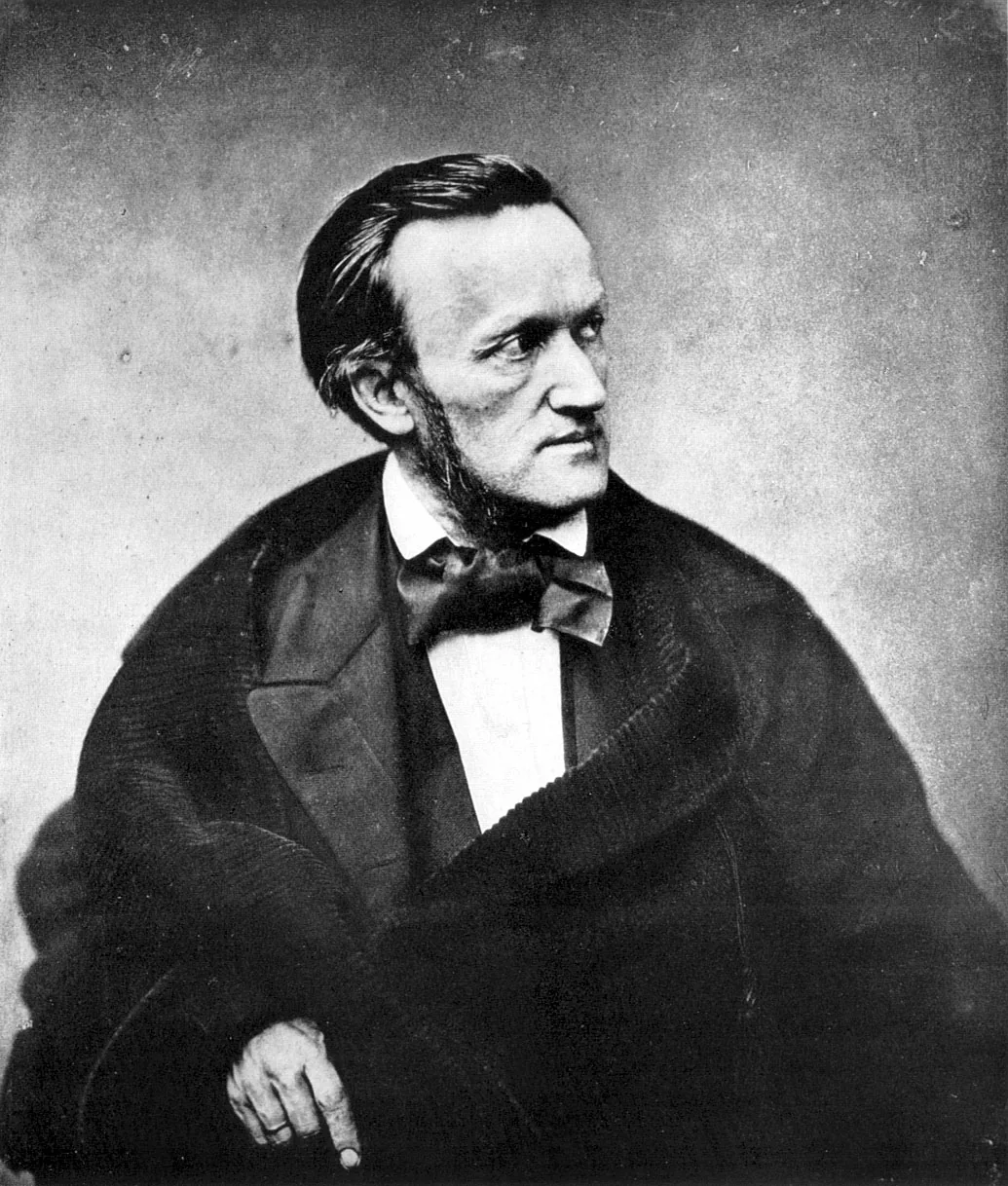
Wikimedia Commons · Public domain · file Wagner returned to Paris to oversee the production of a revised Tannhäuser; the 1861 performances became a celebrated fiasco. Coordinates represent central Paris.
Settlement in Biebrich
· Biebrich, Wiesbaden, Germany
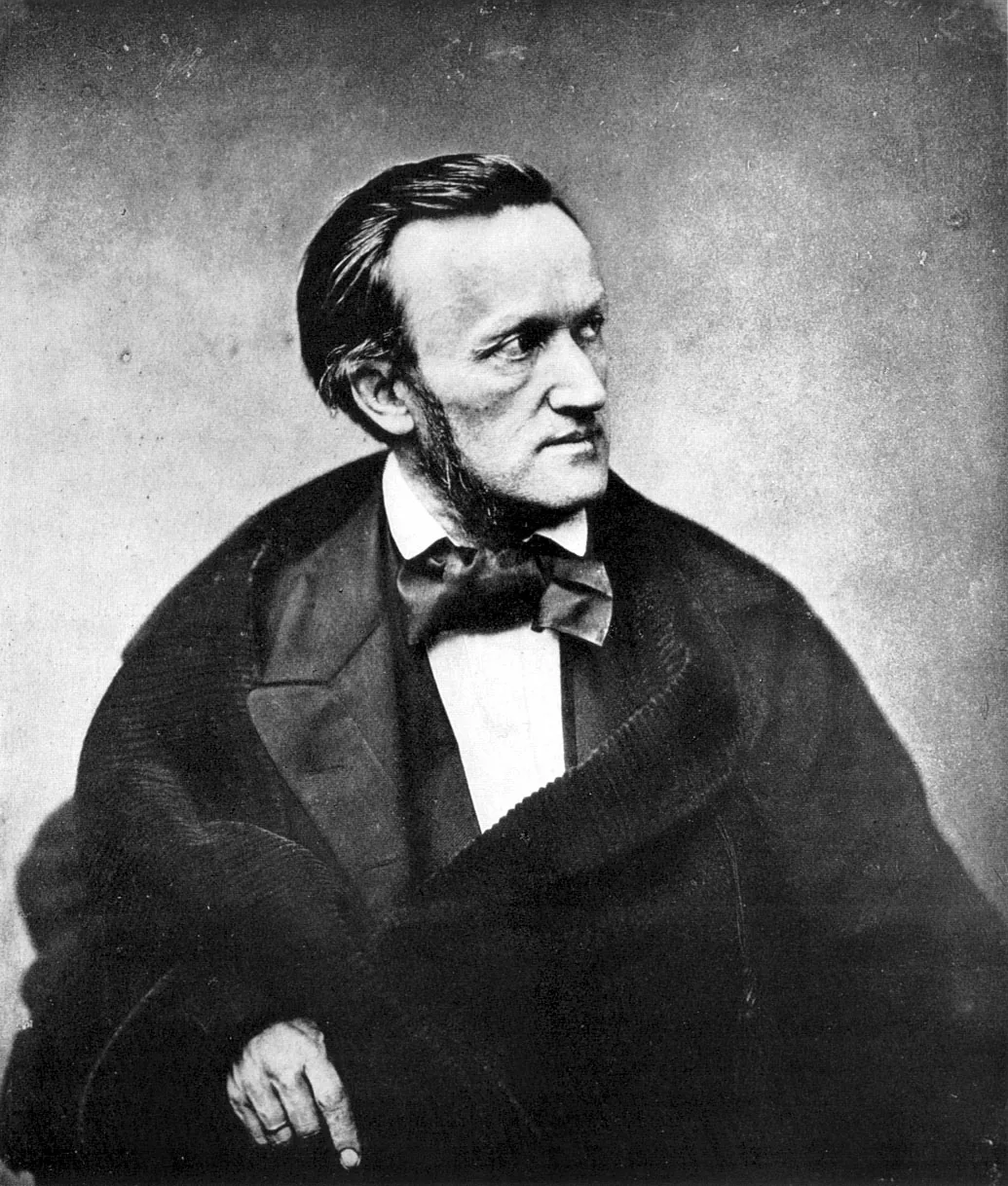
Wikimedia Commons · Public domain · file After the political ban against him in the German Confederation was lifted, Wagner settled at Biebrich on the Rhine near Wiesbaden and began work on Die Meistersinger. The source supports 1862 but gives no more precise settlement date.
Summoned to Munich by Ludwig II
· Munich, Germany
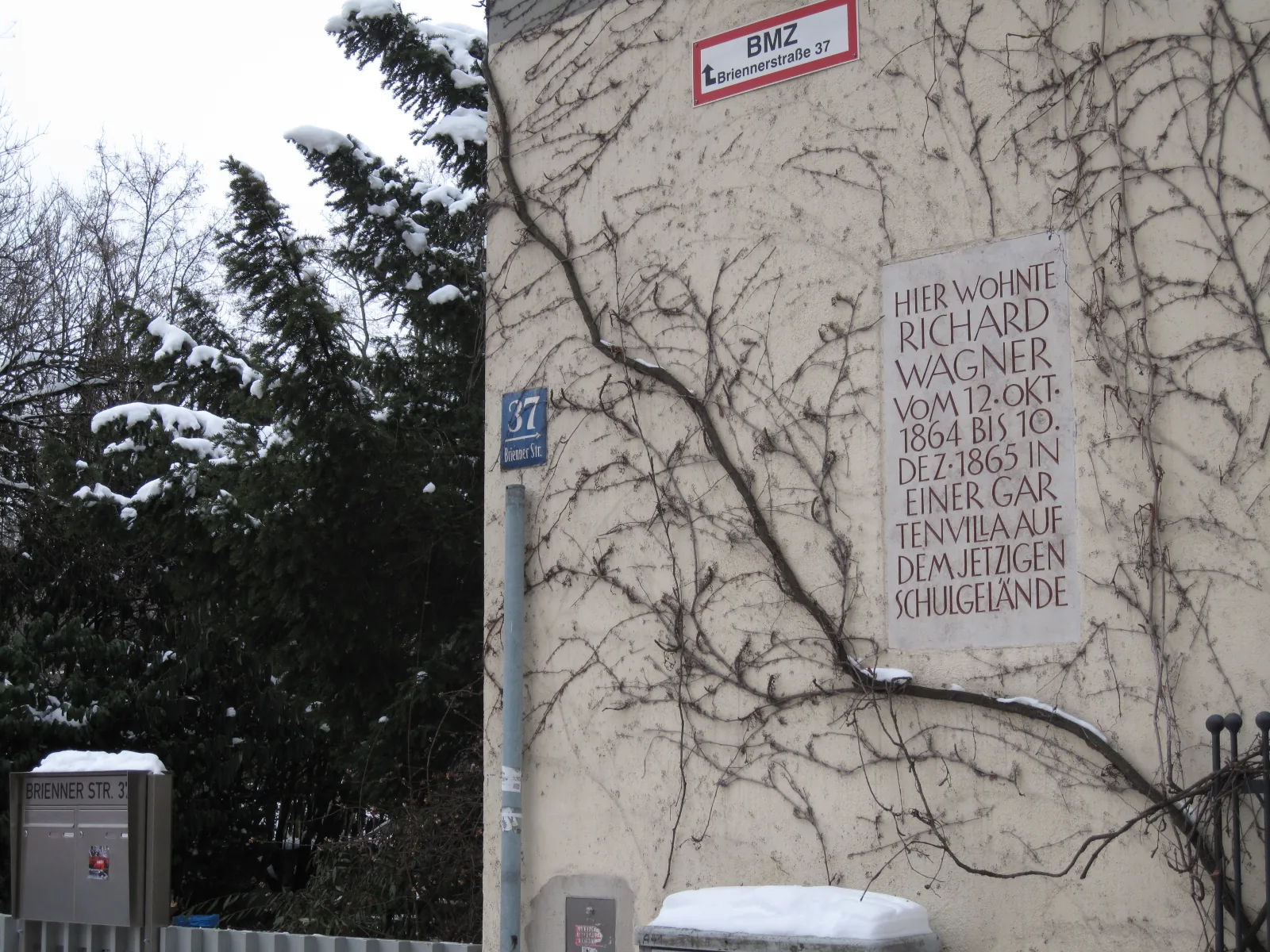
Wikimedia Commons · Copyrighted free use · file The new Bavarian king Ludwig II brought Wagner to Munich, settled his debts, and promoted performances of his planned operas. Coordinates represent central Munich; the source supports the year but not a more precise arrival date.
Residence at Villa Tribschen
· Villa Tribschen, Lucerne, Switzerland
After leaving Munich, Wagner leased Villa Tribschen on Lake Lucerne. It became the household's residence and a major compositional base. The source supports April 1866 but not a specific move-in day.
Move to Bayreuth
· Bayreuth, Germany
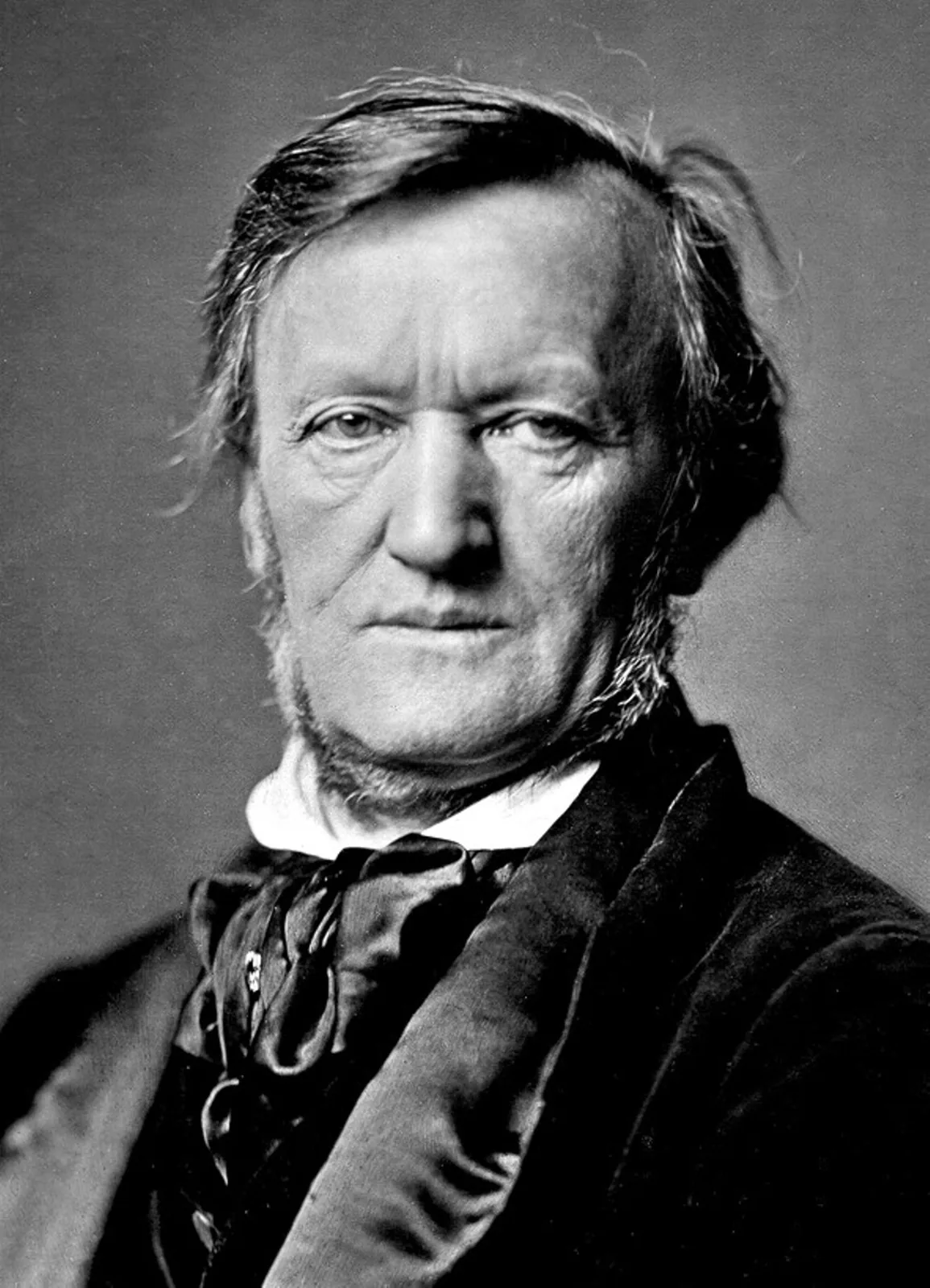
Wikimedia Commons · Public domain · file Wagner moved to Bayreuth to realize his plan for a dedicated festival theatre for his music dramas. Coordinates represent central Bayreuth.
Conducting the final Parsifal performance
· Bayreuth Festspielhaus, Bayreuth, Germany
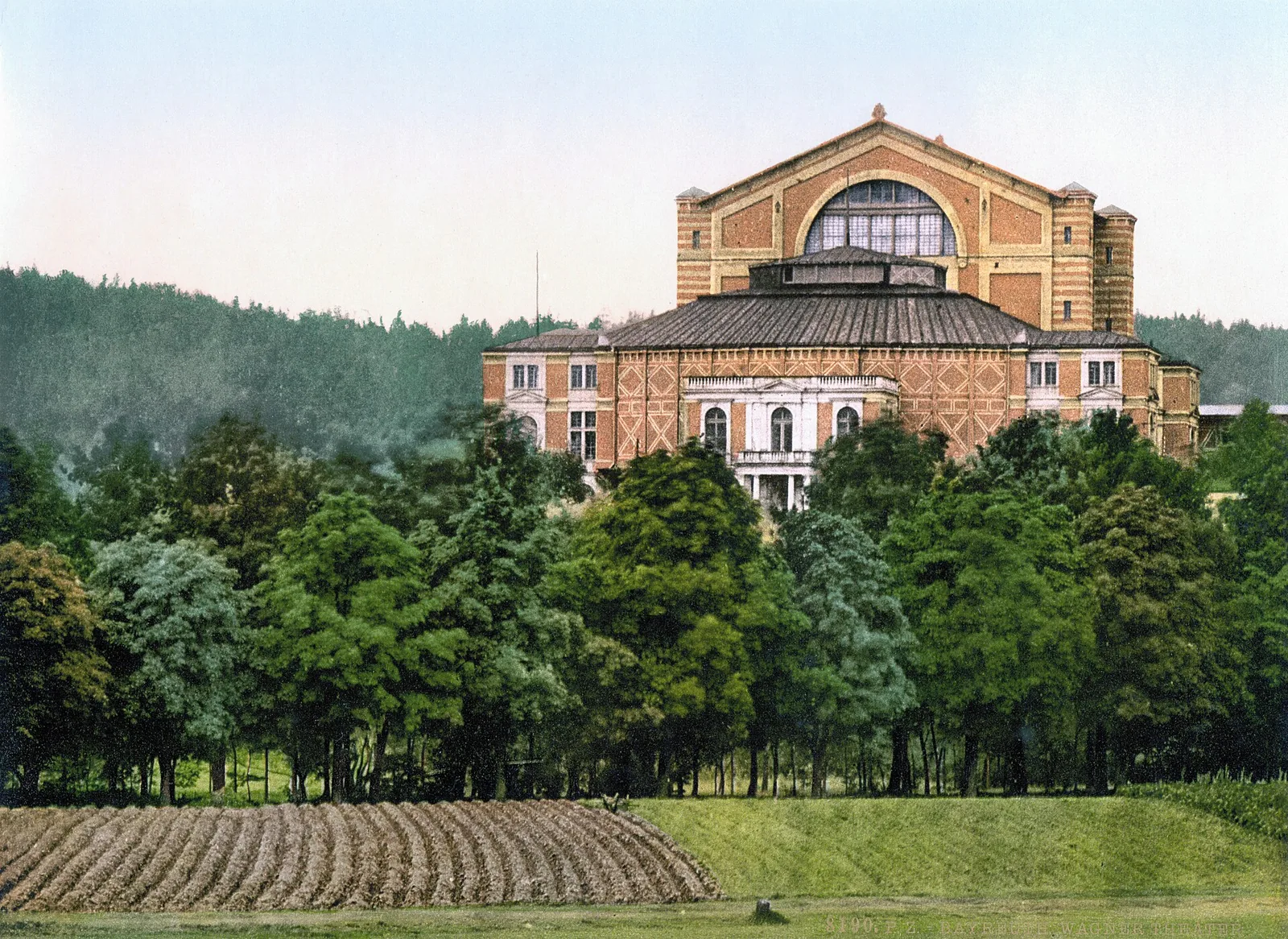
Wikimedia Commons · Public domain · file At the final performance of the second Bayreuth Festival, Wagner unexpectedly took the baton from Hermann Levi and conducted the end of Parsifal.
Final arrival in Venice
· Ca' Vendramin Calergi, Venice, Italy
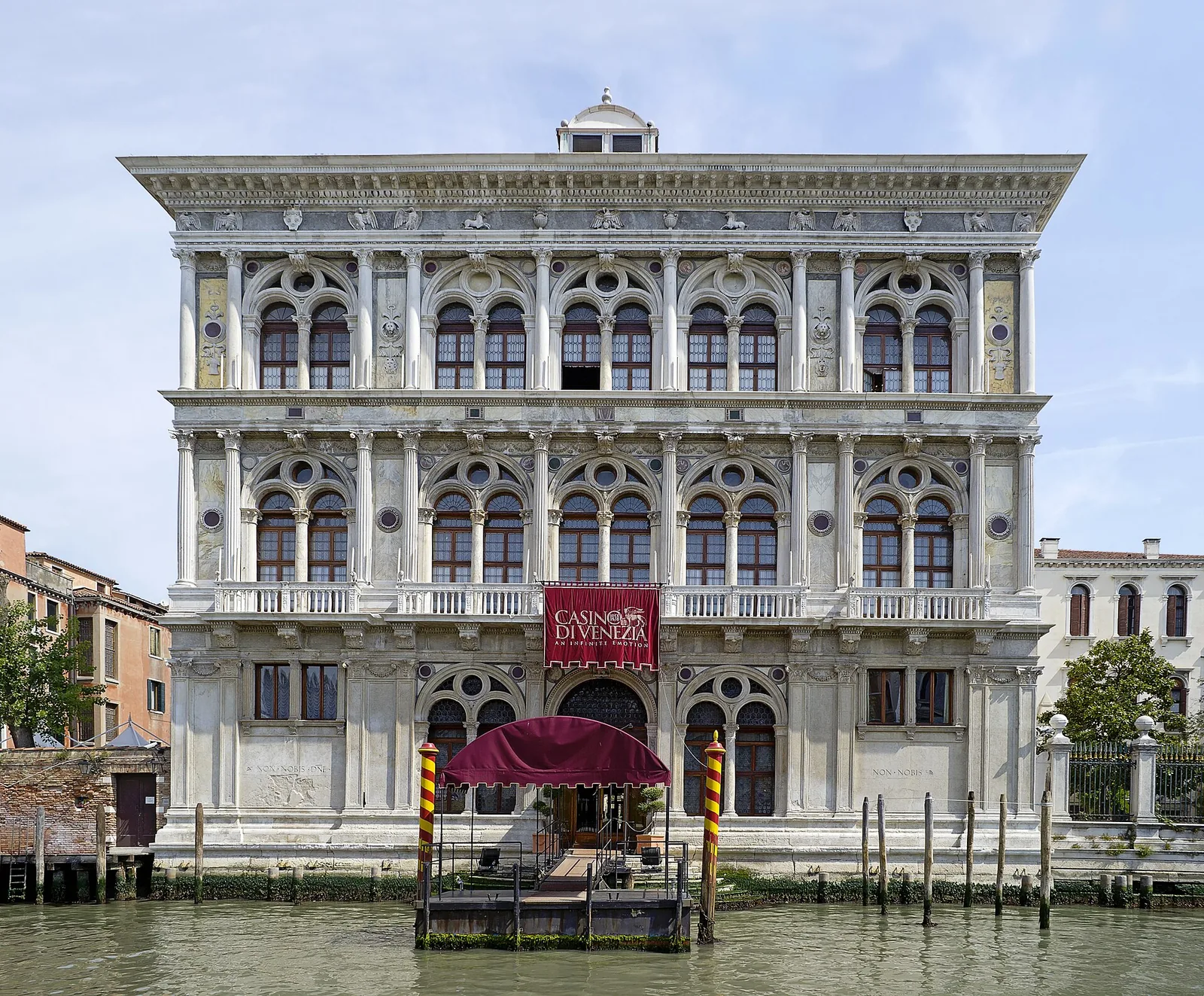
Wikimedia Commons · CC BY-SA 4.0 · file After the 1882 Bayreuth Festival, Wagner arrived in Venice with Cosima, their children, and household staff for his final residence.
Death at Ca' Vendramin Calergi
· Ca' Vendramin Calergi, Venice, Italy
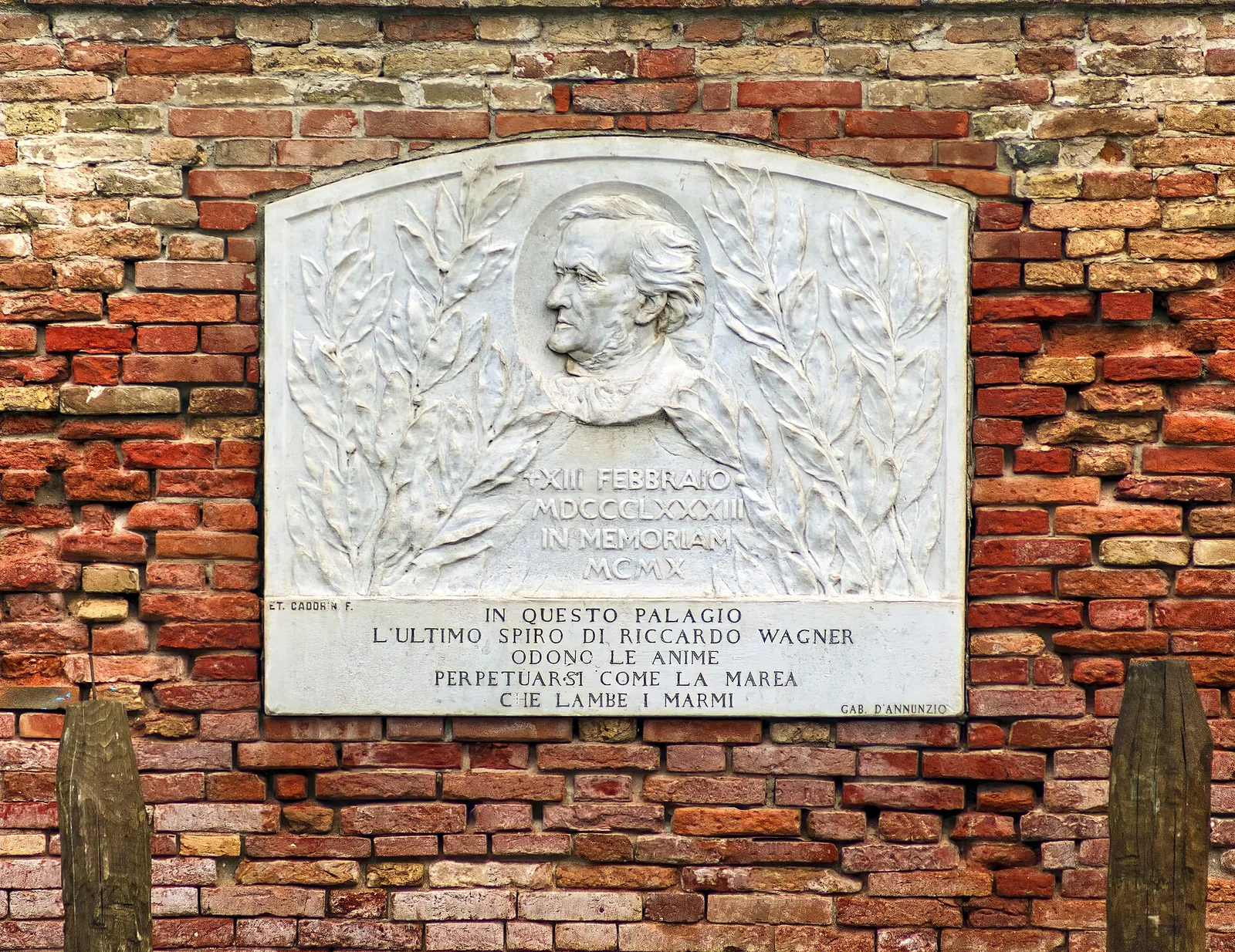
Wikimedia Commons · CC BY-SA 4.0 · file Wagner died of a heart attack during his final Venetian stay at Ca' Vendramin Calergi on the Grand Canal.