
8 moments
Birth in Kucha
· Kucha, Tarim Basin, present-day Xinjiang, China
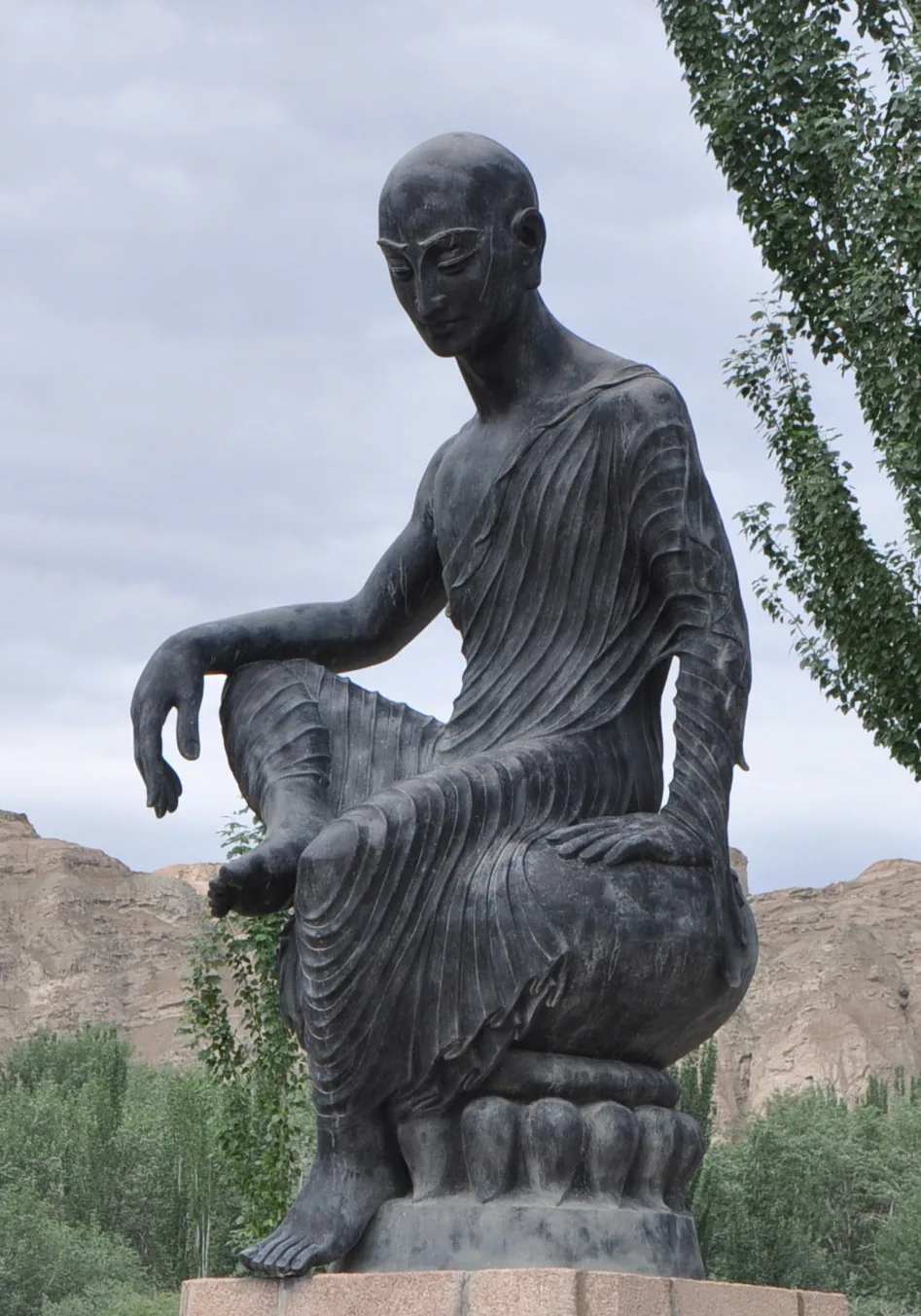
Wikimedia Commons · Creative Commons Attribution-Share Alike 3.0 Unported · file Kumārajīva was born in the Buddhist kingdom of Kucha, an oasis polity on the northern edge of the Tarim Basin. Coordinates represent the Kucha/Kuqa oasis area; the exact fourth-century birthplace is not identified.
Study in Kashmir
· Kashmir (Chipin), Himalayan region
At age nine, Kumārajīva travelled with his mother to Kashmir and studied Buddhist Āgama texts there for three years under Bandhudatta. Year is inferred from the reported birth year of 344 and age nine. Coordinates are a representative point for the broad historical region of Kashmir.
Study and conversion at Kashgar
· Kashgar, Xinjiang, China
While returning toward Kucha with his mother, Kumārajīva spent more than a year at Kashgar. There he studied Sarvāstivādin materials and encountered Mahāyāna teachers, including Sūryasoma and Buddhayaśas. Arrival year is inferred from the reported birth year and his departure at age twelve; the source specifies a stay of more than one year.
Full ordination at Kucha
· Royal Palace, Kucha, Tarim Basin, present-day Xinjiang, China
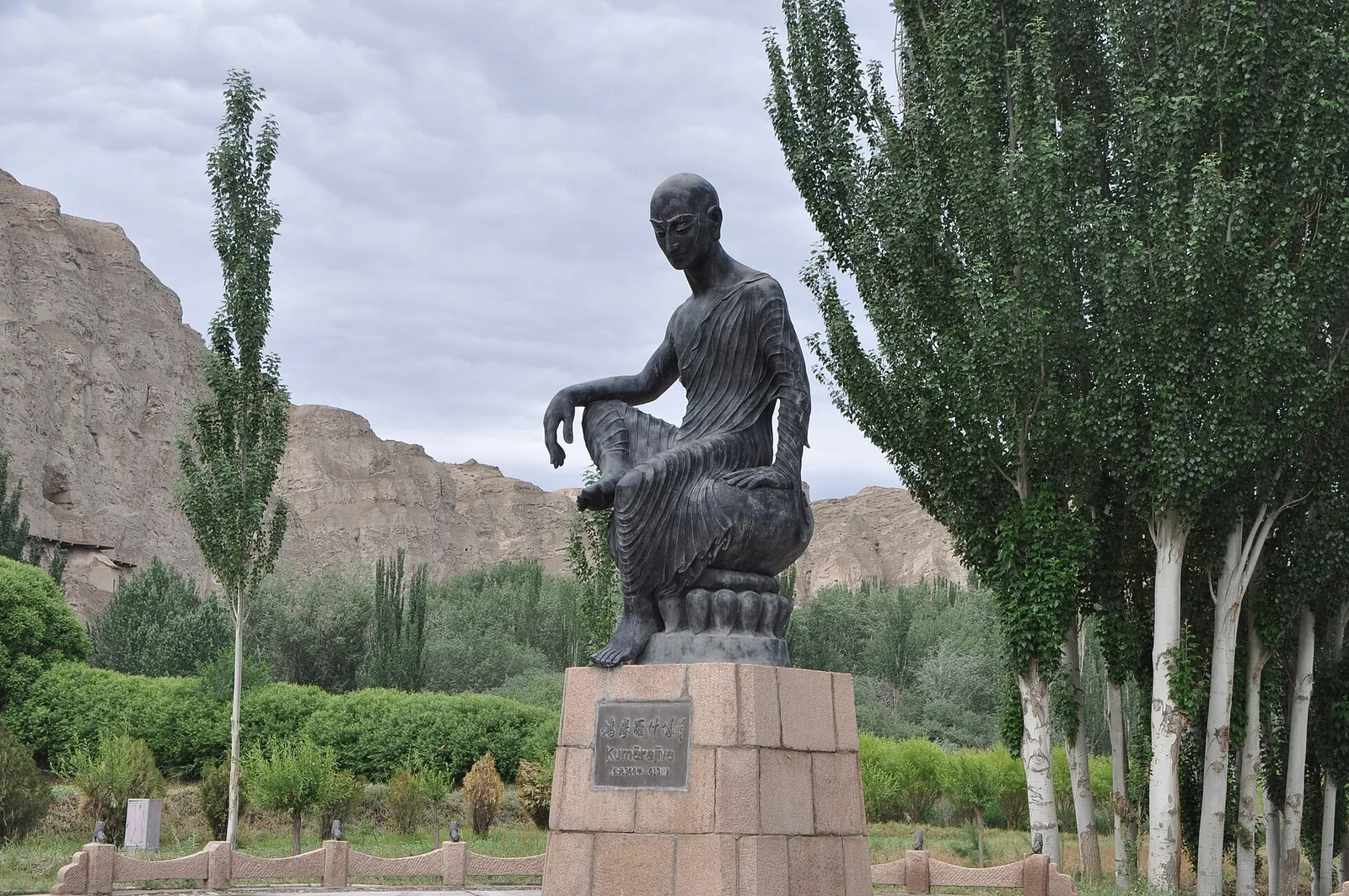
Wikimedia Commons · Creative Commons Attribution-Share Alike 3.0 Unported · file Back in Kucha, Kumārajīva received full monastic ordination in the royal palace at age twenty and continued Vinaya study with Vimalākṣa. Year is inferred from the reported birth year of 344 and age twenty. The royal palace's exact archaeological location is not established; coordinates represent Kucha.
Captured during Lü Guang's conquest of Kucha
· Kucha, Tarim Basin, present-day Xinjiang, China
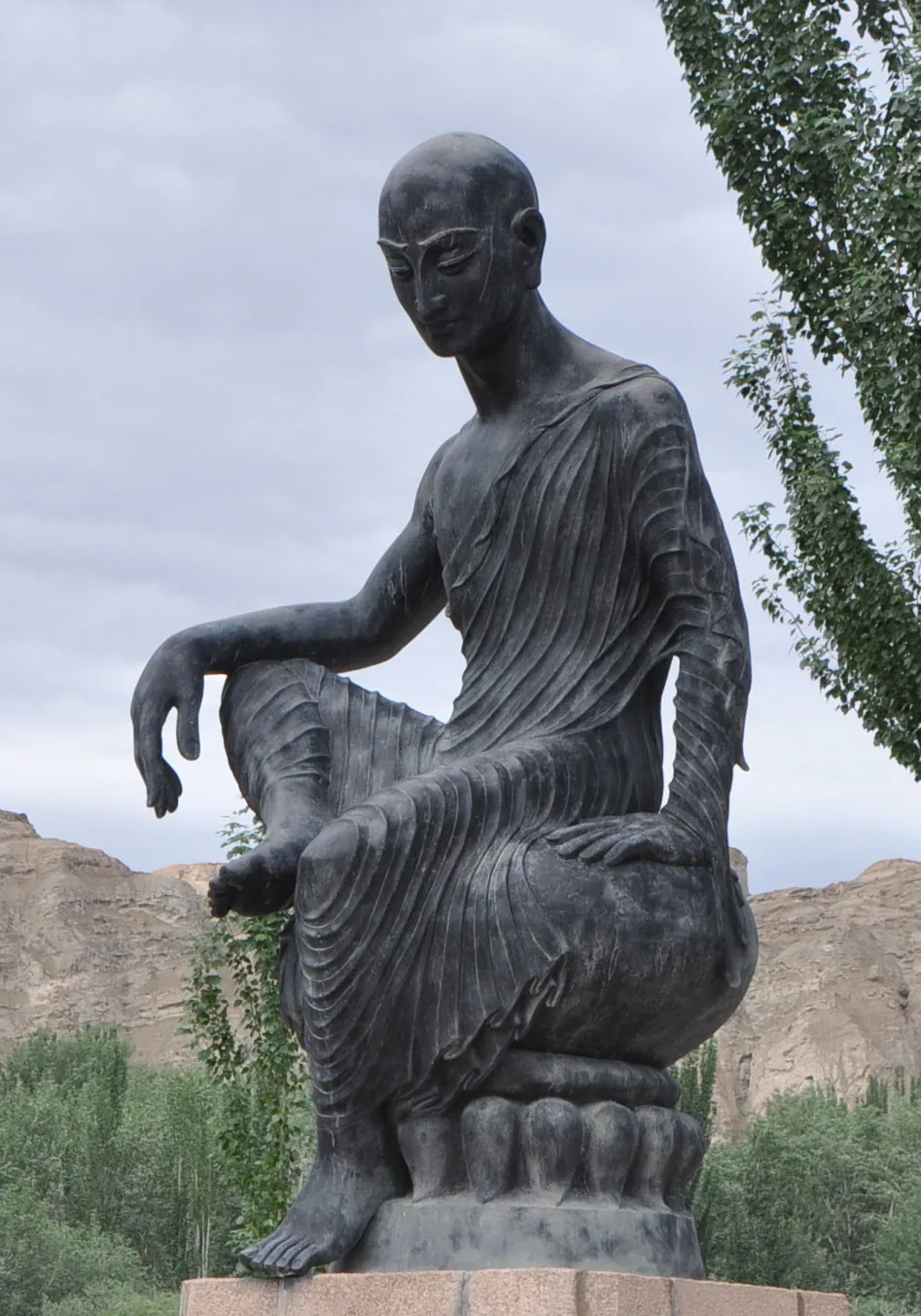
Wikimedia Commons · Creative Commons Attribution-Share Alike 3.0 Unported · file Lü Guang's Former Qin army conquered Kucha and seized Kumārajīva as war booty, beginning his forced removal toward the eastern Silk Road corridor. Coordinates represent the Kucha/Kuqa oasis area rather than a securely identified point of capture.
Residence in Guzang during captivity
· Guzang, present-day Wuwei, Gansu, China
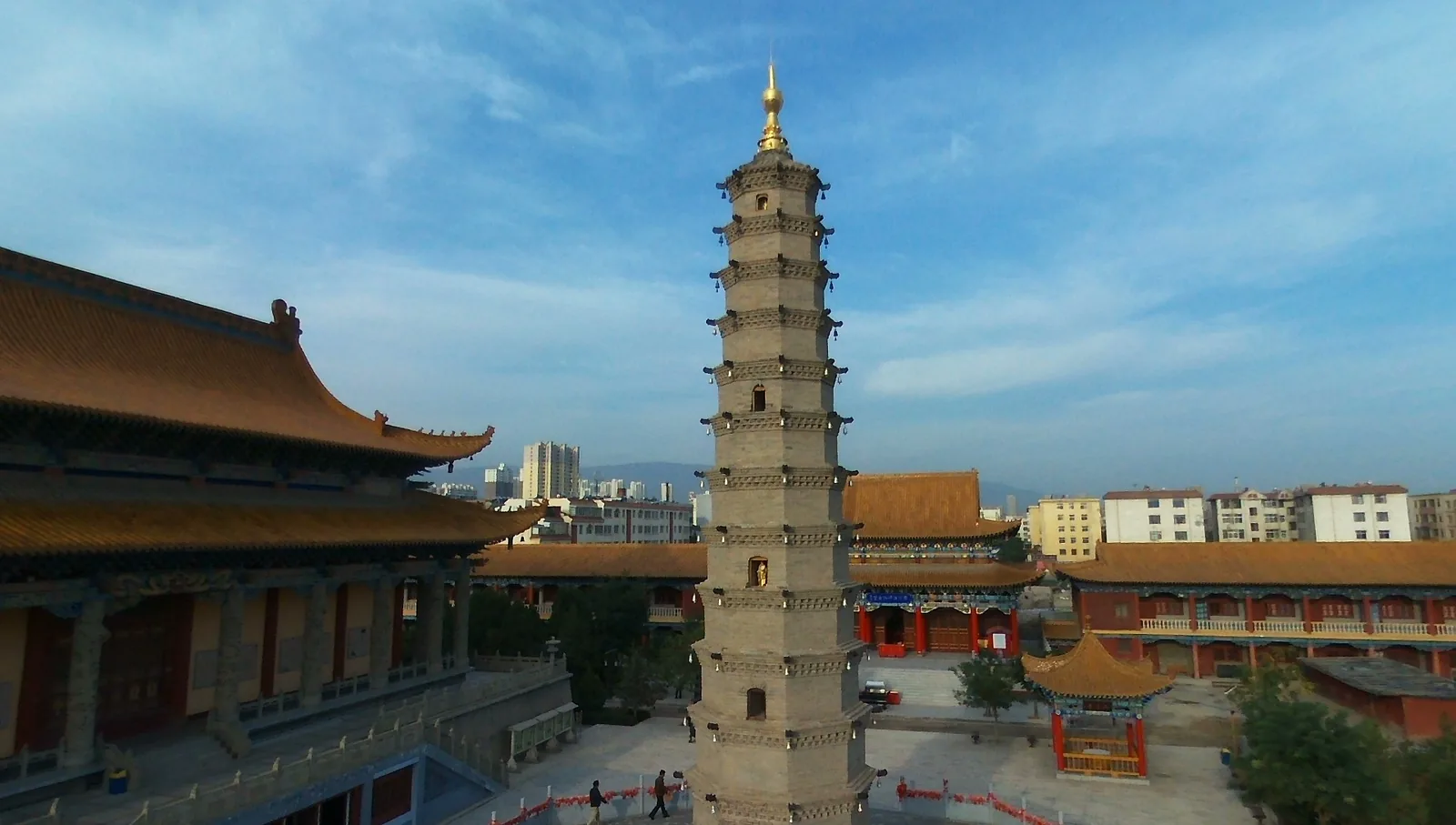
Wikimedia Commons · Creative Commons Attribution-Share Alike 3.0 Unported · file Kumārajīva lived at Guzang, the Later Liang capital, while held within Lü Guang's regime. This prolonged confinement was an important period before his eventual transfer to Chang'an. Guzang is represented by present-day Wuwei, the successor settlement; the precise Later Liang court site is uncertain.
Arrival at Chang'an
· Chang'an, present-day Xi'an, Shaanxi, China
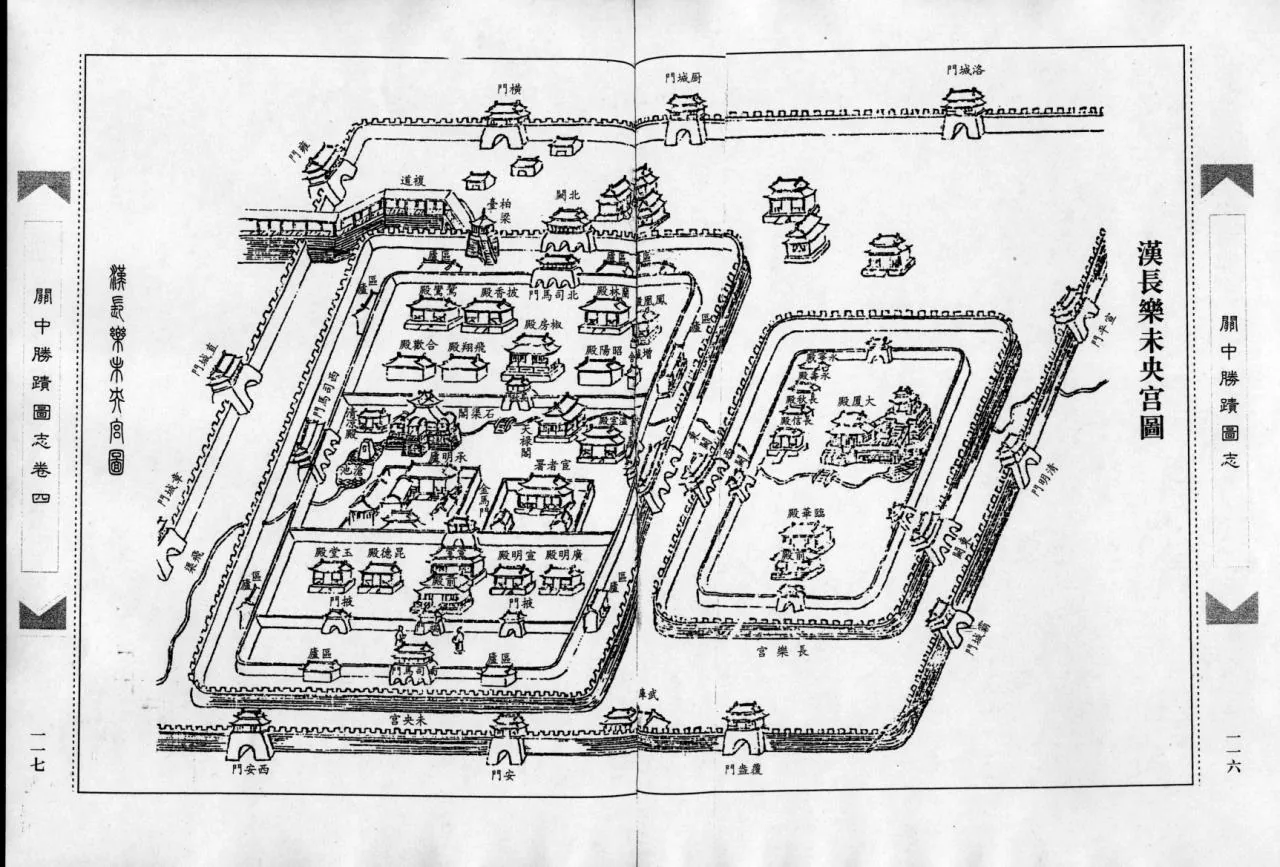
Wikimedia Commons · Public domain · file After the Later Qin defeat of the Lü regime, Kumārajīva reached Chang'an and was made National Preceptor. His arrival initiated the court-sponsored translation work for which he became best known. The source explains that this arrival is often dated to 401 because most of Hongshi 3 fell in that year. Coordinates are a representative point for the archaeological area of ancient Chang'an.
Death at Chang'an
· Chang'an, present-day Xi'an, Shaanxi, China
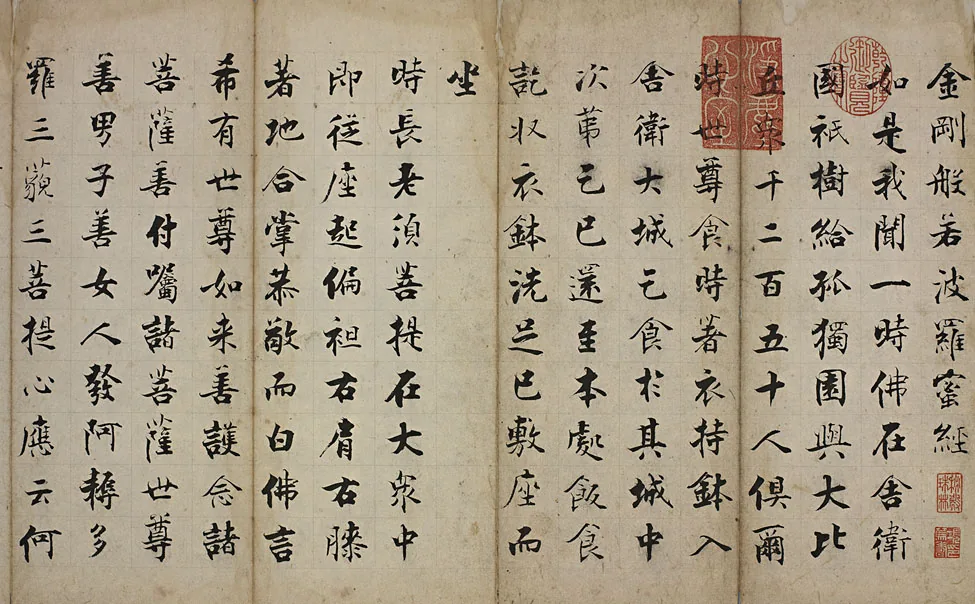
Wikimedia Commons · Public domain · file Kumārajīva died in Chang'an after roughly eleven years directing and participating in the translation enterprise established under Yao Xing. The cited source notes conflicting traditional death dates, including a 409 record, but identifies 413 as the date usually accepted today. Coordinates represent ancient Chang'an broadly.