
31 moments
Birth in Paris
· Paris, France
Sartre was born in Paris, beginning a life that would make him one of the most prominent French philosophers and public intellectuals of the twentieth century. Settlement-level coordinates; the cited text does not identify the birth building.
Entered the École normale supérieure
· École normale supérieure, Paris, France
Sartre entered the École normale supérieure with Paul Nizan, where he formed intellectual relationships that shaped his early philosophical career. The BnF chronology places this entry under 1924.
Teaching at Lycée du Havre
· Lycée François-Ier, Le Havre, France
Sartre began his lycée teaching career in Le Havre, a formative period before his Berlin study year and later literary success. Coordinates are representative of the lycée/city area.
Study year at the French Institute in Berlin
· Institut français d'Allemagne, Berlin, Germany
Sartre succeeded Raymond Aron at the Institut français d'Allemagne and studied Husserl's phenomenology, a major influence on his philosophical development. Berlin settlement coordinates; the cited article does not provide the institute's street address.
Summer journey in Italy
· Italy
Sartre traveled in Italy with Simone de Beauvoir shortly before his Berlin appointment; the journey included their first visit to Venice. Country-level representative coordinates because the cited sentence does not specify a single Italian locality.
Teaching at Lycée de Laon
· Lycée de Laon, Laon, France
After Le Havre and Berlin, Sartre taught at the Lycée de Laon during the 1936–37 school period. Coordinates are representative of Laon; the article does not supply the school's exact coordinates.
Teaching in Paris before the war
· Lycée Pasteur, Neuilly-sur-Seine, France
Sartre returned to Paris to teach, first at Lycée Pasteur and then, before the war, in the Paris lycée system. The institution is in Neuilly-sur-Seine, immediately west of Paris; the source groups it under Paris.
Captured at Padoux
· Padoux, Vosges, France
During the Battle of France, Sartre was captured by German troops at Padoux, beginning nine months of captivity as a prisoner of war.
Prisoner at Stalag XII-D
· Stalag XII-D, Trier, Germany
Sartre was held at Stalag XII-D in Trier, where he wrote Bariona, ou le fils du tonnerre, his first theatrical work. Coordinates represent Trier because the cited text identifies the camp only by its Trier location.
Prisoner of war in Nancy
· Nancy, France
Following his capture, Sartre was held as a prisoner of war in Nancy before his final confinement at Stalag XII-D in Trier. The source supports the year and location but not a more precise Nancy detention date.
Returned to teaching and settled at Hotel Mistral
· Hotel Mistral, Neuilly-sur-Seine, France
After release from captivity, Sartre regained a teaching position at Lycée Pasteur and settled at the Hotel Mistral in Neuilly-sur-Seine. Settlement-level coordinates; the hotel's exact historic location is not specified in the cited text.
Resistance-support journey to the French Riviera
· French Riviera, France
Sartre and Simone de Beauvoir traveled to the French Riviera to seek André Gide's and André Malraux's support for Socialisme et Liberté. Regional representative coordinates because the cited text gives no specific Riviera locality.
Teaching at Lycée Condorcet
· Lycée Condorcet, Paris, France
Under the Vichy-era educational system, Sartre took up a post at Lycée Condorcet in Paris, where he taught during the Occupation.
Moved to rue Bonaparte
· Rue Bonaparte, Paris, France
After the war, Sartre moved to rue Bonaparte, his principal Paris residence and working base until 1962, from which he launched Les Temps modernes. Street-level representative coordinates; the cited sentence does not give an apartment number.
Visit to General Marshall at the Pentagon
· The Pentagon, Arlington, Virginia, United States
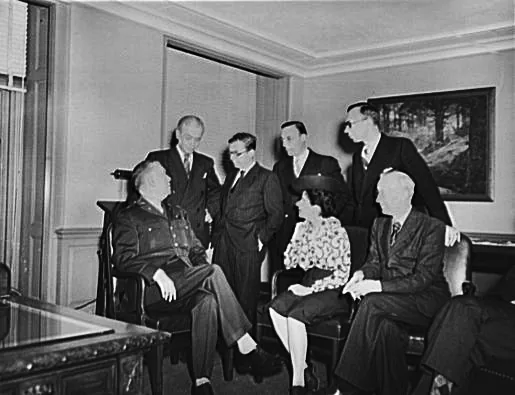
Wikimedia Commons · Public domain · file Soon after the Second World War, Sartre was among French journalists who visited General George C. Marshall at the Pentagon. The date is supported to year precision by the photograph caption.
Return visit to Naples
· Naples, Italy
Sartre returned to Naples with Michelle Vian, revisiting a city that had affected him strongly in 1936. The preceding sentence identifies the city as Naples; the date is supported as late summer 1951 but recorded at year precision.
First trip to the Soviet Union
· Soviet Union
Sartre undertook his first Soviet journey in 1954; after returning to France, he gave a five-part interview to Libération about the trip. Country-level representative coordinates because the cited BnF source does not identify the Soviet itinerary.
Photographed in China
· China
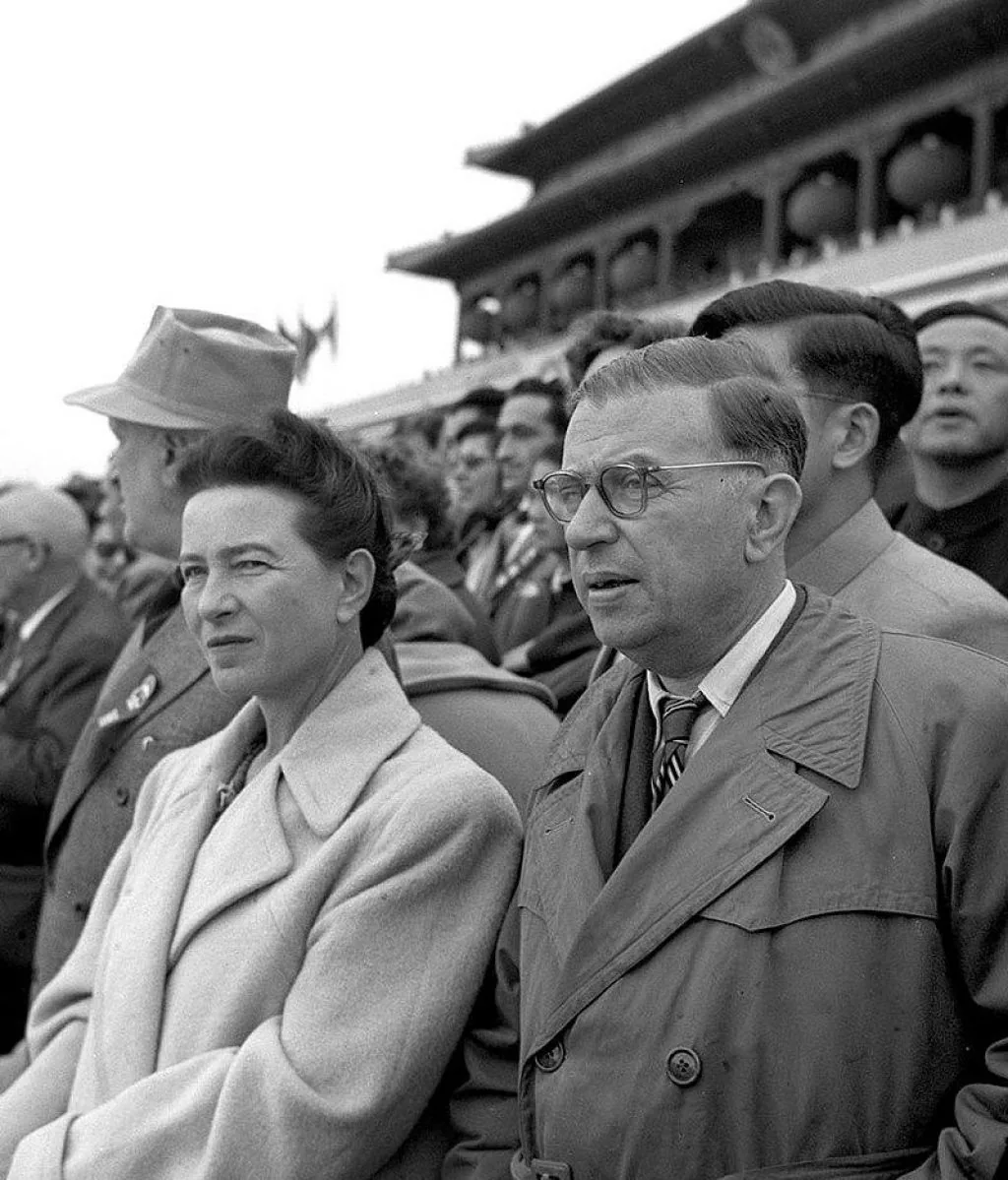
Wikimedia Commons · Public domain · file Sartre traveled in China with Simone de Beauvoir; a Gallimard Archives photograph shows them there with their interpreter, Mme Cheng. The photograph is dated 1955. National representative coordinates are used because no city is stated in the cited caption.
In Brazil during the Jeanson-network trial
· Brazil
Sartre was in Brazil when the French trial of the Jeanson network occurred; his statement of solidarity was sent with his approval and read in court. Country-level representative coordinates; the BnF source does not identify the Brazilian city.
La Coubre memorial service
· Havana, Cuba
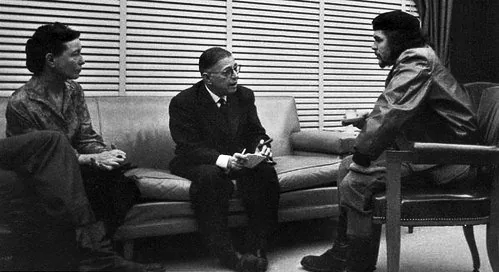
Wikimedia Commons · Public domain · file Sartre was photographed in Havana at the memorial service following the La Coubre explosion, during his 1960 Cuban visit with Simone de Beauvoir. Havana settlement coordinates; the memorial-service venue is not specified in the cited file description.
Studio at 222 boulevard Raspail
· 222 boulevard Raspail, Paris, France
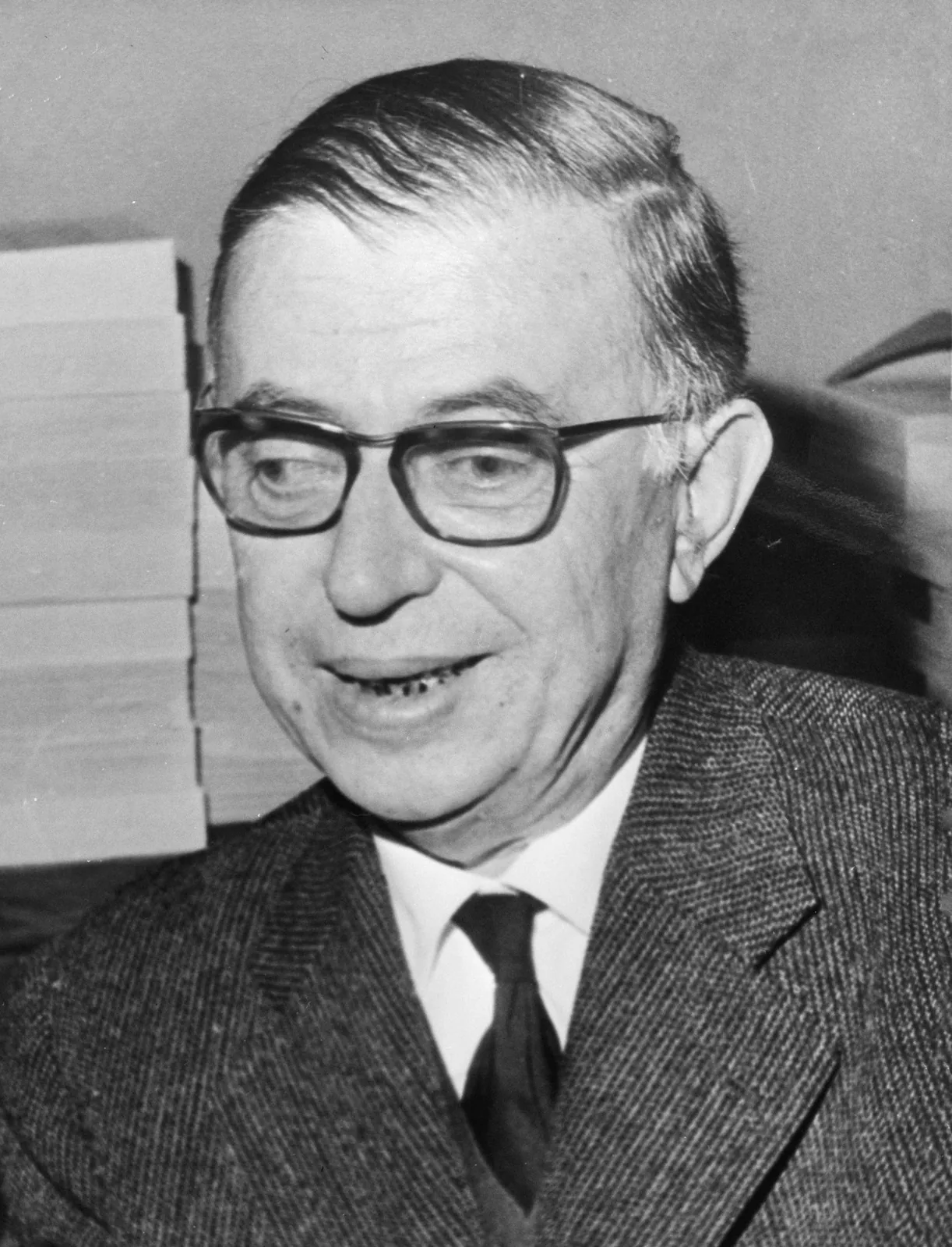
Wikimedia Commons · Creative Commons Attribution-Share Alike 3.0 Netherlands · file After attacks on his rue Bonaparte apartment, Sartre took a studio at 222 boulevard Raspail, where he remained until 1973. The BnF chronology places this entry under 1962.
Retreat at Hélène de Beauvoir's house
· Goxwiller, Bas-Rhin, France
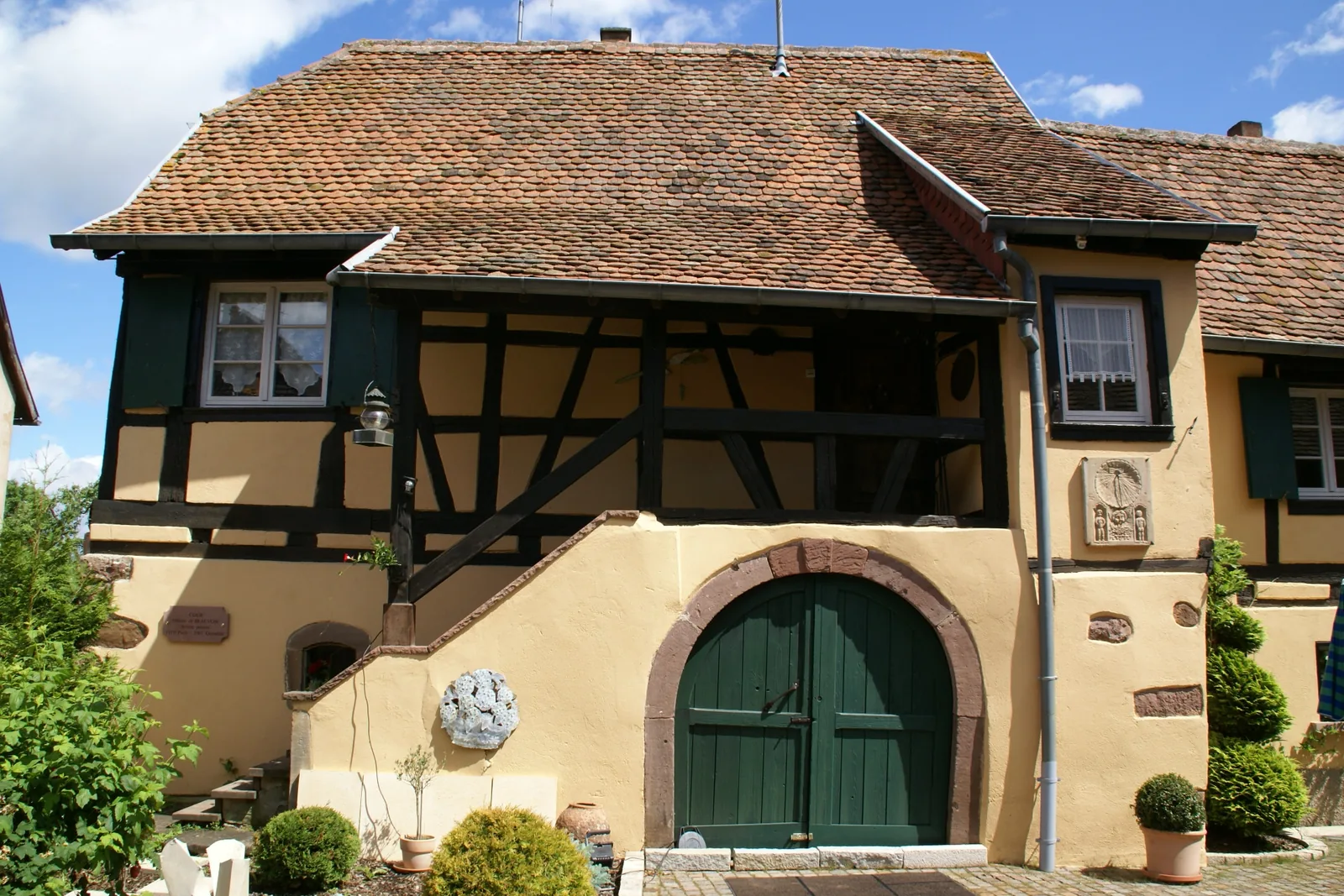
Wikimedia Commons · Creative Commons Attribution-Share Alike 3.0 Unported · file After being awarded the Nobel Prize in Literature, which he declined, Sartre tried to avoid media attention at Hélène de Beauvoir's house in Goxwiller. The Nobel Prize was awarded in 1964; the cited caption does not provide a more precise date.
Journey to Israel for intellectual dialogue
· Israel
Sartre traveled to Israel as part of a 1967 effort to foster dialogue between Israeli and Egyptian intellectuals after visiting Egypt. Country-level representative coordinates because the BnF source does not identify an Israeli city.
Photographed in Venice
· Venice, Italy
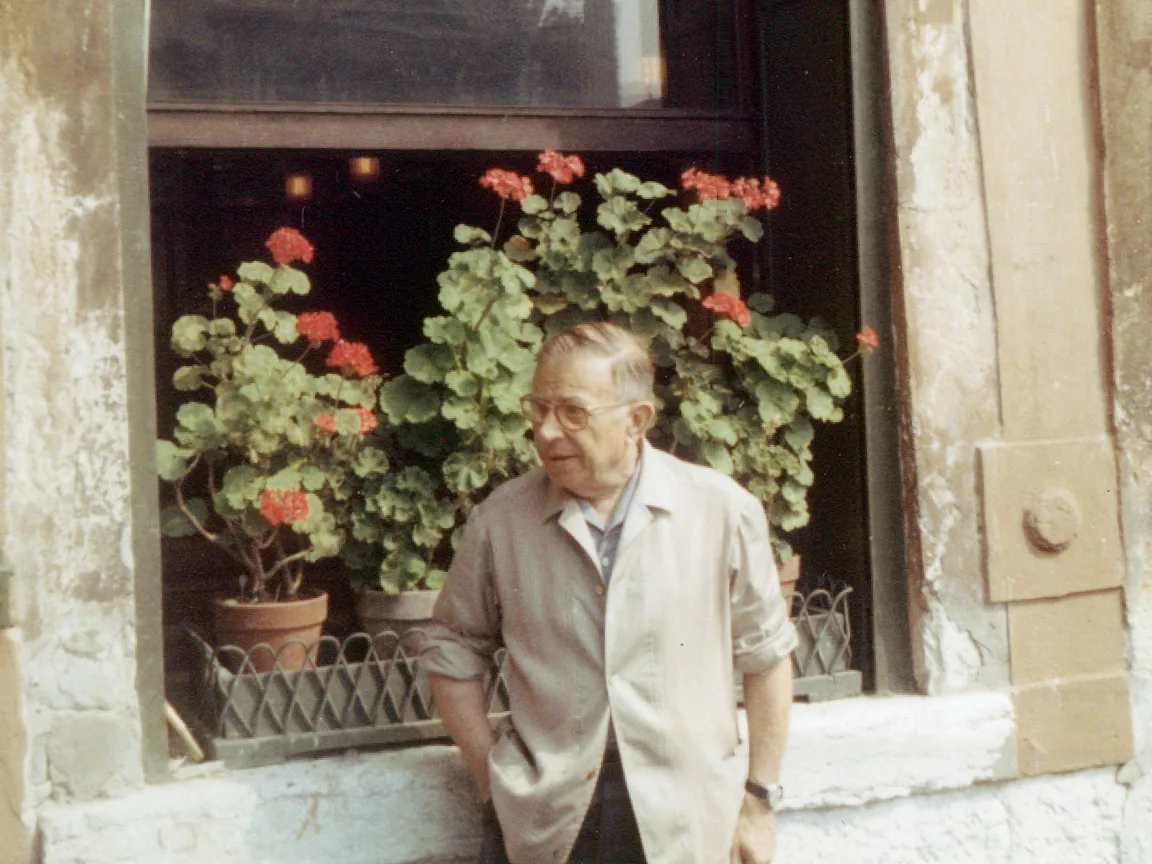
Wikimedia Commons · Creative Commons Attribution 3.0 Unported · file A contemporary photograph documents Sartre's presence in Venice during a period of sustained international political and cultural activity. The source is a photograph caption and supports year precision only.
Meeting President Nasser in Cairo
· Cairo, Egypt
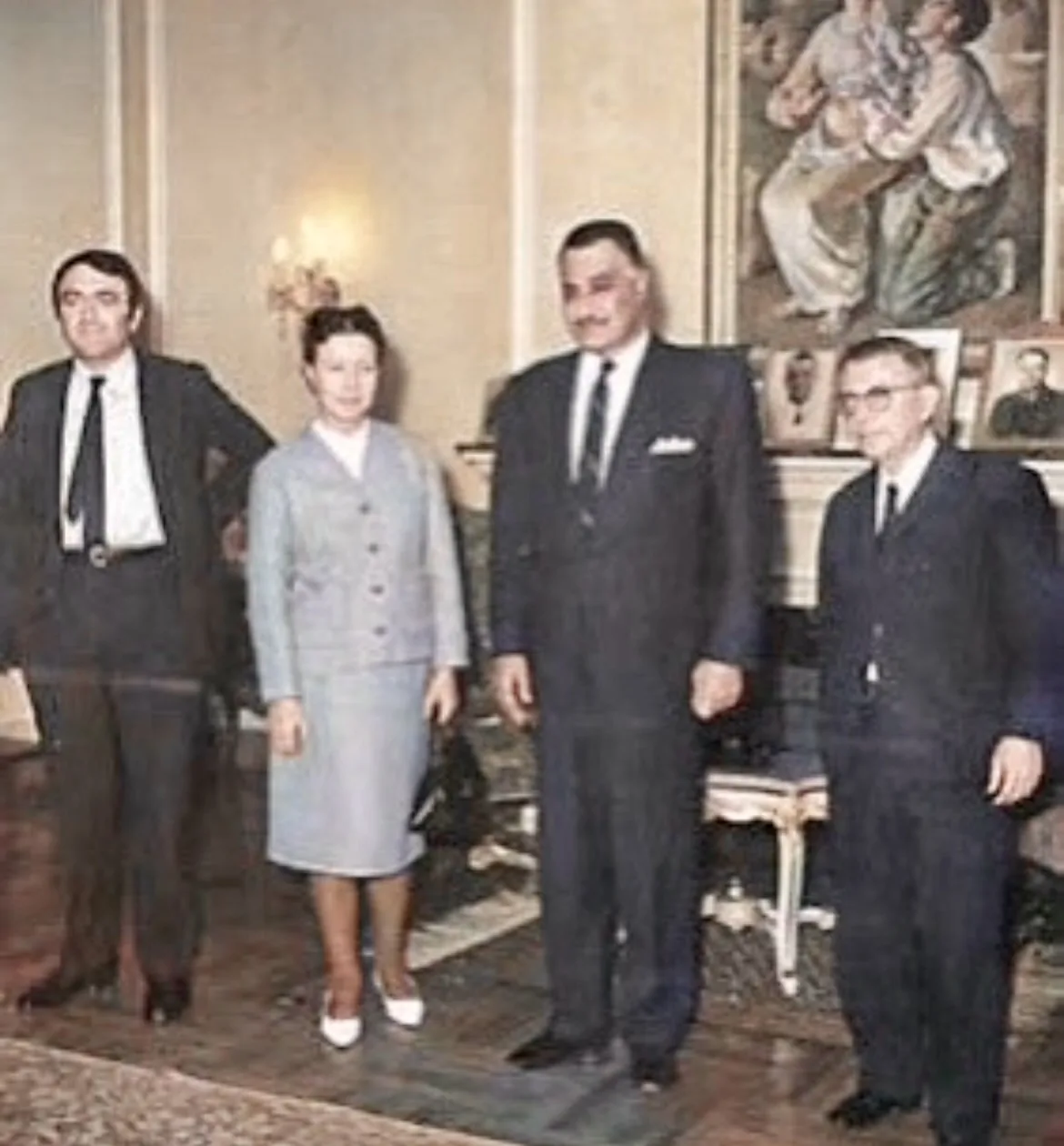
Wikimedia Commons · Public domain · file Sartre, Simone de Beauvoir, and Claude Lanzmann met Egyptian president Gamal Abdel Nasser at his Cairo home during Sartre's Middle East engagement. Cairo settlement coordinates; the cited caption does not provide the residence address.
Arrest during the May 1968 strikes
· Paris, France
Sartre supported the May 1968 strike movement in Paris and was arrested for civil disobedience before President Charles de Gaulle intervened. The cited text supports Paris and 1968, but not a specific arrest site or date.
Speech outside Renault Billancourt
· Renault Billancourt factory site, Boulogne-Billancourt, France
As director of the Maoist newspaper La Cause du Peuple, Sartre addressed workers leaving the Renault Billancourt factory. Coordinates represent the historic Renault Billancourt/Île Seguin factory area.
Visit to Andreas Baader
· Stammheim Prison, Stuttgart, West Germany
During a collective hunger strike, Sartre visited Red Army Faction prisoner Andreas Baader and criticized the conditions in Stammheim Prison.
Final journey to Israel
· Israel
Sartre made his final trip to Israel in an effort to encourage a response to Egyptian president Anwar Sadat's peace initiative. Country-level representative coordinates because no city is identified in the source.
Boat-people appeal at the Élysée Palace
· Élysée Palace, Paris, France
Supported by André Glucksmann and Raymond Aron, Sartre went to the Élysée Palace to support Vietnamese boat people leaving Vietnam. The BnF chronology places this entry under 1979.
Death in Paris
· Paris, France
Sartre died in Paris from pulmonary edema at age seventy-four; his funeral later drew tens of thousands of mourners. Settlement-level coordinates; the cited text does not identify the place of death within Paris.