
32 moments
Birth at Carthage
· Carthage, Tunisia
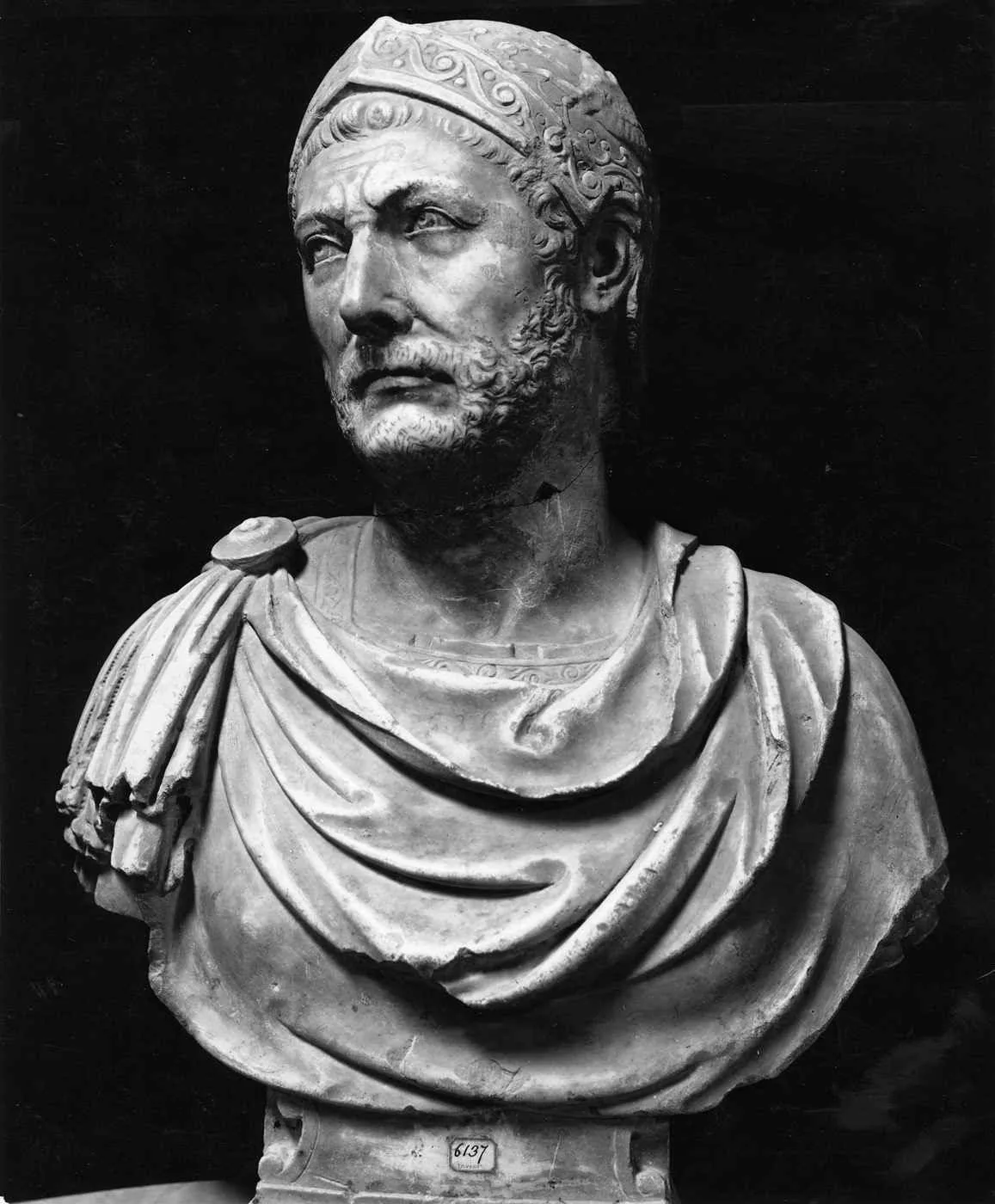
Wikimedia Commons · Public domain · file Hannibal was born at Carthage, the center of the Carthaginian state in North Africa.
Campaign against the Vaccaei at Arbucala
· Arbucala (near modern Toro), Castile and León, Spain
Hannibal's campaign against the Vaccaei included the storming of Arbucala. Ancient Arbucala is conventionally associated with the Toro area; coordinate is representative.
Campaign against the Vaccaei at Helmantice
· Helmantice (modern Salamanca), Castile and León, Spain
During his western Iberian campaign, Hannibal stormed the Vaccaean stronghold of Helmantice. Coordinate represents modern Salamanca, conventionally identified with ancient Helmantice.
Siege of Saguntum
· Saguntum (modern Sagunto), Valencian Community, Spain
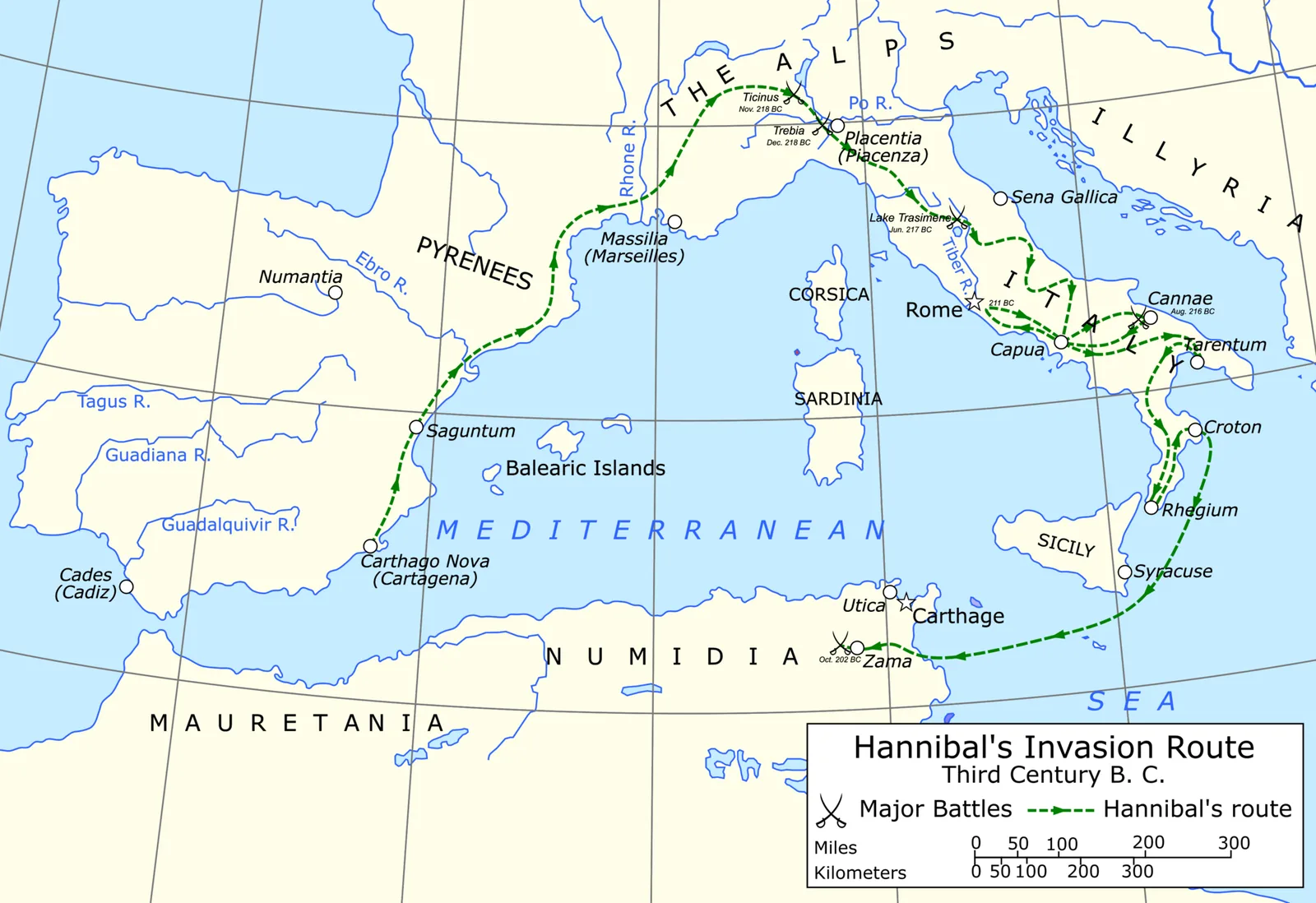
Wikimedia Commons · CC BY-SA 4.0 · file Hannibal led the Carthaginian siege, capture, and sack of Saguntum, an episode that preceded Rome's declaration of war.
Arrival in Piedmont
· Piedmont, Italy
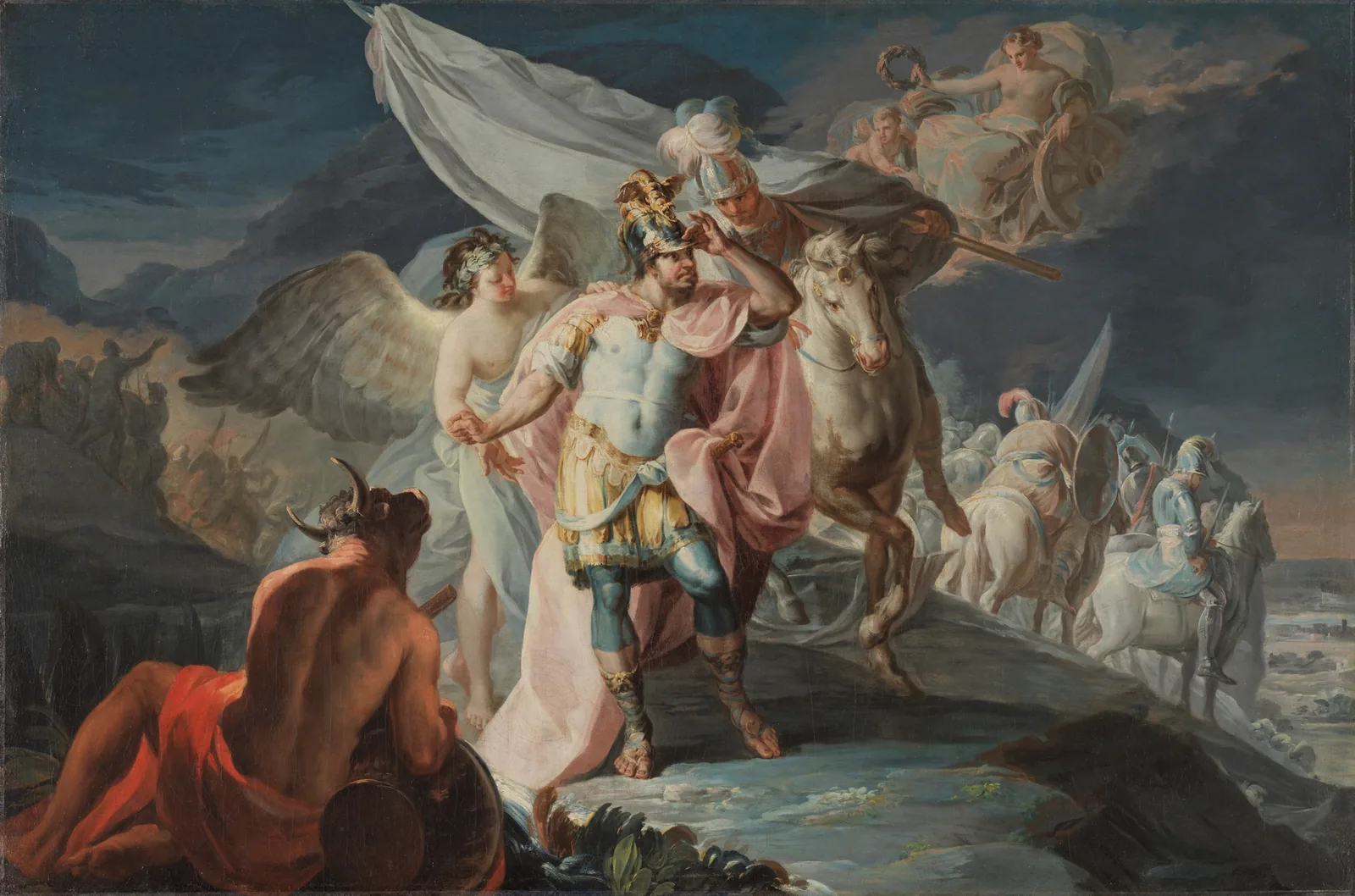
Wikimedia Commons · Public domain · file After crossing the Alps, Hannibal arrived in the region now called Piedmont in northern Italy. Coordinate is a representative point in Piedmont.
Departure from New Carthage
· New Carthage (modern Cartagena), Murcia, Spain
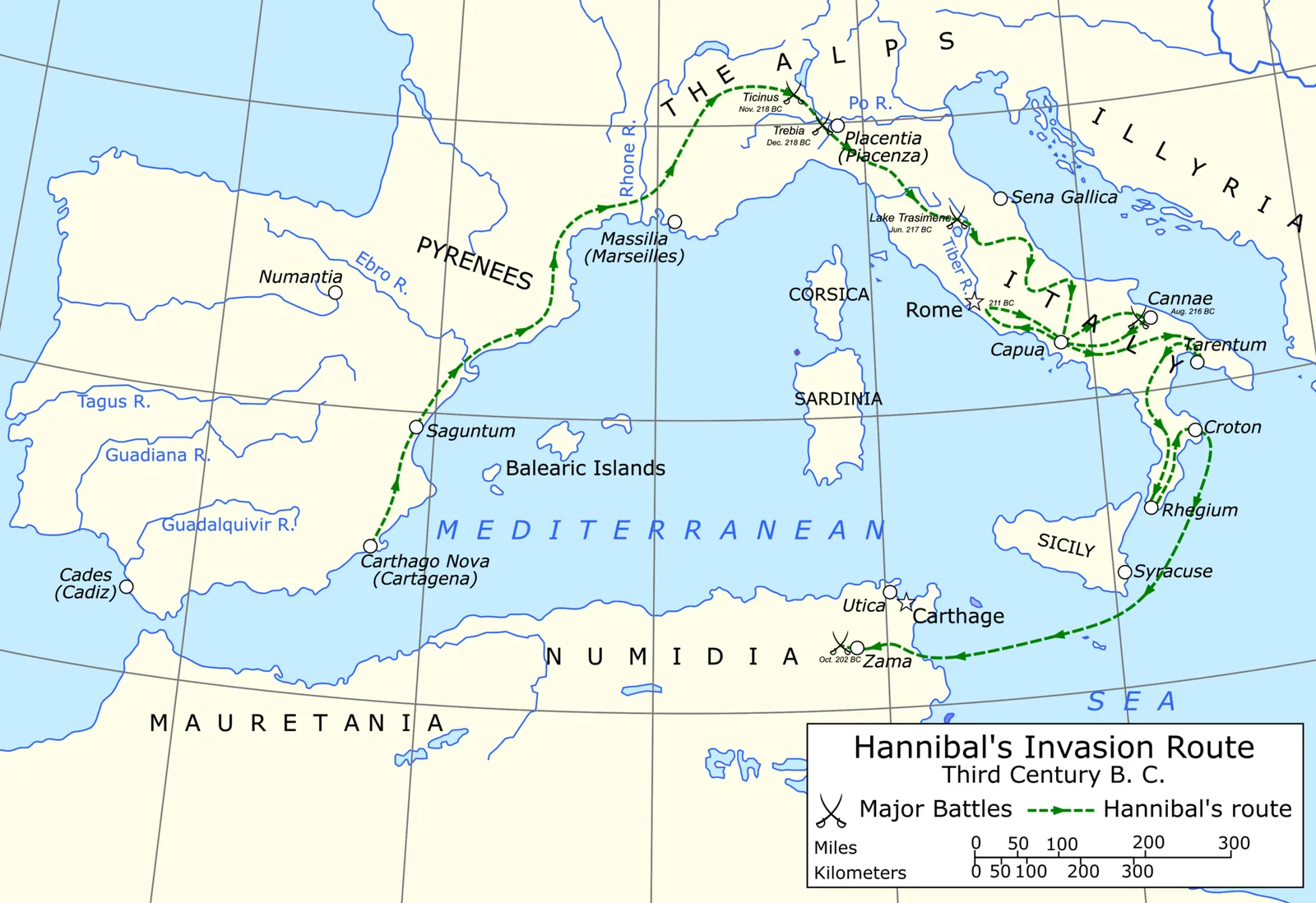
Wikimedia Commons · CC BY-SA 4.0 · file Hannibal assembled his invasion army at New Carthage and began the northward march toward Gaul and Italy. The source supports May 218 BC; the card retains year precision because no day is supplied.
Crossing of the Rhône
· Rhône River crossing site, France
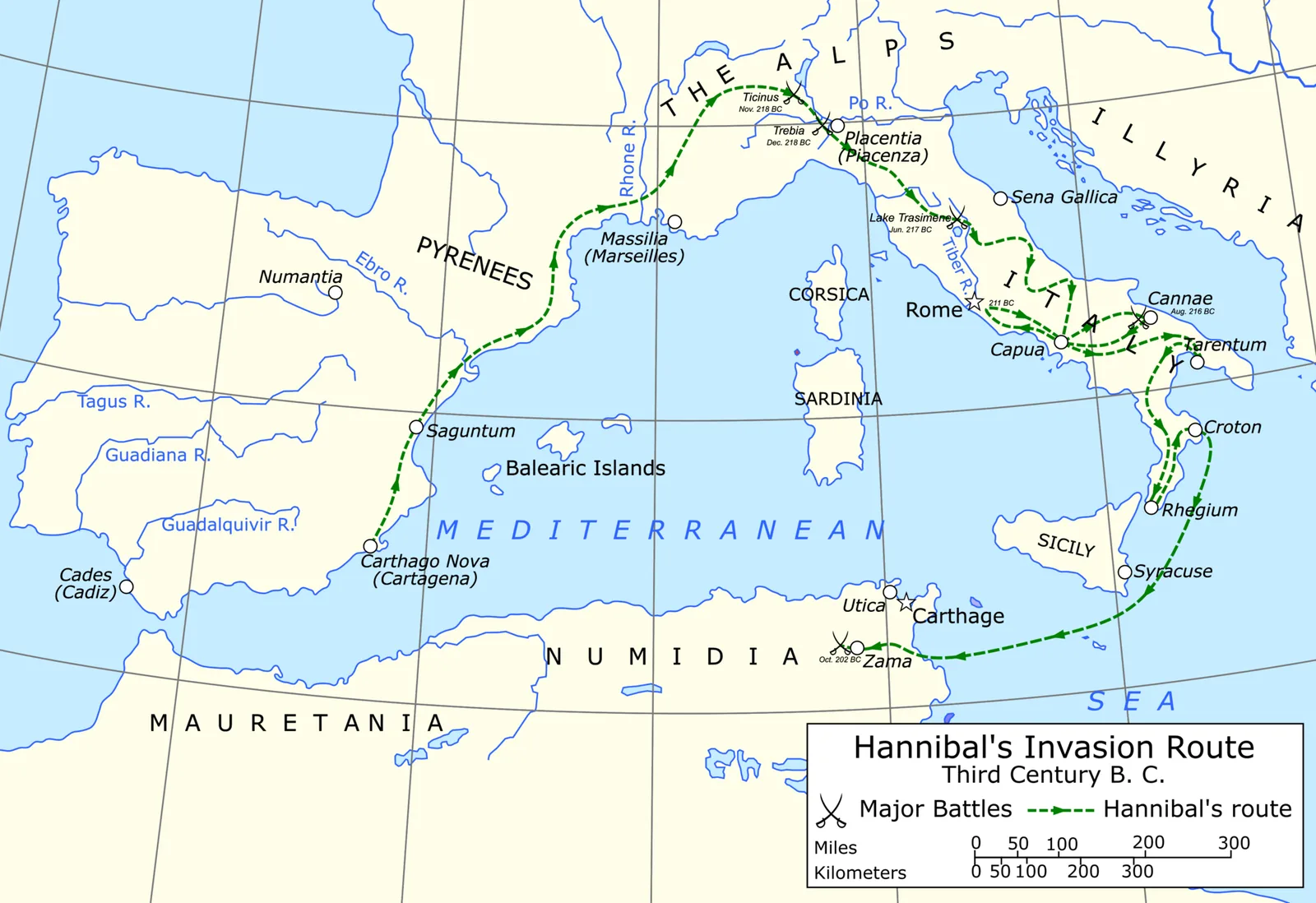
Wikimedia Commons · CC BY-SA 4.0 · file Hannibal's army crossed the Rhône during the overland advance toward Italy. The precise Rhône crossing site is debated; coordinates follow the representative point used by the cited article.
Crossing the Alps into Italy
· Western Alps, France–Italy
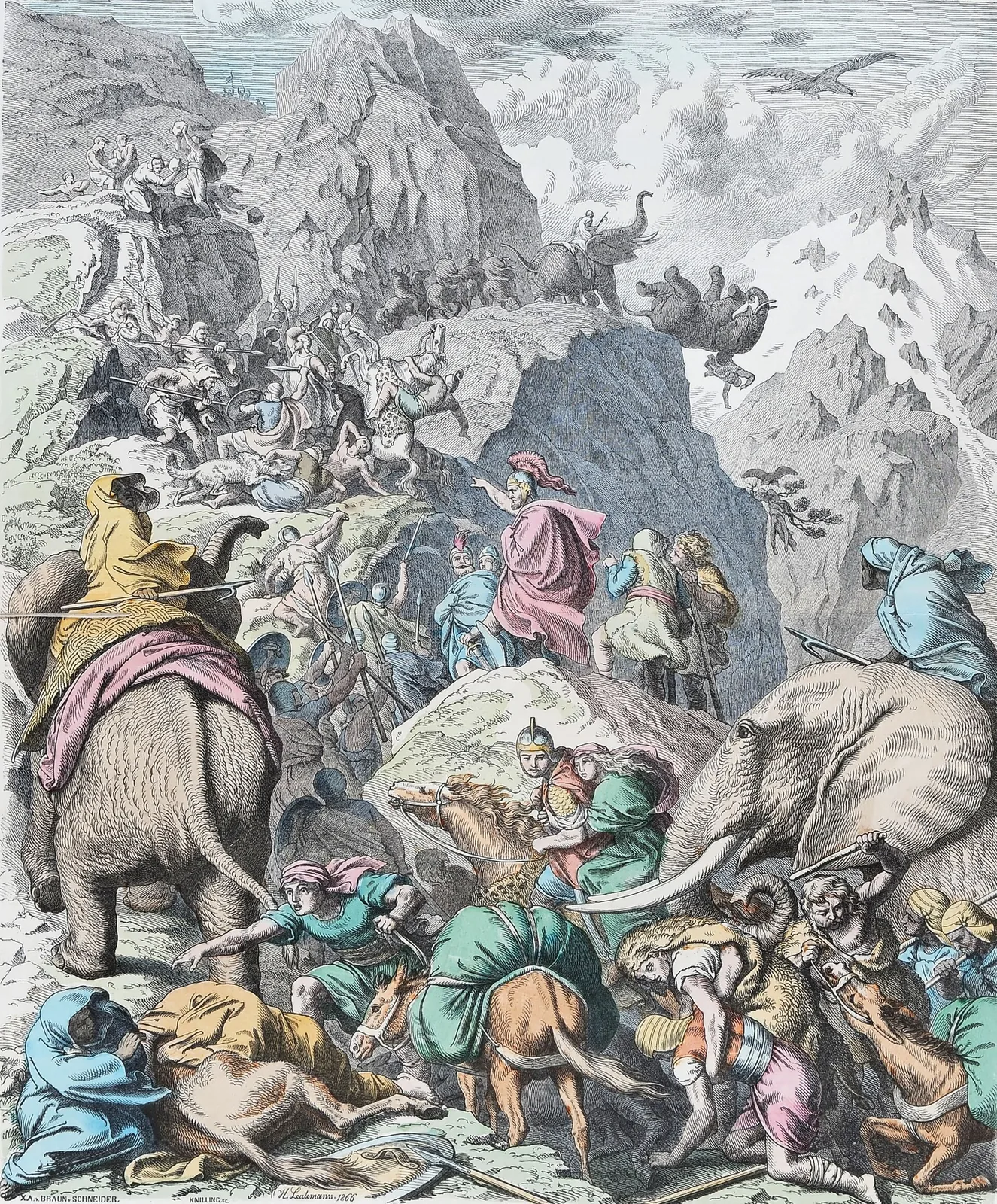
Wikimedia Commons · Public domain · file Hannibal crossed the Alps with his army during the invasion of Italy. The exact Alpine route remains disputed; coordinate is a representative point near Col de la Traversette, one proposed route.
Battle of Ticinus
· Ticino River, Lombardy, Italy
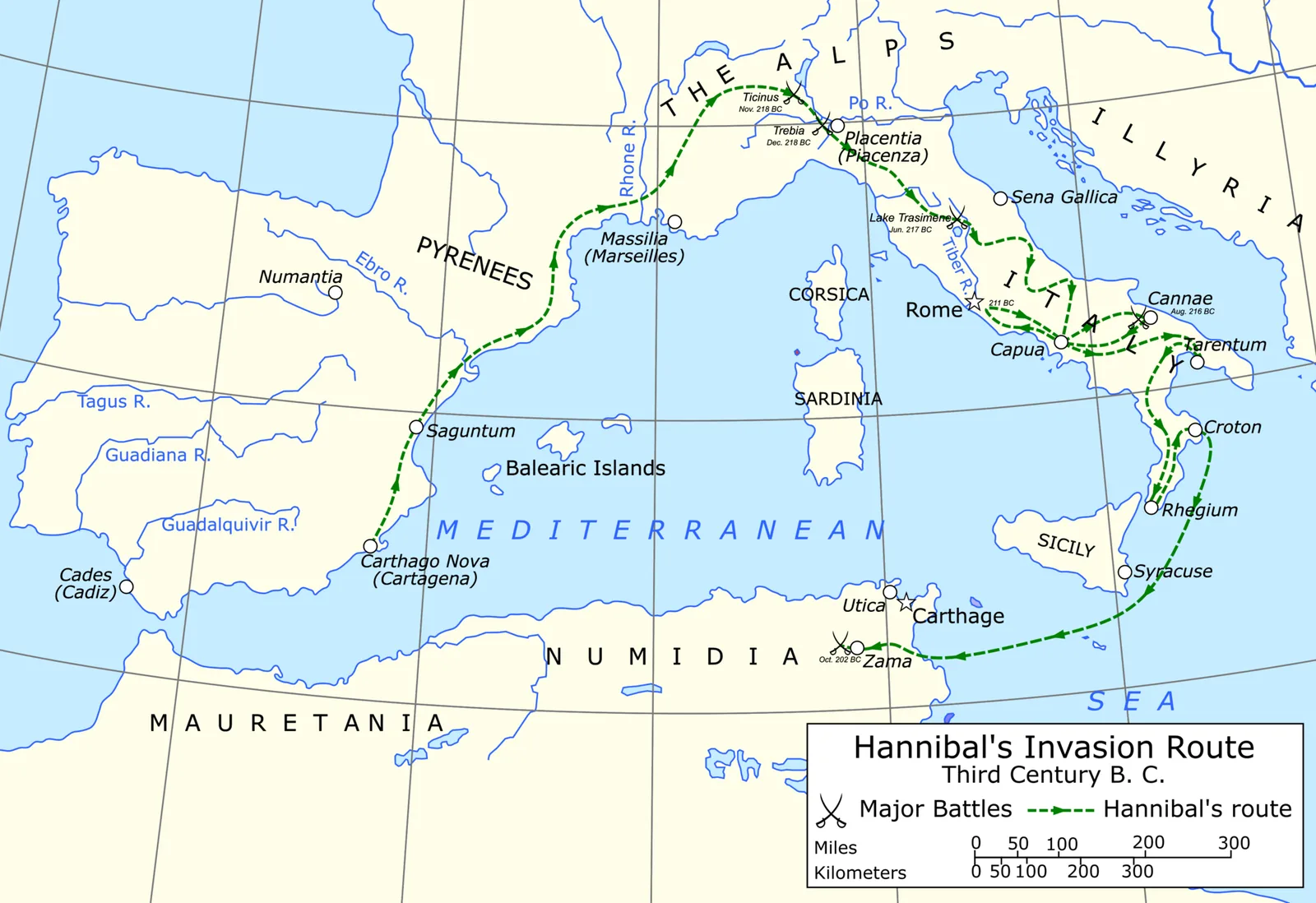
Wikimedia Commons · CC BY-SA 4.0 · file Hannibal fought the Roman army at the Ticinus, beginning his sequence of victories in northern Italy. The battle's exact site is uncertain; coordinate is a representative point on the lower Ticino.
Battle of the Trebia
· Trebia River, Emilia-Romagna, Italy
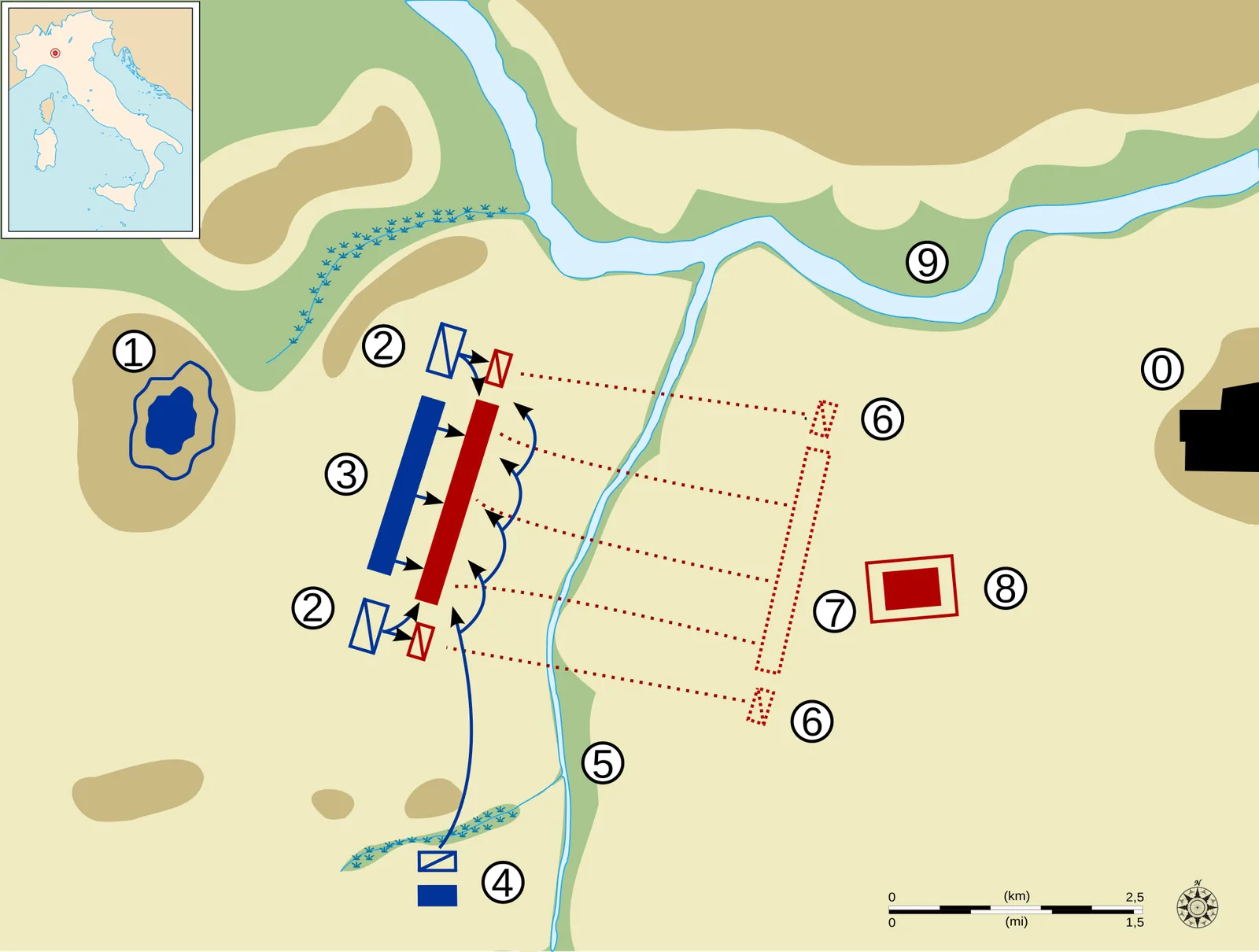
Wikimedia Commons · Public domain · file Hannibal defeated the Roman army on the west bank of the lower Trebia River. The source gives two alternative days; month precision is used.
Battle of Lake Trasimene
· North shore of Lake Trasimene, Umbria, Italy
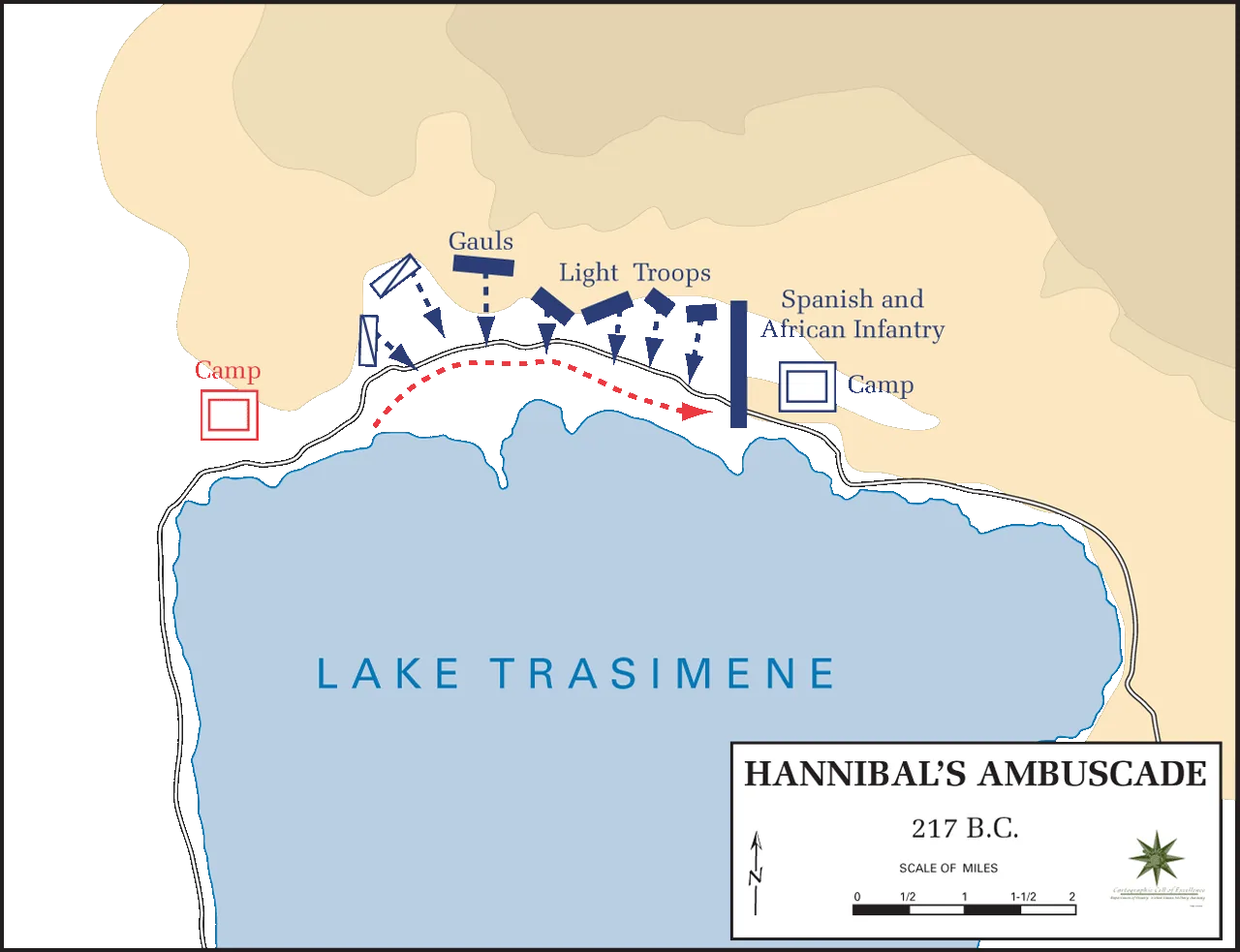
Wikimedia Commons · CC BY-SA 3.0 Unported · file Hannibal commanded the Carthaginian victory over the Roman army on Lake Trasimene's north shore.
First attempt on Nola
· Nola, Campania, Italy
Hannibal camped near Nola during his first unsuccessful attempt to take the city. The battle is dated late 216 BC; year precision is used.
Battle of Cannae
· Cannae, Apulia, Italy
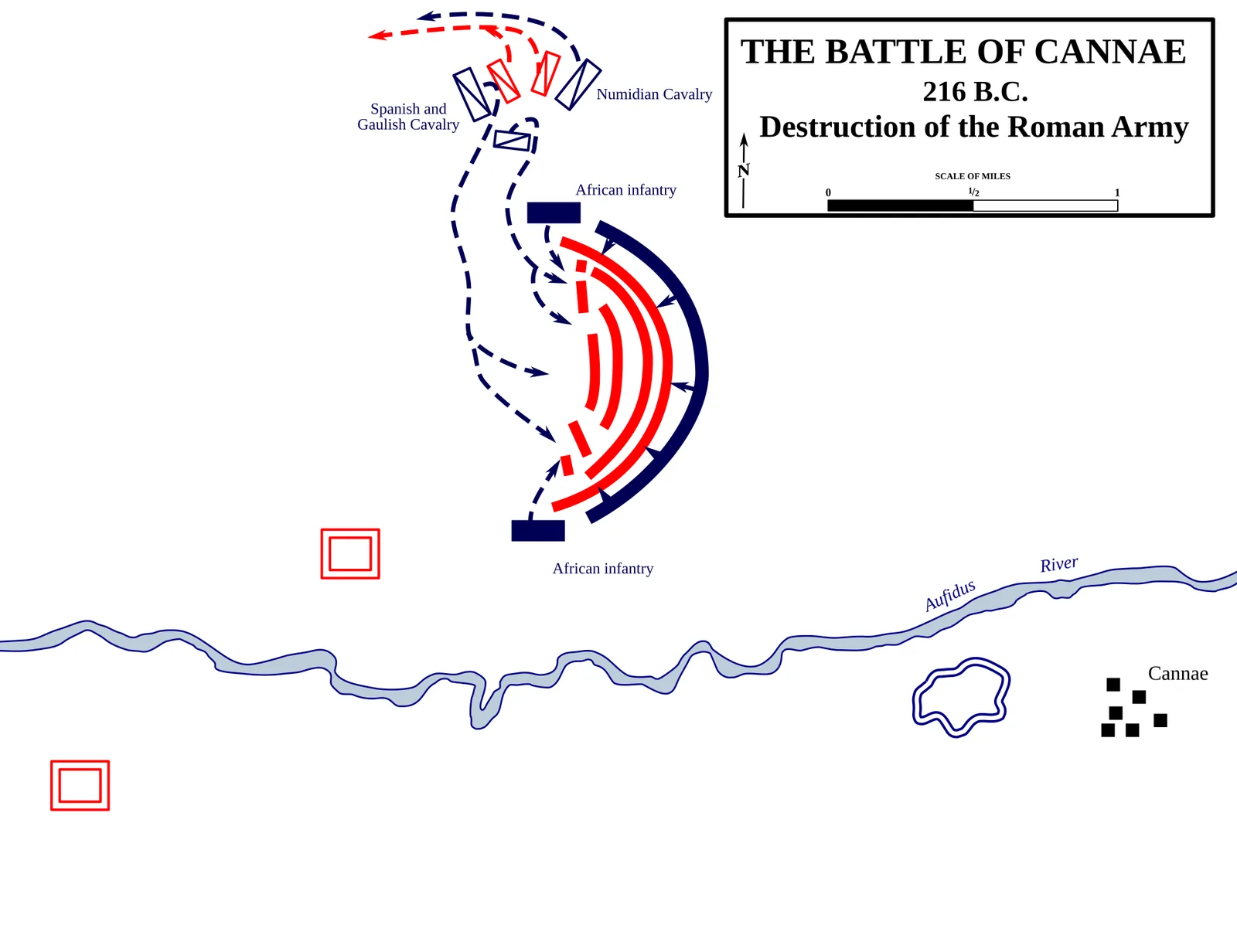
Wikimedia Commons · Public domain · file Hannibal led the Carthaginian army that encircled and nearly annihilated a larger Roman army at Cannae. The cited article dates the battle to 2 August 216 BC.
Second attempt on Nola
· Nola, Campania, Italy
Hannibal returned to Nola for a second attempt to seize the city, again meeting Roman resistance. The cited article dates the battle to August 215 BC.
Battle of the Silarus
· Silarus River (modern Sele River), Campania, Italy
Hannibal defeated a Roman force near the Silarus River in Lucania. The precise battlefield is uncertain; coordinates follow the representative point in the cited battle article.
Capture of Tarentum
· Tarentum (modern Taranto), Apulia, Italy
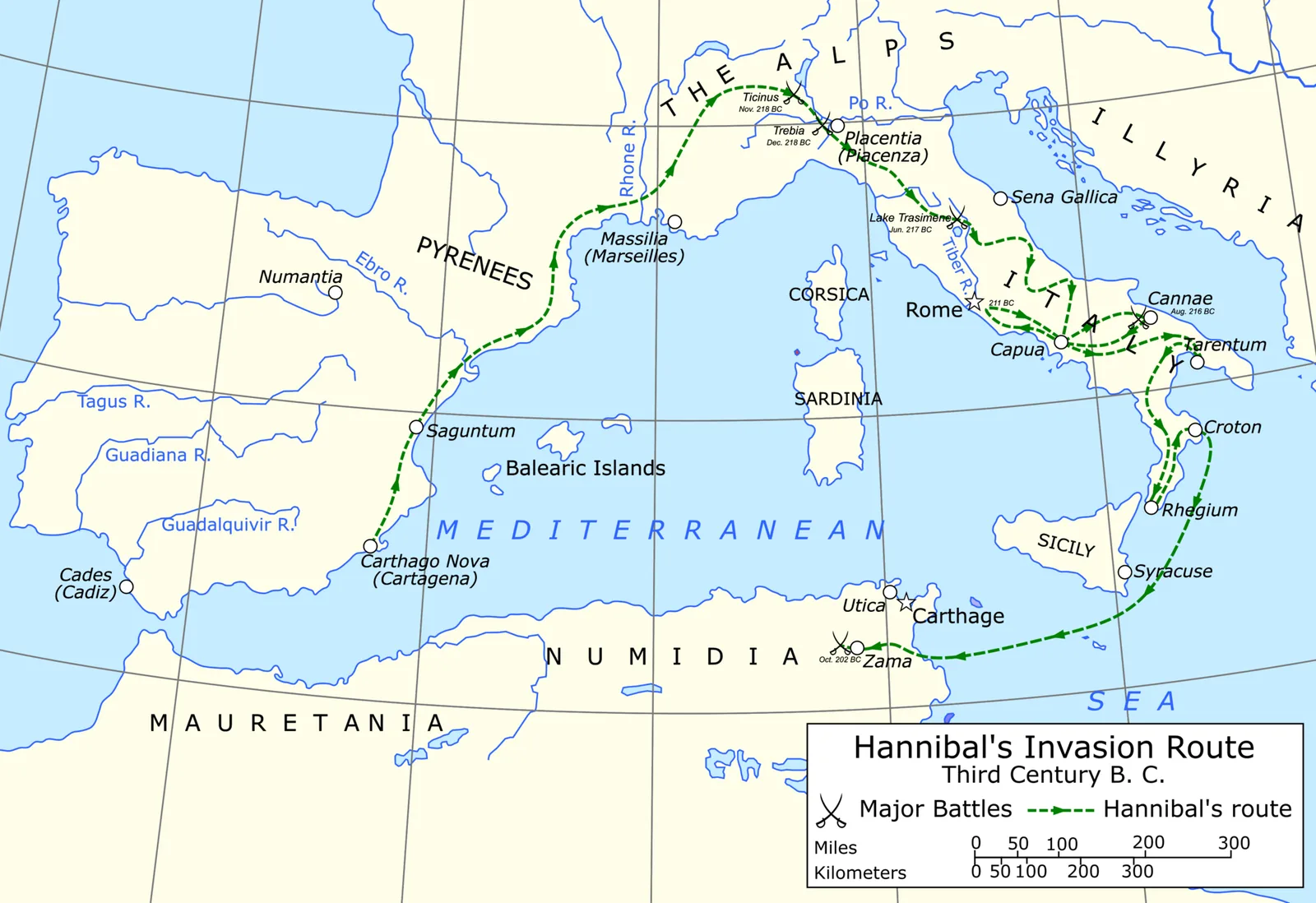
Wikimedia Commons · CC BY-SA 4.0 · file Hannibal captured Tarentum in a surprise attack, though he did not gain control of its harbor. The source supports March 212 BC; year precision is used.
First Battle of Herdonia
· Herdonia (modern Ordona), Apulia, Italy
Hannibal defeated a Roman army at Herdonia, temporarily freeing Apulia from Roman forces.
Assault at Capua
· Capua, Campania, Italy
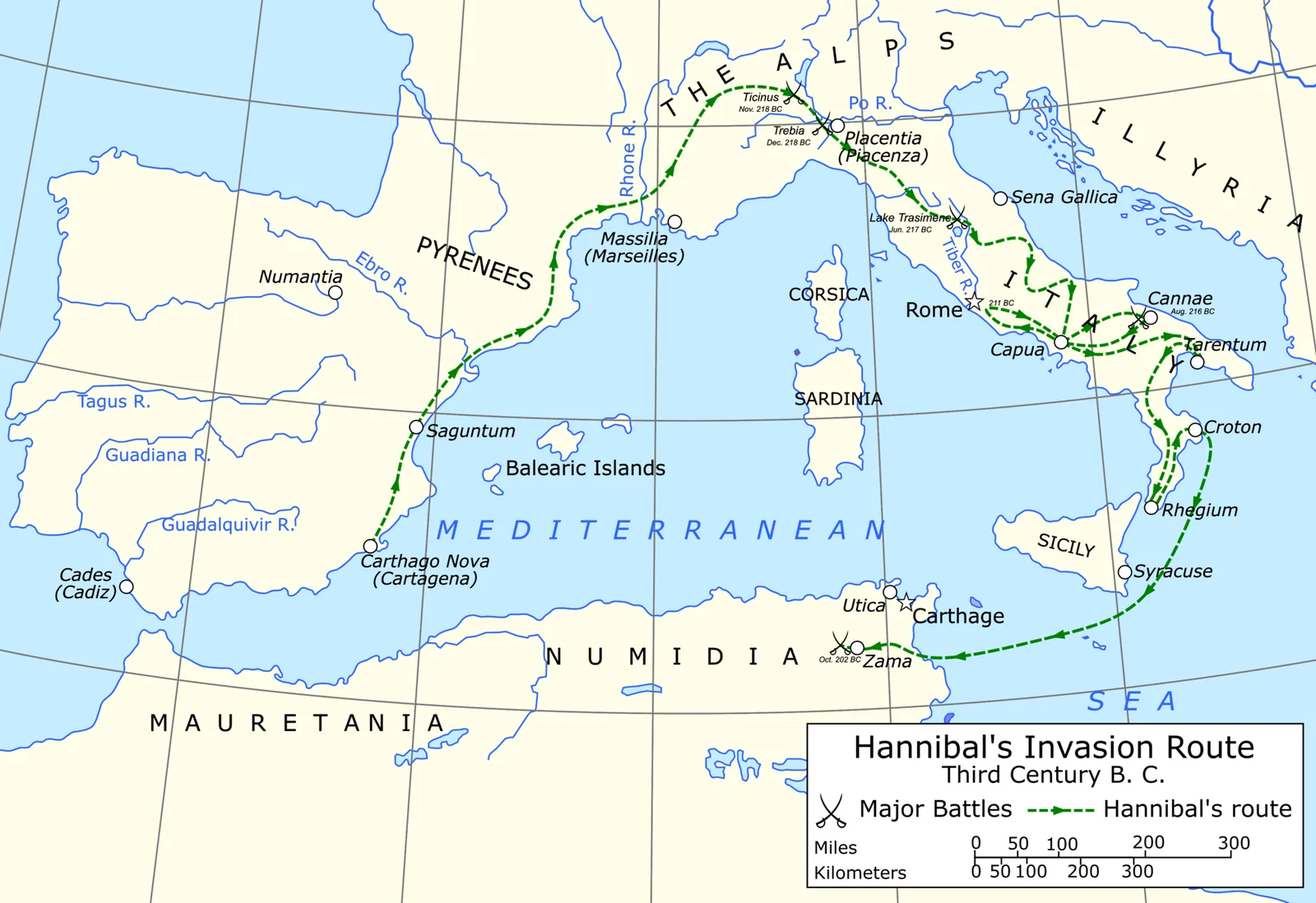
Wikimedia Commons · CC BY-SA 4.0 · file Hannibal attempted to break the Roman siege of Capua by attacking the Roman siege lines.
March on Rome
· Rome, Lazio, Italy
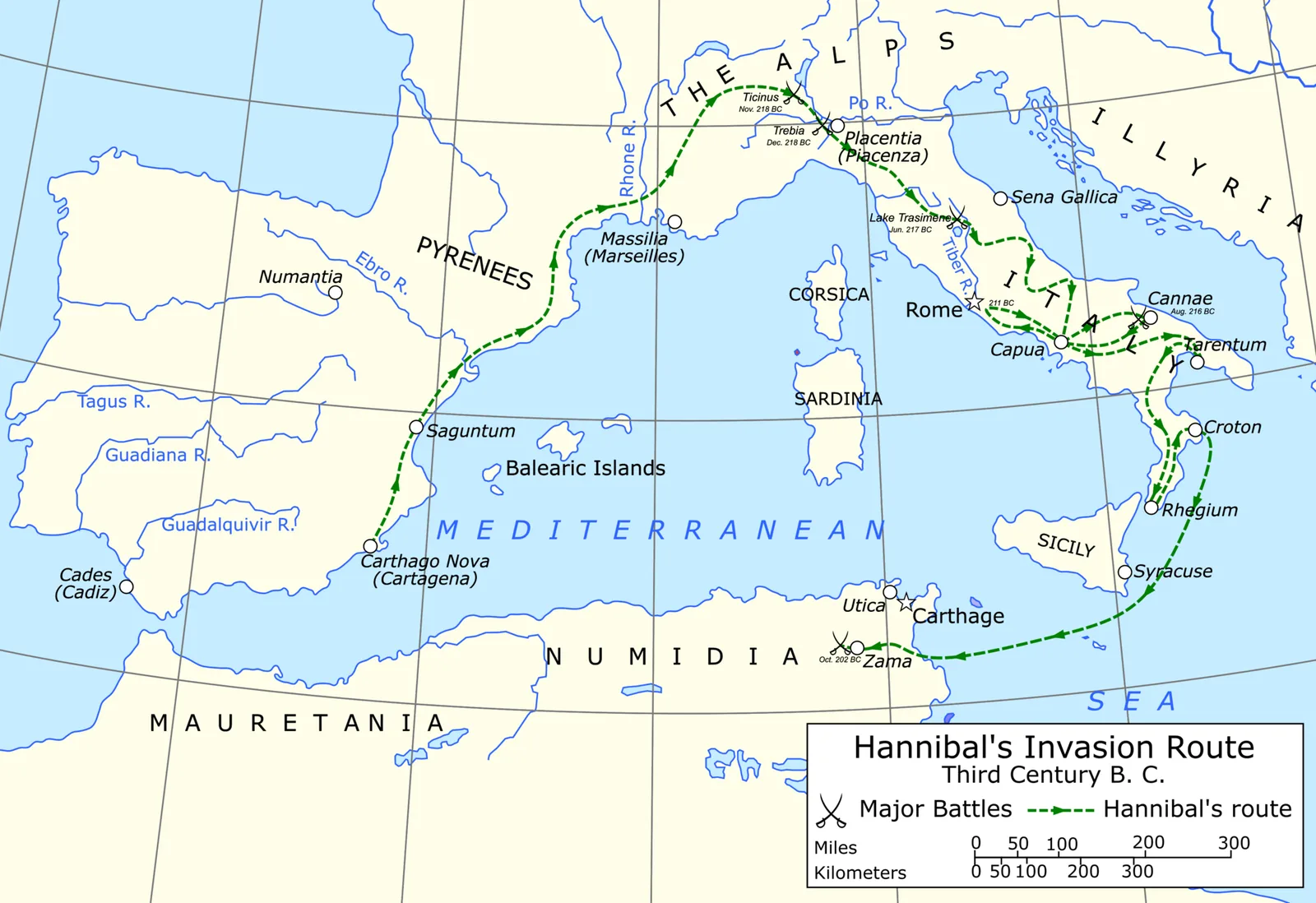
Wikimedia Commons · CC BY-SA 4.0 · file After the unsuccessful effort at Capua, Hannibal marched on Rome in an attempt to induce the Romans to recall their armies. The source gives the year but no more precise date.
Second Battle of Herdonia
· Herdonia (modern Ordona), Apulia, Italy
Hannibal inflicted another major defeat on a Roman proconsular army at Herdonia in Apulia.
Battle of Petelia
· Petelia (near modern Strongoli), Calabria, Italy
Hannibal ambushed and destroyed a Roman detachment near Petelia in Bruttium. Coordinate is a representative point for the ancient Petelia/Strongoli area.
Retreat to Calabria
· Calabria, Italy
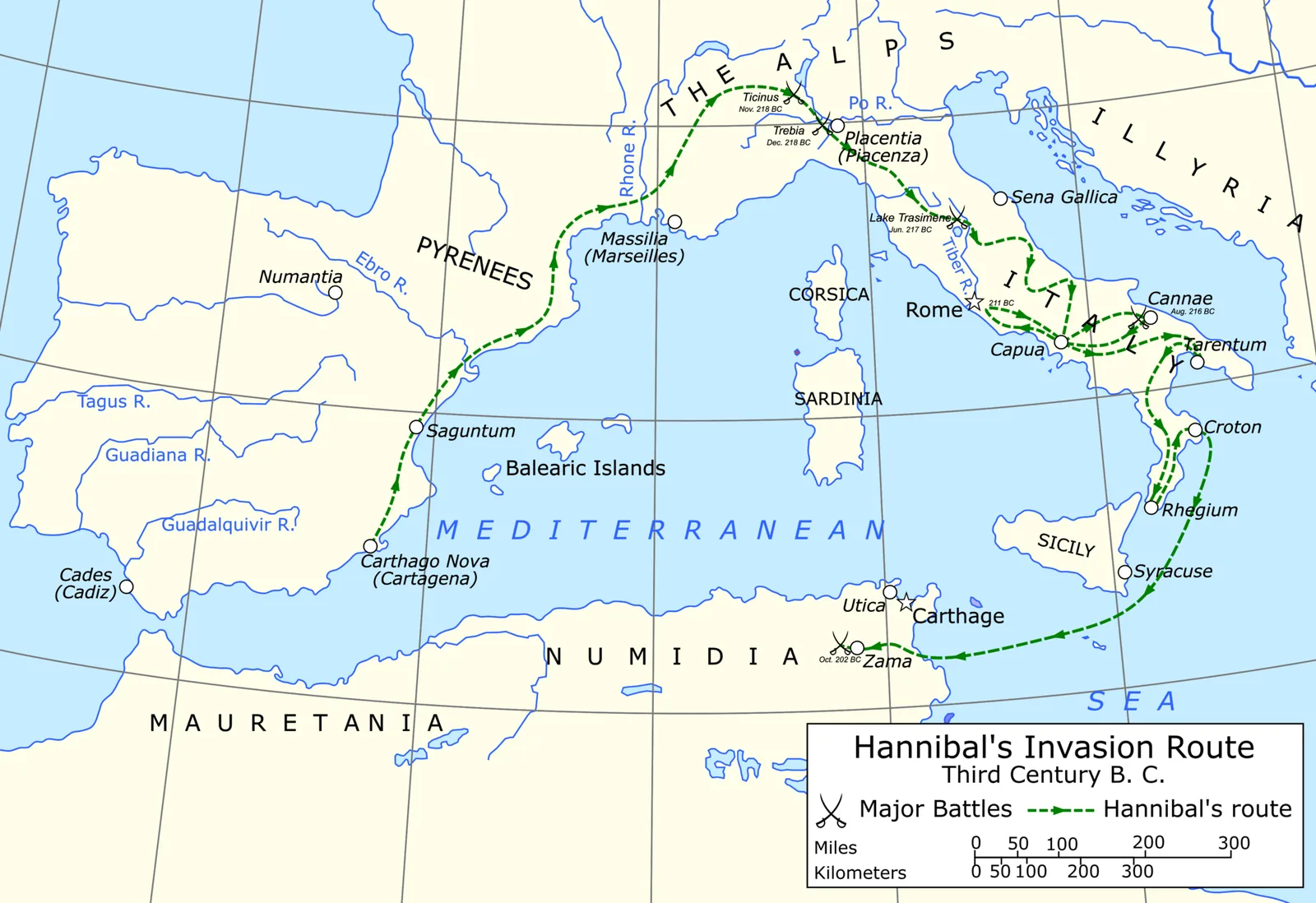
Wikimedia Commons · CC BY-SA 4.0 · file After learning of Hasdrubal's defeat and death, Hannibal retired to Calabria and maintained his position there for subsequent years. Coordinate is a representative point for Calabria.
Departure from Crotona
· Temple of Juno Lacinia, Crotona, Calabria, Italy
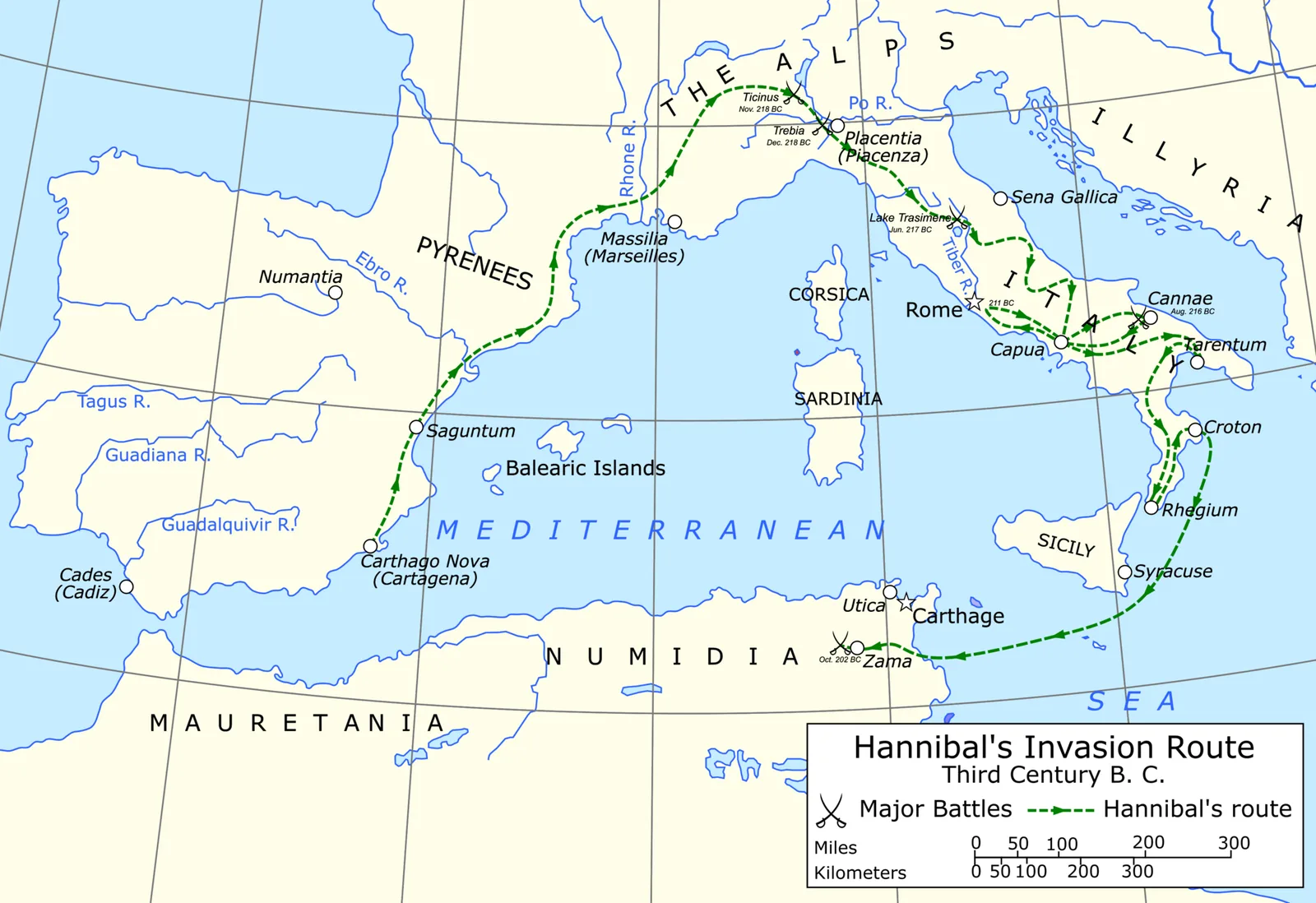
Wikimedia Commons · CC BY-SA 4.0 · file At the end of his Italian campaign, Hannibal left an inscribed record at the Temple of Juno Lacinia near Crotona before sailing to Africa. The temple's exact ancient location is uncertain; coordinate represents the Capo Colonna archaeological area near Crotona.
Return to Carthage
· Carthage, Tunisia
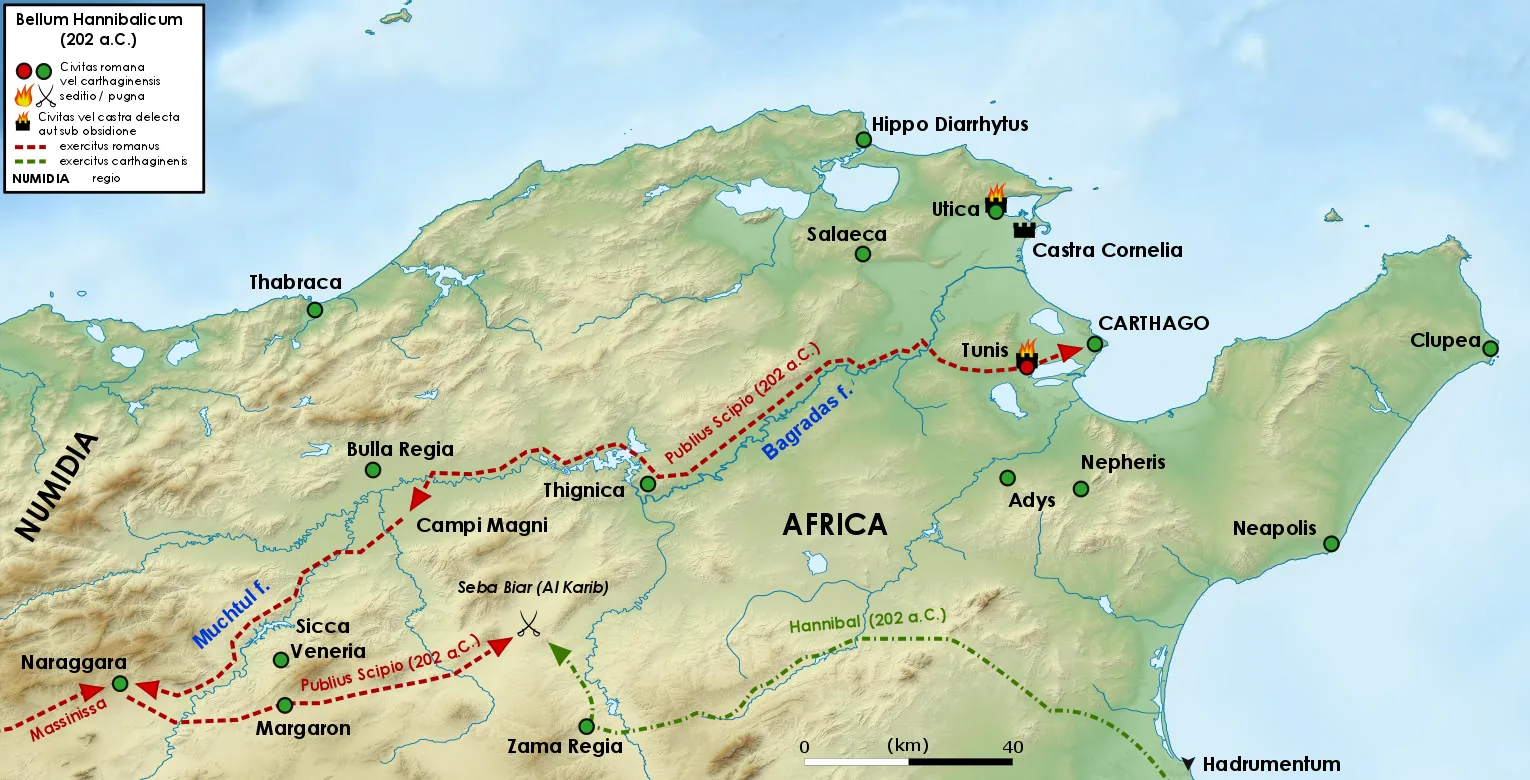
Wikimedia Commons · CC BY 3.0 · file Recalled from Italy, Hannibal returned to Carthage and assumed command in defense against Scipio's invasion.
Battle of Zama
· Zama, near Siliana, Tunisia
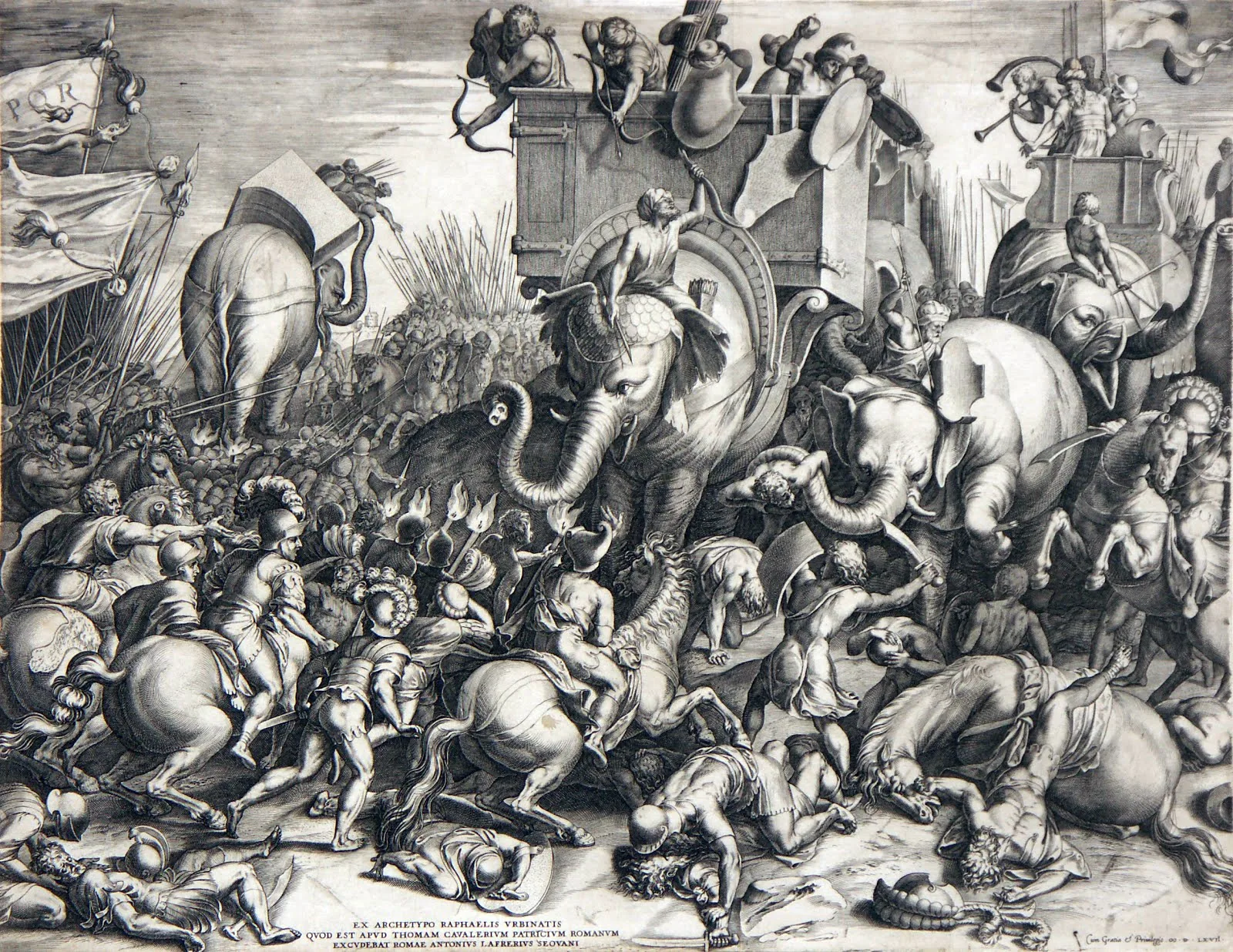
Wikimedia Commons · Public domain · file Hannibal commanded the Carthaginian army in the battle that ended the Second Punic War in Roman victory. The battle location is conventionally placed near modern Siliana; coordinates follow the cited article.
Arrival at Ephesus
· Ephesus, İzmir Province, Turkey
Hannibal reached Ephesus and was received by Antiochus III at the Seleucid court. The source places this journey after 195 BC; 195 BC is used as a conventional chronological anchor.
Visit to Antioch
· Antioch (modern Antakya), Hatay, Turkey
During his exile, Hannibal traveled from Tyre to Antioch before continuing to Ephesus. The source places this journey after 195 BC; 195 BC is used as a conventional chronological anchor.
Visit to Tyre
· Tyre, Lebanon
Hannibal's first recorded stop after leaving Carthage was Tyre, Carthage's Phoenician mother city. The source places this journey after 195 BC; 195 BC is used as a conventional chronological anchor.
Voluntary exile from Carthage
· Carthage, Tunisia
Facing demands that Carthage surrender him, Hannibal fled into voluntary exile. The source places the exile after 195 BC; 195 BC is used as a conventional chronological anchor.
Hospitality at the Armenian royal court
· Royal court of Artaxias I, Greater Armenia
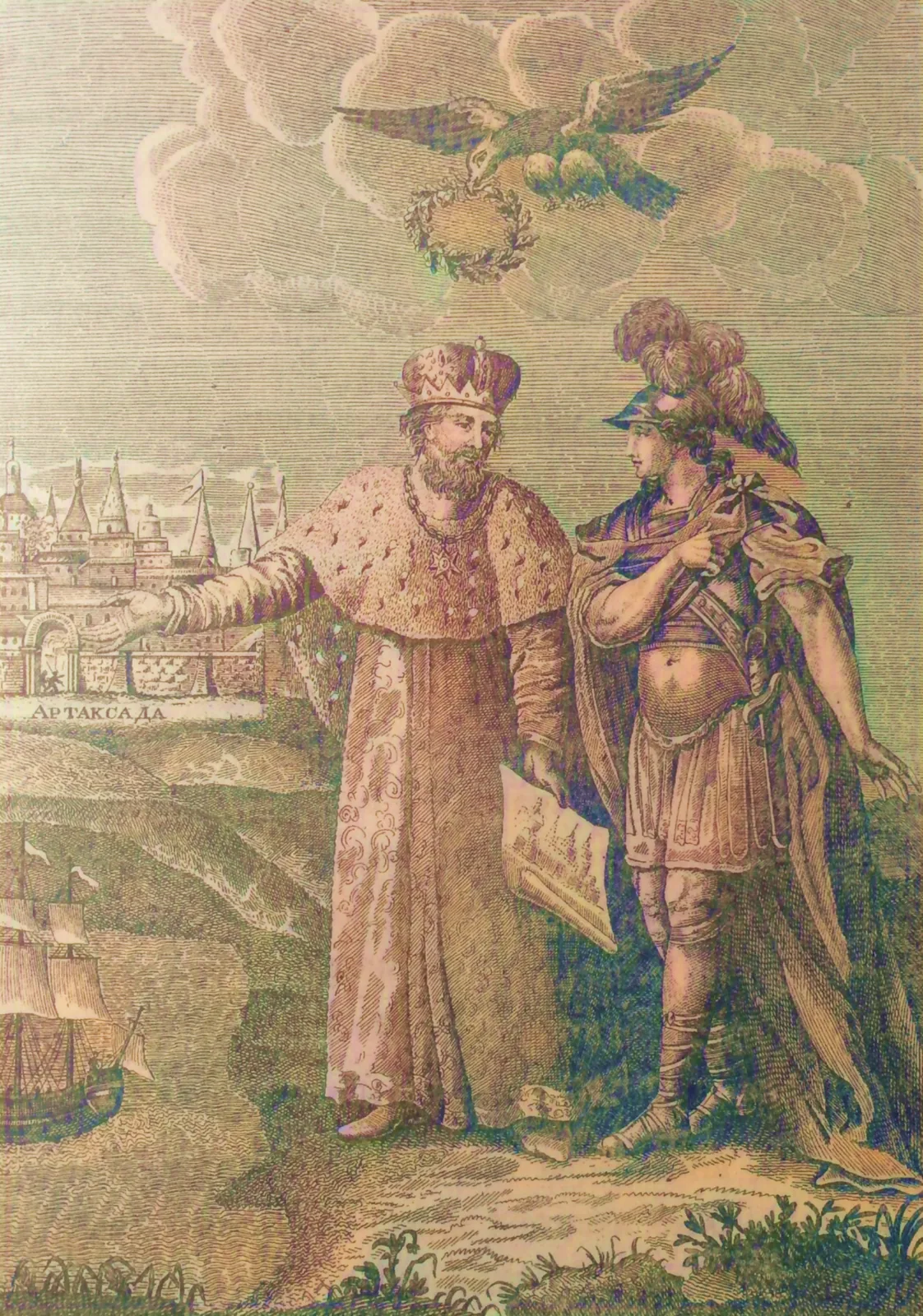
Wikimedia Commons · Public domain · file Following the Seleucid defeat, ancient authors place Hannibal at the royal court of Artaxias I in Greater Armenia. The cited text does not identify the court's precise site; coordinate is a representative point near Artaxata. The placement after the January 189 BC truce is chronologically approximate.
Refuge in Bithynia
· Kingdom of Bithynia, Anatolia
After fleeing the Seleucid sphere, Hannibal sought refuge with King Prusias I of Bithynia. The source does not securely date the arrival in Bithynia or specify a town; coordinate is a representative point near Nicomedia/İzmit.
Death at Libyssa
· Libyssa (near modern Gebze), Kocaeli, Turkey
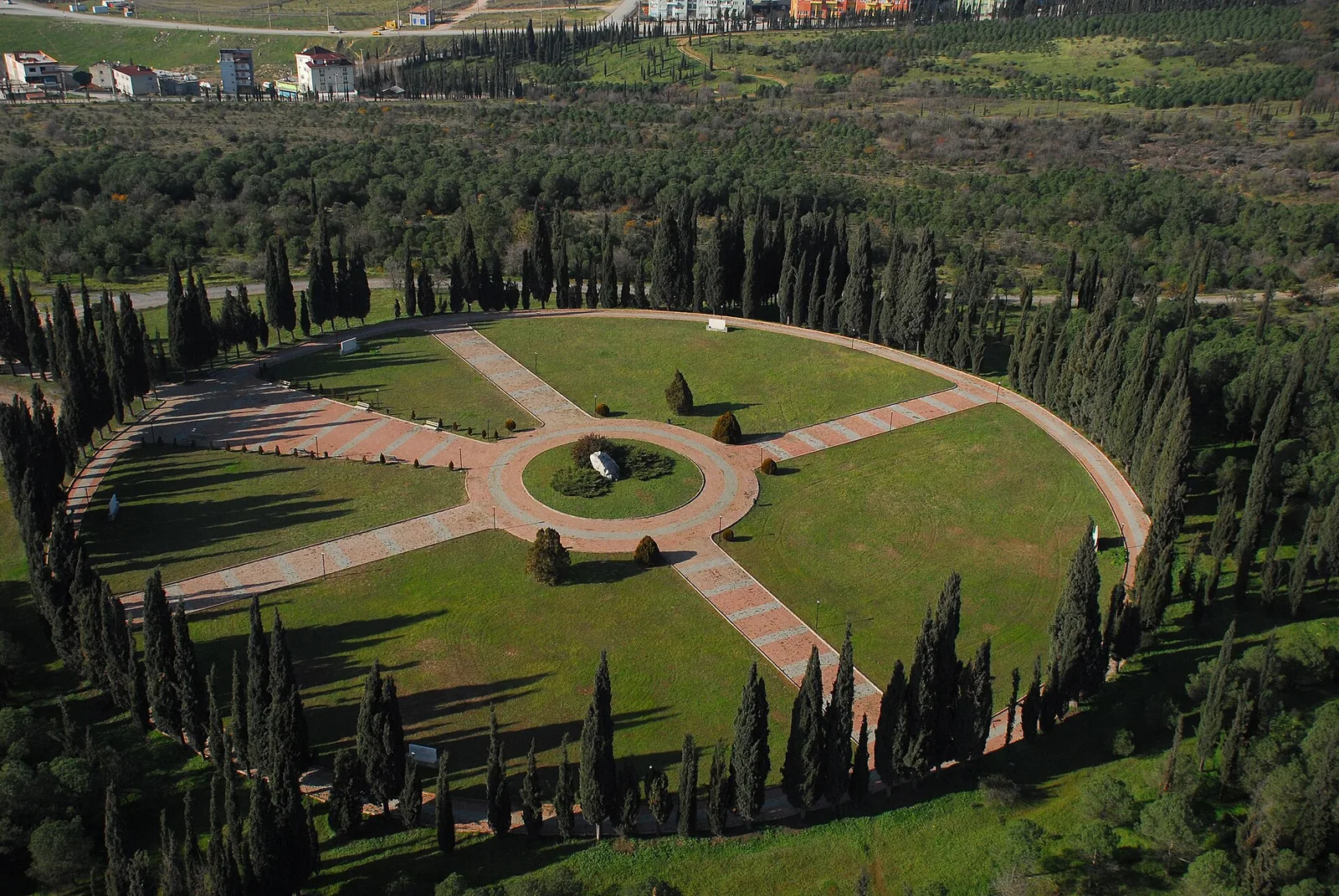
Wikimedia Commons · CC BY-SA 4.0 · file Hannibal died after Roman pressure on Prusias; accounts report that he took poison while trapped in the castle where he lived. His tomb was recorded at Libyssa. Ancient evidence gives conflicting death years: 183, 182, or 181 BC. Libyssa's exact location is uncertain; coordinate represents the Gebze area.