
19 moments
Birth at Himmelpfortgrund
· Schubert Geburtshaus, Nußdorfer Straße 54, Alsergrund, Vienna, Austria
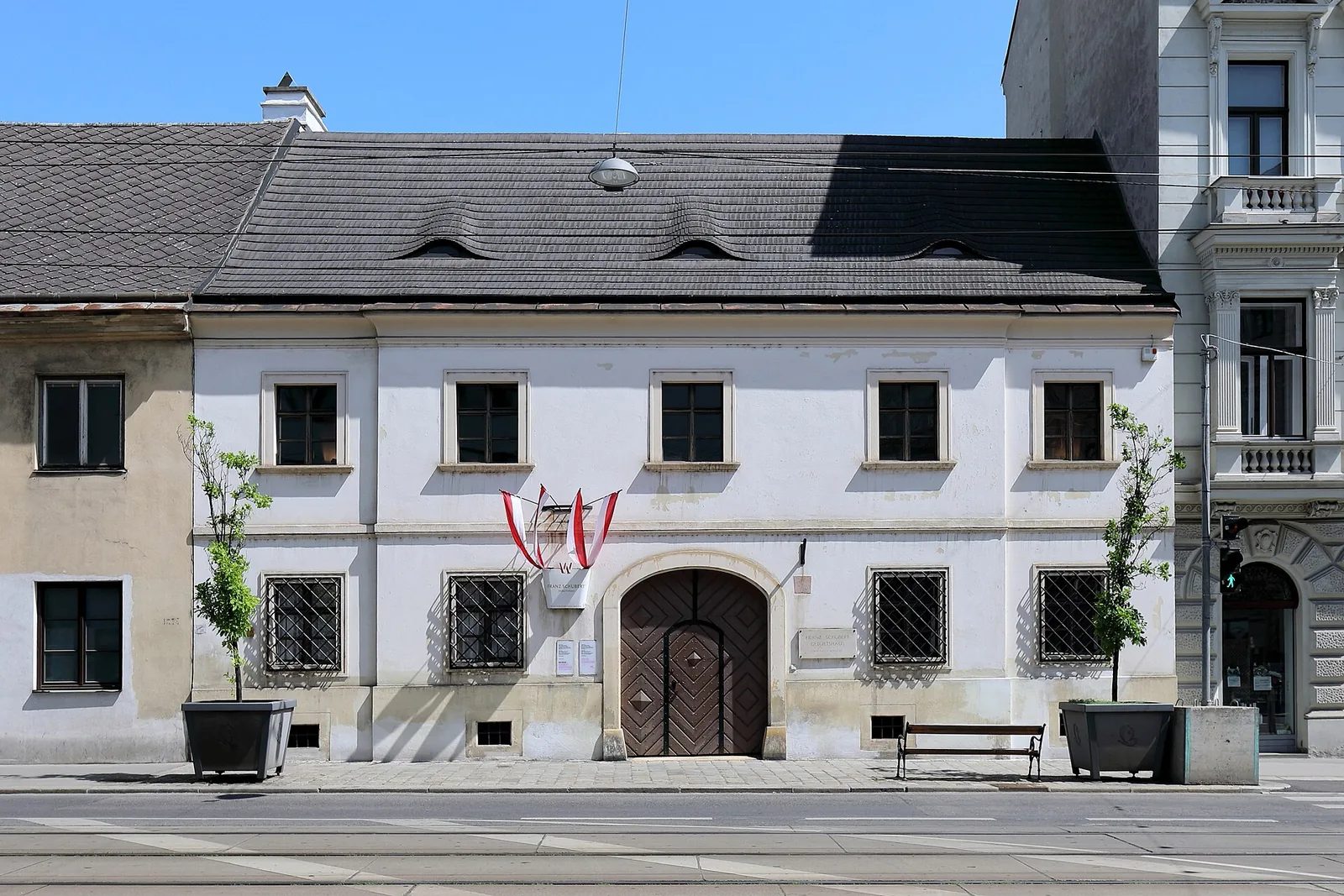
Wikimedia Commons · CC BY-SA 4.0 · file Franz Peter Schubert was born in Himmelpfortgrund, then a Vienna suburb. The birthplace is now known as the Schubert Geburtshaus.
Pupil at his father's school
· Lichtental, Alsergrund, Vienna, Austria
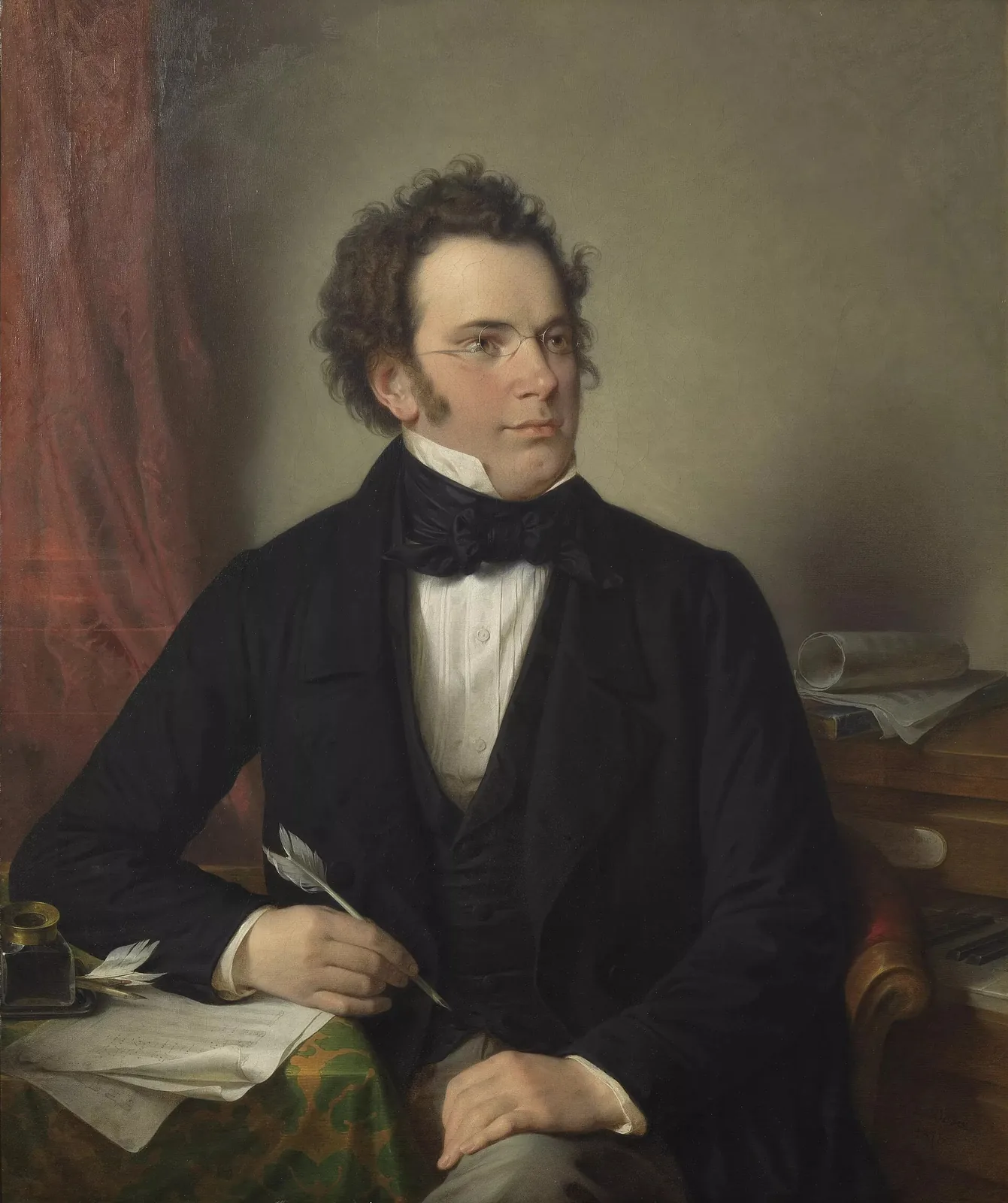
Wikimedia Commons · Public domain · file At about age five, Schubert began regular instruction from his father and was enrolled at his father’s school in Lichtental. The year is derived from his 31 January 1797 birth date and the source's statement that he was five.
Entrance to the Stadtkonvikt
· Stadtkonvikt, Dr.-Ignaz-Seipel-Platz 1, Vienna, Austria
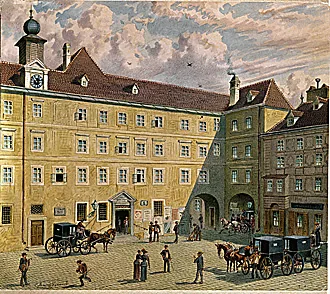
Wikimedia Commons · Public domain · file Schubert entered Vienna’s Imperial Seminary on a choir scholarship, beginning the institutional education that exposed him to major orchestral repertoire. The present-day address marks the former Stadtkonvikt site.
Teacher training at St Anna
· St Anna Normalhauptschule, Annagasse 3, Vienna, Austria
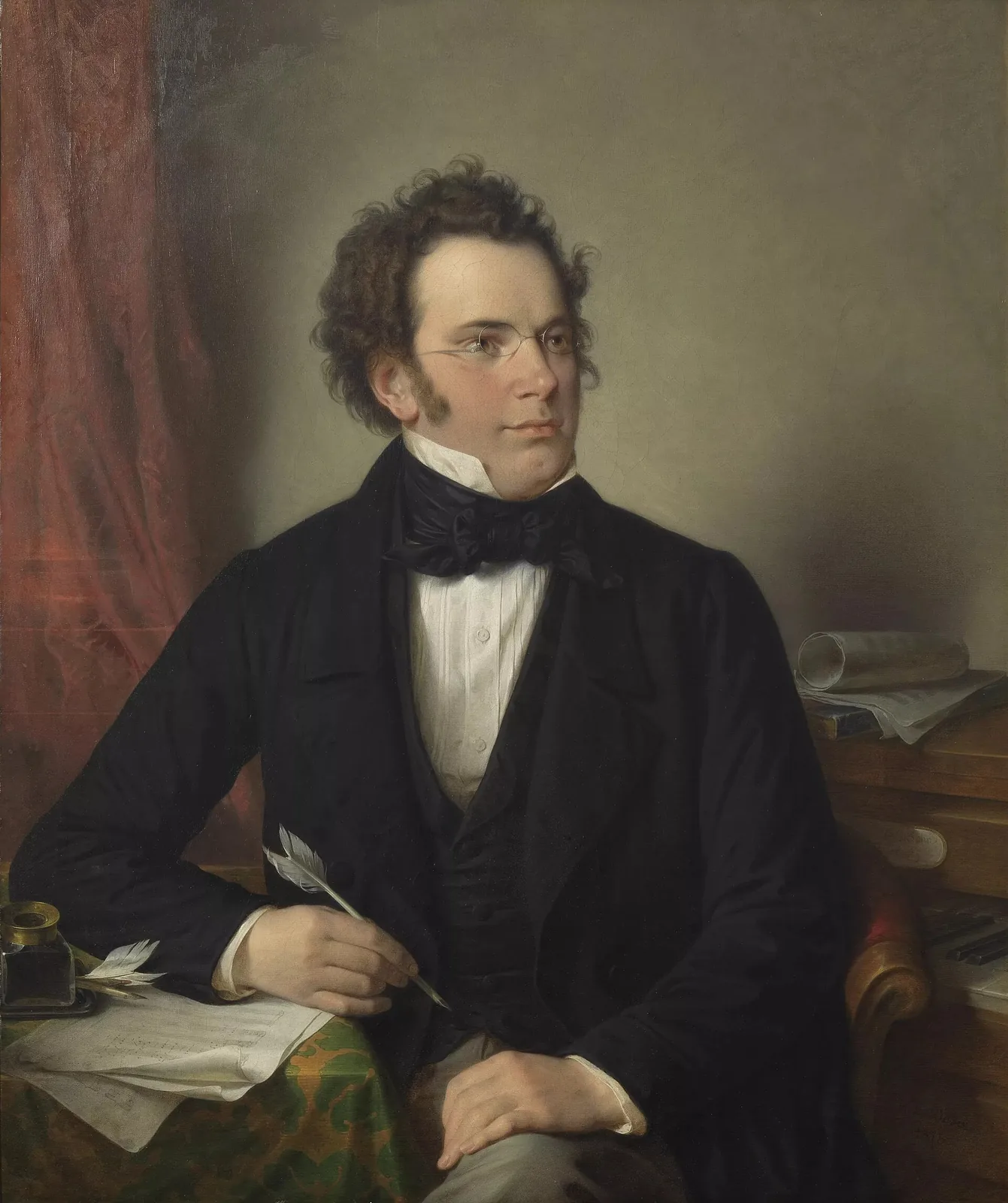
Wikimedia Commons · Public domain · file After leaving the Stadtkonvikt, Schubert returned home and began teacher training at the St Anna Normalhauptschule. Coordinates represent the historic St Anna school site.
Teaching at his father's Lichtental school
· Lichtental, Alsergrund, Vienna, Austria
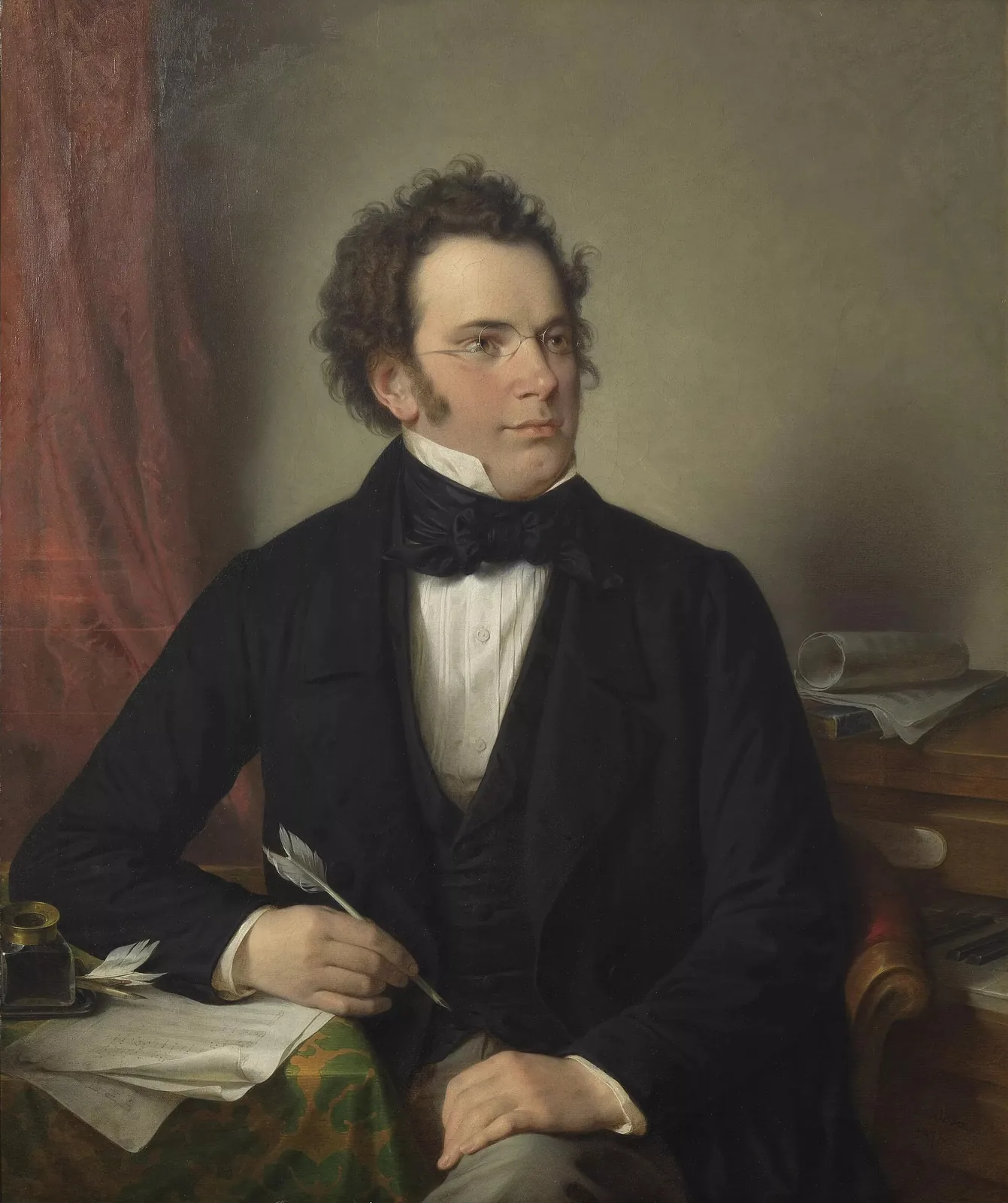
Wikimedia Commons · Public domain · file Schubert entered his father’s school as teacher of the youngest pupils while continuing composition studies with Antonio Salieri. The source identifies the school as his father's; the coordinate represents Lichtental.
Guest in Schober's lodgings
· Vienna, Austria
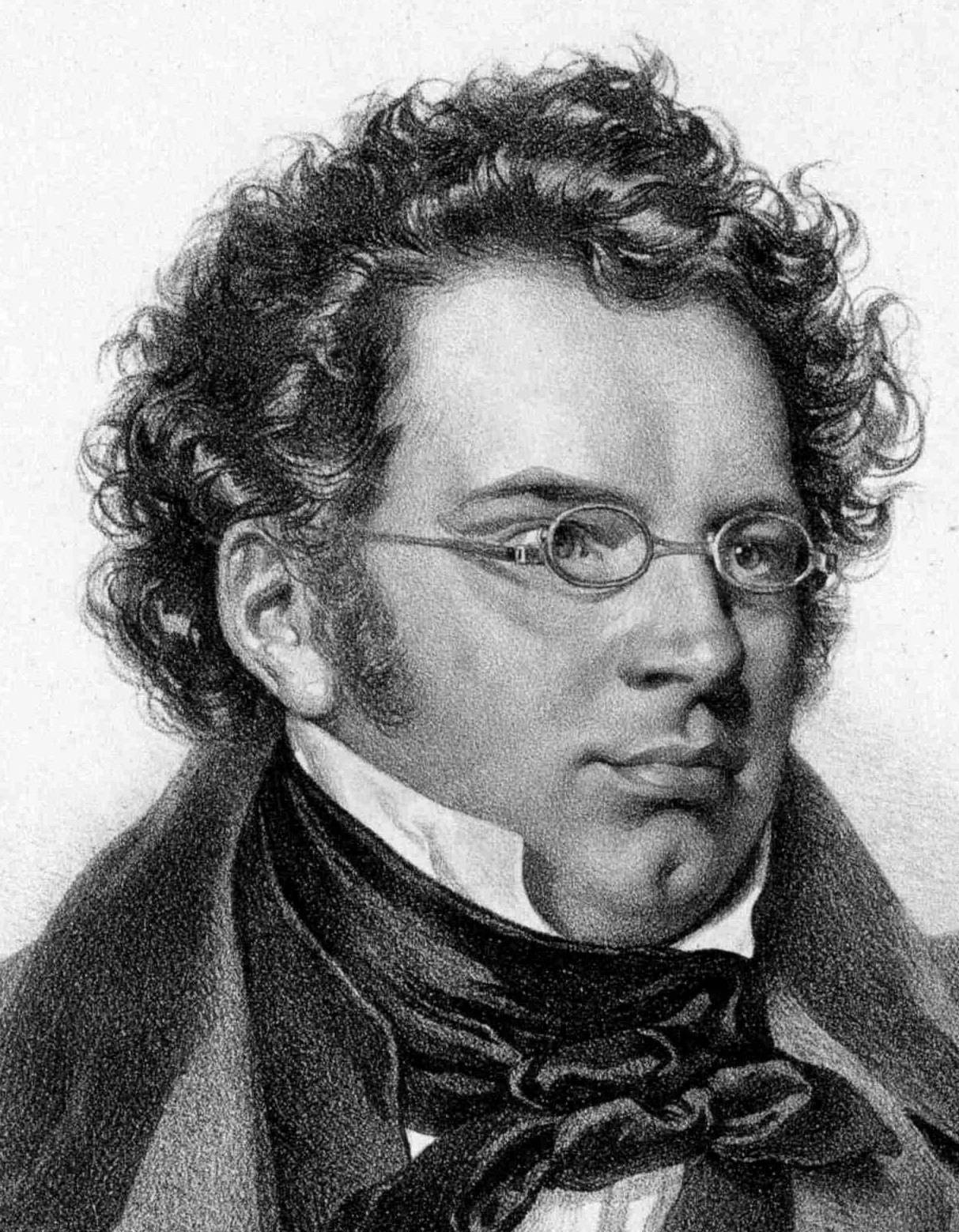
Wikimedia Commons · Public domain · file By the end of 1816, Schubert had become a guest in the lodgings of his friend Franz von Schober, a turning point away from school teaching toward full-time composition. The cited passage does not specify the lodgings' address; coordinates represent central Vienna.
Visit to Spaun in Landstraße
· Landstraße, Vienna, Austria
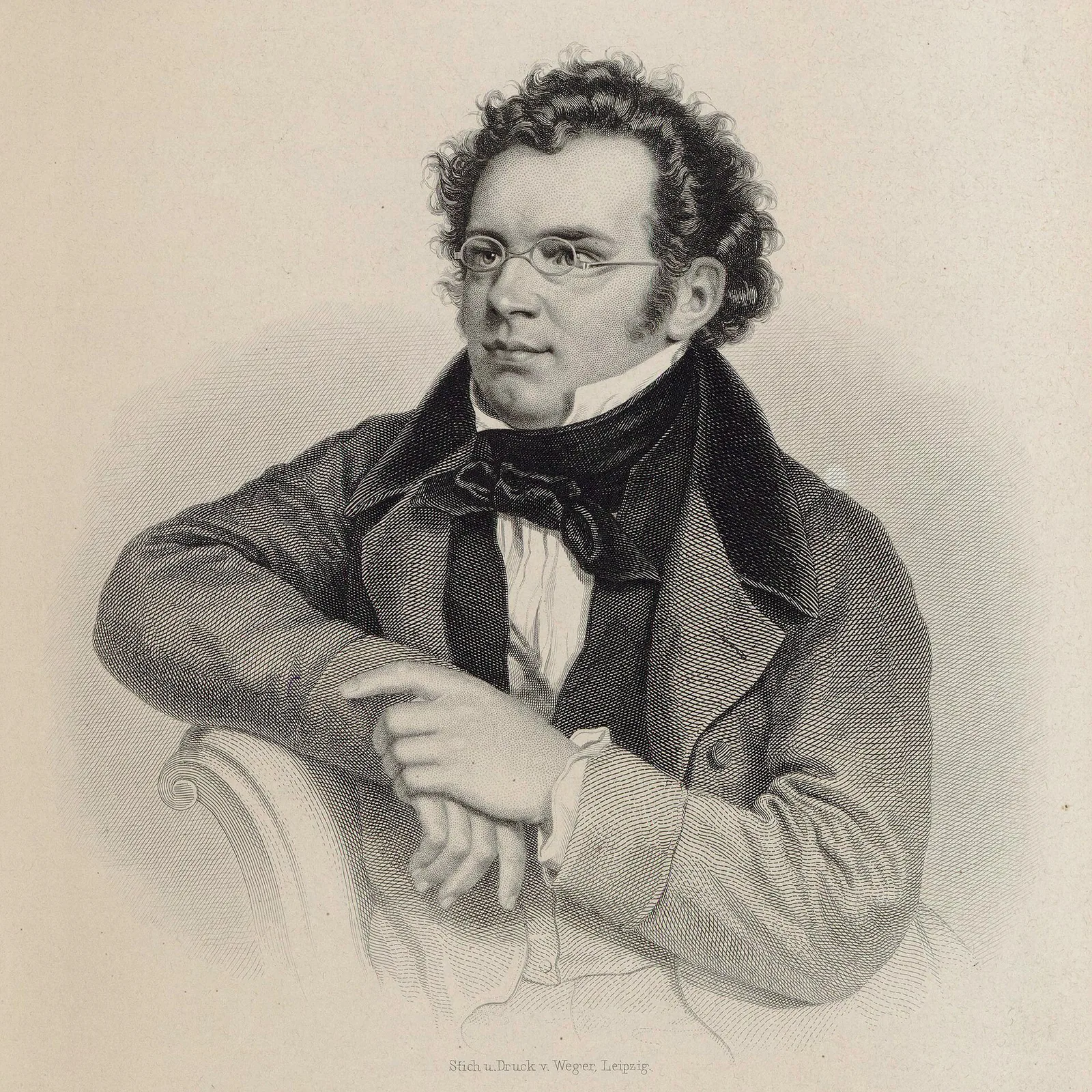
Wikimedia Commons · Public domain · file Schubert spent several days with his friend Joseph von Spaun after Spaun moved to the Landstraße suburb; the visit was probably Schubert’s first away from home or school. Coordinates represent the Landstraße district because the new-home address is not supplied.
Teaching in Rossau
· Rossau, Alsergrund, Vienna, Austria
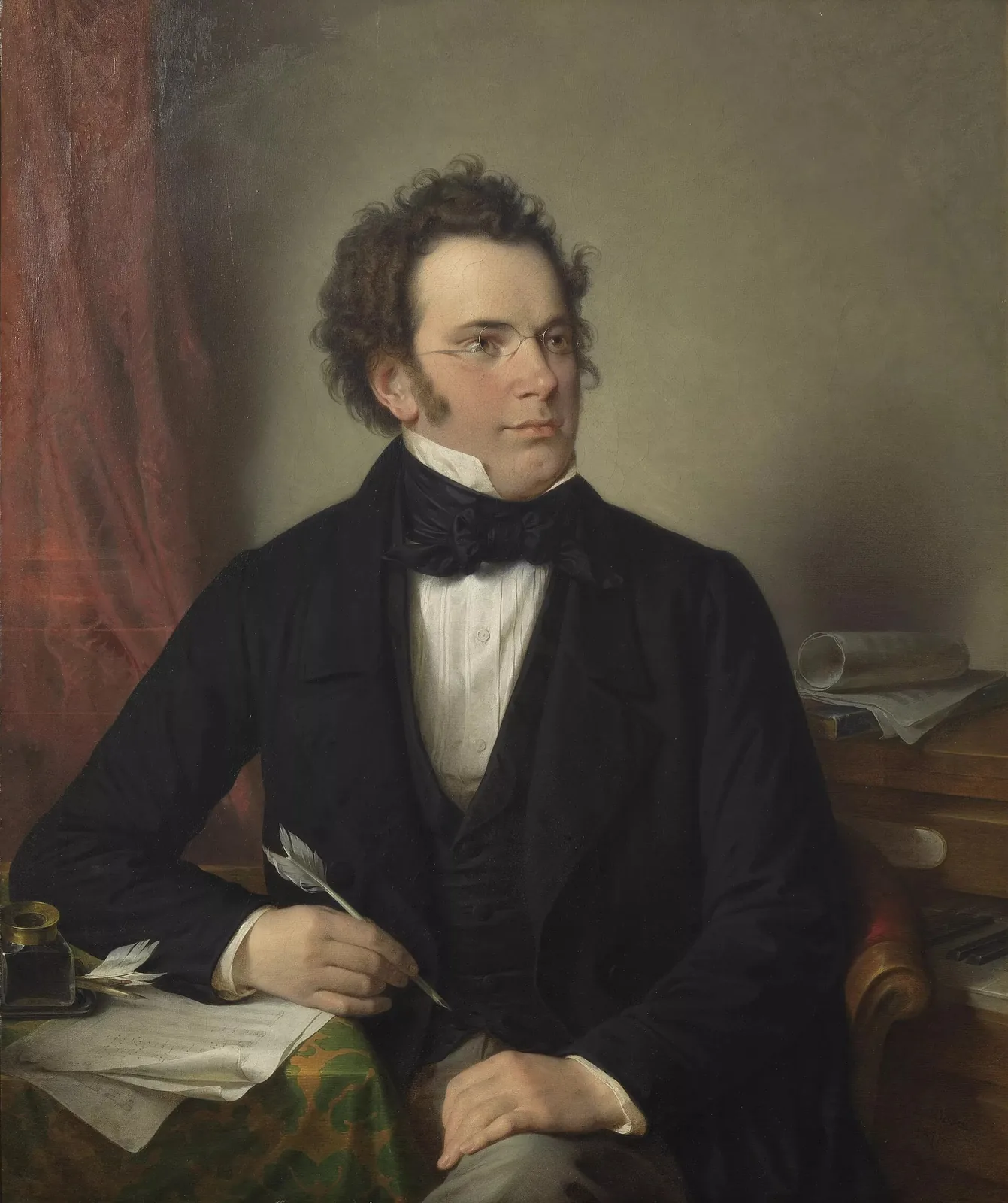
Wikimedia Commons · Public domain · file After his father received a new post at a Rossau school in late 1817, Schubert rejoined him there and resumed teaching duties. Coordinates represent the Rossau neighborhood; the school building is not identified in the cited passage.
Music tutor at Esterházy château
· Esterházy Château, Želiezovce, Slovakia
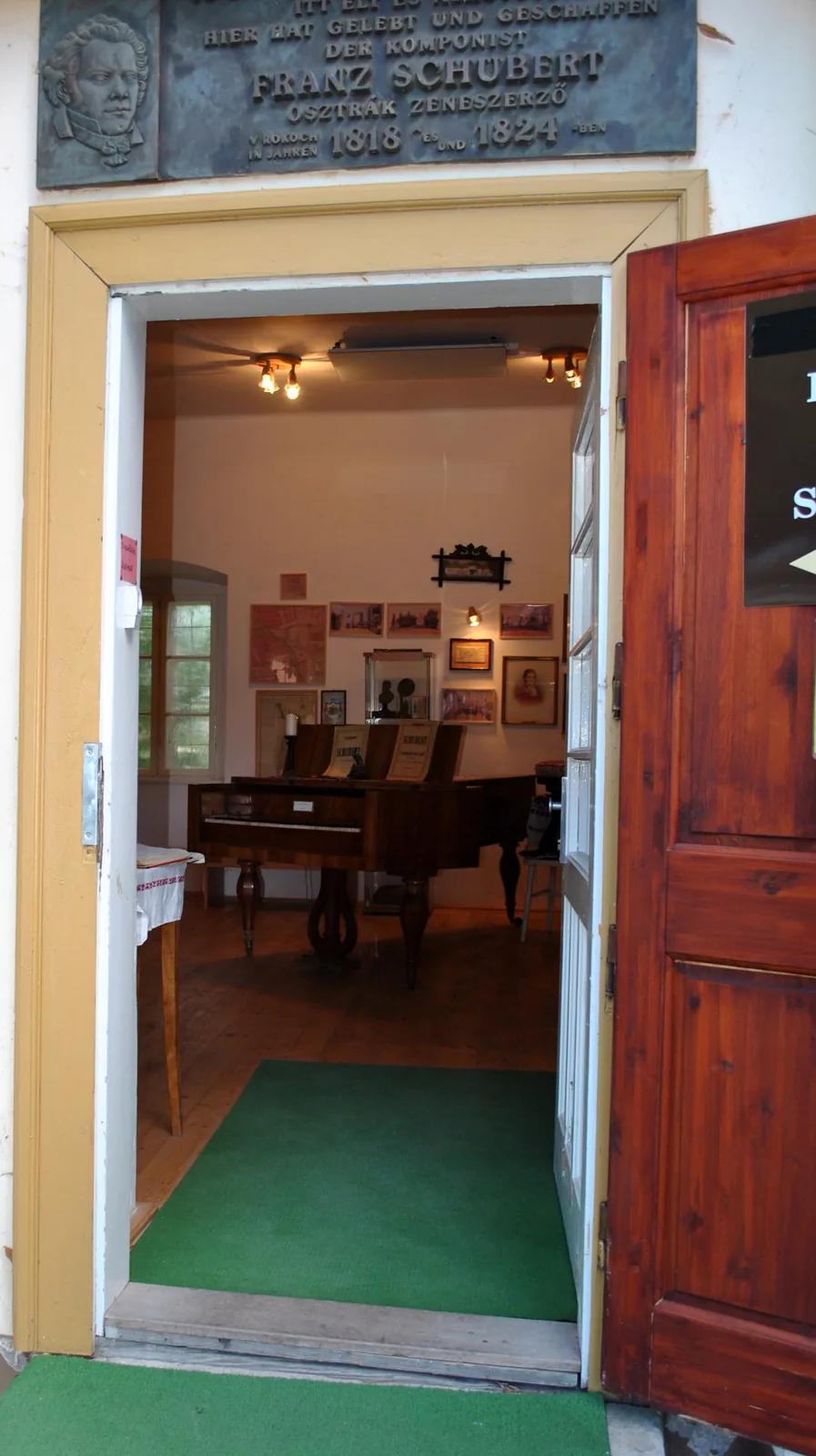
Wikimedia Commons · CC BY-SA 4.0 · file Schubert spent the summer as music teacher to Count Johann Karl Esterházy’s family, teaching piano and singing to the count’s daughters at Zselíz. The source supports a summer stay but not a more precise arrival date.
Second Zselíz stay
· Esterházy Château, Želiezovce, Slovakia
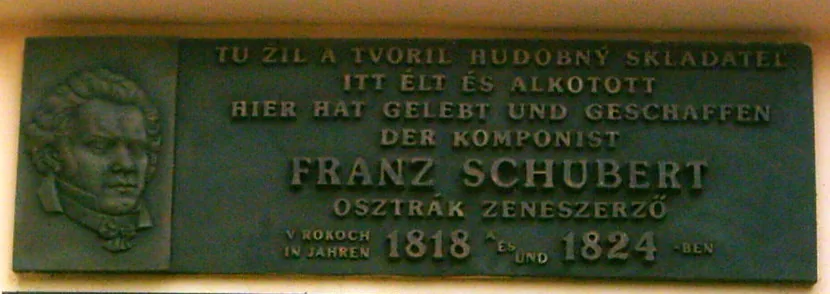
Wikimedia Commons · Public domain · file Schubert returned to Zselíz in the summer of 1824, where he wrote works including the Divertissement à la hongroise and the A-minor Rosamunde Quartet. The source gives only the season for this visit.
Six-week stay in Gmunden
· Gmunden, Upper Austria, Austria
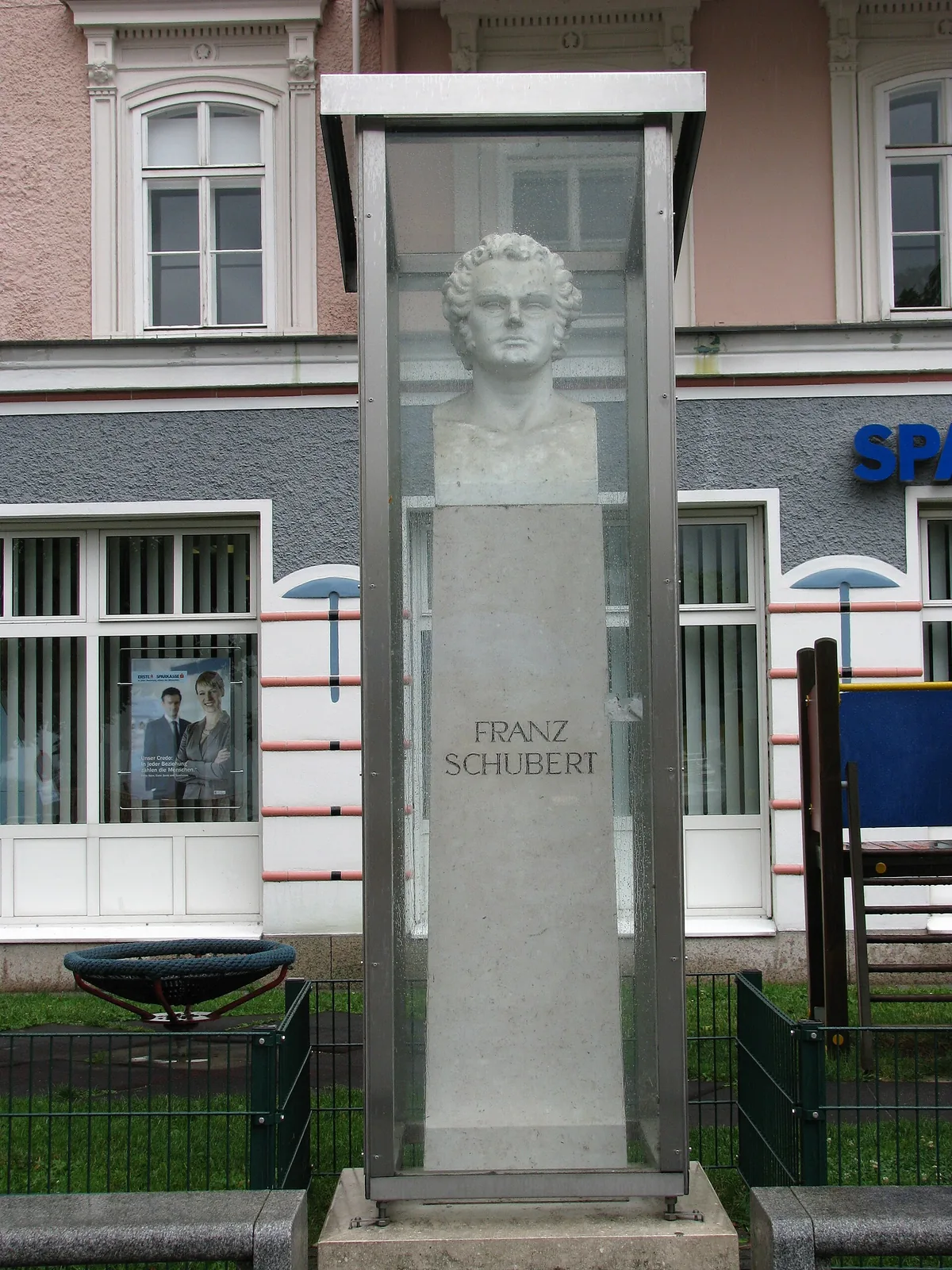
Wikimedia Commons · CC BY-SA 3.0 AT · file Schubert’s July 1825 letter records that he had spent six weeks in Gmunden during his Upper Austria journey. The letter establishes a six-week stay but does not provide the exact dates of the Gmunden interval.
Return to Steyr during Upper Austria tour
· Steyr, Upper Austria, Austria
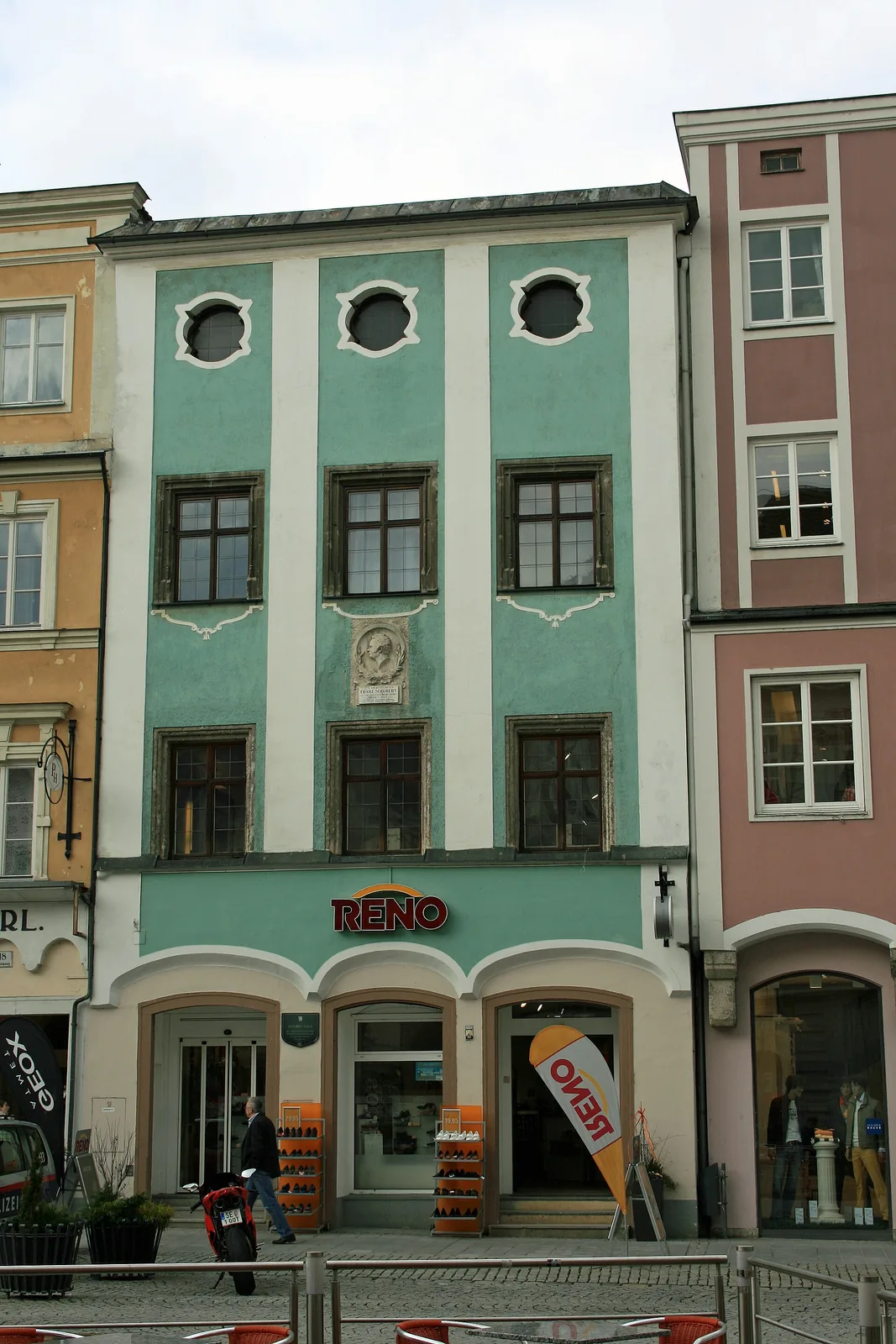
Wikimedia Commons · CC BY-SA 3.0 · file During his extended 1825 Upper Austria journey with Johann Michael Vogl, Schubert wrote from Steyr that he had returned there after six weeks in Gmunden. The quoted words are from Schubert's letter dated at Steyr in July 1825; the source presents the letter date as 25 July 1825, with a parenthetical uncertainty concerning the day.
Composition dated at Gastein
· Bad Gastein, Salzburg, Austria
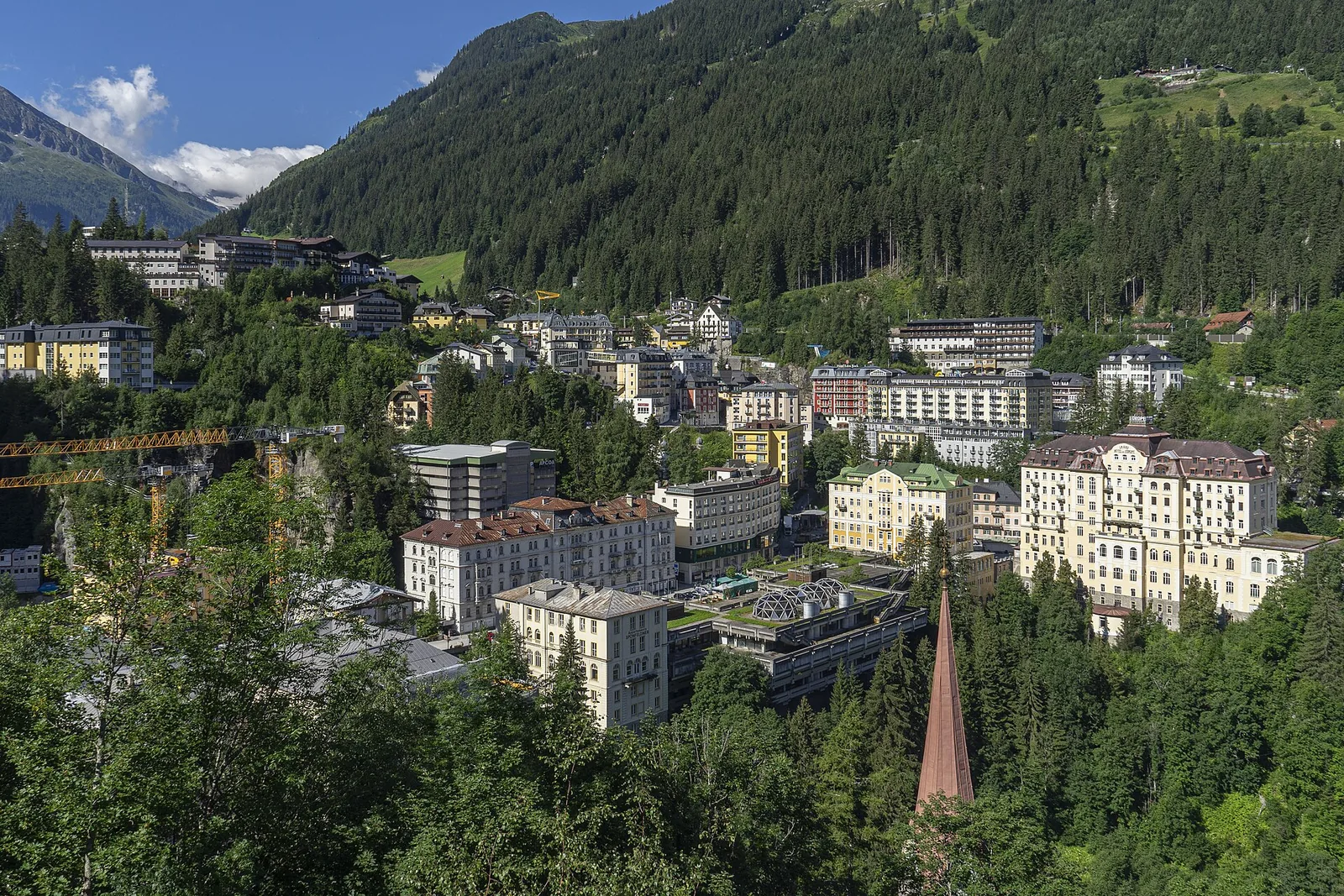
Wikimedia Commons · CC BY-SA 4.0 · file An autograph manuscript of Das Heimweh is catalogued as dated at Gastein in August 1825, documenting Schubert’s stay in the spa town during his 1825 journey. The location and month are supplied in the catalogue record for Schubert's autograph manuscript.
Continuous Vienna residence
· Vienna, Austria
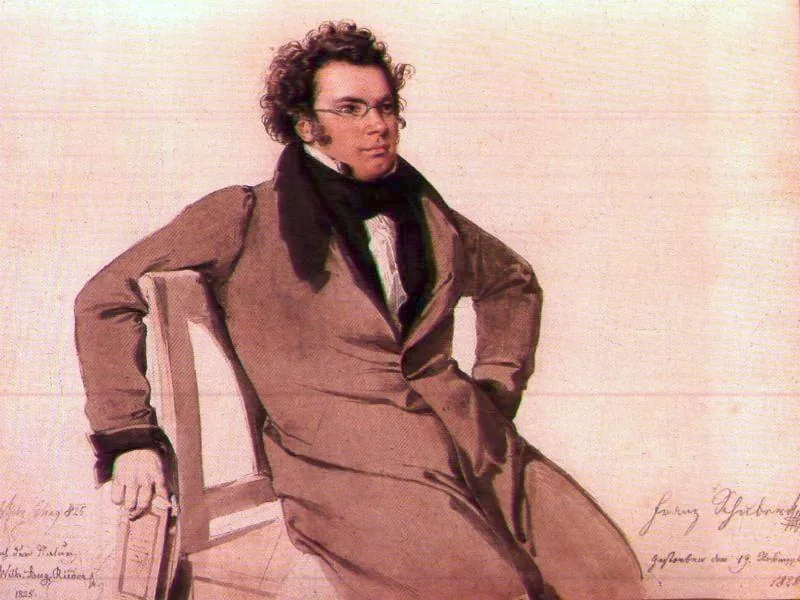
Wikimedia Commons · Public domain · file Schubert’s final years were centered in Vienna, interrupted only by a brief documented trip to Graz in 1827. This card marks the beginning of the cited continuous-residence period; it overlaps the separately recorded Graz exception.
Brief visit to Graz
· Graz, Styria, Austria
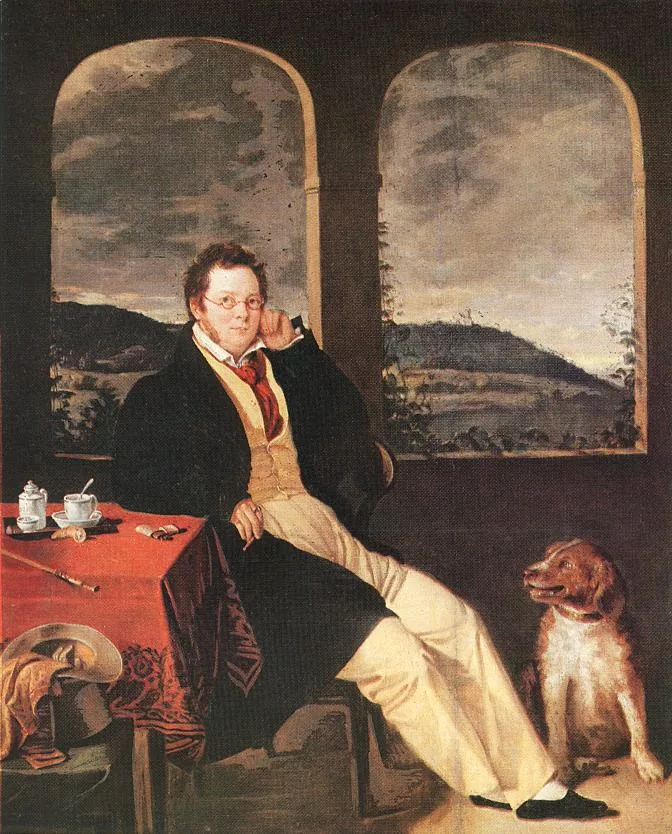
Wikimedia Commons · Public domain · file Graz was Schubert’s only stated exception to his otherwise continuous Vienna residence from 1826 through 1828. The source establishes only the year and that the visit was brief.
Torchbearer at Beethoven's funeral
· Vienna, Austria
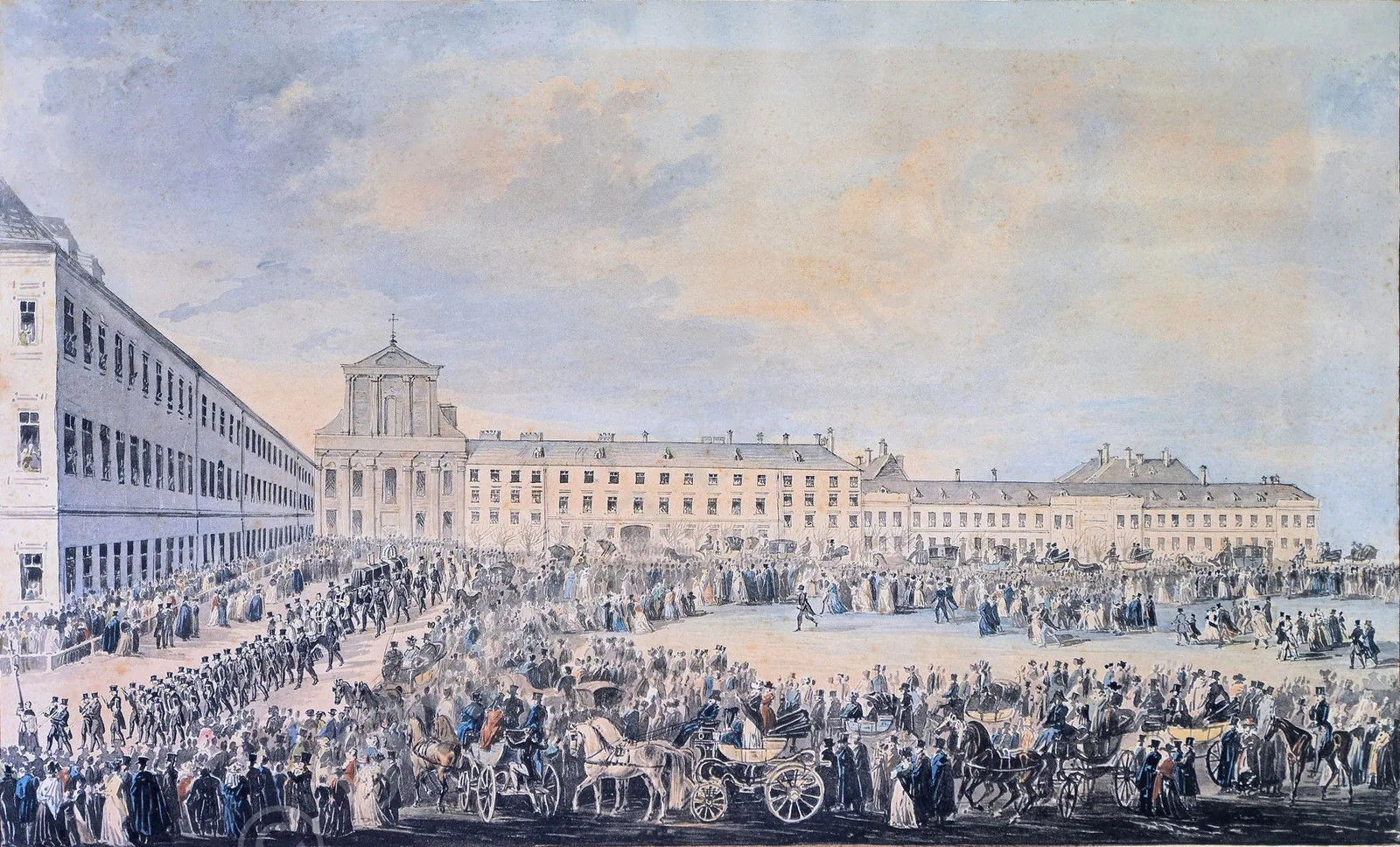
Wikimedia Commons · Public domain · file Schubert was among the torchbearers in Ludwig van Beethoven’s funeral procession in Vienna. Coordinates represent central Vienna because the procession followed a route rather than occurring at one point.
Only public concert of his own works
· Old Musikverein, Tuchlauben 12, Vienna, Austria
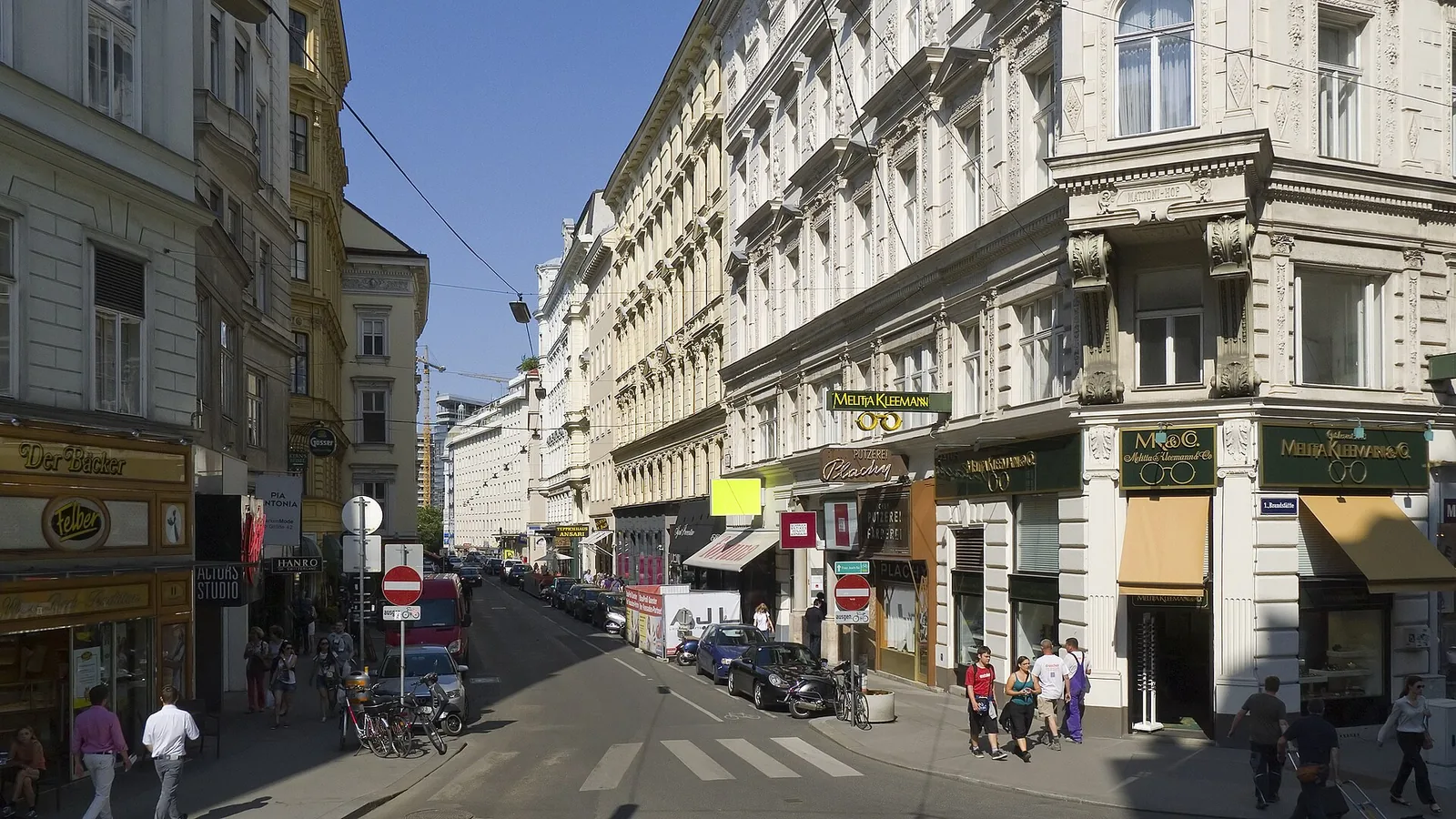
Wikimedia Commons · CC BY-SA 3.0 · file Schubert’s sole public concert of his own works took place in the old Musikverein auditorium under the Tuchlauben. The original Musikverein building was later demolished; coordinates represent its former Tuchlauben 12 site.
Final residence in Ferdinand Schubert's flat
· Schubert Sterbewohnung, Kettenbrückengasse 6, Vienna, Austria
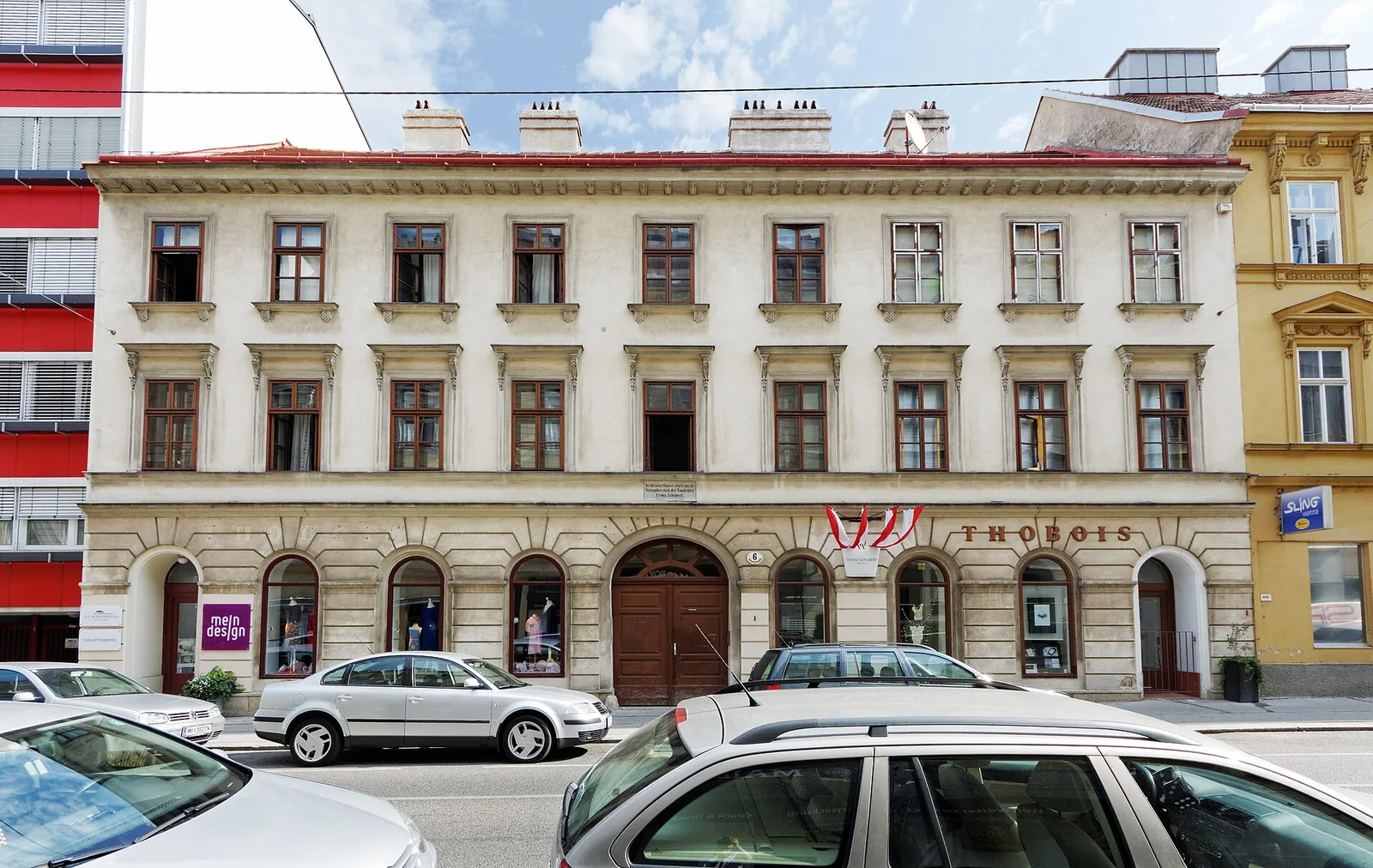
Wikimedia Commons · CC BY-SA 4.0 · file In the period immediately before his death, Schubert lived in the Kettenbrückengasse flat of his brother Ferdinand. The source supports November 1828 but does not state the precise move-in date.
Death in Vienna
· Vienna, Austria
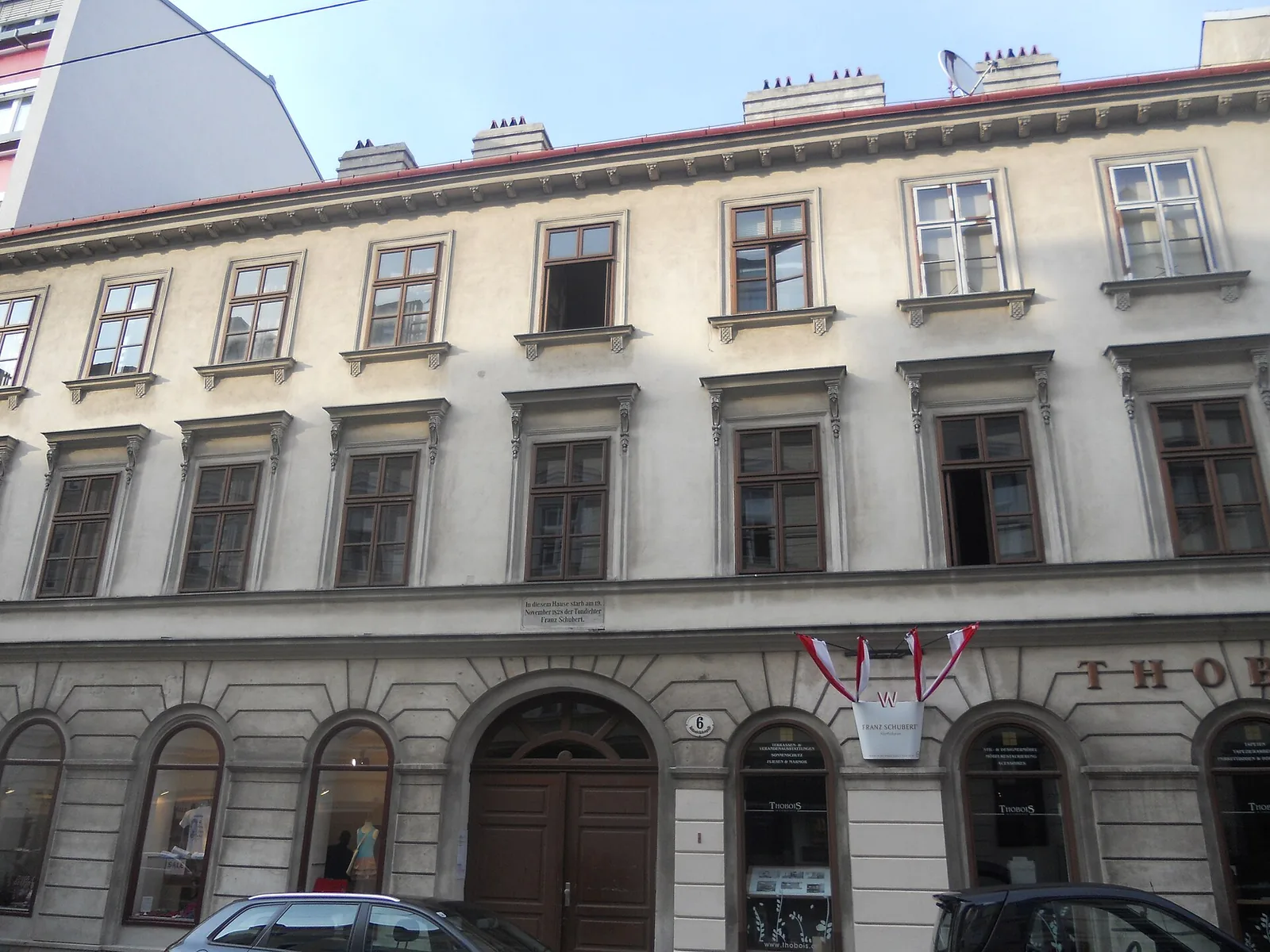
Wikimedia Commons · CC BY-SA 3.0 · file Schubert died aged 31 in his brother Ferdinand’s apartment in Vienna; the official diagnosis was typhoid fever. The cited source identifies the brother's apartment but does not give its street address in this passage.