
23 moments
Birth at Andijan
· Andijan, Uzbekistan
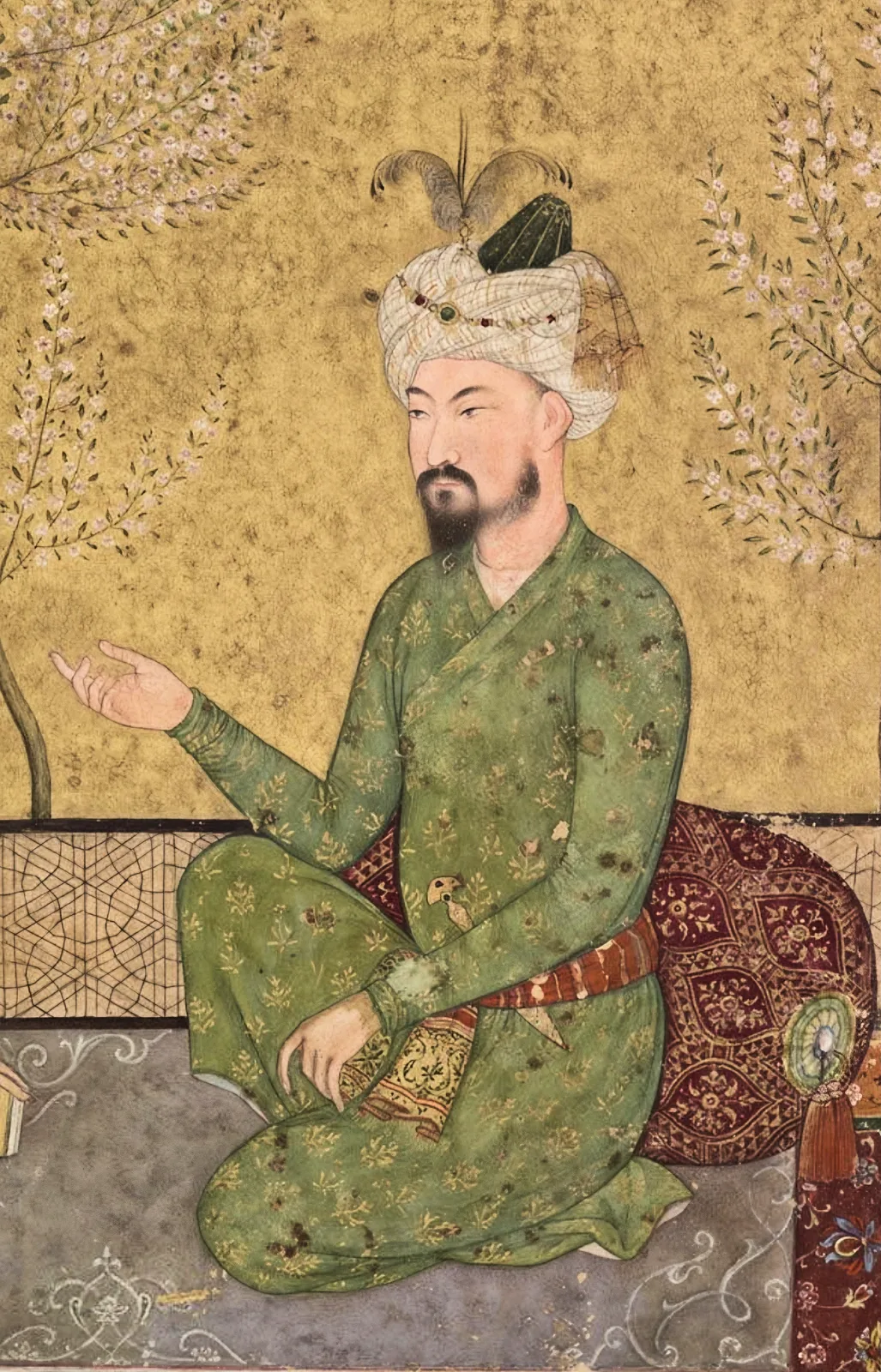
Wikimedia Commons · Public domain · file Babur was born in Andijan in the Fergana Valley, then within the Timurid realm.
Accession at Akhsikath
· Akhsikath archaeological site, Namangan Region, Uzbekistan
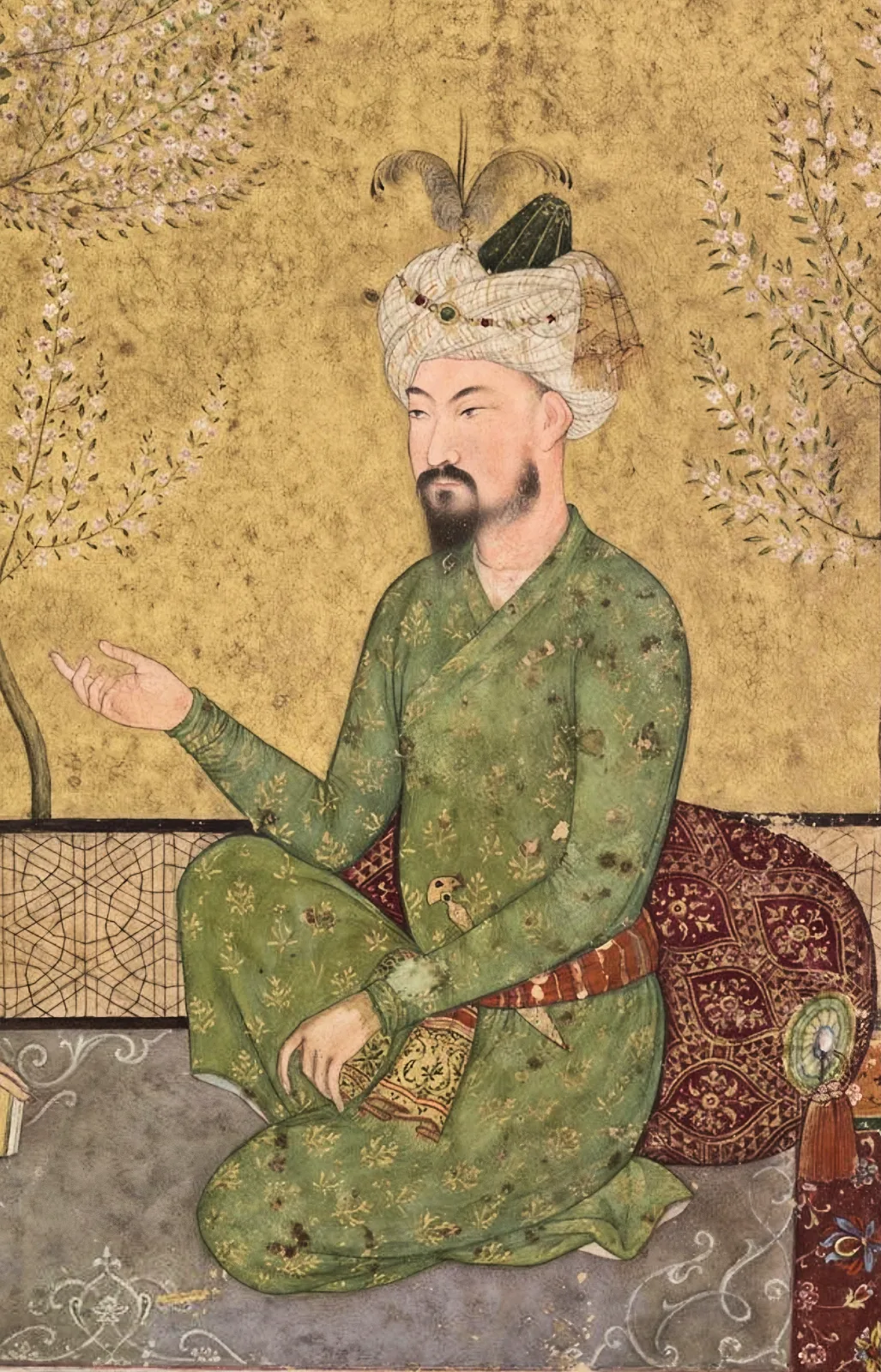
Wikimedia Commons · Public domain · file At about age twelve, Babur succeeded to the Fergana throne at its capital, Akhsikath. Coordinates are a representative point for the archaeological remains of historic Akhsikath.
Siege and capture of Samarkand
· Samarkand, Uzbekistan
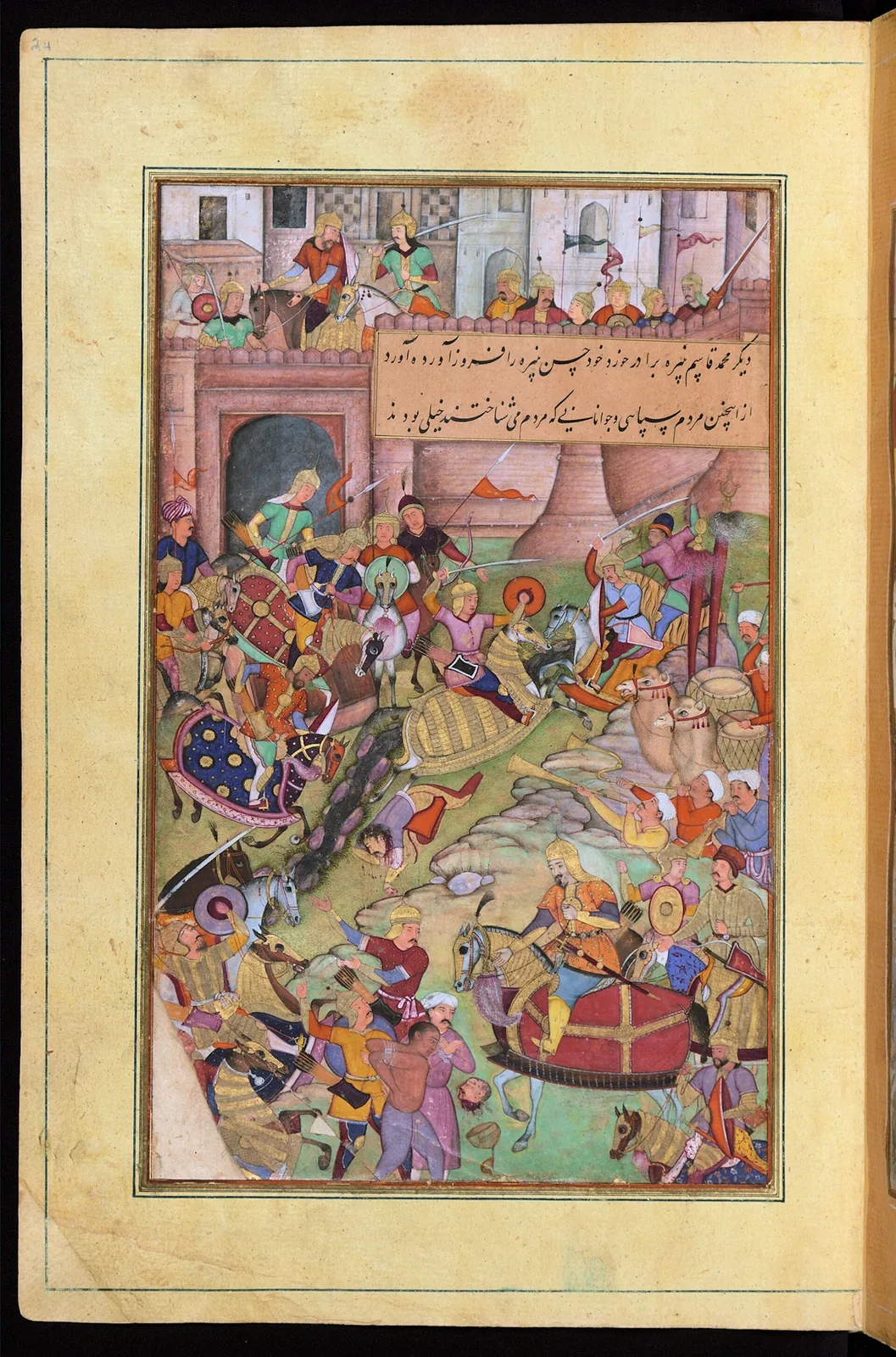
Wikimedia Commons · Public domain · file Babur led his army from Andijan toward Samarkand and spent months campaigning around the city before taking it later that year. The card is dated to the documented start of Babur's Samarkand campaign; coordinate is Samarkand because the cited camp was nearby.
Exile at Tashkent
· Tashkent, Uzbekistan
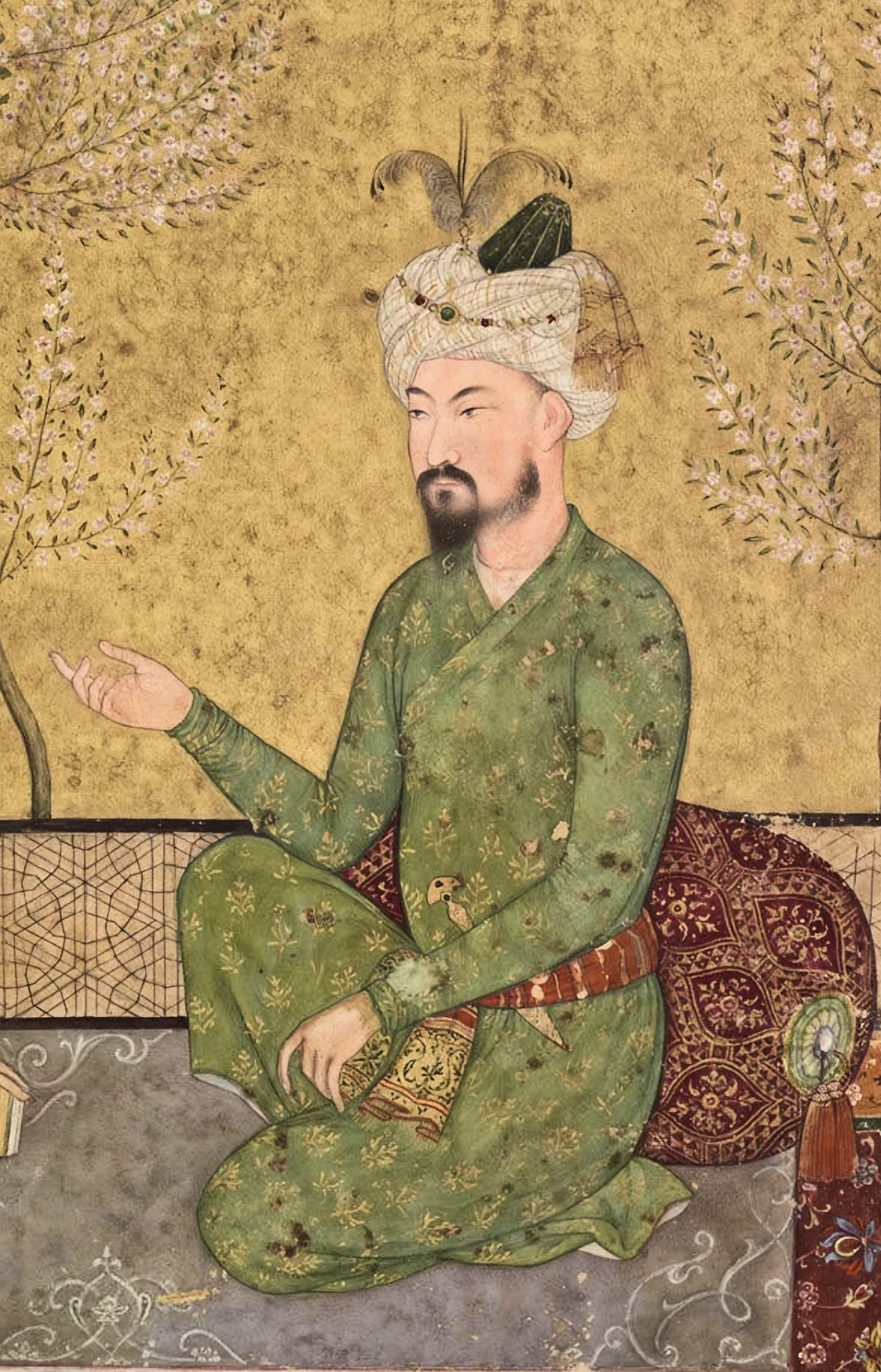
Wikimedia Commons · Public domain · file After losing his Central Asian possessions, Babur went to Tashkent, where his own memoir records his impoverished stay. The source gives the date only as "By 1502."
Conquest of Kabul
· Kabul, Afghanistan
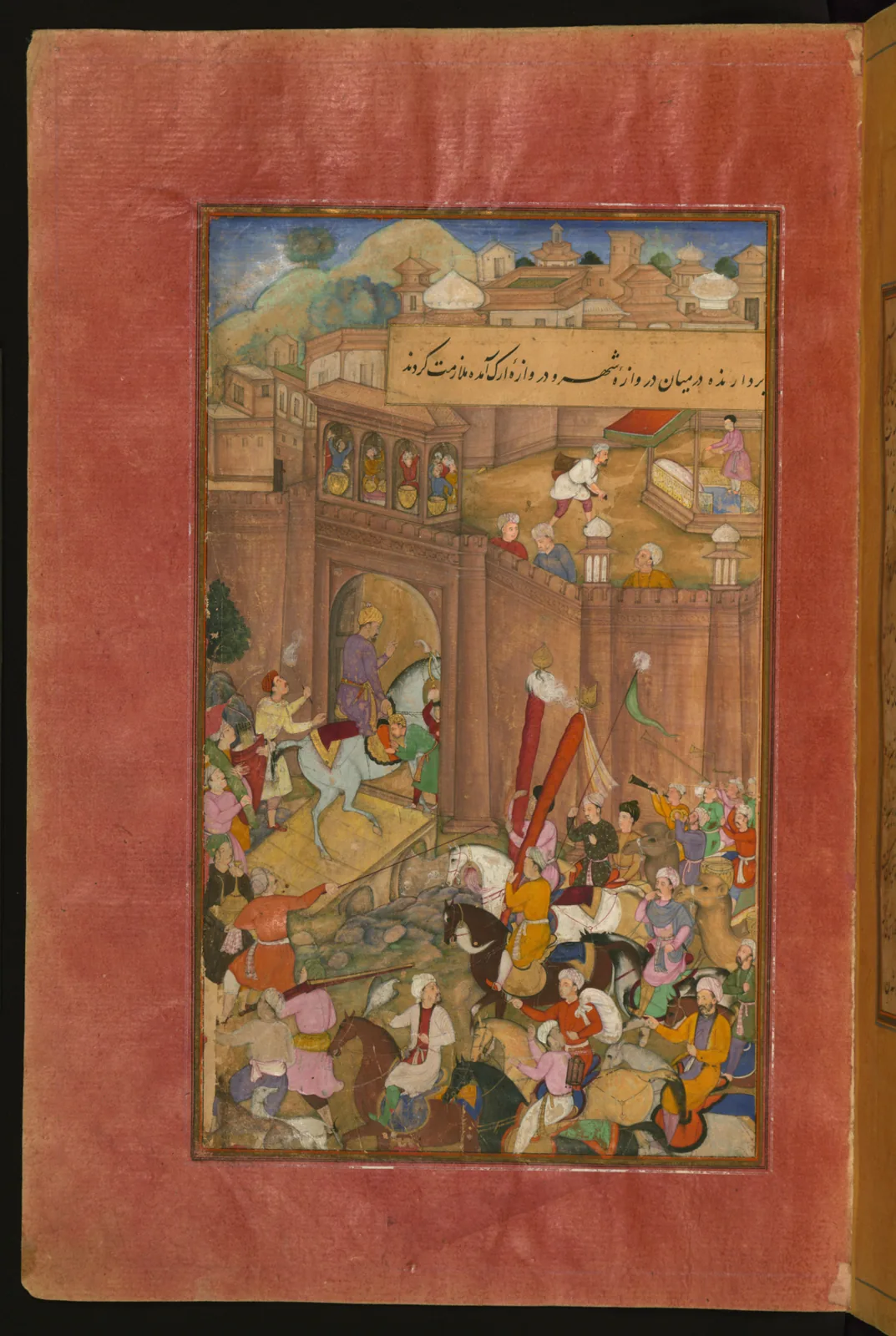
Wikimedia Commons · Public domain · file Babur crossed the Hindu Kush and captured Kabul, establishing the Afghan base from which he later pursued campaigns into India.
First expedition toward Hindustan
· Khyber Pass, Afghanistan-Pakistan border
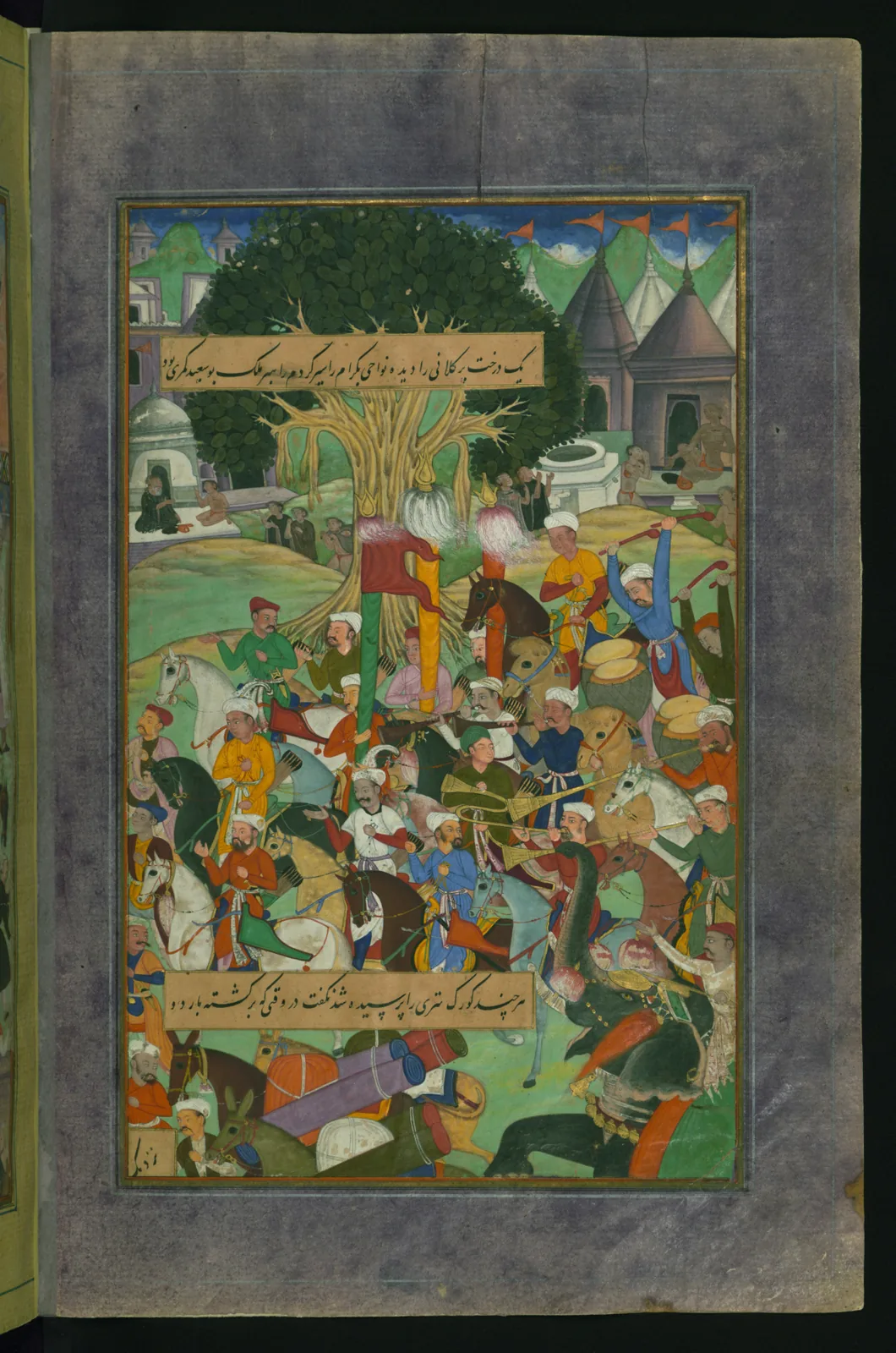
Wikimedia Commons · Public domain · file From Kabul, Babur began his first expedition into Hindustan, making a brief raid across the Khyber Pass. The source establishes transit across the pass but does not identify an exact point within it.
Two-month stay at Herat
· Herat, Afghanistan
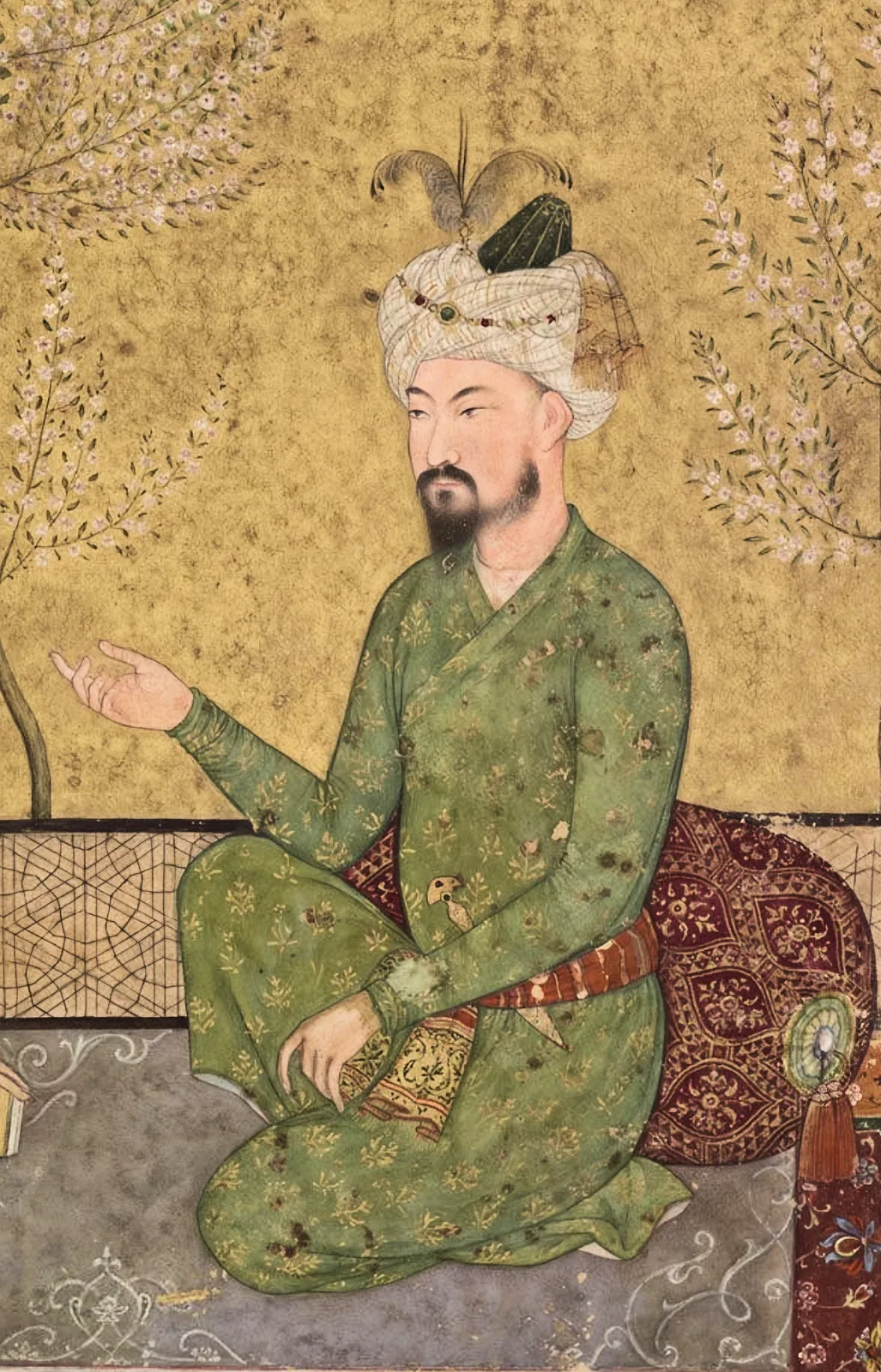
Wikimedia Commons · Public domain · file Babur stayed in Herat after being invited by the sons of Sultan Husayn Mirza Bayqarah, encountering its notable cultural life before departing. The immediately following text states that he spent two months there; the year is established by the preceding discussion of Husayn Mirza's death in 1506.
Occupation of Bukhara
· Bukhara, Uzbekistan
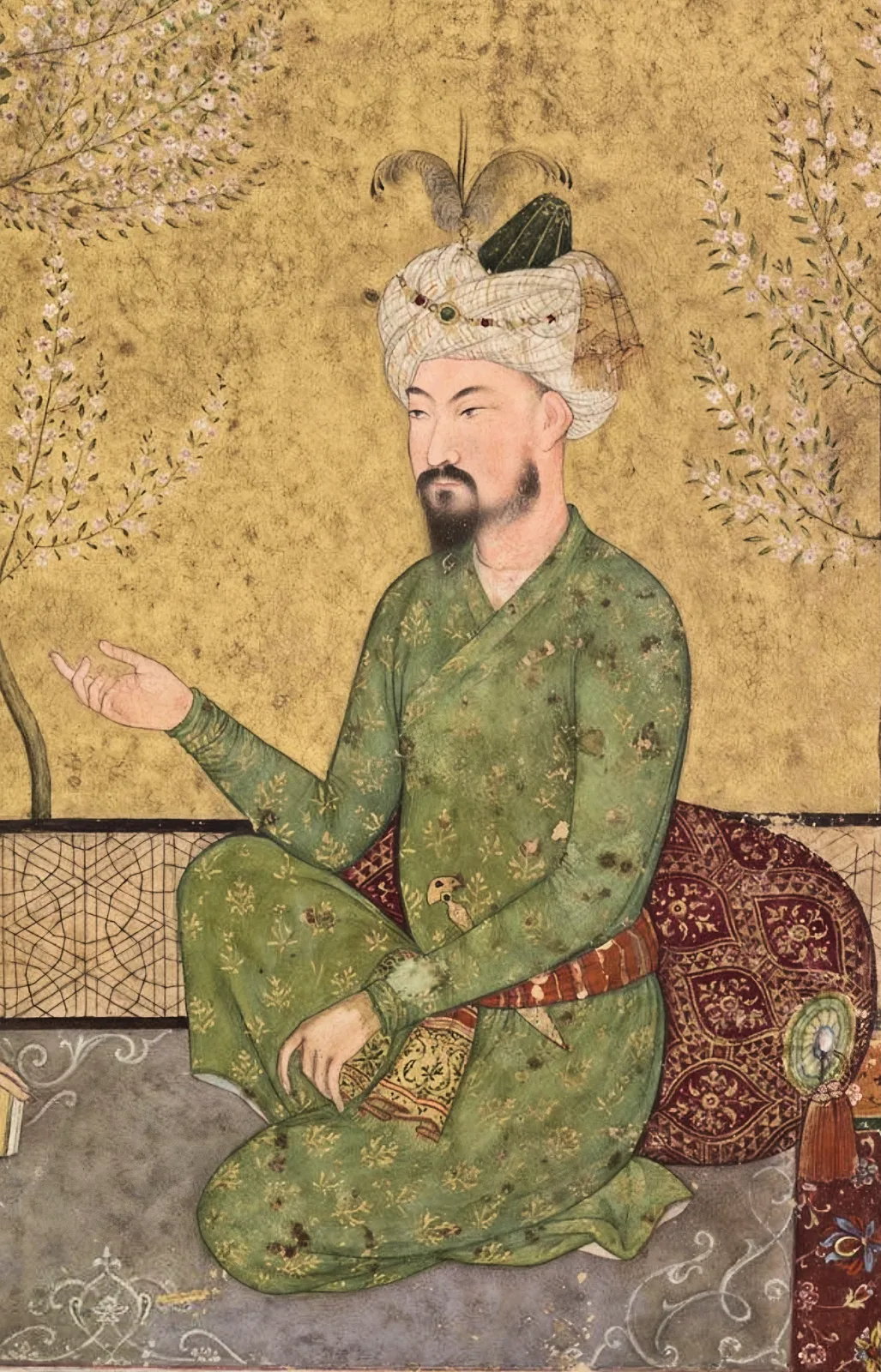
Wikimedia Commons · Public domain · file During the same Central Asian campaign in which he retook Samarkand, Babur also took Bukhara. The source places this capture in the 1511 campaign but does not provide a more precise date.
Third capture of Samarkand
· Samarkand, Uzbekistan
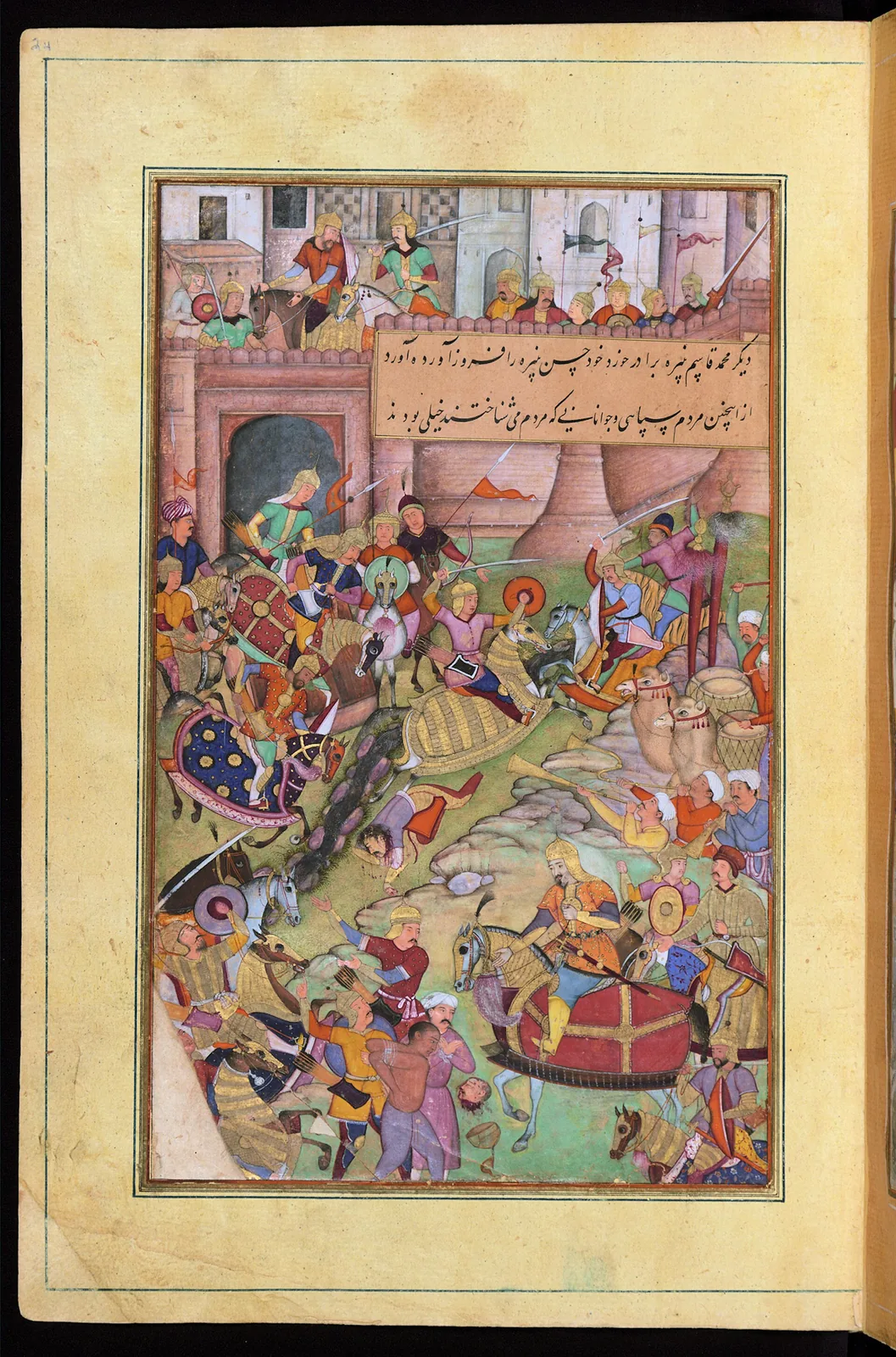
Wikimedia Commons · Public domain · file With Safavid support, Babur again took Samarkand during his attempt to recover Timurid territories in Central Asia.
Return to Kabul
· Kabul, Afghanistan
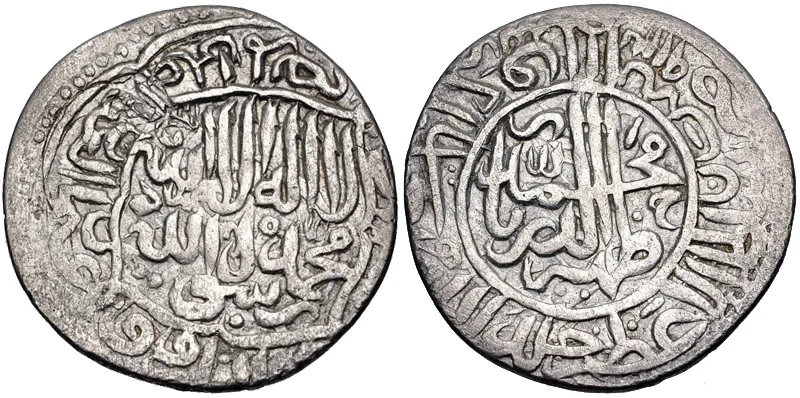
Wikimedia Commons · Creative Commons Attribution-Share Alike 2.5 Generic · file After losing Samarkand and Bukhara again, Babur returned to Kabul, his principal base until the Panipat campaign.
Reached the Chenab River
· Chenab River, Punjab, Pakistan
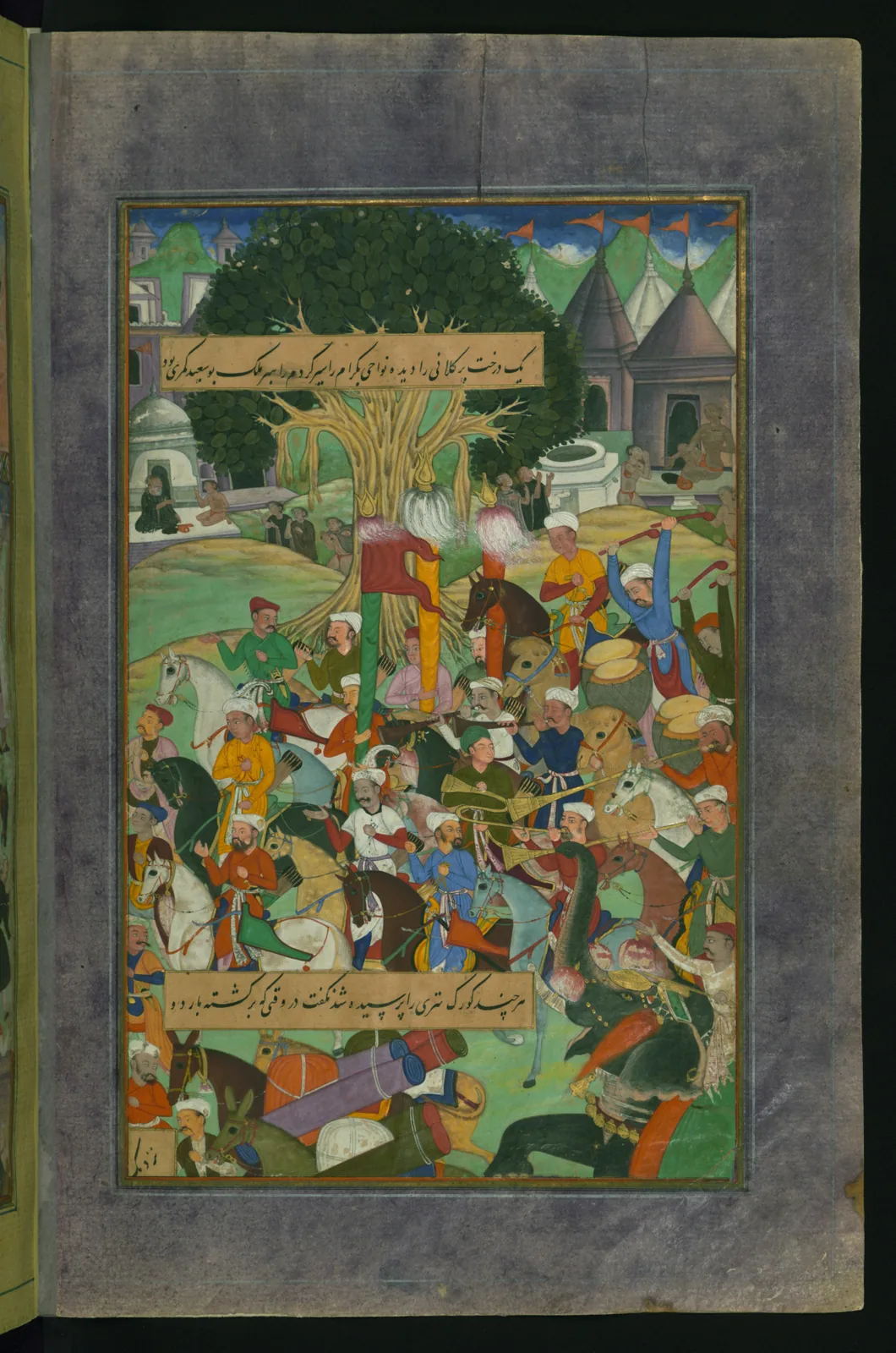
Wikimedia Commons · Public domain · file Babur's north Indian campaign reached the Chenab River in Punjab. Coordinates are a representative point on the Chenab River in Punjab because the source does not specify a crossing or camp.
Campaign at Bajaur
· Bajaur, Khyber Pakhtunkhwa, Pakistan
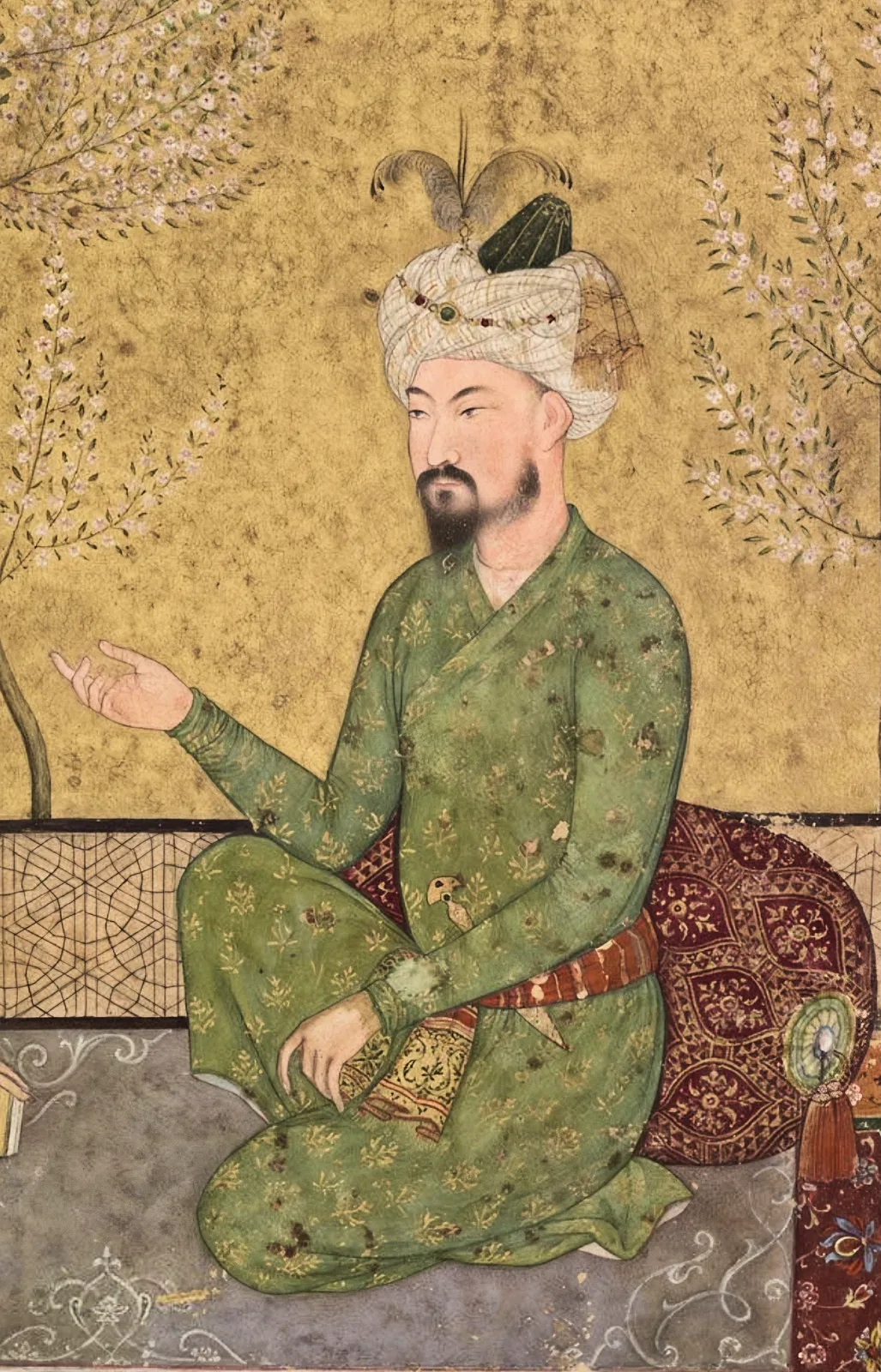
Wikimedia Commons · Public domain · file Babur was present during the assault on Bajaur, a violent campaign undertaken from his Kabul-based domains. Coordinates represent the Bajaur region; the source does not identify a more precise battlefield point.
Siege and annexation of Kandahar
· Kandahar, Afghanistan
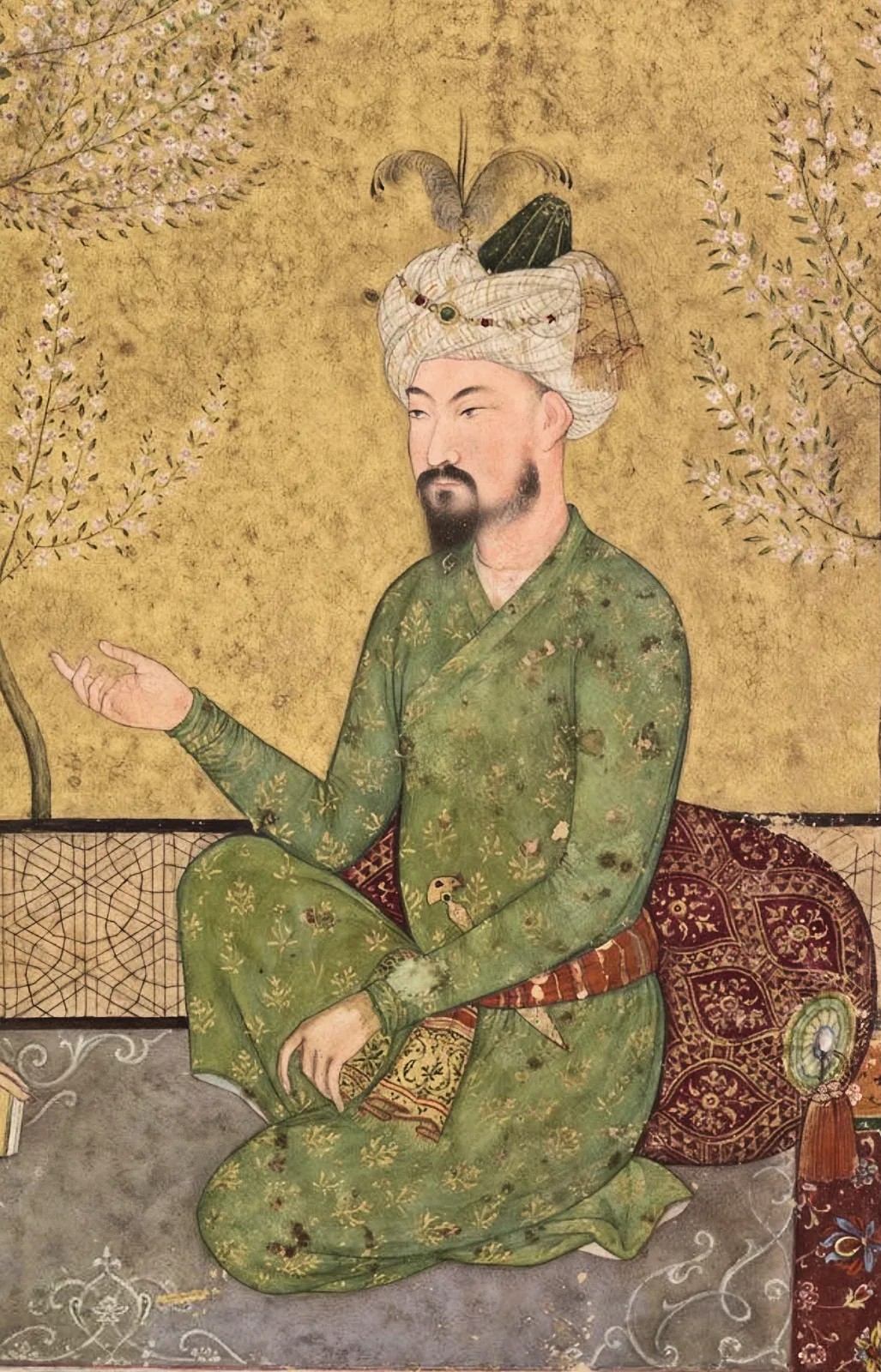
Wikimedia Commons · Public domain · file Babur besieged and annexed Kandahar, extending his Kabul-based realm before the final conquest of northern India.
Arrival and sack of Lahore
· Lahore, Punjab, Pakistan
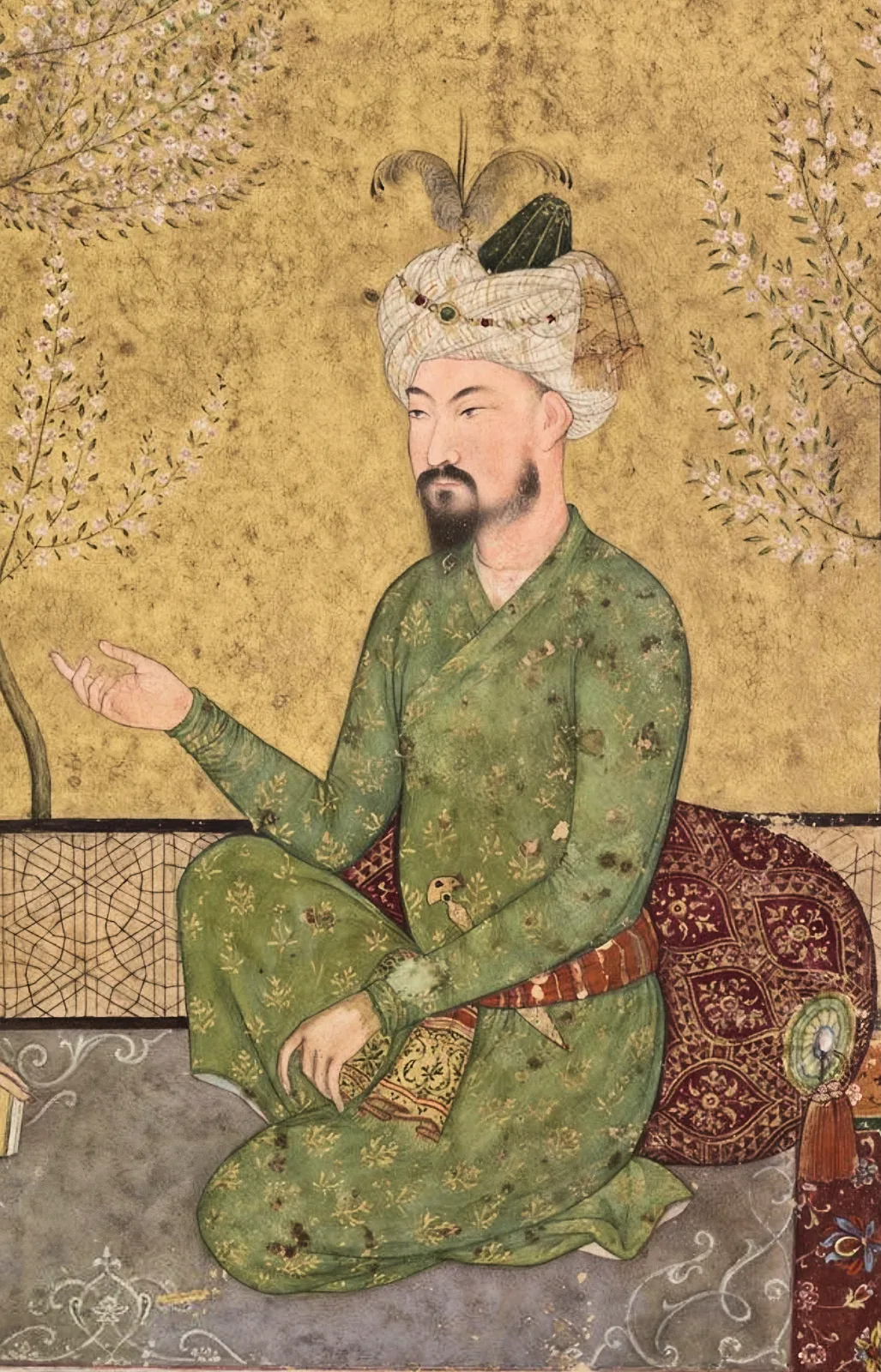
Wikimedia Commons · Public domain · file Babur arrived at Lahore during his Punjab campaign and burned the city after confronting the Lodi army.
March to Dipalpur
· Dipalpur, Punjab, Pakistan
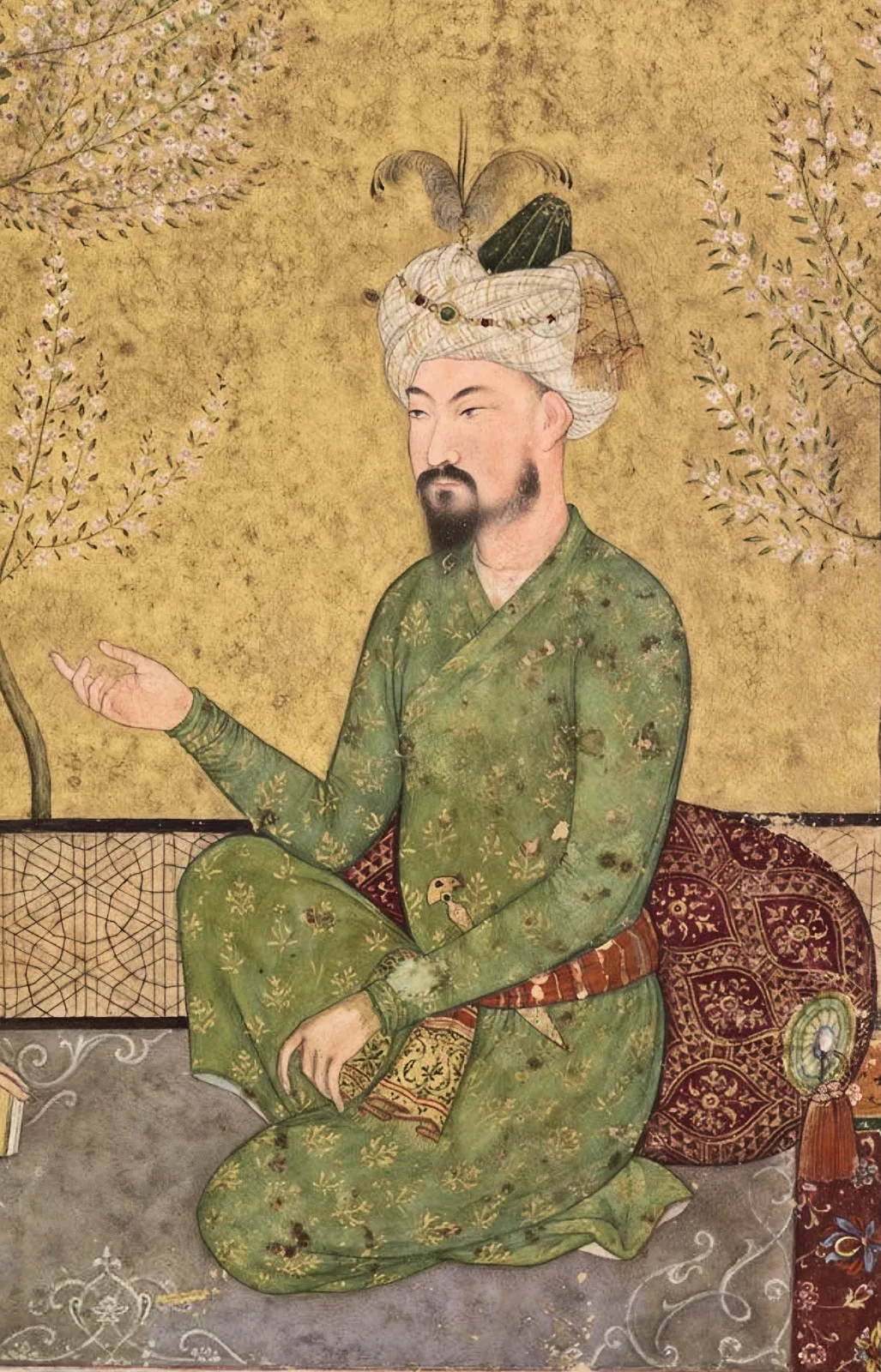
Wikimedia Commons · Public domain · file After Lahore, Babur marched to Dipalpur and installed Alam Khan as governor.
At Peshawar before final invasion
· Peshawar, Khyber Pakhtunkhwa, Pakistan
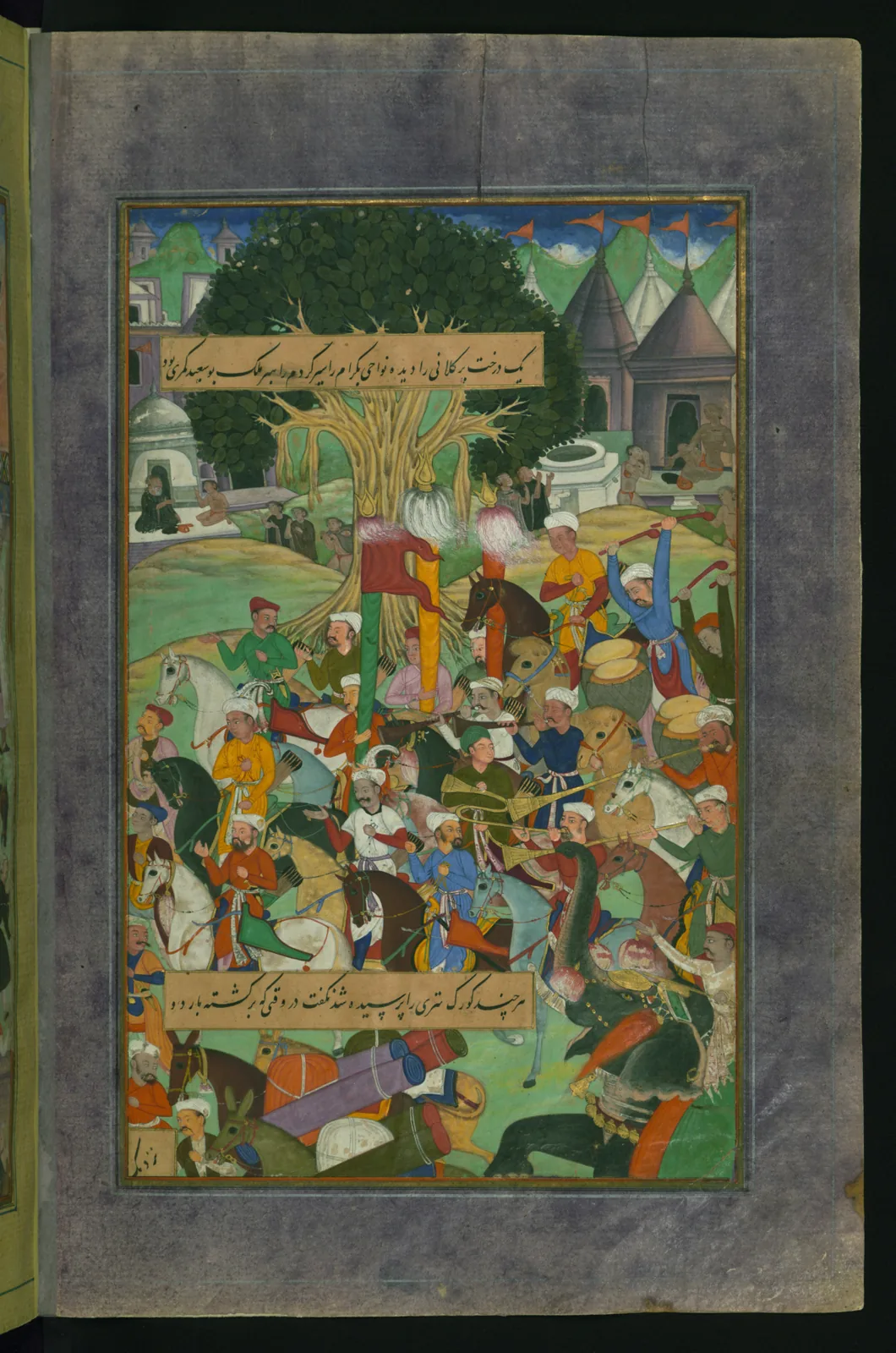
Wikimedia Commons · Public domain · file Babur was at Peshawar when he received news that Daulat Khan Lodi had changed sides, immediately preceding his final advance into Punjab.
Arrival at Panipat
· First Battle of Panipat battlefield, Haryana, India
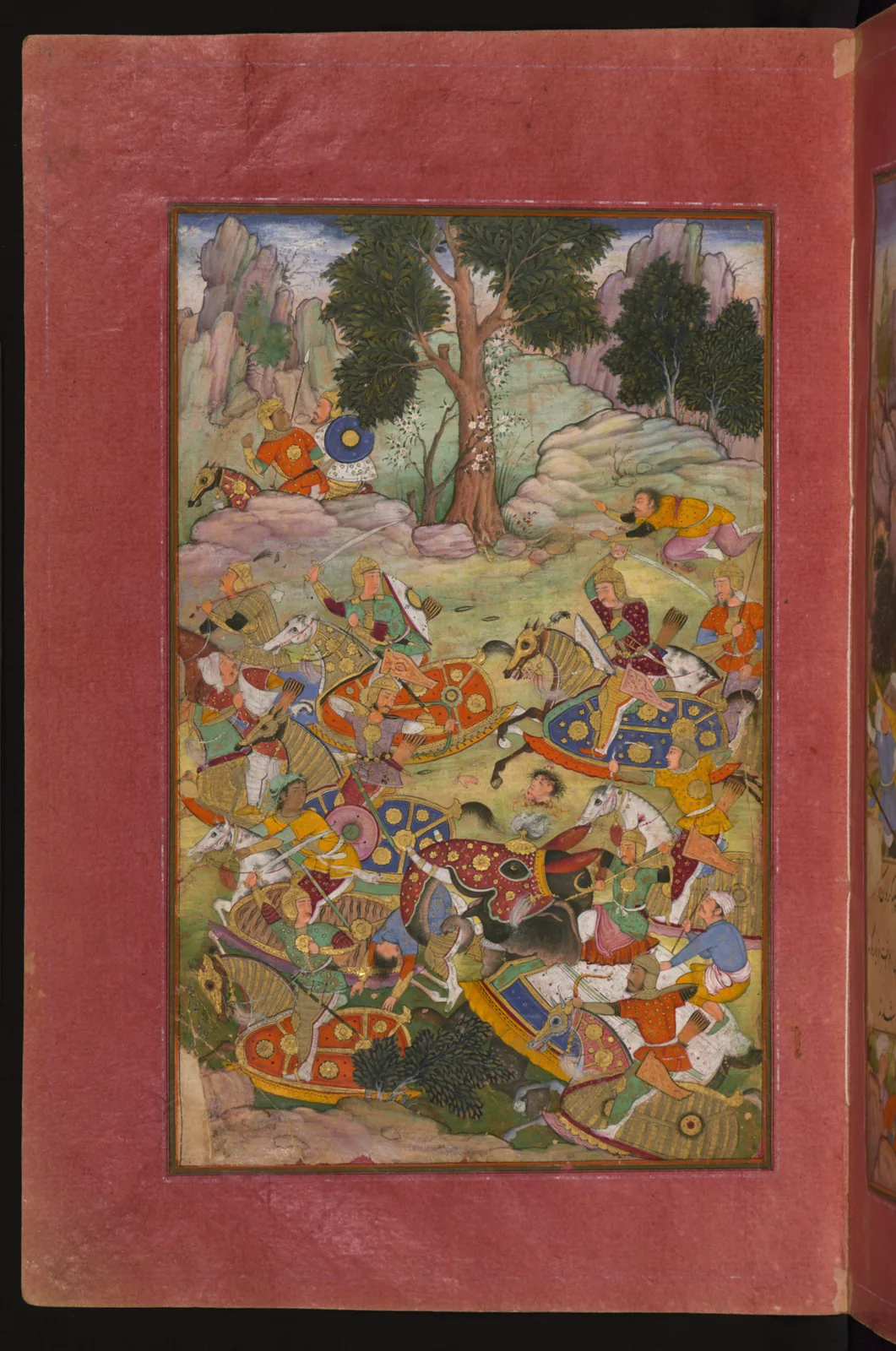
Wikimedia Commons · Public domain · file Babur reached Panipat and confronted Ibrahim Lodi's army on the eve of the battle that opened Mughal rule in northern India. Coordinates are those published for the First Battle of Panipat battlefield.
First Battle of Panipat
· First Battle of Panipat battlefield, Haryana, India
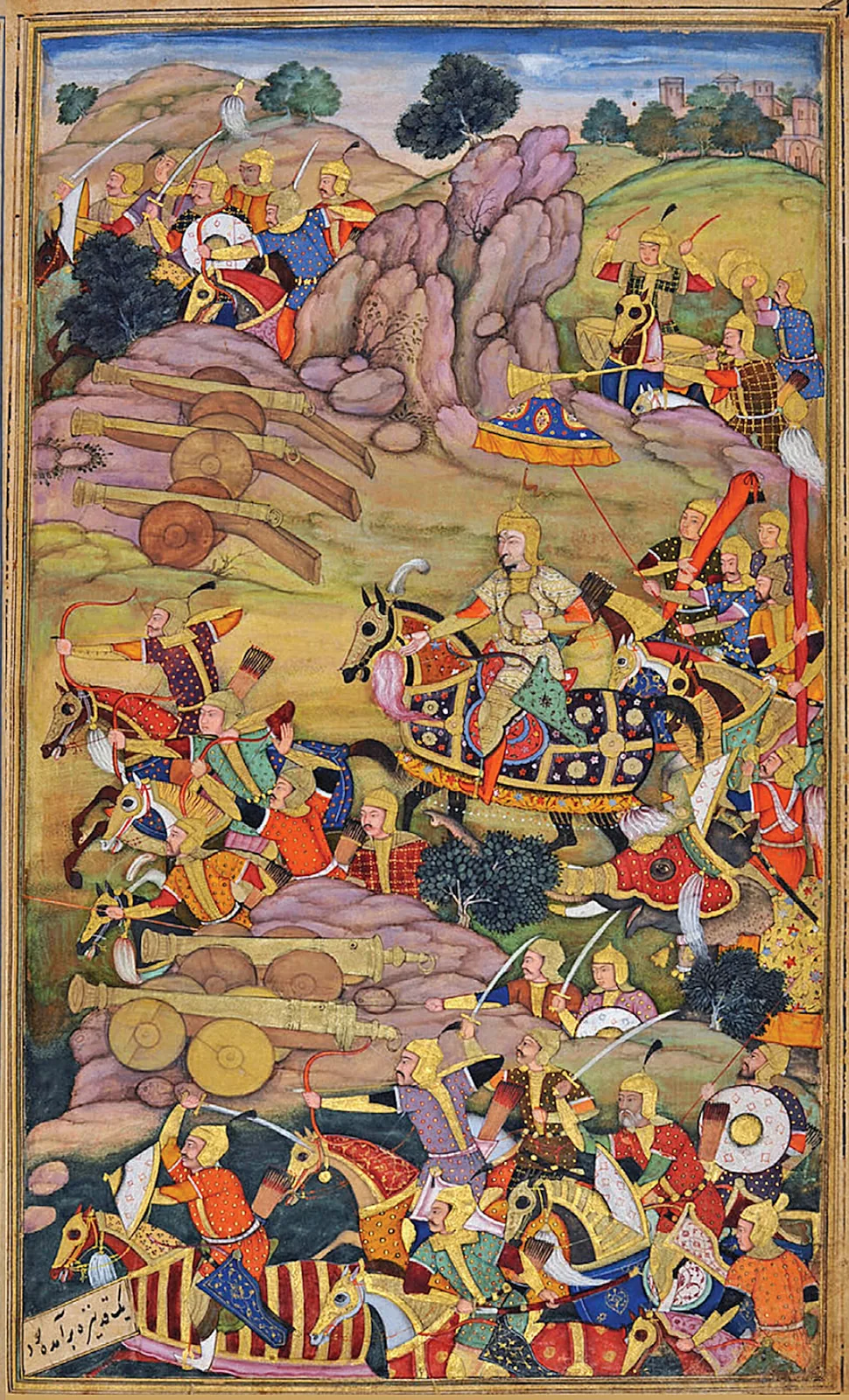
Wikimedia Commons · Public domain · file Babur commanded the Mughal force that defeated Ibrahim Lodi at Panipat, a victory marking the beginning of Mughal rule in India.
Encounter at Urvahi valley
· Urvahi Valley, Gwalior, Madhya Pradesh, India
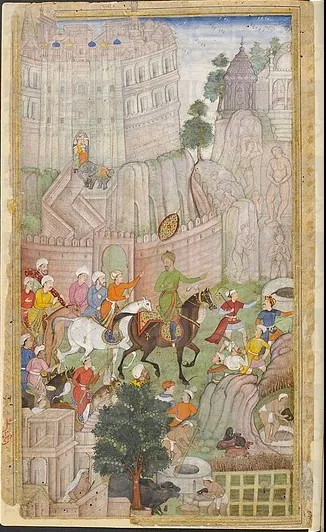
Wikimedia Commons · Public domain · file Babur was at the Urvahi valley near Gwalior during his 1527 campaign, where he encountered the Jain colossi mentioned in the Baburnama tradition. Location is a representative point for Urvahi Valley near Gwalior Fort.
Battle of Khanwa
· Khanwa battlefield, Rajasthan, India
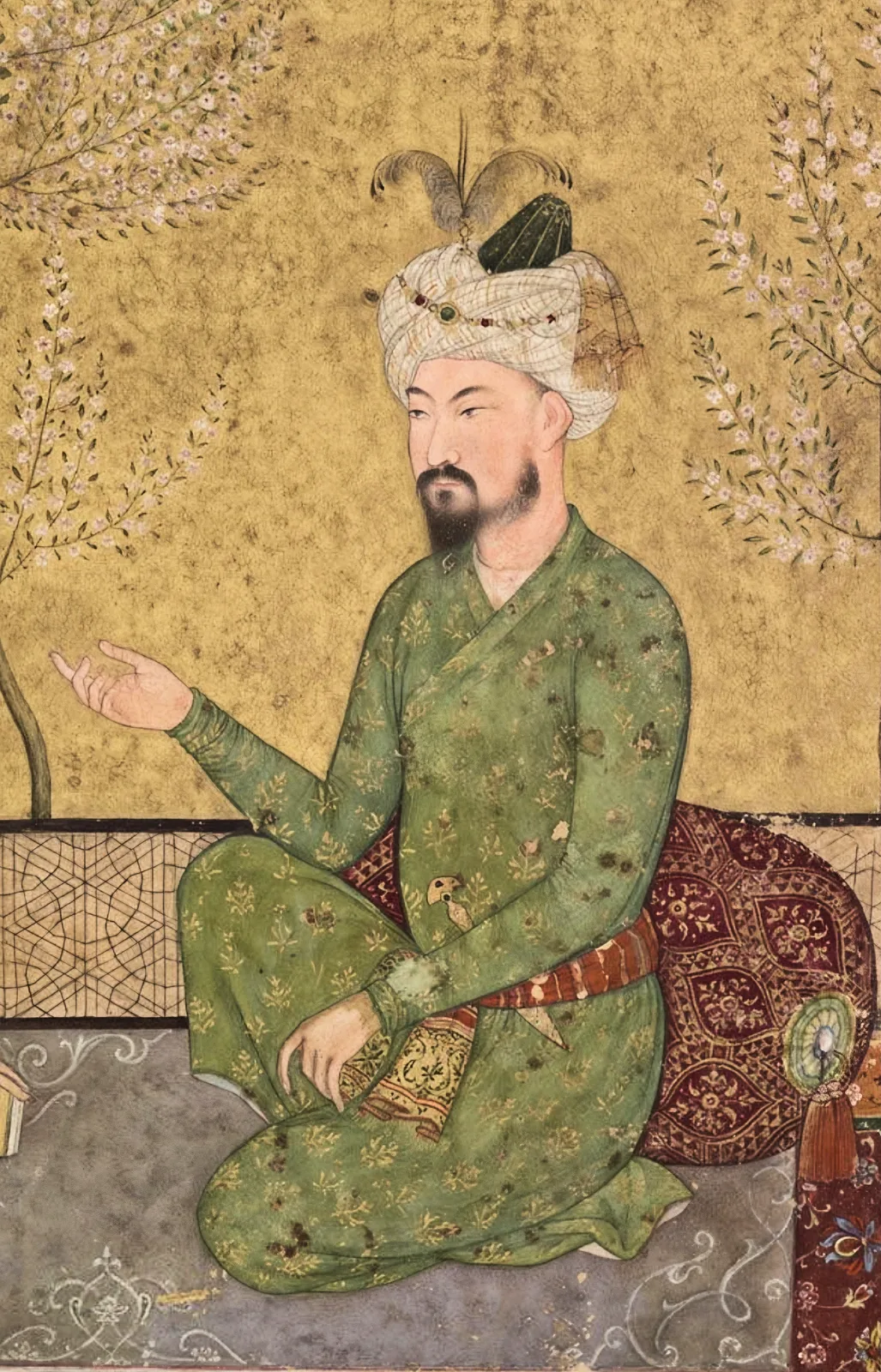
Wikimedia Commons · Public domain · file Babur took a defensive position at Khanwa and defeated the Rajput-led coalition of Rana Sanga. Coordinates are those published for the Khanwa battlefield.
Capture of Chanderi
· Chanderi, Madhya Pradesh, India
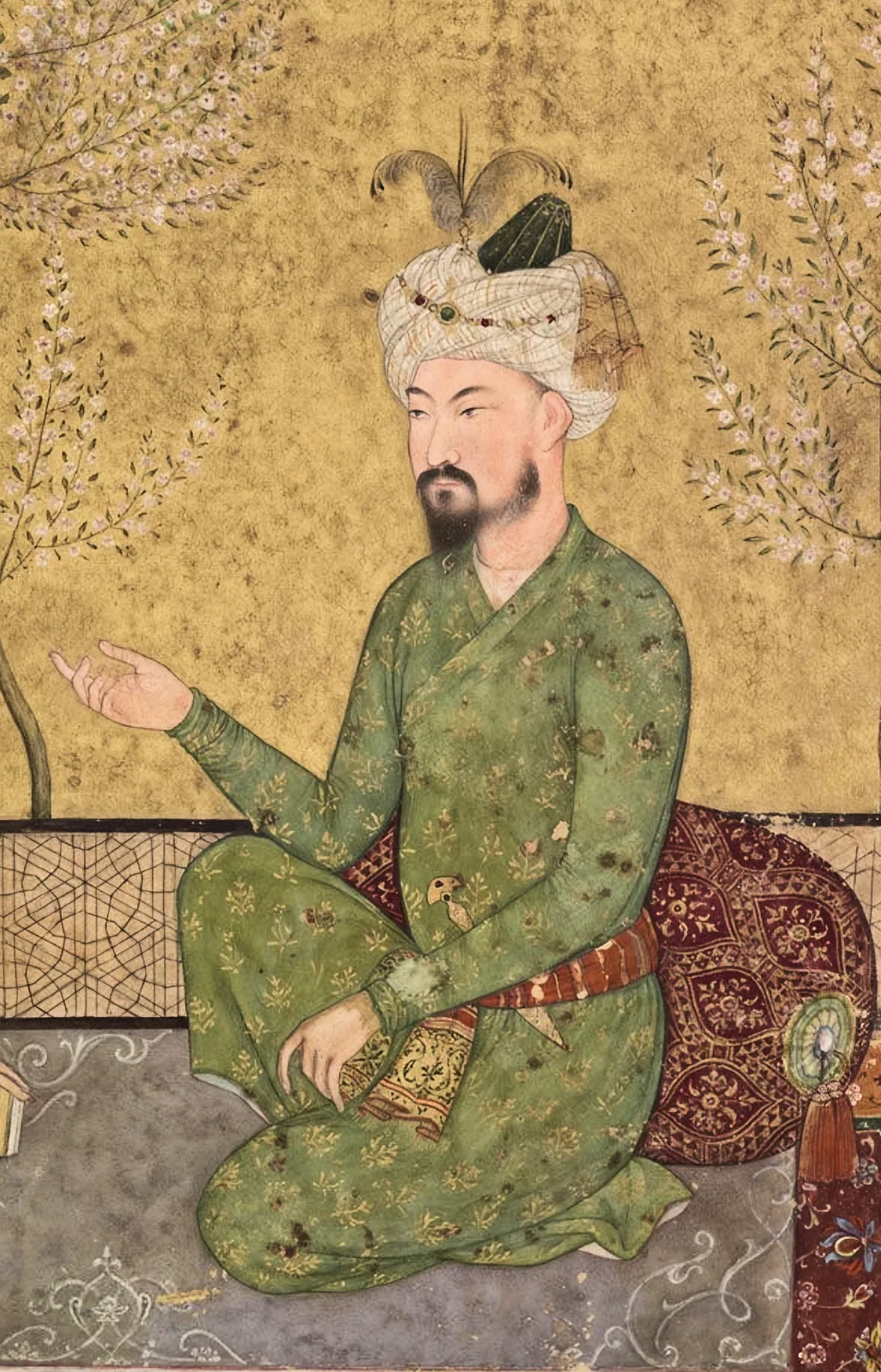
Wikimedia Commons · Public domain · file Babur reached Chanderi and offered terms to Medini Rai before the Mughal capture of its fortifications.
Battle of Ghaghra
· Ghaghara River near Revelganj, Bihar, India
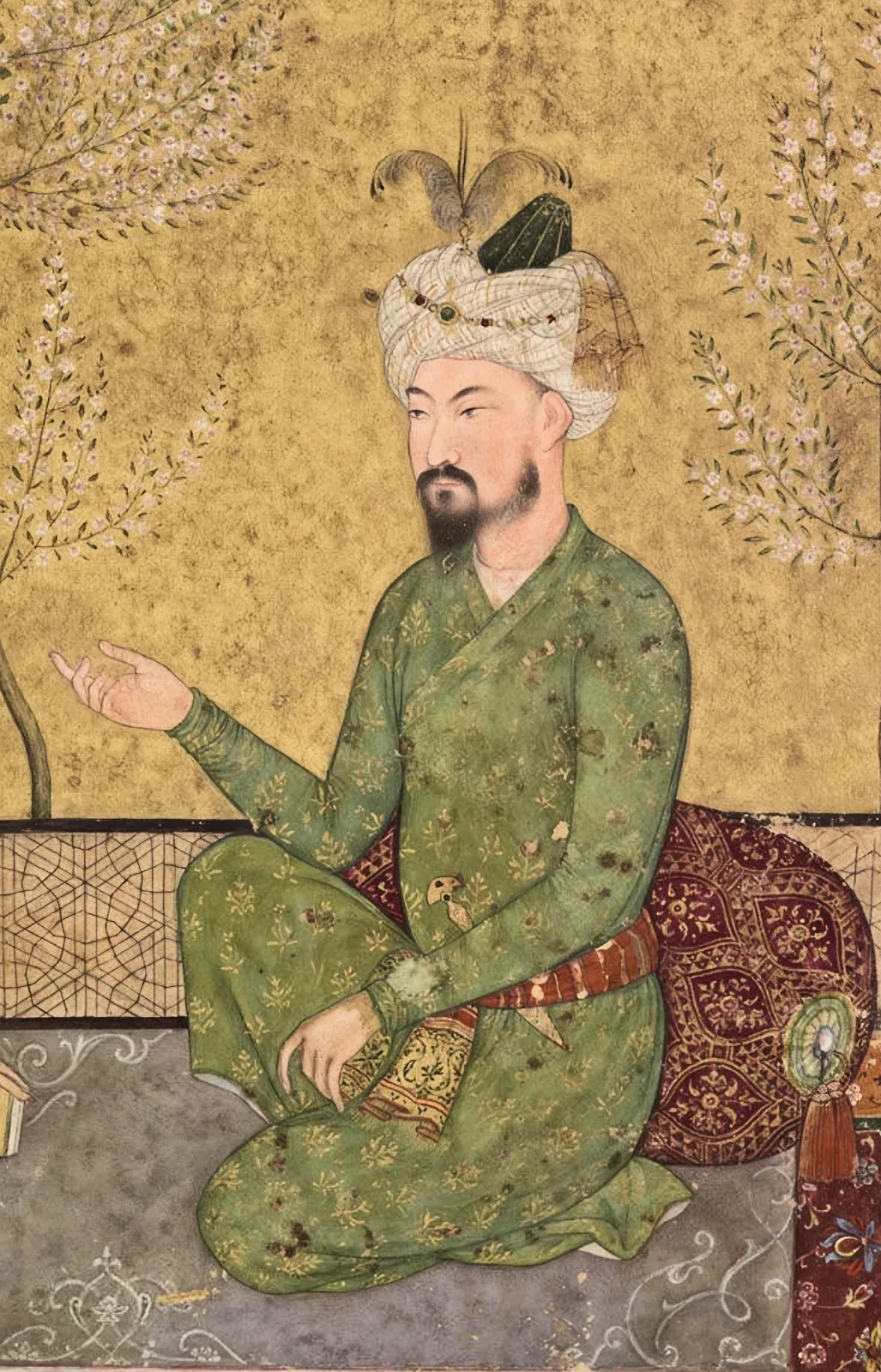
Wikimedia Commons · Public domain · file Babur led Mughal forces at the Ghaghara River against an Afghan-Bengal coalition in his final major battle for control of Hindustan. The article's infobox dates the battle to 6 May 1529 and locates it on the Ghaghara River at Revelganj.
Death at Agra
· Agra, Uttar Pradesh, India
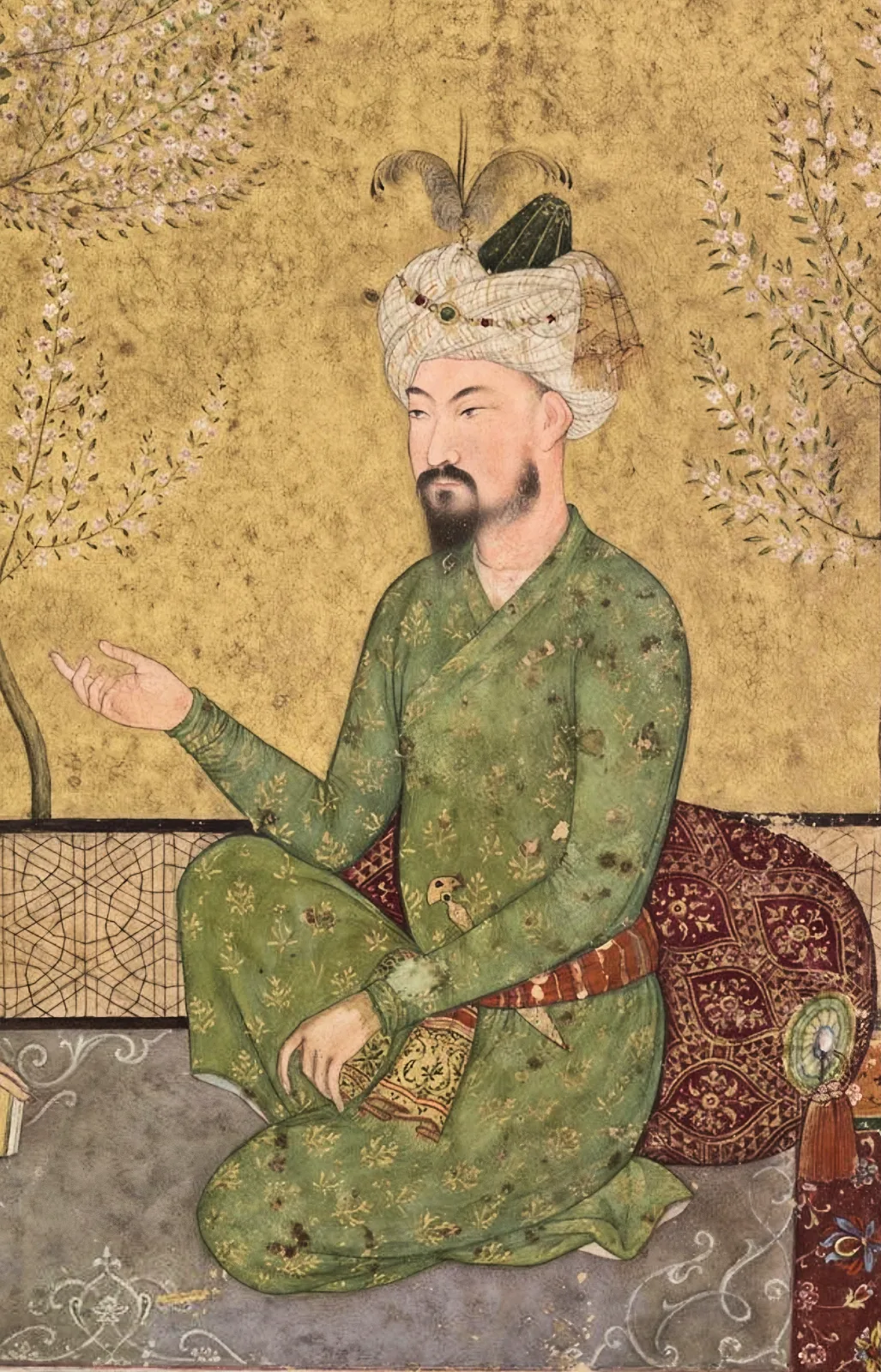
Wikimedia Commons · Public domain · file Babur died at Agra after four years as Mughal emperor; the source records 26 December 1530 in Old Style dating, corresponding to 5 January 1531 in the cited text. Date follows the article infobox and the Old Style date supplied in the quoted text.