
5 moments
Birth at Madauros
· Madauros (near M'Daourouch), Algeria
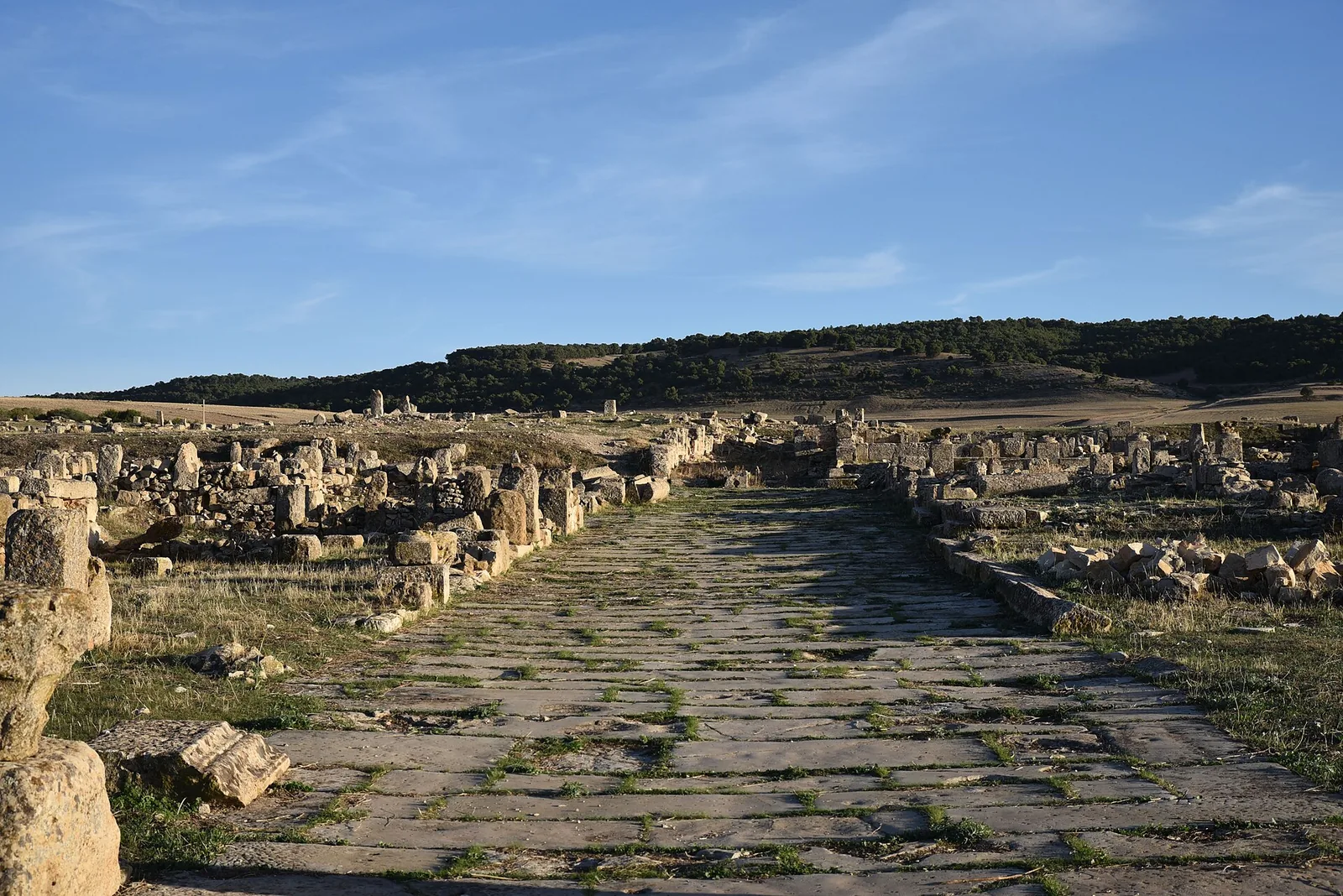
Wikimedia Commons · Creative Commons Attribution-Share Alike 2.0 Generic · file Apuleius was born at the Roman colonia of Madauros in Numidia, represented by the archaeological site near modern M'Daourouch, Algeria. The year is circa 124, not an exact birth year; coordinates represent ancient Madauros near modern M'Daourouch.
Arrival and marriage at Oea
· Oea (modern Tripoli), Libya
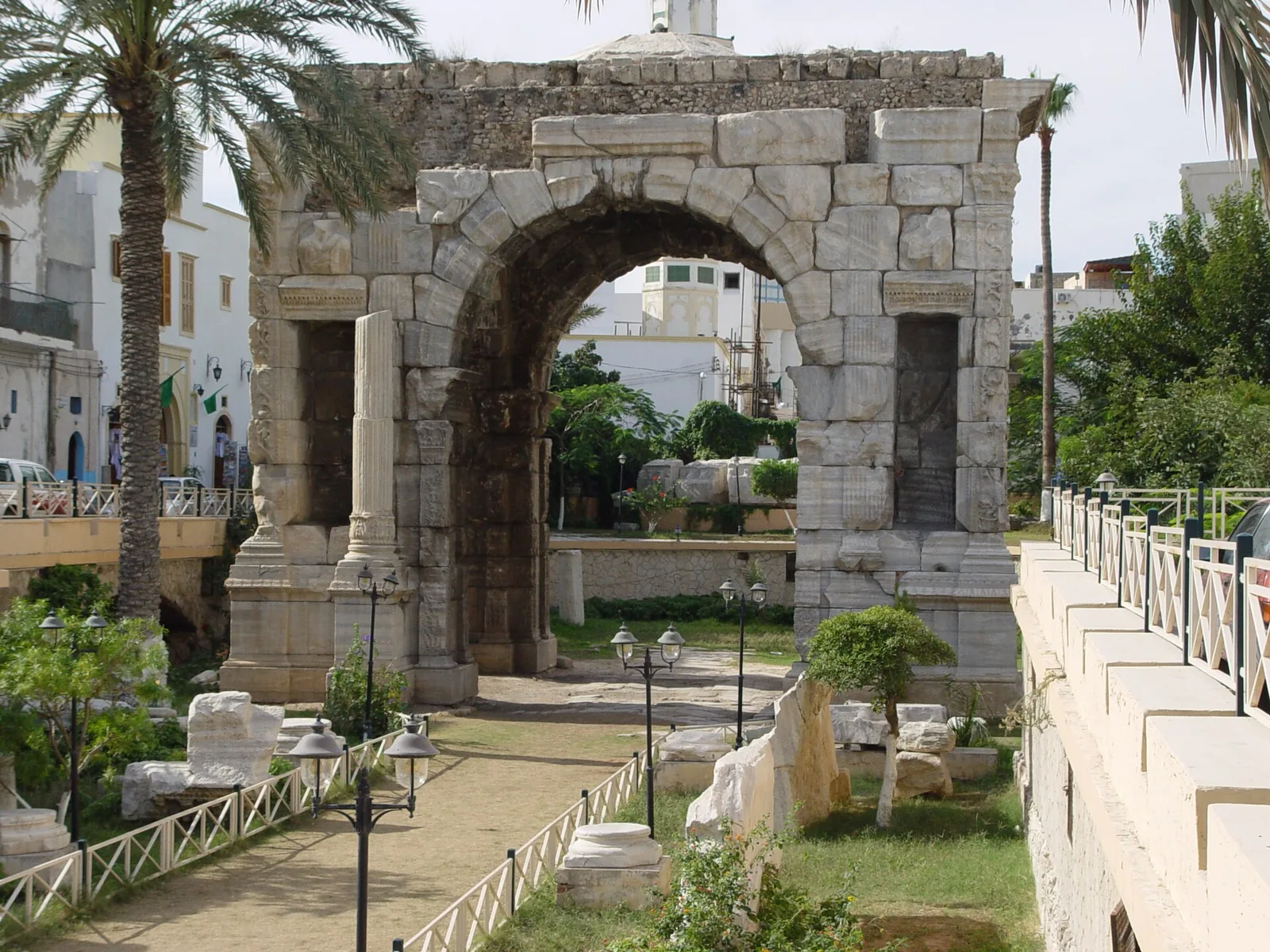
Wikimedia Commons · Creative Commons Attribution 2.0 Generic · file While travelling toward Alexandria, Apuleius came to Oea, where he married the wealthy widow Pudentilla. This stay led directly to the later accusation of magic. The source dates the arrival and marriage to around 155 or 156; 156 is used as the best-supported year-level placement.
Defense at the Sabratha magic trial
· Sabratha, Libya
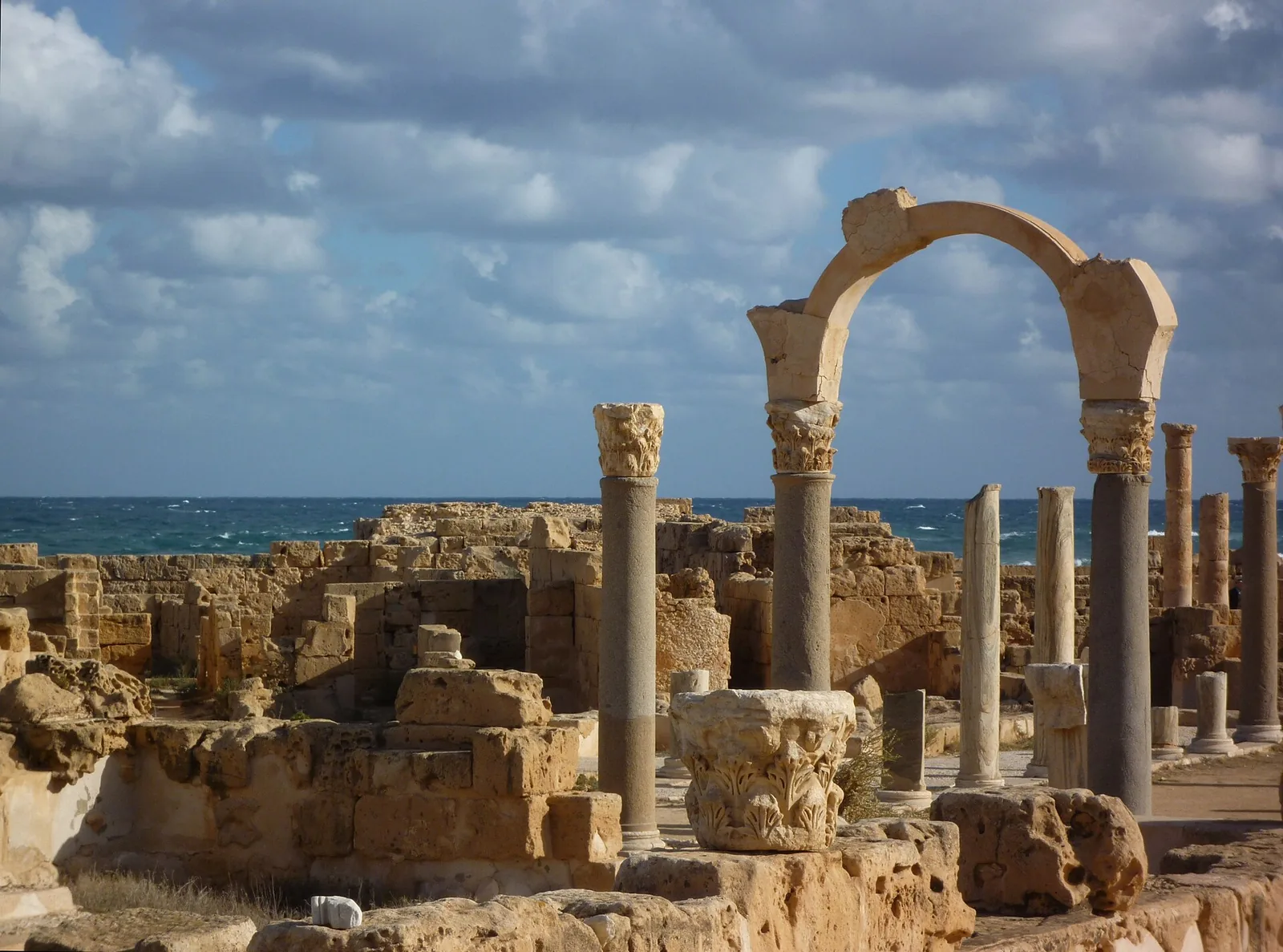
Wikimedia Commons · Creative Commons Attribution-Share Alike 3.0 Unported, 2.5 Generic, 2.0 Generic and 1.0 Generic license · file Apuleius personally delivered his defense against the charge of using magic before the proconsul and magistrates at Sabratha; the speech survives as the Apologia. The trial is dated circa 158, with some scholarship allowing late 158 or early 159.
Oration at Carthage
· Carthage, Tunisia
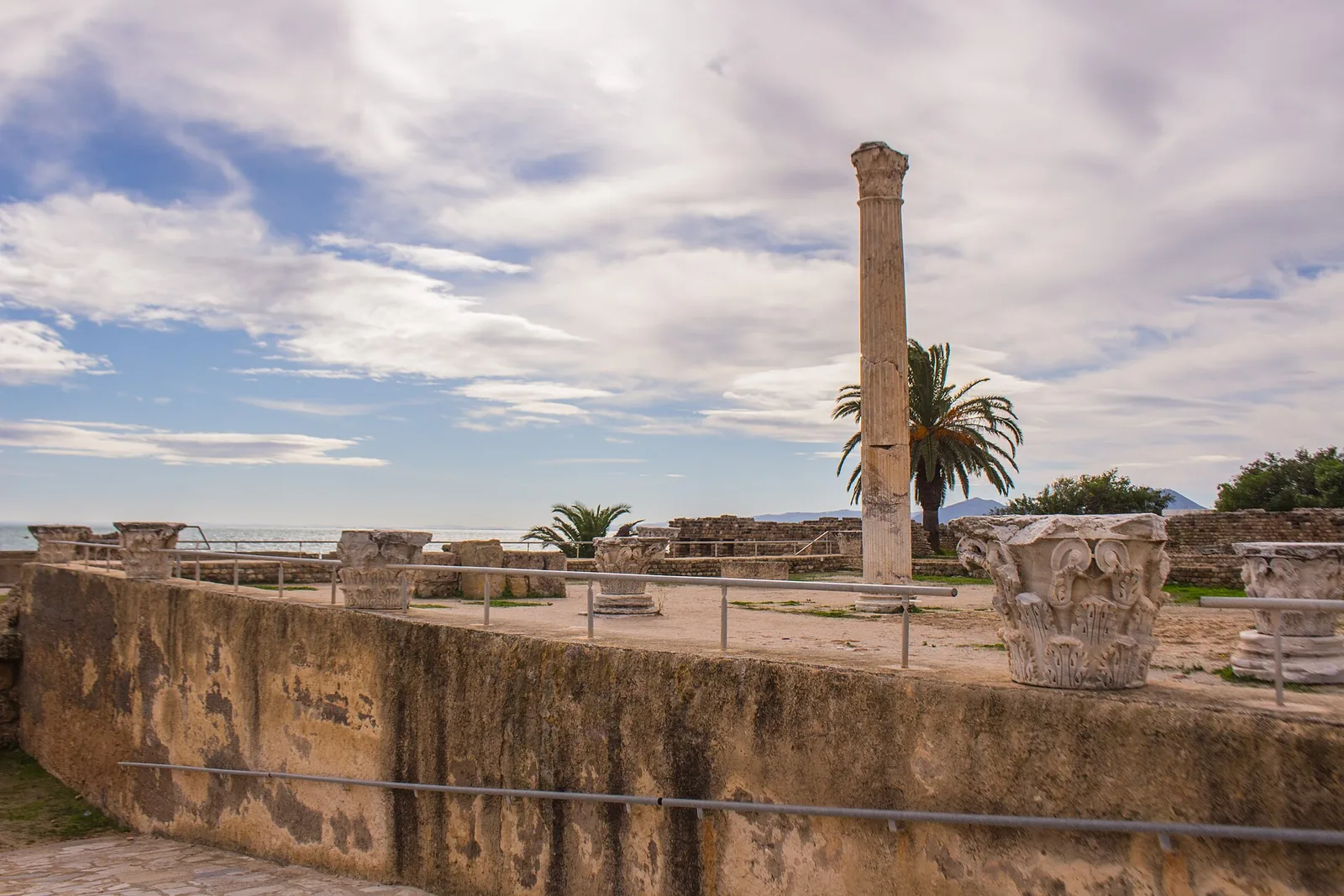
Wikimedia Commons · Creative Commons Attribution-Share Alike 4.0 International · file Apuleius delivered an oration of thanks at Carthage after honors connected with a statue had been decreed for him, demonstrating his prominent later public role in the city. The location is secure. The year 169 is an estimate cited by the commentary; it states that even an approximate date cannot be established with certainty.
Treatment at the Persian Baths
· Aquae Persianae (probable), Hammam Lif, Tunisia
During the circumstances surrounding a public performance, Apuleius withdrew to the Persian Baths for treatment after injuring his ankle. The baths are probably to be identified with a site at or near Hammam Lif across the Bay of Tunis. The speech is estimated by one scholarly reconstruction to 169, but its date cannot be fixed securely; the identification of the Persian Baths with Hammam Lif is probable rather than certain.