
36 moments
Birth in Kislovodsk
· Kislovodsk, Stavropol Krai, Russia
Solzhenitsyn was born in Kislovodsk, then in the Russian SFSR.
Mathematics and physics student
· Rostov State University, Rostov-on-Don, Rostov Oblast, Russia
He entered Rostov University as a mathematics and physics student, beginning the educational path that continued until wartime mobilization. Coordinate represents Rostov-on-Don; the timeline names Rostov University rather than a specific campus building.
Final examinations interrupted by war
· Moscow, Russia
After graduating from Rostov University, he went to Moscow for final examinations at the Moscow Institute of Philosophy, Literature, and History; the German invasion interrupted them. Coordinate is a representative central-Moscow point; the cited timeline does not identify the examination venue.
Red Army battery in Poland
· Poland
As commander of a sound-ranging artillery battery, Solzhenitsyn's unit fought in Poland during the Soviet advance westward. The source identifies Poland but not a particular locality; coordinate is a representative national point.
Front-line service in East Prussia
· East Prussia
His artillery unit entered East Prussia during the final Soviet offensive phase of the war. Historical-region coordinate is representative; the source does not identify a particular front position.
Imprisonment at Lubyanka
· Lubyanka Building, Moscow, Russia
After his arrest, he was taken to Moscow's Lubyanka prison for interrogation. The article places this transfer after the February 1945 arrest; exact arrival date is not given.
Arrest while serving in East Prussia
· East Prussia
SMERSH arrested Solzhenitsyn while he was serving at the East Prussian front, initiating his imprisonment in the Soviet penal system. Historical-region coordinate is representative; the arrest location is not specified more narrowly.
Special Camp imprisonment at Ekibastuz
· Ekibastuz, Pavlodar Region, Kazakhstan
He was transferred to a Special Camp for political prisoners at Ekibastuz, where he performed mining, bricklaying, and foundry work; the experience informed One Day in the Life of Ivan Denisovich.
Internal exile at Birlik
· Birlik, Baidibek District, Turkistan Region, Kazakhstan
Upon completing his camp sentence, Solzhenitsyn was sent into lifelong internal exile in the village of Birlik in southern Kazakhstan. Coordinate is a representative point for Birlik/Baidibek District because the cited source does not provide an exact settlement coordinate.
Cancer treatment in Tashkent
· Tashkent, Uzbekistan
He received hospital treatment in Tashkent when his cancer had progressed during exile; the experience became material for Cancer Ward. Coordinate represents Tashkent; the hospital is not named.
Schoolteacher in Vladimir region
· Vladimir Oblast, Russia
After release from internal exile, he returned to European Russia and found work as a schoolteacher in Vladimir region, where he rented a room from the woman later represented in Matryona's Home. Coordinate represents Vladimir, the regional center; the timeline does not identify the school or village.
Settlement and teaching career in Ryazan
· Ryazan, Ryazan Oblast, Russia
Solzhenitsyn settled in Ryazan after receiving rehabilitation papers and worked as a school physics and astronomy teacher while continuing In the First Circle.
Clandestine work in Soviet Estonia
· Soviet Estonia
Solzhenitsyn used a hideout in Estonia while writing The Gulag Archipelago, spending a cumulative seven months there during the 1963–1967 period. The source dates this activity to 1963–1967 but does not identify the hideout; coordinate is a representative point for Estonia.
Residence with Heinrich Böll
· Langenbroich, North Rhine-Westphalia, Germany
Immediately after deportation, Solzhenitsyn lived at the home of German writer Heinrich Böll in Langenbroich. Coordinate is a representative point for Langenbroich; the exact house location is not supplied by the source.
Deportation to Frankfurt
· Frankfurt am Main, Hesse, West Germany
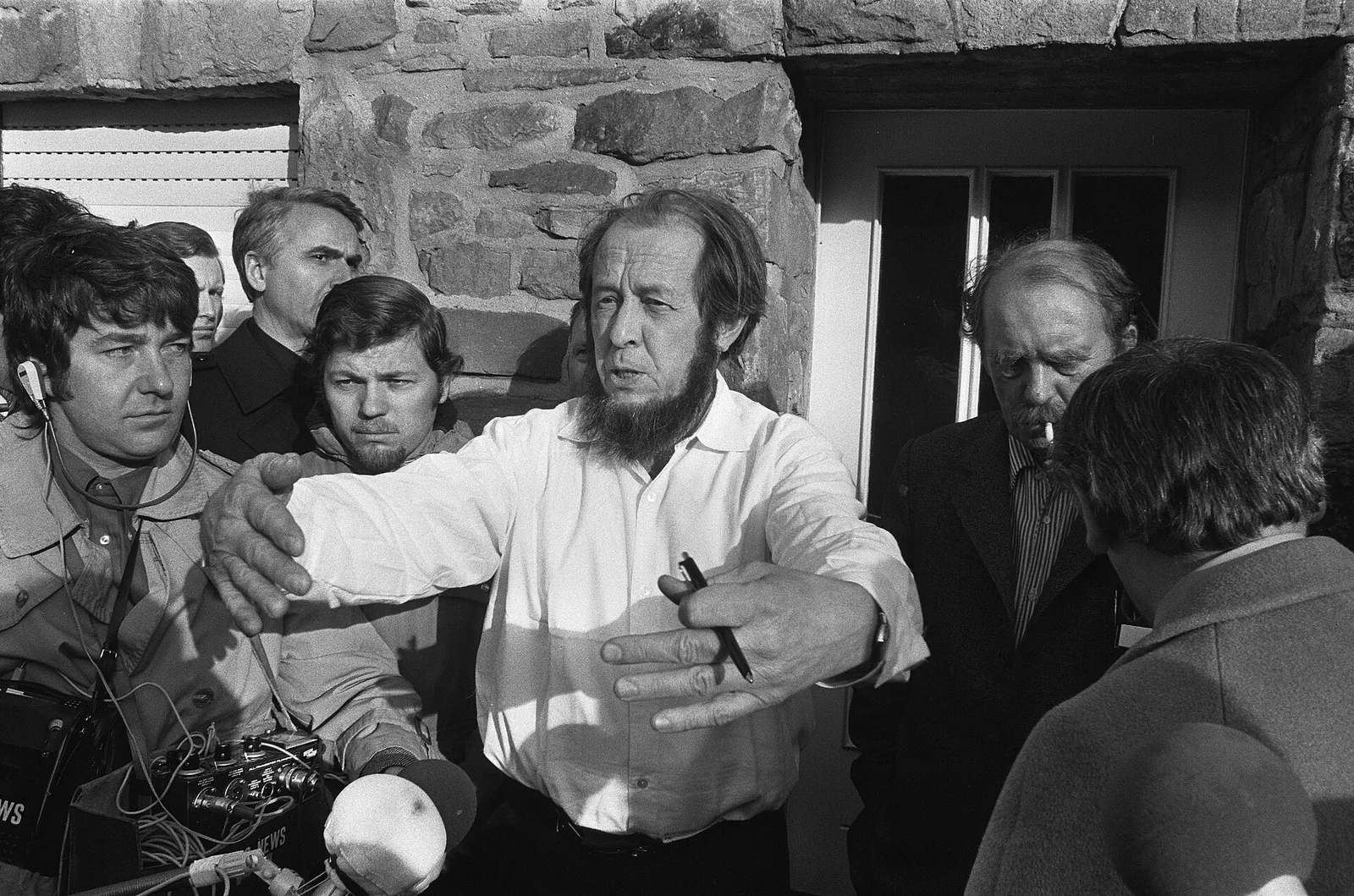
Wikimedia Commons · CC0 1.0 Universal Public Domain Dedication · file The Soviet government deported Solzhenitsyn to West Germany the day after his arrest and stripped him of Soviet citizenship.
Family reunion in Zürich
· Zürich, Switzerland
After leaving West Germany, Solzhenitsyn was in Zürich when his wife, children, stepson, and mother-in-law joined him in exile.
Nobel banquet speech
· Stockholm City Hall, Stockholm, Sweden
Solzhenitsyn attended the Nobel festivities in Stockholm and gave the Nobel Banquet speech at Stockholm City Hall after being unable to accept the prize in 1970.
AFL–CIO speech in Washington
· Washington, D.C., United States
Solzhenitsyn delivered a major address to the AFL–CIO in Washington, D.C., criticizing the Soviet system and discussing the Ukrainian famine of 1932–1933. The specific venue in Washington is not identified by the cited source.
AFL–CIO speech in New York City
· New York City, New York, United States
Nine days after his Washington address, Solzhenitsyn delivered a second AFL–CIO speech in New York City. The specific venue is not identified by the cited source.
Settlement in Cavendish
· Cavendish, Vermont, United States
After a first visit in April, Solzhenitsyn established his long-term American residence in Cavendish, Vermont, in June 1976.
Old Believer church visit
· St. Nicholas Old Believer Orthodox Church, Millville, New Jersey, United States
During a United States tour, he visited St. Nicholas Old Believer Orthodox Church in Millville and privately addressed parishioners and clergy in Russian. Coordinate represents Millville; the church's exact mapped location was not established from the cited source.
Address to Cavendish Town Meeting
· Cavendish, Vermont, United States
Solzhenitsyn addressed Cavendish's town meeting to explain his decision to settle there and apologize for fencing his property. Coordinate represents the town center; the meeting venue is not identified.
Harvard commencement address
· Harvard University, Cambridge, Massachusetts, United States
He received an honorary Harvard degree and delivered the commencement address later published as A World Split Apart. The source is the text of Solzhenitsyn's commencement address and identifies Harvard University and the date.
Interview at Vermont home
· Cavendish, Vermont, United States
French journalist Bernard Pivot conducted a televised interview with Solzhenitsyn at his rural Vermont home. The source gives Vermont but does not name the town; Cavendish is used because it was his documented Vermont residence.
Vermont Bicentennial parade
· Cavendish, Vermont, United States
At Cavendish's Vermont Bicentennial parade, Solzhenitsyn publicly confirmed that he would return to Russia. Exact parade date is not given.
International Academy of Philosophy speech
· Liechtenstein
Solzhenitsyn delivered a major speech to the International Academy of Philosophy in Liechtenstein, urging Western societies not to lose sight of their political and civic values. The source identifies Liechtenstein but not the municipality or venue; coordinate is a representative national point.
Departure on trans-Russian journey
· Vladivostok, Primorsky Krai, Russia
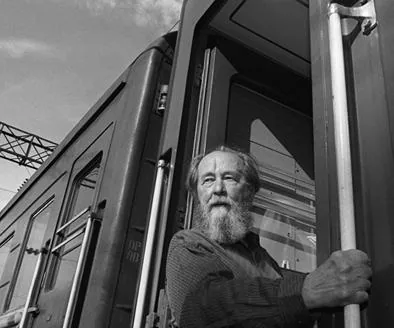
Wikimedia Commons · Creative Commons Attribution-Share Alike 3.0 Unported · file Solzhenitsyn was photographed looking from a train in Vladivostok before beginning his journey across Russia after nearly two decades in exile. The image caption supports summer 1994 but not a more precise date.
Residence at Troitse-Lykovo dacha
· Troitse-Lykovo, Moscow, Russia
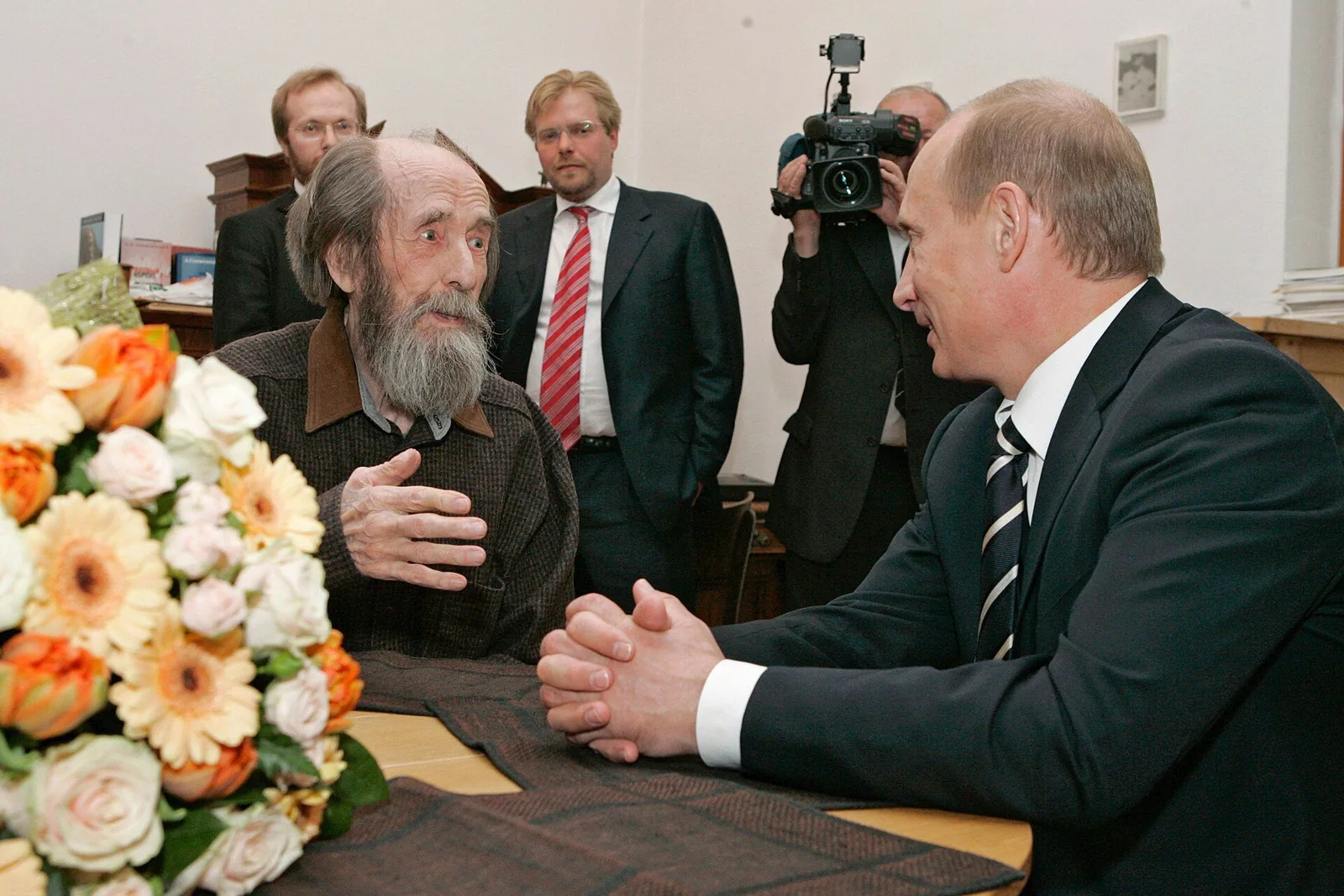
Wikimedia Commons · Copyrighted; Wikimedia Commons file-description page does not state a reusable license · file From his return to Russia until death, Solzhenitsyn lived with his wife at a dacha in Troitse-Lykovo in western Moscow. Coordinate is a representative point for the Troitse-Lykovo neighborhood; the dacha address is not given.
Farewell at Cavendish Town Meeting
· Cavendish, Vermont, United States
Before returning permanently to Russia, Solzhenitsyn bid farewell to Cavendish at its town meeting. Coordinate represents the town center; the meeting venue is not identified.
Return via Magadan
· Magadan, Magadan Oblast, Russia
On his return from exile, Solzhenitsyn flew via Alaska and landed at Magadan, a major former Gulag center, before proceeding to Vladivostok. The timeline gives May for departure and landing sequence but not separate arrival dates for Magadan and Vladivostok.
Arrival in Moscow after rail journey
· Moscow, Russia
After two months of rail travel and public meetings across Russia, Solzhenitsyn arrived in Moscow.
Speech at the State Duma
· State Duma, Moscow, Russia
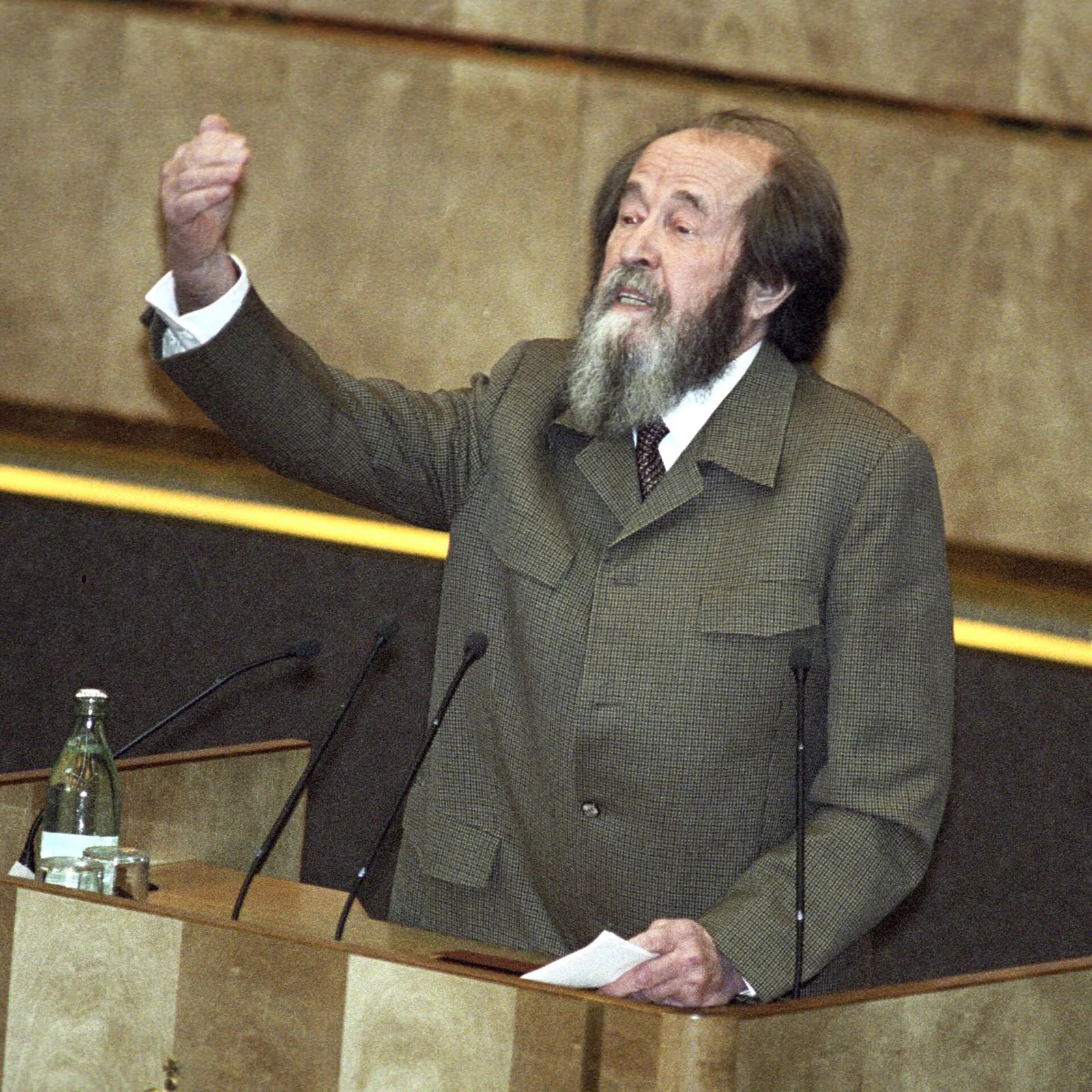
Wikimedia Commons · Creative Commons Attribution 4.0 International · file After returning to Russia, Solzhenitsyn addressed the State Duma in Moscow. Evidence is a dated photograph caption.
Journey through the Tver and Upper Volga region
· Tver, Tver Oblast, Russia
Solzhenitsyn traveled through the Tver/upper Volga region while continuing his post-return writing and publishing work. The source identifies a broad region rather than a specific itinerary; coordinate represents Tver.
Journey southwest of Moscow
· Southwest of Moscow, Russia
Solzhenitsyn made a regional trip southwest of Moscow in a year that also saw publication of Russia in Collapse and his refusal of a state award. The source does not name localities or dates; coordinate is a representative regional point.
Death near Moscow
· Near Moscow, Russia
Solzhenitsyn died of heart failure near Moscow at age 89, ending the period in which he lived at Troitse-Lykovo. Coordinate is a representative Moscow point because the source says only “near Moscow.”
Burial at Donskoy Monastery
· Donskoy Monastery, Moscow, Russia
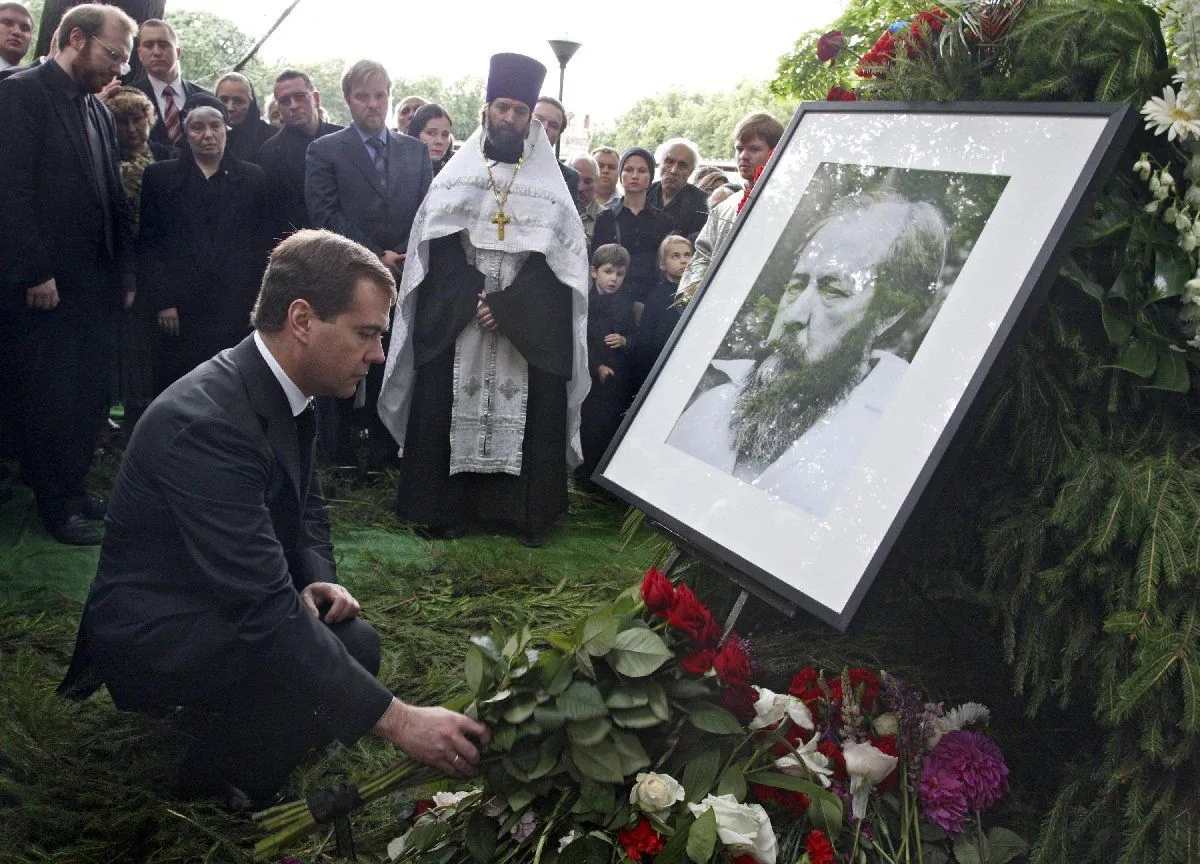
Wikimedia Commons · Copyright status and reusable license not stated on the Wikimedia Commons file-description page · file Following a burial service, Solzhenitsyn was buried at Moscow's Donskoy Monastery in the place he had selected.