
23 moments
Birth at Amarkot Fort
· Umerkot Fort, Umerkot, Sindh, Pakistan
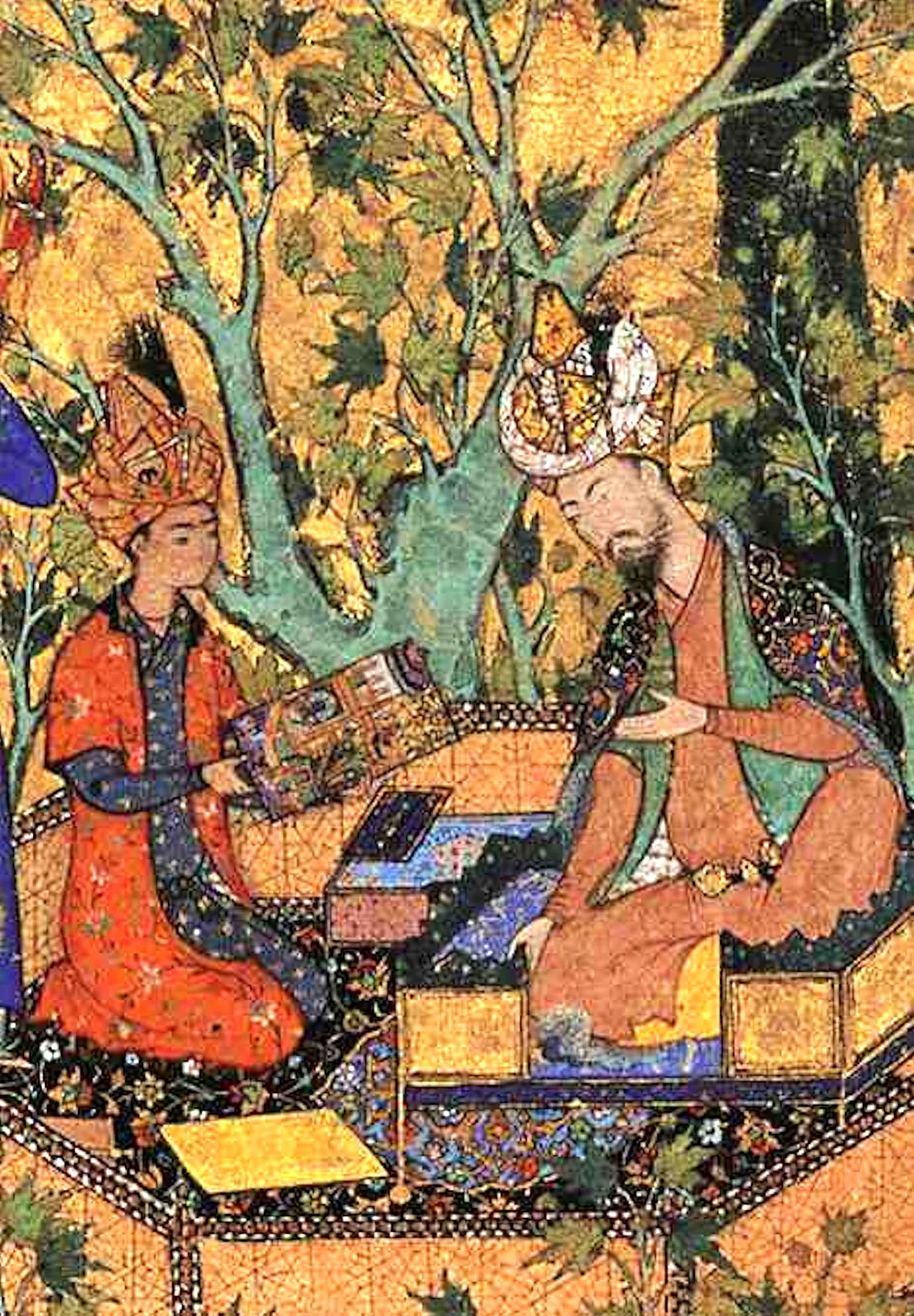
Wikimedia Commons · Public domain · file Akbar was born while his parents were under the protection of the local ruler at the Rajput fortress of Amarkot. The modern city of Umerkot is the historical Amarkot; coordinates represent Umerkot Fort.
Enthronement at Kalanaur
· Takht-i-Akbari, Kalanaur, Punjab, India
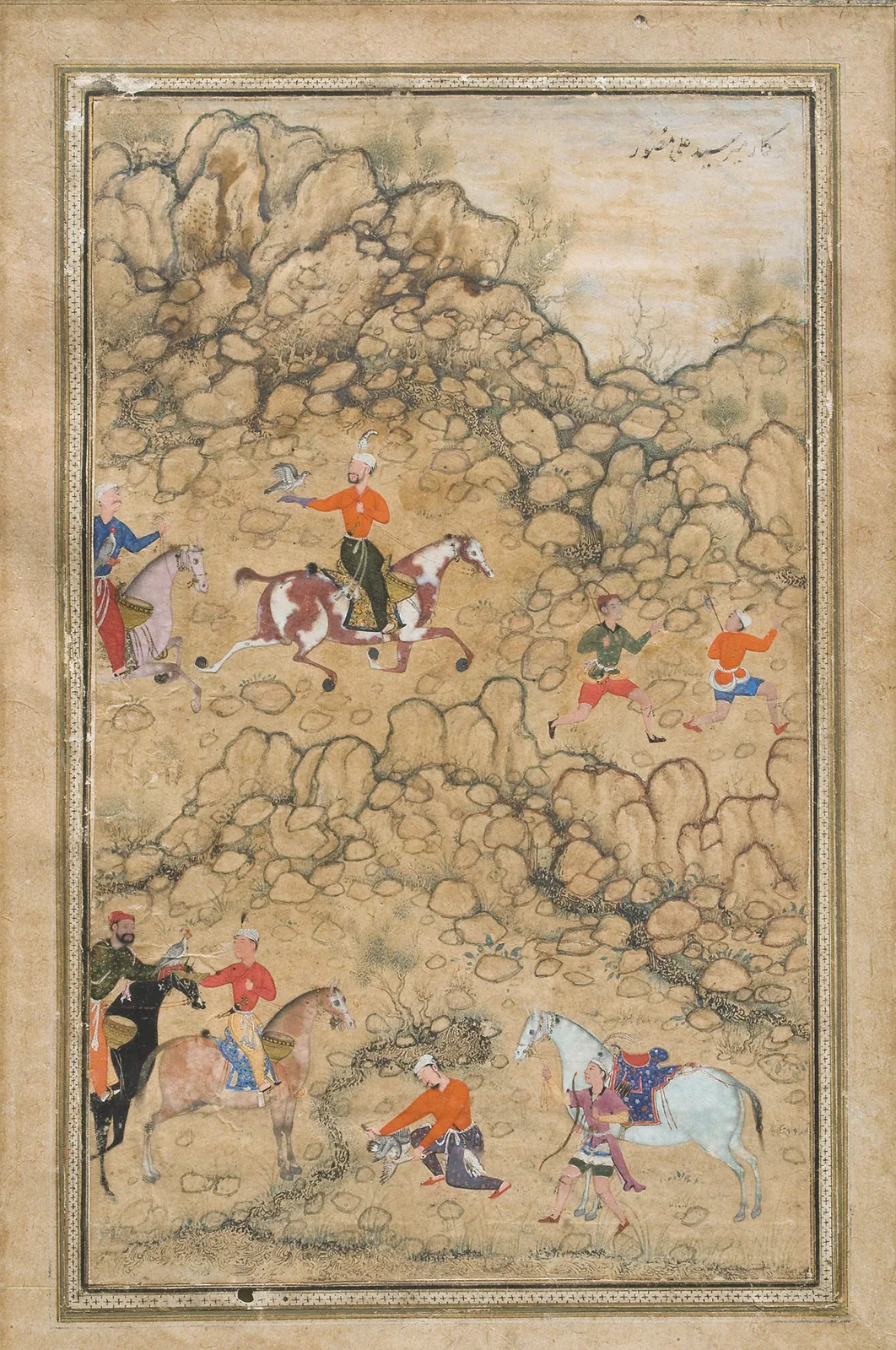
Wikimedia Commons · Public domain · file At age fourteen, Akbar was enthroned and proclaimed shahanshah under the regency of Bairam Khan. Coordinates are a representative point for the Takht-i-Akbari monument at Kalanaur.
Triumphal entry into Delhi
· Delhi, India
After the Panipat victory, Akbar entered Delhi and remained there for roughly a month before returning toward Punjab. The source gives the visit's sequence after the battle of 5 November 1556 but not an exact entry day.
Second Battle of Panipat
· Panipat battlefield, Haryana, India
Akbar and Bairam Khan marched to recover Delhi and Agra; during the battle they remained with the Mughal rear camp near Panipat. Coordinates mark the battlefield; the cited rear camp was eight miles away and its exact location is not specified.
Personal journey to Malwa
· Malwa, India
Akbar personally went to Malwa to confront Adham Khan and remove him from command after the Mughal conquest campaign. Malwa is a broad historical region; coordinates are a representative point at Indore.
Adham Khan's execution at Agra
· Agra Fort, Agra, Uttar Pradesh, India
During a court dispute, Akbar personally ordered and carried out the fatal defenestration of his foster-brother Adham Khan at the Agra palace. The source identifies a palace courtyard at Agra; coordinates represent Agra Fort.
Siege of Chittorgarh begins
· Chittor Fort, Chittorgarh, Rajasthan, India
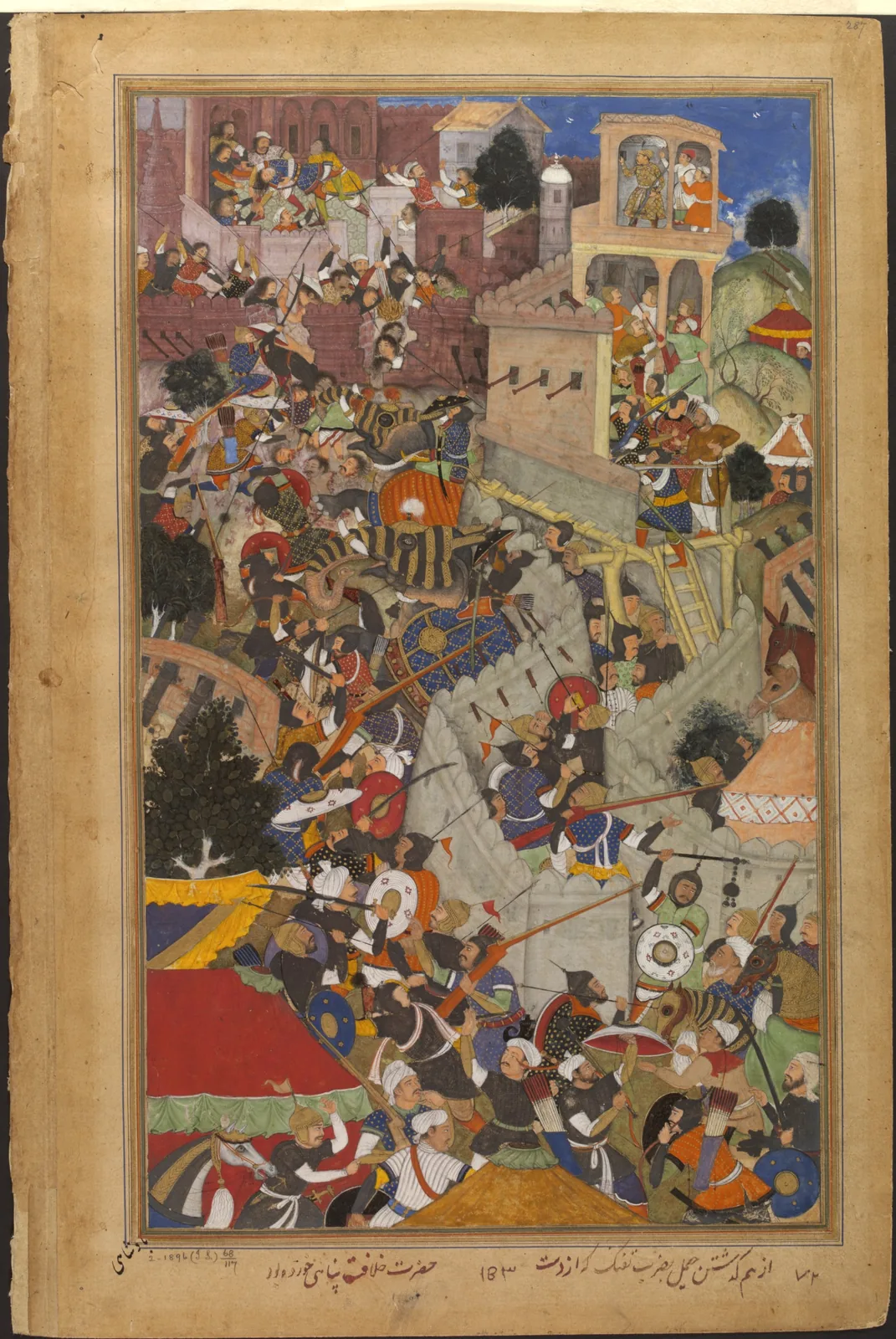
Wikimedia Commons · Creative Commons Public Domain Mark 1.0 · file Akbar advanced from Agra with a large army and artillery and began the siege of the Mewar capital's fort.
Siege of Ranthambore
· Ranthambore Fort, Sawai Madhopur, Rajasthan, India
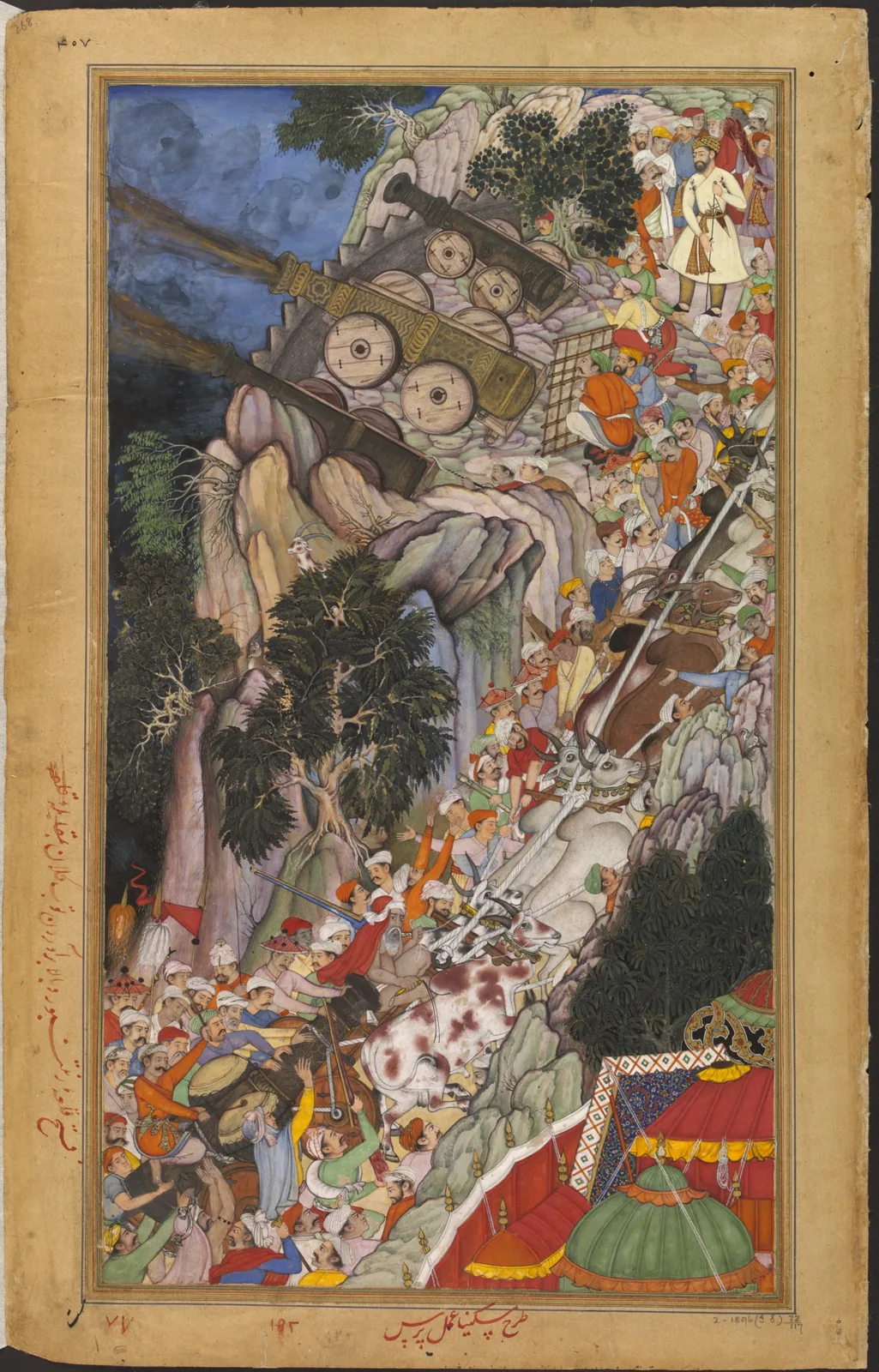
Wikimedia Commons · Creative Commons Public Domain Mark 1.0 · file Akbar led the Mughal army in the siege of Ranthambore Fort shortly after the Chittorgarh campaign.
Capture of Chittor Fort
· Chittor Fort, Chittorgarh, Rajasthan, India
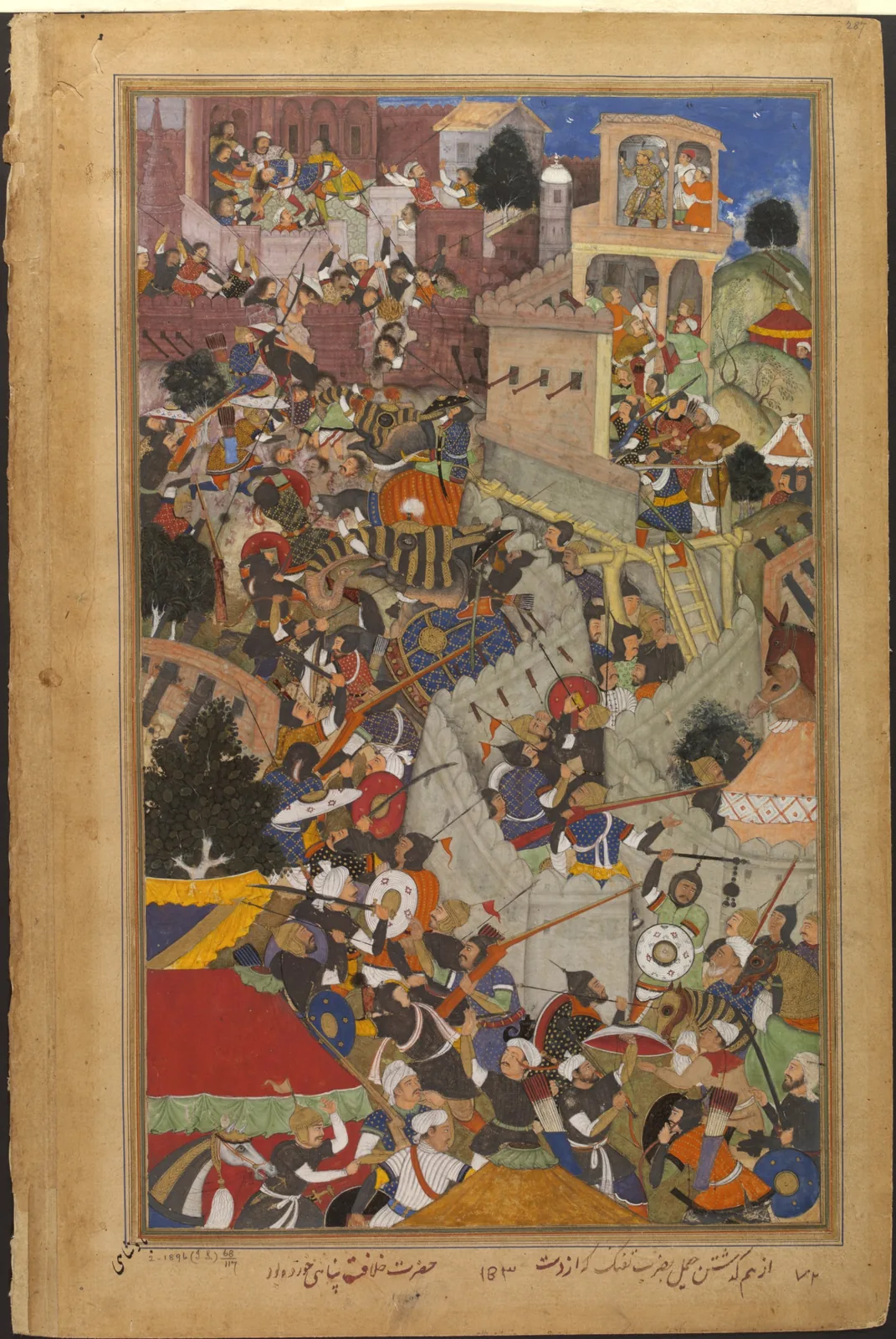
Wikimedia Commons · Creative Commons Public Domain Mark 1.0 · file Akbar was present through the culmination of the Chittorgarh siege and subsequently returned to Agra after placing the fort under a general. The return statement follows the fort's capture on 23 February 1568.
Entry into Ranthambore Fort
· Ranthambore Fort, Sawai Madhopur, Rajasthan, India
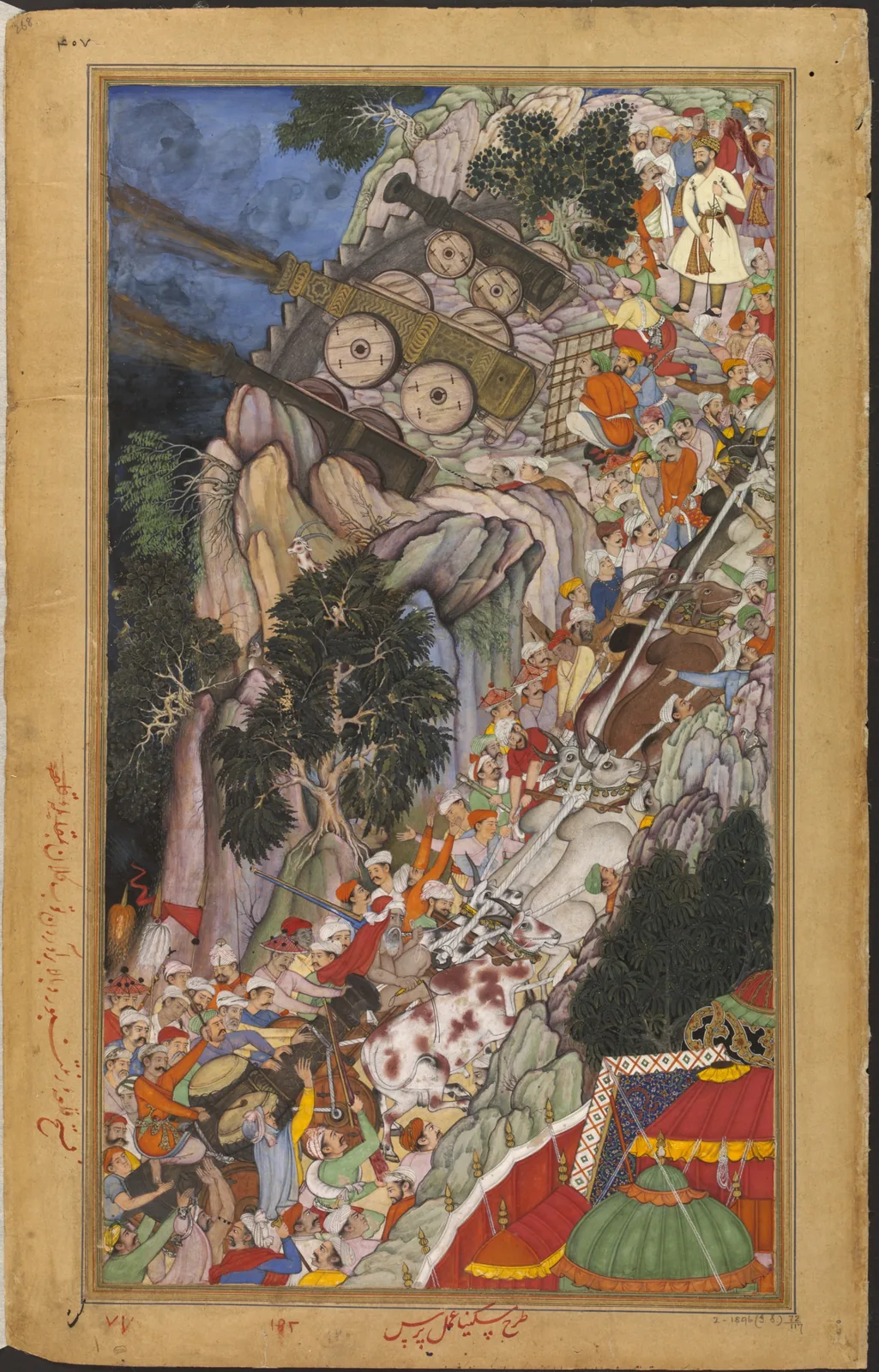
Wikimedia Commons · Creative Commons Public Domain Mark 1.0 · file Following Surjan Hada's surrender, Akbar entered Ranthambore Fort and received the ruler's submission.
Foundation of Fatehpur Sikri
· Fatehpur Sikri, Uttar Pradesh, India
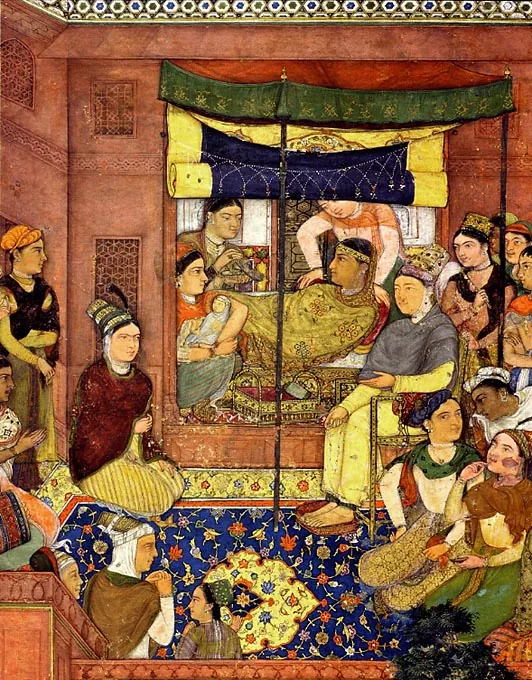
Wikimedia Commons · Public domain · file Akbar marked the Rajput campaigns by establishing a new capital west of Agra, later called Fatehpur Sikri. Coordinates represent the historic city center.
Gujarat campaign at Nagaur
· Nagaur, Rajasthan, India
While traveling toward Gujarat, Akbar passed through Nagaur after leaving Ajmer. The itinerary is dated by the expedition's departure on 2 July 1572; no more precise date for Nagaur is given.
Gujarat campaign at Sirohi
· Sirohi, Rajasthan, India
Akbar reached Sirohi during his Gujarat expedition and launched a counterattack after an ambush on his advance guard. The source dates the wider march to 1572 but gives no exact arrival day at Sirohi.
Departure for the Gujarat campaign
· Fatehpur Sikri, Uttar Pradesh, India
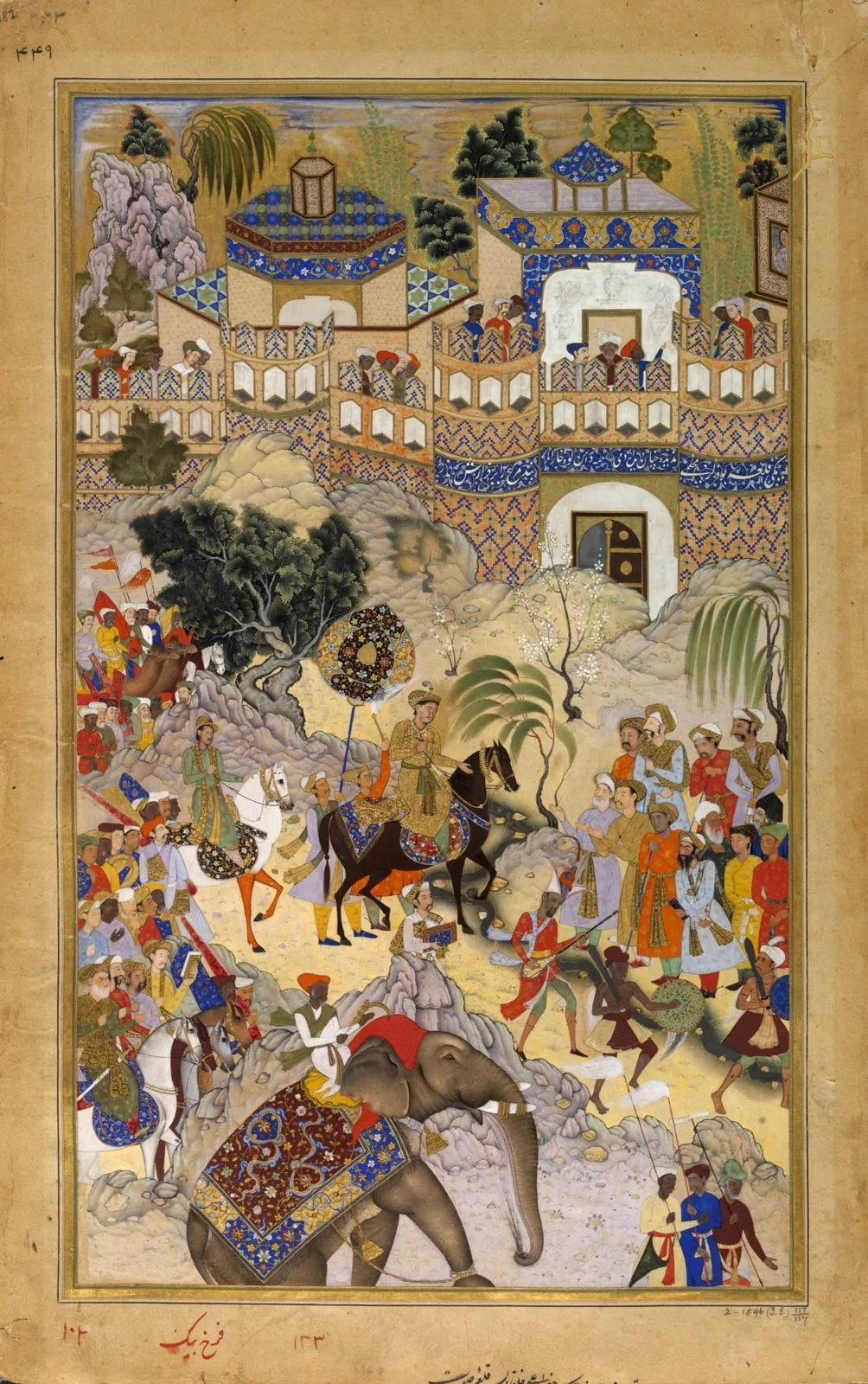
Wikimedia Commons · Public domain · file Akbar began his Gujarat expedition by departing Fatehpur Sikri for Ajmer with an advance guard sent ahead.
Arrival at Ahmedabad
· Ahmedabad, Gujarat, India
Akbar arrived at the Gujarat Sultanate's capital and began reorganizing the newly conquered territory. The source calls Ahmedabad the capital earlier in the same campaign account.
Visit to Cambay
· Khambhat (Cambay), Gujarat, India
Akbar traveled from Ahmedabad to the port of Cambay, where he encountered merchants from several regions and first saw the sea.
Return march to Ahmedabad
· Ahmedabad, Gujarat, India
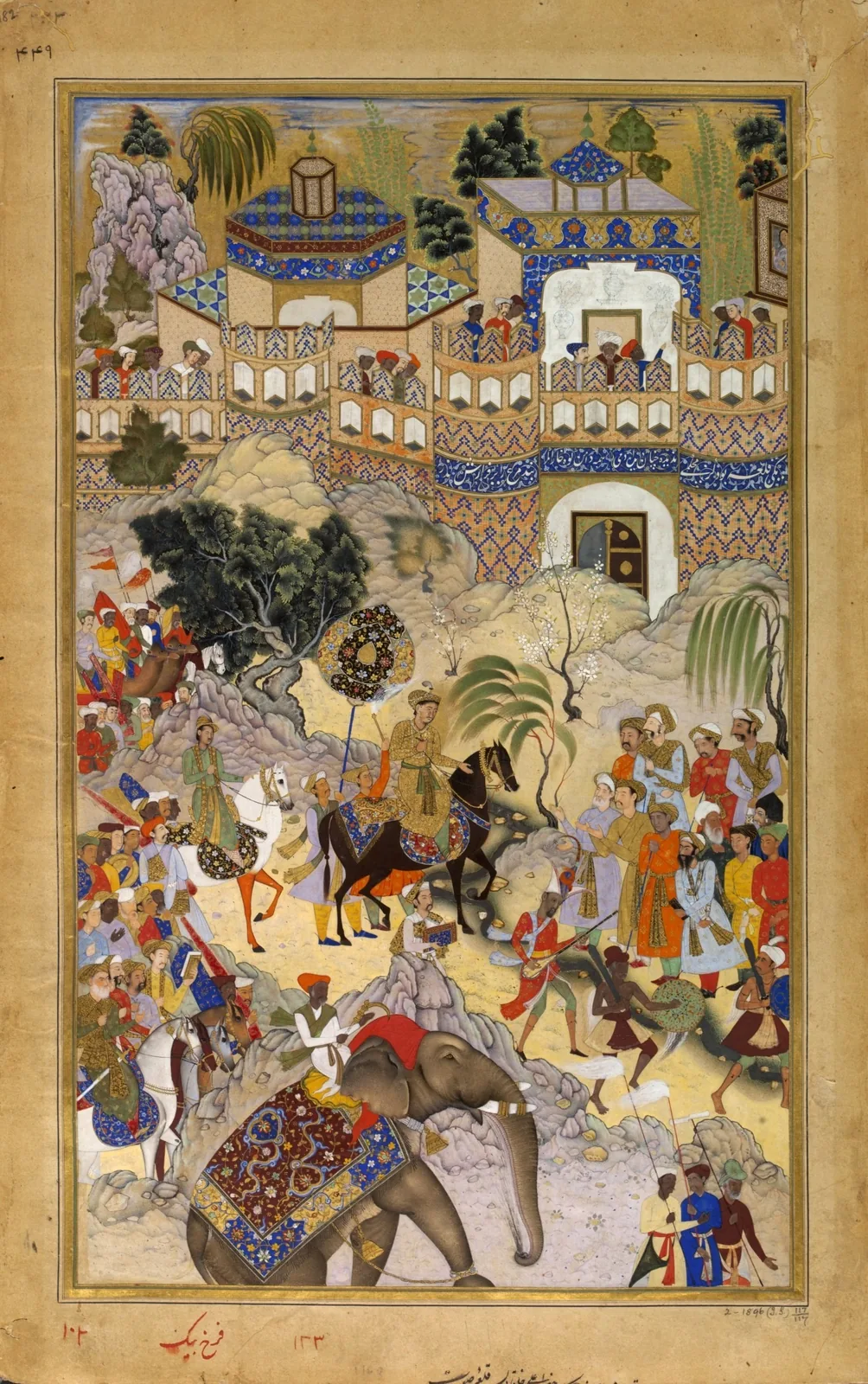
Wikimedia Commons · Public domain · file During the Gujarat rebellion, Akbar made a rapid crossing of Rajputana and reached Ahmedabad in eleven days. The source gives the year and journey duration but not the exact arrival date.
Return to Fatehpur Sikri from Bengal expedition
· Fatehpur Sikri, Uttar Pradesh, India
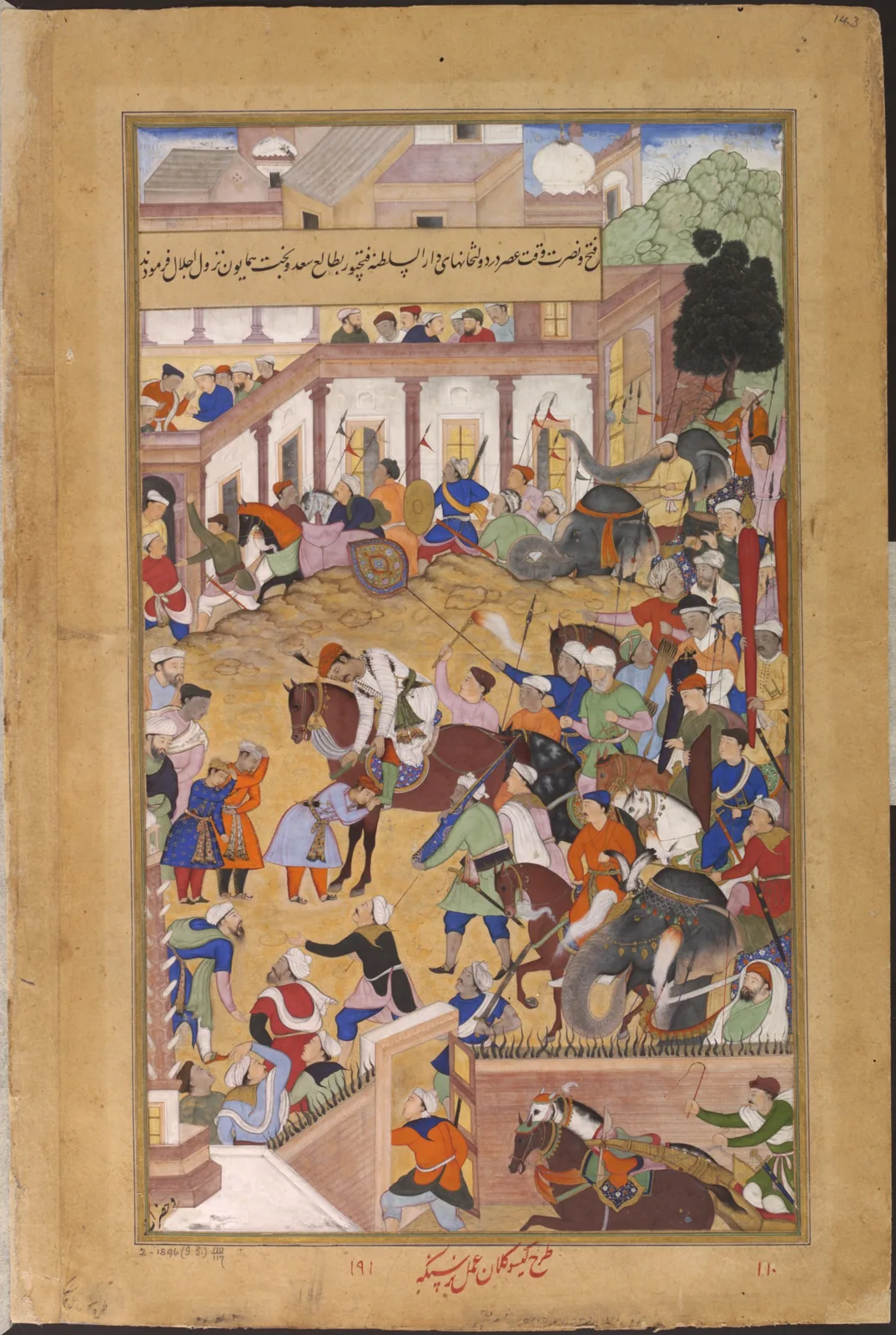
Wikimedia Commons · Public domain · file Akbar personally set out toward Bengal during the campaign, then returned to Fatehpur Sikri after Mughal forces took Patna.
Departure from Fatehpur Sikri
· Fatehpur Sikri, Uttar Pradesh, India
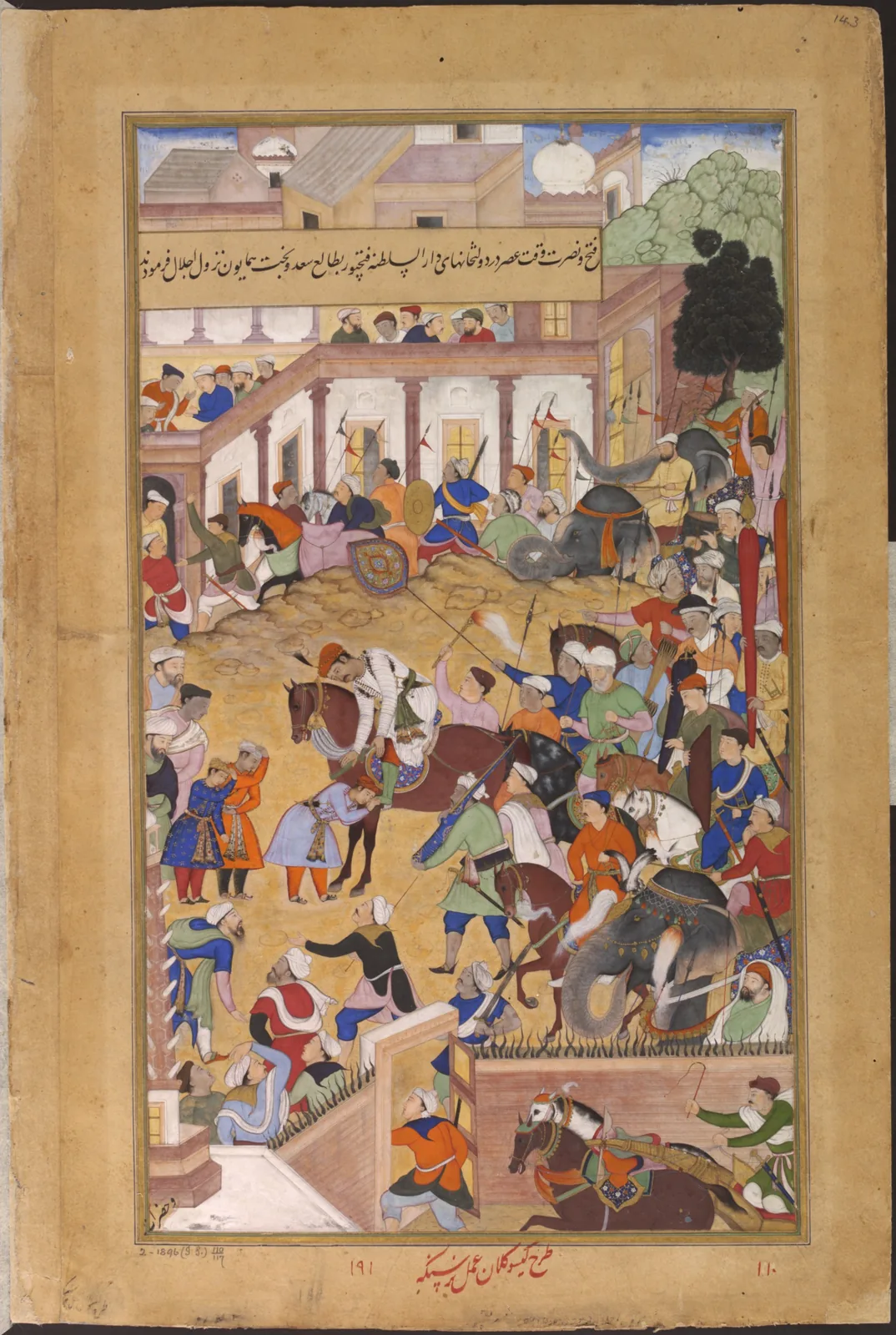
Wikimedia Commons · Public domain · file Akbar abandoned Fatehpur Sikri after it had served as the Mughal capital, in the context of his Punjab campaign. The source establishes departure in 1585 but does not specify a day or month.
Occupation of Burhanpur
· Burhanpur, Madhya Pradesh, India
Akbar personally marched to Burhanpur during the Deccan campaign and occupied the city before besieging Asirgarh.
Return of capital to Agra
· Agra, Uttar Pradesh, India
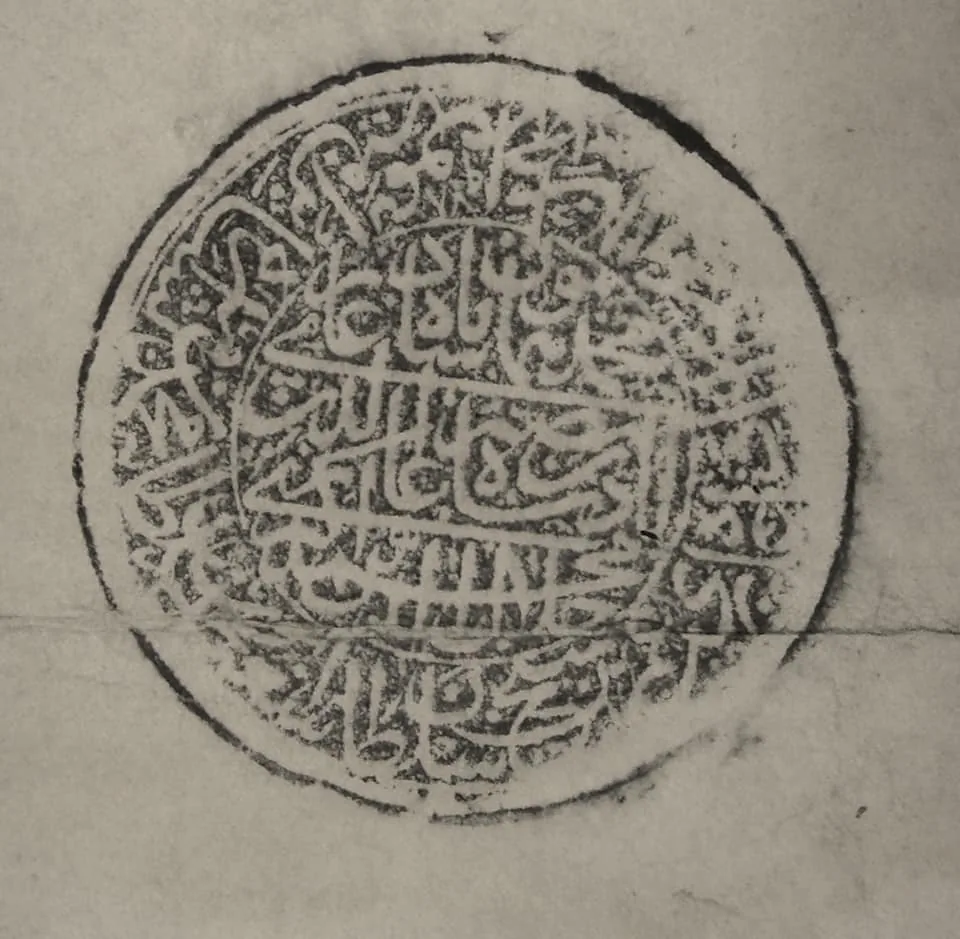
Wikimedia Commons · Public domain · file Akbar relocated the imperial capital from Lahore back to Agra, which remained his governing center for the rest of his life.
Capture of Asirgarh Fort
· Asirgarh Fort, Madhya Pradesh, India
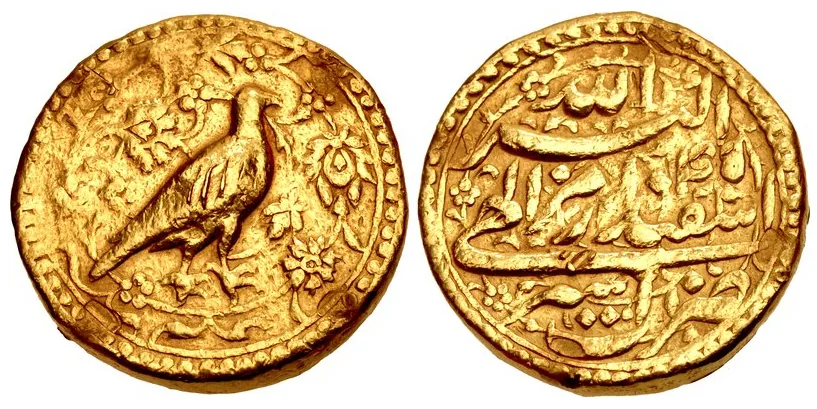
Wikimedia Commons · Public domain · file Akbar completed the Asirgarh siege during the Deccan campaign, taking the strategically important fort after the Khandesh ruler refused to surrender.
Death at Fatehpur Sikri
· Fatehpur Sikri, Uttar Pradesh, India
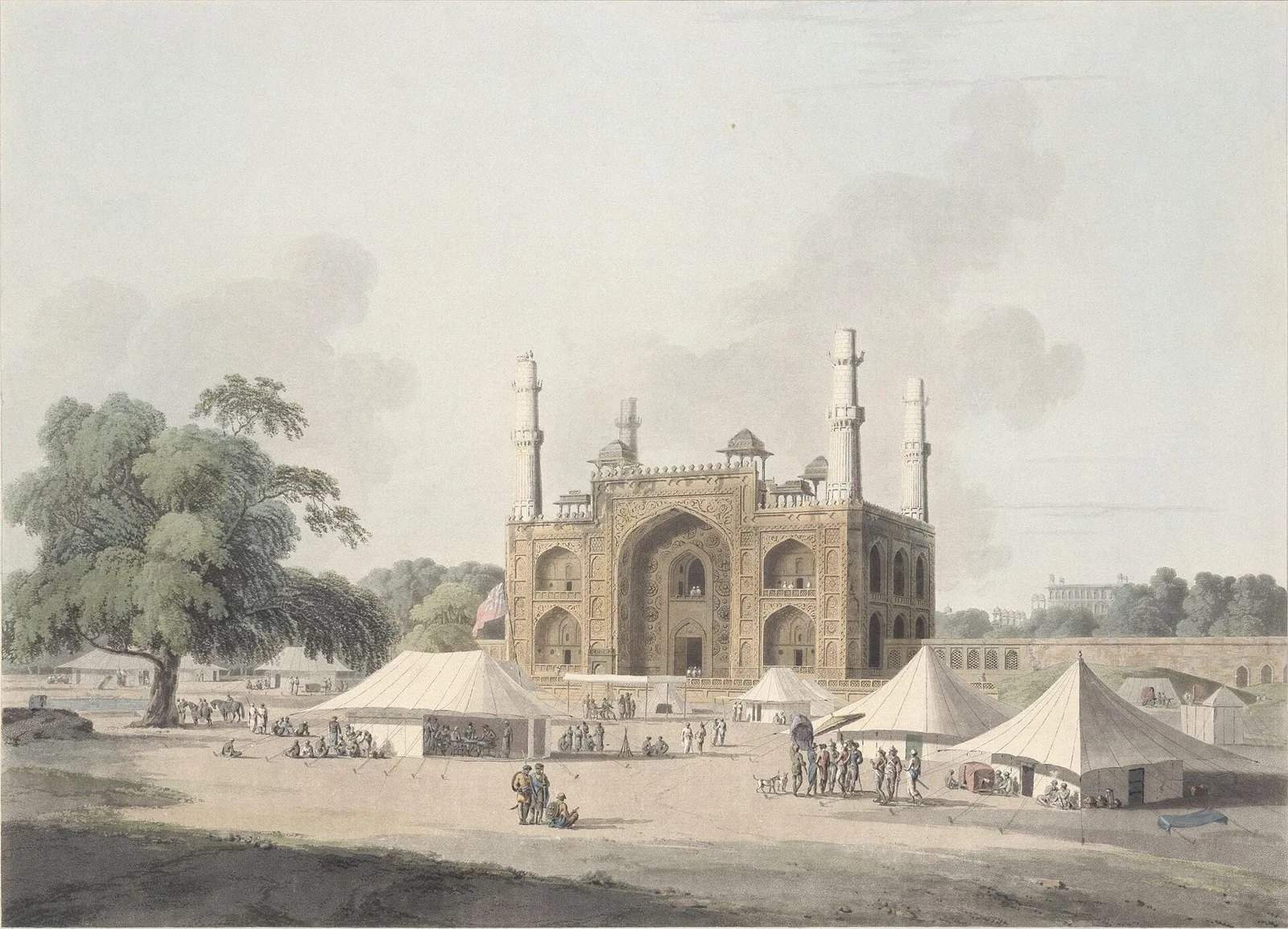
Wikimedia Commons · Public domain · file Akbar died at Fatehpur Sikri after an illness in October 1605; he was subsequently buried at Sikandra, Agra. The article's infobox gives 27 October 1605, while its death narrative says he is believed to have died on 26 October; the header and card use the infobox date.